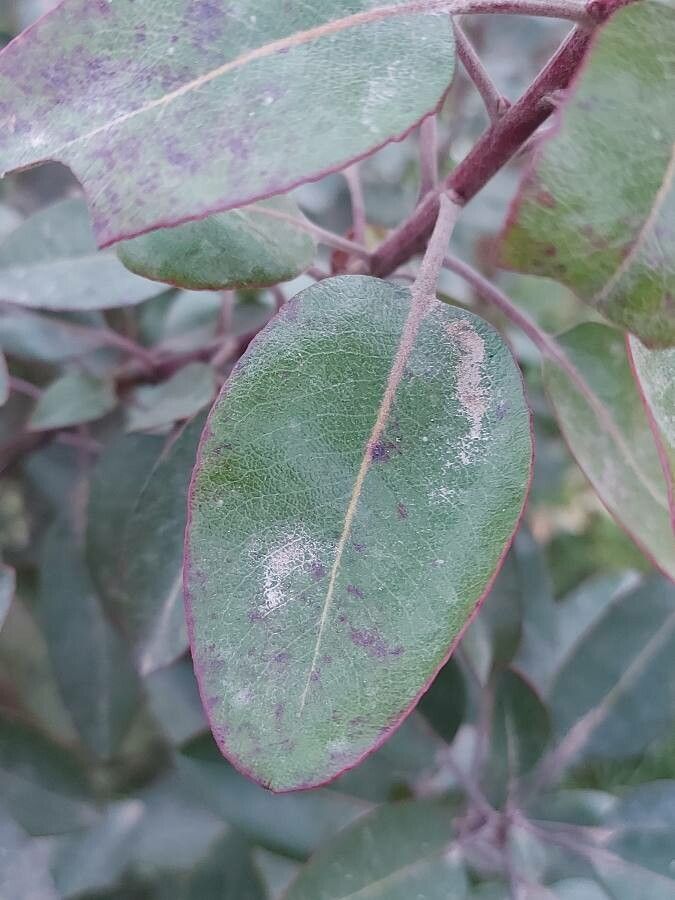
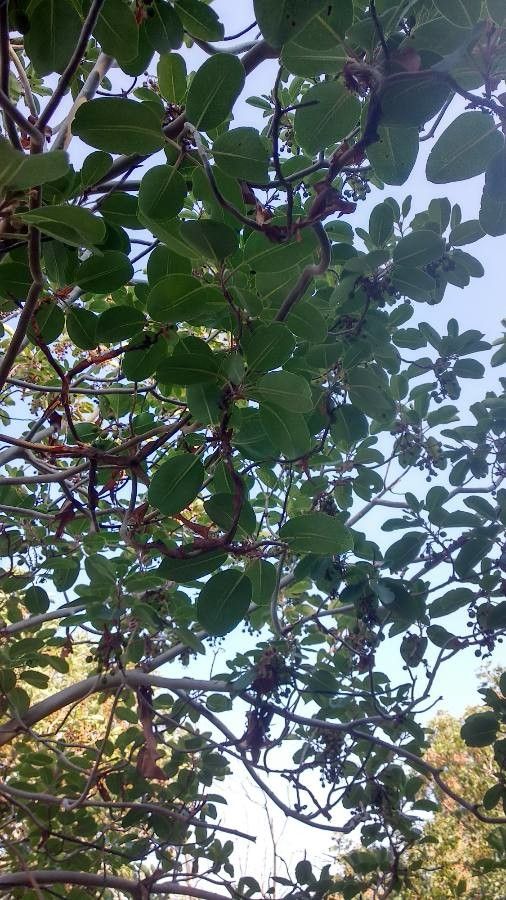
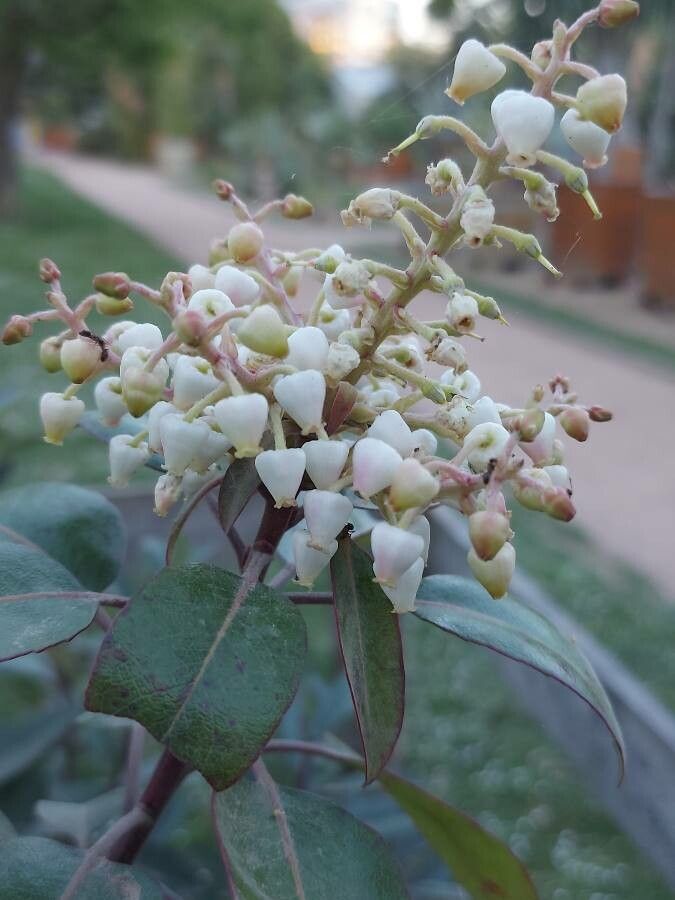
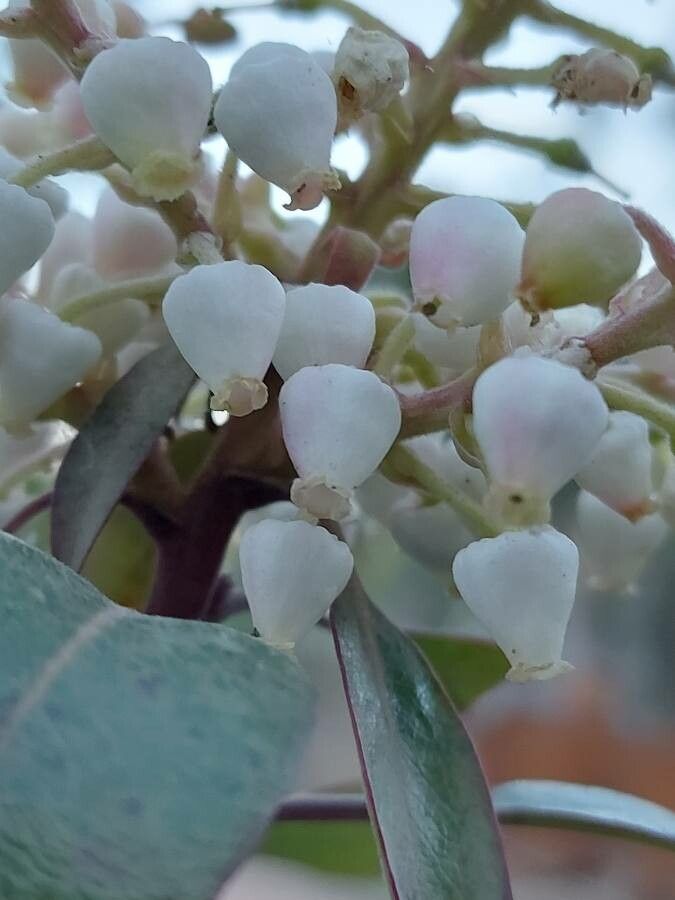
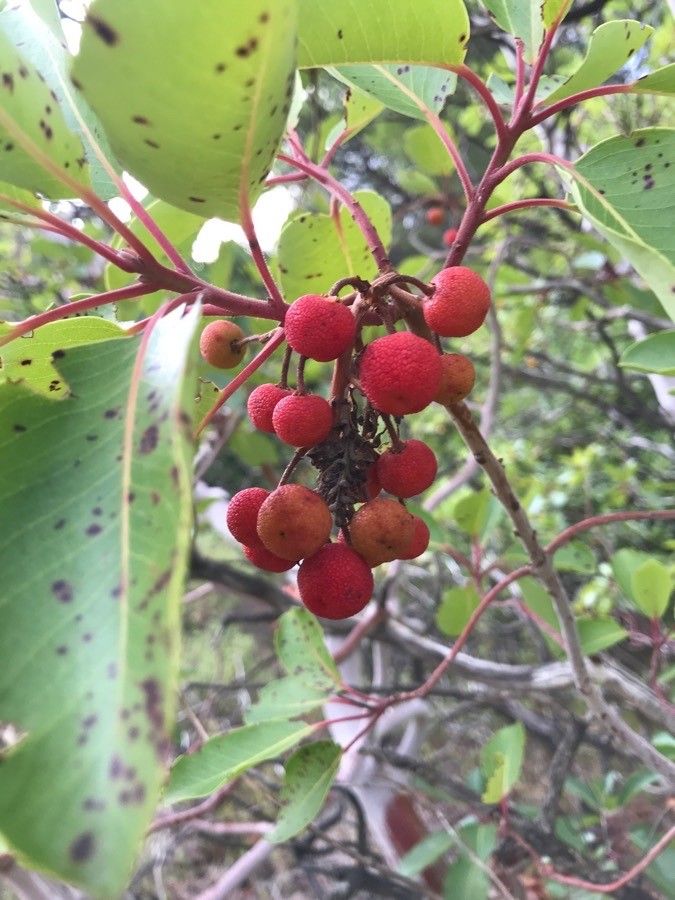
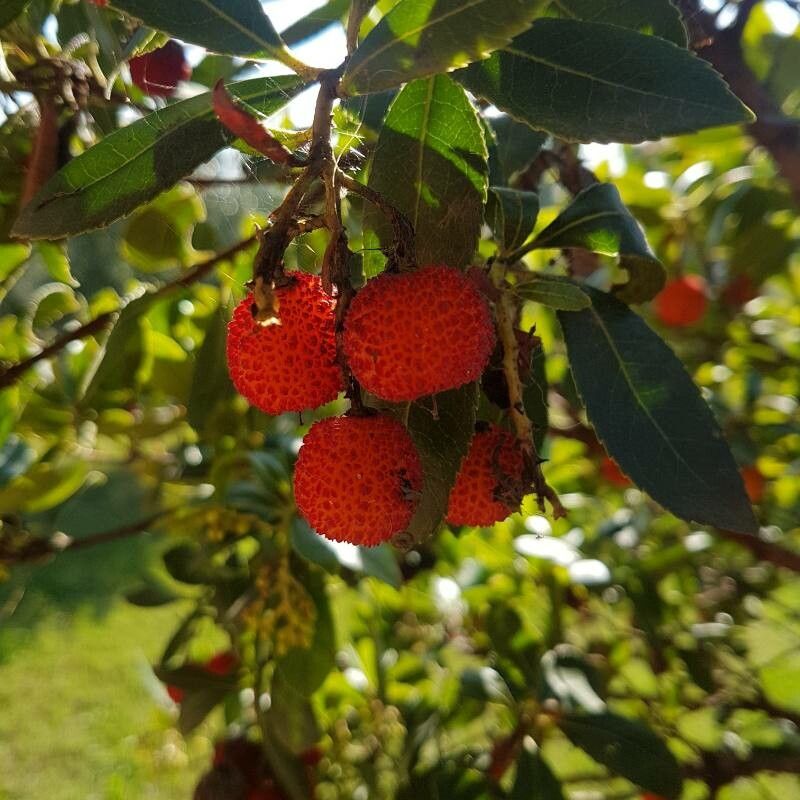
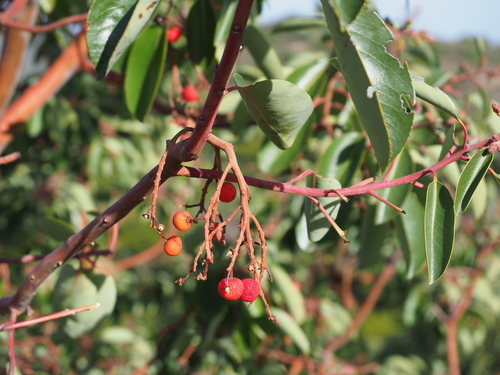
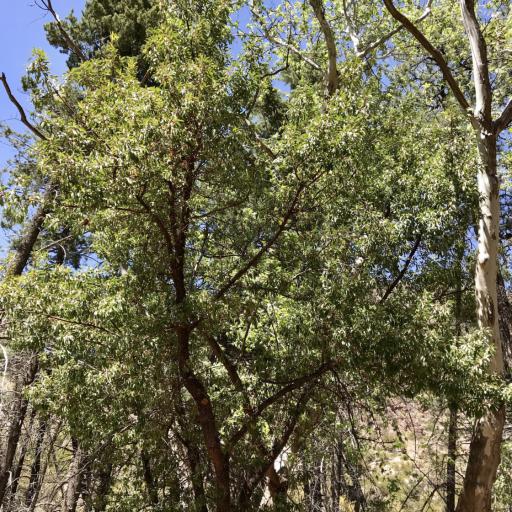
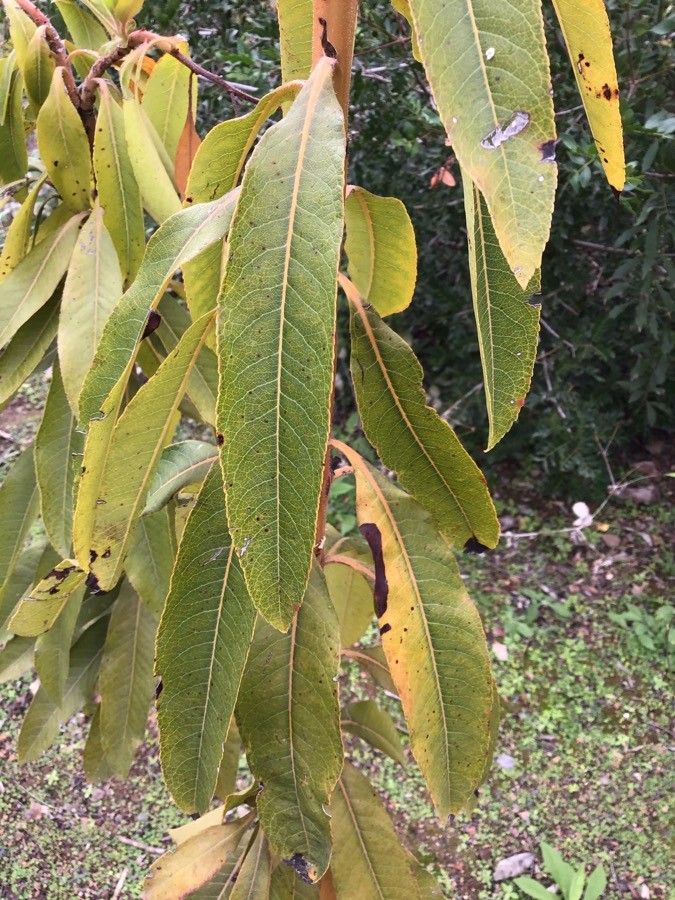
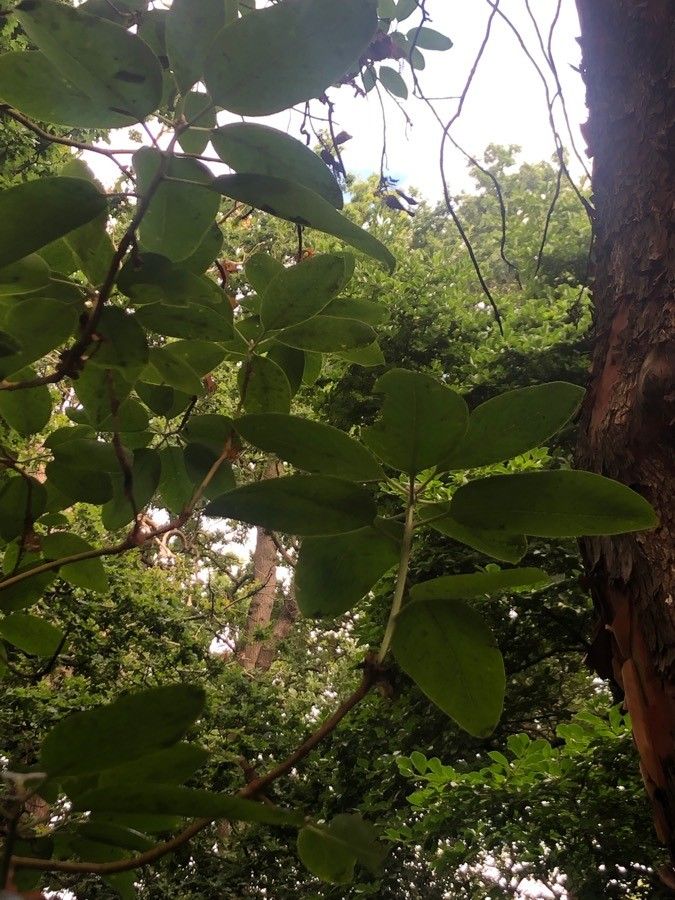
Arbutus xalapensis, commonly known as the Texas madrone, Amazaquitl, or Texas madroño, is a species of flowering plant in the heather family. It is native to Central America, the southwestern United States (western Texas and New Mexico), and throughout Mexico. It is found in canyons and mountains, on rocky plains, and in oak woodlands, at altitudes of up to 3,000 m (10,000 feet) in the south of the range, but lower, down to 600 m (1800 feet) in the north of the range. Arbutus xalapensis is a large shrub or small to medium-sized evergreen tree growing to 5–25 meters (17–84 feet) tall with a trunk up to 50 cm (20 inches) in diameter, with smooth orange-brown bark peeling in thin sheets. The size varies regionally with available rainfall, with small, shrubby plants in dry areas such as western Texas and New Mexico, and larger trees in moister areas of Mexico; plants in Texas, New Mexico, and the far northeast of Mexico are distinguished as a variety, A. xalapensis var. texana, or even a distinct species A. texana, by some botanists, but others do not regard these as distinct.The leaves are oblong to lanceolate, 5–17 cm (2.0–6.8 inches) long and 1.5–5 cm (0.6–2.0 inches) broad, with an entire or serrated margin. The flowers are bell-shaped, white or pale pink, 5–10 mm long, produced in loose panicles. The fruit is a rough-surfaced red berry 1 cm (0.4 inches) in diameter, reportedly edible (however, those of related species have narcotic properties), and contains numerous small seeds.
Texas madrone is resistant to disease and typically not susceptible to illnesses. Regarding care, this plant is fairly low-maintenance. When grown outdoors it needs minimal watering, and larger plants usually do not require pruning. Smaller plants, however, should be pruned after they have bloomed. Texas madronet is appropriate for anyone with outdoor space, such as a garden or deck, and does not demand much care experience.
How to keep Arbutus Xalapensis.
Light
Texas madrone performs best in settings where sunlight is present but not overwhelming. In other words, it can tolerate intense light, but not nonstop exposure. Its original habitat occurs in areas with comparable light conditions. Too little light can cause stunted growth, and too much can produce the same harmful effect.
Water
The Texas madrone, a plant native to arid regions, is highly drought-tolerant and can thrive with minimal moisture. To maintain optimal moisture levels, water the Texas madrone every 2 to 3 weeks. As an evergreen, it needs moderate hydration to sustain its foliage year-round, especially in climates with fluctuating weather conditions.
Temperature
Texas madrone is a plant native to warm-climate areas and prefers temperatures from 59 to 95 °F (15 to 35 °C). In colder seasons, it is advisable to slowly raise heating within that range to preserve suitable growth conditions.
Fertilizer
The timing of fertilization is important for Texas madrone. Apply fertilizer in early spring and continue monthly through early summer. Fertilizer encourages attractive blooms and supplies energy during both dormant and active growth periods.
Pruning
The Texas madrone is known for its peeling bark and evergreen leaves. To keep the plant healthy and ensure good airflow, it's best to prune it from early to late winter. Focus on removing dead or crossing branches, but be careful not to prune too heavily, as this can stress the tree. Regular, light pruning encourages growth and helps maintain the tree's natural shape. For the best results, use clean, sharp tools when pruning.
Botanical profile.
- Plant Type
- Shrub
- Life Cycle
- Perennial
- Genus
- Arbutus
- Family
- Ericaceae
- Hardiness Zone
- 7-10
- Mature Height
- 7.92 m
- Mature Spread
- 7.92 m
- Leaf Color
- Green, Gray, Silver
- Leaf Type
- Evergreen
- Flower Color
- Pink, White
- Flower Size
- 0.51 cm to 0.76 cm
- Bloom Time
- Late winter, Early spring, Mid spring
- Planting Time
- Spring, Summer, Autumn
- Harvest Time
- Late summer, Early fall, Mid fall
- Native Area
- Honduras, Mexico, Guatemala, El Salvador, Nicaragua
Other names.
Reader questions.
How should I water my Texas madrone tree?
You can water your Texas madrone using any common watering tool, such as a watering can, hose, or even cups. It's important to apply the water directly to the soil, making sure to moisten all areas equally so that the entire root system gets the water it needs. Using filtered water is recommended, as tap water may contain harmful particles. Additionally, it's best to use water that is at or slightly above room temperature to avoid shocking the plant. However, the Texas madrone typically responds well to any type of water.
Why is it necessary to add fertilizer to my Texas madrone plant?
No matter which type of Texas madrone plant you have, regular fertilization is key for maintaining its overall health. Proper nutrients promote stronger growth and increase the plant's resilience to difficult growing conditions, as well as its ability to combat diseases and pests. Your Texas madrone's foliage is particularly beautiful, so it is important to prioritize its preservation. By implementing a consistent fertilization schedule tailored to your specific Texas madrone, you can encourage the growth of vibrant, healthy leaves.
What are the sunlight requirements for Texas madrone?
Texas madrone thrives in environments that provide a balance of light and shade, able to withstand strong light but not all day. Its ideal conditions are partial to full sun, meaning it requires about 3-6 hours of sunlight for partial sun, and above 6 hours for full sun. It's crucial to watch how sunlight moves through your garden to pick spots that offer a mix of light and shade, ensuring the plant's well-being.
What is the preferred temperature range for Texas madrone?
The preferred temperature range for Texas madrone, a plant native to warm climates, is between 59 to 95°F (15 to 35°C). During the colder seasons, it is advised to gradually increase heating within this range to maintain ideal growth conditions. The plant demonstrates strong cold resistance, so special frost protection measures are generally not required during winter. However, if temperatures are expected to drop below -15°C, it's important to provide cold protection by wrapping the trunk and branches with non-woven fabric or cloth and watering the plant abundantly before the first freeze of autumn to keep the soil moist.
What should I do if I give my Texas madrone tree too much water or not enough water?
Outdoor plants, especially newly planted ones or seedlings, are prone to insufficient watering. Remember to water them enough for a few months when they are small or just planted. This is because once the roots are established, Texas madrone can mostly rely on rainwater. When your Texas madrone is planted in pots, overwatering is more likely to occur. If you accidentally overwater your Texas madrone, you should immediately stop watering it to minimize the impact. Take the plant out of the pot to check its roots. If none of the roots have root rot, you can return the plant to its container. But if you see signs of root rot, trim affected roots and apply a fungicide to prevent further damage. Repot your Texas madrone in well-draining soil. In the case of underwatering, simply water the Texas madrone more frequently. This is an easy fix. If the plant is underwatered, its leaves will droop, dry out, and fall off. After sufficient watering, the leaves will quickly regain fullness. Correct your watering frequency as soon as you notice underwatering.
When should I put fertilizer on my Texas madrone?
To ensure healthy growth, you should fertilize your Texas madrone during late winter or early spring. This provides the necessary nutrients for the upcoming warm weather. If you live in a warm climate region, it is also beneficial to fertilize in early fall. This not only adds nutrients for the following growing season but also helps the tree withstand winter cold without foliage damage. Fertilizing earlier ensures the new branches have enough time to grow and withstand the cold winter.
What are the essentials for growing Texas madrone effectively?
To grow Texas madrone effectively, it's essential to mimic its natural habitat by providing conditions where the sun is present but not overpowering. Insufficient light can stunt growth, while too much light can be equally harmful. In indoor setups or during less sunny seasons, artificial lighting can supplement natural sunlight, with recommendations including LED lights for full spectrum coverage. The intensity and duration of artificial lighting should mimic natural conditions, ensuring plants receive the right amount of light for healthy growth.
How does Texas madrone react to low temperatures, and what measures should be taken?
Texas madrone is cold-tolerant and thrives best when temperatures stay above 15°C. During winter, it's critical to maintain temperatures above -10°C. If temperatures fall below -15°C, there might not be any noticeable changes during winter, but in spring, the branches can become brittle and dry, with no new shoots emerging. The solution is to prune away any dead branches in spring that have failed to produce new leaves.
How often do I need to water my Texas madrone plant?
If you live in an area with enough rainfall, most outdoor plants will grow naturally without any additional watering. However, if your area doesn't get much rain, you should water your plants every two weeks in the spring and fall, and more frequently in the summer. During the winter, when plants grow slower and require less water, water them sparingly or not at all. Young or newly planted Texas madrone plants need more frequent watering to help them establish and become more adaptable to drought conditions. For potted Texas madrone plants, there are two ways to determine how often to water them. The first is to set a predetermined watering schedule, such as once a week or every other week. However, this may not always be ideal as it doesn't consider the specific growing conditions of your plant. The frequency of watering can also change depending on the season. During the summer, when the plant's water needs are highest, a predetermined schedule may not be sufficient. An alternative approach is to monitor the soil moisture and water when the top two to four inches of soil (about ⅓ to ½ depth of the pots) have completely dried out.
When is it best to not fertilize my Texas madrone tree?
There are a few specific times when you shouldn't fertilize your Texas madrone. The first is during the early and mid-winter months when the plant is dormant and doesn't require any feeding. It's also not recommended to fertilize during late spring and summer. This period is usually hotter and drier, which can have a negative impact on the plant if fertilized. To avoid any potential issues, it's best to stick to a fertilization schedule that involves feeding only in early spring and early fall.
What symptoms indicate insufficient or excessive sunlight in Texas madrone?
Symptoms of insufficient light in Texas madrone include small, new leaves, leggy growth, faster leaf drop, slower or halted new growth, and lighter-colored or pale new leaves. Excessive sunlight can lead to chlorosis (yellowing leaves), sunscald, leaf curling, wilting, and leaf scorching. These symptoms reflect the plant's struggle with light conditions, either in need of more light or suffering from too much exposure.
What are the effects of high temperatures on Texas madrone and how can they be mitigated?
During summer, it is important to keep Texas madrone below 35°C. Temperatures exceeding 41°C can cause the leaves to lighten in color and the tips to become dry and withered, increasing the plant's susceptibility to sunburn. To mitigate these effects, trim away the sunburned and dried-up parts of the plant. Relocate the plant to a shadier spot or use a shade cloth to protect it from midday and afternoon sun. Additionally, water the plant in the morning and evening to ensure the soil remains moist.