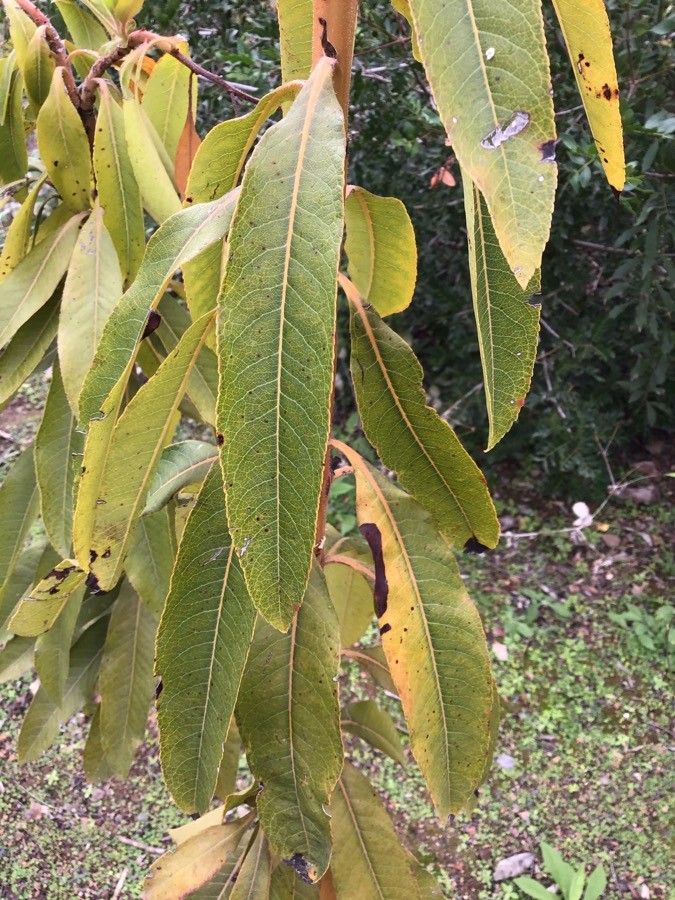
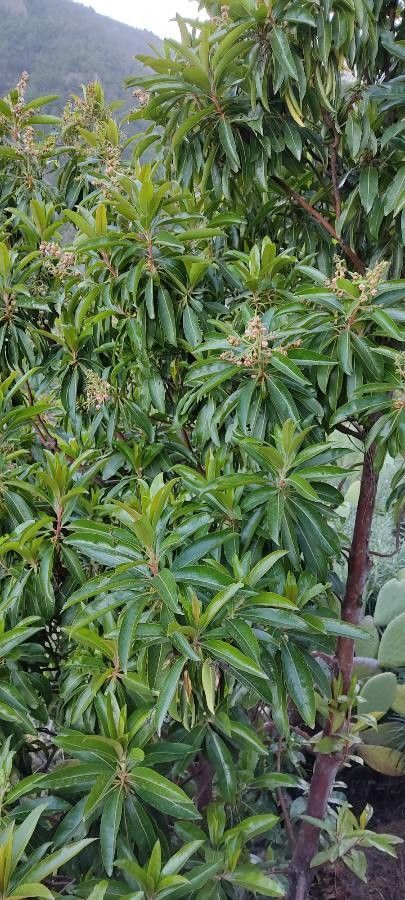
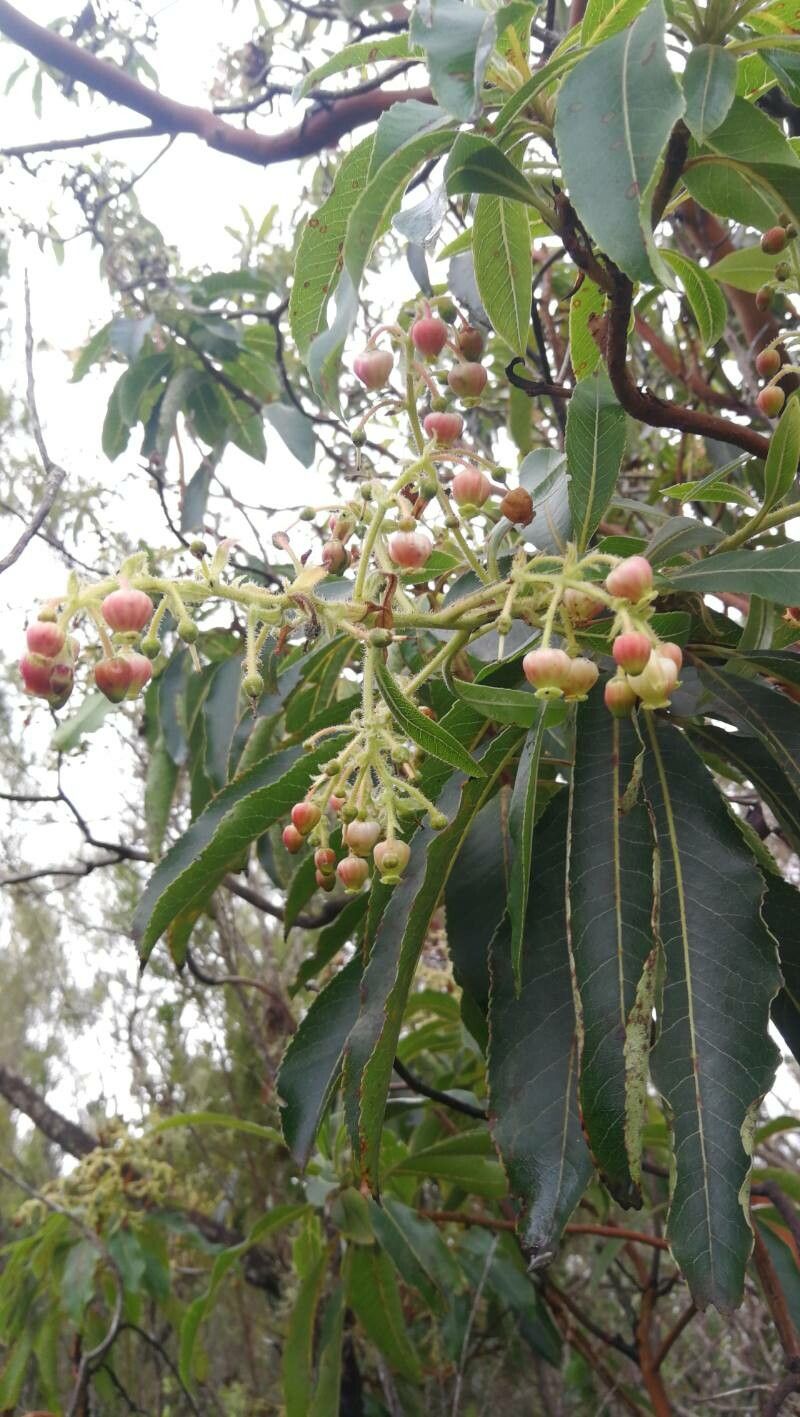
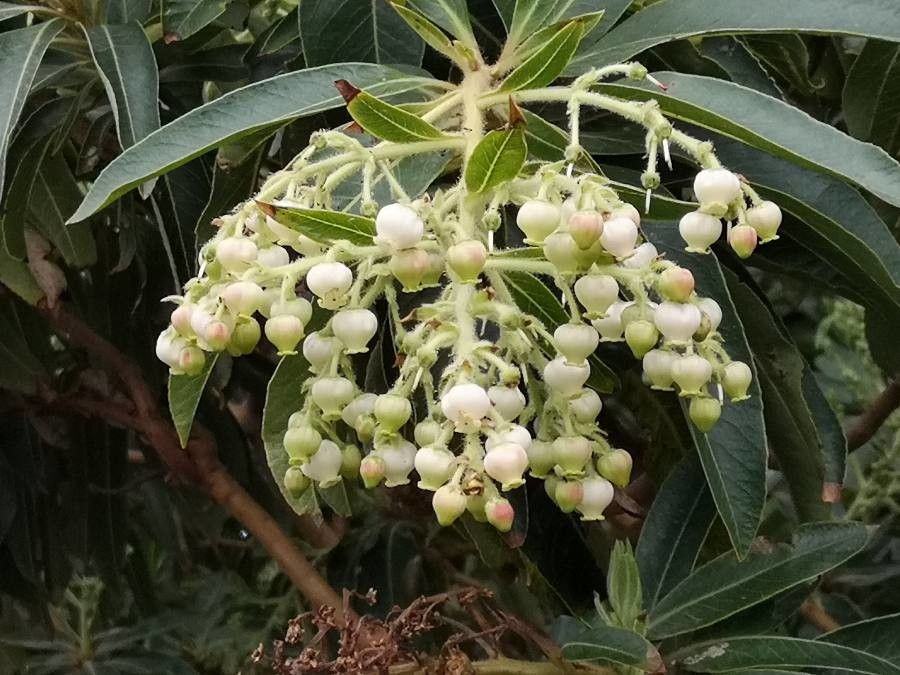
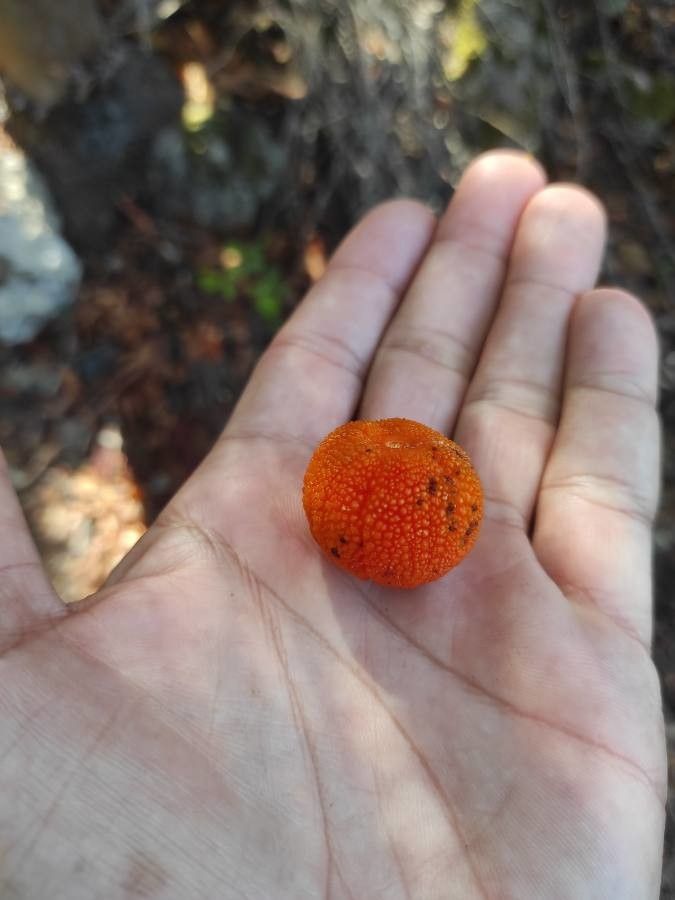
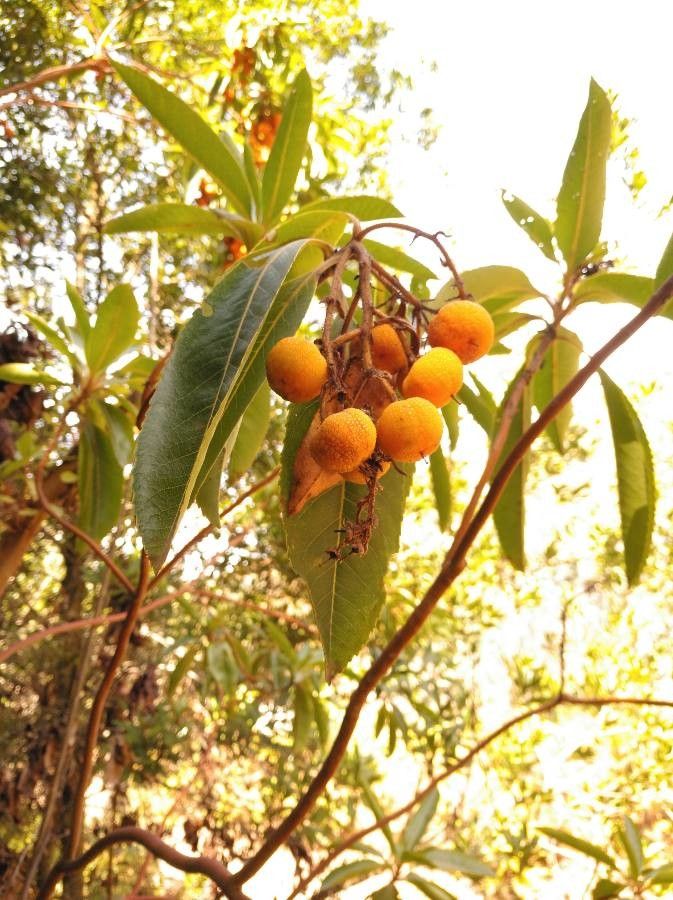
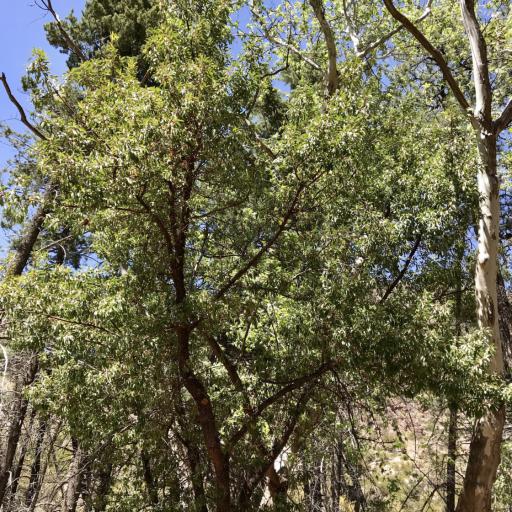
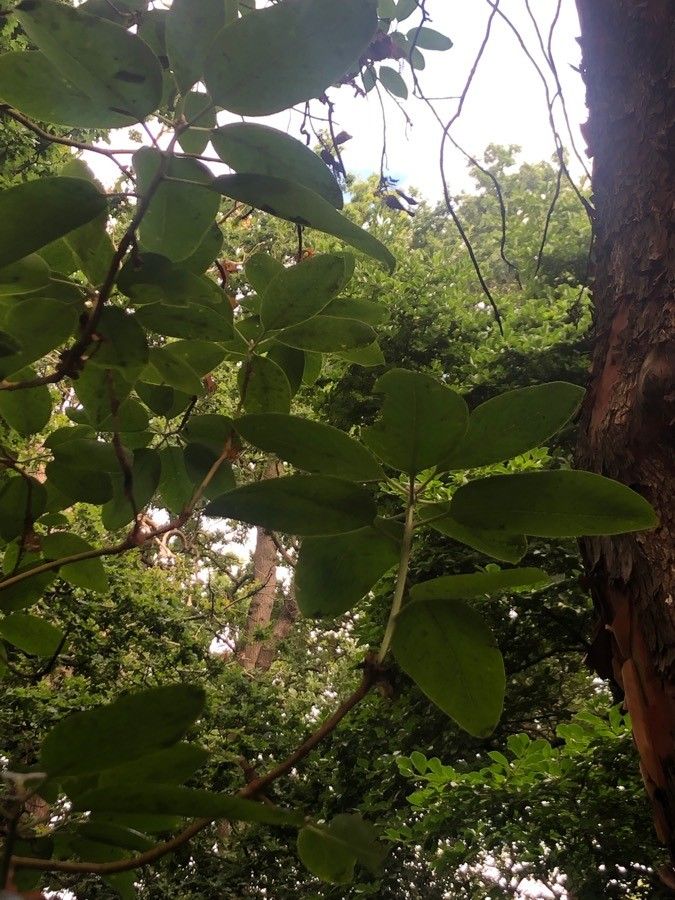
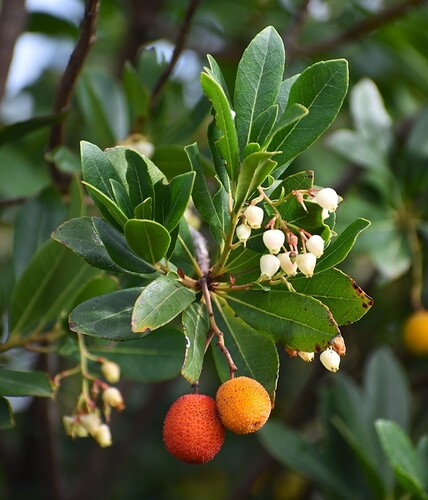
Arbutus canariensis, commonly known as the Canary Island Strawberry Tree, is a small evergreen tree or shrub native to the Canary Islands and Madeira. Belonging to the Ericaceae family, it can grow up to 10 meters tall. The tree features distinctive reddish-brown bark that peels off in thin flakes, revealing a smooth, cinnamon-colored layer beneath.
The leaves of Arbutus canariensis are dark green, glossy, and have serrated edges. During autumn, the plant produces small white or pink bell-shaped flowers, which are followed by round red berries that resemble strawberries. Although these berries are edible, they have a slightly bitter taste.
Arbutus canariensis thrives in well-drained soil with full sun exposure but also tolerates partial shade. It is drought-tolerant once established, though it requires regular watering during its first year of growth.
This plant serves several purposes, including ornamental use due to its attractive appearance. Traditionally, it has also been used for medicinal purposes, particularly for treating respiratory issues such as coughs and bronchitis.
Overall, Arbutus canariensis is a fascinating plant with unique features, making it an excellent addition to any garden or landscape design project.
Canary islands strawberry-tree displays strong resistance to disease and is typically not vulnerable to illnesses. In terms of care, the plant is fairly low-maintenance. When grown outdoors it needs only light watering, and larger specimens usually do not require pruning. Smaller plants, however, should be pruned after they have finished blooming. Canary islands strawberry-tree is suitable for anyone with an outdoor area, such as a garden or deck, and does not demand much care experience.
How to keep Arbutus Canariensis.
Light
Canary Islands strawberry-tree occurs naturally in habitats like forest understories and rocky areas, where it grows in natural shade. It prefers partial sun but can tolerate full sun or full shade, demonstrating its hardy and adaptable nature.
Temperature
Canary islands strawberry-tree is fairly adaptable to temperature, able to withstand high heat and considerable temperature fluctuations. In hot conditions, it's important to monitor watering and give suitable shade to avoid sunburn. On the other hand, the Canary islands strawberry-tree tolerates low temperatures poorly: although it can endure some cold, very low temperatures can cause frost damage.
Fertilizer
Timing is essential for feeding the Canary Islands strawberry tree. Start fertilizing in early spring and continue once a month until early summer. Fertilizer promotes attractive blooms and supplies energy during both dormant periods and active growth.
Botanical profile.
- Plant Type
- Tree
- Life Cycle
- Perennial
- Genus
- Arbutus
- Family
- Ericaceae
- Hardiness Zone
- 9-11
- Mature Height
- 4.88 m to 14.94 m
- Mature Spread
- 3.96 m to 7.92 m
- Leaf Color
- Dark Green
- Leaf Type
- Evergreen
- Flower Color
- White, Pink
- Flower Size
- 0.51 cm to 0.76 cm
- Bloom Time
- Winter
- Planting Time
- Spring, Autumn
- Harvest Time
- Mid spring, Late spring, Early summer, Mid summer
Other names.