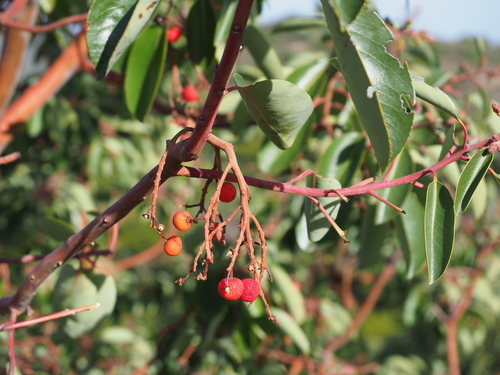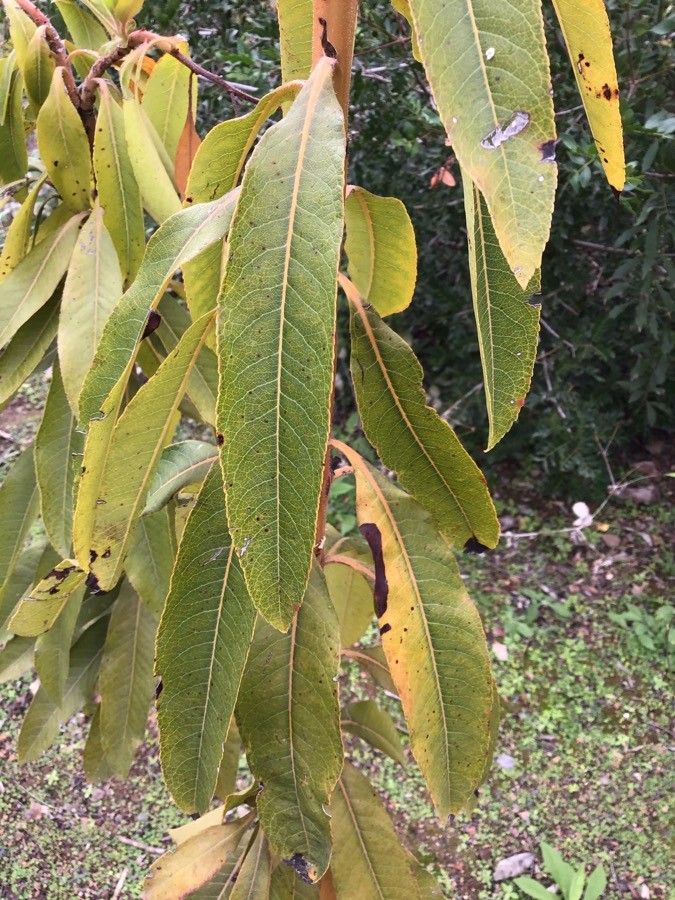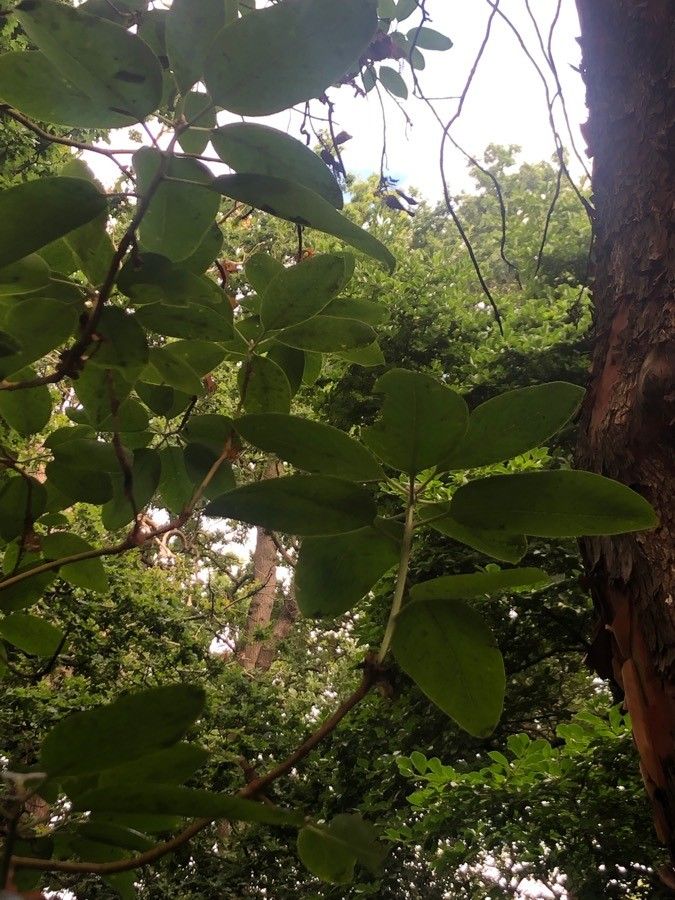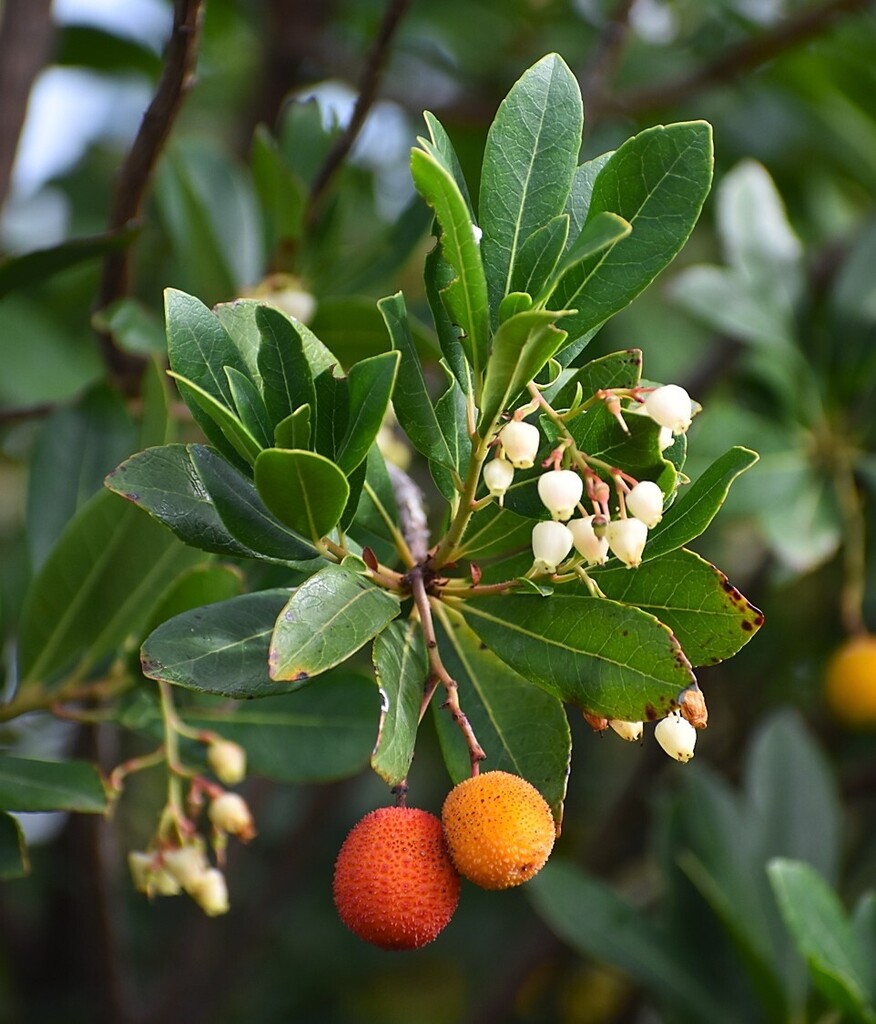
This gracefully branching evergreen shrub boasts glossy dark green foliage and striking cinnamon-colored bark. It produces abundant white flowers that give way to bright, edible, strawberry-like fruits. This low-maintenance plant provides year-round interest in western gardens. Use it as a small specimen tree to anchor a border or create an informal hedge.
The Strawberry Tree: Despite its name, this tree is not related to Fragaria ananassa, commonly known as the garden strawberry. The name likely comes from the tree's fruit, which turns a strawberry-like color as it matures and has a sweet flavor. This is why it is called the strawberry tree.
The strawberry tree has good resistance to disease and is generally not prone to illness. In terms of care, this plant is fairly low-maintenance. When grown outdoors it needs little watering, and larger specimens typically do not require pruning. Smaller plants, however, should be pruned after they have bloomed. The strawberry tree is suitable for anyone with outdoor space, such as a garden or deck, and does not require a lot of gardening experience.
How to keep Arbutus Unedo.
Light
The strawberry tree does best in abundant sunlight, though it can also prosper with some shade. Its native habitat is characterized by areas with plentiful sun. The plant’s robust growth relies on ample sunlight, while inadequate sun can result in poor vigor. Excessive exposure, however, can stress the plant.
Water
The strawberry tree, native to the Mediterranean, thrives best with occasional deep watering, as it is drought-tolerant and only needs watering every 1-2 weeks. It does particularly well outdoors, especially in coastal areas, due to its resilience to salt spray and fluctuating rainfall. These qualities make it an excellent choice for seaside gardens.
Humidity
This plant will thrive in moderate humidity, which is probably the level in your home. However, misting it a few times a week can be very beneficial. Make sure the room has good ventilation.
Temperature
Strawberry tree grows best in a moderate temperature range of 59 to 95 ℉ (15 to 35 ℃) and can tolerate some cold, surviving short periods below freezing. In warmer months it benefits from partial shade to avoid sunscorch.
Fertilizer
The strawberry tree needs adequate nutrients for optimal fruit production. Fertilize in early spring to support new growth and bloom development. Regular fertilization helps the plant remain healthy, produce more delicious fruit, and prevents nutrient deficiency problems like yellowing leaves and poor fruit production.
Pruning
The strawberry tree has evergreen leaves and produces fruits resembling strawberries. To keep the tree healthy and well-shaped, prune it from early to late spring, focusing on removing dead branches and improving air circulation. Maintain its size with light annual pruning, and avoid heavy pruning to minimize stress. Regularly inspect the tree for pests and diseases to help it stay vigorous.
Pot & Repot
When repotting Strawberry tree, choose a pot 1-2 inches (2.5–5.1 cm) larger with ample drainage. Use a well-draining potting mix. Repot in spring or fall, ensuring that the root ball is slightly lower than the rim of the flower pot. Water thoroughly after repotting and place in a warm spot with indirect sunlight.
Botanical profile.
- Plant Type
- Tree, Shrub
- Life Cycle
- Perennial
- Genus
- Arbutus
- Family
- Ericaceae
- Hardiness Zone
- 7-10
- Mature Height
- 4.88 m to 14.94 m
- Mature Spread
- 1.83 m to 4.57 m
- Leaf Color
- Green
- Leaf Type
- Evergreen
- Flower Color
- White, Pink
- Flower Size
- 0.51 cm to 0.51 cm
- Bloom Time
- Late summer, Fall, Winter
- Planting Time
- Spring, Autumn
- Harvest Time
- Early spring, Fall, Winter
- Native Area
- Libya, Tunisia, Turkey, Cyprus, Greece, Croatia, Slovenia, Morocco, Lebanon, Russia, Portugal, Italy, Spain, Albania, Ireland, Algeria, Azerbaijan, France
Other names.
Reader questions.
When Should I Water My Strawberry Tree?
Proper and timely watering is critical for the health and development of a strawberry tree. To determine when to water the plant, check the top 1 to 2 inches of soil for dryness. If the soil feels dry, it's time to water. Also, observe the leaves; wilted or yellowing leaves can indicate under-watering. If roots appear dry and shriveled, the tree needs water, especially during bud formation and in high temperatures or bright sunlight. Avoid watering when the soil is still moist to prevent root diseases, and don't delay watering too much to avoid stunted growth or plant death. Recognizing these signs will help manage the tree's watering schedule effectively.
When should I fertilize my Strawberry tree?
The best time to fertilize a Strawberry tree is in early spring, before the buds emerge. During this time, the tree uses the stored reserves from winter to grow. To support the development of blooms, it's recommended to fertilize about 2 to 4 weeks before expected blooming, allowing enough time for the nutrients to be absorbed and dispersed throughout the plant. While you can continue to feed the Strawberry tree during spring, it's advisable not to fertilize in autumn as it may cause excessive foliage growth late in the season, making the leaves vulnerable to winter damage.
What are the sun requirements for a strawberry tree?
The strawberry tree requires generous amounts of sunlight to thrive but also does well with some shade. Its natural habitat suggests a preference for abundant sunlight. For optimal growth, ensure the plant receives ample sun, as insufficient sunlight may lead to poor vitality, while overexposure could stress the plant. It's described that full sun corresponds to above 6 hours of sunlight, and partial sun is about 3-6 hours. Observing the movement of sunlight through your garden to find the ideal balance of light and shade is recommended to ensure the health and happiness of your plants.
What temperature conditions are ideal for a Strawberry Tree?
The Strawberry Tree thrives in a moderate temperature range of 59°F to 95°F (15°C to 35°C) and can tolerate some cold, surviving short periods of below freezing temperatures. It has strong cold resistance, meaning special frost protection measures are usually not necessary. However, in warmer months, it benefits from some shade to avoid sunscorch.
How Should I Water My Strawberry Tree?
The strawberry tree should be watered deeply and infrequently, allowing the soil to dry out slightly between waterings. It benefits from bottom-watering, where the pot is placed in water, allowing roots to absorb moisture from the bottom. Misting the foliage can increase humidity and keep leaves hydrated, but avoid overdoing it to prevent fungal diseases. Use a watering can with a narrow spout for precise watering. A moisture meter can help you gauge when the tree needs water. Focus on the root zone and avoid excessive moisture on the foliage to prevent disease. Ensure the pot has good drainage and consider watering in the morning to allow any excess moisture to evaporate during the day.
Why is it necessary to fertilize my Strawberry tree?
The growth of plants can lead to a depletion of soil nutrients, especially for fast-growing types like the Strawberry tree. Regular fertilization is important to provide these plants with the necessary nutrients. This not only helps them stay healthy but also promotes the growth of delicious fruit. If plants are not fertilized for an extended period, they can face various problems. Nutrient deficiency can result in issues with foliage, such as yellow leaves. Other symptoms may include reddish coloring, deformities in leaf shape, withered tips, or large portions of the plant dying back. Some nutrient deficiencies can also affect the bark, causing disorders, slow growth, poor shoot development, and a lack of fruit production.
How important is artificial lighting for indoor strawberry trees?
Artificial lighting becomes crucial when natural sunlight is inadequate, especially during winter or in spaces that receive less sunlight. It promotes faster, healthier growth. For indoor strawberry trees, choosing the right type of artificial light (such as LED lights) is advised, as they can offer tailored wavelengths needed for plant growth. Full sun plants require 30-50W/sq ft of artificial light, partial sun plants need 20-30W/sq ft, and full shade plants require 10-20W/sq ft. It's important to position the light source 12-36 inches above the plant and ensure it receives 8-12 hours of light per day to mimic natural daylight hours properly.
How to protect a Strawberry Tree during extremely cold winters?
If winter temperatures are expected to drop significantly, it's important to provide cold protection to the Strawberry Tree. This can be achieved by wrapping the trunk and branches with materials such as non-woven fabric or cloth. Additionally, before the first freeze in autumn, it is recommended to water the plant abundantly to ensure the soil remains moist and enters a frozen state, helping prevent drought and water scarcity during winter and early spring.
How Much Water Does a Strawberry Tree Really Need?
A strawberry tree's water needs depend on its size and the pot size. For small trees in a 6-inch pot, about 1/2 to 1 cup (120-240 ml) per watering session is sufficient. Larger trees in a 12-inch pot may need 2-3 cups (480-720 ml) per session. Observe the tree's leaves and growth for signs of proper hydration. Overwatering can cause leaves to yellow or brown, while underwatering can lead to wilting. It's crucial to allow the soil to dry out partially between watering sessions but avoid complete dryness. Using well-draining soil and ensuring proper drainage can help maintain optimal hydration.
When is it not a good time to fertilize my Strawberry tree?
When growing a Strawberry tree, it's best to avoid fertilizing it in the first year. Even after that, be careful about using fertilizer unless it is necessary. If you pruned 20% or more of the plant the previous year, do not fertilize it. It's also important to refrain from fertilizing plants that are diseased or damaged, as it can cause more harm than good. Instead of using fertilizer as a solution, focus on identifying and addressing the underlying issue. During the summer, avoid fertilizing the Strawberry tree as it can lead to excessive growth right before winter. Additionally, refrain from fertilizing during hot and dry periods, as dry soil does not effectively deliver the nutrients and this can stimulate further growth that may require more water than available. It's best to apply fertilizer earlier in the season when temperatures are cooler. Lastly, take care not to inadvertently provide a double-dose of fertilizer by applying it to nearby plants or lawns that can be absorbed by the Strawberry tree.
What are some common symptoms of inadequate light in strawberry trees?
If a strawberry tree doesn't receive enough light, several symptoms may manifest, including the growth of smaller and lighter-colored new leaves, leggy or sparse growth, and faster leaf drop as the plant conserves resources. Inadequate light can halt the plant's growth completely. Overexposure to sunlight can also cause chlorosis (leaves turning yellow), sunscald, wilting, leaf curling, and leaf scorching, showing the plant's struggle to adapt to its lighting conditions.
What are the symptoms of a Strawberry Tree being exposed to temperatures too low or too high?
When the Strawberry Tree is exposed to temperatures below its cold tolerance, although there may not be noticeable changes during winter, the branches may become brittle and dry during springtime, and no new shoots will emerge. In contrast, when exposed to temperatures above its heat tolerance, the leaves may become lighter in color, the tips may dry and wither, and the plant may become susceptible to sunburn.