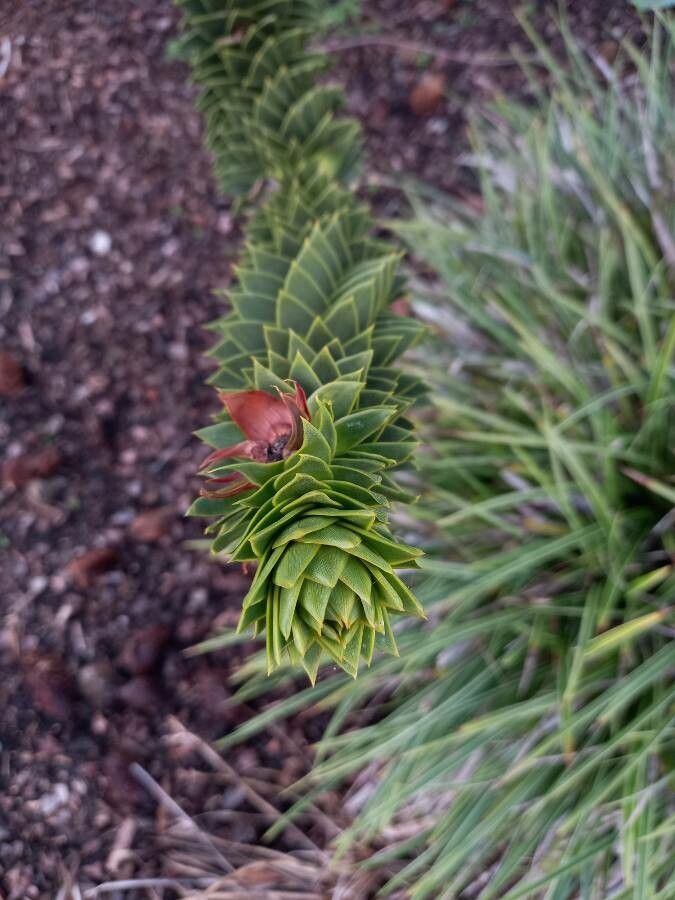
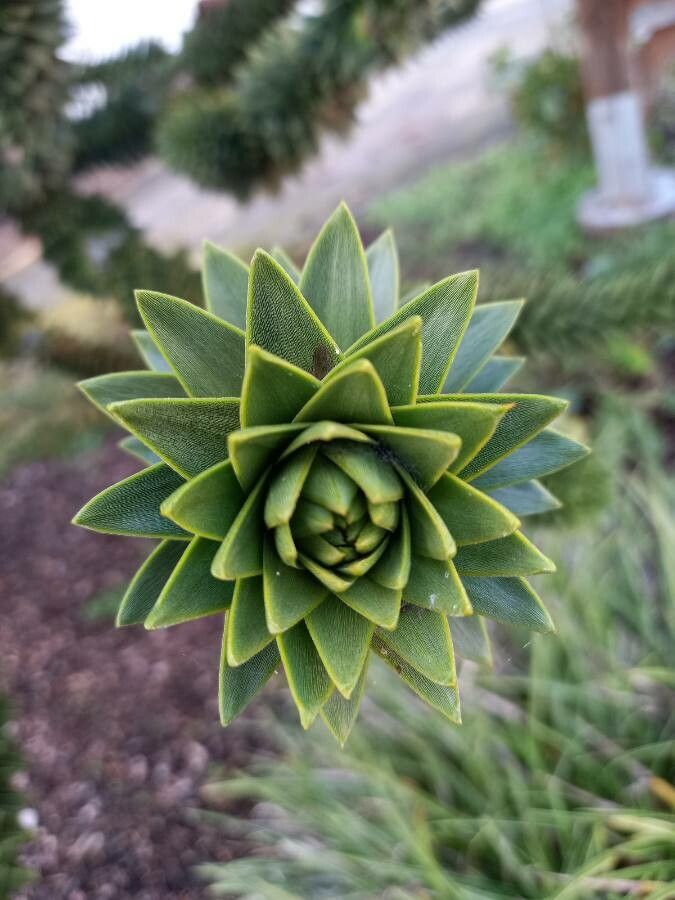
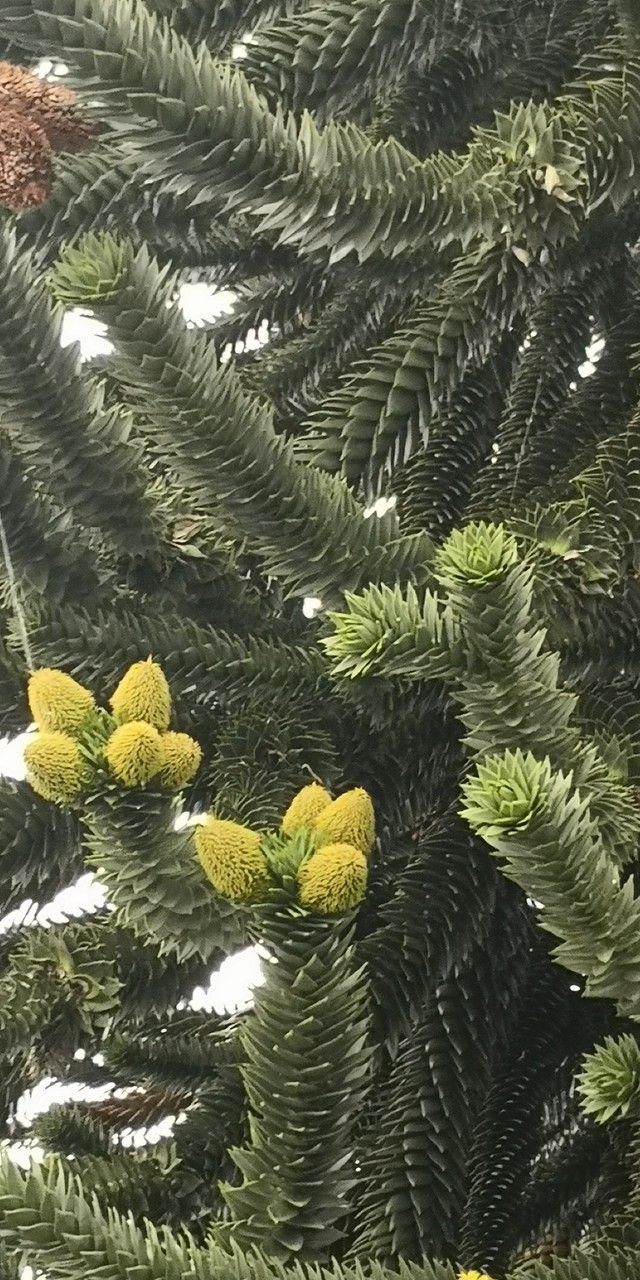
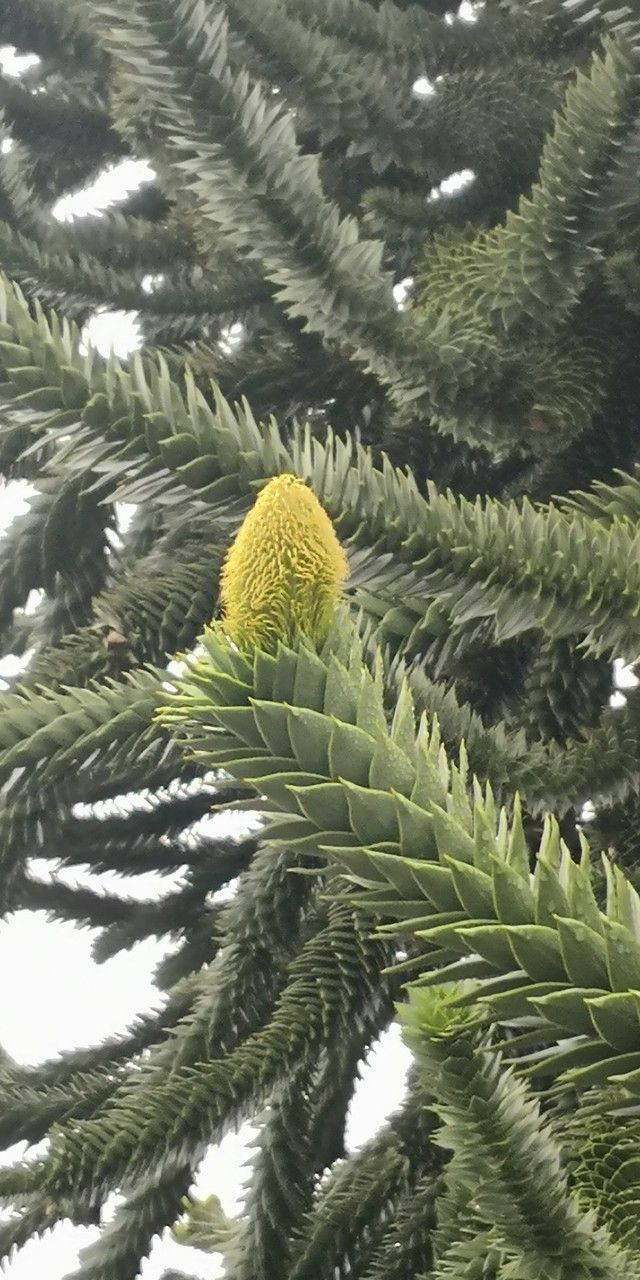
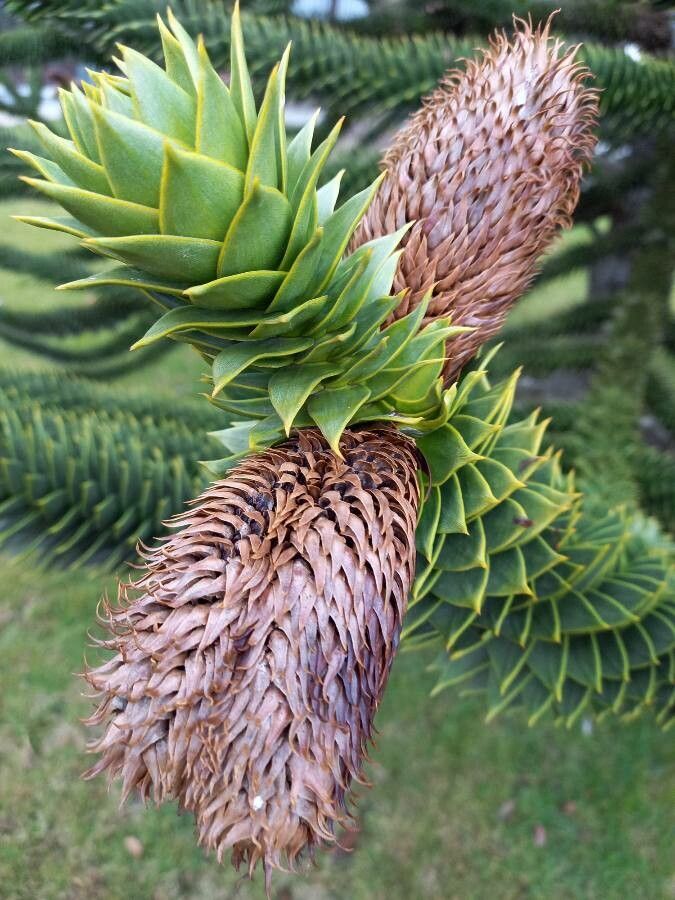
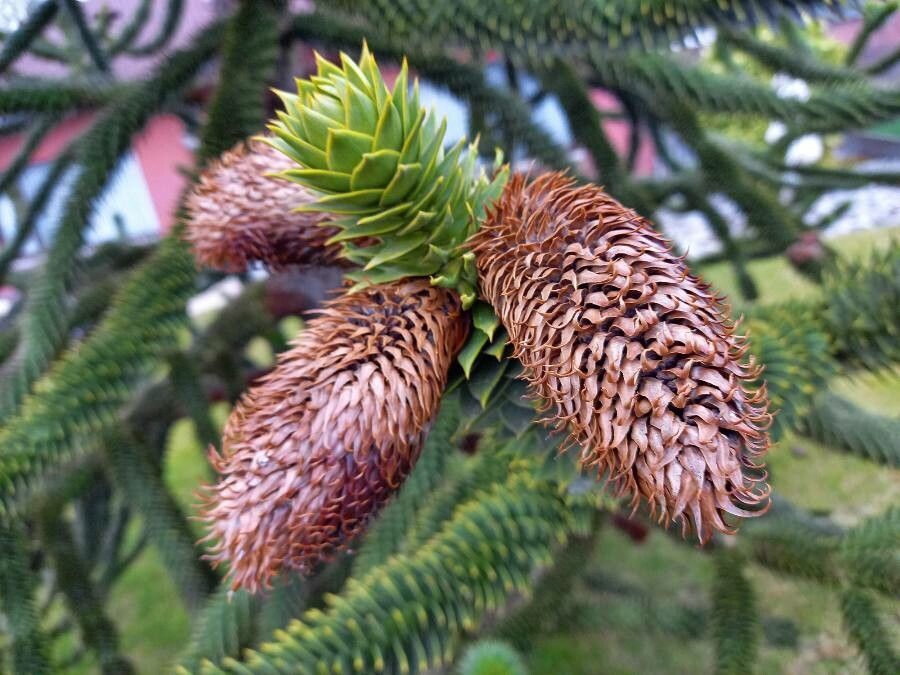
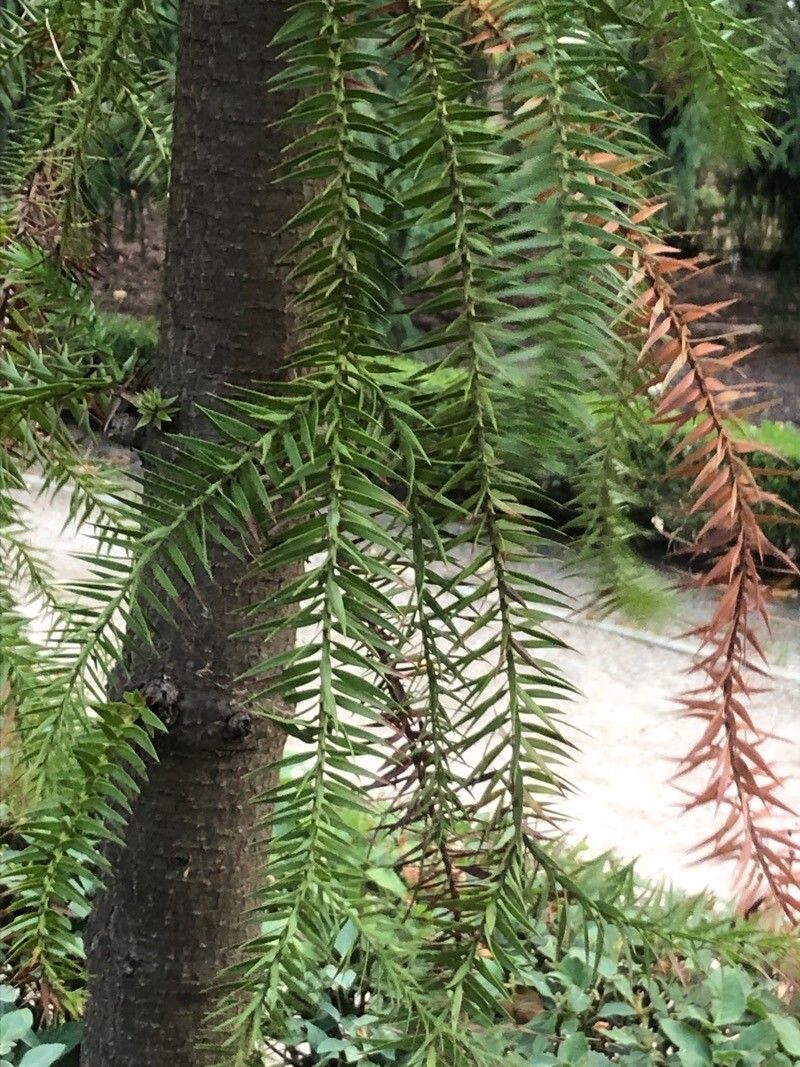
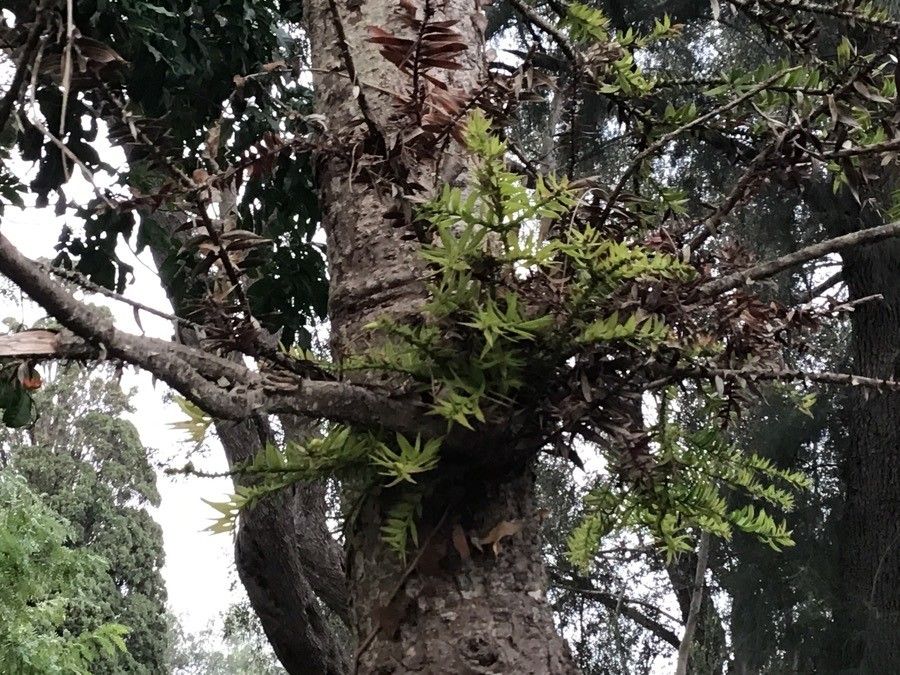
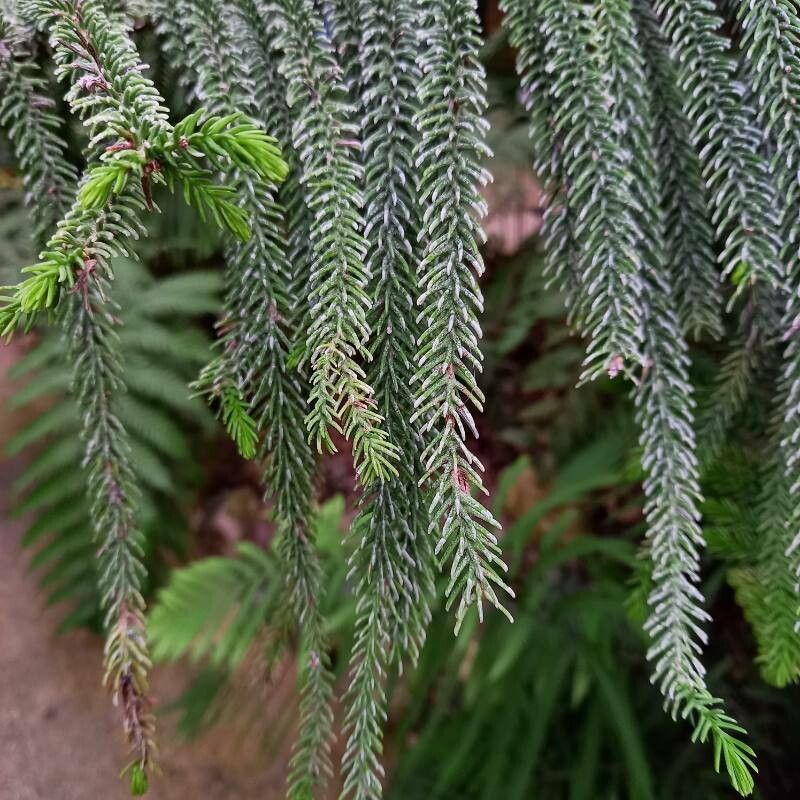
Araucaria araucana, commonly known as the monkey puzzle tree, is a slow-growing evergreen tree native to the Andes Mountains of South America. This tree belongs to the ancient Araucariaceae family and can live for over 1,000 years. Its distinctive appearance is marked by symmetrical branches and sharp-pointed leaves that grow in whorls around the stem. The bark is thick, scaly, and deeply fissured, which contributes to its aged appearance. The monkey puzzle tree produces both male and female cones on separate branches. The female cones are large, reaching up to 20 cm in diameter, and take up to three years to mature before releasing seeds. While these seeds are edible, they have a bitter taste. The Araucaria araucana holds cultural significance for indigenous people in South America. They use its wood for building homes and making furniture, as well as for ceremonial purposes. Recently, this species has become endangered due to deforestation caused by logging, land conversion for agriculture, and urban development. Overall, Araucaria araucana is an iconic species known for its unique appearance and cultural importance. However, it is threatened by human activities such as deforestation, making conservation efforts crucial to preserving this ancient plant species.
Monkey puzzle tree is resistant to disease and is generally not likely to suffer from illnesses. Regarding care, this plant is fairly low-maintenance. When grown outdoors it needs only minimal watering, and larger specimens typically do not require pruning. Smaller plants, however, should be pruned after they have finished blooming. Monkey puzzle treet is appropriate for anyone with an outdoor space, such as a garden or deck, and does not demand a great deal of care experience.
How to keep Araucaria Araucana.
Light
The monkey puzzle tree does best with intense, prolonged exposure to sunlight, though it can still grow with only limited light. Native to regions with plentiful sun, the tree may show slower growth or diminished health if it does not receive sufficient light. Too much sun, however, is not a major hazard.
Water
The monkey puzzle tree, native to the temperate rainforests of South America, thrives with regular moisture and can tolerate moderate drought conditions. To replicate its natural rainfall cycle, it should be watered every two weeks. Usually grown outdoors, this tree flourishes in areas where abundant rainfall supports its vigorous growth.
Temperature
The monkey puzzle tree prefers temperatures between 68 and 100 ℉ (20 to 38 ℃) and is native to the cooler mountainous areas of South America. In winter it can withstand temperatures as low as 23 ℉ (-5 ℃) if given proper protection, such as mulching the roots and wrapping the trunk in burlap.
Fertilizer
Monkey puzzle tree has particular nutrient needs and does not require heavy fertilization. Spring is the ideal time to fertilize to promote optimal growth. Supplying nutrients enhances its health, increases its resistance to pests and diseases, and helps maintain its long lifespan.
Pruning
The Monkey Puzzle tree, famous for its spiky leaves, benefits greatly from careful pruning during its dormant period, which occurs from early to late winter. Removing dead branches helps improve airflow and overall health. However, it's important to avoid heavy pruning to minimize stress on the tree. This careful pruning not only enhances the tree's shape but also reduces the risk of disease and increases its vitality.
Pot & Repot
When repotting a Monkey puzzle tree, choose a pot 1–2 inches (2.5–5.1 cm) larger with ample drainage. Use a well-draining potting mix. Repot in spring or fall, ensuring that the root ball is slightly lower than the rim of the flower pot. Water thoroughly after repotting and place in a warm spot with indirect sunlight.
Toxicity
The Monkey Puzzle tree is not toxic, the seeds are edible and are farmed in Chile. They taste much like a pine nut.
Further reading →
The toxicity and danger assessments provided are for reference only. We do not assure their accuracy, so it's crucial not to depend on them. Seek professional advice when necessary for accurate guidance.
Botanical profile.
- Plant Type
- Tree
- Life Cycle
- Perennial
- Genus
- Araucaria
- Family
- Araucariaceae
- Hardiness Zone
- 9-11
- Mature Height
- 14.94 m to 24.08 m
- Mature Spread
- 6.1 m to 9.14 m
- Leaf Color
- Green
- Leaf Type
- Evergreen
- Flower Color
- Green, Yellow, Brown
- Bloom Time
- Early summer, Mid summer
- Planting Time
- Spring, Autumn
- Harvest Time
- Mid summer, Late summer, Early fall
- Native Area
- Argentina, Chile
Other names.
Reader questions.
How should I water my Monkey puzzle tree?
You can water your Monkey puzzle tree using any common watering tool like watering cans, hoses, or cups. It's important to apply the water directly to the soil and make sure all areas are evenly moistened to provide adequate water to the root system. Filtered water is recommended to avoid harmful particles, and using water at or slightly above room temperature is beneficial as extreme temperatures can be shocking for the tree. However, the Monkey puzzle tree generally responds well to any type of water.
Why should I give fertilizer to my Monkey puzzle tree?
To promote healthy growth of the Monkey puzzle tree, it is recommended to fertilize it in the spring. Keep in mind that this plant has a long lifespan and requires support. Adding nutrients to the soil not only enhances the plant's overall health but also boosts its resistance to common pests and diseases that can hinder growth or reduce its lifespan.
What are the sunlight requirements for a Monkey Puzzle Tree?
The Monkey Puzzle Tree requires full sun exposure to thrive, benefiting from more than 6 hours of direct sunlight daily. However, it can also grow under partial sun conditions, which means about 3-6 hours of sunlight each day. It's crucial to observe how sunlight moves through your garden to find the ideal spot that provides a balance of light and shade, ensuring the tree's wellbeing.
What is the preferred temperature range for a Monkey Puzzle Tree?
The Monkey Puzzle Tree (Araucaria araucana) thrives in a temperature range of 68 to 100°F (20 to 38°C). Originally from the cooler mountainous regions in South America, it can also endure lower winter temperatures as low as 23°F (-5°C) with proper care, which includes mulching the roots and wrapping the trunk in burlap to protect it from cold.
What should I do if I give too much or too little water to my Monkey puzzle tree?
Outdoor plants, especially newly planted ones or seedlings, are prone to lack of watering. It's important to consistently water them for a few months after planting, as they rely on rain once their roots are established. However, when Monkey puzzle trees are planted in pots, overwatering is more likely to occur. If you accidentally overwater your Monkey puzzle tree, there are steps you can take to remedy the situation. First, stop watering the plant immediately to minimize the negative effects. Then, remove the tree from its pot to inspect the roots. If no root rot is present, you can return the plant to its container. If root rot is found, trim away affected roots and apply a fungicide. Finally, repot the tree in well-draining soil. On the other hand, underwatering is a simple problem to fix. If you notice drooping, drying leaves, water the plant more frequently and the leaves will regain their fullness. Adjust your watering frequency as soon as you notice underwatering.
When should I fertilize my Monkey puzzle tree?
The growing medium may not provide sufficient nutrients for healthy growth. Nevertheless, the Monkey puzzle tree is unique compared to your garden annuals and perennials, as it doesn't need a significant amount of extra nutrients. For this tree, the ideal time to fertilize is in the spring, prior to the emergence of new growth.
How does insufficient sunlight affect the growth of a Monkey Puzzle Tree?
A Monkey Puzzle Tree can sustain growth with marginal sunlight but is originally from habitats with abundant sunlight. Insufficient sun exposure may lead to slower growth rates or weakened health. Although excessive sunlight isn't a significant threat, optimal sun exposure ensures better growth and health of the tree.
How should a Monkey Puzzle Tree be cared for during cold weather?
In colder climates, especially during winter, it's crucial to protect the Monkey Puzzle Tree from freezing temperatures. Recommendations include bringing outdoor-grown trees indoors, placing them near a bright but not too close to heaters to avoid a drastic temperature increase. Maintaining an indoor temperature above 20°C is beneficial for the tree's health, as temperatures nearing 0°C could be harmful.
How frequently do I need to water my Monkey puzzle tree?
Most outdoor plants can rely on rainfall for their water needs. However, if your area lacks rainfall, you should water your plants every 2 weeks in the spring and fall. In the summer, more frequent watering is necessary. During the slower growth period of winter, water sparingly or not at all. If you have a young or newly planted Monkey puzzle tree, it will need more frequent watering to establish and grow. When it comes to potted plants, there are two main approaches to determine watering frequency for your Monkey puzzle tree. The first is to follow a predetermined watering schedule, such as once a week or every other week. However, this may not consider the specific conditions of your plant's environment. The other approach is to base watering frequency on soil moisture. Wait until the top 2 to 4 inches of soil in the pot have completely dried before watering again. This method may require more frequent watering during the summer when the plant needs more water.
When is the best time to not add fertilizer to my Monkey puzzle tree?
The Monkey puzzle tree differs from other plants in its fertilization needs. Unlike plants that benefit from regular fertilization, the Monkey puzzle tree does not require large amounts of nutrients. In fact, using too much fertilizer can harm it and lead to dying back. It's best to only apply fertilizer in the spring and avoid adding any in the summer, fall, and winter seasons. Additionally, refrain from introducing any organic matter to the soil during these times.
What is the importance of artificial lighting for indoor Monkey Puzzle Trees?
Artificial lighting is crucial for indoor Monkey Puzzle Trees, especially when natural sunlight is inadequate, such as during winter or in less sunny spaces. LED lights are recommended due to their ability to provide specific wavelengths needed for plant growth. For full sun plants, 30-50W/sq ft of artificial light is needed; partial sun plants require 20-30W/sq ft, and full shade plants need 10-20W/sq ft. The light source should be placed 12-36 inches above the plant for 8-12 hours per day to mimic natural sunlight.
What are the symptoms of a Monkey Puzzle Tree being exposed to low temperatures?
Exposure to low temperatures can be detrimental to a Monkey Puzzle Tree, resulting in symptoms like leaves lightening in color when temperatures fall below -5°C. Post-frost, the foliage may turn brown or black, and signs of wilting or drooping could appear. To mitigate damage, affected parts should be trimmed, and the tree should be moved to a warmer, sunlit spot indoors, ensuring it's not too close to heaters or air conditioning vents to avoid air dryness.