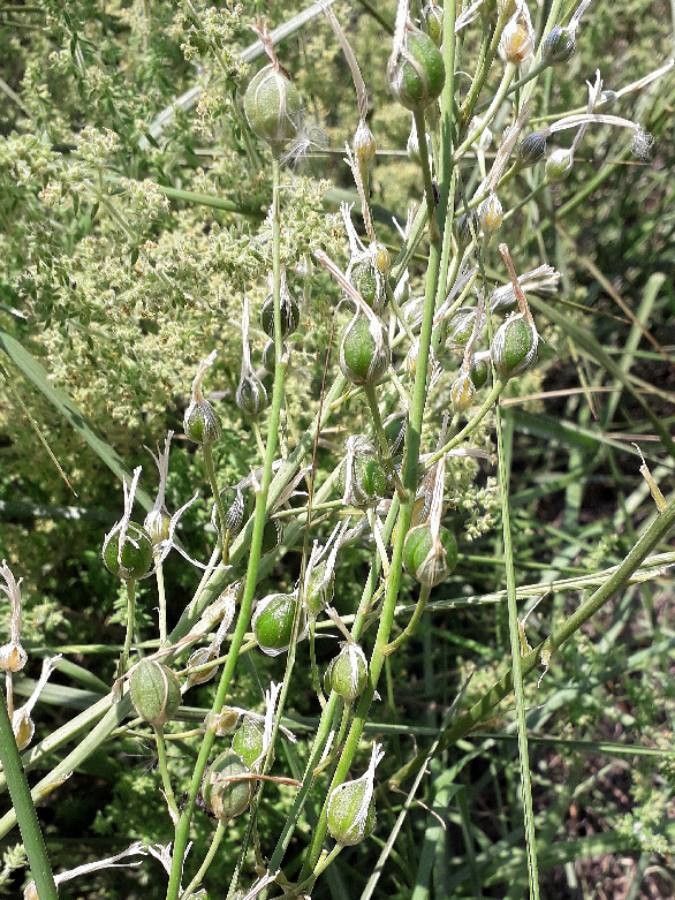
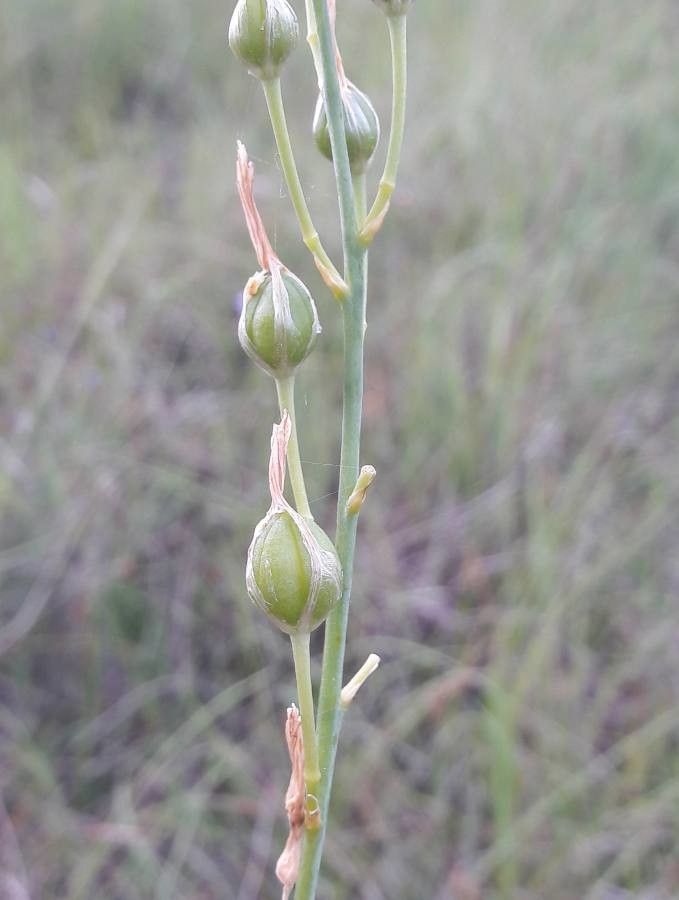
Anthericum liliago, commonly known as St. Bernard's lily or St. Bernard's rod, is a perennial herbaceous plant in the Asparagaceae family. Native to Europe and Asia, it thrives in meadows, grasslands, and open woodlands.
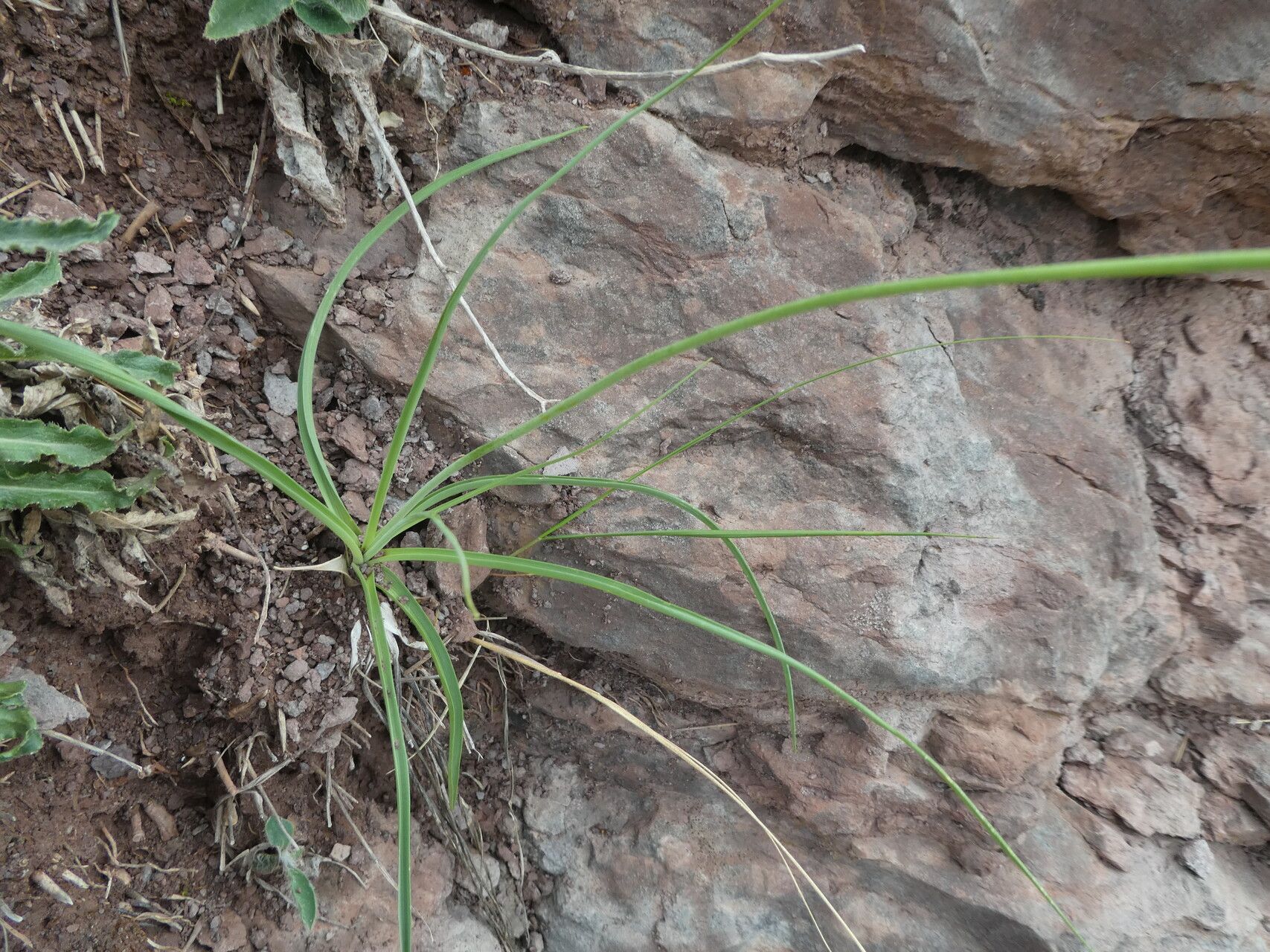
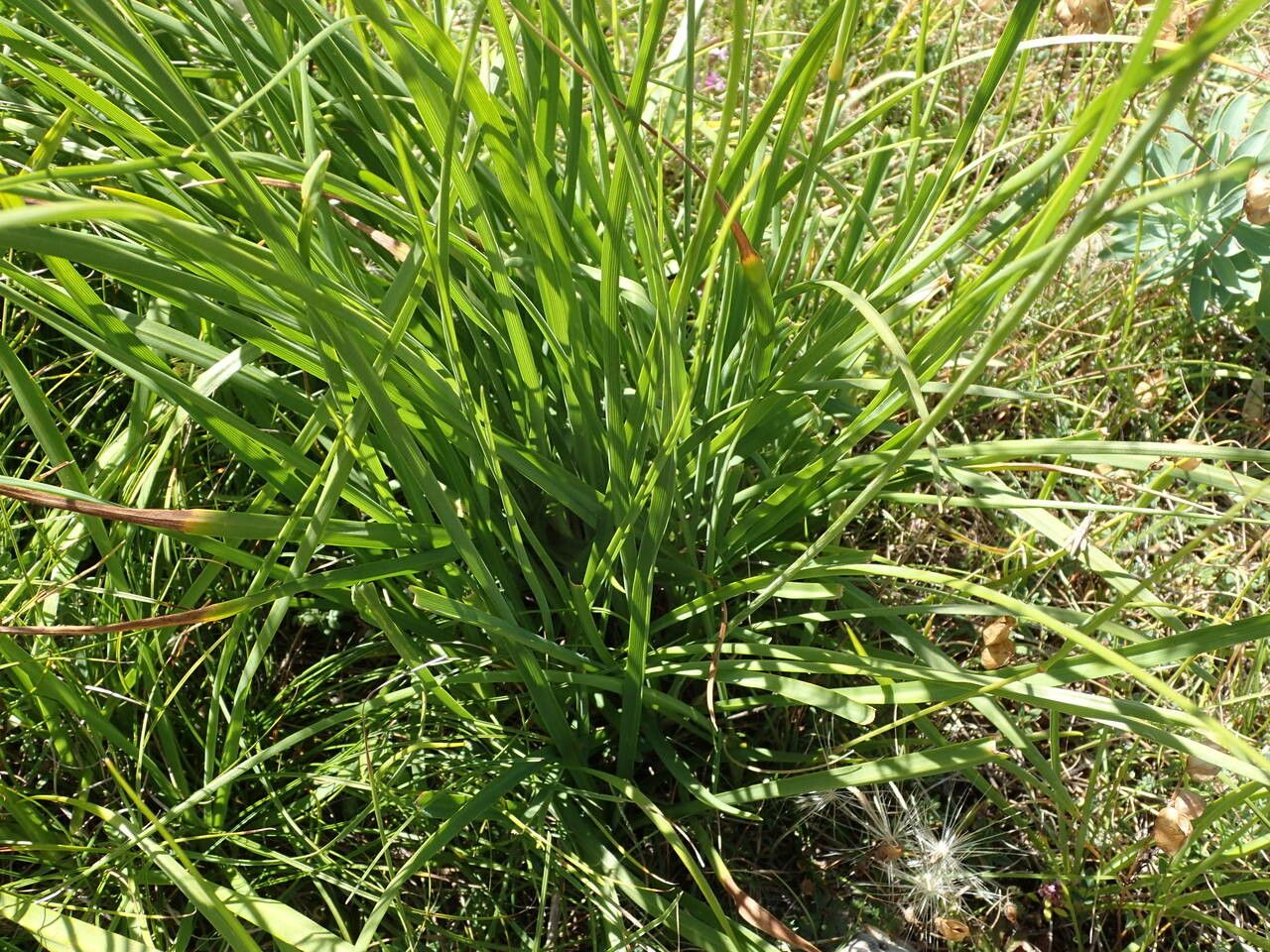
The plant typically reaches a height of up to 60 cm, with long, narrow leaves arranged in a basal rosette. These dark green leaves, marked by prominent veins, can also extend up to 60 cm in length.
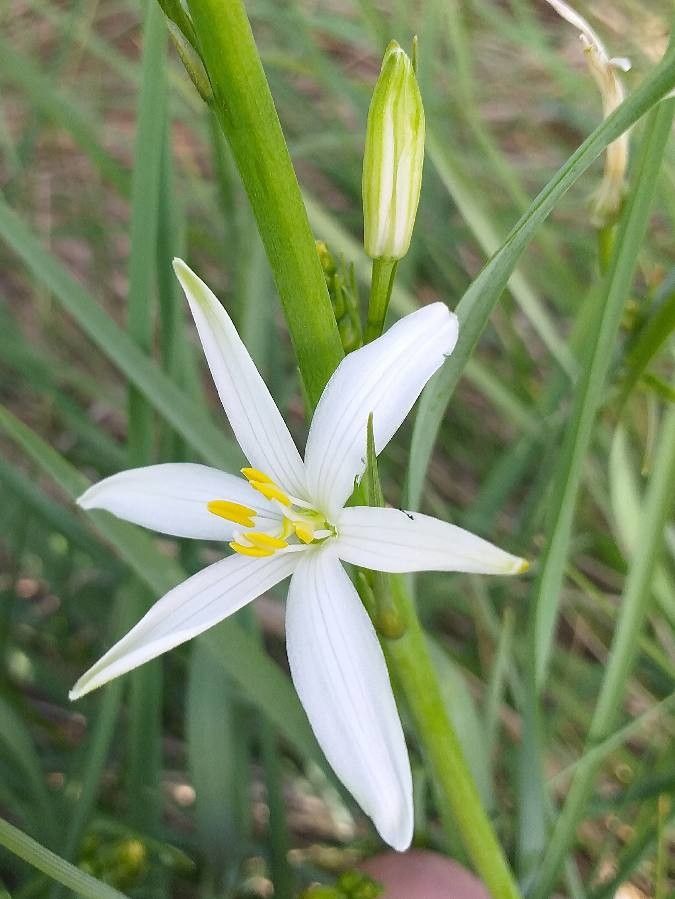
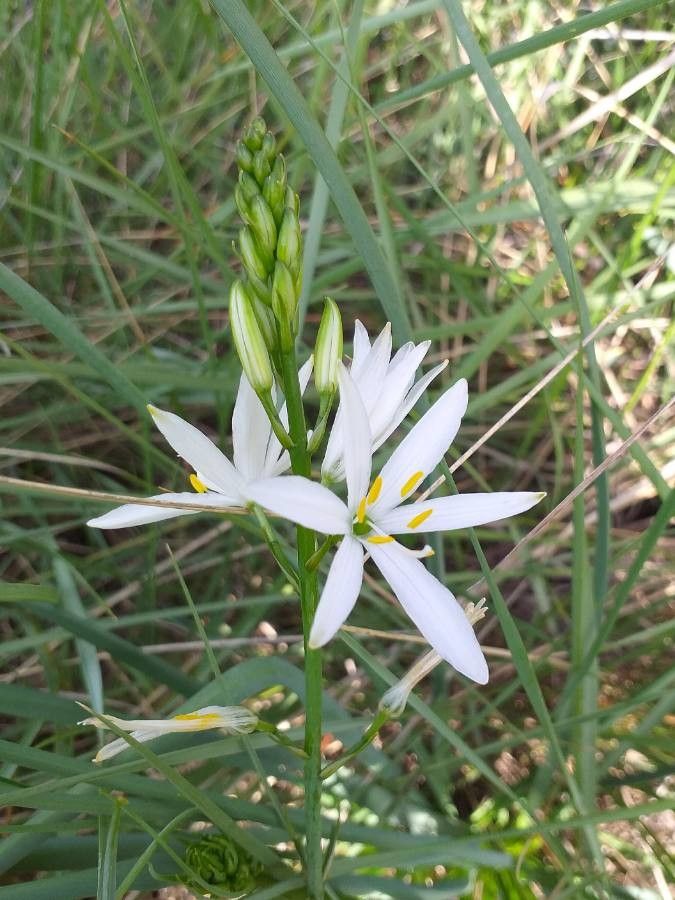
Anthericum liliago features white or pale pink flowers, each displaying six petals in a star-shaped arrangement. These blooms appear from May to July, perched on tall stems that rise above the foliage.
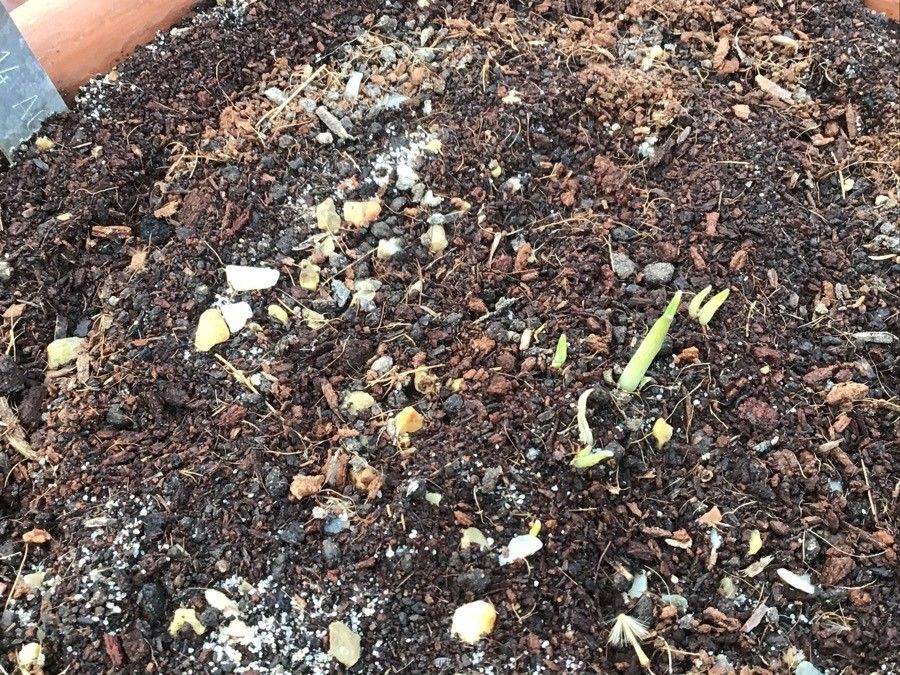
Easy to cultivate, Anthericum liliago prefers well-drained soil and can thrive in full sun or partial shade. It can be propagated through division of the rhizomes or by sowing seeds.
In traditional medicine, Anthericum liliago has been valued for its diuretic properties and its effectiveness in treating respiratory issues such as coughs and bronchitis.
Overall, Anthericum liliago is an attractive ornamental plant that enhances any garden's beauty while offering medicinal benefits when used appropriately under medical supervision.
St. Bernard's lily is largely disease-resistant and typically not susceptible to illnesses. That said, it can be affected by pests and diseases found in its surroundings. These infections are generally mild. With respect to care, this plant needs moderate maintenance. It should be pruned regularly to keep a neat appearance and support healthy growth. Fertilizing can also help encourage flowering. St. Bernard's lily is appropriate for anyone who has outdoor space, like a garden or patio, and does not demand extensive gardening experience. When grown indoors, it may require more attention.
How to keep Anthericum Liliago.
Light
St. Bernard's lily grows best in open, plentiful sunlight, mirroring the intensely sunlit conditions of its native habitat. Too little light can impede its healthy development, while too much may scorch the foliage. Therefore, maintaining a balanced amount of sun is essential for its optimal growth.
Water
St. Bernard's lily flourishes in European grasslands, where it prefers moderate moisture levels and can tolerate short periods of dryness. Watering the plant once a week is usually enough to maintain a steady supply of water without over-saturating the soil. During its active growing season, using rainwater can be particularly beneficial for this herbaceous perennial, which is commonly cultivated outdoors.
Temperature
St. Bernard's lily naturally grows in regions where temperatures generally lie between 41 and 95 °F (5 to 35 °C). The plant prefers warmth and does well within that temperature band. Seasonal variations may mean you need to alter indoor conditions to replicate that temperature range.
Fertilizer
For St. Bernard's lily, the primary time to apply fertilizer is in early spring when the flowers are forming. The correct fertilizer promotes better blooms and helps the lily produce attractive flowers. Fertilizing in early spring ensures strong flowering during the season and supplies energy for its dormant growth phases.
Pruning
To keep St. Bernard's lily healthy and attractive, it's best to prune it from early to late spring. This involves removing old flowers and dead leaves. Pruning helps improve air circulation, reduces the risk of diseases, and encourages strong blooming. Additionally, it helps maintain the plant's shape and overall health, enhancing its ornamental value throughout the growing season.
Botanical profile.
- Plant Type
- Herb
- Life Cycle
- Perennial
- Genus
- Anthericum
- Family
- Asparagaceae
- Hardiness Zone
- 4-9
- Mature Height
- 46 cm to 61 cm
- Mature Spread
- 49 cm
- Leaf Color
- Green
- Leaf Type
- Deciduous
- Flower Color
- White
- Flower Size
- 3.81 cm
- Bloom Time
- Mid spring, Late spring, Early summer
- Planting Time
- Spring
- Harvest Time
- Mid summer, Late summer, Early fall
- Native Area
- Turkey, Sweden, Austria, Czech Republic, Slovakia, Montenegro, Bulgaria, Poland, Greece, Croatia, Serbia, Hungary, Germany, Italy, Spain, Switzerland, Denmark, Netherlands, France, Albania, Romania, Belgium, Portugal
Other names.
Reader questions.
How should I water my St. Bernard's lily?
To properly care for the St. Bernard's lily, it is best to use filtered water at room temperature or slightly warmer. Tap water may contain harmful particles. This plant prefers warm temperatures, so cold water can be a shock. Avoid overhead watering as it can cause problems with the foliage. Instead, water the soil directly and make sure it is completely soaked. This helps the roots spread and collect nutrients.
Why do I have to give food to my St. Bernard's lily plant?
Fertilization is important for the St. Bernard's lily for a few reasons. Firstly, it provides essential nutrients for the plant's growth above and below ground. However, the St. Bernard's lily doesn't require a lot of fertilizer overall. While it can sometimes survive without fertilization, annual fertilization can greatly benefit the plant, ensuring its survival and promoting the production of longer-lasting, more beautiful flowers. Therefore, those wanting their St. Bernard's lily to thrive should consider regular fertilization.
What are the sunlight requirements for St. Bernard's lily?
St. Bernard's lily requires full sun, which is above 6 hours of sunlight to thrive. It is essential to observe how sunlight moves through your garden to choose spots that offer a perfect balance of light and shade, ensuring the plant's happiness. Originating from intensely sunlit habitats, St. Bernard's lily needs unobstructed and abundant sunlight exposure for optimal growth. Insufficient light can hinder its growth, while too much sun can scorch its foliage, making solar balance vital.
What is the ideal temperature range for St. Bernard's lily?
St. Bernard's lily thrives in temperatures ranging from 41 to 95 °F (5 to 35 °C). It enjoys the warmth within this temperature range. To maintain its health and growth, adjustments may need to be made when growing it indoors to replicate these optimal conditions. Despite its strong cold resistance, in areas where winter temperatures fall below -30°C, it is advised to take measures to protect the plant from the cold. This can include covering the plant with soil or straw for insulation. Additionally, watering the plant abundantly before the first freeze can help ensure the soil stays moist, preventing drought and water scarcity during winter and early spring.
What do I do if I give my St. Bernard's lily too much or too little water?
Both overwatering and underwatering can harm your St. Bernard's lily, but overwatering is more common. Overwatering causes wilting and yellowing of stems and leaves. It can also lead to diseases like root rot, mold, and mildew, which are deadly for the plant. Underwatering is less likely with this plant, but it can make the leaves brittle and brown. It's important to quickly identify signs of overwatering and take action. Some diseases caused by overwatering, such as root rot, may be irreversible if not addressed promptly. Reduce your watering schedule if you see early signs of overwatering. Check the soil quality and replace it if it drains poorly. If you notice signs of underwatering, simply increase watering until the signs disappear.
When should I fertilize my St. Bernard's lily for the best results?
The best time to fertilize a St. Bernard's lily is in late winter to early spring when it is transitioning from dormancy to active growth. Fertilizing at this time promotes healthy growth for the upcoming season. Although early spring is the most beneficial, fall is also an acceptable time to fertilize. However, it is not recommended to fertilize during summer or winter.
How can artificial lighting benefit indoor St. Bernard's lilies?
For indoor St. Bernard's lilies, artificial lighting serves as an essential solution, especially when natural sunlight is insufficient, like in winter or less sunny spaces. LED lights, being a popular choice, can be customized to provide specific wavelengths of light needed by the plants. Full sun plants need 30-50W/sq ft, partial sun plants 20-30W/sq ft, and full shade plants 10-20W/sq ft of artificial light. The light source should be placed 12-36 inches above the plant to mimic natural sunlight, and most plants require 8-12 hours of light per day.
How does St. Bernard's lily handle low temperatures?
St. Bernard's lily is remarkably cold-tolerant, thriving best in temperatures above 5°C and should be ideally kept above -25°C during winter months. If temperatures fall below -30°C, the plant may not exhibit immediate visible distress, but it could lead to a significant decrease in sprouting or complete lack of sprouting in the following spring. To mitigate this, in spring, any parts of the plant that have failed to sprout should be removed to encourage new growth.
How many times should I give water to my St. Bernard's lily?
If your plant is in a pot, the most precise way to determine if your St. Bernard's lily needs water is by checking the soil. Plunge your finger into the soil and if you find that the top two to three inches are dry, it is time to water. For outdoor plants grown in the ground, you can use a similar method to test the soil. When the top few inches have dried out, it is time to water. Typically, this means watering once a week during the spring and early fall. However, in extremely hot weather, watering should be increased to about twice or more per week. It's worth noting that mature and well-established St. Bernard's lilies can withstand periods of drought.
When is the best time to not add fertilizer to my St. Bernard's lily?
To ensure proper fertilization of your St. Bernard's lily, it is important to remember that only one feeding is necessary each year, specifically during late winter and early spring. Fertilizing during spring, summer, and fall should be avoided to prevent overfertilization and its related complications. However, if you happened to miss fertilizing in spring, it is acceptable to feed the plant in the fall. Additionally, refrain from fertilizing during the winter months when the plant is in its dormant phase and not actively growing.
What are some symptoms of inadequate lighting for St. Bernard's lily?
Symptoms of inadequate lighting in St. Bernard's lily include small new leaves, leggy or sparse growth, faster leaf drop, slower or no new growth, lighter-colored new leaves, chlorosis (leaves turning yellow), sunscald (damage from intense light), leaf curling, wilting, and leaf scorching. These symptoms indicate either too little or too much exposure to sunlight, affecting the plant's health and growth.
What are the symptoms and solutions for St. Bernard's lily when exposed to high temperatures?
In the heat of summer, it's crucial to keep St. Bernard's lily below 35°C to avoid stress from high temperatures. Exceeding 38°C can cause the leaves to lighten in color, curl, become susceptible to sunburn, and in severe cases, the entire plant may show symptoms of wilting or drying out. To remedy this, trim away the sunburned and dried-up parts of the plant. Relocating the plant to a shaded area, especially away from the harsh midday and afternoon sun, or using a shade cloth, can protect the plant. Moreover, watering the plant in the morning and evening to maintain soil moisture can help alleviate the stress caused by high temperatures.