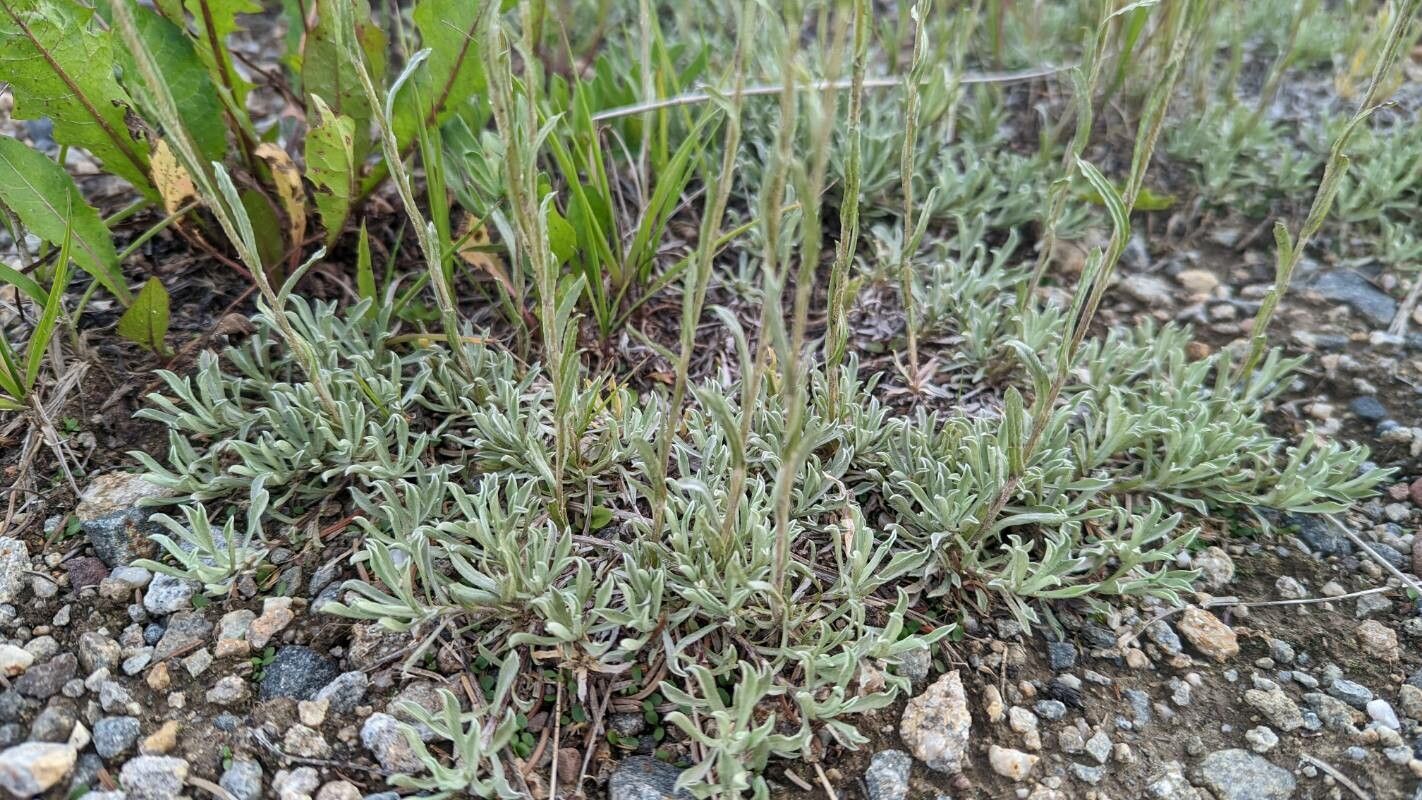
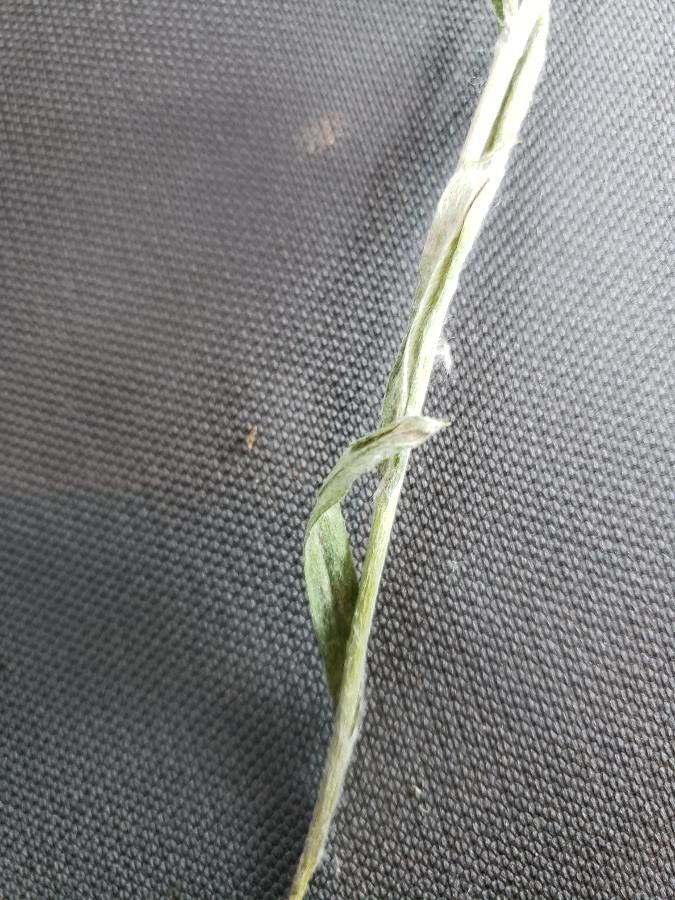
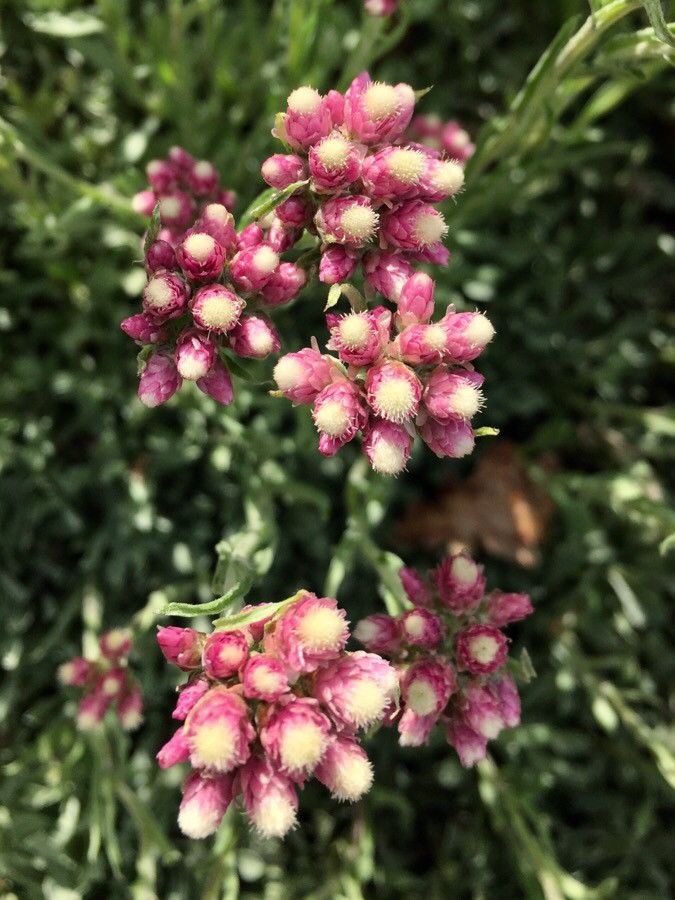
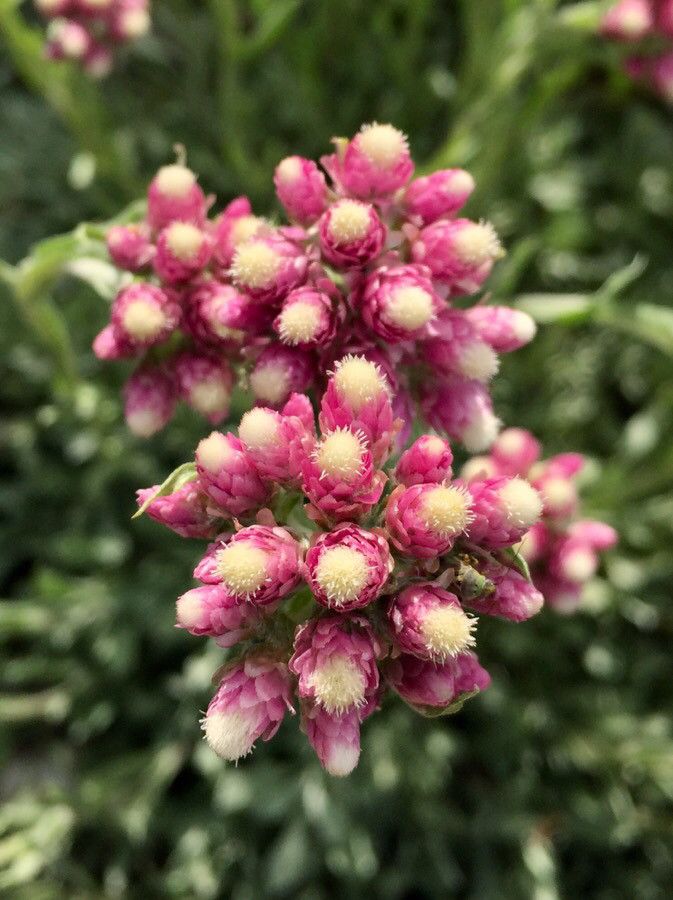
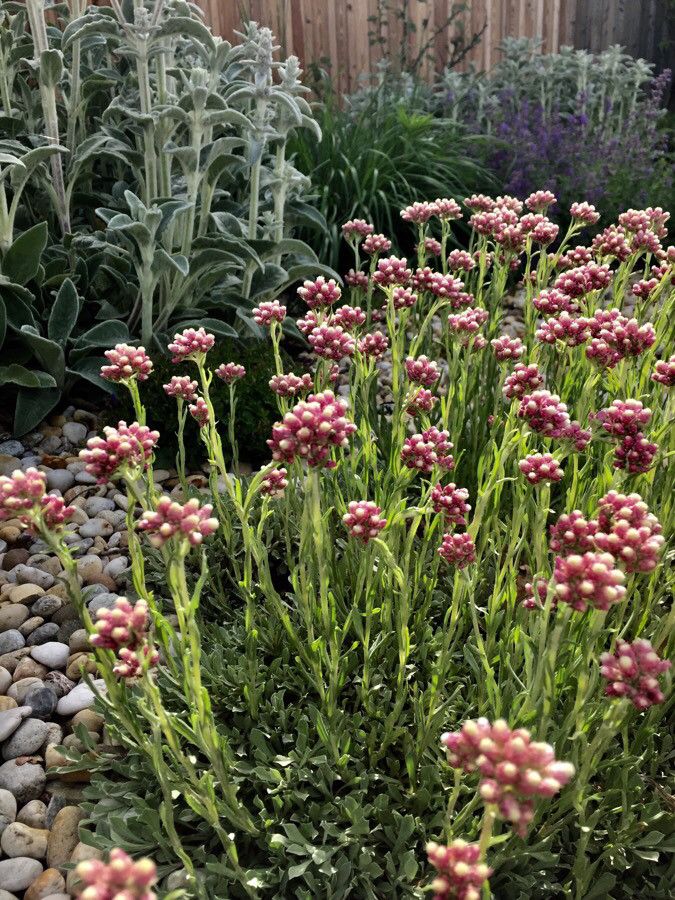
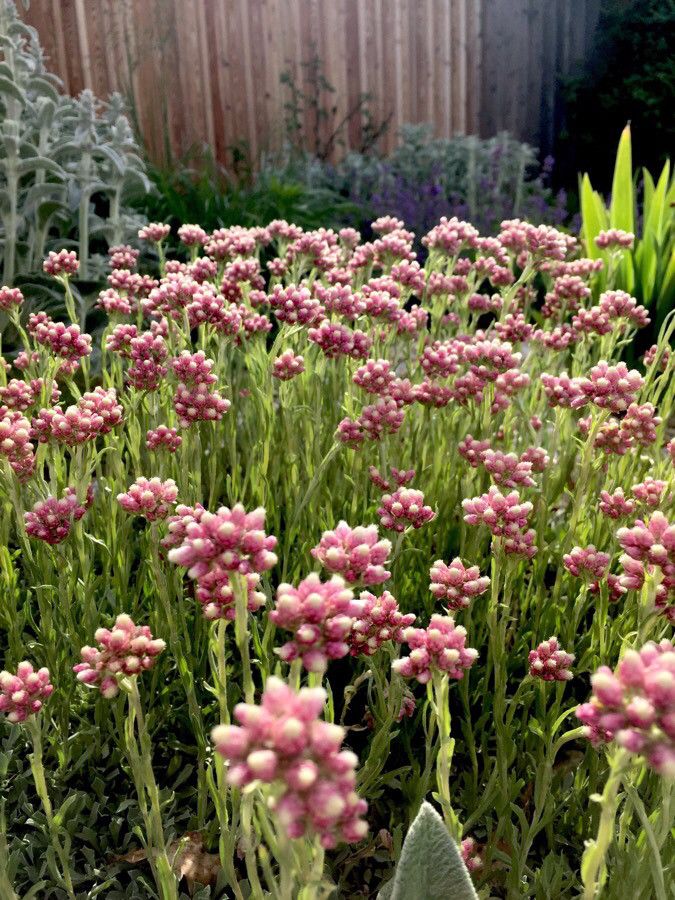
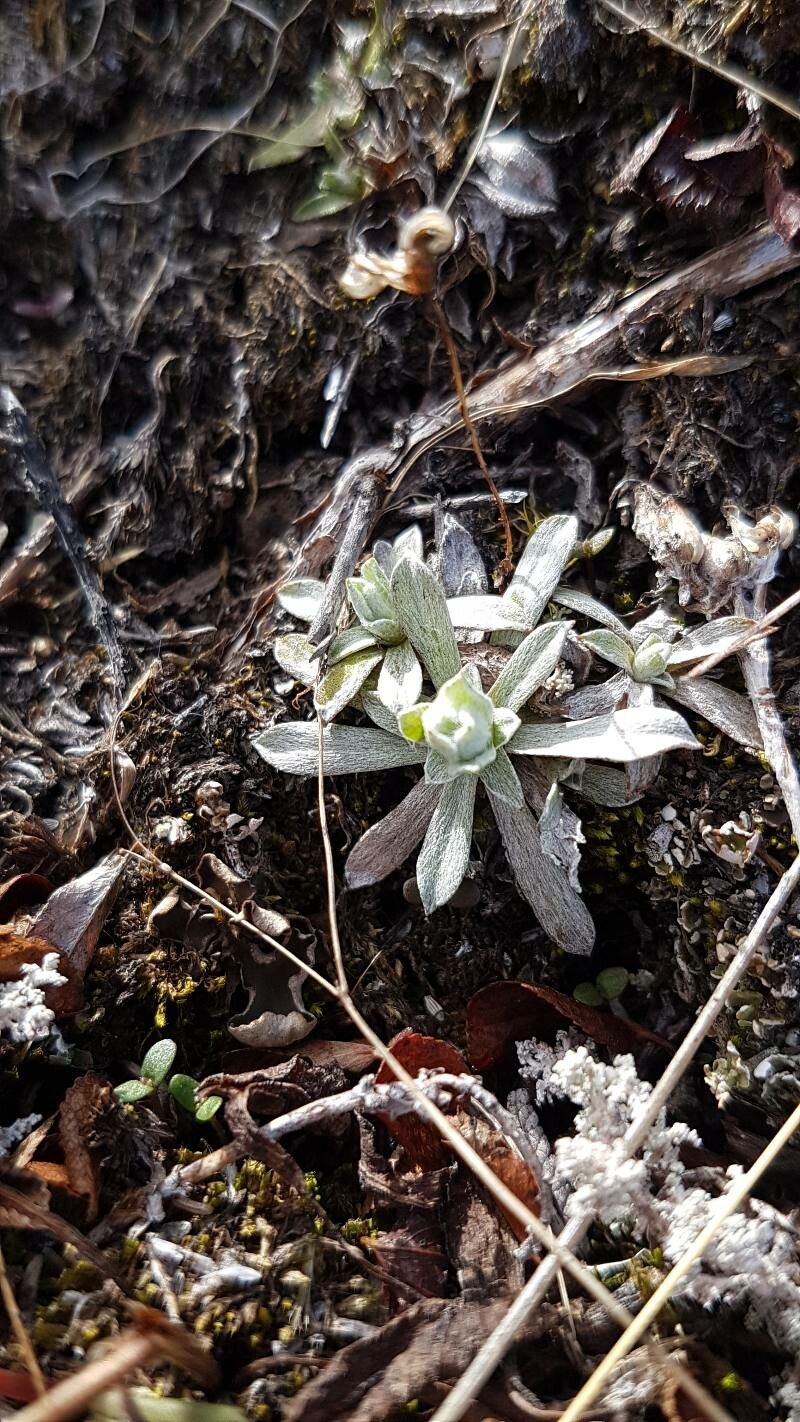
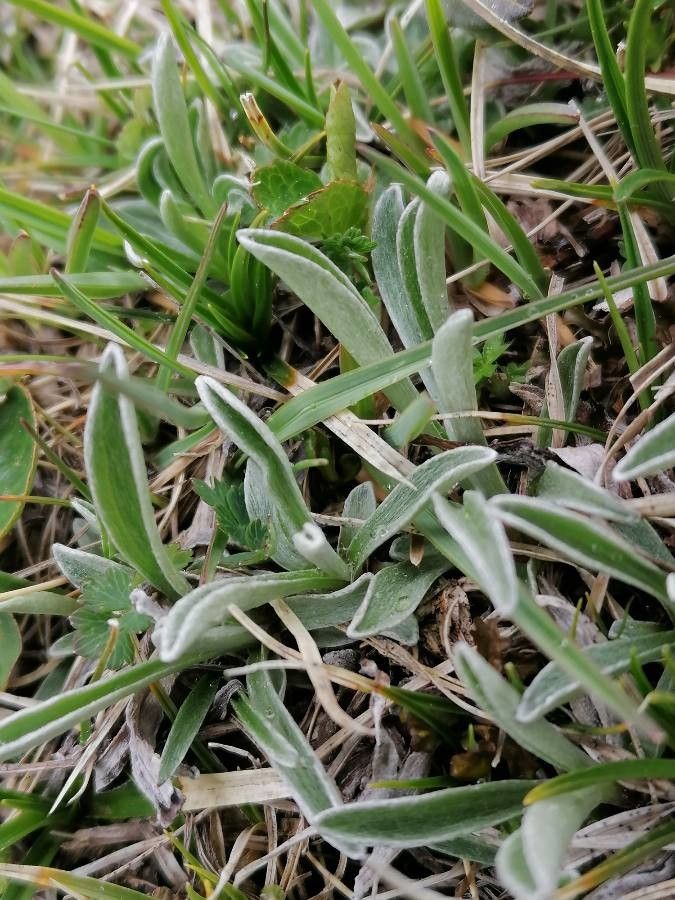
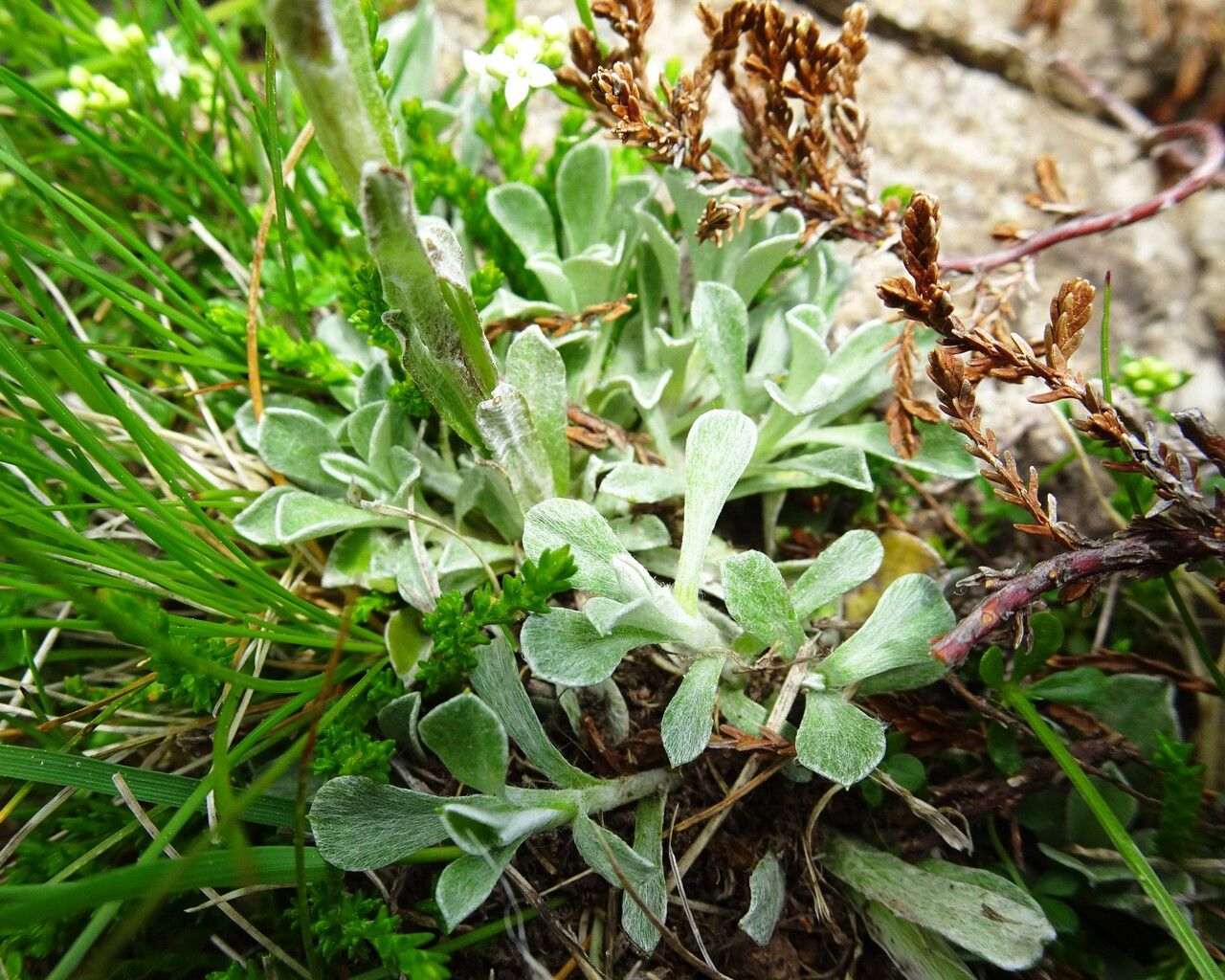
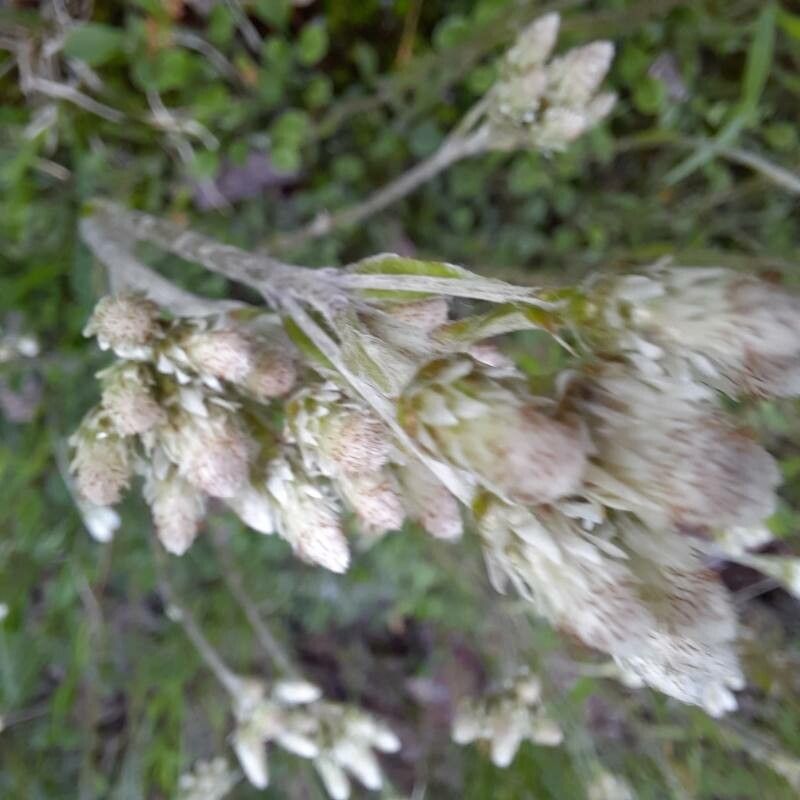
Antennaria rosea is a North American species of flowering plant in the family Asteraceae known by the common name rosy pussytoes. Other common names include cat's foot and mountain everlasting. It is widespread across much of Canada including all three Arctic territories, as well as Greenland, the western and north-central United States, and the Mexican state of Baja California.Antennaria rosea is a plant of many habitats, from dry to wet climates and low elevation to very high. It is a very morphologically diverse species; individuals can look very different. It is polyploid and exhibits apomixis; most all the plants are female and they reproduce asexually.This herbaceous perennial grows to a height of 10 to 40 centimeters (4 to 15+1⁄2 in). It has a network of short stolons by which it spreads, its method of vegetative reproduction. It forms a basal patch of woolly grayish leaves 1 to 4 cm long. Blooming early in summer, the inflorescence contains several flower heads in a cluster. Each head is lined with wide, pointed phyllaries which are often rose in color, the trait that gives the species its name, but they may also be white, yellowish, or brownish. The species is dioecious, but since most of the individuals are female, most bear flower heads containing pistillate flowers. The fruit is an achene with a body less than 2 millimeters long and a pappus which may be 6 or 7 mm long. The plant often produces fertile seeds, but most individuals in most populations are clones. Plants are sometimes fertilized with pollen from other Antennaria species, which may bring new genes into an A. rosea population, increasing the genetic diversity amongst the clones.In the UK Antennaria rosea has gained the Royal Horticultural Society's Award of Garden Merit. SubspeciesAntennaria rosea subsp. arida (E.E.Nelson) R.J.Bayer Antennaria rosea subsp. confinis (Greene) R.J.Bayer Antennaria rosea subsp. pulvinata (Greene) R.J.Bayer Antennaria rosea subsp. rosea
Rosy pussytoes has strong disease resistance and is typically not vulnerable to illnesses. Still, it can be affected by pests and diseases present in its environment. These infections tend to be mild. Regarding care, this plant needs a moderate amount of attention. It should be pruned on a regular basis to preserve a tidy appearance and healthy growth. Applying fertilizer can also encourage blooming. Rosy pussytoes is appropriate for anyone with outdoor areas like a garden or patio and does not demand extensive care experience. It may need increased attention if kept indoors.
How to keep Antennaria Rosea.
Light
Rosy pussytoes is a perennial herbaceous plant that prefers sunny locations and is native to open habitats, commonly occurring in meadows and grasslands. It favors full sun but can also tolerate partial sun.
Water
Rosy pussytoes is native to well-drained alpine regions and thrives with moderate moisture. It benefits from consistent watering, ideally once a week. Being an alpine plant, it is well-suited for outdoor environments, where it adapts to the seasonal precipitation patterns that influence its growth cycles.
Temperature
Rosy pussytoes can tolerate a wide range of temperatures, but its range may still be restricted by certain combinations of moisture and heat. It does best in warm summer climates with sufficient rainfall or watering. Long periods of cloudy, rainy weather, as well as extended high temperatures, can make Rosy pussytoes more likely to die. In winter, adequate protection from cold can increase the plant's survival rate.
Fertilizer
The best time to fertilize a Rosy pussytoes is in early spring, as it comes out of dormancy and begins active growth. Fertilization supplies essential nutrients for healthy development. Although Rosy pussytoes needs relatively little fertilizer, applying it annually can improve its survival and encourage better, longer-lasting flowers.
Pruning
Rosy pussytoes is a low-growing, mat-forming plant with silvery foliage. To encourage dense growth and improve airflow, prune it regularly from early to late spring to remove dead stems and spent flowers. Use sharp, clean tools for maintenance to enhance the plant's health and aesthetic appeal.
Pot & Repot
Repot the mat-forming rosy pussytoes every 2-3 years in early spring. Use a shallow, well-draining container to promote healthy growth. Ensure the plant receives bright light and be careful not to overwater, as this can damage its delicate foliage and blooms. With patience, you will be rewarded with vibrant flowers.
Botanical profile.
- Plant Type
- Herb
- Life Cycle
- Perennial
- Genus
- Antennaria
- Family
- Asteraceae
- Hardiness Zone
- 3-8
- Mature Height
- 8 cm to 40 cm
- Mature Spread
- 49 cm
- Leaf Color
- Green, Gray, Silver
- Leaf Type
- Semi-evergreen
- Flower Color
- Pink
- Flower Size
- 0.51 cm to 1.02 cm
- Bloom Time
- Mid spring, Late spring
- Planting Time
- Spring, Summer, Autumn
- Harvest Time
- Early summer, Mid summer
Other names.