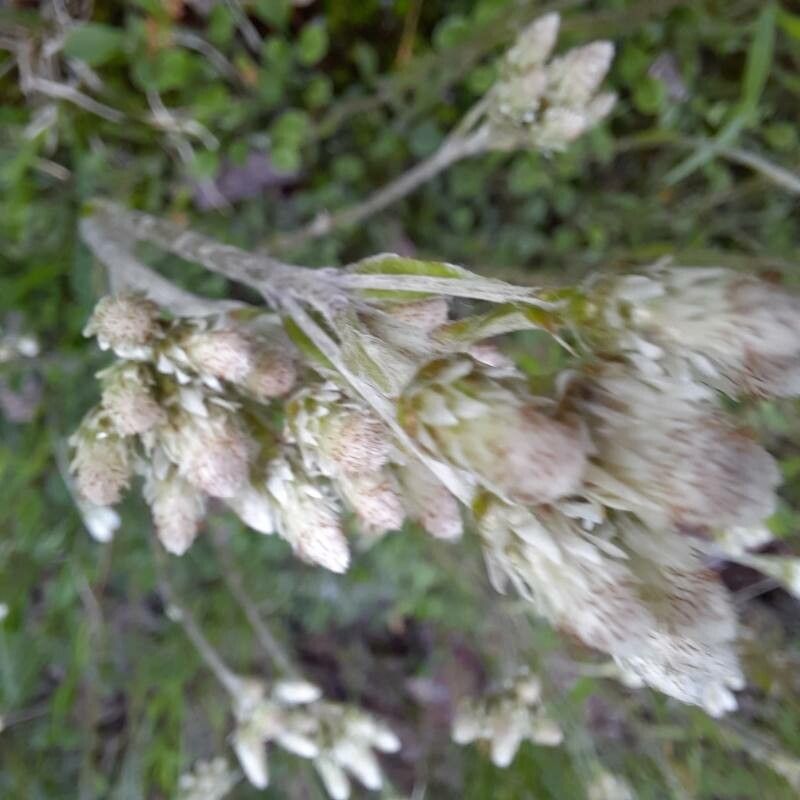
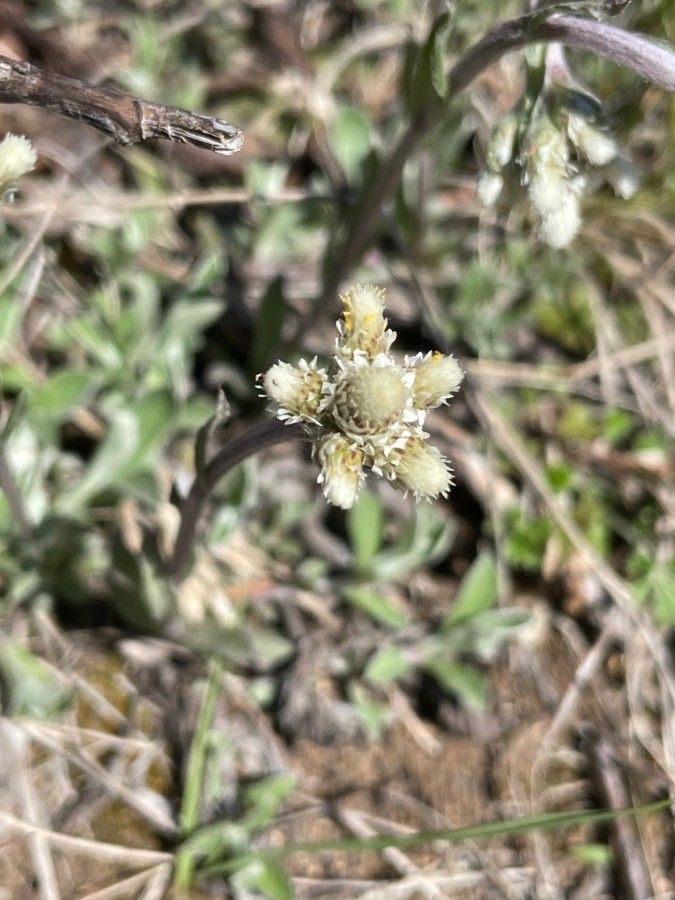
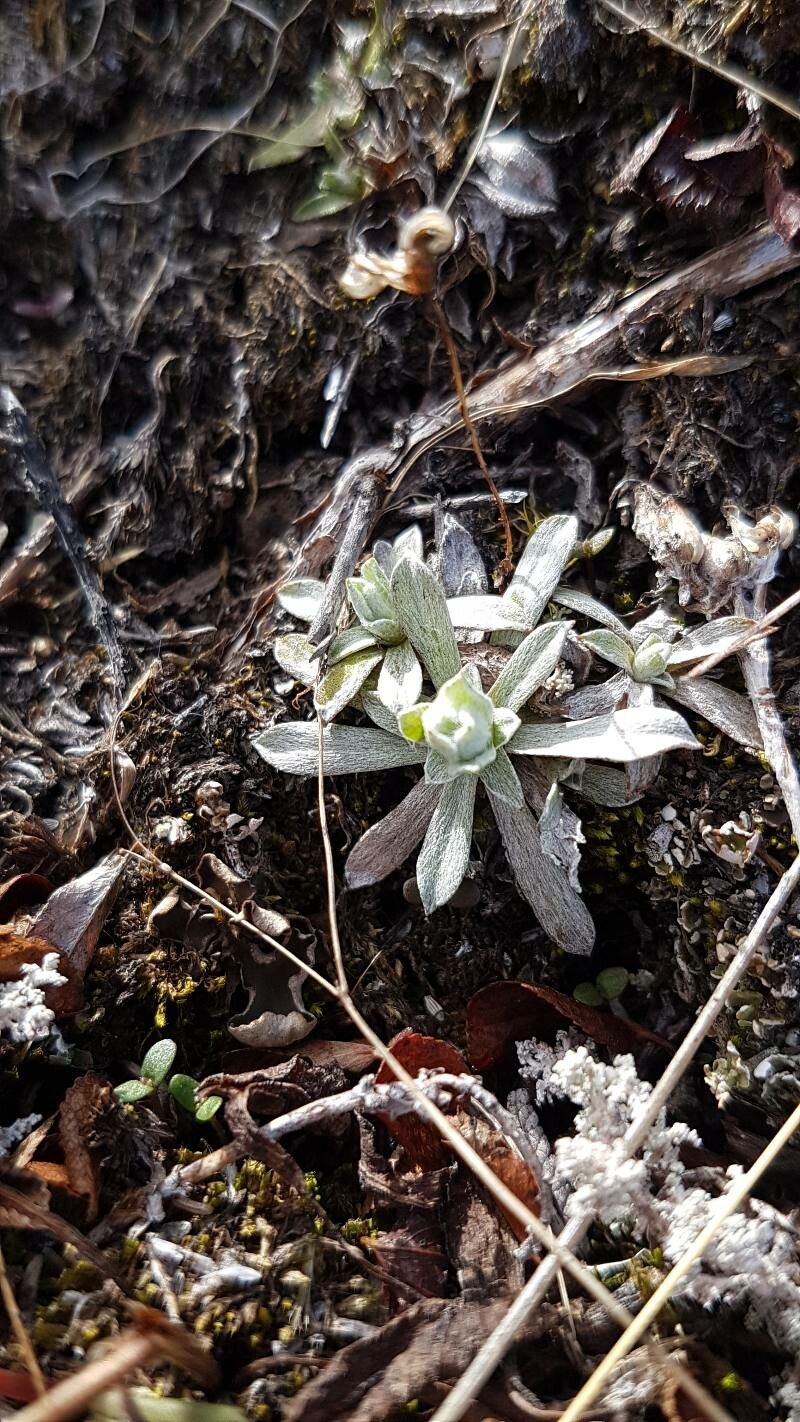
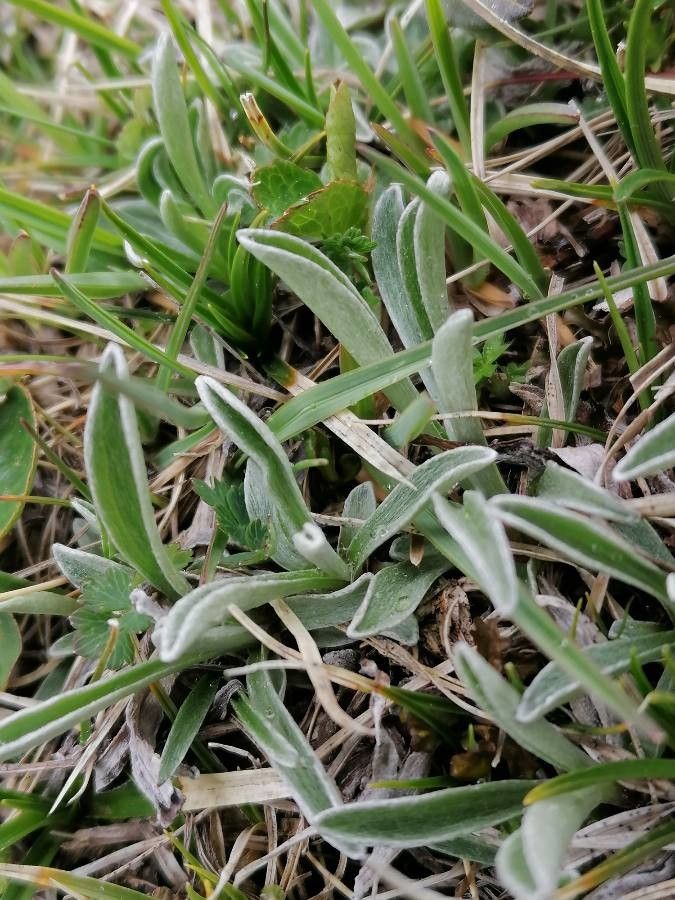
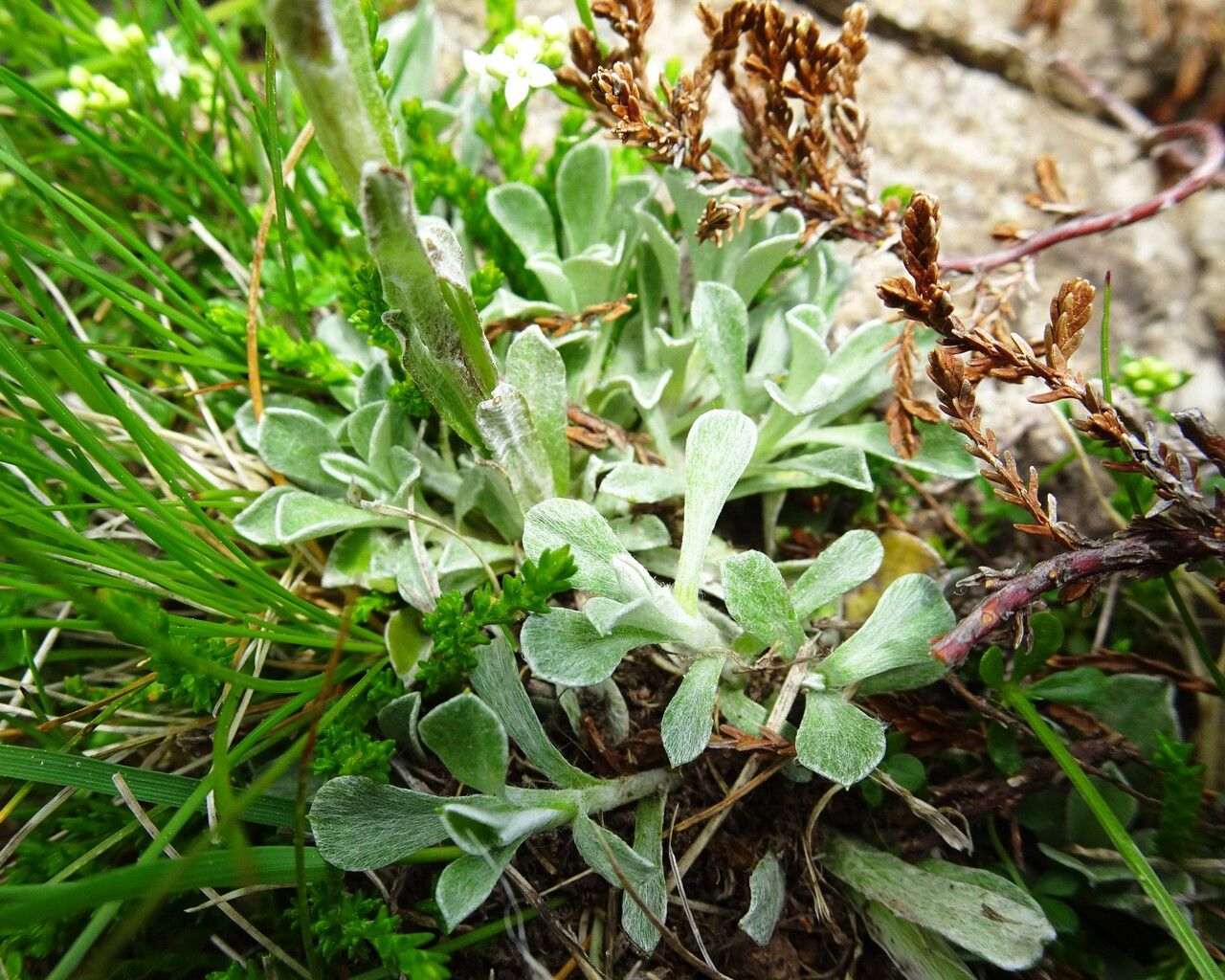
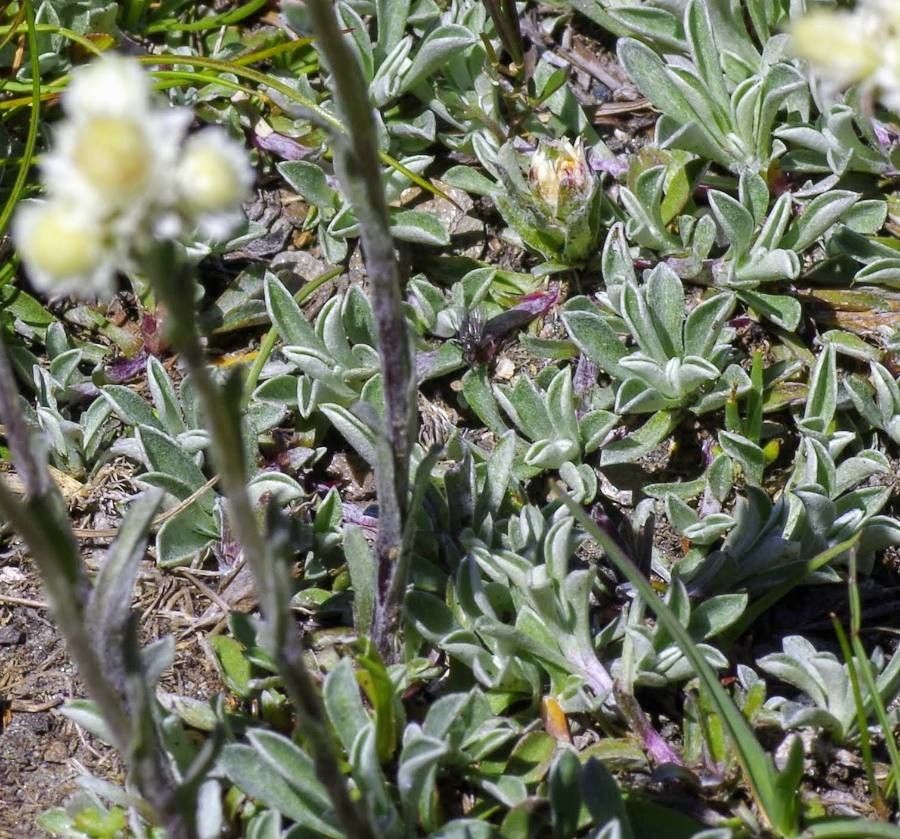
Antennaria howellii, commonly known as Howell's pussytoes, is a perennial herbaceous plant in the Asteraceae family. Native to North America, it can be found across the western United States and Canada. Typically, the plant grows up to 10 cm in height and has a spreading growth habit, featuring woolly, gray-green leaves. Its small flowers, which are white or pinkish-white, bloom from May to August.
This plant thrives in well-drained soils with full sun exposure but can also tolerate partial shade. It is commonly found on rocky slopes or in open meadows at high elevations, up to 3,000 meters above sea level.
Traditionally, Native American tribes have used Antennaria howellii for medicinal purposes, such as treating respiratory ailments like coughs and colds. It also possesses anti-inflammatory properties, making it useful for treating skin irritations like rashes.
Antennaria howellii plays a significant role in the ecosystem by providing food for various wildlife species, including deer, elk, rabbits, and rodents.
Overall, Antennaria howellii is a fascinating perennial with unique characteristics, making it a valuable addition to any garden or landscape design. It also offers ecological benefits within its natural habitat.
Howell's pussytoes shows good resistance to disease and is usually not vulnerable to illnesses. However, it can be affected by pests and diseases present in its environment. These problems are typically mild. For care, this plant requires moderate maintenance. It should be pruned regularly to maintain a tidy appearance and encourage healthy growth. Fertilizing can also help increase flowering. Howell's pussytoes is appropriate for anyone with outdoor space, such as a garden or patio, and does not demand extensive gardening experience. It may need extra care when kept indoors.
How to keep Antennaria Howellii.
Light
Howell's pussytoes is a perennial herbaceous plant that prefers sunny conditions and is native to open habitats, often occurring in meadows and grasslands. It favors full sun but can also tolerate partial sun.
Water
Howell's pussytoes thrive in moderately moist environments, benefiting from weekly watering to support its drought-resistant qualities. As a perennial herbaceous plant, it is best grown outdoors to take advantage of natural rainfall, which promotes optimal health and vigor.
Temperature
Howell's pussytoes can adapt to a wide range of temperatures, but its distribution may still be restricted by different combinations of moisture and heat. It performs best in warm summer climates with sufficient rainfall or watering. Extended periods of cloudy, rainy weather, as well as prolonged high temperatures, can increase the chance of Howell's pussytoes dying. In winter, proper protection from cold can boost the plant's survival rate.
Fertilizer
The best time to fertilize Howell's pussytoes is in early spring, as it comes out of dormancy and begins active growth. Fertilizing supplies essential nutrients for healthy development. Although Howell's pussytoes has fairly low fertilizer requirements, applying fertilizer once a year can improve its survival and encourage healthier, longer-lasting blooms.
Pruning
For optimal growth, Howell's pussytoes benefit from pruning dead or damaged leaves in early to late spring. Avoid heavy pruning and emphasize light, regular maintenance instead. This tidying helps enhance air circulation, reduces the risk of disease, and keeps the plant looking attractive.
Botanical profile.
- Plant Type
- Herb
- Life Cycle
- Perennial
- Genus
- Antennaria
- Family
- Asteraceae
- Hardiness Zone
- 3-8
- Mature Height
- 15 cm to 40 cm
- Mature Spread
- 10 cm to 30 cm
- Leaf Color
- Gray, Light Gray
- Leaf Type
- Evergreen
- Flower Color
- White
- Flower Size
- 0.51 cm to 1.02 cm
- Bloom Time
- Mid spring, Late spring
- Planting Time
- Spring, Summer, Autumn
- Harvest Time
- Early summer, Mid summer
Other names.