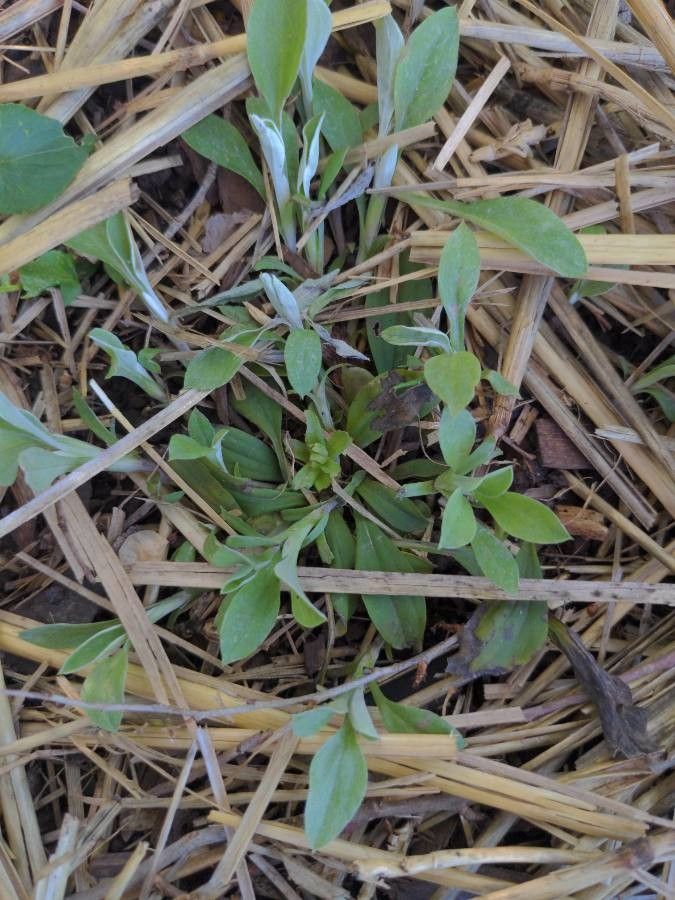
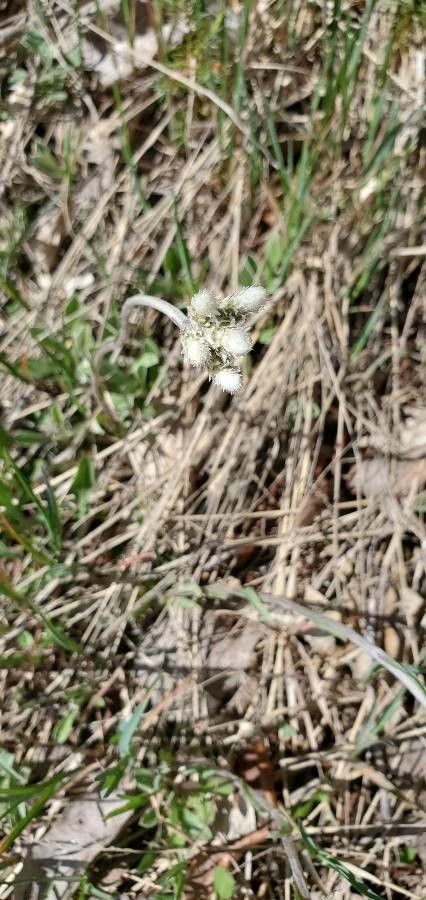
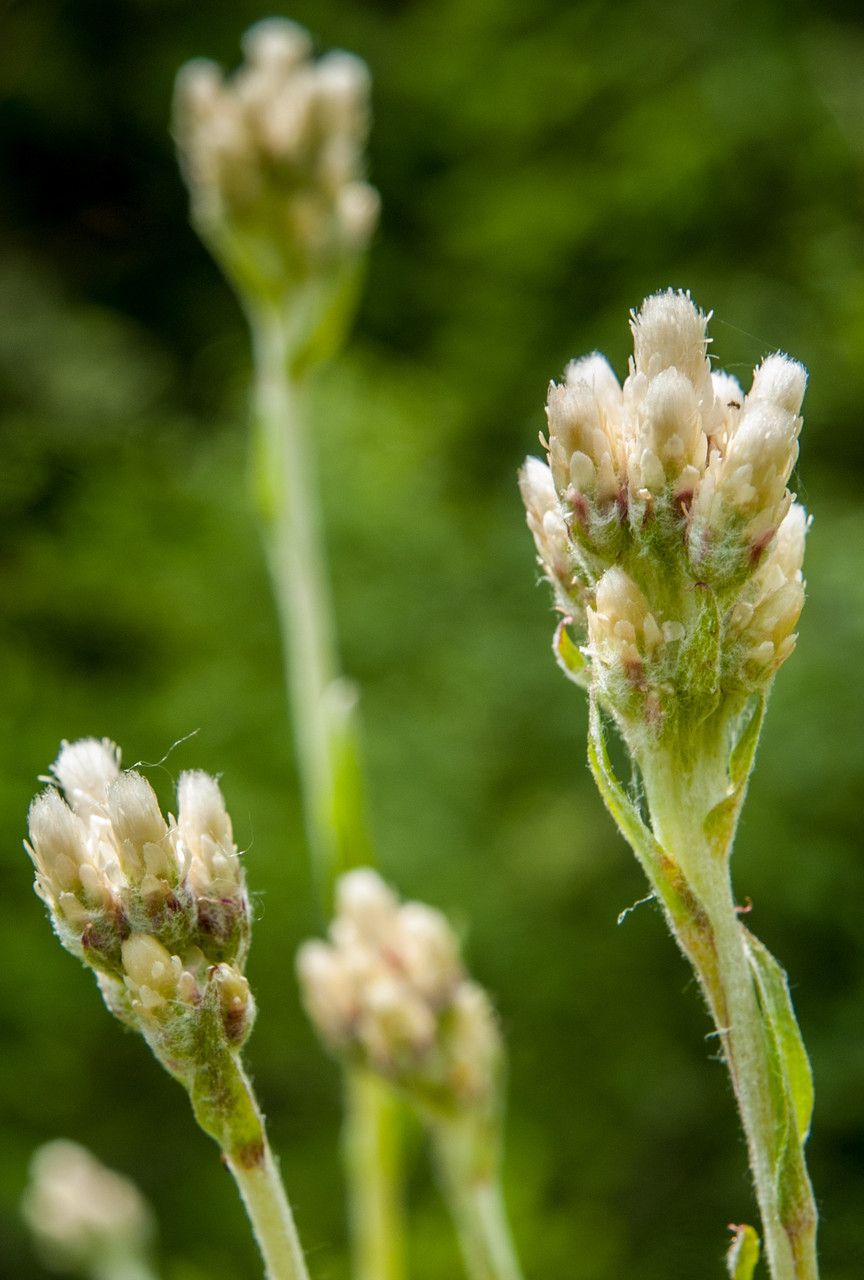
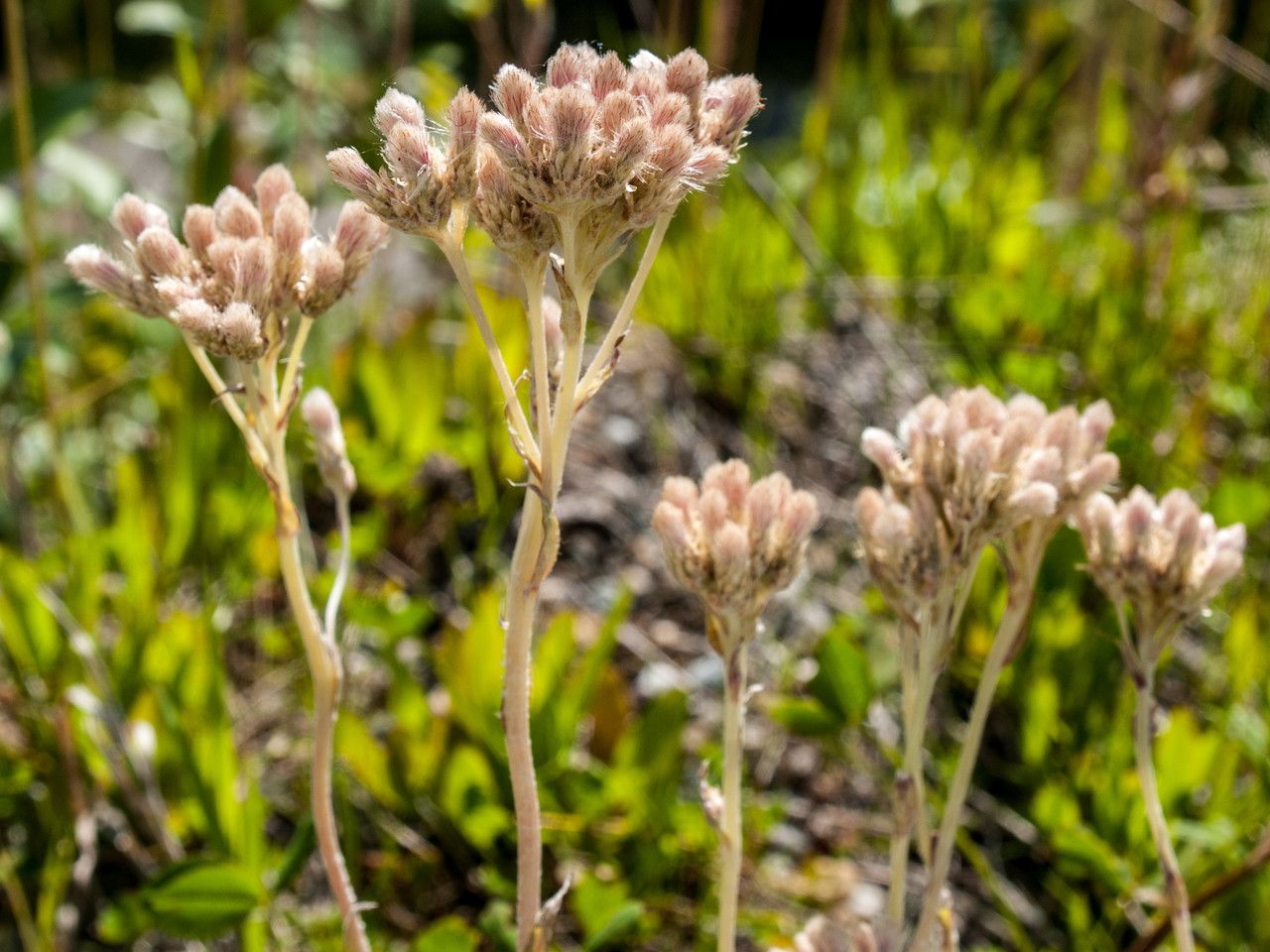
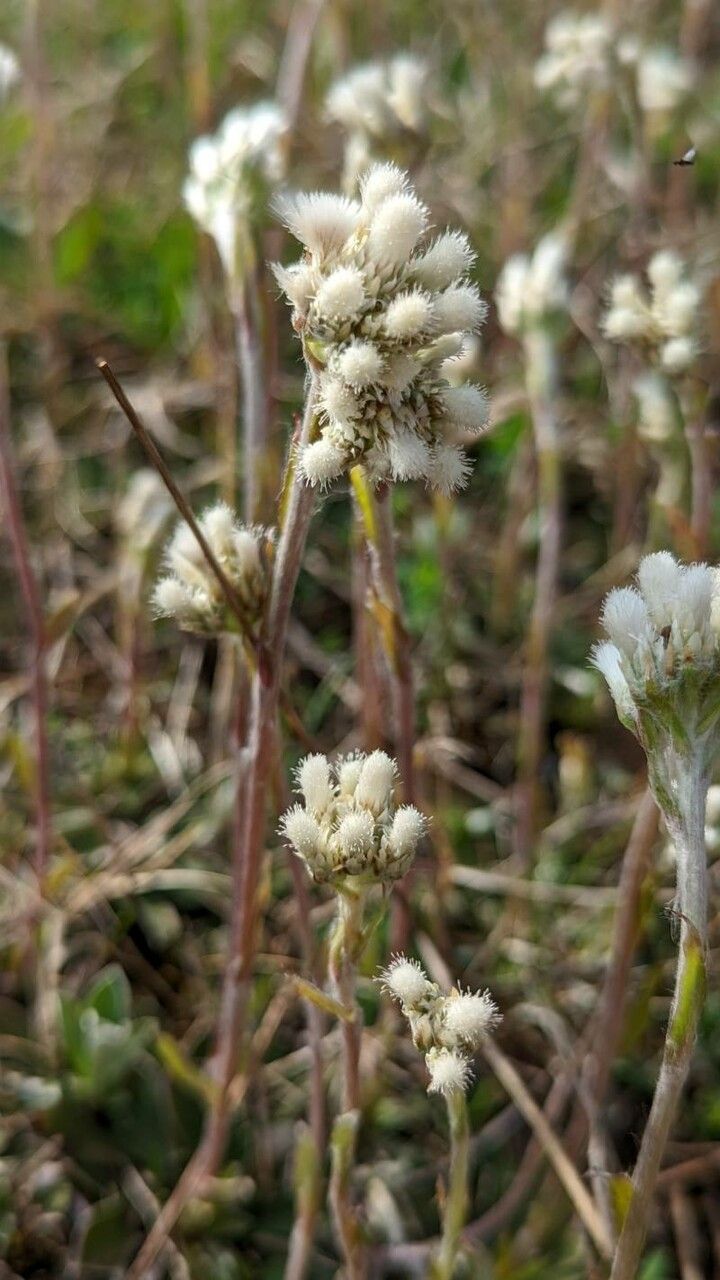
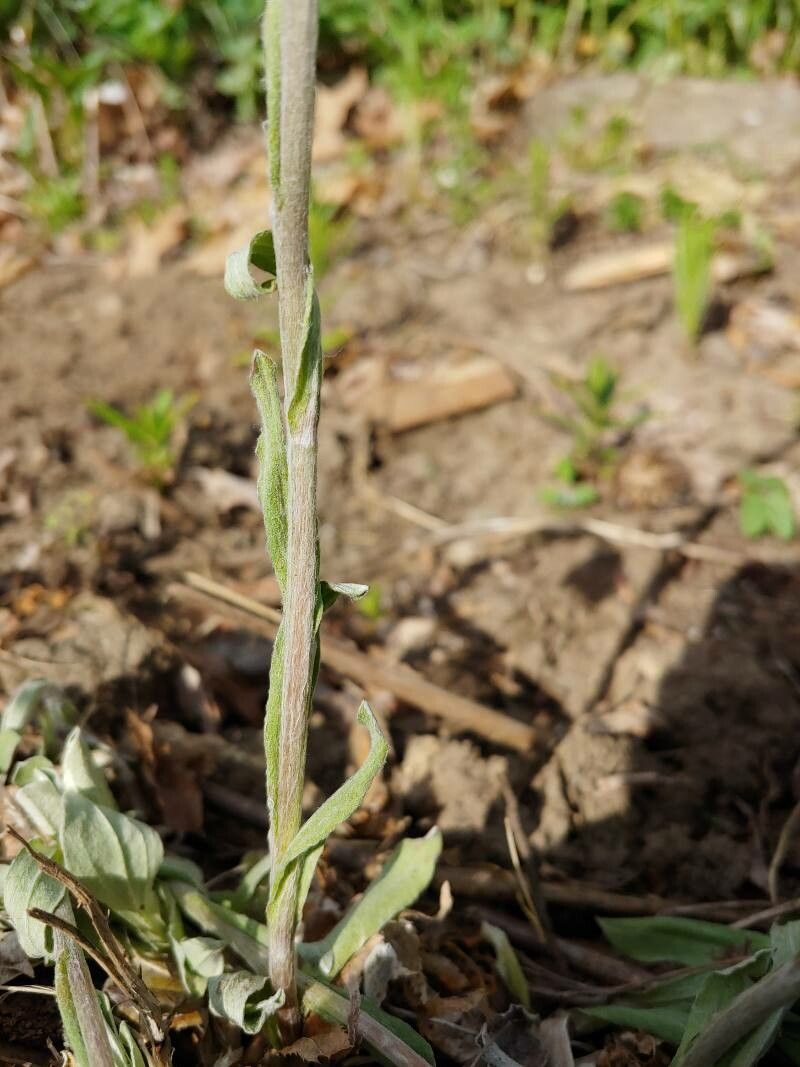
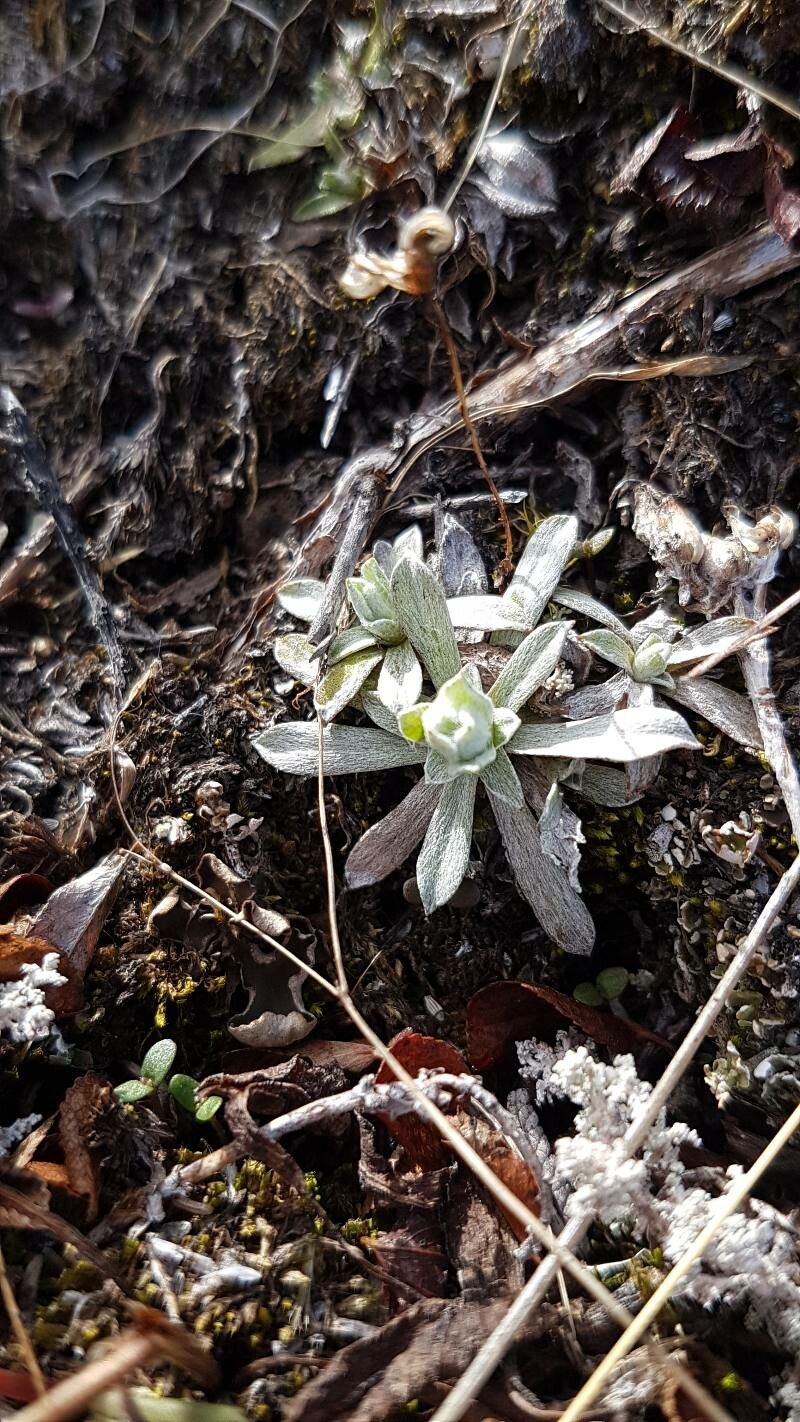
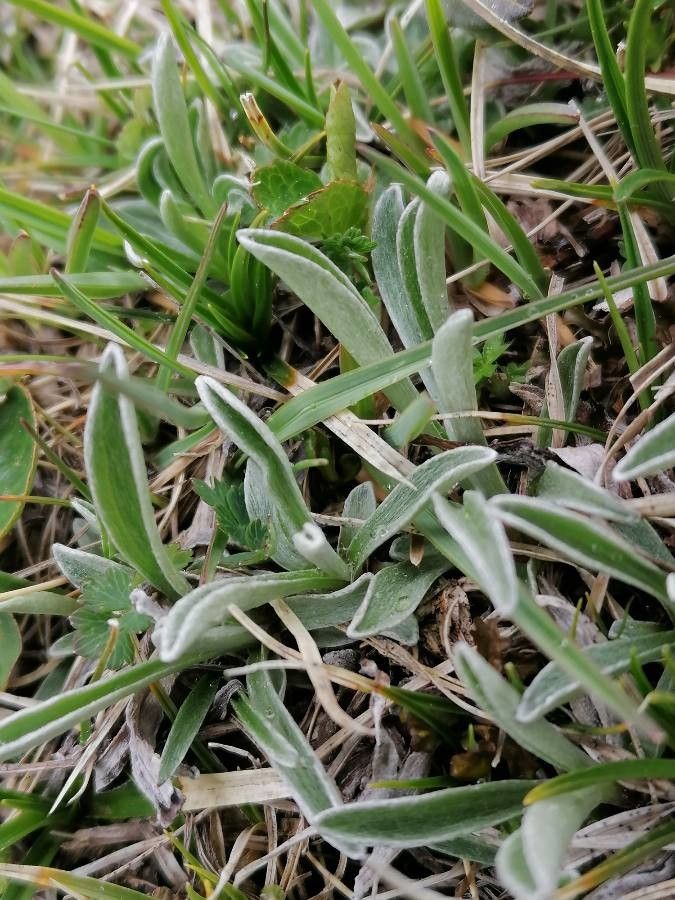
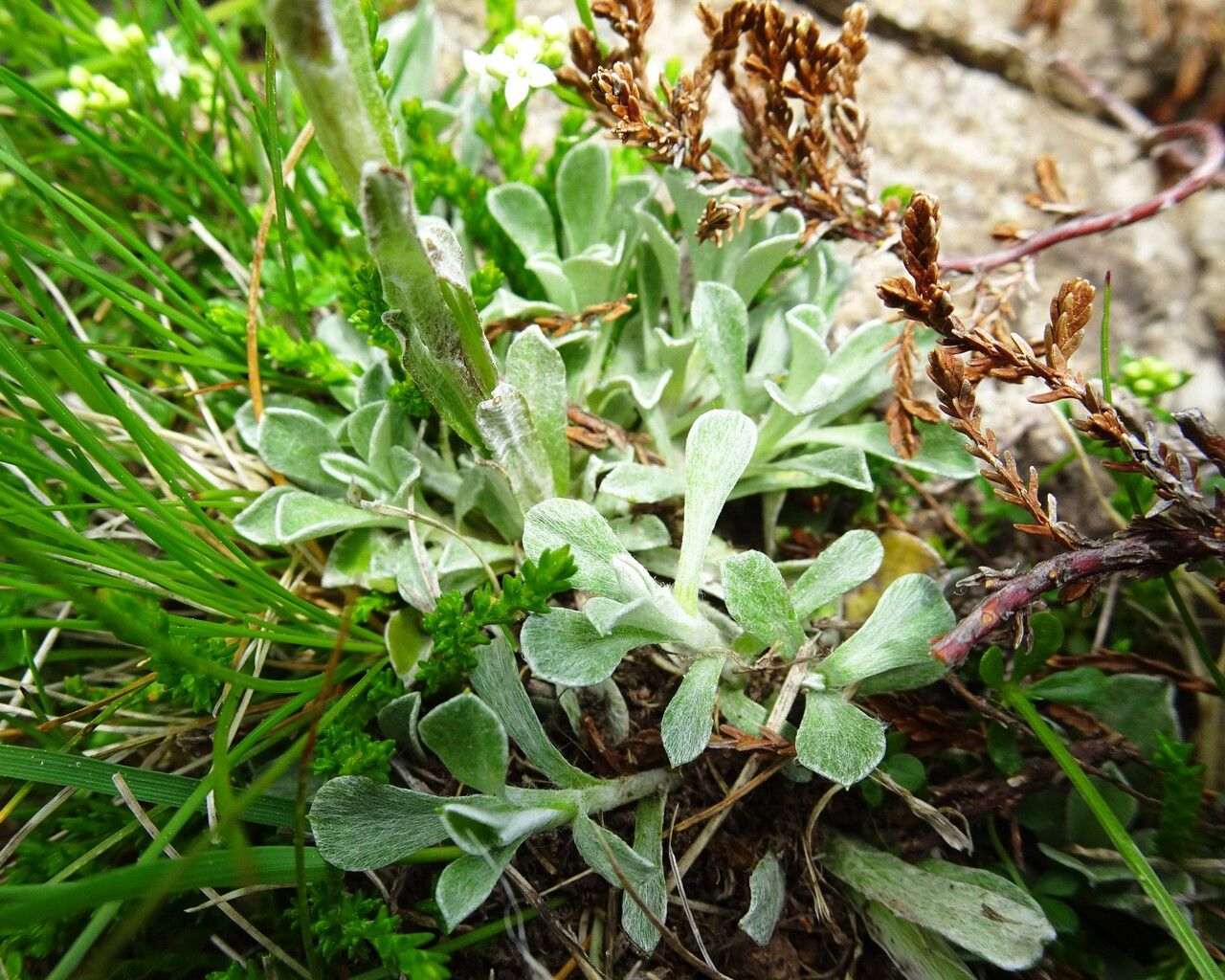
Antennaria neglecta, commonly known as field pussytoes, is a perennial herbaceous plant in the Asteraceae family. Native to North America, it thrives in various habitats including prairies, meadows, and open woods. The plant typically grows up to 30 cm tall and features a basal rosette of leaves that are grayish-green and covered in woolly hairs on both sides.
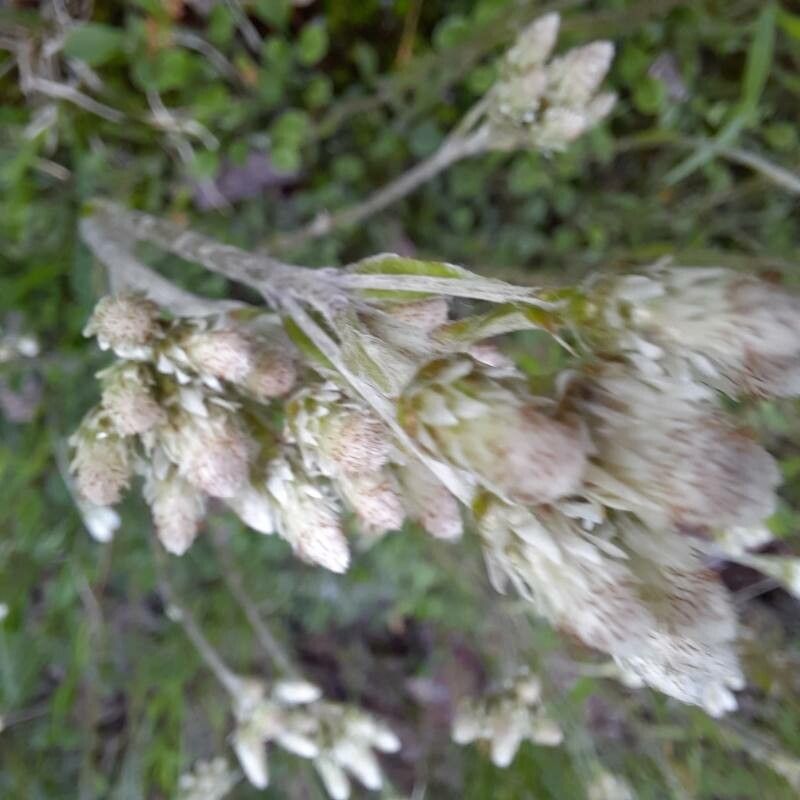
The flowers of Antennaria neglecta are small and inconspicuous, with white or pinkish petals that bloom from May to August. The plant reproduces either through seeds or vegetatively via its rhizomes.
Historically, Native Americans have used Antennaria neglecta for medicinal purposes, treating ailments such as coughs, colds, fever, and wounds. Today, herbalists continue to use the plant for its anti-inflammatory properties.
Field pussytoes are ecologically important, providing food for pollinators like bees and butterflies and serving as a host plant for certain moth species.
In summary, Antennaria neglecta is a vital native species that supports biodiversity conservation efforts and offers medicinal benefits.
Field pussytoes has strong disease resistance and is generally not prone to illnesses. Still, it can be affected by pests and diseases present in its environment. Such infections are typically mild. Regarding care, this plant needs a moderate amount of attention. Regular pruning is necessary to preserve its appearance and encourage healthy growth. Applying fertilizer can also encourage more blooms. Field pussytoes is suitable for anyone who has outdoor space, like a garden or patio, and does not demand extensive plant-care experience. It may need extra care if kept indoors.
How to keep Antennaria Neglecta.
Light
Field pussytoes performs best in full, unshaded sunlight, though it can also do well with some shade. The species comes from habitats that receive abundant sunlight. Too much shade can result in poor growth, while too much sun typically does not cause problems.
Water
Field pussytoes flourish in well-drained soils and thrive with moderate moisture, which mirrors the rainfall typical of their native habitat. While they can withstand brief dry spells, they benefit from weekly watering. As perennial herbs, field pussytoes make efficient use of seasonal rainwater throughout their growth cycles.
Temperature
For field pussytoes, the native temperature-related habitat is cool, moist conditions, but it can grow across a wide temperature range. It prefers temperatures between 32 to 90 °F (0 to 32 °C). In winter, temperatures below 32 °F (0 °C) are best for its survival. In summer, it can tolerate higher temperatures up to 90 °F (32 °C).
Fertilizer
One spring application of fertilizer is generally enough for Field pussytoes, though repeated feedings can boost growth. Apply fertilizer every month to every month and a half. Fertilizing improves the leaves' appearance and function, encouraging even color and a healthy texture. It also promotes root development and nutrient uptake, supporting long-term plant health.
Pruning
Field pussytoes is a low-growing perennial that forms a mat and features small clusters of white flowers. Prune in early spring to remove dead foliage, and prune again after flowering in late spring. This will promote growth, improve shape and blooming, prevent legginess, and enhance vigor.
Botanical profile.
- Plant Type
- Herb
- Life Cycle
- Perennial
- Genus
- Antennaria
- Family
- Asteraceae
- Hardiness Zone
- 3-8
- Mature Height
- 0 cm to 30 cm
- Mature Spread
- 8 cm
- Leaf Color
- Green, Gray, Red, Bronze
- Leaf Type
- Deciduous
- Flower Color
- White, Pink
- Flower Size
- 2.54 cm
- Bloom Time
- Mid spring, Late spring, Early summer
- Planting Time
- Spring
- Harvest Time
- Early summer, Mid summer
Other names.
Reader questions.
How should I water my Field pussytoes?
To properly water the Field pussytoes, it is best to use filtered water at room temperature. Tap water may contain harmful particles that can negatively affect the plant's health. Since the Field pussytoes is accustomed to warm environments, it is important to use water that is not cold, as it can be a shock to the plant's system. Additionally, overhead watering should be avoided to prevent foliage complications. Instead, you should directly apply the filtered room temperature water to the soil until it is completely soaked. This method helps to thoroughly moisten the roots and promote their spread throughout the soil, allowing them to collect the necessary nutrients.
Why should I put fertilizer on my Field pussytoes?
The leaves of the Field pussytoes are an important part of its structure. Fertilization plays a significant role in ensuring that these leaves not only look good but also function well. By properly fertilizing your Field pussytoes, you can help maintain consistent leaf color and a healthy texture. Fertilization also benefits the plant below the surface by promoting the growth of new roots and maintaining existing ones. This means that fertilization not only keeps your plant healthy in the present but also enhances its ability to absorb nutrients from the soil in the future.
What kind of sunlight does Field pussytoes require?
Field pussytoes is a plant that requires full sun daily, with at least six hours of sunlight to maintain its leaves, roots, and blooms in a healthy state. While most perennials also need six hours of sunlight each day, there are exceptions such as the Orange Daylily or Giant Coreopsis. These plants can survive with a minimum of three hours of sunlight, but they won't flourish as they would under sunnier conditions.
What are the ideal temperature conditions for Field Pussytoes?
Field Pussytoes, or Antennaria neglecta, thrives in cool, moist conditions but can adapt to a wide range of temperatures. It prefers temperatures between 32°F and 90°F (0°C to 32°C). In winter, it survives best in temperatures below 32°F (0°C), while in summer, it can tolerate heat up to 90°F (32°C). Thanks to its strong cold resistance, special frost protection measures are not typically needed, except when winter temperatures are expected to drop below -35°C. In such cases, protection can be provided by covering the plant with soil or straw. Furthermore, watering the plant abundantly before the first freeze helps keep the soil moist, preventing drought and water scarcity during the colder months.
What should I do if I give my Field pussytoes too much or too little water?
Both overwatering and underwatering can harm the health of your Field pussytoes, but overwatering is more commonly seen. When this plant gets too much water, its stems and leaves may wilt and turn yellow. Overwatering for a long time can also cause diseases like root rot, mold, and mildew, which can be fatal for your plant. Underwatering is less common because Field pussytoes can tolerate drought quite well. However, it can still happen, and when it does, you will notice that the leaves become brittle and brown. It is important to recognize signs of overwatering early when caring for your Field pussytoes. Some diseases caused by overwatering, like root rot, cannot be fixed if you wait too long. If you see early signs of overwatering, reduce your watering immediately. Additionally, check the quality of the soil where your Field pussytoes is growing. If it drains poorly, replace it with loose, well-draining potting mix. On the other hand, if your Field pussytoes shows signs of getting too little water, simply water it more frequently until the signs disappear.
When should I fertilize my Field pussytoes?
When you grow your Field pussytoes outdoors, it will start sending new growth in early spring. This is the time to start fertilizing it for the year. Typically, one application of fertilizer in spring is sufficient for the plant to thrive. However, if you want to maximize its growth, you can feed it multiple times during spring and early summer. In this case, you can feed it about once every month to a month and a half.
Can the sun harm Field pussytoes? How can we prevent sun and heat damage to Field pussytoes?
In warm climates, some Perennial Flowering Plants may struggle with excessive heat and suffer from sun damage. They can wilt, dry out, or even experience growth problems if they are consistently exposed to the intense afternoon sun. However, not all plants require protection from the light afternoon sun. For those that are harmed by intense afternoon exposure, it is recommended to provide them with some shade in warmer climates. Gardeners can achieve this by planting these plants in areas that do not receive direct heat during the afternoon, such as under trees or behind bushes.
How does Field Pussytoes react to low temperatures, and what measures should be taken?
Field Pussytoes has a high tolerance for cold and performs optimally when temperatures stay above 0°C. However, when temperatures drop below -35°C, while no immediate changes may be noticeable, the plant may exhibit decreased sprouting or fail to sprout at all in the spring. If this occurs, it's recommended to remove any parts of the plant that have not sprouted as a solution to encourage new growth.
How frequently should I water my Field pussytoes plant?
If your Field pussytoes plant is in a pot, the most precise way to determine if it needs water is by checking the soil with your finger. If the top two to three inches of soil are dry, it's time to water it. The same method can be used if you are growing your Field pussytoes outdoors in the ground. When the top few inches of soil have dried out, it's time to water it. Typically, during the spring and early fall, watering once a week is sufficient. However, during extremely hot weather, you may need to increase watering to twice or more per week. It's worth noting that mature, well-established Field pussytoes have a remarkable ability to withstand drought.
When is not a good time to use fertilizer on my Field pussytoes?
During late fall and winter, your Field pussytoes will go into a dormant phase and stop producing new growth. It's important to avoid fertilizing during this time. If you decide to fertilize in the spring and summer, gradually decrease the frequency of fertilization as summer approaches, since the growth rate of your Field pussytoes will also slow down. In general, it's not a good idea to fertilize your Field pussytoes when the weather is extremely hot or the soil is overly dry. Fertilizing under these conditions can cause stress and premature death for your Field pussytoes.
Should I keep the Field pussytoes plant out of direct sunlight?
Certain perennial plants require ample sunlight to reach their maximum bloom. However, in warmer climates, some of these plants actually benefit from less sun. For instance, individuals residing in hotter regions might find it beneficial to shade their flowering perennials during the intense afternoon sun, especially during summer months. Although many perennial flowering plants prefer partial shade in the hottest climates, there are exceptions. Take the Giant Coreopsis, for example, as it is not bothered by excessive sun exposure. These plants can flourish even when placed in the full sun during scorching weather.
What are the signs of Field Pussytoes being affected by high temperatures, and how can they be addressed?
During the summer months, Field Pussytoes should ideally not be exposed to temperatures exceeding 32°C. Temperatures above 35°C can cause the leaves to lighten in color, become prone to curling, suffer from sunburn, and in severe cases, lead the entire plant to wilt and dry. To mitigate these issues, trim away any sunburned or dried parts of the plant. Relocating the plant to a shaded area during the peak sun hours or using a shade cloth can prevent further damage. Additionally, watering the plant in the morning and evening helps maintain soil moisture, providing necessary relief from the heat.