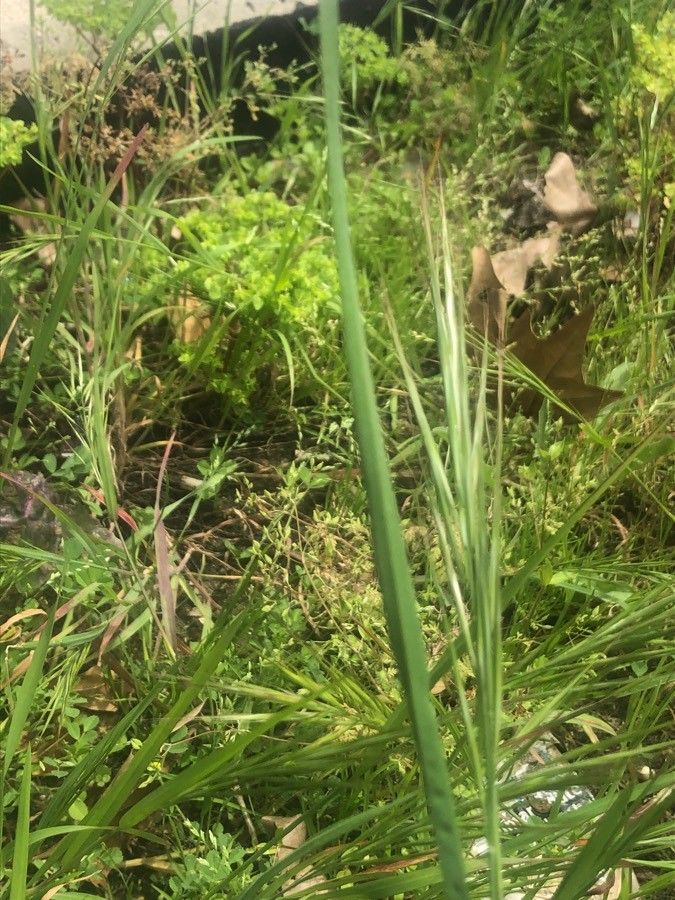
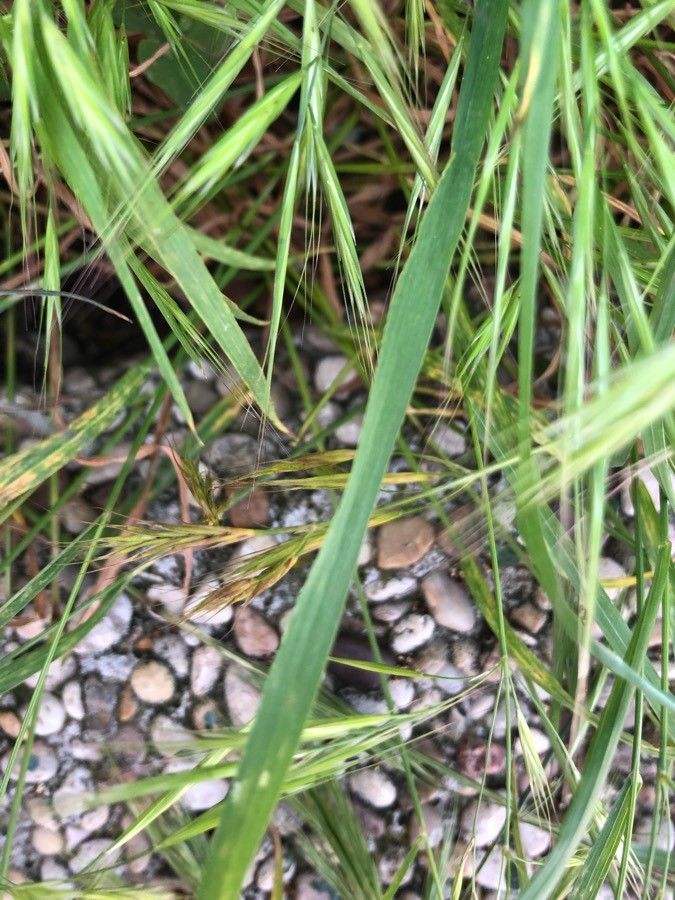
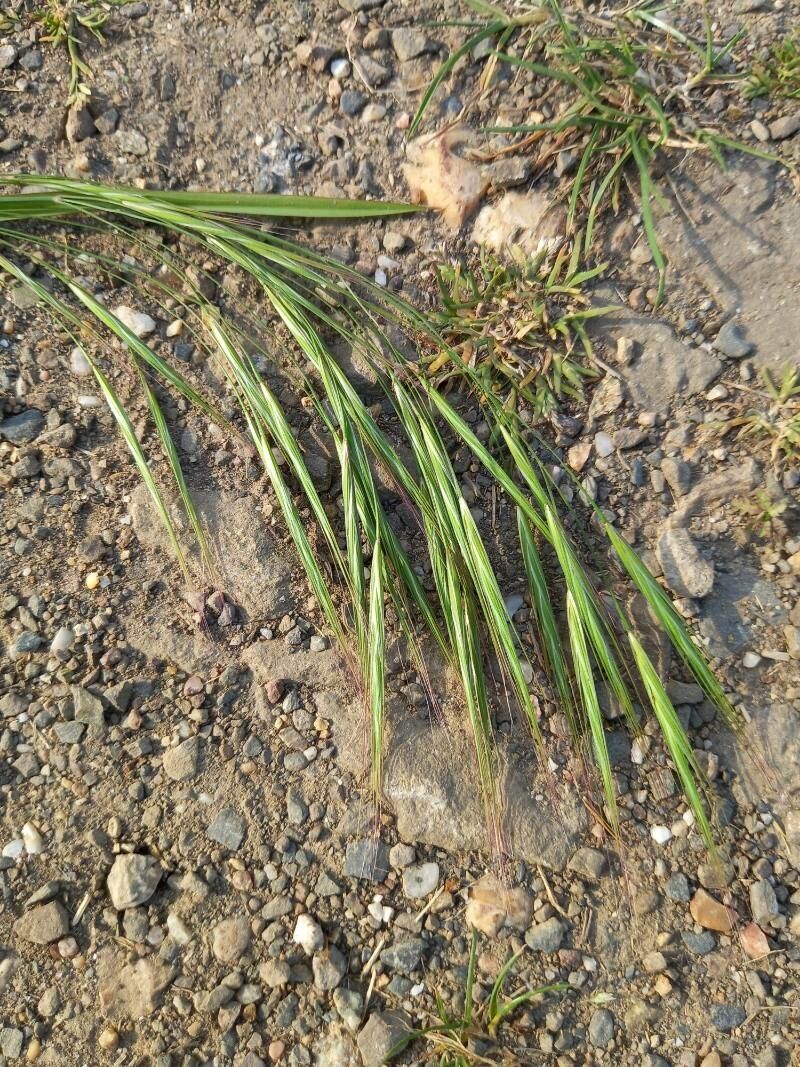
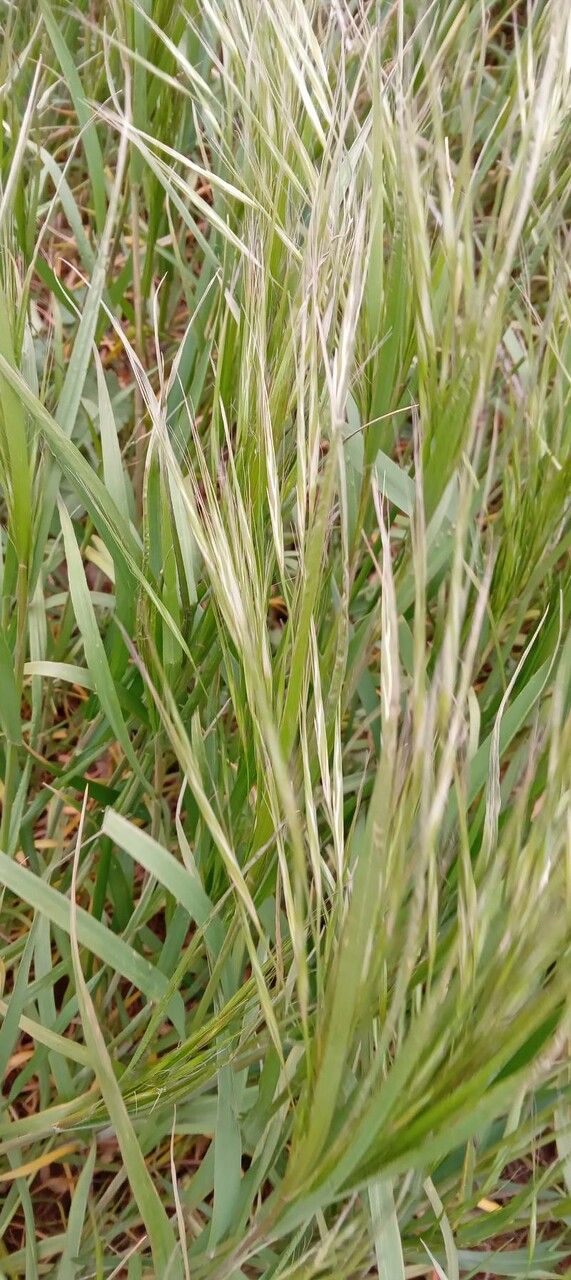
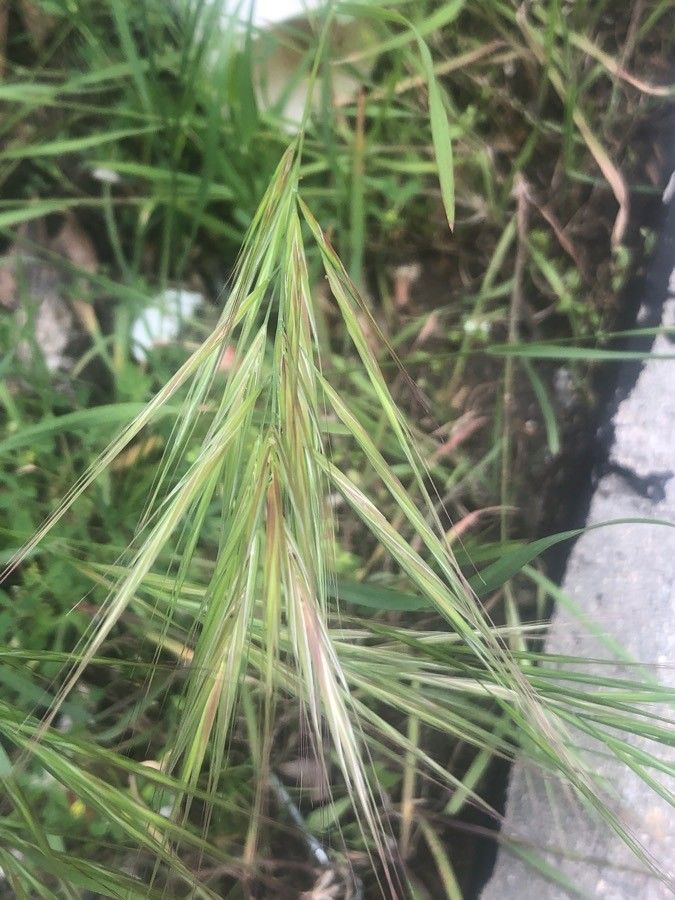
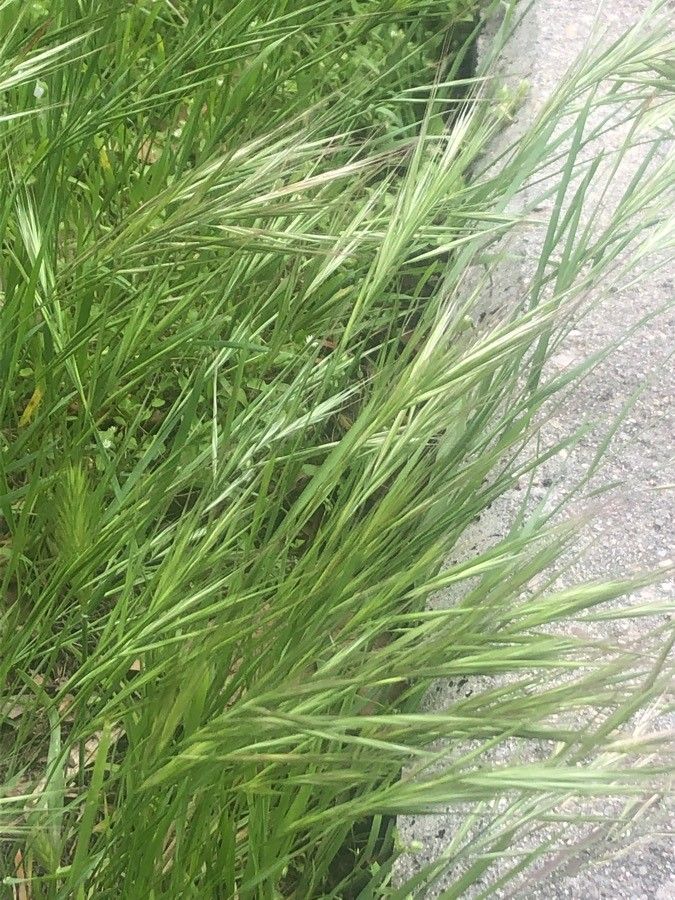
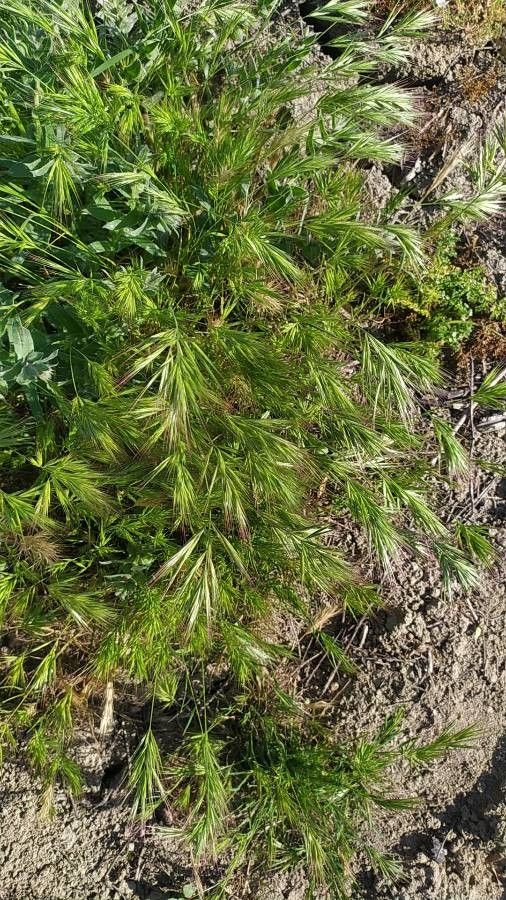
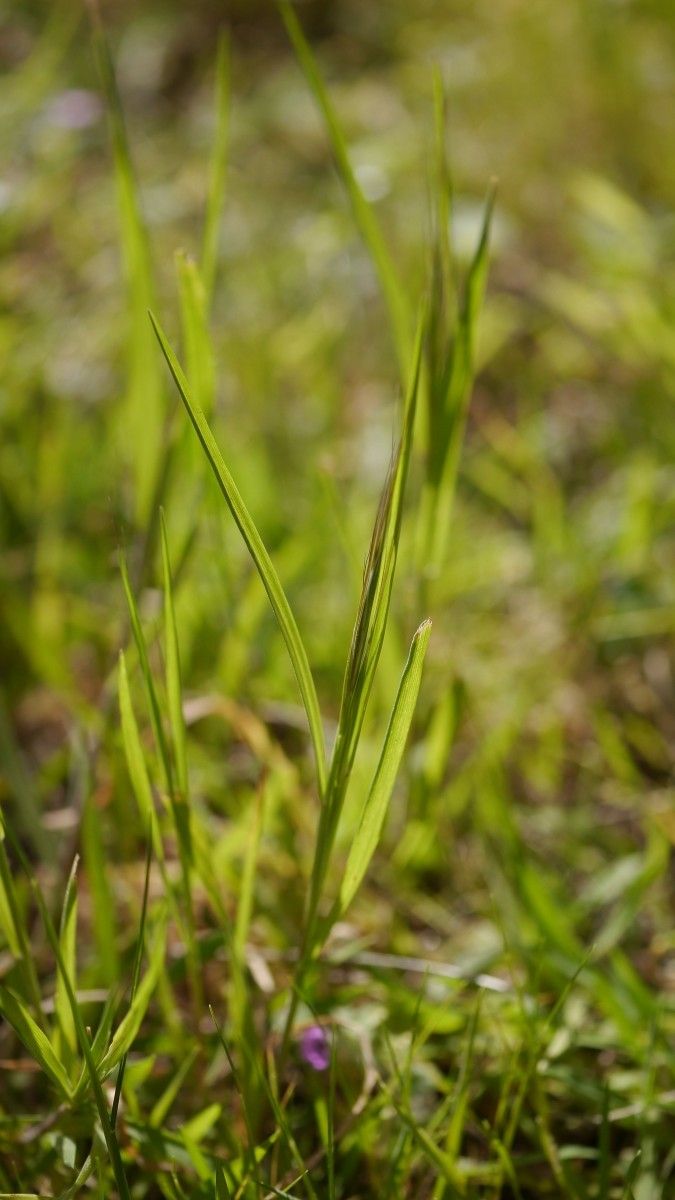
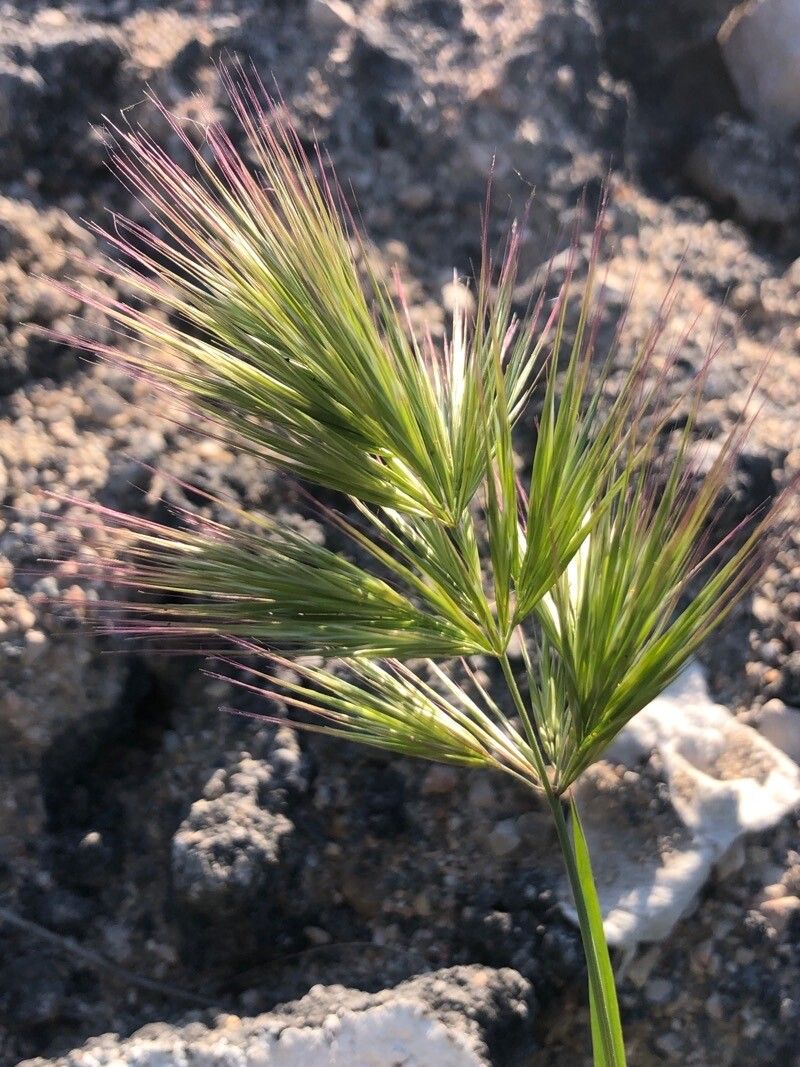
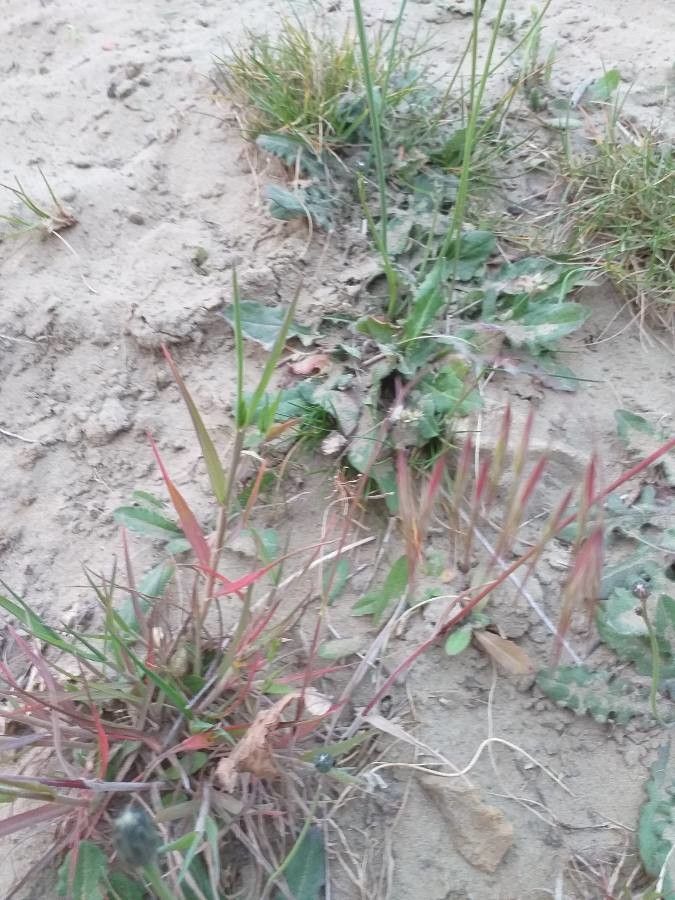
Anisantha sterilis, commonly known as sterile brome or barren brome, is a species of grass belonging to the Poaceae family. It is a perennial plant that can grow up to 1.5 meters tall and features long, narrow leaves with pointed tips. The plant produces dense spikes of greenish-yellow flowers that can reach up to 20 centimeters in length. Native to Europe, sterile brome has been introduced to many other parts of the world, including North America and Australia. It thrives in disturbed areas such as roadsides, fields, and waste places. While the plant has been used for forage, it is not considered high-quality feed due to its low protein content. However, it can be beneficial for erosion control thanks to its ability to quickly establish on disturbed soils. Sterile brome can also be problematic as an invasive species, spreading rapidly through seed production and displacing native vegetation. It competes with other plants for resources like water and nutrients, thereby reducing biodiversity in ecosystems where it becomes established. Overall, Anisantha sterilis is an interesting grass species that offers both advantages, such as erosion control, and disadvantages, particularly its negative impact on ecosystems where it becomes invasive.
Poverty brome has strong disease resistance and is generally not susceptible to disease. With respect to care, this plant is fairly low-maintenance. When grown outdoors it needs little watering, and larger specimens typically do not require pruning. Smaller plants, however, should be trimmed after they finish blooming. Poverty bromet is suitable for anyone with an outdoor area, such as a garden or deck, and does not demand much gardening experience.
How to keep Anisantha Sterilis.
Light
Poverty brome comes from bright, open environments and does best in full sun. It can tolerate partial sun but prefers direct sunlight for optimal growth. This annual and biennial plant is known for its sun-loving nature.
Temperature
Poverty brome is naturally suited to environments where temperatures range from 68 to 95 ℉ (20 to 35 ℃), emphasizing its preference for temperate climates. Seasonal adjustments to mimic these conditions would promote its growth.
Botanical profile.
- Plant Type
- Grass
- Life Cycle
- Annual
- Genus
- Anisantha
- Family
- Poaceae
- Hardiness Zone
- 5
- Mature Height
- 20 cm to 91 cm
- Mature Spread
- 20 cm to 40 cm
- Leaf Color
- Light Green, Pale Green
- Leaf Type
- Semi-evergreen
- Flower Color
- White, Yellow, Green, Purple, Brown
- Flower Size
- 6.35 cm to 11.43 cm
- Bloom Time
- Mid spring, Late spring, Early summer
- Planting Time
- Spring, Autumn
- Harvest Time
- Early summer, Mid summer
- Native Area
- Libya, Turkey, Austria, Slovakia, Montenegro, Slovenia, Morocco, Croatia, Belarus, Uzbekistan, Russia, Iraq, Germany, Jordan, Romania, Belgium, Portugal, Netherlands, France, Tajikistan, Cyprus, Bulgaria, Poland, Armenia, Greece, Ukraine, Lebanon, Serbia, China, Norway, Afghanistan, Syria, Kyrgyzstan, Kazakhstan, Italy, Spain, Denmark, Israel, Iran, Albania, Ireland, Algeria, Hungary, Azerbaijan, Turkmenistan
Other names.