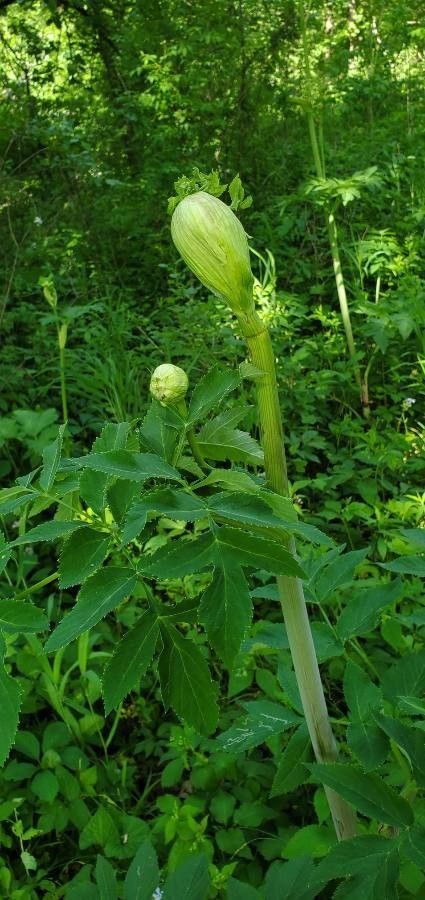
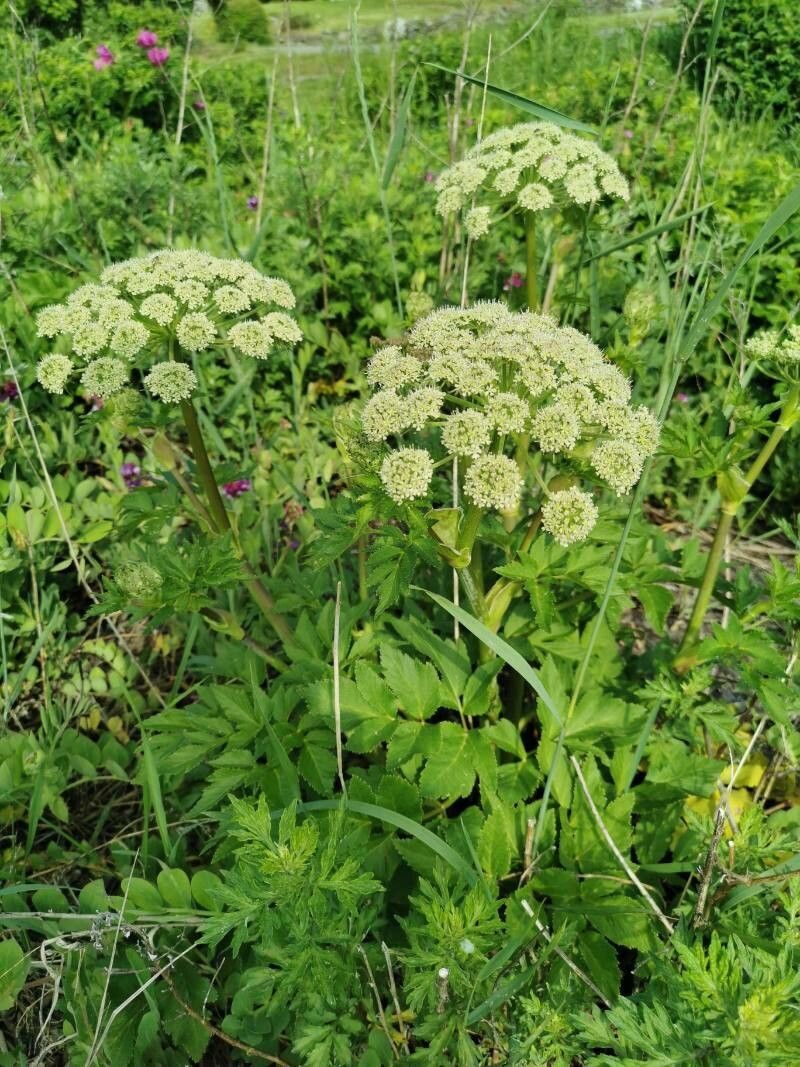
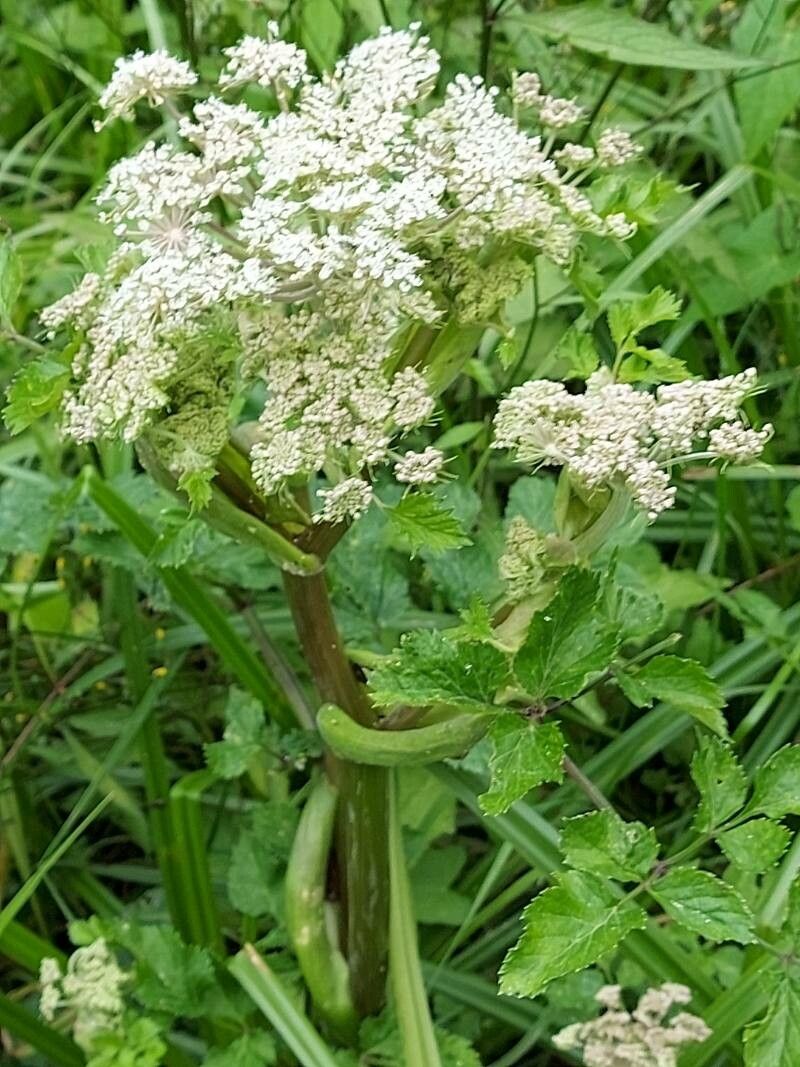
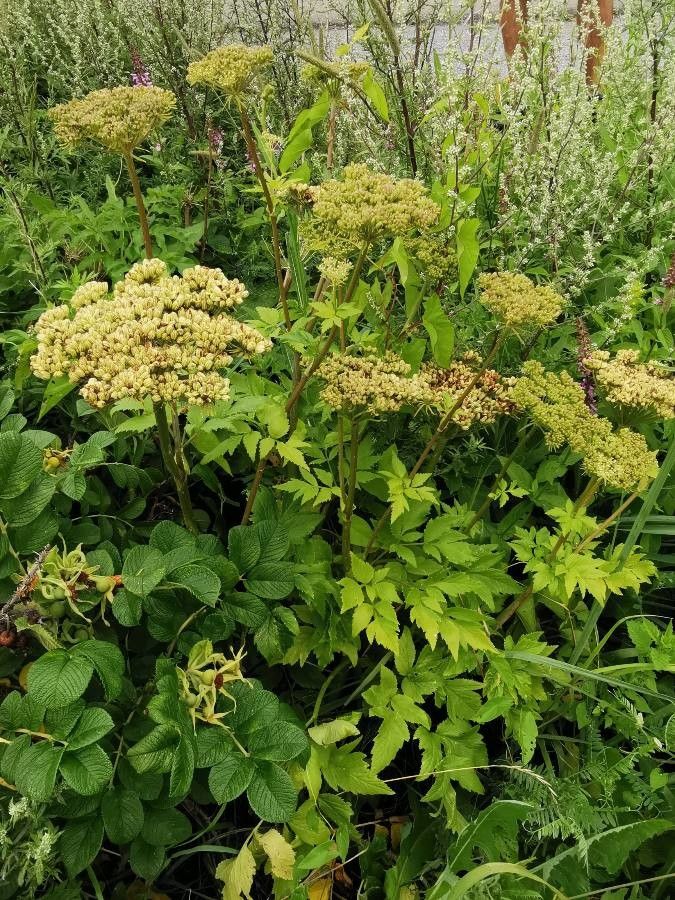
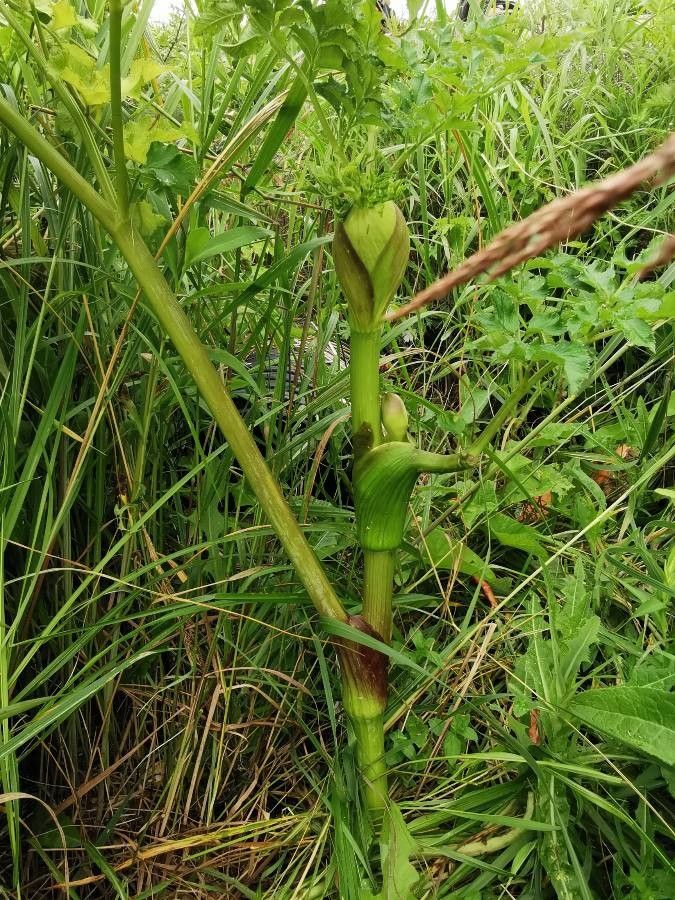
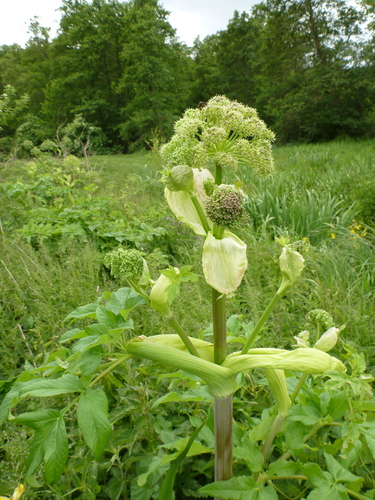
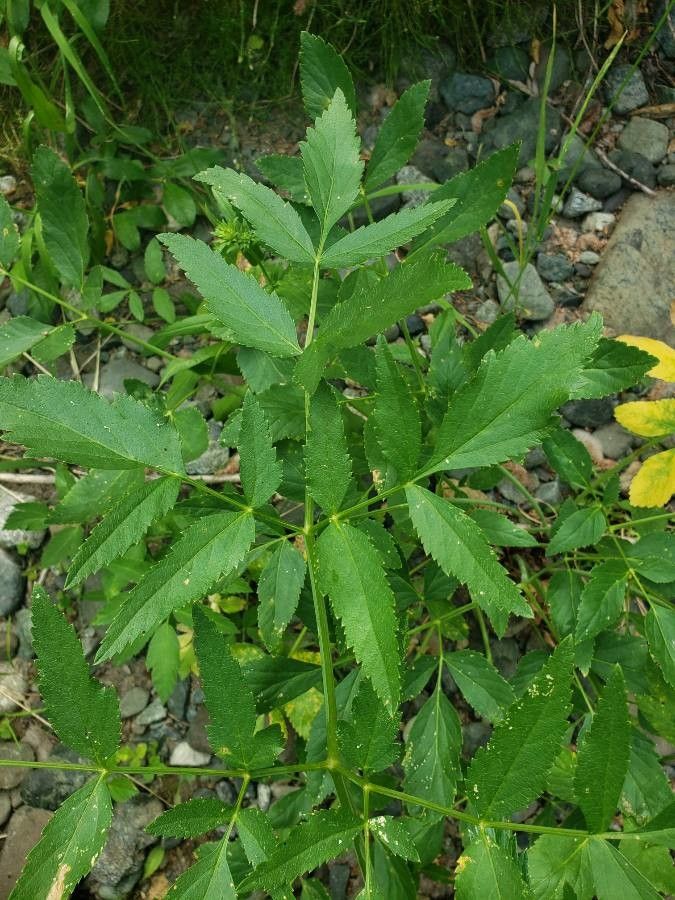
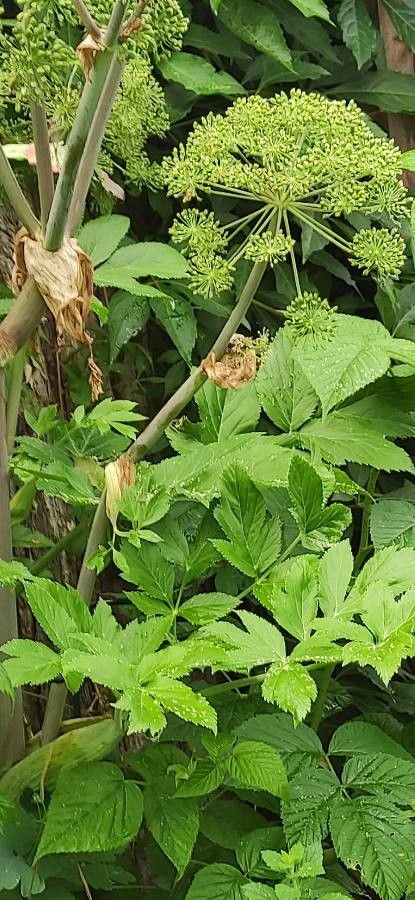
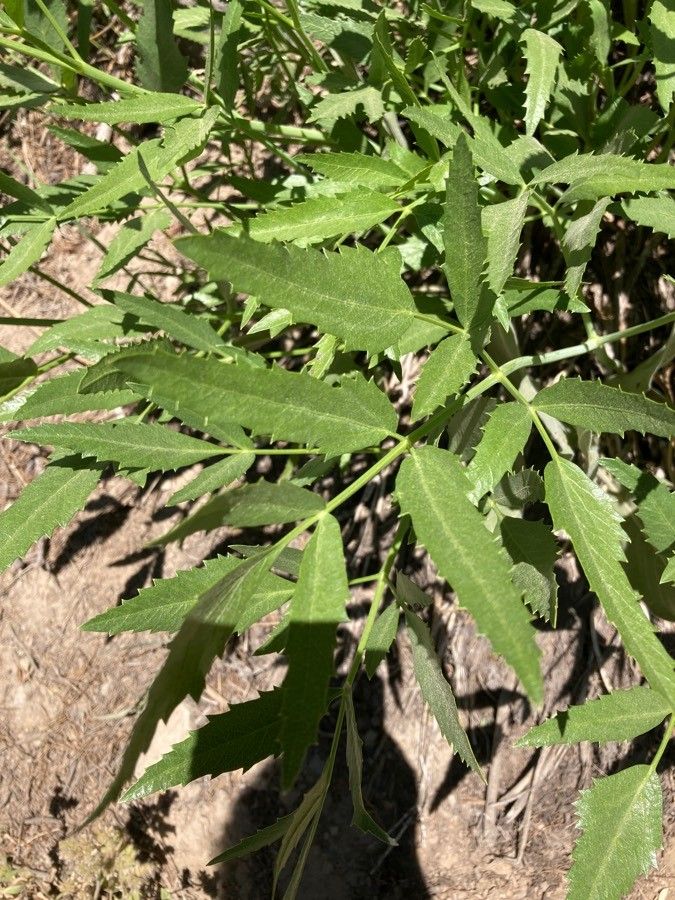
Angelica lucida, commonly known as seacoast angelica or sea-watch, is a perennial herbaceous plant in the Apiaceae family. It is native to coastal regions of North America, ranging from Alaska to California. The plant can reach heights of 1-2 meters and features a stout stem with large leaves divided into three leaflets. Its small, white or greenish-white flowers bloom in clusters from June through August.
Seacoast angelica thrives in moist soils and is typically found along rocky shores, cliffs, marshes, and coastal meadows. Indigenous people have traditionally used it for medicinal purposes, including treating colds, coughs, and stomach ailments, as well as for its antiseptic properties.
Ecologically, the plant plays a vital role by providing habitat for various insects, such as bees and butterflies, which pollinate its flowers. Additionally, birds feed on its seeds during the winter months.
Overall, Angelica lucida is an essential coastal species with cultural significance in indigenous medicinal practices. Its ecological importance in supporting diverse insect and bird populations makes it a valuable part of our natural environment.
Seacoast angelica has strong disease resistance and is generally not highly susceptible to illnesses. However, it can be affected by pests and diseases present in its environment. These infections are typically minor. Regarding care, this plant needs moderate maintenance. It requires regular pruning to preserve a good appearance and support healthy growth. Fertilizing can also encourage flowering. Seacoast angelica is appropriate for anyone with outdoor space, such as a garden or patio, and does not demand extensive gardening experience. It may need increased attention when grown indoors.
How to keep Angelica Lucida.
Light
Seacoast angelica prefers generous sun exposure, though not intense sunlight. It does best in moderately lit settings but can also tolerate locations with limited sun. Its light needs are fairly flexible through different growth stages, since too much or too little light generally will not seriously hinder its development. It performs well in areas with mixed sunlight.
Water
Seacoast angelica, which originates from coastal regions, thrives with consistent moisture and generally requires weekly watering. This herbaceous perennial is highly adaptable to different levels of water availability, which affects its cycles of growth and dormancy. Its ability to withstand changing moisture conditions highlights its resilience.
Temperature
Seacoast angelica naturally occurs in areas with typical temperatures of 41 to 77 °F (5 to 25 ℃). It generally favors warmer climates, though it can tolerate occasional cold snaps. Adjustments to maintain these temperatures are recommended during extreme seasonal changes.
Fertilizer
Usually one fertilizer application in spring is adequate for Seacoast angelica, though multiple feedings can maximize growth. Fertilize every month to a month and a half. Fertilization improves the leaves' appearance and function, maintaining uniform color and a healthy texture. It also promotes root development and nutrient uptake for long-term plant health.
Pruning
Seacoast angelica features hollow stems and broad leaves. To promote healthy growth and manage its height, prune the plant from early to late spring. Removing dead stems helps improve air circulation and reduce the risk of disease. For further guidance, consult reliable horticultural sources.
Botanical profile.
- Plant Type
- Herb
- Life Cycle
- Perennial
- Genus
- Angelica
- Family
- Apiaceae
- Hardiness Zone
- 4-5
- Mature Height
- 0.61 m to 1.37 m
- Mature Spread
- 30 cm to 61 cm
- Leaf Color
- Green, Dark Green
- Leaf Type
- Deciduous
- Flower Color
- White
- Flower Size
- 15.24 cm
- Bloom Time
- Early summer, Mid summer
- Planting Time
- Spring, Summer
- Harvest Time
- Late summer, Early fall
- Native Area
- Russia, Japan
Other names.
Reader questions.
How should I water my Seacoast angelica?
To ensure the health of your Seacoast angelica, it is important to water it properly. Start by using filtered water at room temperature, as tap water may contain harmful particles. The plant is accustomed to warmth, so avoid shocking its system with cold water. Instead of watering from above, which can lead to foliage issues, apply filtered room temperature water directly to the soil. Make sure to thoroughly soak the soil, as this will benefit the plant by moistening the roots and aiding nutrient absorption.
What are the sunlight requirements for Seacoast angelica?
Seacoast angelica requires about 3-6 hours of sunlight daily, fitting into the category of partial sun plants. For areas with full shade, it means the plant should receive less than 3 hours of sunlight. It's essential to observe how sunlight moves through your garden, picking locations that offer a balance of light and shade to ensure your plants thrive.
What is the native temperature range for Seacoast angelica?
Seacoast angelica, or Angelica lucida, thrives in environments where temperatures generally range between 41 to 77 °F (5 to 25 °C). It prefers warmer climates but can withstand mild cold snaps. To support its growth, it is suggested to adjust temperatures during extreme seasonal changes, ensuring a conducive environment for this plant.
What should I do if I give too much or too little water to my Seacoast angelica plant?
Overwatering is a common issue for Seacoast angelica and can cause wilting, yellowing, and diseases like root rot, mold, and mildew. Underwatering is less common but can cause brittle, brown leaves. To prevent damage, it's important to notice signs of overwatering early and reduce watering immediately. If the soil drains poorly, replace it with well-draining potting mix. If underwatering is suspected, water more regularly until signs subside.
Can Seacoast angelica grow in conditions other than natural sunlight?
Yes, Seacoast angelica can grow under artificial lighting conditions, which is particularly useful when natural sunlight is insufficient. LED lights are recommended for indoor plant lighting, as they can provide specific wavelengths needed for plant growth. Full sun plants require 30-50W/sq ft of artificial light, partial sun plants need 20-30W/sq ft, and full shade plants should get 10-20W/sq ft. The artificial light source should be placed 12-36 inches above the plant, and the light should be on for 8-12 hours per day to mimic natural sunlight durations.
Does Seacoast angelica require frost protection measures during winter?
Seacoast angelica is highly cold-tolerant and does not require specific frost protection measures during the winter months. However, it is advised to water the plant generously before the first freeze of autumn. This ensures that the soil remains moist and enters a frozen state adequately prepared, which helps to prevent drought and water scarcity for the plant during winter and the early spring period.
How frequently should I give water to my Seacoast angelica plant?
If your Seacoast angelica plant is in a pot, the best way to determine if it needs water is to stick your finger in the soil. If the top two to three inches of soil are dry, it's time to water it. If you're growing the plant outside in the ground, you can use the same method. Once the top few inches of soil have dried out, it's time to water. Generally, in the spring and early fall, you'll need to water this plant about once a week using this method. However, during extremely hot weather, you may need to water it at least twice a week or more. It's worth noting that mature, well-established Seacoast angelica plants can handle drought quite well.
What are the symptoms of inadequate light exposure for Seacoast angelica?
Symptoms of inadequate light exposure for Seacoast angelica include new leaves growing smaller than older ones, leggy or sparse growth, faster leaf drop, slower or halted growth, leaves developing pale or irregular color patterns, chlorosis (yellowing of leaves), sunscald, leaf curling, wilting, and leaf scorching. These symptoms highlight the plant's struggle with adjusting to light conditions either excessively low or high.
What should be done if the winter temperature drops below -30°C for Seacoast angelica?
Seacoast angelica exhibits extreme cold tolerance, yet it's crucial to maintain winter temperatures above -30°C. Should temperatures fall below this threshold, you might not observe immediate changes during winter, but a decrease or an absence of sprouting can occur in spring. The recommended solution for this scenario is to remove any plant parts that have failed to sprout in spring, ensuring healthier growth for the remaining plant.
How much water does my Seacoast angelica plant need?
To water your Seacoast angelica effectively, don't hold back on the amount of water you give it. Wait until the top layer of soil is about 2 to 3 inches dry before watering, and then give it a good, thorough soaking. Make sure you add enough water to completely saturate the soil, causing any excess water to drain out of the pot through the drainage holes at the bottom. If you don't see that excess water draining, it means you haven't watered enough. On the other hand, be careful not to let water accumulate inside the soil, as that can harm the plant. Similarly, if you notice that water isn't draining through the pot, it could indicate a problem with poorly draining soil, which is not good for the plant's health. If the plant is outdoors, it should receive about 1 inch of rain per week, which should be sufficient.
How can I adapt my Seacoast angelica to changing light conditions, both indoors and outdoors?
To help Seacoast angelica adapt to changing light conditions, gradually increase exposure to sunlight by shifting plants to sunnier spots each week, ensuring they receive 3-6 hours of direct sunlight daily. For indoor plants that are large or not easily movable, consider providing additional light using a desk, ceiling lamp, or professional plant grow lights for at least 8 hours daily. Outdoors, avoid sudden changes in light to prevent sunburn. In both settings, observe that parts of the plant damaged by insufficient sunlight might not recover, but new growth will be healthy after light conditions improve.
How does Seacoast angelica respond to high temperatures, and what are the recommended solutions?
Seacoast angelica shows a low tolerance for high temperatures. When temperatures rise above 25°C, its growth ceases, and the plant becomes more vulnerable to rot. To mitigate this, it is suggested to trim away any sunburned or dried-up parts of the plant. Moving the plant to a shaded location or employing a shade cloth to minimize exposure during the hottest parts of the day is beneficial. Additionally, watering the plant in the morning and evening helps keep the soil moist, thus supporting the plant in high temperature conditions.