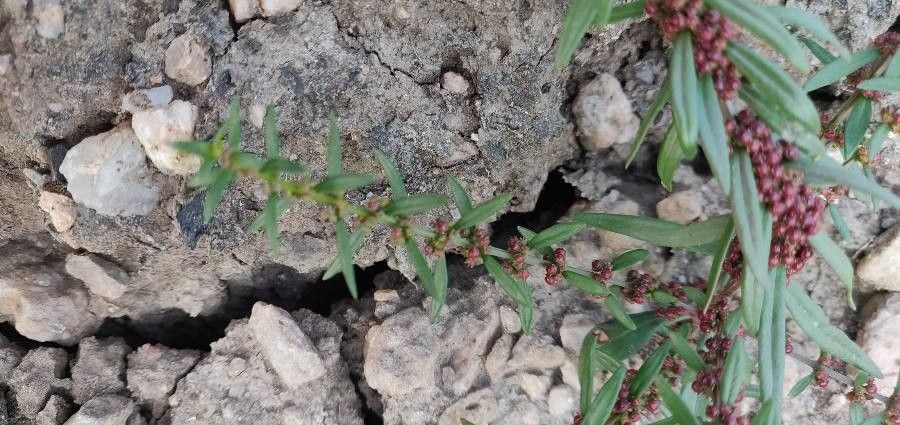
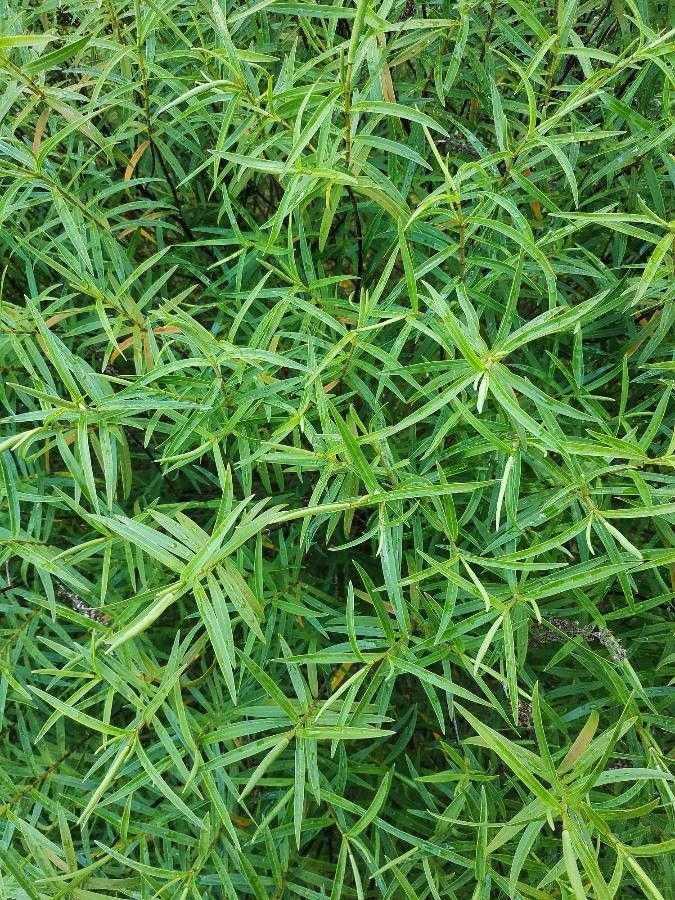
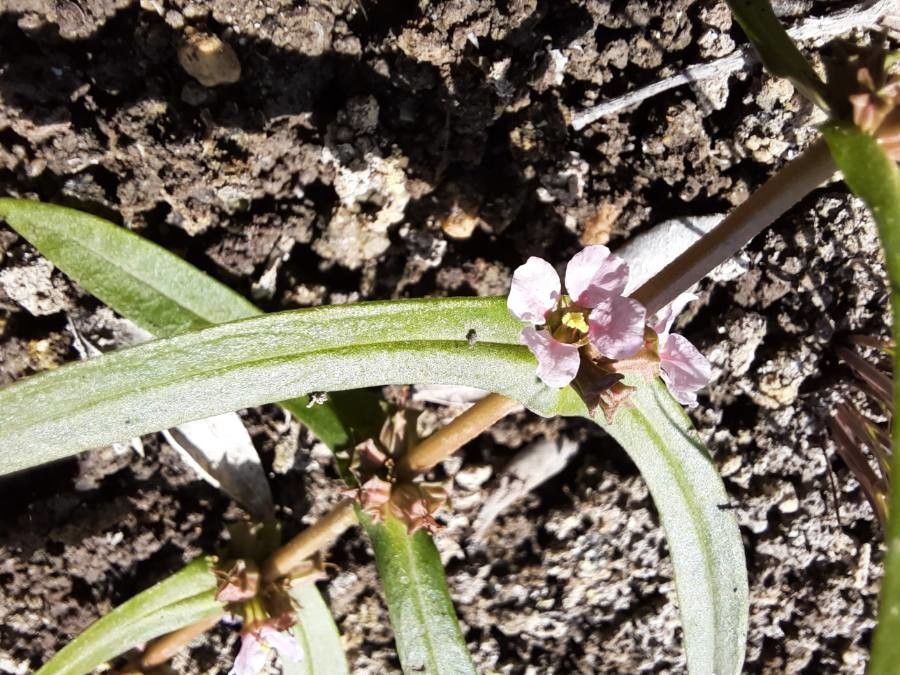
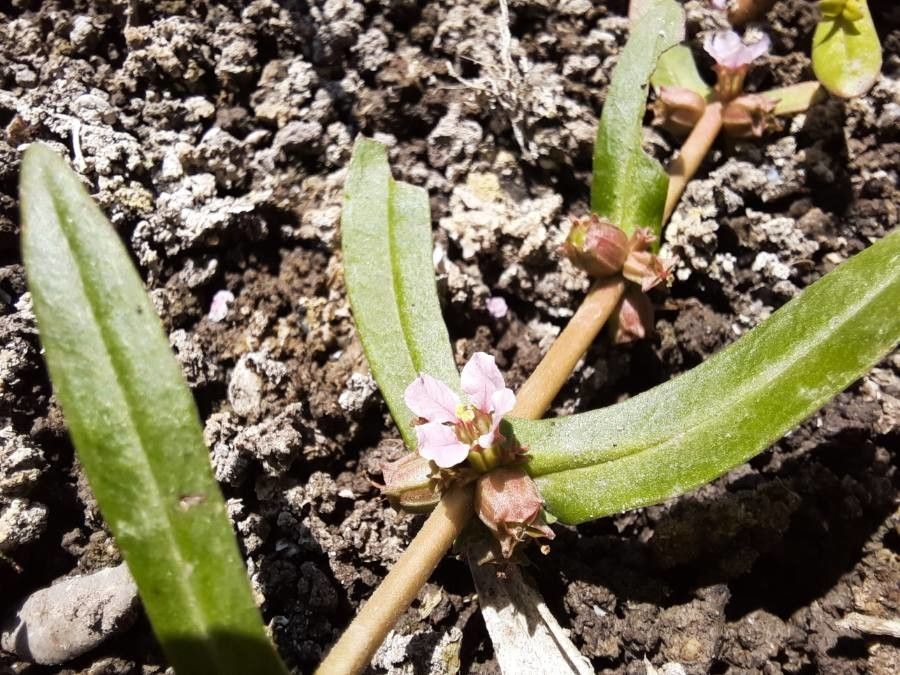
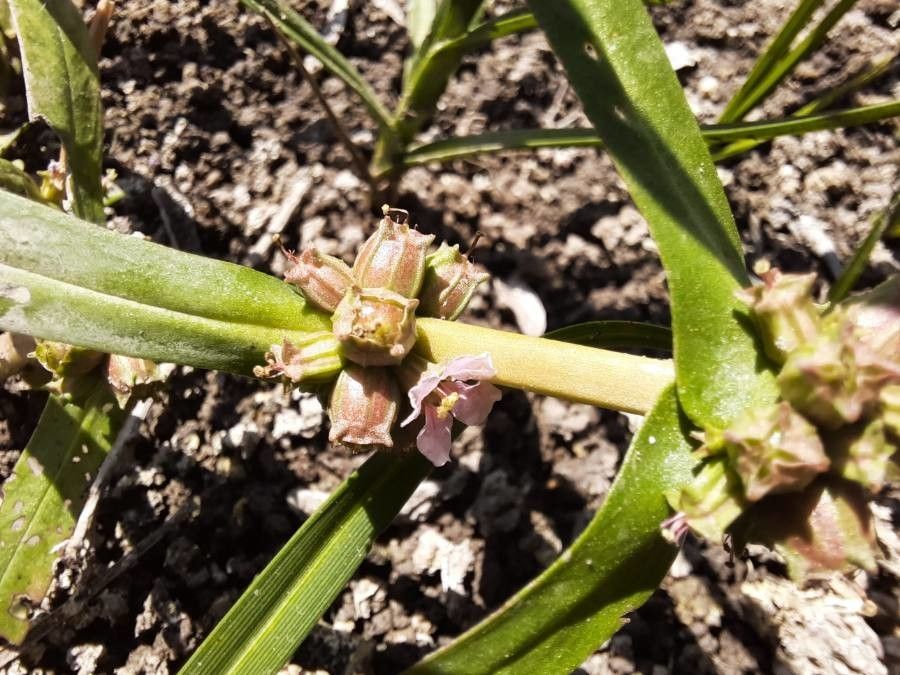
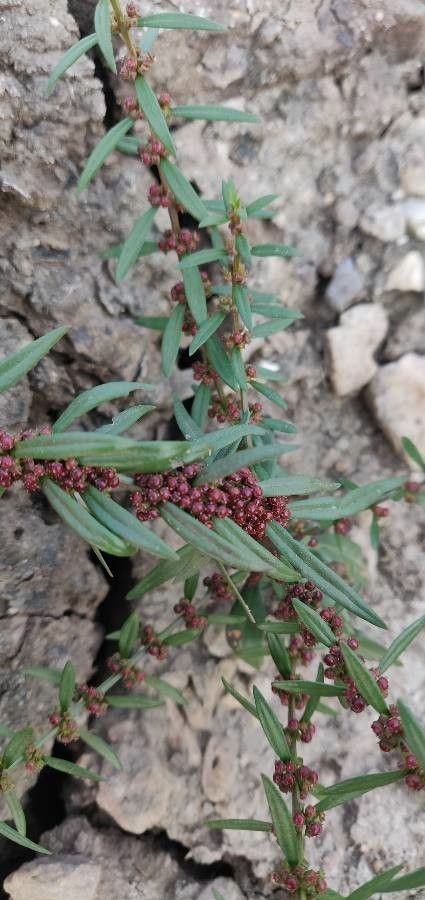
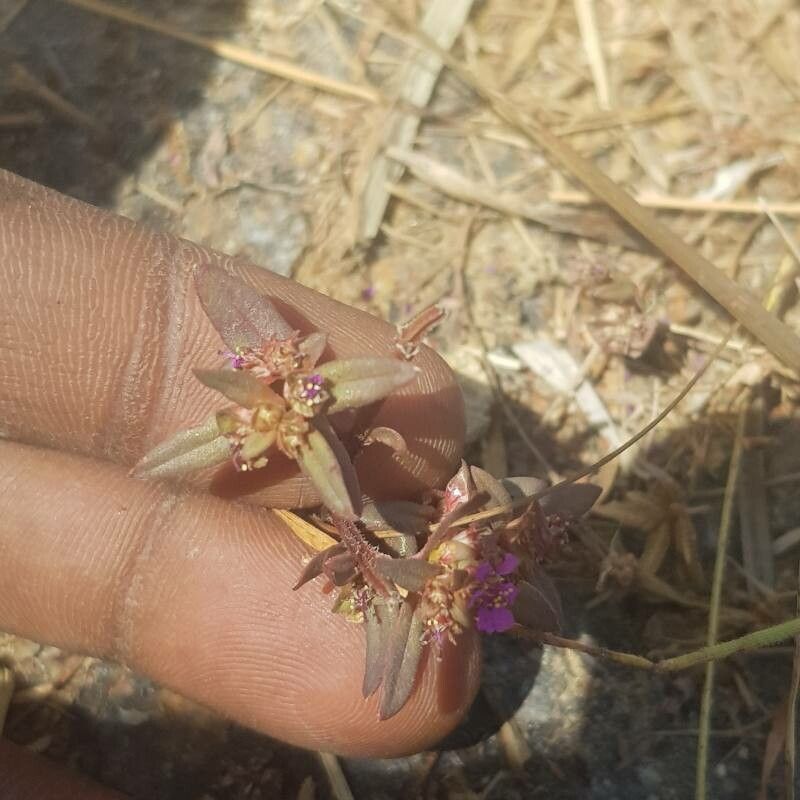
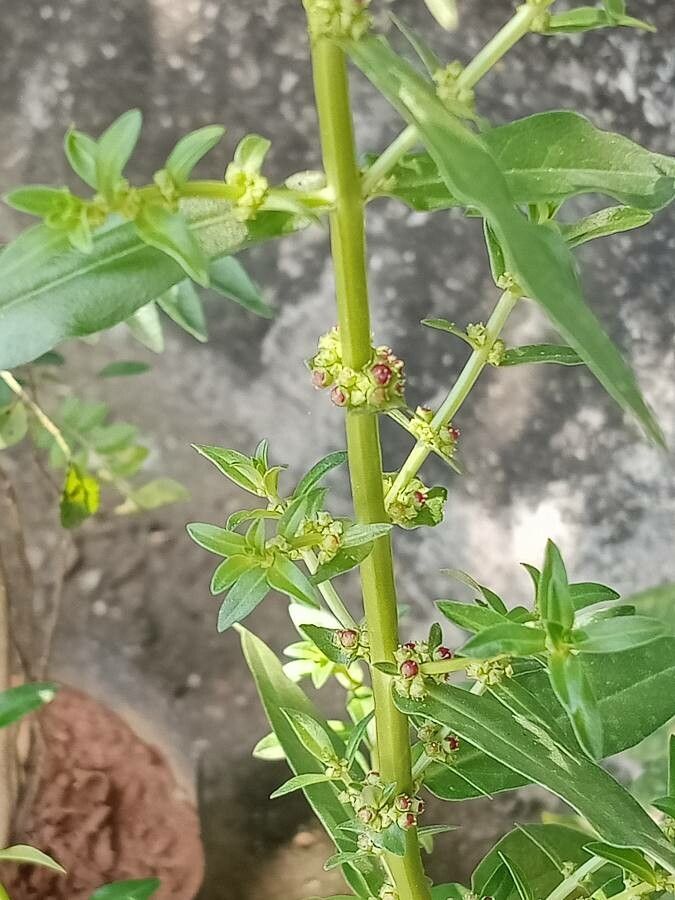
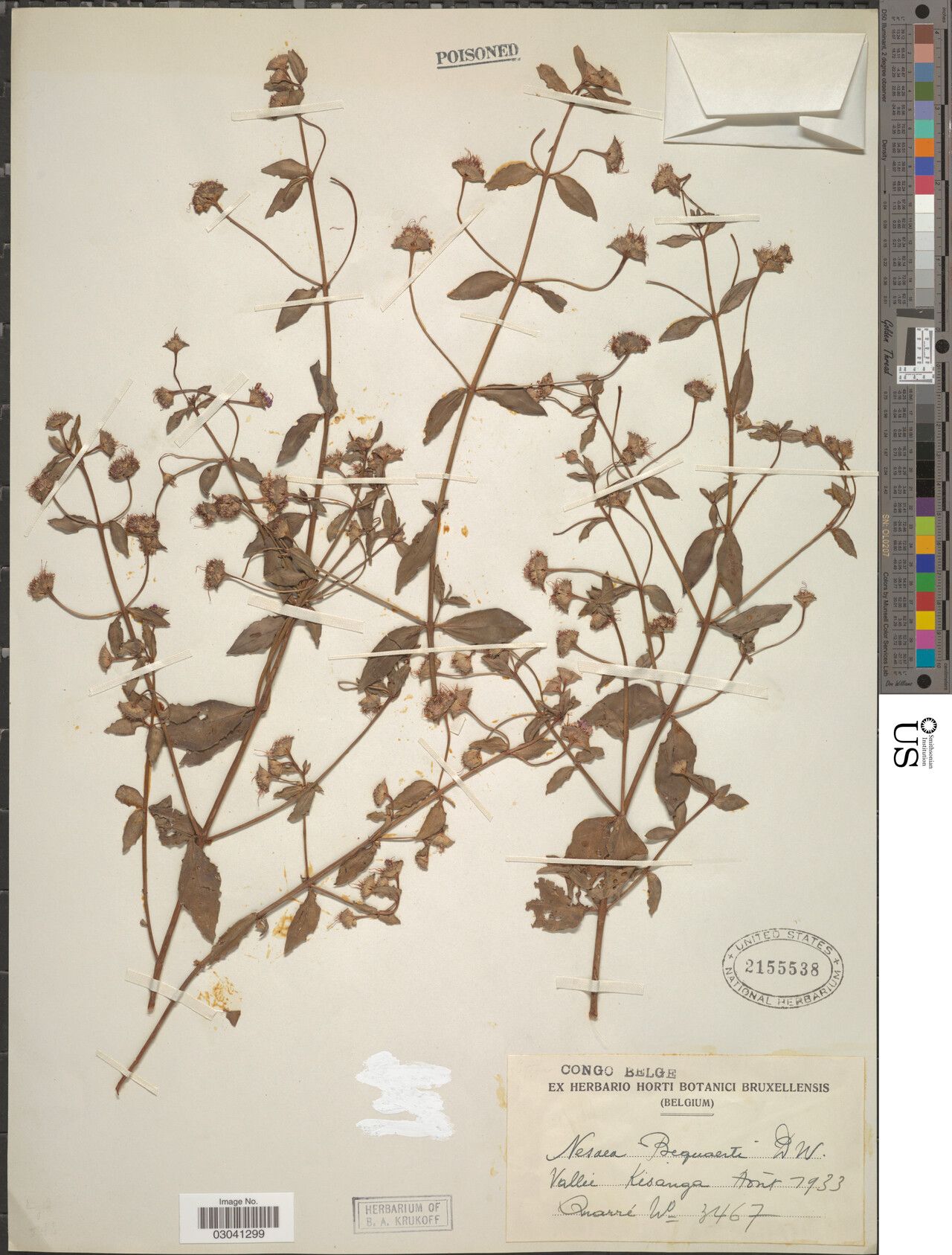
Ammannia coccinea is a species of flowering plant in the loosestrife family known by several common names, including valley redstem, scarlet toothcup, and purple ammannia. It is native to most of the contiguous United States, with the exception of the Pacific Northwest and New England. It is generally found in moist areas, such as riverbanks and pond margins. It is weedy in some areas. This is an annual herb growing erect to heights approaching one meter or lying along the ground. Leaves are linear in shape, up to 8 centimeters long, and green to shades of deep red in color. The inflorescence is a cluster of 3 to 5 flowers growing in the leaf axils along the upper part of the stem. The rounded flower has small rose to lavender petals each a few millimeters long and protruding stamens with yellow anthers. The fruit is a rounded capsule up to half a centimeter wide containing many tiny seeds.
Valley redstem is fairly disease-resistant and usually does not develop illnesses. However, it can be affected by pests and diseases present in its environment. These problems are typically not serious. As for maintenance, this plant requires a moderate level of care. It should be pruned regularly to keep a neat appearance and support healthy growth. Fertilizing can also encourage it to flower. Valley redstem is well suited for anyone with outdoor space, such as a garden or patio, and does not demand extensive care experience. When grown indoors, though, it may need more attention.
How to keep Ammannia Coccinea.
Light
Valley redstem comes from bright, open habitats and does best in full sun. It can tolerate some partial shade but prefers direct sunlight for optimal growth. This plant, which is annual or biennial, is known for its sun-loving nature.
Water
Valley redstem flourishes in moist, wetland-like environments where it needs consistent moisture. To keep the plant healthy and avoid waterlogging, it is important to water it once a week. Valley redstem is resilient to changing water levels, able to withstand both flooding and moderate dry spells. This adaptability makes it an excellent choice for outdoor locations near water bodies.
Temperature
Valley redstem is a plant that does best in its native growing environment where temperatures range from 68 to 95 °F (20 to 35 ℃). To maintain its health, small temperature adjustments may be needed as the seasons change.
Fertilizer
Valley redstem does well with regular, light applications of fertilizer to encourage healthy leaf development. Fertilize Valley redstem roughly once a month during the summer. Nitrogen is essential for foliage, and supplying nitrogen-rich sources helps Valley redstem thrive.
Pruning
Valley redstem, known for its vibrant red stems, thrives in wet conditions. To promote healthy growth and improve airflow, prune the plant between early and late spring. Remove any dead stems during this time. Make sure to sanitize your tools before pruning to prevent disease, which will enhance flowering and resilience while maintaining the plant's size and shape.
Botanical profile.
- Plant Type
- Herb
- Life Cycle
- Annual
- Genus
- Ammannia
- Family
- Lythraceae
- Hardiness Zone
- 3
- Mature Height
- 20 cm to 61 cm
- Mature Spread
- 30 cm
- Leaf Color
- Green
- Leaf Type
- Deciduous
- Flower Color
- Red
- Flower Size
- 0.76 cm
- Bloom Time
- Summer, Early fall, Mid fall
- Planting Time
- Summer
- Harvest Time
- Late summer, Fall, Early winter
- Native Area
- Colombia, Bahamas, Cuba, Honduras, Mexico, Guatemala, Venezuela, Nicaragua, Ecuador, Costa Rica, Panama, Jamaica
Other names.
Reader questions.
What is the ideal temperature range for growing Valley redstem?
Valley redstem, known botanically as Ammannia coccinea, thrives best in temperatures between 68 to 95 °F (20 to 35 °C). This plant is native to environments that support this temperature range, and maintaining such conditions can contribute significantly to its health. While the plant is highly cold-tolerant, slight adjustments to the surrounding temperature might be necessary with the changing seasons to ensure its well-being.
How does Valley redstem handle cold temperatures and frost?
Valley redstem is exceptionally tolerant to cold conditions and doesn't require special frost protection measures during the winter months. To prepare for the first freeze of autumn, it is recommended to water the plant generously. This practice helps to keep the soil moist, which in turn allows it to enter a state of freeze. This technique is crucial for preventing drought and water scarcity for the plant during the winter and early spring.
What should you do if the winter temperature drops below -35°C for Valley redstem?
Despite Valley redstem's high tolerance for cold, it is vital to ensure that winter temperatures remain above -35°C. If the temperatures fall below this threshold, you might not see immediate damage during the winter, but the plant could experience decreased sprouting or fail to sprout at all in the spring. If this occurs, the solution is to remove any parts of the plant that have failed to sprout, allowing for potentially healthy growth in the coming seasons.
How should Valley redstem be cared for in temperatures above 35°C?
Valley redstem struggles in high temperatures exceeding 35°C, leading to halted growth and an increased risk of rot. To protect and care for the plant under these conditions, it is advisable to trim away any parts that have become sunburned or dried up. Moving the plant to a shaded location or using a shade cloth can provide protection from the intense midday and afternoon sun. Additionally, watering the plant in the morning and evening can help keep the soil moist and support the plant's health during periods of high temperature.