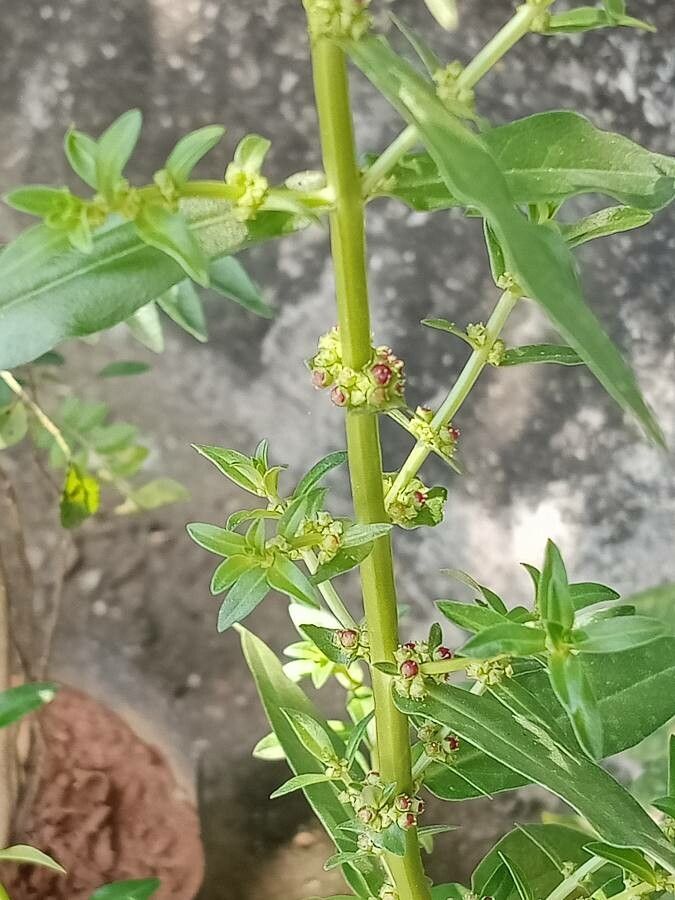
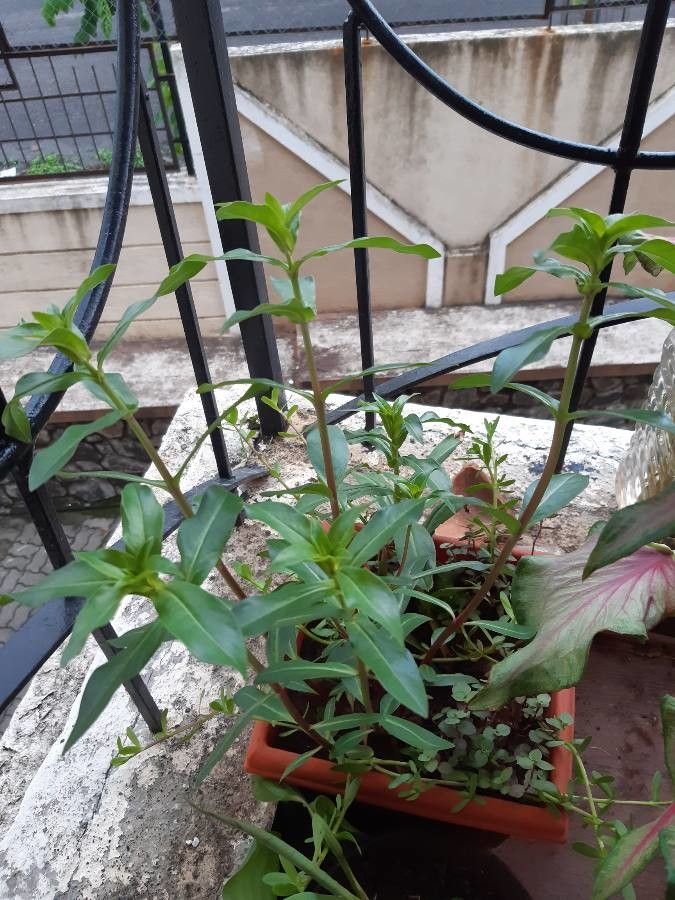
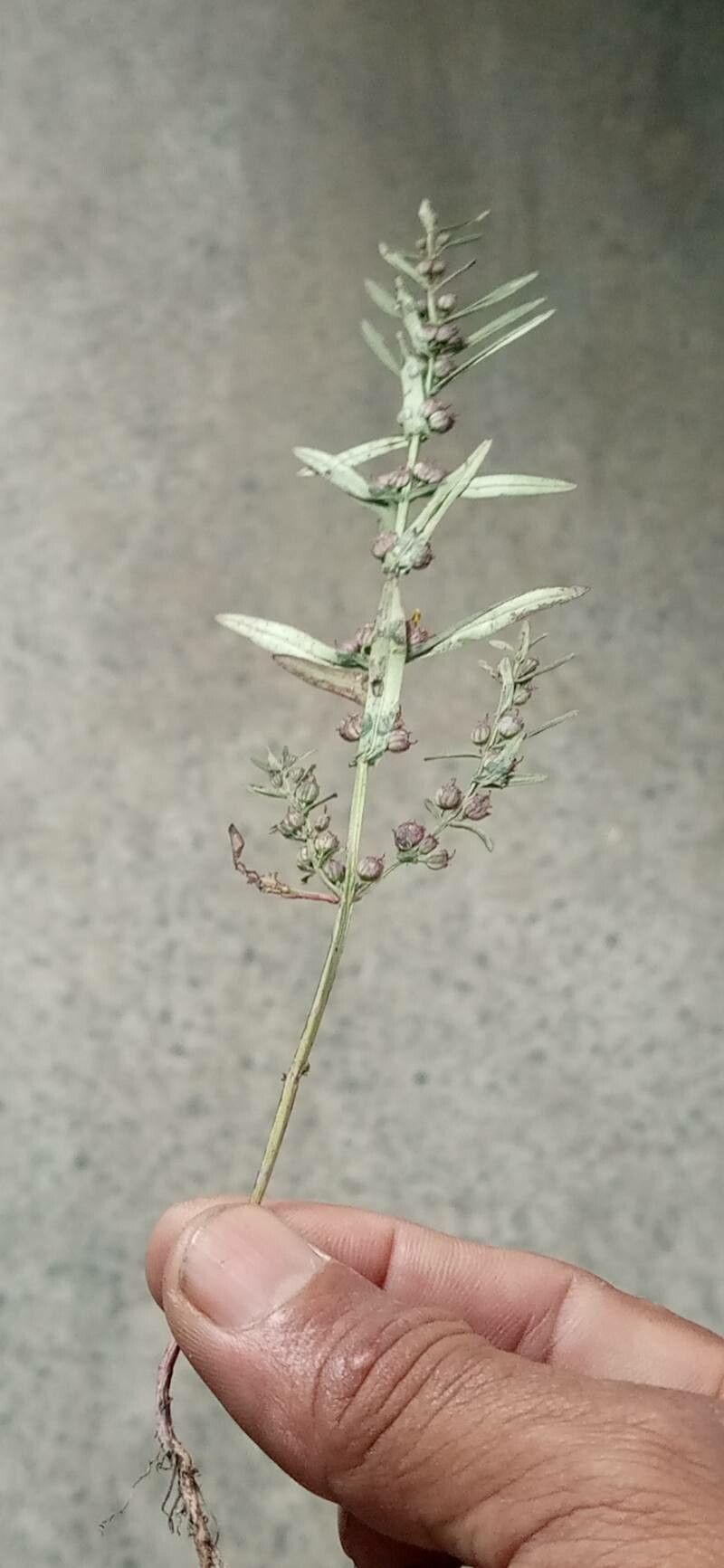
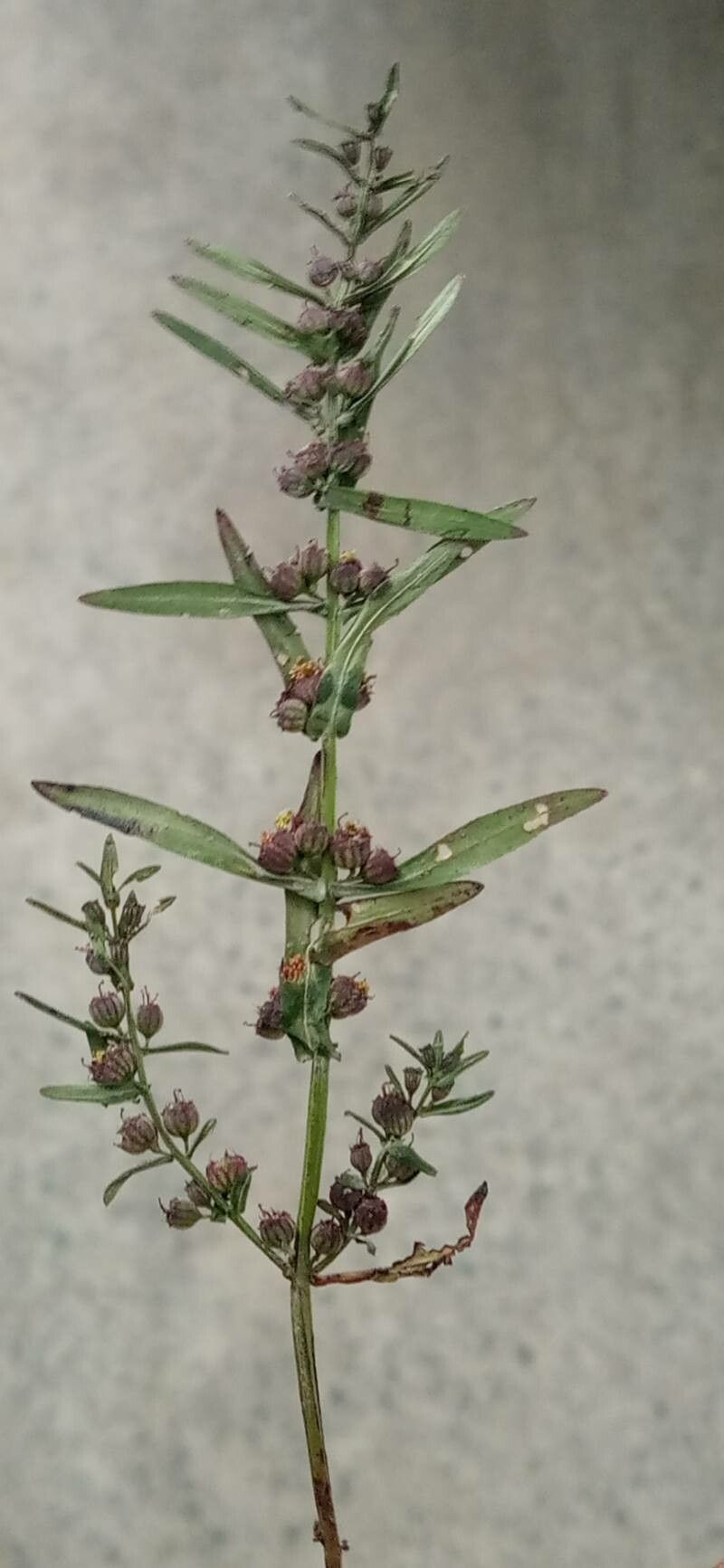
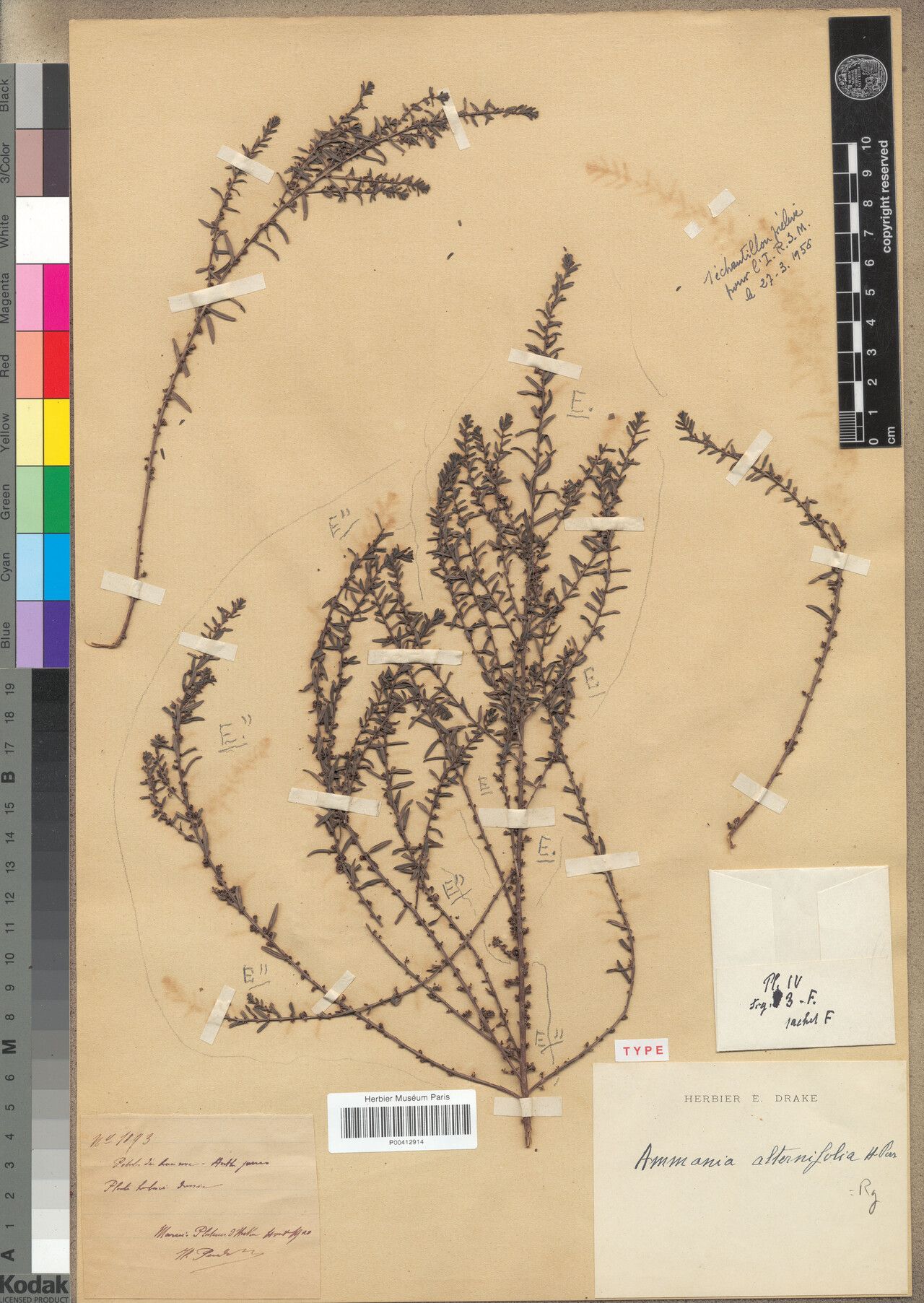
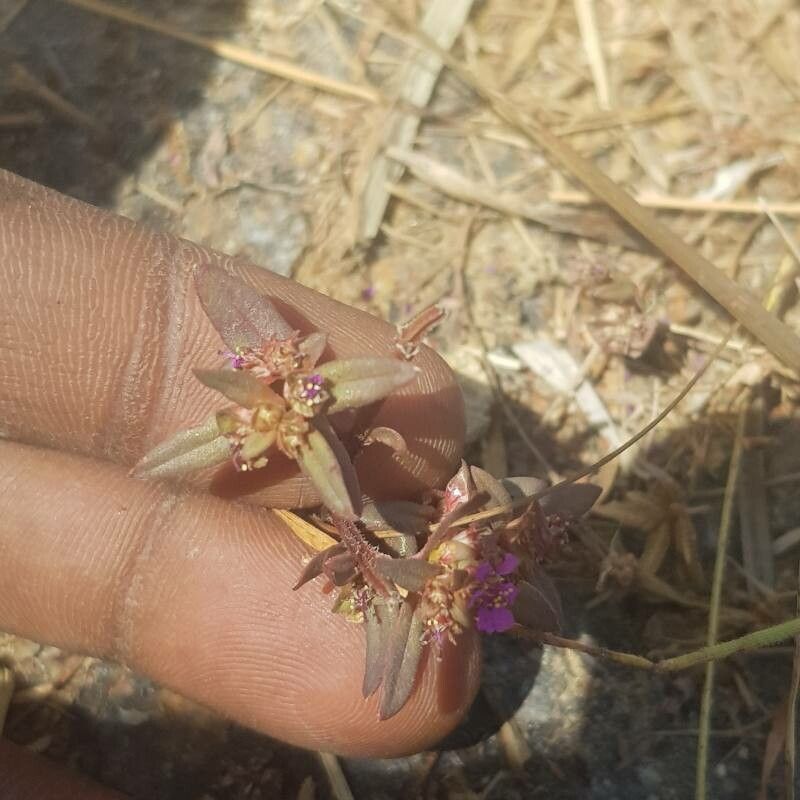
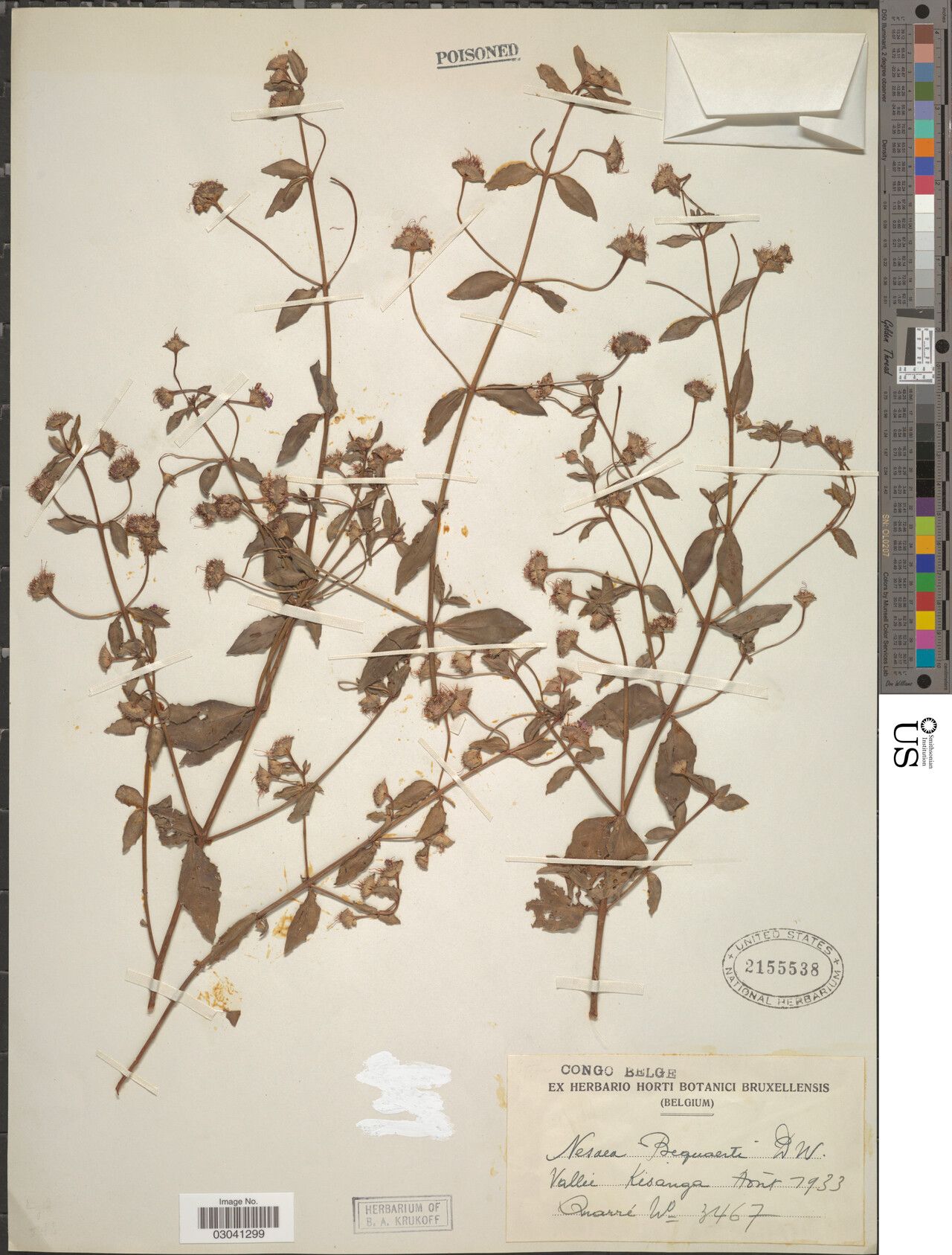
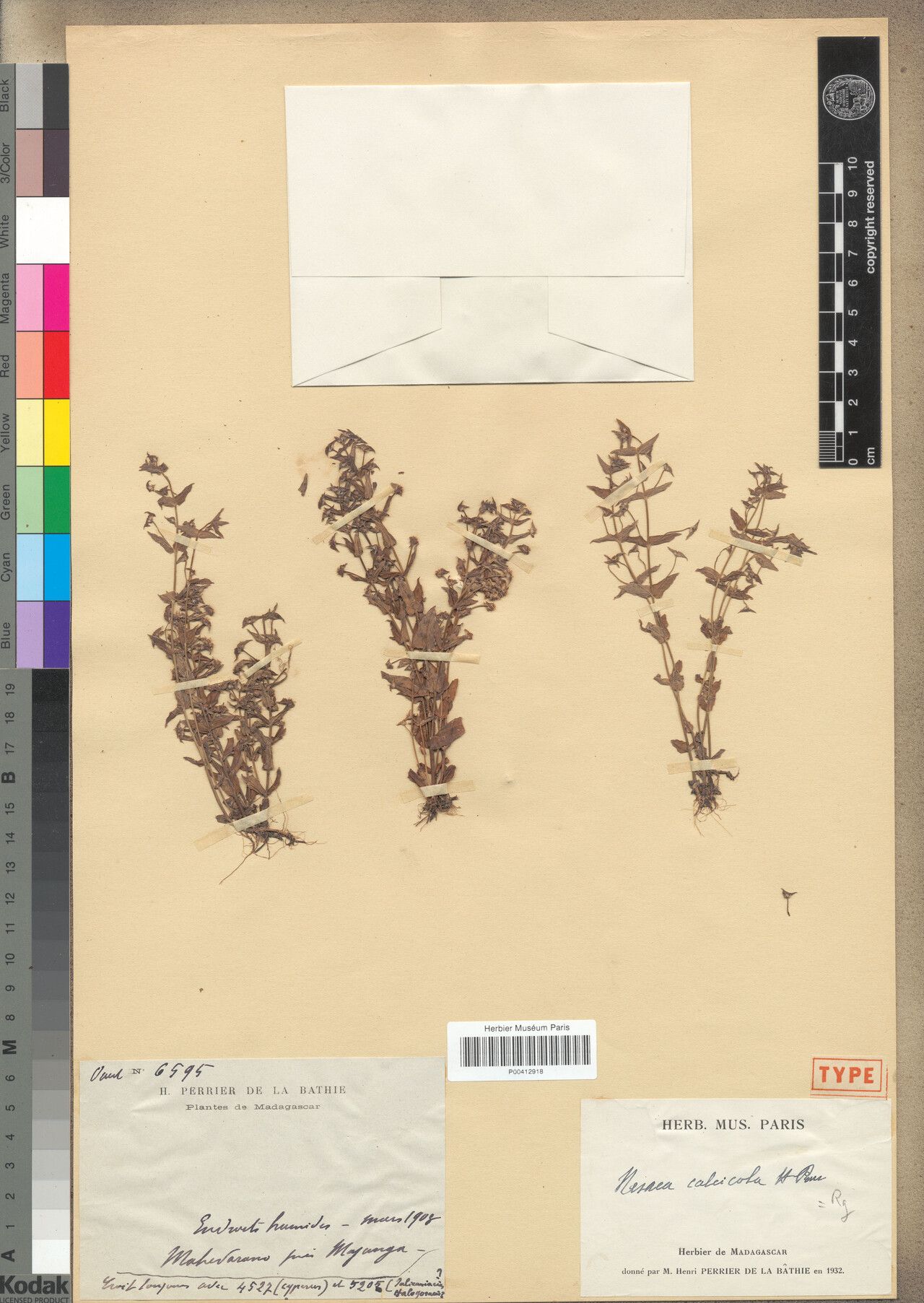
Ammannia baccifera, also known as the monarch redstem or blistering ammannia is a species in the family Lythraceae. It is widespread in the tropical regions of Asia, America and Africa. It has been naturalized in Spain. It is annual and herbaceous, and can be found in marshes, swamps, rice fields and water courses at low elevations. It is considered endangered in Israel, but because it is widespread and common elsewhere, the IUCN considers it to be 'Least Concern'. The plant Ammannia baccifera Linn. is erect, branched, smooth, slender, annual, more or less purplish herb 10 to 50 centimeters in height. The stems are somewhat 4-angled. The leaves are oblong, oblanceolate, or narrowly elliptic, about 3.5 centimeters long – those on the branches very numerous, small, and 1 to 1.5 centimeters long – with narrowed base and pointed or somewhat rounded tip. The flowers are small, about 1.2 millimeters long, greenish or purplish, and borne in dense axillary clusters. The capsules are nearly spherical, depressed, about 1.2 millimeters in diameter, purple, and irregularly circumscribes above the middle. The seeds are black (Nadkarni, 1982).
Monarch redstem has strong resistance to disease and typically does not suffer from illnesses. Nevertheless, it can be affected by pests and diseases present in its environment. These infections are generally mild. Regarding care, this plant needs moderate maintenance. It should be pruned regularly to preserve a neat appearance and promote healthy growth. Applying fertilizer can also encourage flowering. Monarch redstem is appropriate for anyone with outdoor space, like a garden or patio, and does not demand extensive experience in plant care. It may need more attention when cultivated indoors.
How to keep Ammannia Baccifera.
Light
Monarch redstem comes from bright, open habitats and does best in full sun. It can tolerate partial sun but favors direct sunlight for optimal growth. This plant, which may be annual or biennial, is known for its sun-loving nature.
Water
Monarch redstem, which originates from wetlands, thrives in consistently moist soil and high humidity. To ensure optimal growth, it is best to water it weekly, although it can withstand short periods of dryness. It's important to understand local climate zones, as rainfall patterns in outdoor environments can significantly impact the plant's health.
Temperature
Monarch redstem comes from tropical areas where the climate is generally warm and humid. Therefore, it is well adapted to high heat and humidity. It does not tolerate sudden temperature changes and prefers a steady temperature environment, so avoiding temperature fluctuations indoors is important. It usually cannot withstand cold and needs higher temperatures to grow. If the ambient temperature falls too low, the plant may stop growing or even die.
Fertilizer
Monarch redstem does well with regular, light applications of fertilizer to encourage healthy leaf development. You should apply fertilizer about once a month during the summer. Nitrogen is vital for foliage, and providing nitrogen-rich fertilizer helps Monarch redstem thrive.
Pruning
The Monarch redstem is characterized by its vibrant red stems and clusters of flowers. It thrives with strategic pruning, which should be done from early to late spring. By removing dead growth, you can enhance the plant's health and flowering potential. Thinning the plant allows for better air circulation and helps reduce the risk of disease. Regular pruning also encourages a bushier appearance, ensuring robust growth during its active season.
Botanical profile.
- Plant Type
- Herb
- Life Cycle
- Annual, Perennial
- Genus
- Ammannia
- Family
- Lythraceae
- Hardiness Zone
- 9-11
- Mature Height
- 10 cm to 49 cm
- Mature Spread
- 15 cm to 30 cm
- Leaf Color
- Green
- Leaf Type
- Evergreen
- Flower Color
- Pink, Red
- Flower Size
- 0.10 cm
- Bloom Time
- Summer, Early fall, Mid fall
- Planting Time
- Spring, Summer, Autumn
- Harvest Time
- Late summer, Fall, Early winter
- Native Area
- Sri Lanka, Burkina Faso, Egypt, Turkey, Malaysia, India, Angola, Madagascar, Rwanda, Pakistan, Thailand, Nigeria, Eritrea, Kenya, Brunei, Tanzania, Zimbabwe, Uzbekistan, Russia, Mali, Benin, Iraq, Indonesia, Cambodia, Burundi, Mozambique, Oman, Ghana, Ethiopia, Botswana, Nepal, Saudi Arabia, Malawi, Tajikistan, South Africa, Zambia, Sudan, Philippines, Laos, Armenia, Chad, China, Afghanistan, Vietnam, Myanmar, Togo, Bhutan, Côte d'Ivoire, Eswatini, Iran, Azerbaijan, Congo (DRC), Turkmenistan
Other names.
Reader questions.
What are the sunlight requirements for Monarch redstem?
Monarch redstem thrives in full sun, requiring more than 6 hours of sunlight daily for optimal growth. It can tolerate partial sun, which amounts to about 3-6 hours of sunlight. The plant originates from bright, open environments, meaning its growth is best supported by direct sunlight. Indoor plants may require artificial lighting, especially in less sunny spaces or during winter, to mimic these conditions. LED lights are recommended for their ability to offer tailored wavelengths, with full sun plants needing 30-50W/sq ft, partial sun plants 20-30W/sq ft, and full shade plants 10-20W/sq ft of artificial light.
What are the symptoms of light deficiency in Monarch redstem?
When Monarch redstem is grown in inadequate light, it might display symptoms such as smaller new leaves, leggy or sparse growth, accelerated leaf drop, slowed or halted growth, lighter-colored or irregularly patterned new leaves, and conditions like chlorosis, sunscald, leaf curling, wilting, and leaf scorching. These symptoms indicate that the plant is struggling to adapt to its environment, emphasizing the need for sufficient light.
How can I address light-related issues for my Monarch redstem?
To address insufficient light, gradually move Monarch redstem plants to sunnier locations to receive at least 6 hours of direct sunlight daily, using south-facing windows for indoor plants and artificial lighting if needed. For outdoor plants, avoid sudden changes in light intensity to prevent sunburn. Reduce obstructions like overhanging branches, and consider transplanting smaller plants to sunnier locations. Note that parts of the plant damaged by insufficient light may not recover, but new growth should be healthy with improved light conditions.