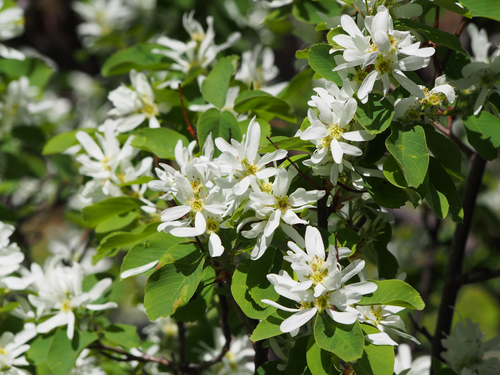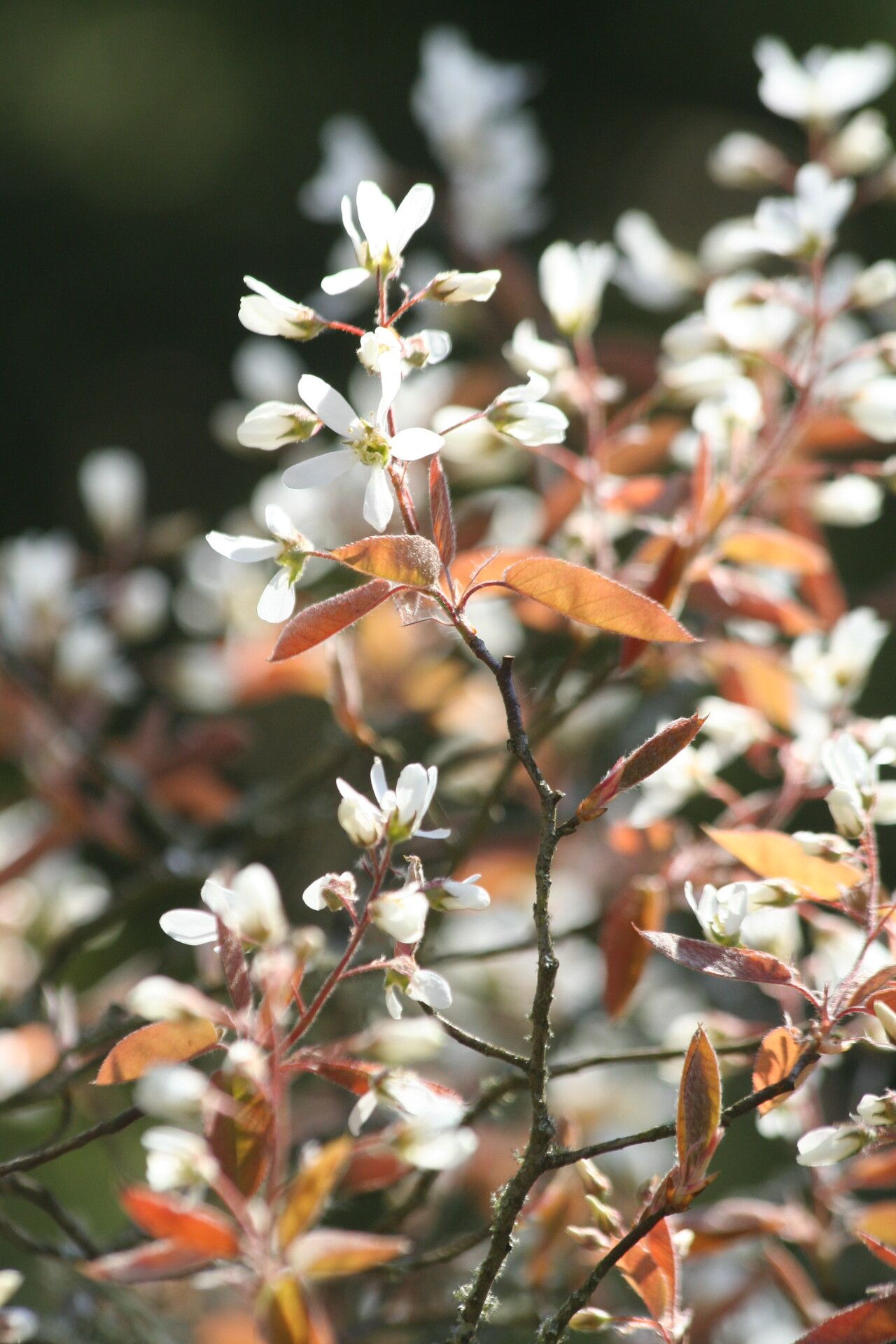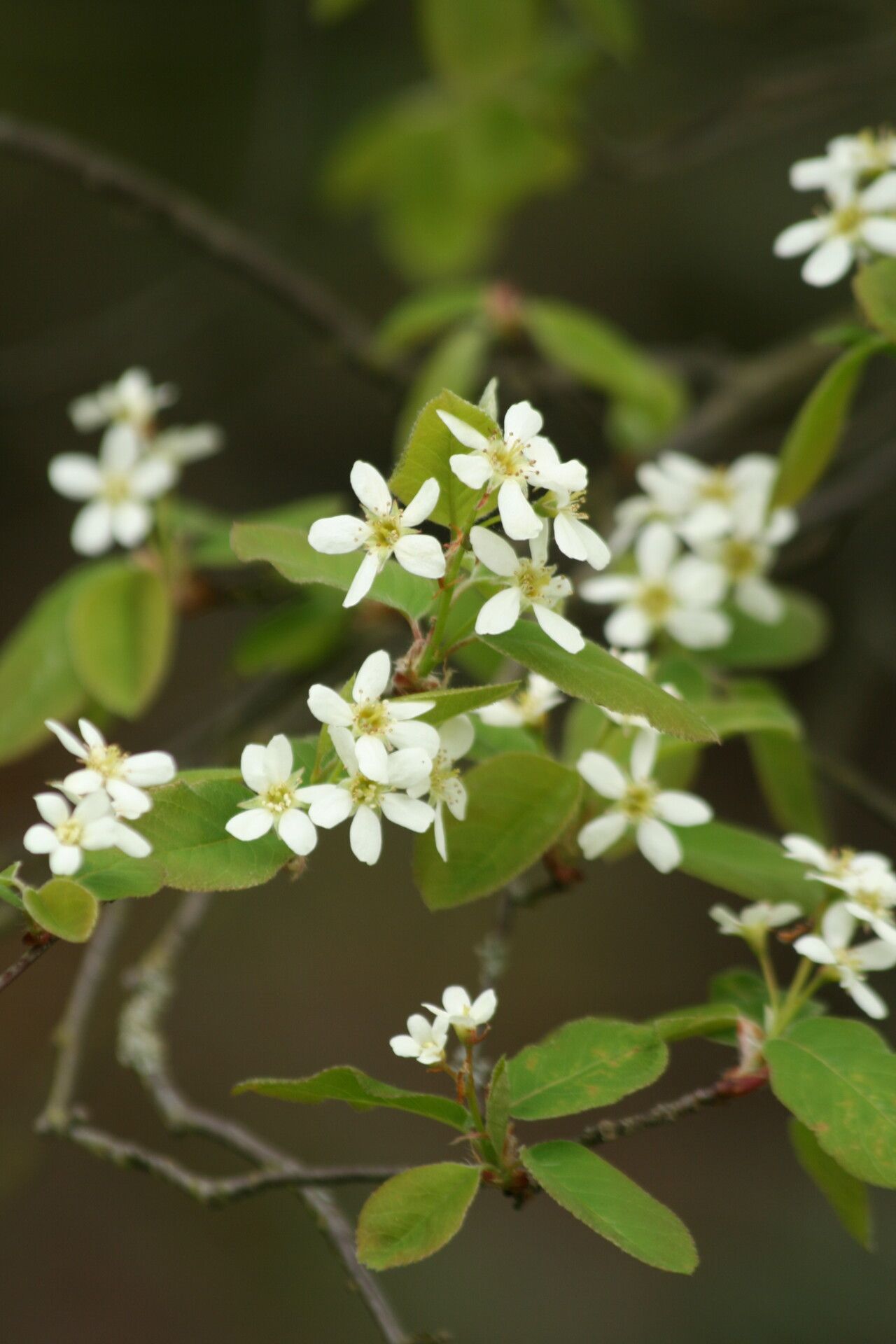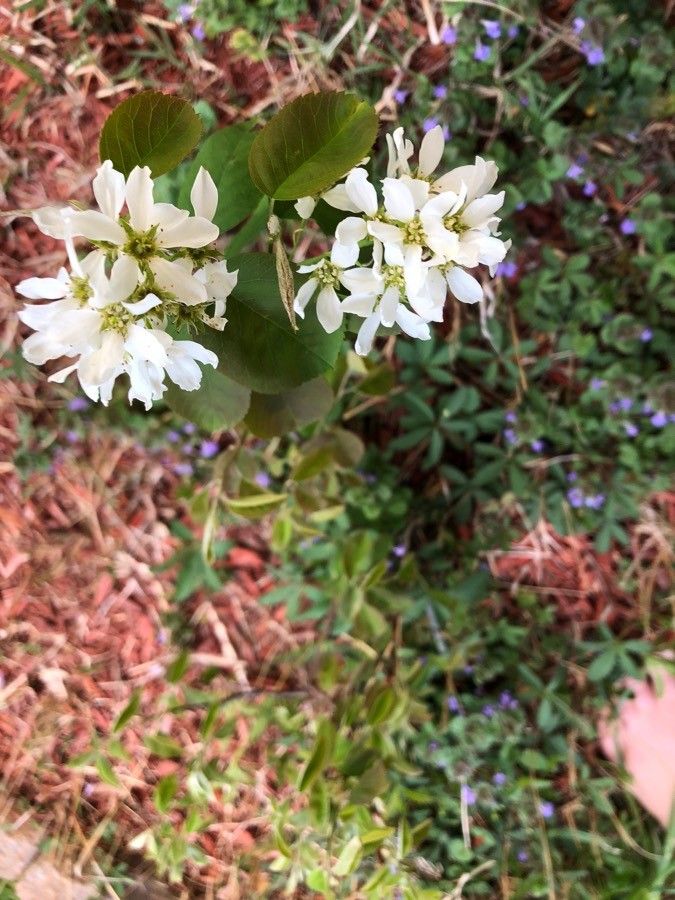
Amelanchier spicata, also referred to as the low juneberry, thicket shadbush, dwarf serviceberry, or low serviceberry (historically also called "pigeon berry"), is a species of serviceberry that has edible fruit, which are really pomes. They can be eaten raw or cooked. Amelanchier spicata has clusters of small white flowers that bloom in spring. Amelanchier spicata is native to North America. It is a very hardy species, and is considered invasive in Scandinavia.
Running serviceberry is resistant to disease and generally not susceptible to illnesses. In terms of care, this plant is fairly low-maintenance. When grown outdoors it needs little watering, and larger plants typically do not require pruning. Smaller plants, however, should be pruned after they finish blooming. Running serviceberry is suitable for anyone with an outdoor area, such as a garden or deck, and does not demand extensive gardening experience.
How to keep Amelanchier Stolonifera.
Light
Running serviceberry does best in locations with plentiful sunlight, which supports healthy growth and maximizes photosynthesis. It can tolerate sites with less sun, but reduced light may slow its growth and diminish its vigor. Excessive or insufficient light can cause foliage damage or stunted growth.
Water
The running serviceberry thrives in environments with moderate rainfall, needing a balance between moisture and dryness. While it prefers humidity, it is also drought-tolerant. For optimal health, water it every 1-2 weeks. As a deciduous plant, it loses its leaves in the autumn, which decreases its water needs during that season.
Temperature
Running serviceberry is native to temperate climates. It grows best in temperatures between 41 and 90°F (5 to 32℃). In colder or hotter periods, it is advisable to slowly acclimate the plant or to give it a protected microclimate.
Fertilizer
The Running serviceberry plant needs adequate nutrients to achieve optimal fruit production. Fertilize in early spring to encourage new growth and flower development. Regular fertilization keeps the plant healthy, produces more delicious fruit, and prevents nutrient deficiency problems such as yellow leaves and poor fruit production.
Pruning
The running serviceberry is a low-growing shrub known for its white flowers and edible berries. To keep it healthy, prune in late spring by removing any dead, damaged, or crossing branches. Additionally, thin out crowded areas to improve air circulation and light penetration. Regular pruning helps maintain the shrub's shape, control its spread, and enhance its growth and fruit production.
Pot & Repot
For serviceberries to thrive when grown in pots, they require excellent drainage. Good drainage is essential because it prevents root rot and encourages healthy growth.
Botanical profile.
- Plant Type
- Shrub
- Life Cycle
- Perennial
- Genus
- Amelanchier
- Family
- Rosaceae
- Hardiness Zone
- 4-8
- Mature Height
- 1.22 m to 1.52 m
- Mature Spread
- 1.22 m to 1.52 m
- Leaf Color
- Green
- Leaf Type
- Deciduous
- Flower Color
- White
- Flower Size
- 1.52 cm to 2.03 cm
- Bloom Time
- Early spring, Mid spring
- Planting Time
- Spring, Summer
- Harvest Time
- Early summer, Mid summer
Other names.
Reader questions.
What are the sunlight requirements for Running Serviceberry (Amelanchier stolonifera)?
Running Serviceberry thrives in areas with abundant sun exposure, ideally receiving above 6 hours of sunlight for full sun exposure, or about 3-6 hours for partial sun exposure. This level of sunlight is crucial for its healthy growth, optimal photosynthesis, and vigor. However, it's also sensitive to the amount of light it receives; too much or too little can cause foliage damage or stunted growth. Observing how sunlight moves through your garden can help you choose the right balance of light and shade to ensure the happiness of your plants.
What is the ideal climate for Running Serviceberry?
Running Serviceberry, or Amelanchier stolonifera, is native to temperate climates and thrives in temperatures between 41 to 90°F (5 to 32°C). It is well-adapted to environments within this temperature range, making it versatile for various temperate locations. During periods that are colder or warmer than its ideal temperature range, it is recommended to gradually acclimate the plant to the new conditions or provide a protective microclimate to ensure its health and growth.
How does artificial lighting support indoor growth of Running Serviceberry?
Indoor plants, including Running Serviceberry, require adequate lighting for optimal growth, especially when natural sunlight is insufficient, such as during winter or in less sunny spaces. Artificial lighting can be a vital solution for promoting faster, healthier growth. LED lights, a popular choice, can be customized to provide specific wavelengths of light needed by the plants. For full sun plants, 30-50W/sq ft of artificial light is recommended, partial sun plants need 20-30W/sq ft, and full shade plants require 10-20W/sq ft. To mimic natural sunlight, the artificial light source should be placed 12-36 inches above the plant and be left on for 8-12 hours per day, depending on the plant species' natural daylight hours.
How does Running Serviceberry handle cold temperatures?
Running Serviceberry exhibits strong resistance to cold temperatures and generally does not require special frost protection measures in winter. However, in cases where winter temperatures are expected to plummet below -30°C, it's important to take steps to protect the plant. This can involve wrapping the trunk and branches with insulating materials like non-woven fabric or cloth. Additionally, watering the plant abundantly before the first freeze of autumn is advised, ensuring the soil is moist as it freezes. This strategy helps prevent drought and water scarcity for the plant during the colder months and into early spring.
What are the symptoms of Running Serviceberry receiving inadequate sunlight?
When Running Serviceberry doesn't receive enough sunlight, it may show several symptoms indicating light deficiency. New leaves may grow smaller, and the plant might exhibit leggy or sparse growth, characterized by longer spaces between leaves or stems, resulting in a thin and weak appearance. Faster leaf drop can occur as the plant sheds older leaves early to conserve resources. Additionally, growth may slow down or stop, and new leaves could appear lighter in color or suffer from chlorosis, turning yellow due to a lack of chlorophyll. Overexposure to sunlight can also cause issues like sunscald, leaf curling, wilting, and leaf scorching.
What are some symptoms of adverse conditions for Running Serviceberry and their solutions?
For Running Serviceberry, there are two primary symptoms of adverse conditions related to temperature extremes. For low temperatures, when it drops below -25°C and especially under -30°C, branches may become brittle and fail to produce new growths in spring, without visible changes during winter. The solution involves pruning away any dead branches that have failed to produce new leaves come spring. For high temperatures, particularly above 32°C, the plant's leaves may lighten in color, with tips becoming dry and withered, signaling increased susceptibility to sunburn. The appropriate response includes trimming sunburned and dried parts, relocating the plant to a shaded area or employing a shade cloth to protect it from the midday and afternoon sun, and ensuring the soil remains moist with morning and evening watering.
What solutions are available for managing inadequate sunlight for Running Serviceberry?
To address inadequate sunlight for Running Serviceberry, gradual adjustments to the plant's light exposure are recommended. For indoor plants, progressively move them to sunnier spots, aiming for at least 6 hours of direct sunlight daily, and consider artificial lighting solutions such as keeping a lamp on for at least 8 hours daily or investing in professional grow lights. Outdoors, gradually relocate your plants to sunnier areas to prevent sunburn, avoiding sudden changes in light intensity. If the plant's surroundings block sunlight, consider pruning obstructions like trees, or for smaller plants, transplanting them during their dormant period (late winter or early spring) to a location with ample sunlight and good drainage. Note that parts of the plant affected by insufficient sunlight may not recover, but new growth should be healthy with increased light exposure.