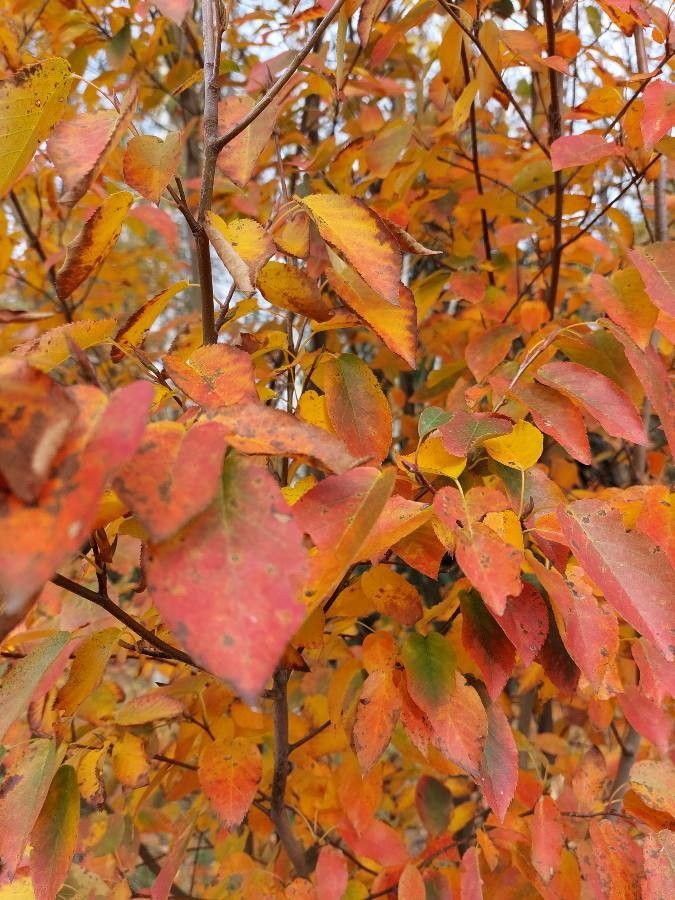
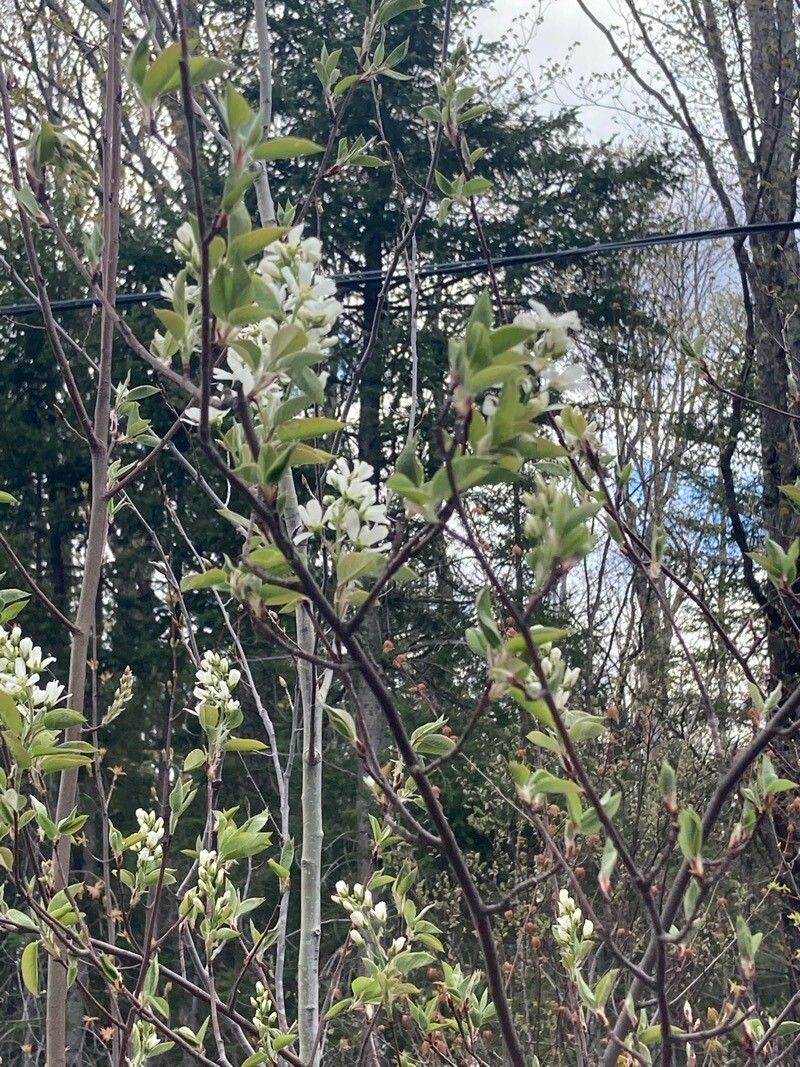
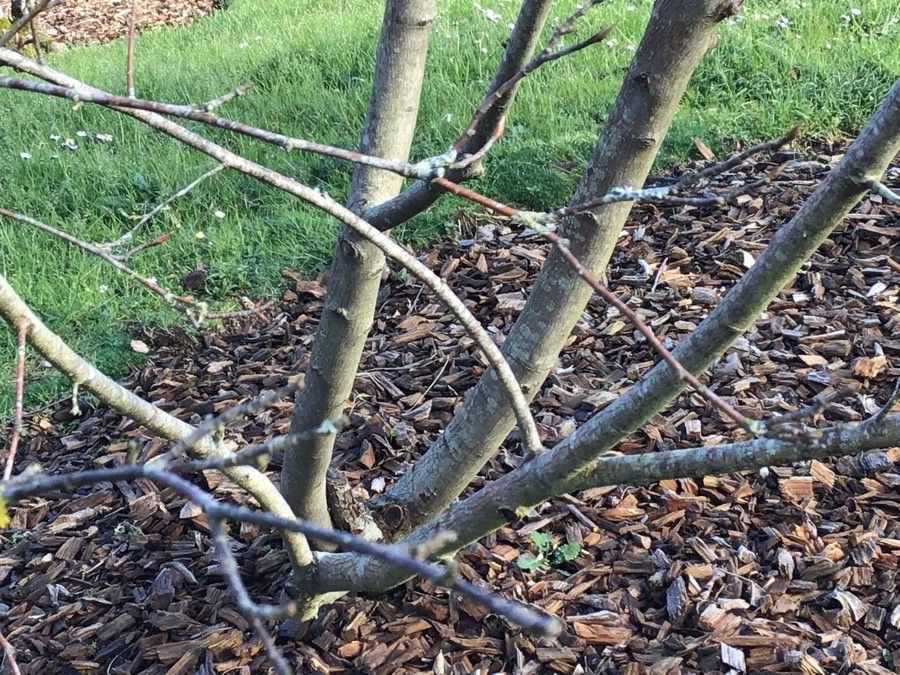
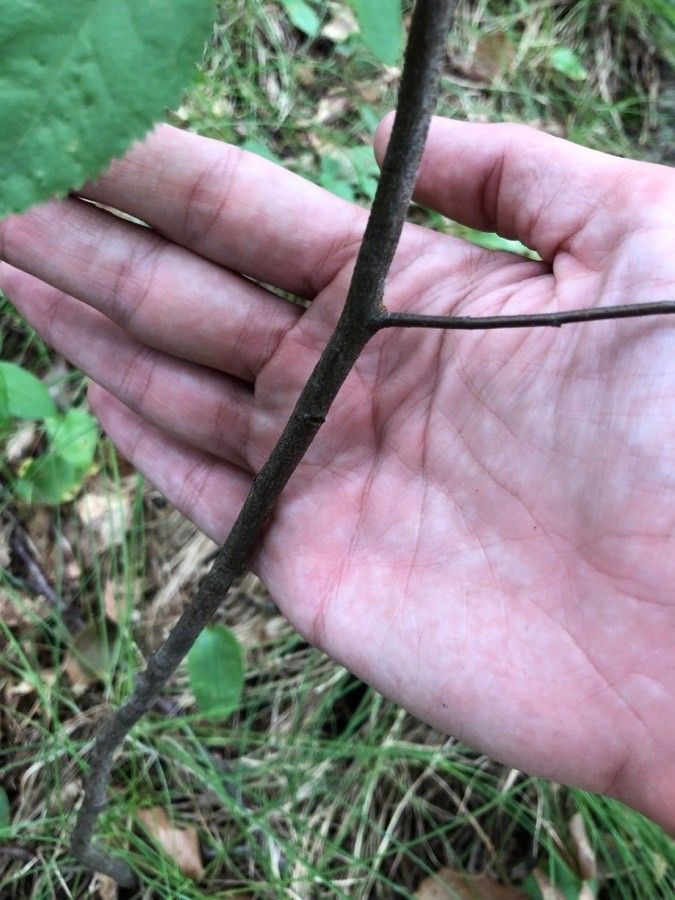
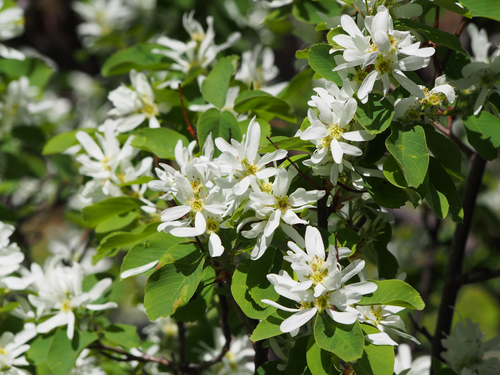
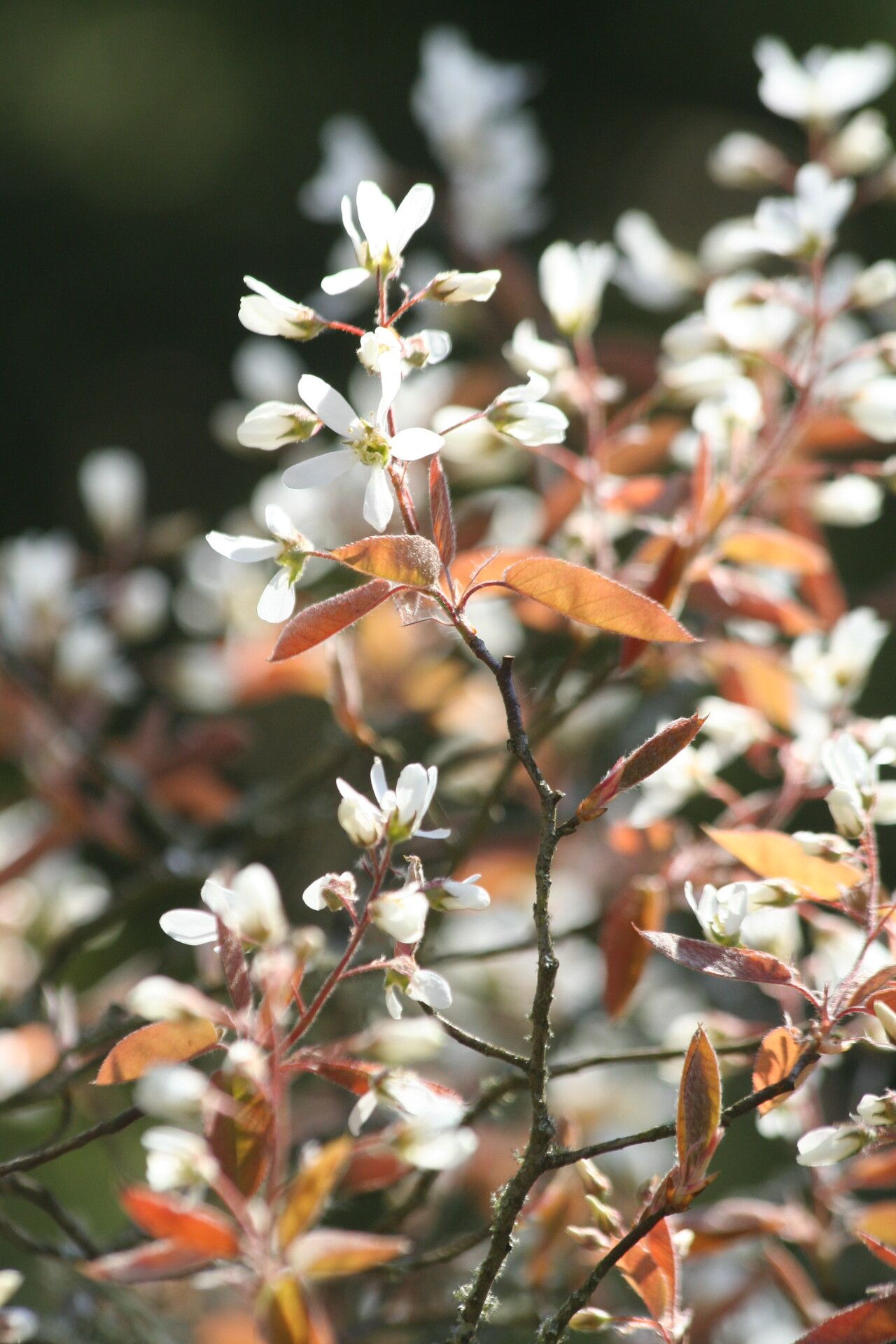
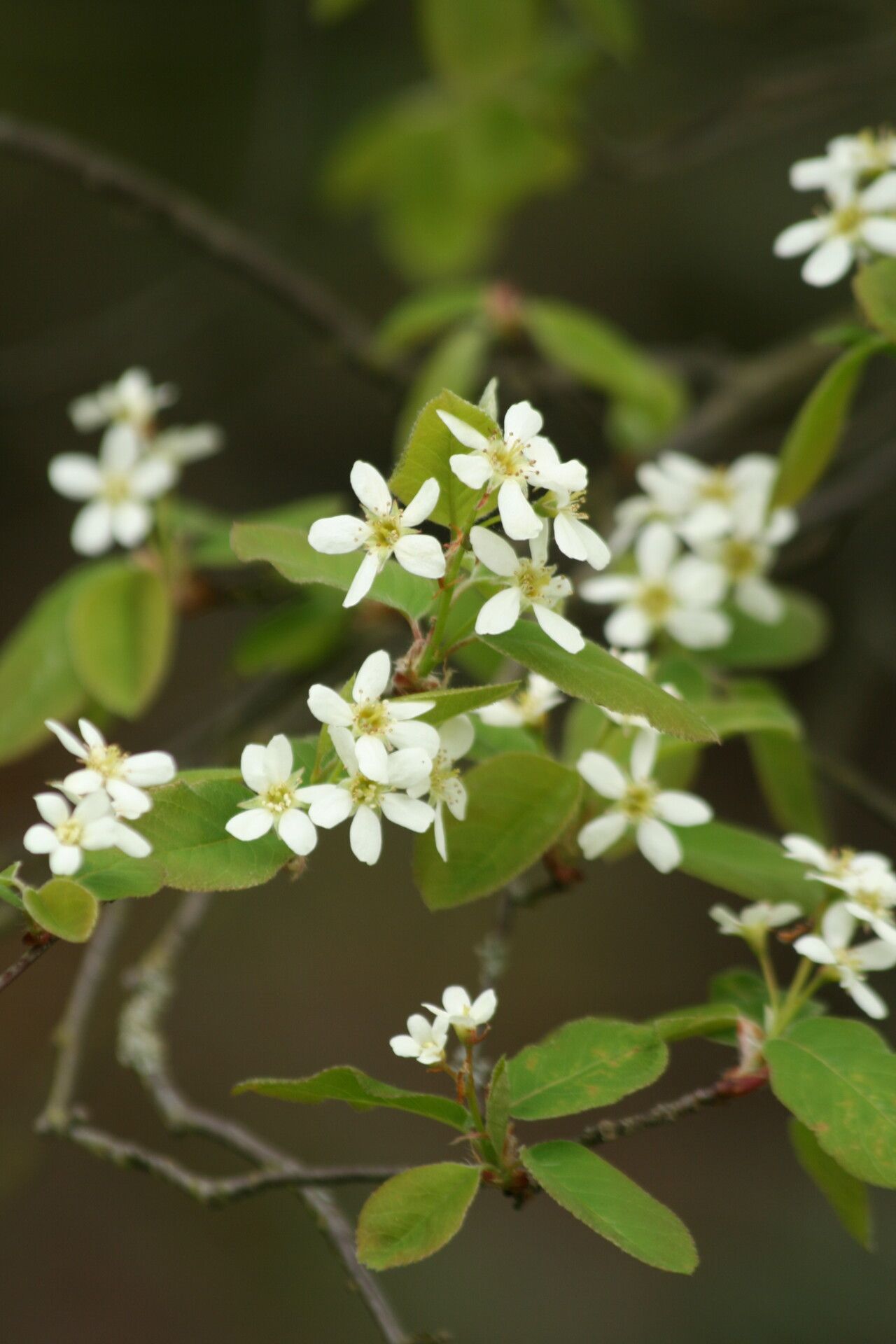
Amelanchier arborea (downy serviceberry or common serviceberry), is native to eastern North America from the Gulf Coast north to Thunder Bay in Ontario and Lake St. John in Quebec, and west to Texas and Minnesota.Other common names are "shadberries" (as their blossoming coincides with the shad runs in New England), "Juneberries" (because the berries usually set on in June), and "Service" or "Sarvice" berries because their blooms mean that the muddy back roads into the "coves and hollers" of Appalachia will soon be passable for circuit-riding preachers and the communities will be able to have Sunday services again. (Some say, more morbidly, that it means the ground is soft enough to dig, which means that those who died over winter can be buried and have services said over them.)Amelanchier arborea is generally 5–12 m (16–39 ft) tall. Occasionally, it can grow up to 20 metres (66 ft) tall and reach into the overstory. The trunk can be up to 15 cm (6 in) in diameter (rarely to 40 cm or 16 in). The bark is smooth and gray.The buds are slender with a pointed tip, and usually more than two scales visible. The leaves are ovate or elliptical, 4–8 cm (1+1⁄2–3+1⁄4 in), rarely 10 cm (4 in), long and 2.5–4 cm (1–1+5⁄8 in) wide, with pointed tips and finely serrated margins. A characteristic useful for identification is that the young leaves emerge downy on the underside. The fall color is variable, from orange-yellow to pinkish or reddish.
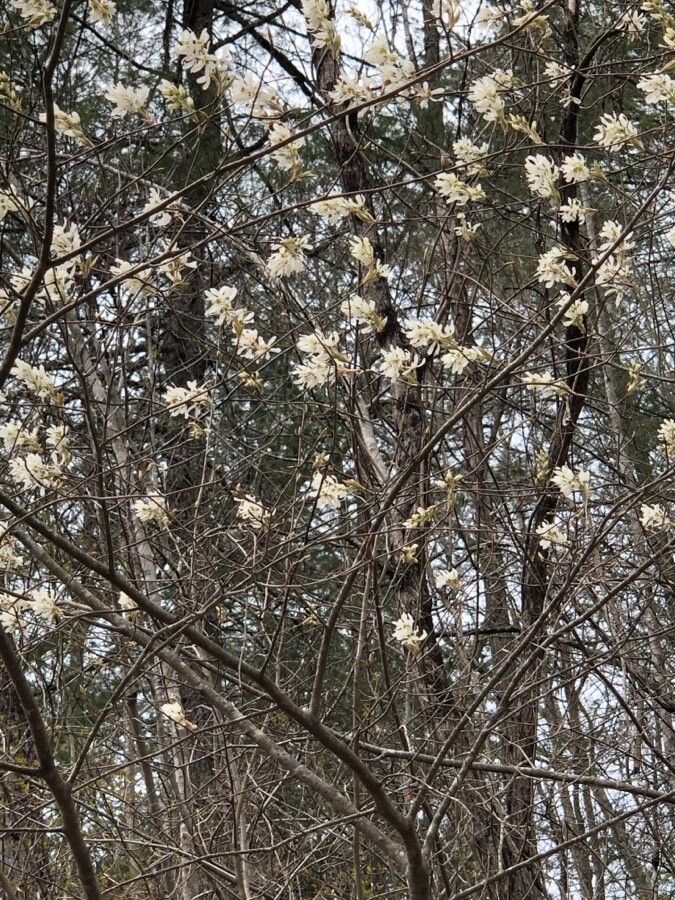
It has perfect flowers that are 15–25 mm (5⁄8–1 in) in diameter, with 5 petals, emerging during budbreak in early spring. The petals are white. Flowers are produced on pendulous racemes 3–5 cm (1+1⁄4–2 in) long with 4–10 flowers on each raceme. The flowers are pollinated by bees. The fruit is a reddish-purple pome, resembling a small apple in shape. They ripen in summer and are very popular with birds. The fruit is eaten by over 40 species of birds and various mammals, including squirrels, rabbits, chipmunks, mice, voles, foxes, black bears, deer, and elk. It also commonly hybridizes with other species of Amelanchier, the hybrid Amelanchier × grandiflora being one example, and identification can be very difficult as a result.
The common serviceberry gets its name because its fruit resembles that of the related European Sorbus. This plant produces a reddish-purple pome that looks like a small apple. Because it is one of the most widespread species in its genus, it is known as the common serviceberry.
Downy serviceberry is largely disease-resistant and generally not prone to disease. This plant is relatively low-maintenance. When grown outdoors it needs little watering, and larger plants usually do not require pruning. Smaller plants, however, should be pruned after they have finished blooming. Downy serviceberry is suitable for anyone with an outdoor space, such as a garden or deck, and does not require much experience in plant care.
How to keep Amelanchier Arborea.
Light
Downy serviceberry performs best in areas with good natural light and can tolerate lower-intensity light. Having evolved in sunny habitats, it achieves optimal growth with sufficient sun, though too much or too little light can stress it. It adjusts through its various growth stages when provided adequate light.
Water
The common serviceberry thrives in environments with moderate moisture, requiring the soil to remain consistently hydrated without becoming waterlogged. It should be watered every 1 to 2 weeks. Typically grown outdoors, this plant benefits from mulching, which helps retain soil moisture and reflects its natural woodland habitat.
Temperature
Downy serviceberry is native to regions where temperatures range from 68 to 95 °F (20 to 35 ℃). It grows best within that range, so it's essential to monitor and adjust temperatures seasonally for optimal growth.
Fertilizer
Fertilize your Downy serviceberry in early spring to encourage healthy growth. Consistent fertilization boosts overall health, leading to vigorous development, increased tolerance of harsh conditions, and stronger resistance to diseases and pests. Keep to a regular fertilization schedule for your Downy serviceberry to achieve deep-colored, vibrant foliage and a lush appearance.
Pruning
The common serviceberry is a deciduous shrub known for its clusters of white flowers and edible berries. To ensure healthy growth and abundant fruit production, it's best to prune it in early spring. Remove any dead or crossing branches to improve air circulation and light penetration. This not only promotes better growth but also enhances the shrub's ornamental appeal.
Pot & Repot
To thrive, common serviceberry needs pots with excellent drainage. This helps manage moisture properly and prevents root rot.
Botanical profile.
- Plant Type
- Tree, Shrub
- Life Cycle
- Perennial
- Genus
- Amelanchier
- Family
- Rosaceae
- Hardiness Zone
- 4-9
- Mature Height
- 4.57 m to 12.19 m
- Mature Spread
- 4.57 m to 7.62 m
- Leaf Color
- Green, Yellow, Red, Bronze
- Leaf Type
- Deciduous
- Flower Color
- White
- Flower Size
- 15.24 cm
- Bloom Time
- Mid spring, Late spring
- Planting Time
- Autumn
- Harvest Time
- Early summer, Mid summer
Other names.
Reader questions.
How should I water my Common serviceberry plant?
To promote excellent root development for your plants, here are some helpful tips: - Place a garden hose at the base of the plant, focusing the water flow on the roots rather than directly spraying the leaves. This will ensure proper hydration without causing damage. - If your plants are outdoors and exposed to direct sunlight, keep in mind that the leaves may need more frequent watering. Consider using bubblers attached to each plant to keep the roots moist. - Soaker hoses are another option to consider, as they can cover the entire garden or bed and help the roots absorb water deeply. When adding or removing plants, make sure to adjust the soaker hoses accordingly. - After watering, it's important to drain any excess water and allow the soil to dry out before the next watering session. Watering at ground level can also help prevent the spread of diseases. - On sunny days, it can be beneficial to mist the entire bush with water to help cool down the plant and provide some relief from the heat. - Keep in mind that whether your serviceberry is potted or in-ground, it prefers deep watering rather than light sprinkling. Remember to adjust your watering routine accordingly to ensure the best possible growth for your plants.
Why should I use fertilizer on my Common serviceberry tree?
To ensure your Common serviceberry's overall health, it is recommended to regularly fertilize regardless of the type you own. This will provide the necessary nutrients for robust growth and increased resilience against tough conditions, diseases, and pests. The foliage of your Common serviceberry is a notable feature, so it's important to maintain it. Implementing a specific fertilization schedule will result in vibrant leaves and a lush appearance.
How many hours of sunlight per day should Common serviceberry get for it to grow healthy?
To promote healthy growth, it's important for Common serviceberry to get a minimum of 3-6 hours of sun every day. This is the minimum requirement, as plants that can handle part sun can also do well in full sun. These plants are more flexible because they need less light for photosynthesis compared to plants that specifically need full sun or part shade.
What temperature is best for Common serviceberry?
For Common serviceberry to thrive, the best temperature range is between 65 and 80℉ (18 and 27℃). During the primary growing phase, it can tolerate temperatures as high as 95℉ (35℃) and as low as 15℉ (-10℃). This species is generally tolerant of low temperatures and can survive freezing winters. The ideal temperature range is as follows: perfect - between 65 and 80℉ (18 and 27℃), highest - between 85 and 95℉ (30 and 35℃), and lowest - between -5 and 15℉ (-20 and -10℃), or even lower.
What should I do if I give the Common serviceberry too much or too little water?
An overwatered Common serviceberry may exhibit signs such as yellowing, dropping, and wilting leaves. The plant may also appear unhealthy with mushy stems. It's advisable to adjust your watering schedule to prevent these issues. Conversely, wilting can also be a sign of under watering, characterized by crispy and dry leaves. When the soil is dry and simple watering is not enough, give the plant a thorough watering. This will allow the Common serviceberry to recover, although the damaged root system may cause yellowing and dryness in the leaves for a few more days. To avoid overwatering when the Common serviceberry is indoors, always check the moisture levels and watch out for black spots. If present, allow the soil to dry out for a few days without watering. Overwatering can lead to root rot, indicated by discolored and slimy roots. If root rot is observed, consider transferring the plant to a different pot and avoid excessively wet soil. When planting the Common serviceberry outdoors, check the soil moisture by digging a bit deeper. If it feels too dry, it may indicate underwatering, so provide adequate watering to aid in the plant's recovery.
When should I put fertilizer on my Common serviceberry?
To ensure healthy growth, fertilize your Common serviceberry for the first time in late winter or early spring. This will provide the necessary nutrients for the upcoming warm weather. In warm climate regions, it is beneficial to fertilize again in early fall. This additional feeding not only adds nutrients for the following growing season but also strengthens the Common serviceberry to withstand the cold winter without foliage damage. Fertilizing earlier will allow new branches to grow and withstand the winter.
What kind of sunlight does Common serviceberry require?
Common serviceberry thrives when exposed to full or partial sun. It particularly flourishes with direct morning light, although some shade is necessary in the afternoon to protect it from the intense sun. In temperate environments, excessive hot afternoon sun can harm the leaves, resulting in a negative impact on the plant's overall health and aesthetics.
Do I need to change the temperature for Common serviceberry when it is growing in different stages?
According to research, Common serviceberry shows signs of stunted growth when exposed to extended periods of high temperatures. This effect is particularly noticeable during the development of axillary buds and the growth of main shoots. To promote strong growth after germination or transplanting, it is recommended to maintain a consistent and cooler temperature of around 65℉(18℃).
How frequently should I water my Common serviceberry?
The Common serviceberry prefers deep and infrequent watering. If you plant them in pots, be sure to soak them in a gallon of water each time since the water storage of pots is limited and the soil dries out faster. In cold regions, you should water them every 3 to 5 days. Water them early in the morning when the soil is dry, both indoors and outdoors. To determine if watering is needed, check the soil inside. If the top 2-3 inches of soil is dry, it's time to give the plant a good watering. On hot days, check the moisture daily as the heat can dry out the pot soil quickly. If you have a garden, irrigation of the soil is needed. In hot climates, water once a week, but only if you notice that about 2 to 3 inches of soil have become too dry, both indoors and outdoors. Take into consideration the amount of rainwater on the plant and avoid overwatering to prevent root rot. If there is a lot of rainfall, you may not need to water the plants additionally. The Common serviceberry mainly grows in spring and fall. Outdoors, add mulch about 3 to 4 inches deep to conserve water. Sandy soil requires more frequent watering as it drains faster. On the other hand, clay soil needs less frequent watering, around every 2-3 days, to avoid root rot. Mark the date on the calendar whenever you water and observe the leaves for drooping, as this could indicate that you are a day late with watering.
When is the best time to not add fertilizer to my Common serviceberry plant?
There are a few times during the year when you shouldn't fertilize your Common serviceberry. The first is during the early and mid-winter months when the plant is dormant and doesn't need feeding. It's also not a good idea to fertilize it during late spring and summer because the weather is hotter and drier. Fertilizing during this time can have a negative effect on the plant. To avoid any issues, it's best to stick to a fertilization schedule that only involves feeding in early spring and early fall.
Does sunlight harm Common serviceberry? How can we keep Common serviceberry safe from the sun and heat?
Indoor serviceberry plants are prone to sun damage when they are moved outside. To avoid sunburn, it is recommended to move the pots slowly from a shaded location to a brighter area. However, even plants used to the summer sun can be harmed by extreme heat. During a heatwave, it is crucial to keep the soil consistently moist to help the plants endure high temperatures. In case of intense weather conditions, such as extreme heat, it is advisable to move container plants to shaded areas in the afternoon or provide protection with a shade cloth to safeguard the delicate common serviceberry plants.
How do I make sure Common serviceberry stays warm in cold seasons?
The common serviceberry can tolerate freezing temperatures when planted in the ground, as long as the area doesn't dip below 15℉ (-10℃) in winter. However, if you plant it in a pot or container, it's important to protect the roots from the cold. You can do this by wrapping the container in a blanket or bringing it indoors, where it will be fully shielded from the elements.