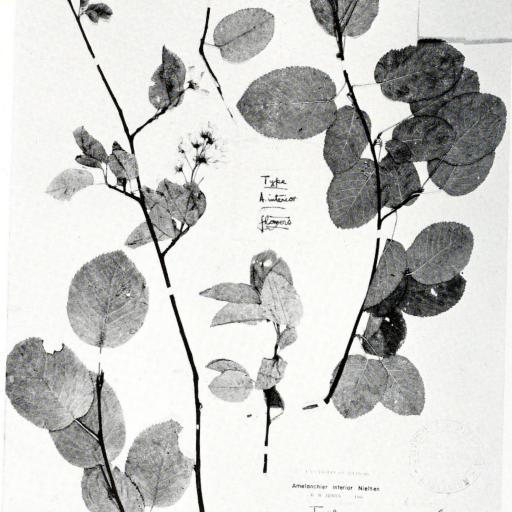
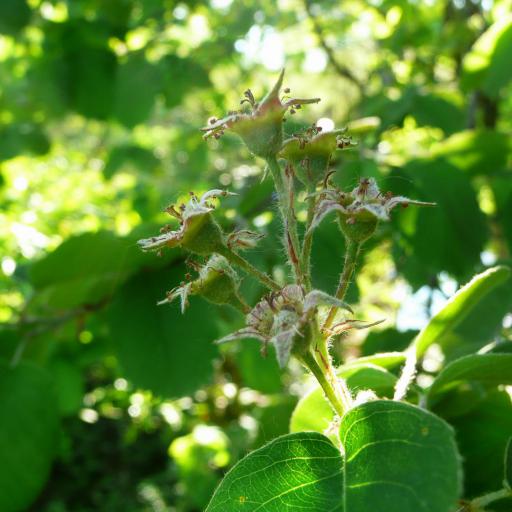
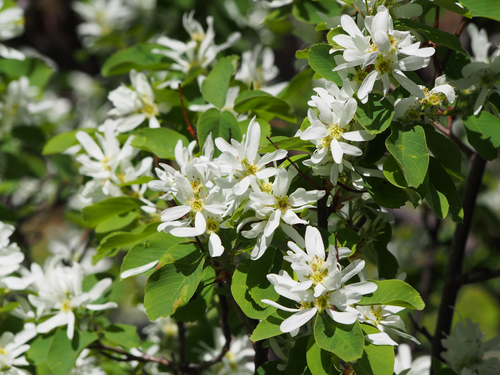
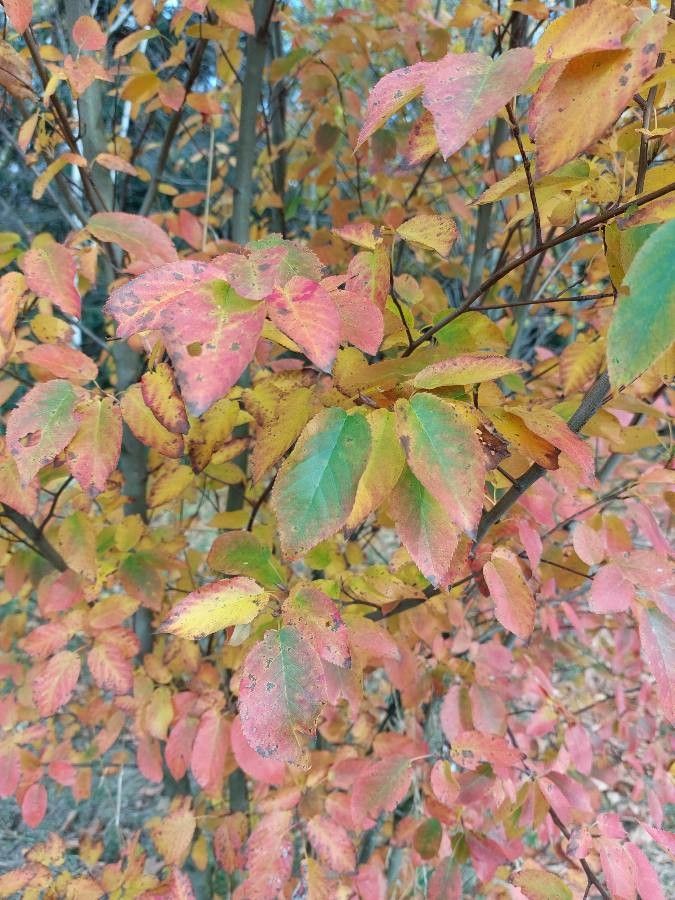
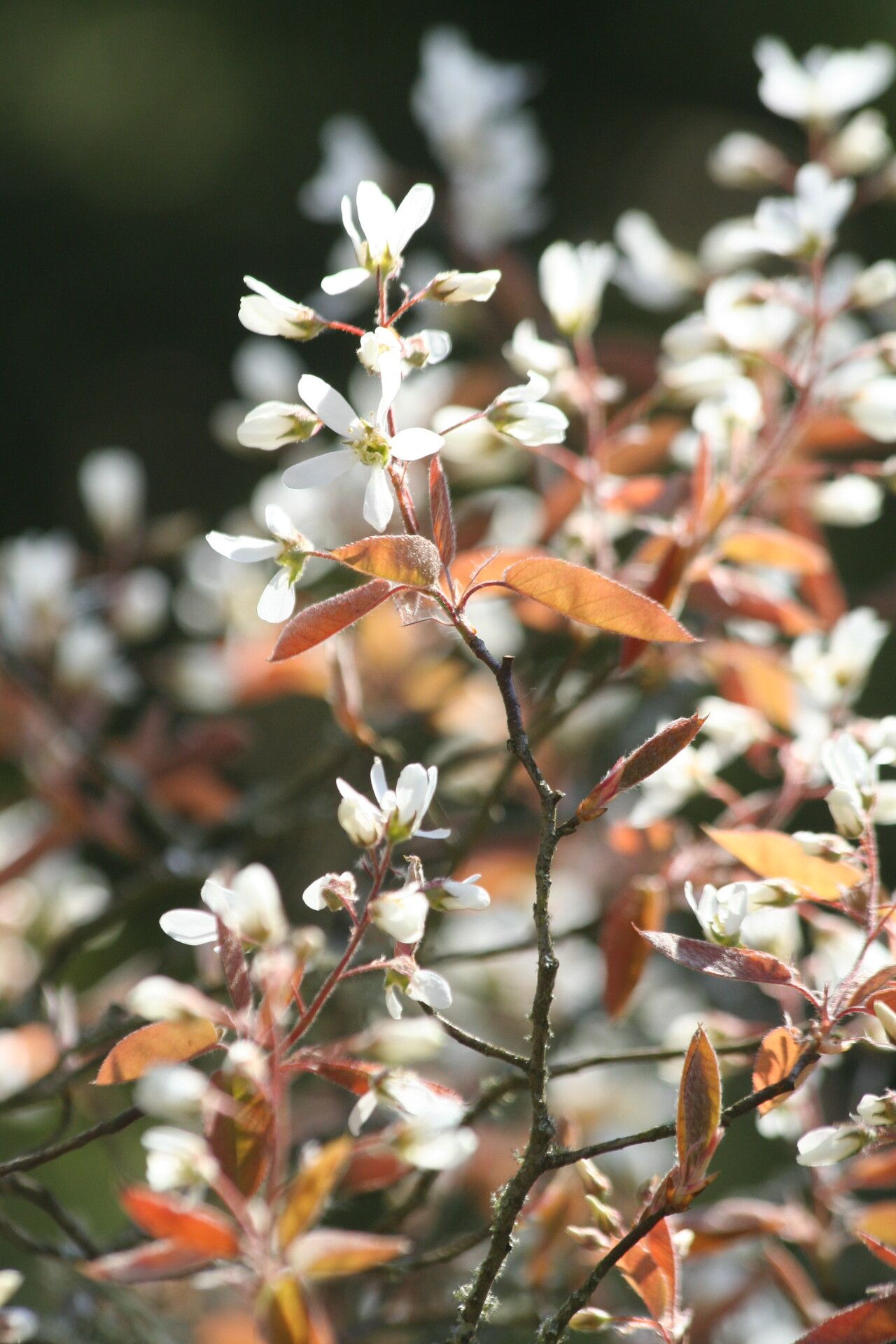
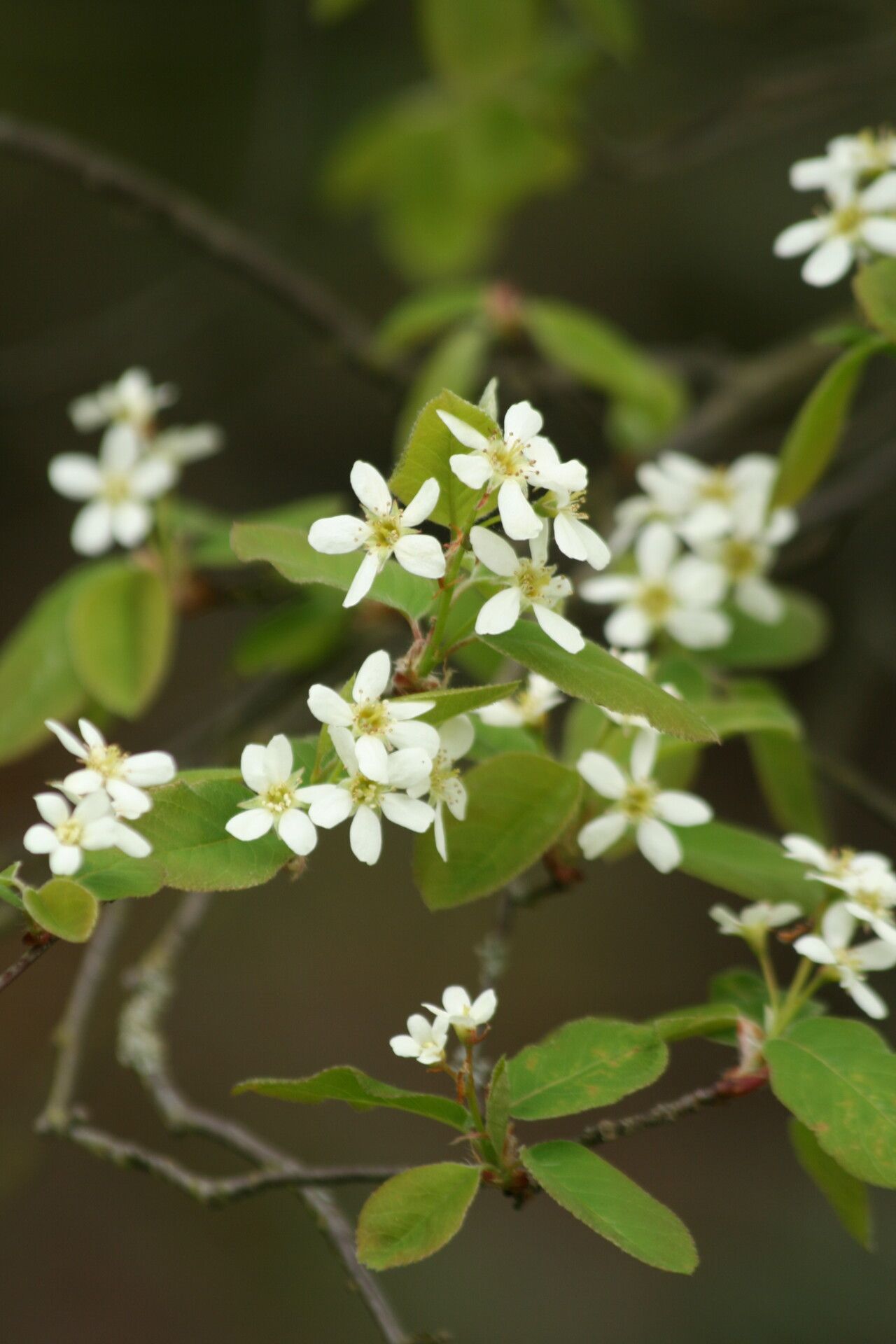
Amelanchier interior or Wiegand's shadbush is type of serviceberry shrub. It produces a sweet tasting edible fruit called a pome, which can be eaten raw or cooked. The fruit has a sweet flavor. This species is a deciduous tree. It grows on hillsides and banks of streams and reaches up to nine meters. The plant prefers light (sandy), medium (loamy) and heavy (clay) soils and can grow in heavy clay soil. It can grow it acid, neutral and alkaline soils, as well as shade or semi-shade. It requires moist soil.
Inland serviceberry is well resistant to disease and is generally not susceptible to illnesses. As for care, this plant is fairly low-maintenance. When grown outdoors it needs only minimal watering, and larger specimens typically do not require pruning. Smaller plants, however, should be pruned after they finish blooming. Inland serviceberry is appropriate for anyone with an outdoor area, such as a garden or deck, and does not demand much gardening experience.
How to keep Amelanchier Interior.
Light
Inland serviceberry is native to open habitats, such as sunny meadows and forest edges, that provide plenty of light. It thrives in Full Sun but can also tolerate Partial Sun, adapting well to a range of sunlight conditions.
Water
The inland serviceberry is highly drought-tolerant, requiring moderate watering only every 2-3 weeks once it is established. This adaptability makes it an excellent choice for outdoor landscaping in temperate climates. In addition, its water needs decrease significantly during dormancy in the colder months, helping conserve resources.
Temperature
Inland serviceberry is very adaptable to a wide range of climates, from intense summer heat to severe winter cold. Nonetheless, it has an optimal temperature range for growth. If temperatures become too high, the plant can experience heat and humidity stress that may lead to its death. In locations where temperatures approach the lower edge of its cold tolerance, providing insulation to protect the plant is important.
Fertilizer
The Inland serviceberry needs adequate nutrients to achieve optimal fruit production. Apply fertilizer in early spring to encourage new growth and bloom development. Regular fertilizing helps the plant stay healthy, produce more delicious fruit, and prevents nutrient deficiency issues like yellow leaves and poor fruit production.
Pruning
The inland serviceberry is known for its beautiful white flowers in spring and its edible berries. To keep the plant healthy and thriving, it's best to prune it in early spring. This helps shape the plant and thin out crowded areas, which improves air circulation and light exposure. Pruning at this time aligns with the plant's growth cycle, promoting health, vigor, and robust flowering and fruiting, resulting in a more productive plant.
Pot & Repot
Inland serviceberry needs excellent drainage when grown in pots to thrive. Proper drainage is essential to prevent waterlogging and to support healthy root development, which ensures the plant's optimal growth and vitality.
Botanical profile.
- Plant Type
- Tree, Shrub
- Life Cycle
- Perennial
- Genus
- Amelanchier
- Family
- Rosaceae
- Hardiness Zone
- 4-9
- Mature Height
- 6.1 m to 9.14 m
- Mature Spread
- 2.13 m to 3.96 m
- Leaf Color
- Green, Dark Green
- Leaf Type
- Deciduous
- Flower Color
- White
- Flower Size
- 1.02 cm to 2.03 cm
- Bloom Time
- Early spring, Mid spring
- Planting Time
- Spring, Summer, Autumn
- Harvest Time
- Early summer, Mid summer
Other names.