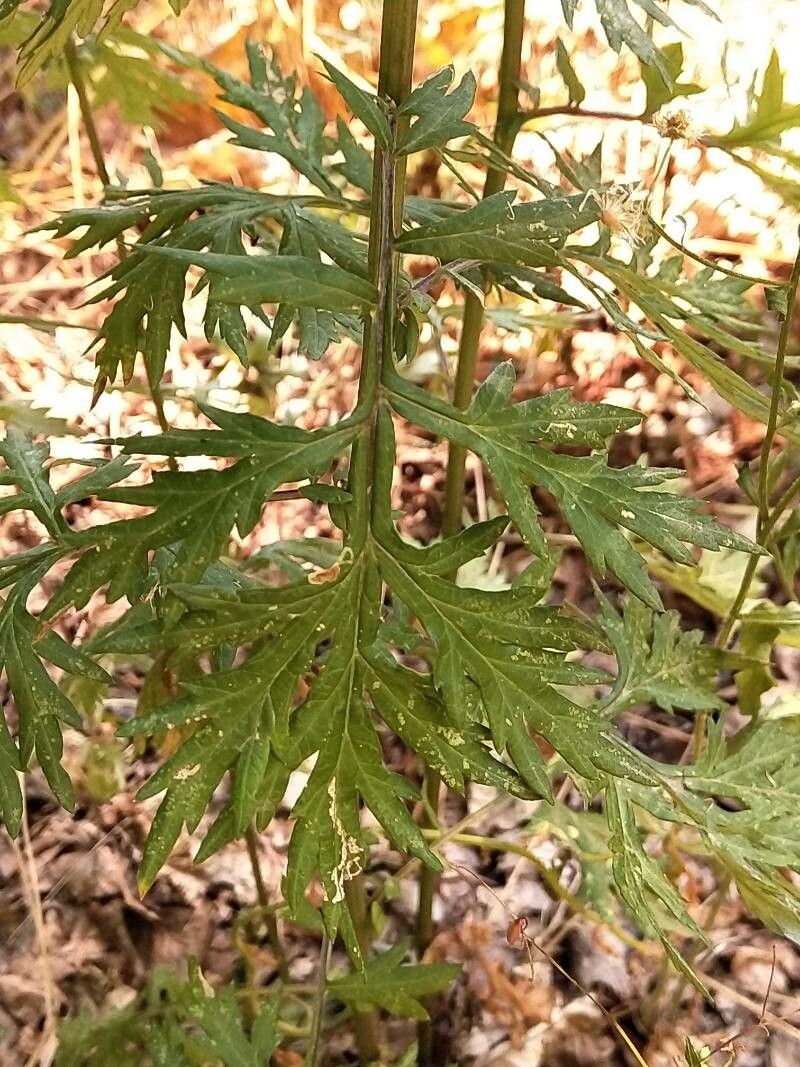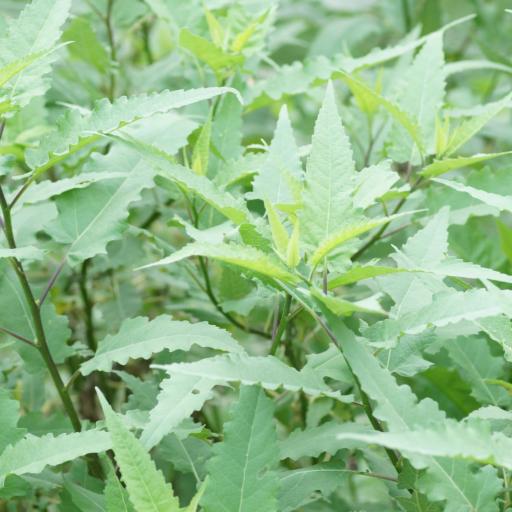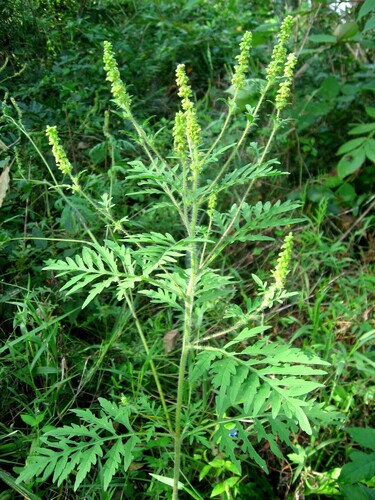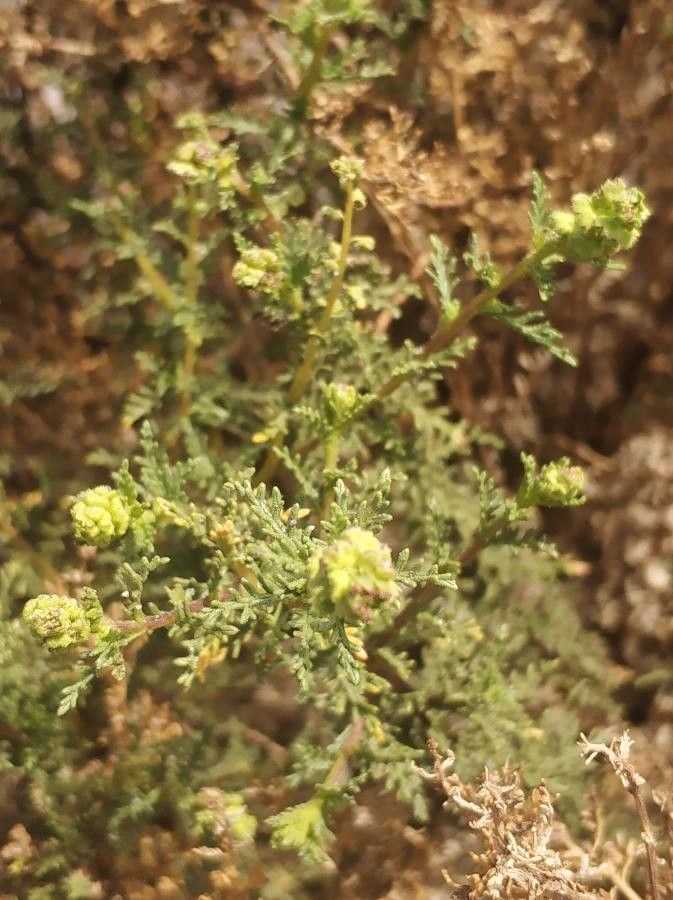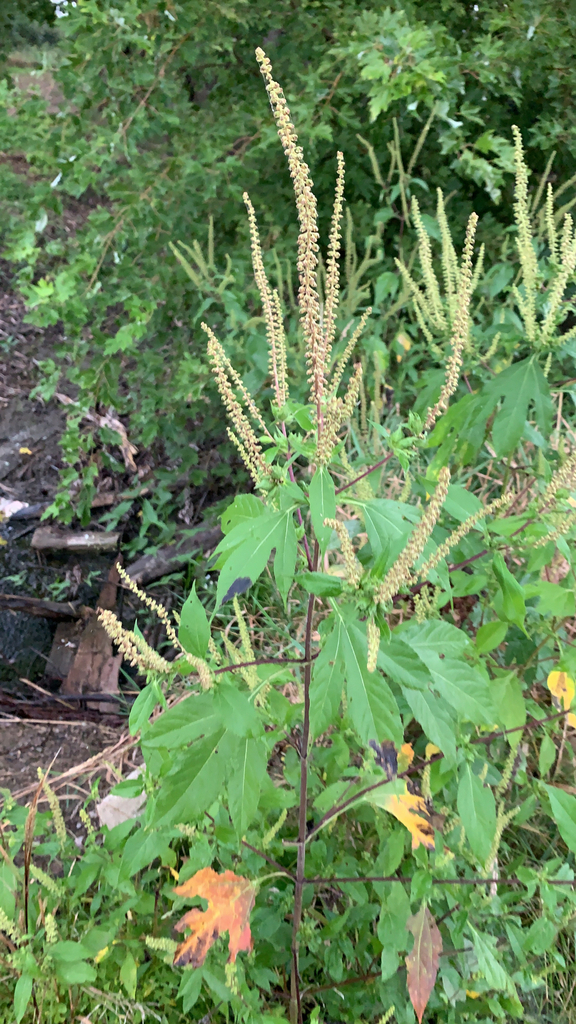
Ambrosia trifida, the giant ragweed, is a species of flowering plant in the family Asteraceae. It is native to North America, where it is widespread in Canada, the United States, and northern Mexico.
Giant Ragweed: Ragweed refers to several species that are pollinated by the wind. Its pollen and seeds can be spread far and wide by the wind. Typically, this plant can grow up to 2 meters in height, but in particularly fertile soil, it can grow even taller, which is why it is called "giant ragweed."
Giant ragweed is fairly disease-resistant and is typically not prone to illnesses. However, it can be vulnerable to pests and diseases present in its environment. These infections are generally mild. In terms of care, this plant requires moderate maintenance. It should be pruned regularly to keep a good appearance and healthy growth. Fertilizing can also help encourage flowering. Giant ragweed is suitable for anyone with outdoor space, such as a garden or patio, and does not need extensive care experience. It may demand more attention when kept indoors.
How to keep Ambrosia Trifida.
Light
Giant ragweed needs a large amount of sunlight to grow well. It does best in places with little shade but can tolerate some partial shade. Growth can suffer from too little light or from excessive sun exposure that scorches the leaves.
Water
Giant ragweed thrives with moderate moisture, needing weekly watering to maintain optimal growth. Native to regions with ample rainfall, it does not tolerate drought well. As an annual herbaceous plant, giant ragweed has a specialized growth cycle designed to effectively use available water during its growing season.
Temperature
Giant ragweed is indigenous to habitats with temperatures between 68 and 100 °F (20 to 38℃). It favors moderate to warm conditions and grows best within that range. Seasonal temperature adjustments might be necessary for optimal growth.
Fertilizer
Giant ragweed benefits from frequent, light applications of fertilizer to encourage healthy leaf growth. Fertilize Giant ragweed roughly once a month during the summer. Nitrogen is vital for foliage, and adding nitrogen-rich sources helps Giant ragweed thrive.
Pruning
These plants can grow rowdy and overcrowd other plants. Look for ragweeds with deeply lobed leaves; these are the younger plants that you can pull up to control the spread. You may opt to cut down older plants with pruning loppers to reduce reseeding.
Toxicity
Ragweed is generally non-toxic; however, it is known for causing allergic reactions in sensitive individuals, pets, and livestock. The plant can induce seasonal rhinitis, contact dermatitis, and irritations.
Further reading →
The toxicity and danger assessments provided are for reference only. We do not assure their accuracy, so it's crucial not to depend on them. Seek professional advice when necessary for accurate guidance.
Botanical profile.
- Plant Type
- Herb
- Life Cycle
- Annual
- Genus
- Ambrosia
- Family
- Asteraceae
- Hardiness Zone
- 3-11
- Mature Height
- 2.13 m
- Mature Spread
- 1.52 m
- Leaf Color
- Green, Blue
- Leaf Type
- Deciduous
- Flower Color
- Yellow, Green
- Flower Size
- 0.51 cm
- Bloom Time
- Mid summer
- Planting Time
- Spring
- Harvest Time
- Mid summer, Late summer
- Native Area
- Mexico
Other names.
Reader questions.
When should I water my Giant Ragweed?
Watering Giant Ragweed is crucial for its health and vigor. The primary signs that indicate the need for watering include soil dryness about an inch or two below the surface, drooping or limp stems and leaves, wilting or brittle leaf texture, and leaf discoloration from robust green to dull green or yellow. It's important to water the plant based on these signs to prevent both dehydration and overwatering stress, ensuring the plant's overall vitality.
What are the sunlight requirements for Giant Ragweed (Ambrosia trifida)?
Giant Ragweed requires significant amounts of sunlight to thrive, with optimal growth in full sun conditions, meaning it needs above 6 hours of sunlight daily. It can also tolerate partial sun, or about 3-6 hours of sunlight, but its growth may not be as robust compared to full sun exposure. It's essential to watch how sunlight moves through your garden to select the ideal location for your plants, ensuring they receive the appropriate balance of light and shade for their happiness.
What is the native environment and ideal temperature range for Giant Ragweed?
Giant ragweed, botanically known as Ambrosia trifida, thrives best in environments that experience moderate to warm temperatures, specifically within the range of 68 to 100°F (20 to 38°C). It is native to regions that typically maintain these temperature conditions. To ensure optimal growth, adjusting to seasonal temperatures may be required, especially to keep within this ideal range.
How should I water my Giant Ragweed?
Giant Ragweed requires a specific approach to watering. The 'soak and dry' technique, where the plant is watered deeply but infrequently, suits it best. This ensures moisture reaches the plant's deep roots without over-saturating it. Utilize tools like a standard watering can for targeted watering and a soaker hose for even distribution at the base, avoiding overhead watering to prevent fungal diseases. Additionally, using a moisture meter can help in monitoring soil moisture levels accurately, especially during dry periods.
What are the essentials for growing Giant Ragweed?
Growing Giant Ragweed successfully demands a generous amount of solar exposure. This plant flourishes best in areas with minimal shade, showcasing moderate tolerance for semi-shaded spots. Lack of sunlight can inhibit its development, while too much direct exposure may lead to leaf scorching. For indoor plants lacking natural sunlight, especially in winter or less sunny areas, artificial lighting serves as an excellent alternative to facilitate healthier and faster growth. LED lights are advised for their capacity to offer specific light wavelengths needed by plants, with full sun plants requiring 30-50W/sq ft, partial sun plants 20-30W/sq ft, and full shade plants needing 10-20W/sq ft of artificial light. The lights should be placed 12-36 inches away from the plants and turned on for 8-12 hours daily to mimic natural daylight hours.
Does Giant Ragweed require special frost protection measures during winter?
Giant ragweed exhibits strong resistance to cold temperatures, usually making special frost protection measures unnecessary during winter. However, if winter temperatures are expected to fall below -35°C, it is important to take steps to protect the plant from the cold. This can include covering the plant with insulating materials such as soil or straw. Additionally, watering the plant abundantly before the first freeze in autumn can help keep the soil moist and prevent water scarcity during the winter and early spring, aiding in cold protection.
How much water does Giant Ragweed really need?
Giant Ragweed has a deep taproot system, requiring deep, thorough watering until the water drains from the bottom of the pot. The watering amount may vary, but for an average-sized plant in a medium-sized pot, approximately 1.5 to 2 liters per session is suitable. Proper hydration will manifest as green, healthy leaves and strong stems. Over or underwatering can lead to problems, such as yellowing leaves or stunted growth, so it's essential to maintain a balance based on the plant's response to watering.
What symptoms indicate insufficient or excessive sunlight in Giant Ragweed?
Giant Ragweed shows distinctive symptoms when it gets insufficient or excessive sunlight. Inadequate light may lead to smaller new leaves, leggy or sparse growth, faster leaf drop, slower or no new growth, and lighter-colored new leaves, all indicating a struggle with light deficiency. Conversely, signs of too much sunlight include chlorosis, or the yellowing of leaves due to the breakdown of chlorophyll; sunscald, which is damage from intense sunlight exposure; leaf curling as a defense against too much sunlight; wilting from excessive water loss; and leaf scorching, characterized by brown, dry, and crispy leaf edges. These symptoms highlight the necessity of maintaining ideal light conditions for Giant Ragweed.
How does low temperature affect Giant Ragweed, and what are the recommended solutions?
Giant ragweed is cold-tolerant, preferring temperatures above 20°C and ideally kept above 0°C during winter. If temperatures drop below -35°C, the plant may not show noticeable changes during winter but could experience decreased sprouting or fail to sprout at all in spring. The recommended solution for this issue is to remove any parts of the plant that have failed to sprout come spring.
What kind of water is best for Giant Ragweed?
Giant Ragweed thrives best with rainwater due to its natural, chemical-free properties and balanced pH level. Distilled water is a good alternative, free from impurities. While tap water can be used, its chlorine, fluoride, and mineral content might not be ideal due to the plant's sensitivities, particularly to chlorine which can cause leaf burn. To improve tap water quality for plant use, dechlorination or filtration to remove harmful contaminants is recommended.
What solutions can alleviate the symptoms of inappropriate light exposure in Giant Ragweed?
To mitigate the symptoms caused by incorrect light exposure for Giant Ragweed, consider the following strategies: For indoor plants, gradually increase sunlight exposure by moving them closer to a south-facing window or use artificial lighting for at least 8 hours daily. Outdoor plants should be transitioned slowly to sunnier spots to prevent sunburn. If trees or structures are blocking sunlight, prune or adjust the surrounding area to reduce obstructions. When transplanting smaller plants for better light access, do so during their dormant period, typically in late winter or early spring, ensuring you move the root ball and soil together to a spot with ample sunlight and good drainage. Be aware that parts of the plant damaged by poor light may not recover, but new growth post-adjustment should be healthy.
What are the effects of high temperature on Giant Ragweed and how can they be mitigated?
During the summer, it is important to keep Giant ragweed's temperature below 38°C to prevent stress from high heat. Should the temperature exceed 43°C, the plant's leaves may lighten in color, curl, become susceptible to sunburn, and in severe cases, the entire plant may wilt and dry. To mitigate these effects, trimming away sunburned and dried-up parts of the plant and moving it to a location with shade during the midday and afternoon, or using a shade cloth, can be beneficial. Additionally, watering the plant in the morning and evening can help keep the soil adequately moist.