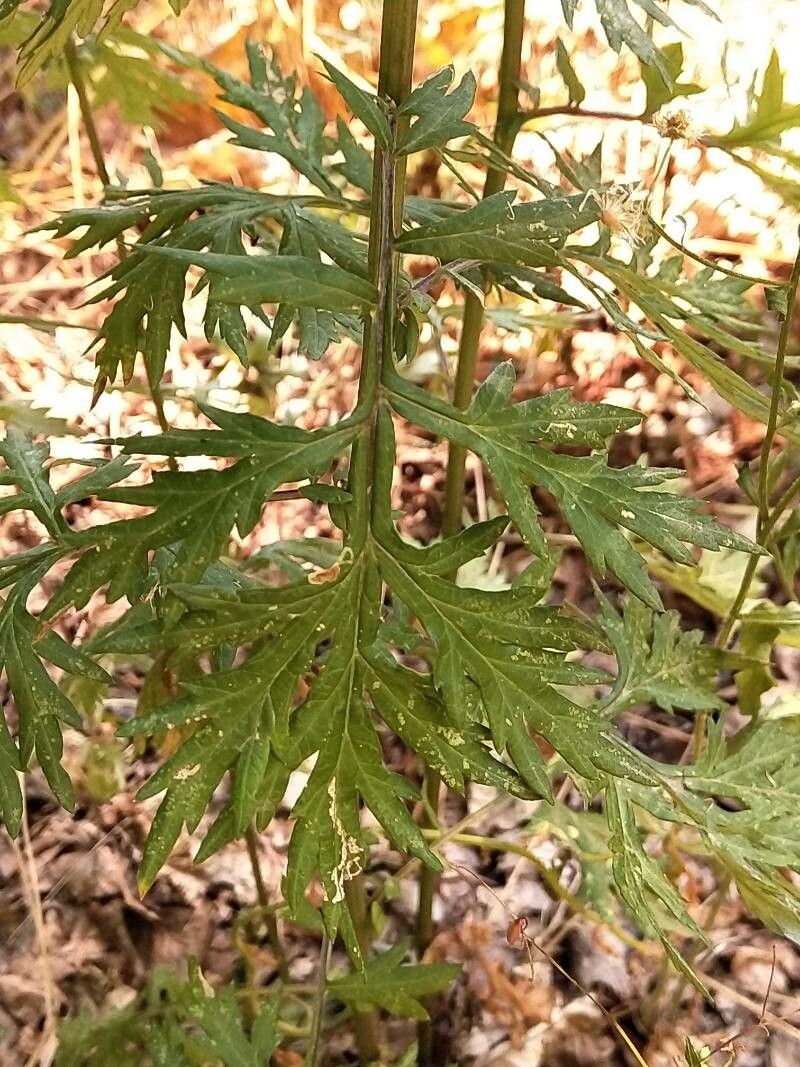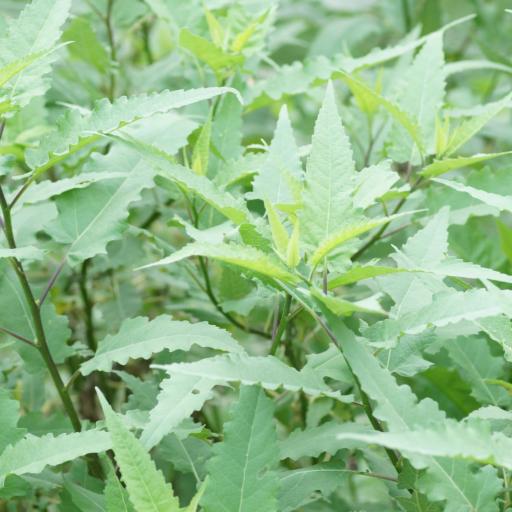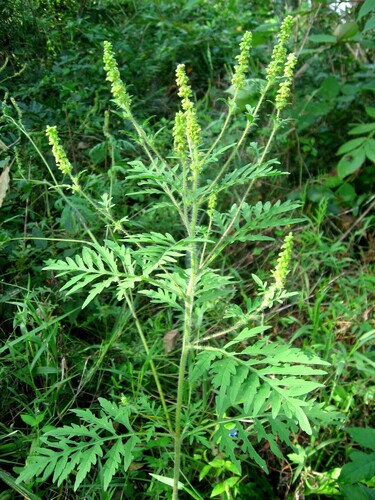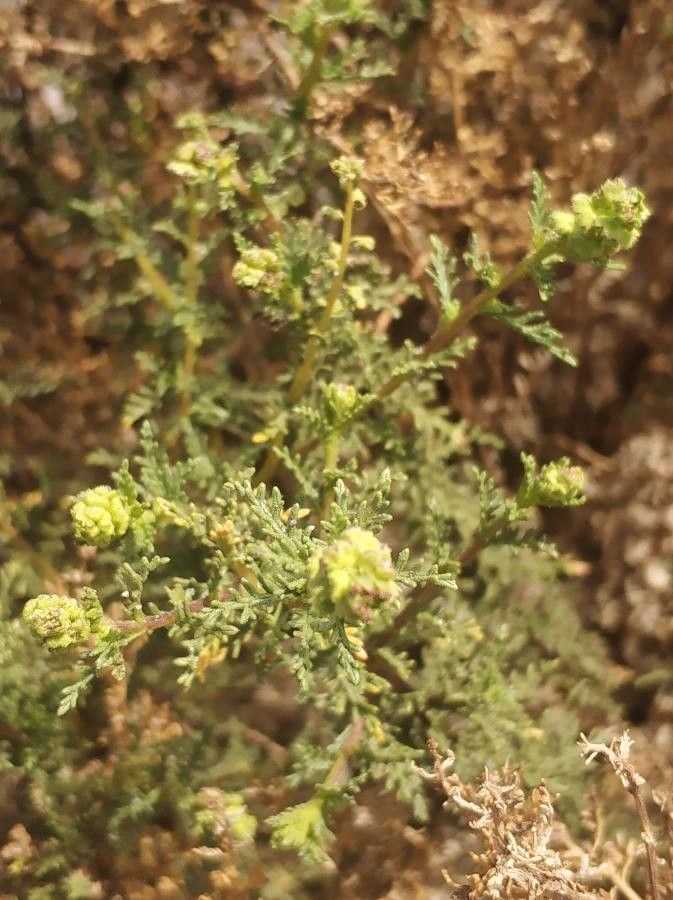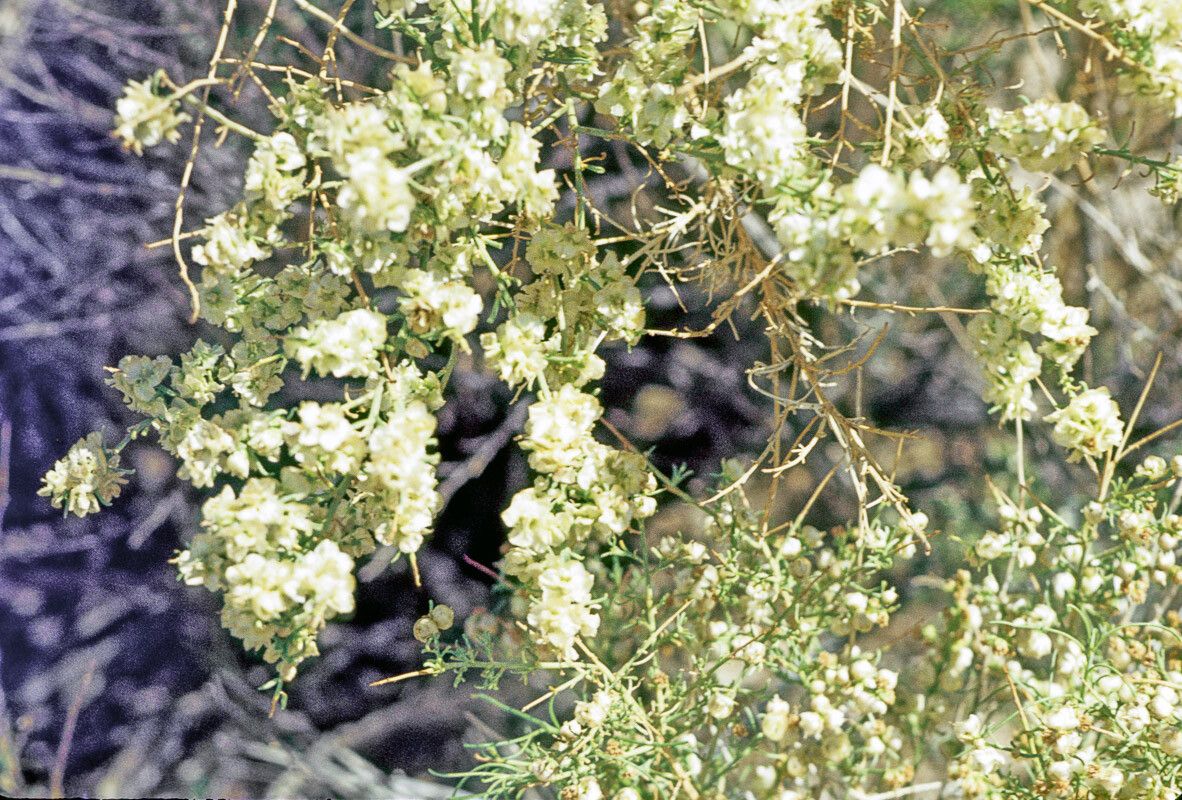
Ambrosia salsola, commonly called cheesebush, winged ragweed, burrobush, white burrobrush, and desert pearl, is a species of perennial shrub in the family Asteraceae native to deserts of the southwestern United States and northwestern Mexico.This species, notable for its foul smell, easily hybridizes with the white bur-sage (Ambrosia dumosa).
Common burrobrush shows strong resistance to disease and is typically not susceptible to illnesses. Regarding upkeep, this plant is fairly low maintenance. Planted outdoors, it needs only light watering, and larger plants generally do not need pruning. Smaller plants, however, should be pruned after they finish blooming. Common burrobrusht is well suited to anyone with outdoor space, such as a garden or a deck, and does not demand extensive plant-care experience.
How to keep Ambrosia Salsola.
Light
Common burrobrush flourishes with plentiful sunlight. Such light is necessary for its growth and overall health. Nonetheless, the plant can tolerate a shortage of light, although this may slow its normal growth rate. Native to sunny habitats, it has adapted to optimize photosynthesis in bright conditions. Very intense sun can cause slight stress but usually does not harm the plant.
Water
Common burrobrush is well adapted to arid environments and demonstrates exceptional drought tolerance, needing water only once every three weeks. Its efficient water storage capacity makes it an excellent choice for xeriscaping, reducing the need for frequent irrigation and increasing its suitability for outdoor landscapes.
Temperature
Common burrobrush is highly adaptable to a range of climates, from blistering summers to frosty winters. It nevertheless has a specific temperature range in which it grows best. If temperatures become too high, the plant can suffer from heat and humidity stress, which may kill it. In areas where temperatures near the lower limit of its cold tolerance, insulating measures should be used to protect the plant.
Fertilizer
To encourage healthy growth, fertilize your Common burrobrush in early spring. Consistent fertilization improves overall health, producing vigorous growth, increased resilience to harsh conditions, and enhanced resistance to pests and diseases. Keep a specific fertilization schedule for your Common burrobrush to maintain vibrant foliage with deep color and a lush appearance.
Pruning
Common burrobrush has dense, woody stems and thrives in arid conditions. To improve airflow and enhance plant health, prune it in early spring to remove any dead branches. Regular pruning also helps maintain the plant's appearance and prevents stress. For optimal vitality, avoid heavy pruning outside of the early spring period. For more tailored guidance, consult horticultural sources.
Botanical profile.
- Plant Type
- Shrub
- Life Cycle
- Perennial
- Genus
- Ambrosia
- Family
- Asteraceae
- Hardiness Zone
- 7-10
- Mature Height
- 61 cm to 91 cm
- Mature Spread
- 61 cm to 91 cm
- Leaf Color
- Light Green, Gray
- Leaf Type
- Deciduous
- Flower Color
- White
- Flower Size
- 2.54 cm
- Bloom Time
- Spring
- Planting Time
- Spring, Autumn
- Harvest Time
- Late spring, Early summer, Mid summer
- Native Area
- Mexico
Other names.
Reader questions.
What are the sunlight requirements for Common burrobrush?
Common burrobrush requires full sun, meaning it should receive above 6 hours of sunlight daily. Observing how sunlight moves through your garden is crucial, ensuring that you choose spots that provide a good balance of light and shade for your plants. This ensures their optimal growth and happiness. Common burrobrush thrives in abundant daylight, which is essential for its growth and health. Despite its ability to withstand a lack of light, growth may slow down if it does not receive enough sunlight. Originally from sunny regions, it has adapted to maximize photosynthesis in sunny conditions. Excessive sun exposure may cause mild stress but generally does not harm the plant.
What solutions are available for Common burrobrush facing insufficient sunlight?
To combat insufficient sunlight for Common burrobrush, you can gradually move the plant to a sunnier location each week until it receives at least 6 hours of direct sunlight daily. This can be achieved using a south-facing window and keeping curtains open during the day. If the plant is large or not easily movable, consider using artificial light, keeping a desk or ceiling lamp on for at least 8 hours daily, or investing in professional plant grow lights. For outdoor plants, avoid sudden changes in light intensity to prevent sunburn. Note that parts of the plant affected by insufficient sunlight may not recover, but new growth should be healthy once the light exposure is increased. Additionally, consider reducing obstructions by pruning trees or branches blocking sunlight and transplanting smaller plants during their dormant period to locations with ample sunlight and good drainage.
What are the symptoms of insufficient or excessive sunlight in Common burrobrush?
Common burrobrush may show various symptoms due to insufficient or excessive sunlight. Insufficient sunlight can lead to smaller new leaves, leggy or sparse growth, faster leaf drop, slower or no new growth, and lighter-colored or yellowing leaves. These symptoms indicate a lack of chlorophyll and essential nutrients, which can hinder the plant's growth. Excessive sunlight can cause chlorosis, sunscald, leaf curling, wilting, and leaf scorching, damaging the plant's tissues and reducing its overall health. These symptoms can negatively affect the plant's ability to photosynthesize and maintain adequate hydration.
How can indoor Common burrobrushes receive adequate lighting?
Indoor Common burrobrushes require adequate lighting for optimal growth, especially when natural sunlight is insufficient. Artificial lights provide a vital solution, promoting faster, healthier growth. LED lights are popular for indoor plant lighting as they can mimic the specific wavelengths needed by the plants. Full sun plants need 30-50W/sq ft of artificial light, partial sun plants need 20-30W/sq ft, and full shade plants need 10-20W/sq ft. The light source should be placed 12-36 inches above the plant to mimic natural sunlight and be left on for 8-12 hours per day, depending on the plant species' needs.