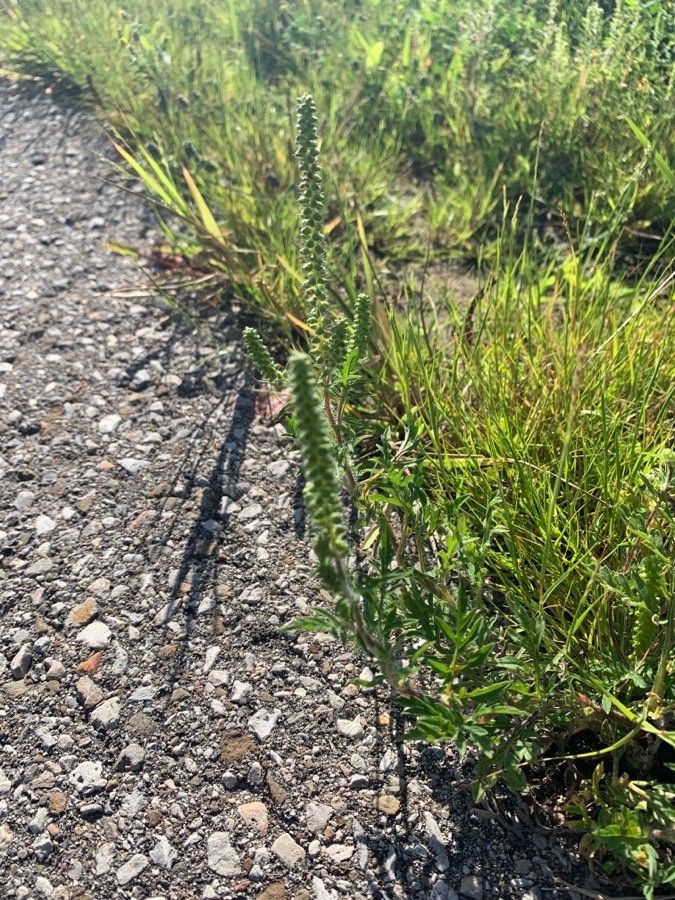
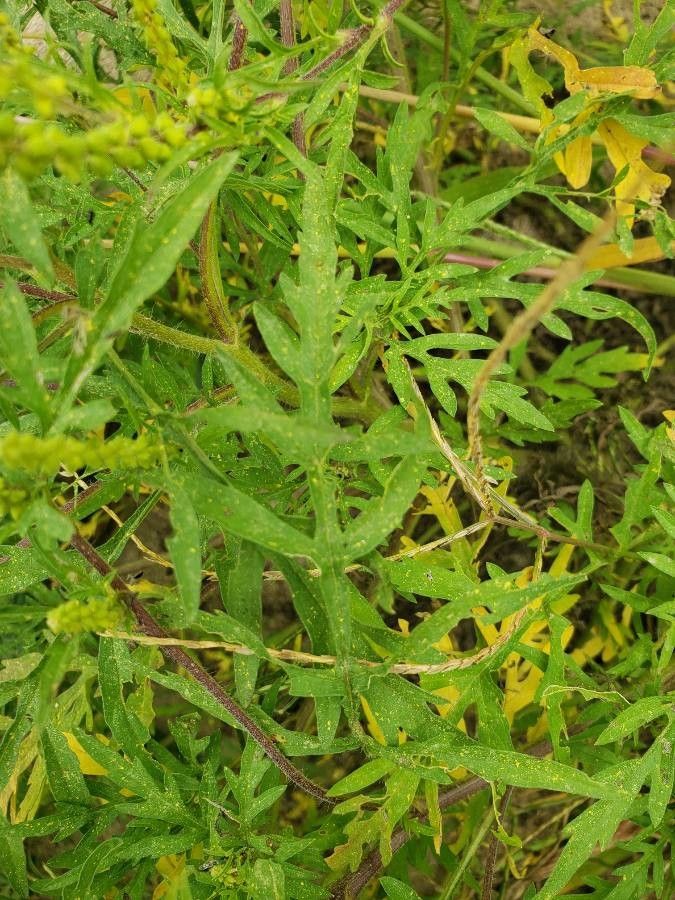
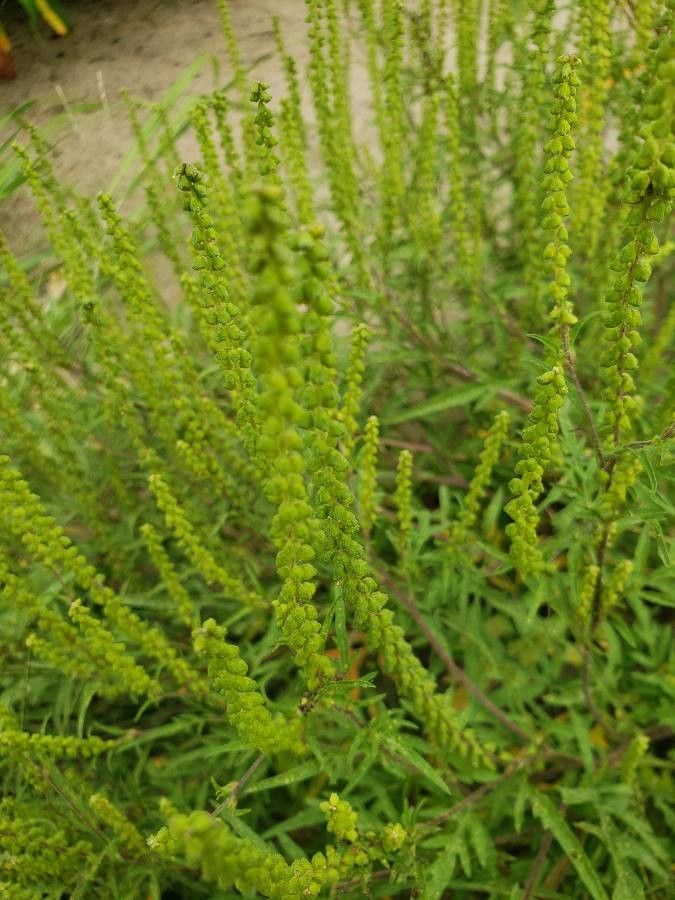
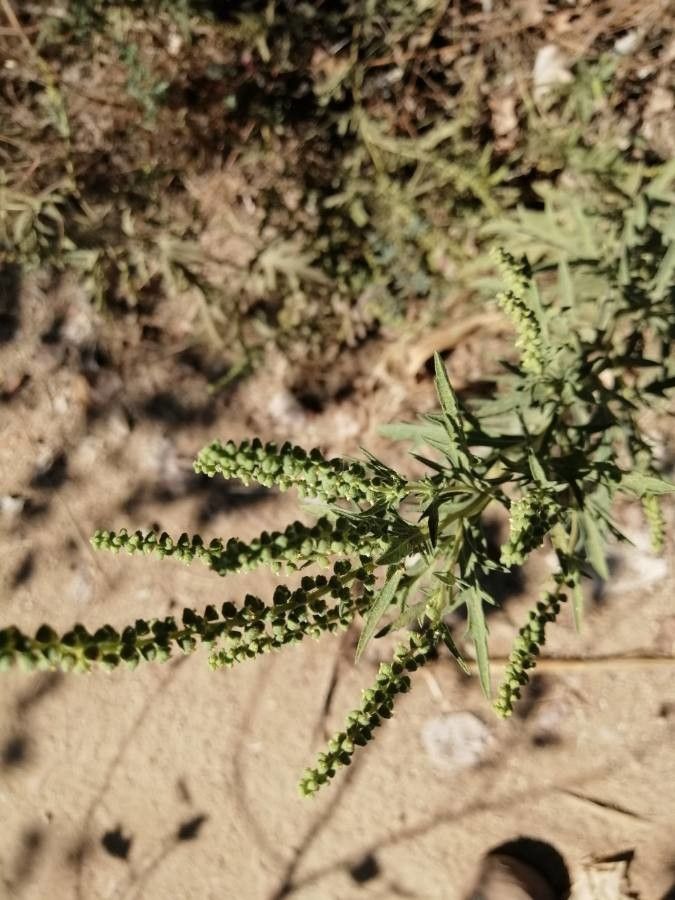
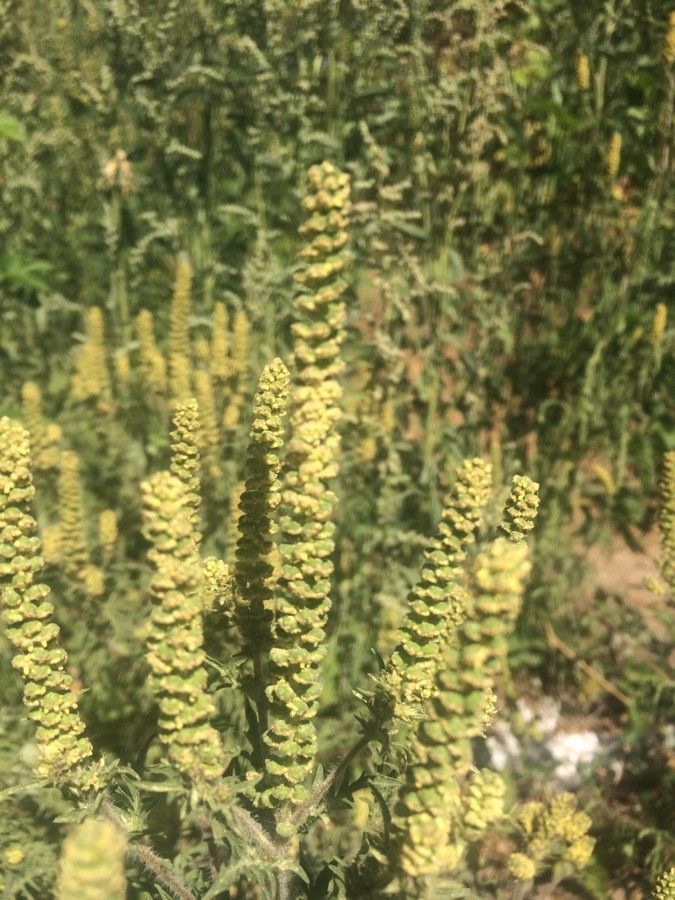
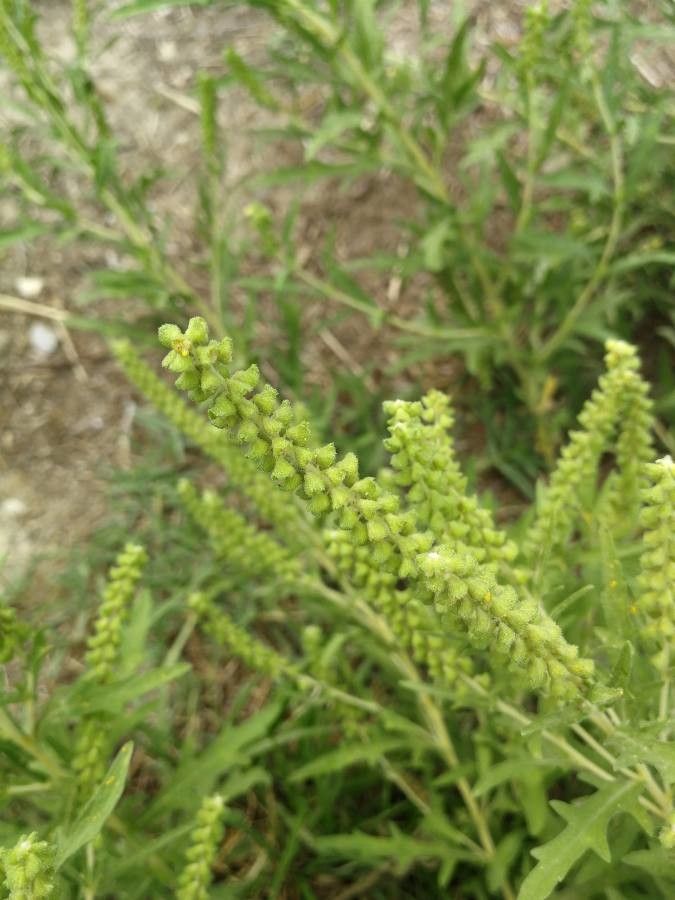
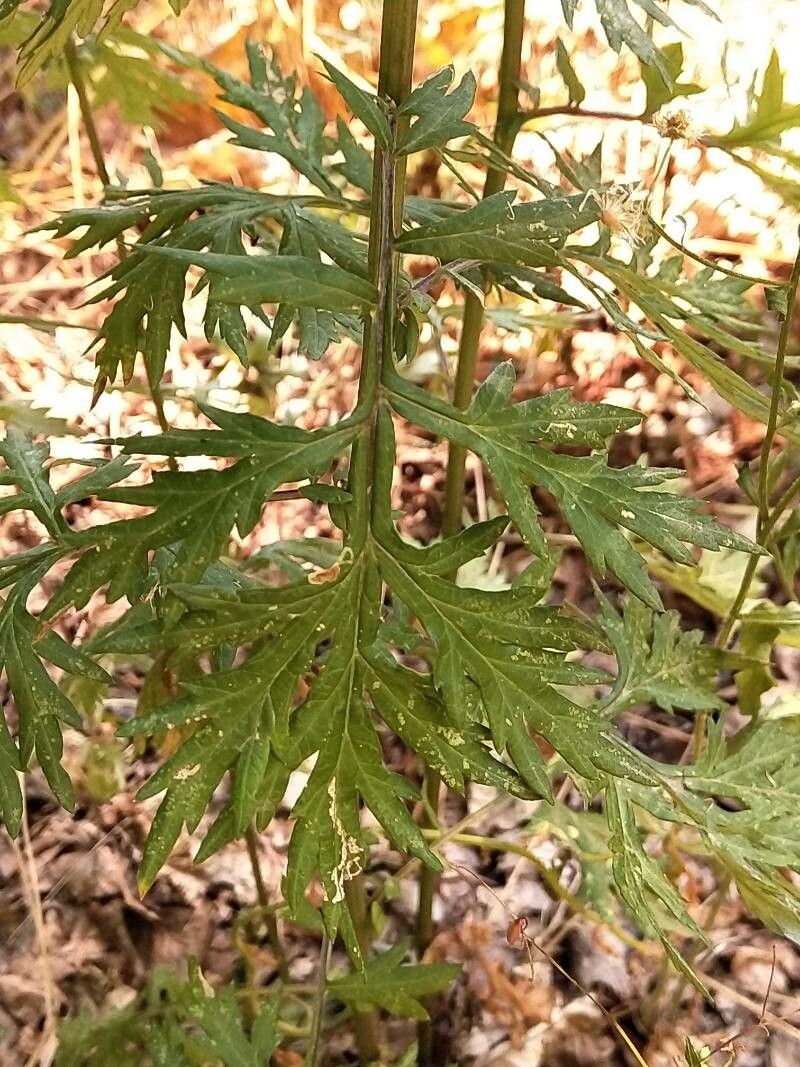
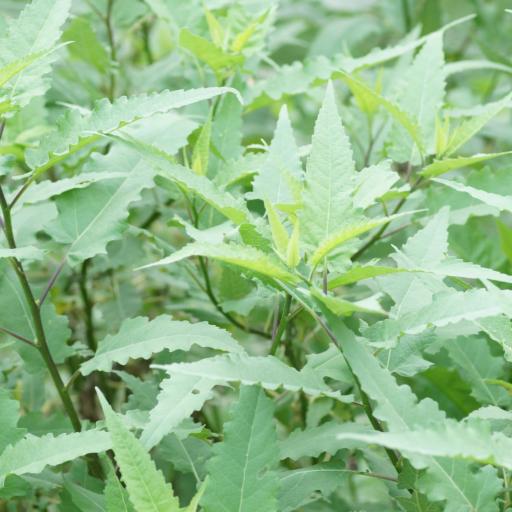
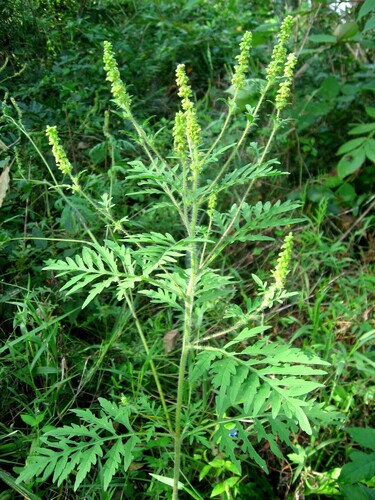
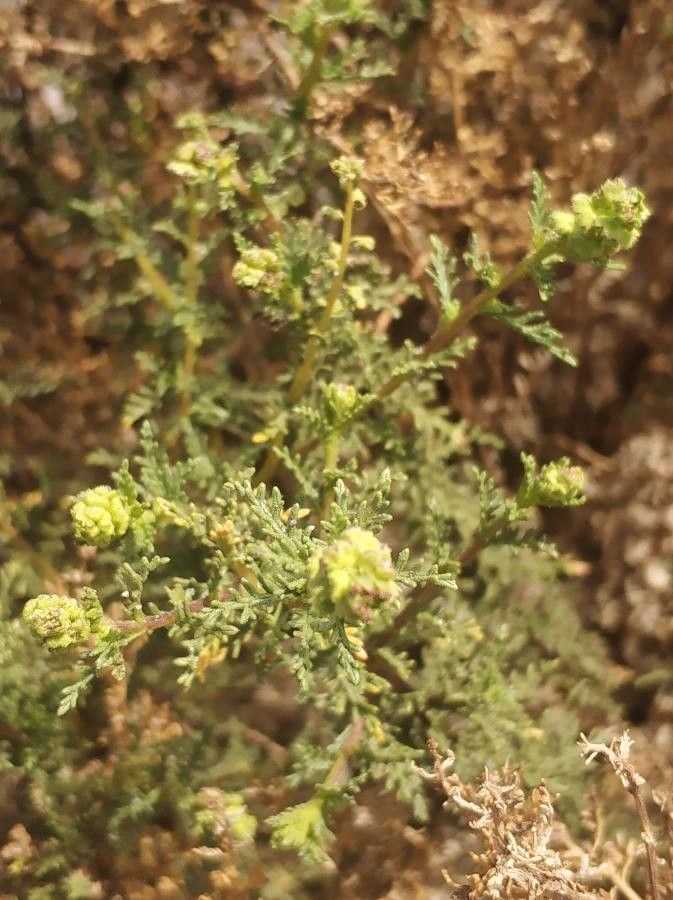
Ambrosia psilostachya, commonly known as western ragweed, is a perennial plant species in the Asteraceae family. Native to North America, it thrives in various habitats, including prairies, meadows, and open woodlands. This plant can grow up to 6 feet tall, featuring a branching stem with deeply lobed green leaves.
The flowers of Ambrosia psilostachya are small and greenish-yellow. They bloom from July to October, producing numerous seeds that are dispersed by the wind. The plant is noted for its allergenic pollen, which causes hay fever in many individuals.
For centuries, Native Americans have utilized Ambrosia psilostachya for its medicinal properties, particularly its believed anti-inflammatory effects. These properties were used to treat a variety of ailments, such as fever, coughs, colds, and asthma.
In addition to its medicinal uses, the plant is an important food source for wildlife. Birds feed on its seeds, and deer graze on its leaves during the winter months when other food sources are scarce.
Despite its ecological benefits, Ambrosia psilostachya is considered an invasive species in some regions. Its ability to grow rapidly under favorable conditions can lead to the displacement of native vegetation.
Cuman ragweed has strong resistance to disease and is generally not prone to illnesses. However, it can be affected by pests and diseases present in its surroundings. These infections are typically mild. In terms of care, this plant has moderate maintenance needs. It should be pruned regularly to maintain a good appearance and healthy growth. Fertilizing can also help encourage flowering. Cuman ragweed is suitable for anyone with outdoor space, such as a garden or patio, and does not require extensive care experience. It may need more attention when grown indoors.
How to keep Ambrosia Psilostachya.
Light
Cuman ragweed does best when exposed to the full intensity of daylight and can also persist in places with less, though still ample, sun. Its native habitat is open areas where continuous, unobstructed overhead light is typical. However, both excessive and insufficient light can negatively affect its growth.
Water
Cuman ragweed is well-suited for arid conditions due to its high tolerance for drought. It requires moderate watering, ideally just once a week. This plant adapts well to dry environments and can withstand periods of low water availability. Its resilience makes it suitable for outdoor growth in various climates.
Temperature
Cuman ragweed is a plant native to temperate regions and prefers a moderately warm climate with temperatures of 68 to 95 °F (20 to 35 ℃). During seasonal changes, make sure cuman ragweed is maintained within this temperature range for optimal growth.
Fertilizer
A single fertilizer application in spring is typically enough for Cuman ragweed, although multiple feedings can maximize its growth. Apply fertilizer every four to six weeks. Fertilization improves the leaves' appearance and function, helping to maintain uniform color and a healthy texture. It also promotes root development and improves nutrient uptake for the plant's long-term health.
Botanical profile.
- Plant Type
- Herb
- Life Cycle
- Perennial, Annual
- Genus
- Ambrosia
- Family
- Asteraceae
- Hardiness Zone
- 6-10
- Mature Height
- 91 cm
- Mature Spread
- 8 cm to 15 cm
- Leaf Color
- Green, White
- Leaf Type
- Semi-evergreen
- Flower Color
- Yellow, Green
- Flower Size
- 2.54 cm
- Bloom Time
- Mid summer
- Planting Time
- Spring
- Harvest Time
- Mid summer, Late summer
- Native Area
- Mexico
Other names.
Reader questions.
What should I do if I give my Cuman ragweed too much or too little water?
Overwatering and underwatering can harm your Cuman ragweed, but overwatering is more common. Too much water can cause wilting and yellowing of the stems and leaves, as well as diseases like root rot, mold, and mildew that can be fatal to your plant. Underwatering is less likely because the Cuman ragweed can tolerate drought to some extent, but it is still possible. In this case, the leaves of the plant may become brittle and brown. It is important to recognize the signs of overwatering early to prevent irreparable damage. If you notice these signs, reduce your watering schedule and check the quality of the soil. If the soil doesn't drain well, replace it with a loose, well-draining potting mix. On the other hand, if you see signs of underwatering, simply water the plant more regularly until the signs improve.
What are the sunlight requirements for Cuman ragweed?
Cuman ragweed requires full sun conditions, thriving in areas that receive more than 6 hours of sunlight daily. It can also adapt to partial sun conditions, where it gets about 3-6 hours of sunlight. It's essential to observe your garden's sunlight exposure throughout the day to ensure your Cuman ragweed gets the perfect balance of light and shade for optimal growth.
What is the ideal temperature range for Cuman ragweed?
Cuman ragweed, known botanically as Ambrosia psilostachya, thrives in temperate regions and prefers moderate to warm climates. The ideal temperature range for its growth is between 68 to 95°F (20 to 35°C). To ensure optimal growth, it's important to maintain the plant within this temperature range during seasonal changes.
How many times should I give water to my Cuman ragweed?
If your Cuman ragweed plant is in a pot, you can easily determine if it needs water by checking the soil. Just stick your finger into the soil and if the top two to three inches are dry, it's time to water. If you have your Cuman ragweed planted outdoors in the ground, you can use the same method to test the soil. When the top few inches of soil are dry, it's a sign that it needs water. Typically, this plant should be watered about once a week in the spring and early fall. However, during very hot weather, you may need to water it twice or even more per week. Despite this, mature and well-established Cuman ragweed plants are actually quite drought-tolerant.
How does Cuman ragweed's growth respond to the amount of sunlight it receives?
Cuman ragweed is ideally suited to environments that offer constant, unobstructed overhead light, similar to its natural habitat in open expanses. While it thrives under the full intensity of daylight, it is also capable of growing in areas with less sunlight. However, too much or too little light exposure can negatively impact its growth. In settings where natural sunlight is limited, such as during winter or in less sunny locations, artificial lighting can be a vital solution to promote healthy growth.
Does Cuman ragweed need frost protection in winter?
Cuman ragweed displays strong cold resistance, which typically eliminates the need for special frost protection measures during winter. Even so, if winter temperatures are forecasted to dip below -25°C, cold protection should be implemented. This can be done by insulating the plant with soil or straw. Additionally, watering the plant abundantly before the first freeze in autumn is advised to keep the soil moist, helping prevent drought and water scarcity during the colder months and into early spring.
How much water does my ragweed plant called Cuman need?
To properly water your Cuman ragweed, don't hold back on the amount of water you give. Make sure the top two to three inches of soil are dry before watering. It's best to give a thorough watering that completely saturates the soil. Use enough water that it flows out through the drainage holes at the bottom of the pot. If you don't see excess water draining out, it means you haven't given enough water. Avoid letting water accumulate in the soil, as this can harm the plant. On the other hand, if water doesn't drain properly, it could be a sign of poorly draining soil, which isn't good for the plant. If the plant is outside, around 1 inch of rain per week should be enough.
What artificial lighting requirements do plants have?
Indoor plants, including Cuman ragweed, require adequate artificial lighting, especially when natural sunlight is insufficient. LED lights are a popular choice because they can be customized to provide specific wavelengths needed for plant growth. The general guidance for artificial lighting is 30-50W/sq ft for full sun plants, 20-30W/sq ft for partial sun plants, and 10-20W/sq ft for full shade plants. Placement should be 12-36 inches above the plant to mimic natural sunlight, and the duration should match the natural daylight hours, typically 8-12 hours of light per day.
What should I do if Cuman ragweed is exposed to low temperatures?
Although Cuman ragweed is cold-tolerant and generally thrives best above 20°C, it is crucial to keep it above 0°C during winter. If temperatures fall below -25°C, you might not notice immediate changes, but there could be a decrease in sprouting or even no sprouting come springtime. In such cases, any parts of the plant that have failed to sprout by spring should be removed.
How should I water my Cuman ragweed as it grows?
The water needs of the Cuman ragweed vary depending on its growth stages. In the first few years of its life or when it has been newly transplanted, it requires more water than usual. This is because during these stages, the Cuman ragweed focuses on sprouting new roots to support future growth, and these roots thrive with slightly more moisture. After a few seasons, the Cuman ragweed will require less water. Another stage where it may need more water is during the bloom period, as flower development requires significant moisture. Therefore, additional watering might be necessary at this time.
What are the symptoms of inadequate lighting for Cuman ragweed?
Symptoms of inadequate lighting in Cuman ragweed include the growth of smaller leaves, leggy or sparse growth, premature leaf drop, and slower or halted new growth. Leaves may develop irregular color patterns or appear paler, indicating a lack of chlorophyll. Excessive sunlight can also lead to chlorosis, sunscald, leaf curling, wilting, and leaf scorching, causing the leaves to lose their green color, curl, or show signs of damage from intense sunlight exposure.
How should I care for Cuman ragweed in high temperatures?
In the summer months, it's important to ensure Cuman ragweed's temperature does not exceed 35°C. Exposure to temperatures above 41°C can cause the leaves to lighten in color, become prone to curling, suffer from sunburn, and in severe cases, the entire plant may wilt and dry out. To manage high temperature exposure, trim away any sunburned or dried-up parts of the plant. Move the plant to a shaded location, especially away from the midday and afternoon sun, or use a shade cloth to protect it. Additionally, watering the plant in the morning and evening will help keep the soil moist and support the plant's health.