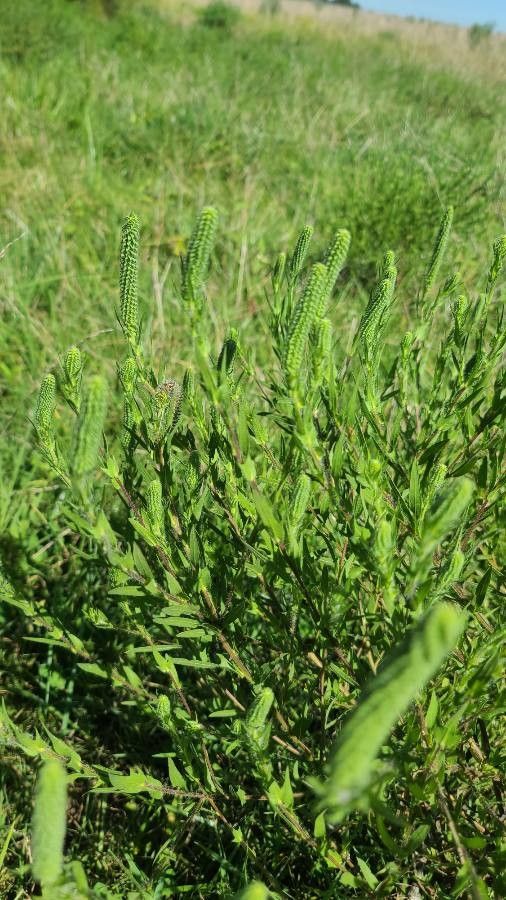
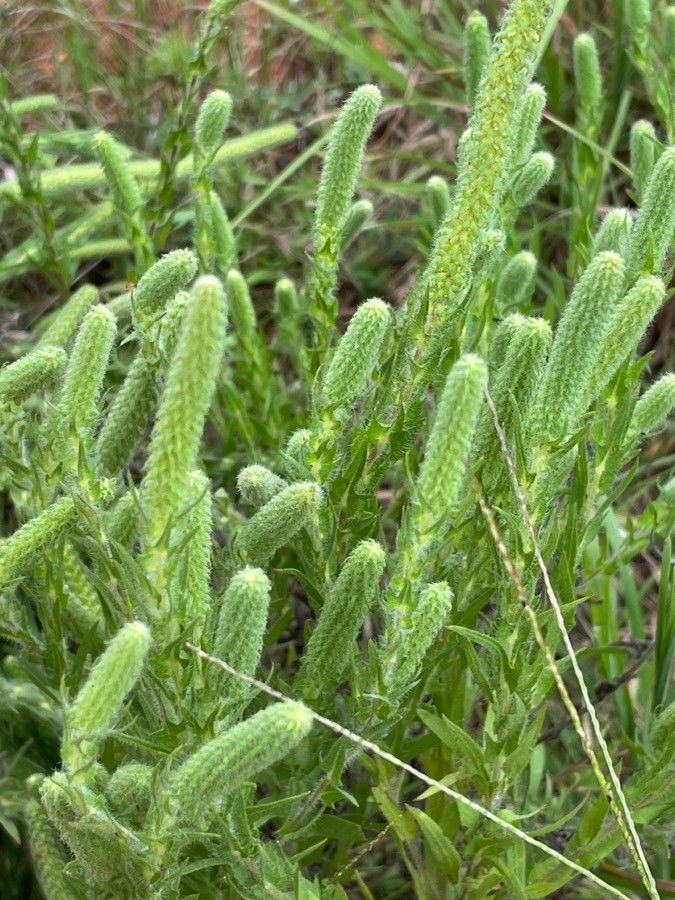
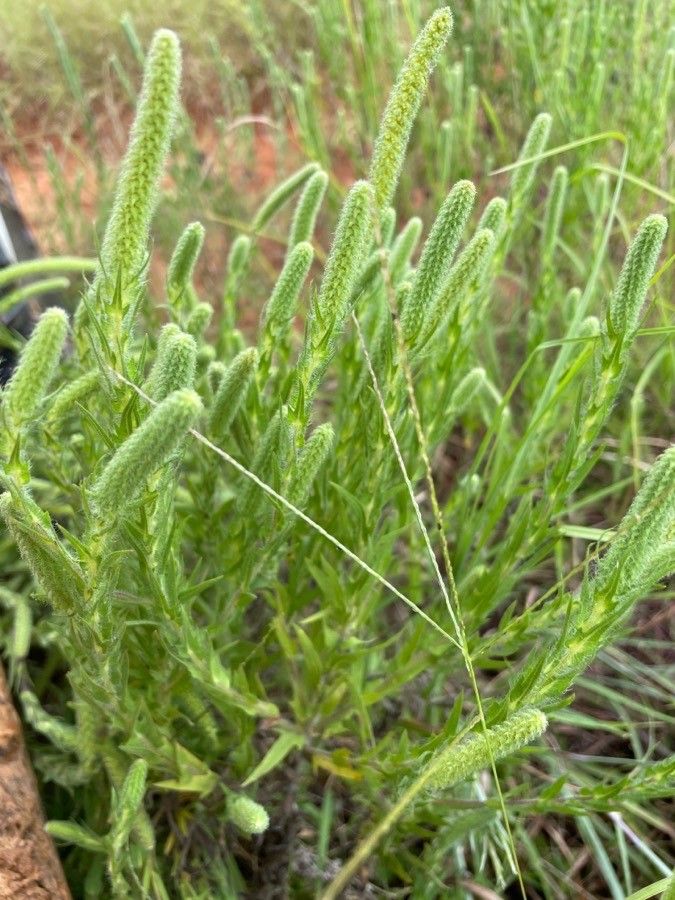
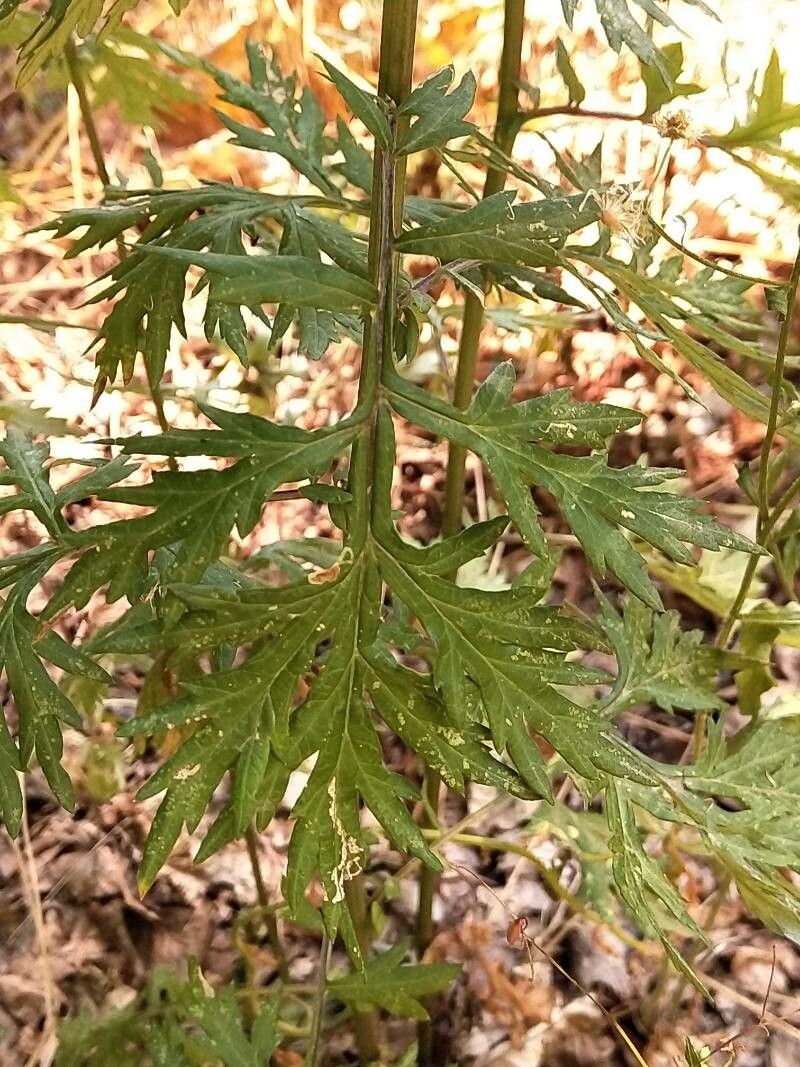
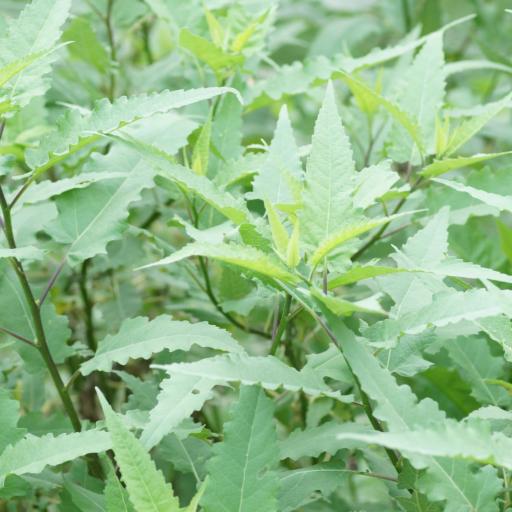
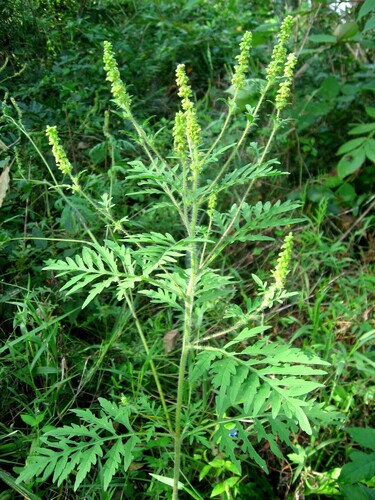
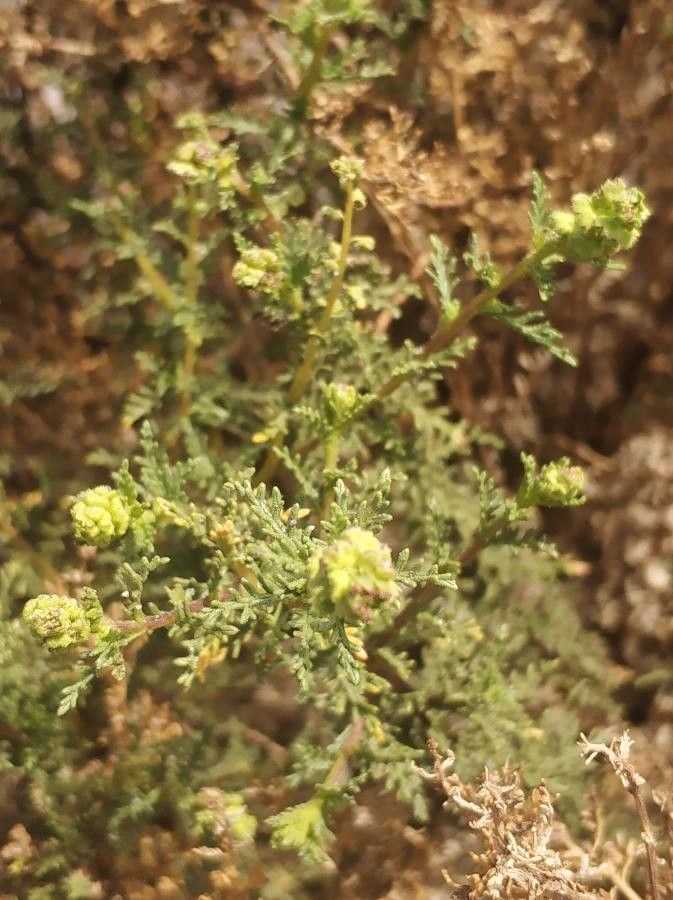
Ambrosia bidentata, commonly known as the biennial ragweed, is a species of flowering plant in the sunflower family. Native to North America, it thrives in various habitats, including prairies, meadows, and disturbed areas. The plant can grow up to 6 feet tall and features green leaves that are deeply lobed with toothed edges. Its small, greenish-yellow flowers lack petals and sepals.
The biennial ragweed is notorious for its allergenic properties, as it produces large amounts of pollen during its blooming season from July to October. This pollen can trigger allergic reactions, such as hay fever and asthma, in some individuals.
Despite these allergenic effects, Ambrosia bidentata has been utilized for medicinal purposes by Native American tribes for centuries. They used it to treat various ailments, including fever, coughs, colds, and skin irritations.
Ecologically, the plant plays a significant role by providing a food source for insects like bees and butterflies, which in turn help with the pollination of nearby plants.
Overall, Ambrosia bidentata is a fascinating species. It offers valuable medicinal benefits but also poses challenges to human health due to its allergenic properties.
Lanceleaf ragweed is fairly resistant to disease and is generally not prone to illnesses. Nonetheless, it can be affected by pests and diseases present in its environment. These outbreaks are usually mild. When it comes to care, this plant needs moderate maintenance. Regular pruning is required to preserve a neat appearance and healthy growth. Fertilizing can also help encourage flowering. Lanceleaf ragweed is appropriate for anyone with outdoor space, such as a garden or patio, and does not demand extensive care experience. It may need more attention if grown indoors.
How to keep Ambrosia Bidentata.
Light
Lanceleaf ragweed is native to bright, open habitats and does best in full sun. It will tolerate partial sun but favors direct sunlight for optimal growth. This plant, which can be annual or biennial, is noted for its sun-loving habits.
Water
Lanceleaf ragweed thrives in environments where the soil goes through regular cycles of being wet and dry. This drought-tolerant plant does best when it receives a good amount of water, but the soil should be allowed to dry out once a week. Ensuring the soil has enough moisture during the growing season is crucial for the plant to achieve optimal growth and environmental resilience.
Temperature
Lanceleaf ragweed can tolerate a wide range of temperatures, but its distribution may still be constrained by different combinations of moisture and heat. It does best in warm summer climates with sufficient rainfall or watering. Extended periods of cloudy, rainy weather or sustained high temperatures can increase the chances of lanceleaf ragweed dying. In winter, providing adequate protection from cold can improve the plant’s survival rate.
Fertilizer
Lanceleaf ragweed does well with frequent, light applications of fertilizer to encourage healthy leaf growth. You should fertilize Lanceleaf ragweed about once a month during the summer. Nitrogen is essential for foliage, and adding nitrogen-rich sources helps Lanceleaf ragweed thrive.
Pruning
Lanceleaf ragweed has lance-shaped leaves and benefits greatly from pruning between early and late spring. To promote growth and manage its spread, trim away dead stems during this period, but avoid heavy pruning outside of the recommended season. For best results, use clean and sharp tools. Pruning not only encourages denser foliage but also helps reduce the production of allergenic pollen.
Botanical profile.
- Plant Type
- Herb
- Life Cycle
- Annual
- Genus
- Ambrosia
- Family
- Asteraceae
- Hardiness Zone
- 4-9
- Mature Height
- 0.3 m to 1.22 m
- Mature Spread
- 20 cm to 61 cm
- Leaf Color
- Green, Dark Green
- Leaf Type
- Deciduous
- Flower Size
- 0.25 cm to 0.51 cm
- Bloom Time
- Late summer, Early fall
- Planting Time
- Spring, Summer, Autumn
- Harvest Time
- Early fall, Mid fall
Other names.