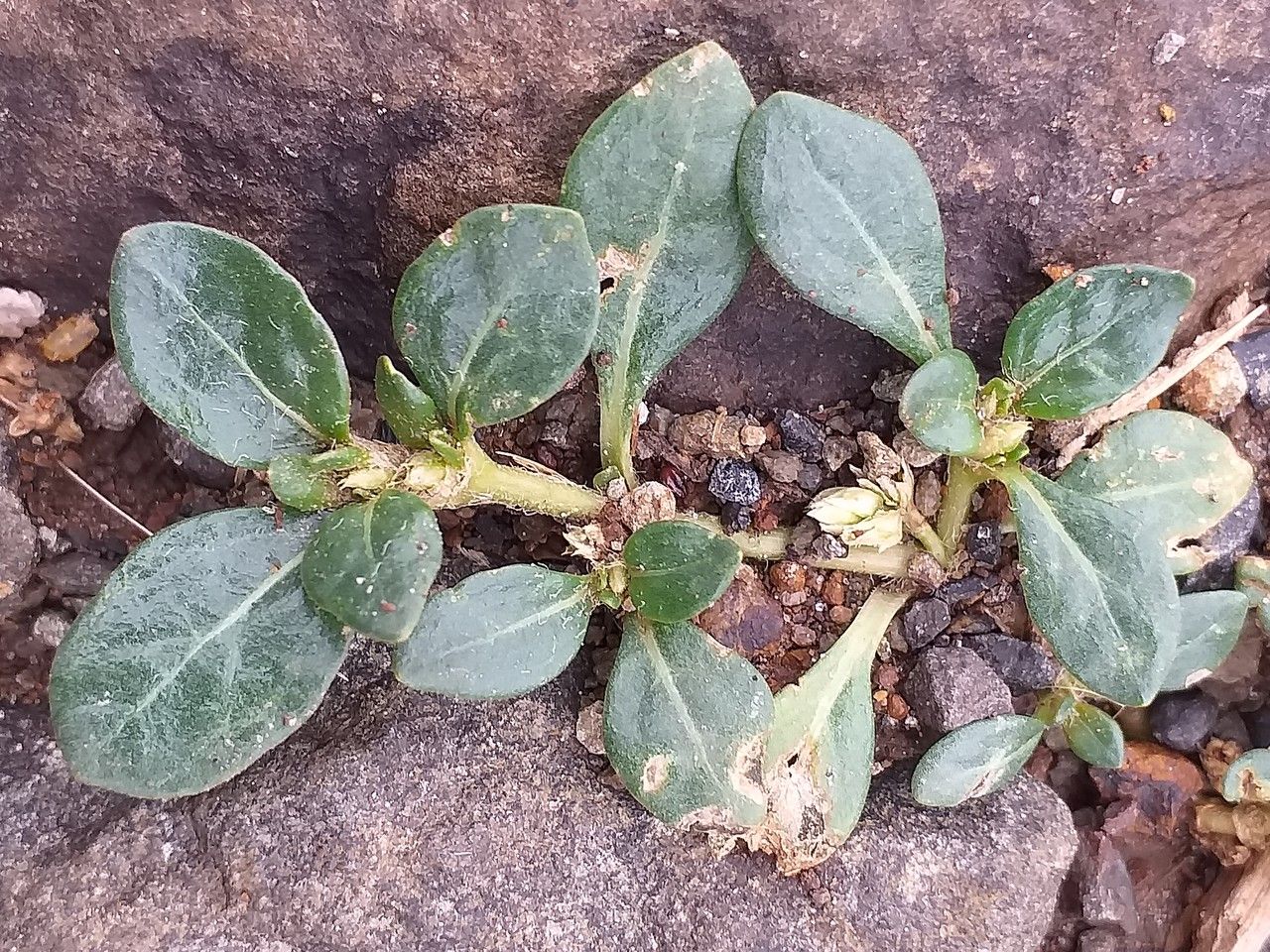
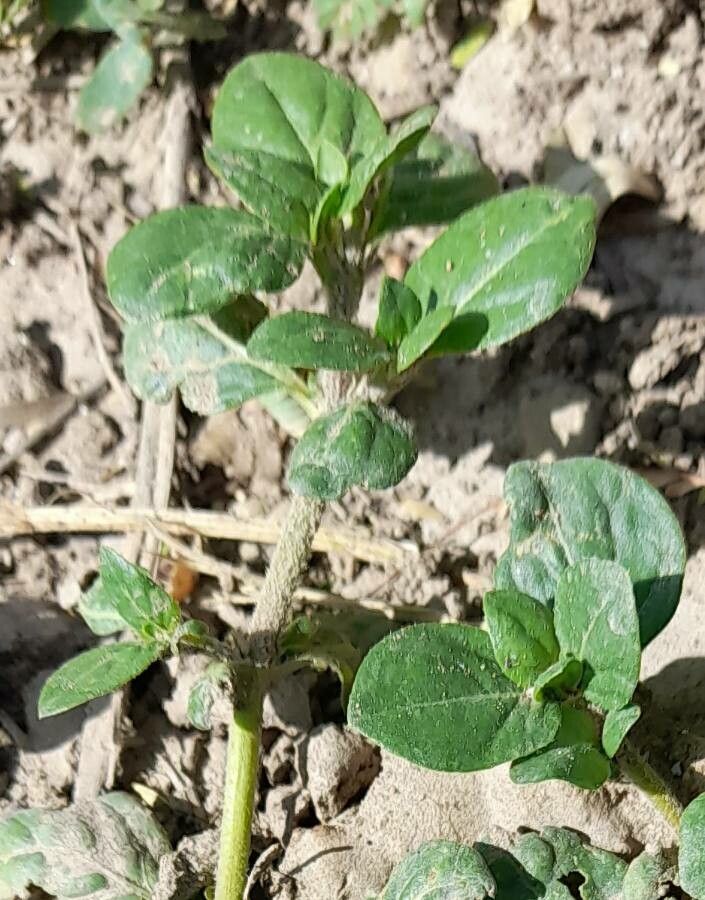
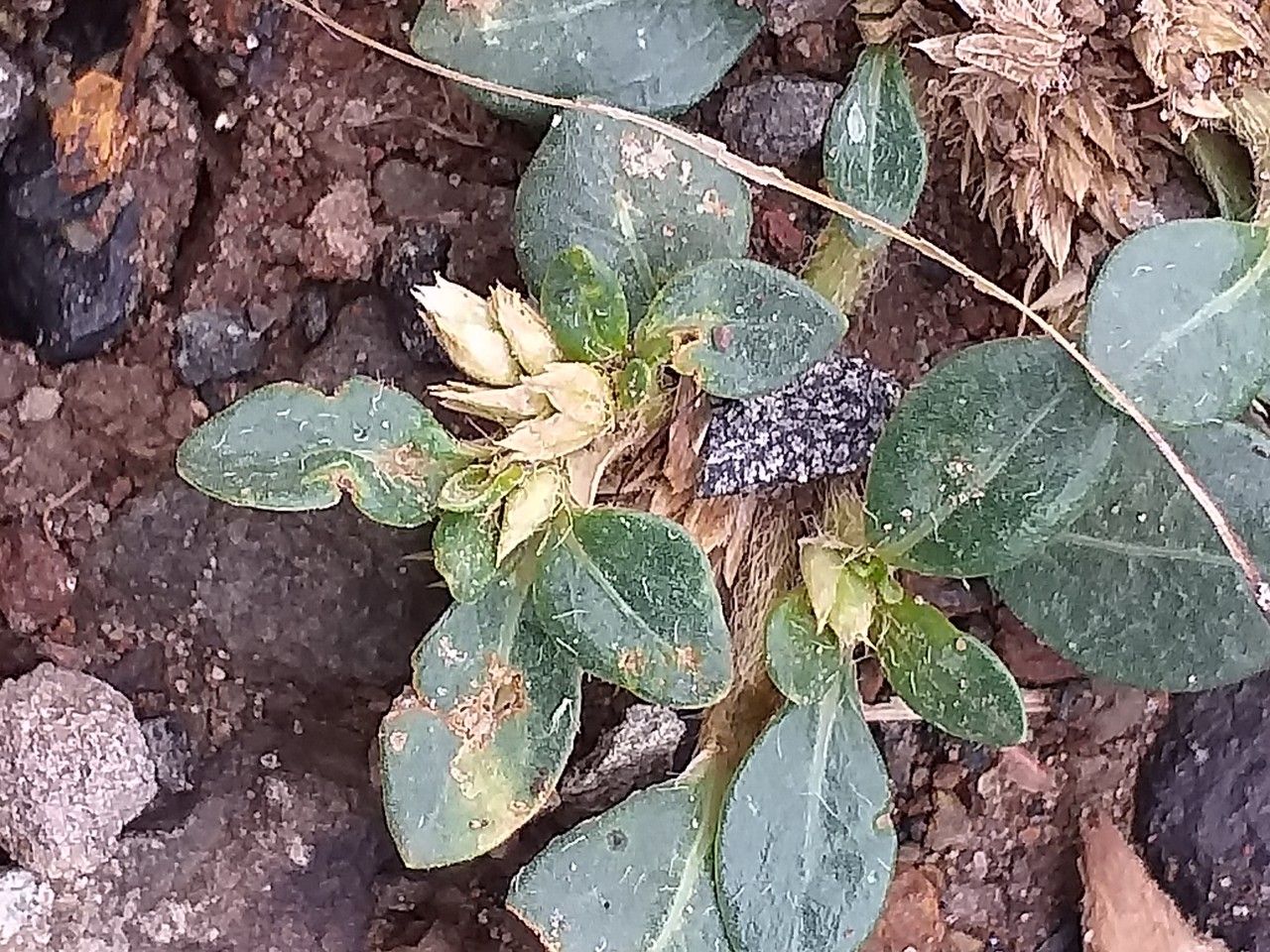
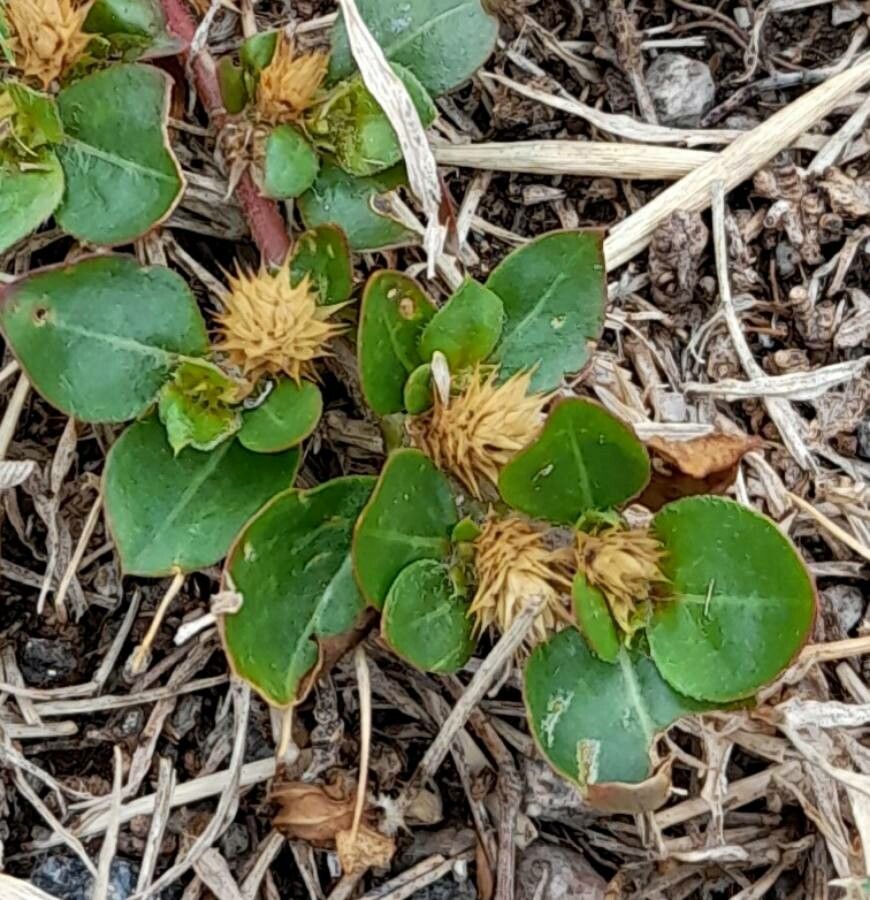
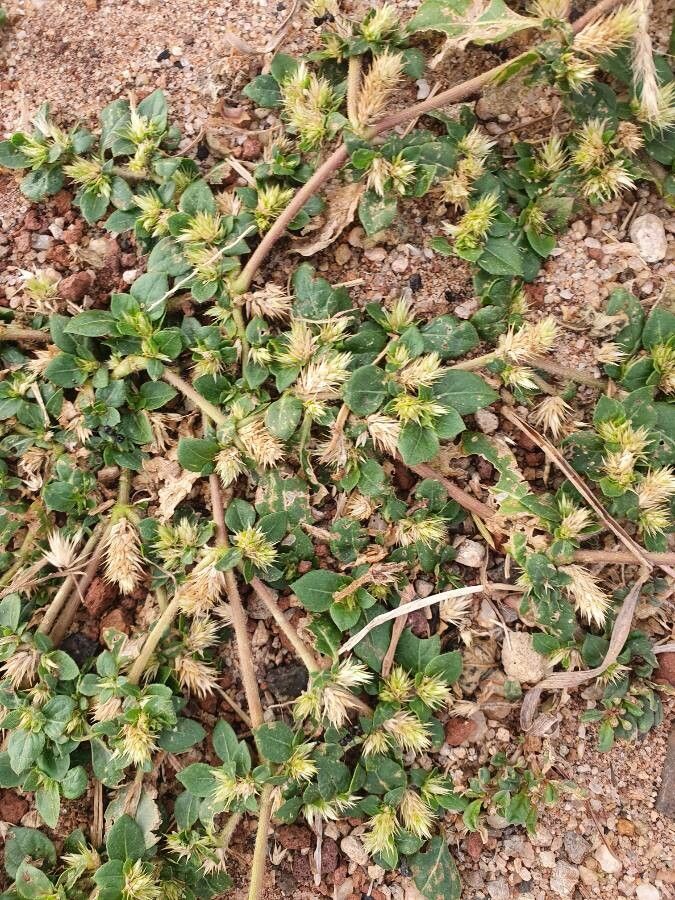
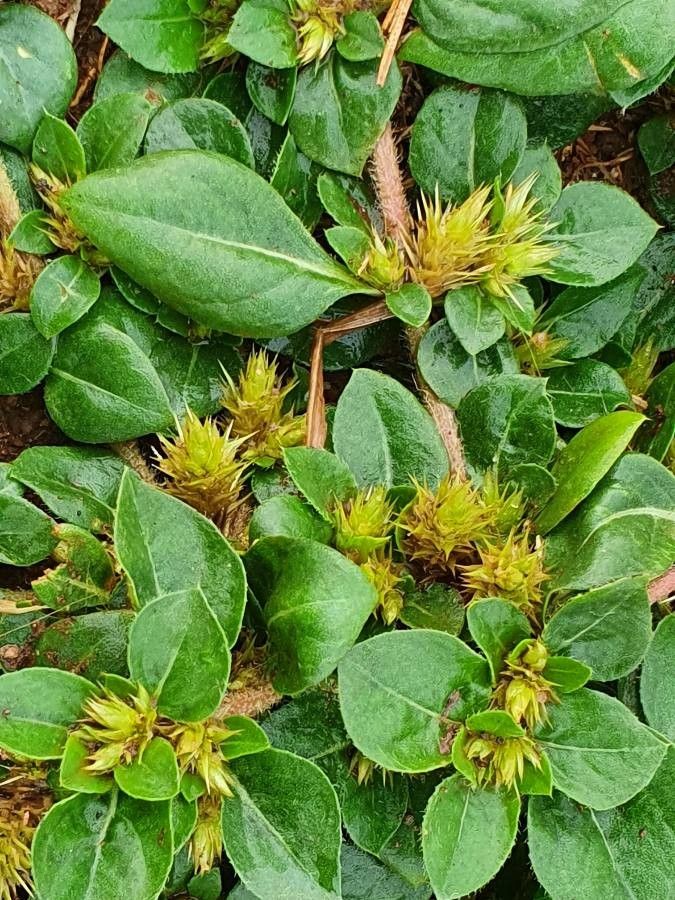
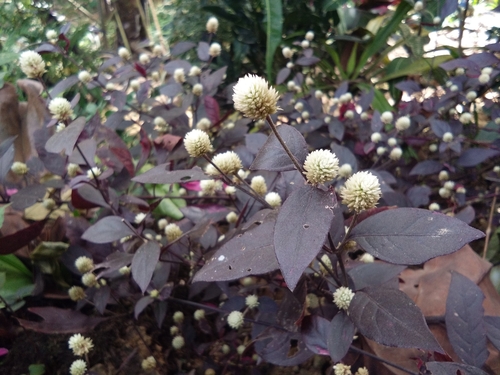
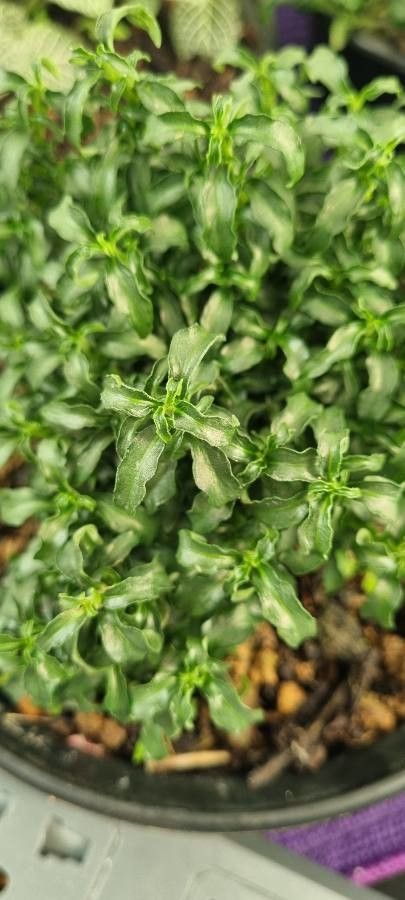
Alternanthera pungens, commonly known as Khaki Weed, is a perennial herbaceous plant belonging to the Amaranthaceae family. Native to South America, it has been introduced and naturalized in many parts of the world, including Australia and Africa. This plant has a prostrate growth habit, with stems that can grow up to 1 meter in length. The leaves are small and oval-shaped, dark green on top with a lighter green underside. The flowers are small, white or pinkish, and grow in clusters at the ends of the stems. Khaki Weed is considered an invasive species due to its ability to spread rapidly through its creeping stems, which root at nodes when in contact with soil. It can quickly colonize disturbed areas such as roadsides, pastures, or abandoned fields. Despite its invasive nature in some countries outside its native range, Alternanthera pungens possesses some medicinal properties. Traditionally, it has been used to treat skin infections like eczema and psoriasis. In summary, Alternanthera pungens is an interesting plant. While it can be problematic in certain areas due to its invasiveness, it also holds potential medicinal properties worth further exploration by researchers interested in natural remedies for skin infections and other unknown applications.
Khakiweed has strong disease resistance and is generally not prone to illnesses. However, it can be vulnerable to pests and diseases present in its environment. These infections are typically not serious. Regarding care, this plant requires a moderate level of maintenance. It should be pruned regularly to keep a good appearance and support healthy growth. Fertilizing can also help encourage flowering. Khakiweed is suitable for anyone with an outdoor area, such as a garden or patio, and does not require much care experience. It may need extra attention when grown indoors.
How to keep Alternanthera Pungens.
Light
Khakiweed does well with ample sunlight, since it comes from environments where sun is plentiful. It can also tolerate partially shaded spots, showing a tolerance for reduced light. However, too little or too much sun can impede the plant's optimal growth and performance.
Water
Khakiweed, adapted to arid conditions, is highly drought-tolerant and only needs watering every 1-2 weeks. It grows best outdoors and is ideal for xeriscaping. During its active growth phase, it requires minimal irrigation, highlighting its resilience and efficient water conservation.
Temperature
Khakiweed is native to habitats where temperatures fall between 68 and 95 °F (20 to 35 ℃). It prefers that range and may need adjustments, such as additional shading or warming techniques, if temperatures fluctuate beyond it.
Fertilizer
One fertilizer application in spring is generally adequate for Khakiweed, although repeated feedings can enhance growth. Apply fertilizer roughly every month to a month and a half. Fertilization improves the leaves’ appearance and function, helping to maintain uniform color and a healthy texture. It also promotes root development and nutrient uptake for lasting plant health.
Pruning
Khakiweed is a low-growing plant with a mat-like formation, characterized by spiky leaves and small white flowers. To control its growth and enhance air circulation and appearance, it's best to prune it from early to late spring. Effective techniques include removing dead stems and thinning out overcrowded areas. For more guidance, resources such as 'The Royal Horticultural Society' can be helpful.
Botanical profile.
- Plant Type
- Herb
- Life Cycle
- Perennial, Annual, Biennial
- Genus
- Alternanthera
- Family
- Amaranthaceae
- Hardiness Zone
- 4-10
- Mature Height
- 5 cm to 10 cm
- Mature Spread
- 30 cm to 61 cm
- Leaf Color
- Green, Dark Green
- Leaf Type
- Semi-evergreen
- Flower Color
- White
- Flower Size
- 2.54 cm
- Bloom Time
- Summer, Fall
- Planting Time
- Summer, Autumn
- Harvest Time
- Late summer, Fall, Early winter
- Native Area
- Uruguay, Colombia, Cuba, Paraguay, Argentina, Haiti, Mexico, Bolivia, Venezuela, Peru, Brazil, Ecuador, Dominican Republic, Jamaica
Other names.
Reader questions.
How should I water my Khakiweed plant in the best way?
To properly water the Khakiweed, it is recommended to use filtered water at room temperature. Filtered water is ideal because tap water may contain harmful particles for this plant. The water temperature should be at room temperature or slightly warmer since the Khakiweed is used to warmth and cold water can be stressful for it. Instead of overhead watering, it is better to apply filtered room temperature water directly to the soil until it is completely soaked. This method benefits the plant by moistening the roots and facilitating their spread in the soil for nutrient absorption.
What are the sunlight requirements for Khakiweed?
Khakiweed thrives under full sun, requiring above 6 hours of sunlight daily for optimal growth. It can also grow in partial sun, which means about 3-6 hours of sunlight. When planning where to plant Khakiweed, it's important to observe the movement of sunlight through your garden, selecting locations that ensure a balance of light and shade conducive to the plant's well-being.
What is the ideal temperature range for Khakiweed?
Khakiweed thrives in environments where the temperature ranges from 68 to 95 °F (20 to 35 °C). This plant prefers such temperatures and may need adjustments like additional shading or warming techniques when temperatures fluctuate beyond this preferred range.
What should I do if I give my Khakiweed too much water or not enough water?
Overwatering is a more common problem than underwatering for Khakiweed. When Khakiweed gets too much water, its stems and leaves may wilt and turn yellow. Over time, overwatering can lead to diseases like root rot, mold, and mildew, which can be fatal for the plant. Underwatering is less common, but it can cause the leaves to become brittle and brown. It's important to recognize the signs of overwatering early. Some diseases caused by overwatering, like root rot, cannot be fixed if you wait too long. If you see signs of overwatering, reduce the watering schedule and check the soil's quality. If the soil drains poorly, replace it with well-draining potting mix. For underwatering, simply water the plant more regularly until the signs improve.
How does Khakiweed respond to different light conditions?
Khakiweed is naturally suited to environments with plenty of sunlight, indicating a preference for abundant exposure. It possesses a degree of tolerance for slightly shaded areas, illustrating its adaptability to various light conditions. However, both insufficient and excessive sun exposure can negatively impact its growth and health, underscoring the need for a balanced lighting environment. For indoor plants, artificial lighting can be crucial, especially when natural sunlight is lacking. LED lights, set to emulate natural sunlight conditions, can substantially benefit plant growth by providing the necessary light intensities and durations.
Does Khakiweed require special frost protection during winter?
Khakiweed has strong cold resistance, so special frost protection measures are usually not necessary. However, if winter temperatures are expected to drop below -30°C, it's important to provide cold protection by covering the plant with materials like soil or straw. Additionally, watering the plant abundantly before the first freeze in autumn keeps the soil moist and helps prevent drought and water scarcity during winter and early spring.
How frequently should I water my Khakiweed?
If your plant is in a pot, the most accurate way to determine if your Khakiweed needs water is to stick your finger into the soil. If the first two to three inches of soil are dry, it's time to water. If you're growing Khakiweed outdoors in the ground, you can use a similar method to check the soil. Again, when the top few inches of soil have dried out, it's time to water. Typically, you'll need to water this plant about once a week in the spring and early fall. During very hot weather, you may need to increase watering to about twice a week or more. However, mature, well-established Khakiweed can tolerate drought well.
What are the signs of inadequate light for Khakiweed?
Khakiweed shows several indicators when the light is insufficient, including smaller new leaves, elongated stem growth making the plant appear leggy and sparse, premature leaf drop to conserve resources, and halted growth as the plant enters survival mode. Leaves may show unusual pale colors or develop chlorosis, where they lose their green pigment. Additionally, excessive sunlight can cause symptoms like sunscald, leaf curling, wilting, leaf scorching, indicating damage from overexposure to sun.
How does khakiweed react to temperatures below its preferred range?
Khakiweed is cold-tolerant and fares best when temperatures are above 20°C. In conditions where temperatures fall below -30°C, the plant may not show noticeable changes during winter but could experience decreased sprouting or no sprouting in spring. To manage this, remove any parts in spring that have failed to sprout.
How much water does my Khakiweed plant need?
To properly water your Khakiweed, don't be afraid to give it a generous amount of water. Make sure the first few inches of soil are dry before watering, and then water thoroughly until the soil is completely soaked. It's important to add enough water so that excess water flows out of the drainage holes in the bottom of the pot. If you don't see any excess water draining, you may have not watered enough, but be careful not to let water accumulate in the soil as this can harm the plant. On the other hand, if water is not draining, it could indicate that the soil doesn't drain well, which is not good for the plant's health. If the plant is outdoors, it generally only needs about 1 inch of rain per week.
How can I address light-related issues for Khakiweed?
To manage light-related challenges with Khakiweed, adopting a gradual approach to increase sun exposure is crucial. For indoor plants, shifting them weekly towards brighter locations, such as a south-facing window or supplementing with artificial lighting such as professional grow lights for a minimum of 8 hours daily, can significantly help. For outdoor settings, incrementally relocating plants to sunnier spots can prevent sunburn, ensuring a smooth transition to higher light levels. If physical obstructions like trees block sunlight, trimming them can increase light availability. Additionally, transplanting smaller plants during dormant periods to areas with better sunlight and drainage can enhance their growth and health.
How should khakiweed be cared for during high temperatures?
During summer, it's crucial to keep Khakiweed below 35°C. If temperatures soar above 41°C, the plant's leaves may lighten in color, become prone to curling, suffer from sunburn, and in severe cases, wilt and dry up completely. To mitigate these issues, trim sunburned and dried-up parts, relocate the plant to a shaded area or use a shade cloth, and water it in the morning and evening to maintain soil moisture.