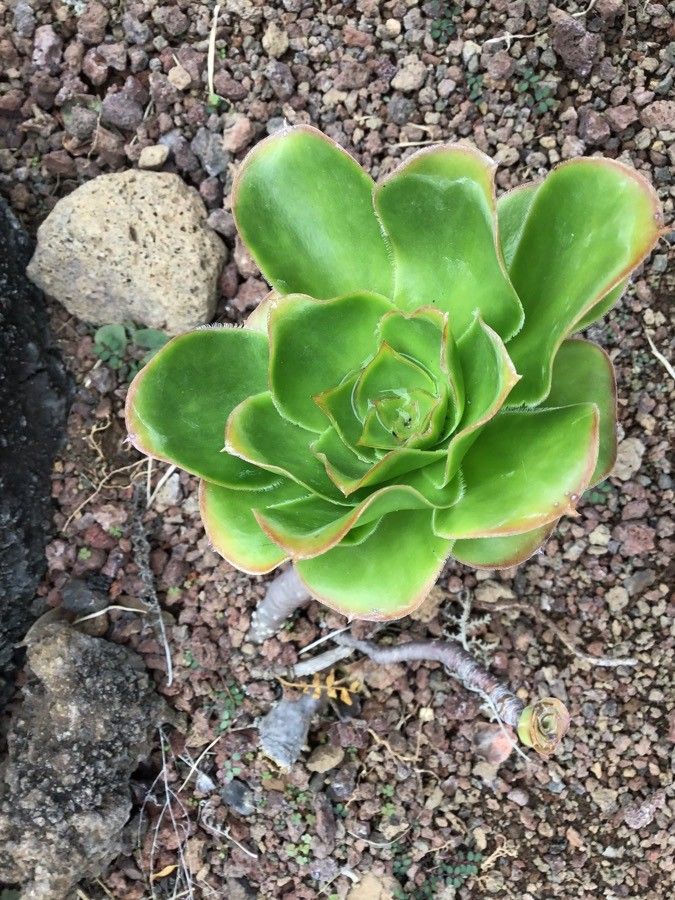
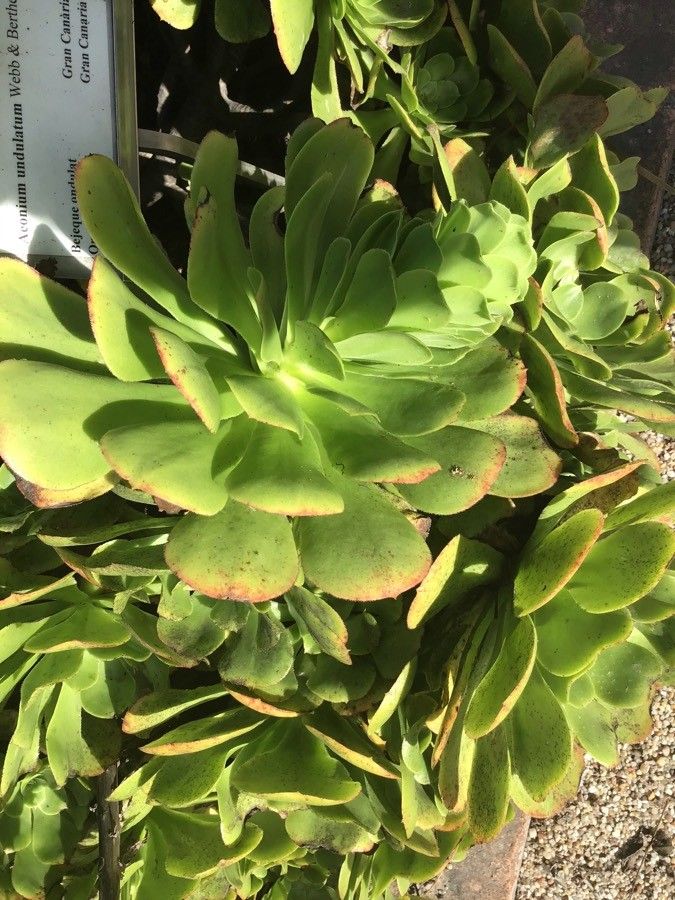
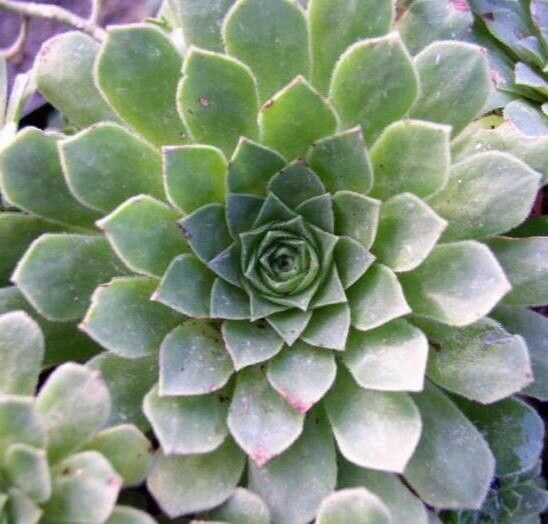
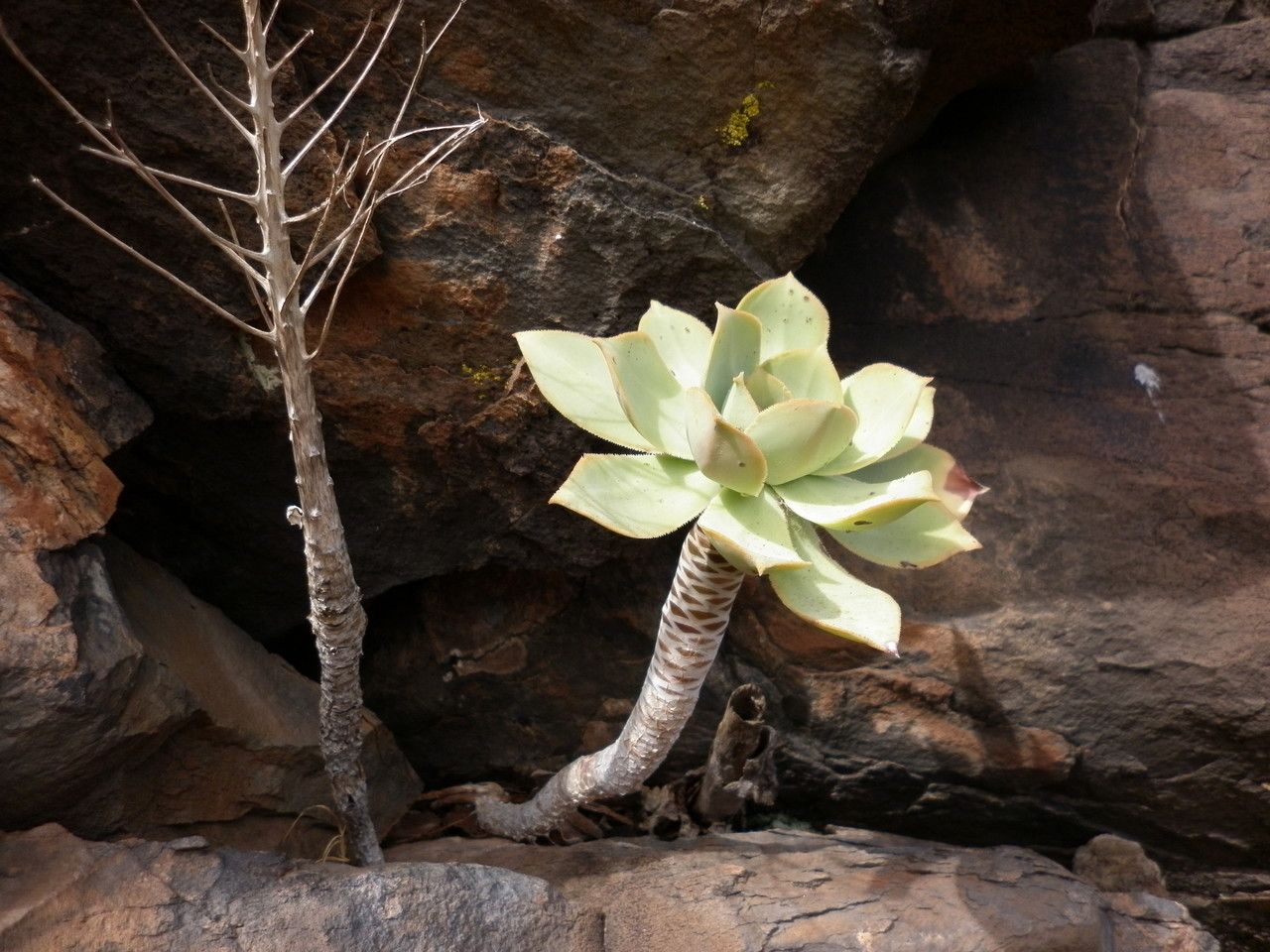
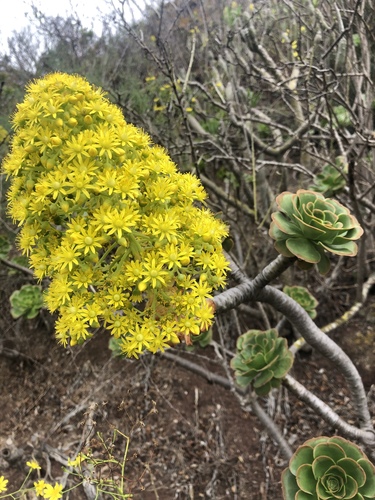
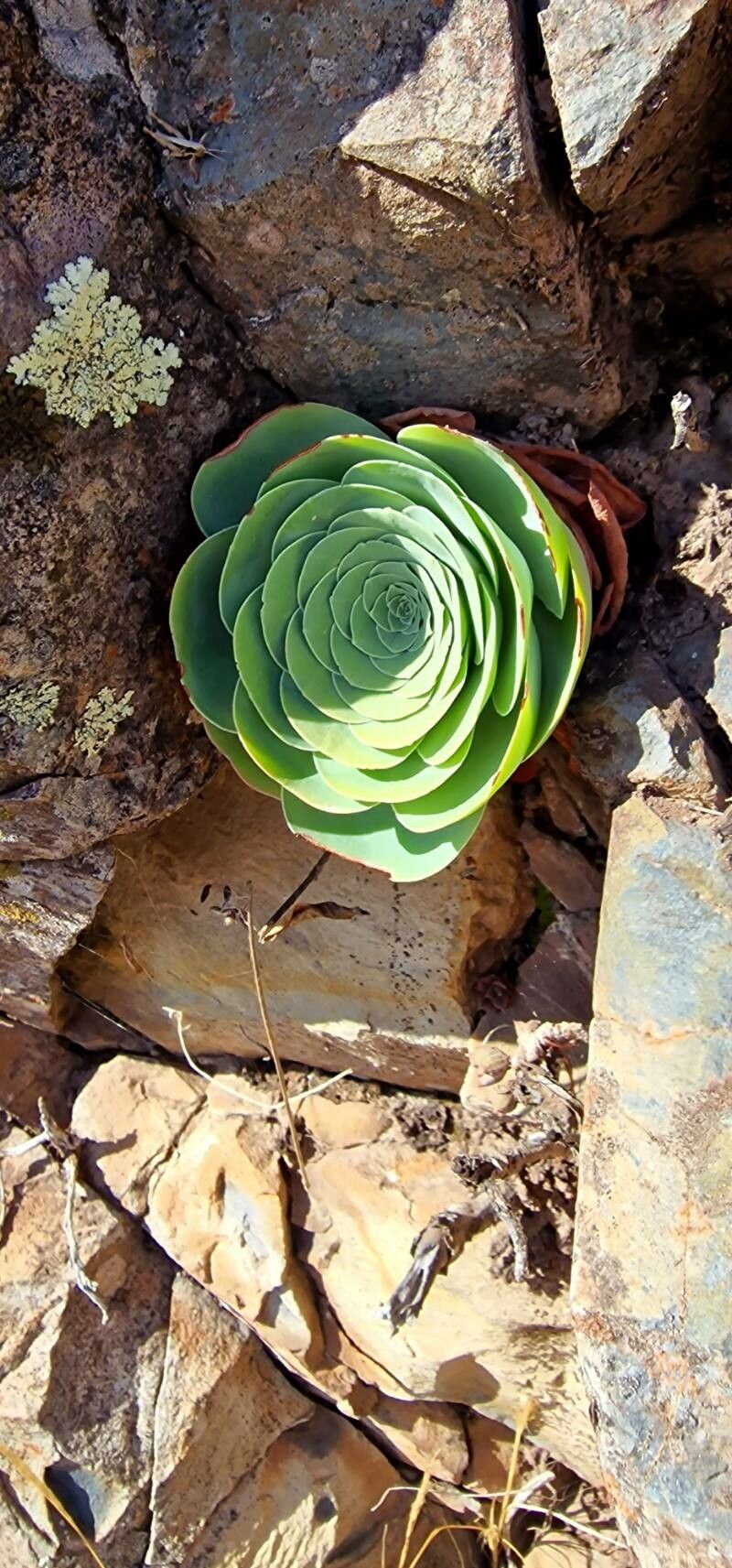
Aeonium undulatum is a succulent plant in the Crassulaceae family. Native to the Canary Islands and Morocco, it is also cultivated worldwide as an ornamental plant. The plant features rosette-shaped structures with fleshy, green leaves that have slightly wavy edges. These leaves can grow up to 15 cm in length and 5 cm in width, arranged in a spiral pattern around a central stem.
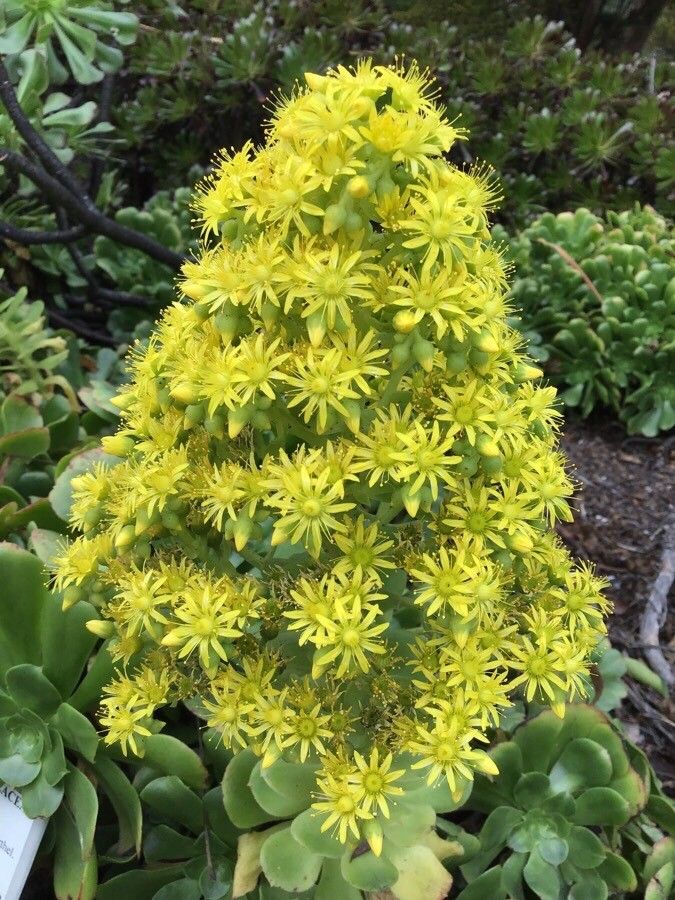
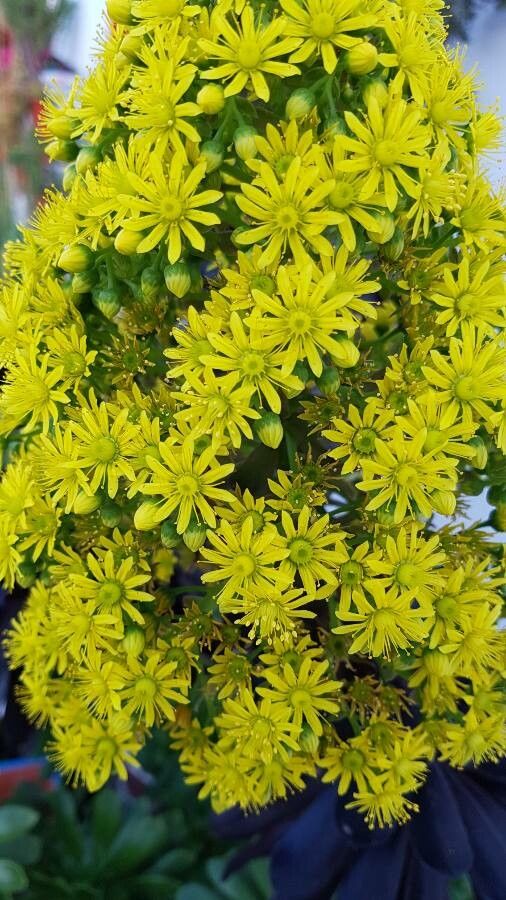
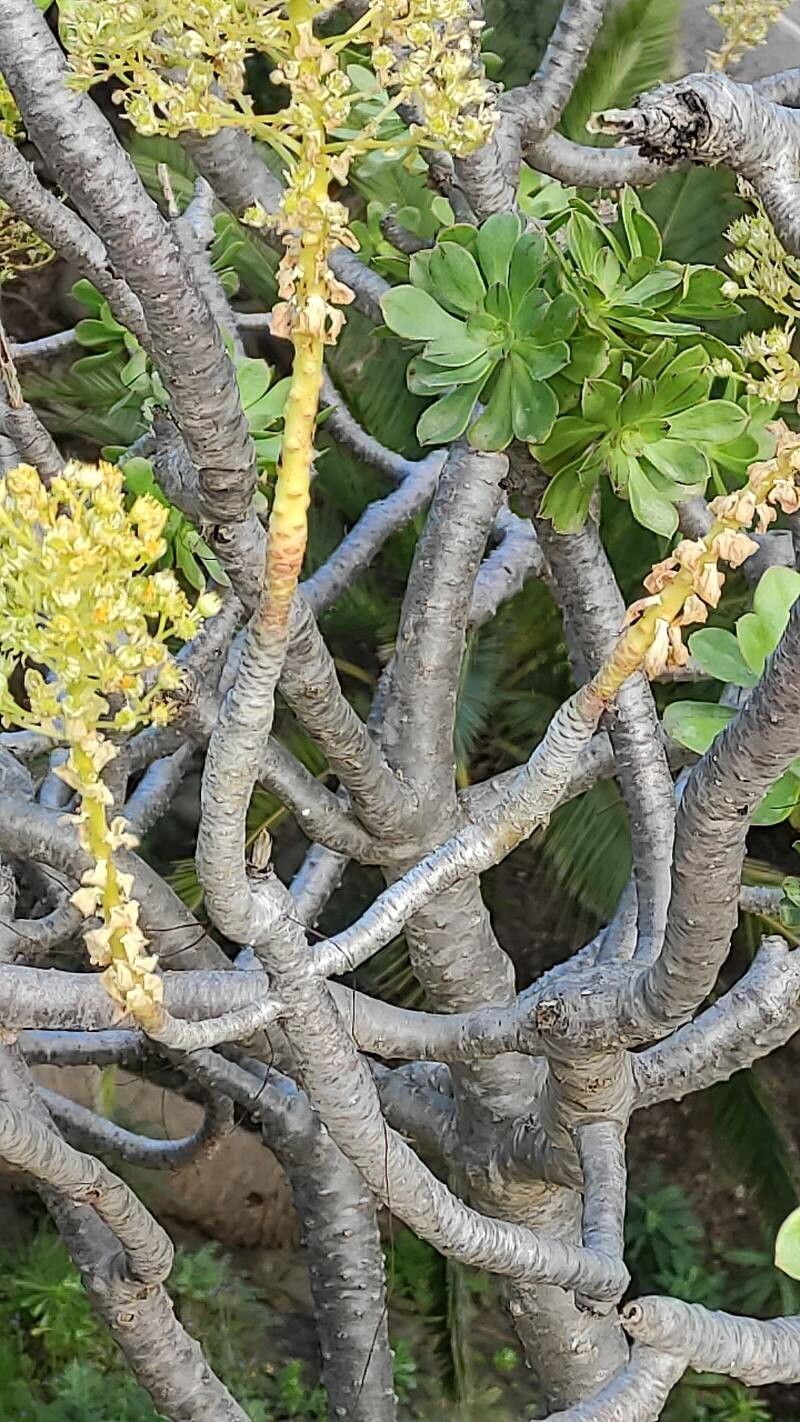
During spring or summer, Aeonium undulatum produces yellow flowers on tall stalks. The flowers are small but numerous, forming clusters at the top of each stem. After flowering, new rosettes develop from offsets produced by mature plants.
This succulent thrives in well-draining soil and prefers full sun or partial shade. While it can tolerate drought conditions, it requires occasional watering during hot weather or prolonged dry spells.
Overall, Aeonium undulatum is an attractive ornamental plant that enhances any garden or indoor space with its unique leaf structure and bright yellow flowers when in bloom.
Saucer-plant has moderate resistance to disease and is more sensitive to humidity. It becomes vulnerable to illnesses when humidity is elevated and is liable to develop root rot while dormant. Regarding care, Saucer-plant tolerates drought but requires increased watering during its active growth. Watering should be sharply reduced or halted entirely during its dormant phase. Saucer-plant is best for growers with some experience, though it can be challenging to maintain, especially during dormancy. It is particularly well suited to people who can dedicate time to its care over the winter months.
How to keep Aeonium Undulatum.
Light
Originating from arid regions, the Saucer-plant does best in full sun, since its native habitat features intense sunlight and little shade. It can also tolerate partial sun, giving it some flexibility in its growth.
Water
The saucer-plant is drought-tolerant and well-suited for arid regions, requiring watering only once every three weeks. As an evergreen, it keeps its leaves year-round, but it looks its best with regular watering during the growing season.
Temperature
Although the Saucer-plant tolerates some heat, it mainly performs best and grows during the cooler seasons, becoming dormant in summer. In hot summer weather, it should be given shade to prevent scorching from intense sunlight. Watering should also be reduced or paused during the hottest period to avoid root rot. It grows vigorously in winter and spring. Provided the temperature does not fall too low, it will keep growing steadily.
Fertilizer
Light applications of fertilizer once or twice a year during the growing season are sufficient for Saucer-plant. Do not fertilize in winter or summer while it is dormant. Reduce fertilizer for plants that have been repotted and wait a few months after repotting before feeding. Fertilizing supports healthy growth and encourages flowering.
Pruning
To keep your saucer plant in good shape, prune any excess or dense branches during the spring and fall. If you want to propagate the plant, choose a strong stem with 5 to 6 leaves. Cut the stem, apply sulfur powder to the cut to protect it, and wait for it to heal before planting. Make sure the soil stays slightly moist.
Pot & Repot
When repotting Saucer-plant, choose a pot slightly larger than the current one that provides good drainage. Use a gritty, well-draining succulent or cactus potting mix. Gently remove the plant from its old pot, brush off excess soil, and replant it at the same depth. Wait a few days before watering to allow any root damage to heal. Repot in spring or fall and place it in a brightly lit location.
Botanical profile.
- Plant Type
- Succulent
- Life Cycle
- Perennial
- Genus
- Aeonium
- Family
- Crassulaceae
- Hardiness Zone
- 9-11
- Mature Height
- 61 cm to 91 cm
- Mature Spread
- 30 cm
- Leaf Color
- Red, Green
- Leaf Type
- Semi-evergreen
- Flower Color
- Yellow
- Flower Size
- 1.02 cm to 2.03 cm
- Bloom Time
- Mid spring, Late spring, Early summer
- Planting Time
- Spring, Summer, Autumn
- Harvest Time
- Summer
Other names.