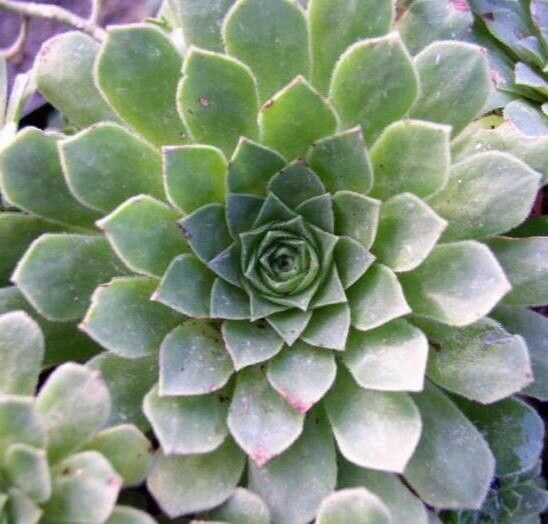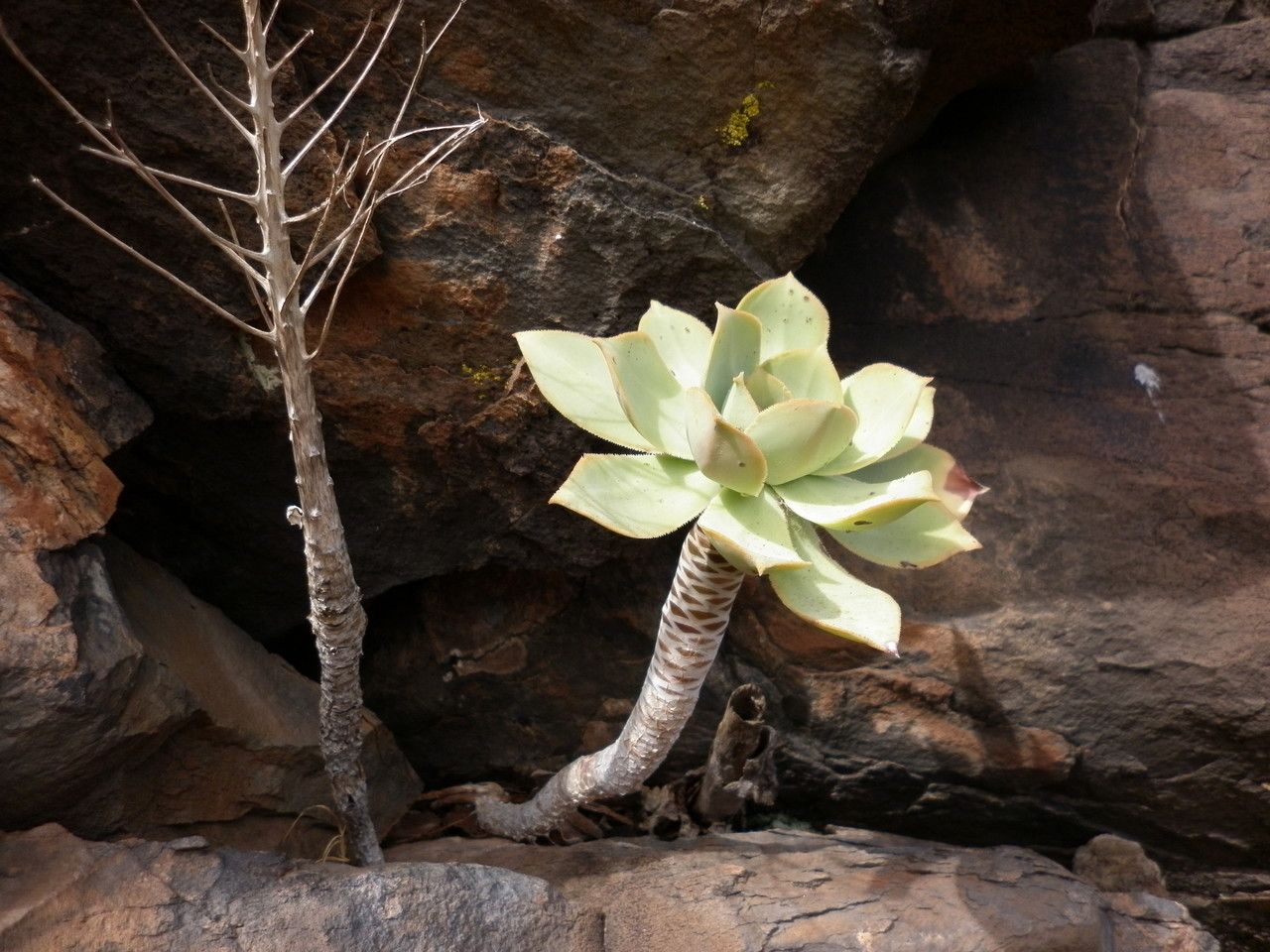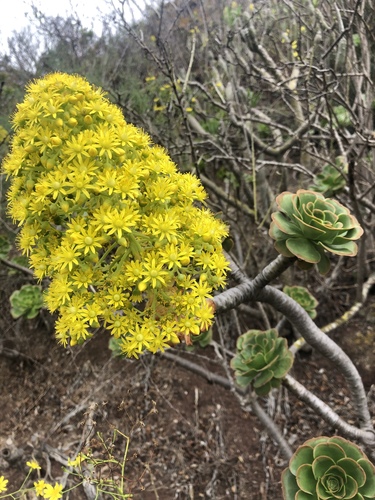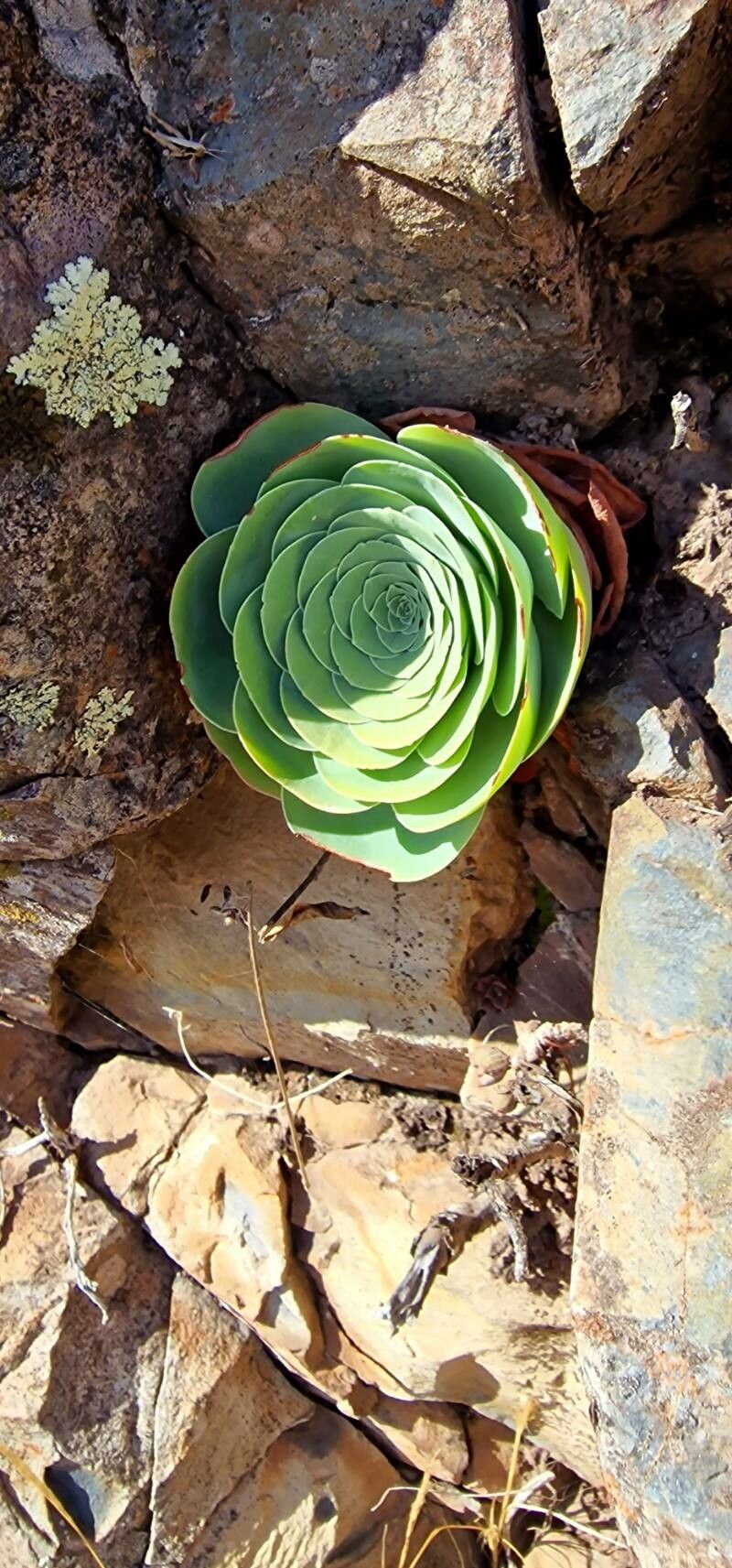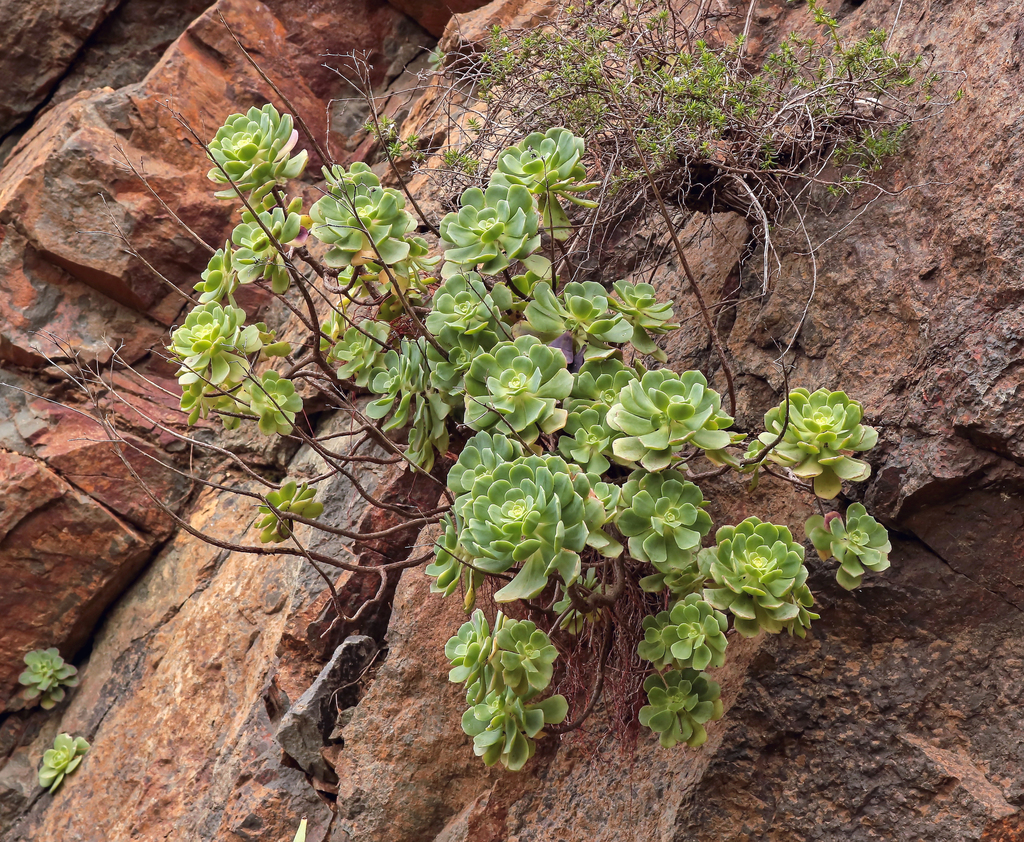
Aeonium Castello (Aeonium castello-paivae), also known as the Tree Aeonium, is a small sub-shrub with thick branching that grows to around 50 cm in height. Depending on the growth circumstances, the plant's hues may vary, but it will often exhibit exquisite pastel hues of green and blue. During the summer, plants often grow a thin, powdery covering known as farina. Farina is considered to provide various functions, including reflecting sunlight and serving as a sunscreen; limiting water loss through the leaf surfaces; and helping water to swiftly bead and flow off the foliage, so plants do not stay saturated. When cultivated in broad sunlight and under stress, plants may also acquire crimson leaf margins.
Aeonium castello-paivae has moderate disease resistance and is relatively sensitive to humidity. It becomes susceptible to disease in high-humidity conditions and is prone to root rot during dormancy. Regarding care, Aeonium castello-paivae tolerates drought but requires increased watering during the growing season. Watering should be greatly reduced or stopped entirely during the dormant period. Aeonium castello-paivae is appropriate for people with some growing experience, though it can be difficult to maintain, particularly while dormant. It is especially suitable for those who have the time to devote to its care during the winter months.
How to keep Aeonium Castello Paivae.
Light
Native to arid regions, Aeonium castello-paivae performs best in full sun, as its natural habitat is marked by intense sunlight and little shade. It can also tolerate partial sun, giving it some flexibility in its growth.
Humidity
This plant prefers dry conditions, so don't mist it. However, watering it less often can also thrive in higher humidity.
Temperature
Although Aeonium castello-paivae tolerates some heat, it mainly does best and grows during the cooler seasons and goes dormant in summer. In hot summer weather, provide shade to avoid scorching from intense sunlight. Watering should be cut back or stopped during the hottest period to prevent root rot. Winter and spring are when Aeonium castello-paivae shows vigorous growth. If temperatures don't fall too low, it will continue to grow steadily.
Fertilizer
For Aeonium castello-paivae, applying fertilizer 1-2 times a year during the growing season is sufficient. Avoid fertilizing in winter and in summer when it is dormant. Reduce feeding for plants that have been repotted and wait a couple of months after repotting before you begin fertilizing. Fertilizing helps maintain healthy growth and promotes flowering.
Pruning
Remove any dead or damaged branches and leaves in early June. This may also be done in the autumn once the temperature lowers, and they will regrow in the spring. To stimulate bushy growth, pinch off side branches at their bases as they develop.
Pot & Repot
When repotting Aeonium castello-paivae, choose a pot slightly larger than the current one that has good drainage. Use a gritty, well-draining cactus or succulent mix. Gently remove the plant from its old pot, brush off excess soil, and replant it at the same depth. Wait a few days before watering so any root damage can heal. Repot in spring or fall and place the plant in a brightly lit spot.
Toxicity
In addition to its stunning rosettes, Aeonium Castello is non-toxic to people and animals. It is even regarded as a pet-friendly succulent.
Further reading →
The toxicity and danger assessments provided are for reference only. We do not assure their accuracy, so it's crucial not to depend on them. Seek professional advice when necessary for accurate guidance.
Botanical profile.
- Plant Type
- Succulent, Shrub
- Life Cycle
- Perennial
- Genus
- Aeonium
- Family
- Crassulaceae
- Hardiness Zone
- 9-11
- Mature Height
- 30 cm to 61 cm
- Mature Spread
- 30 cm to 49 cm
- Leaf Color
- Light Green, Pale Green
- Leaf Type
- Evergreen
- Flower Color
- Yellow
- Flower Size
- 1.02 cm to 2.03 cm
- Bloom Time
- Mid spring, Late spring
- Planting Time
- Spring, Summer, Autumn
- Harvest Time
- Early summer, Mid summer
- Native Area
- Canary Islands, Africa