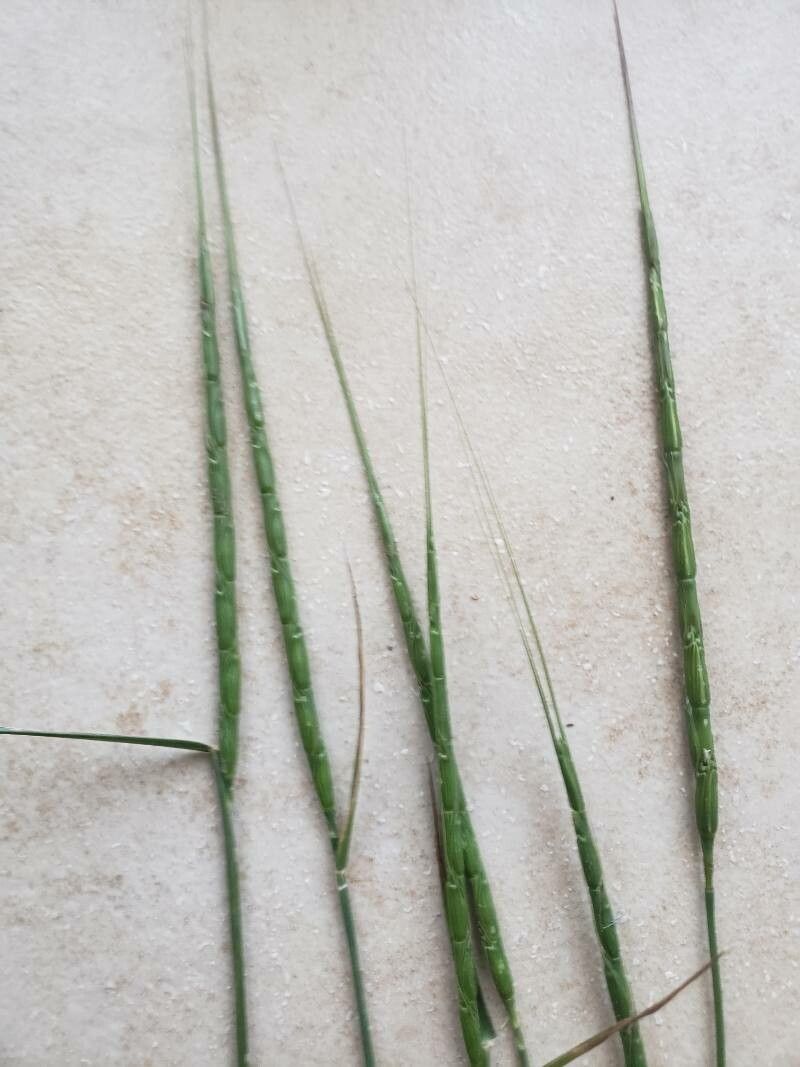
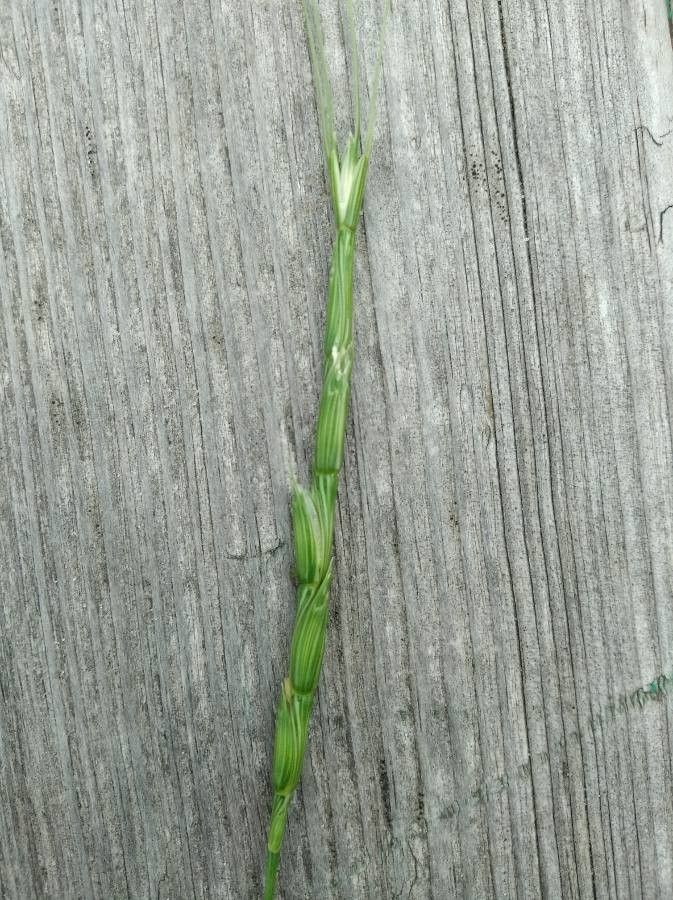
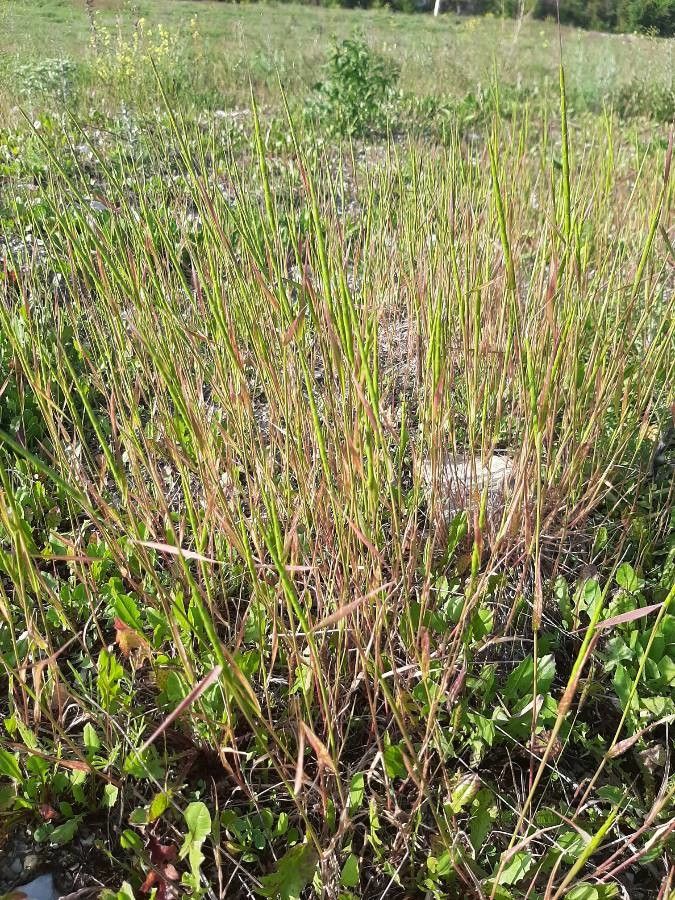
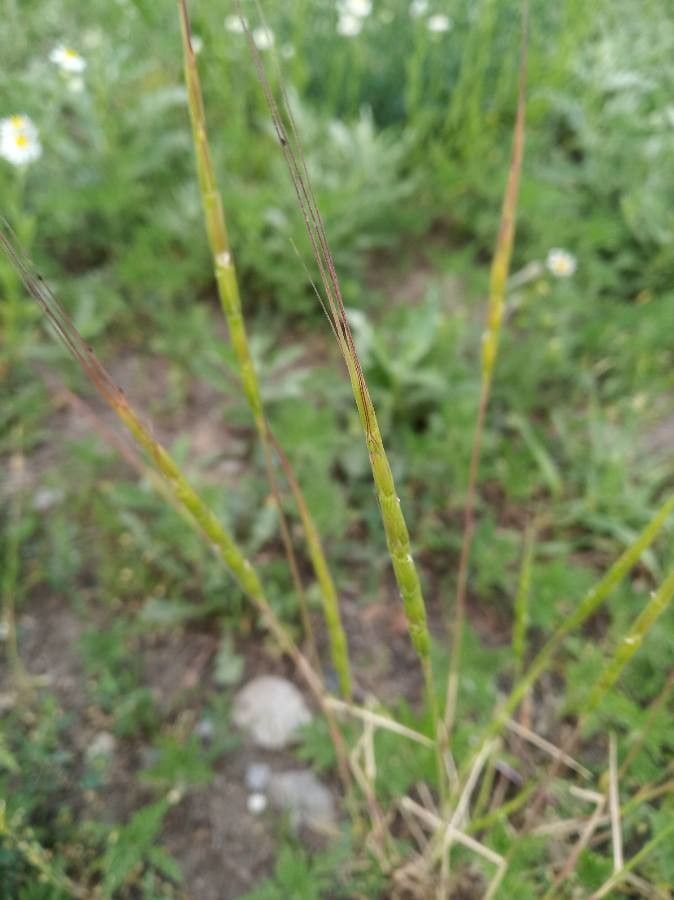
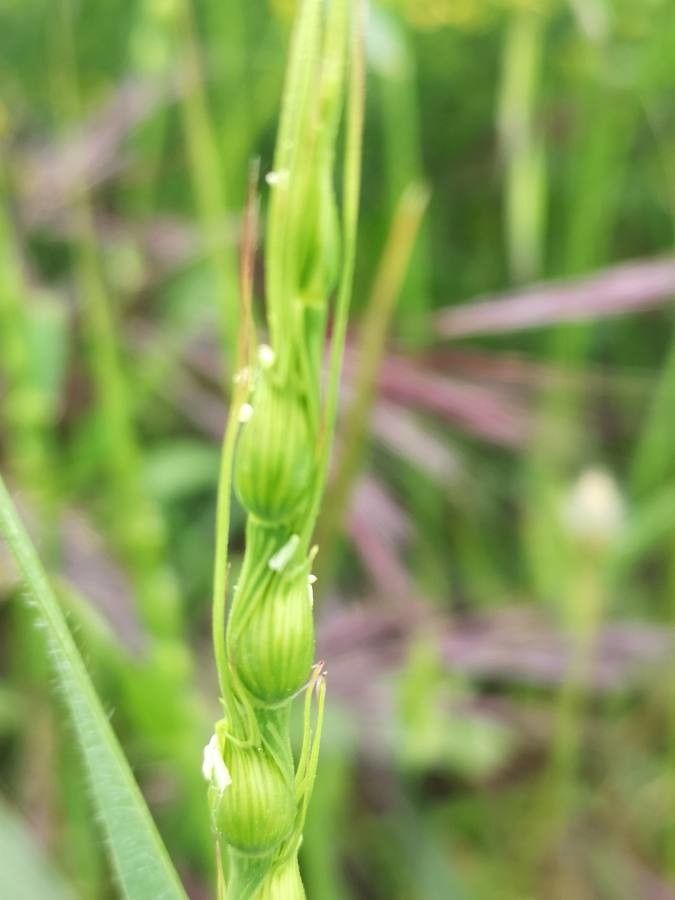
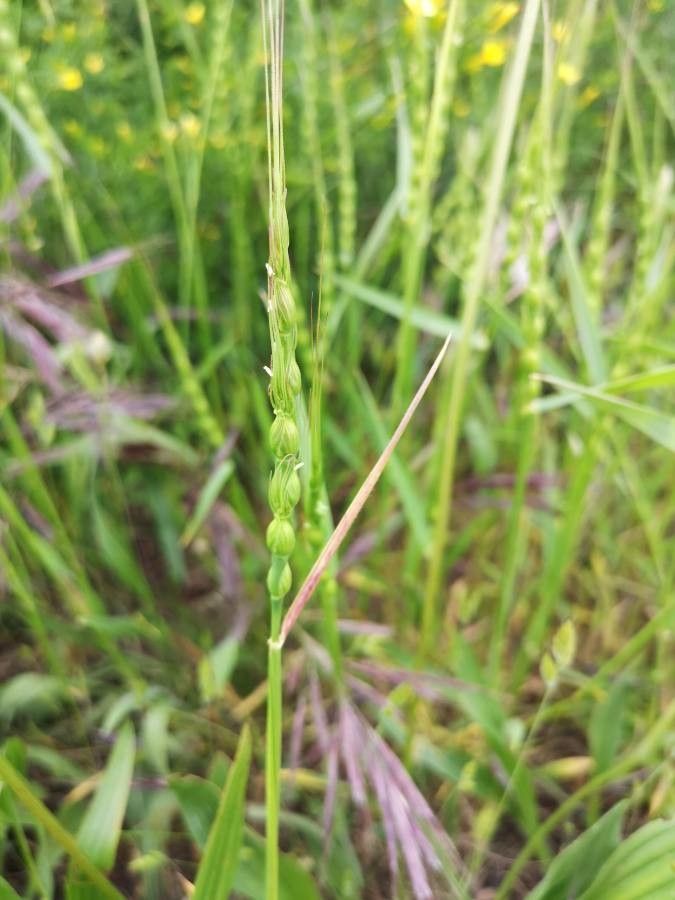
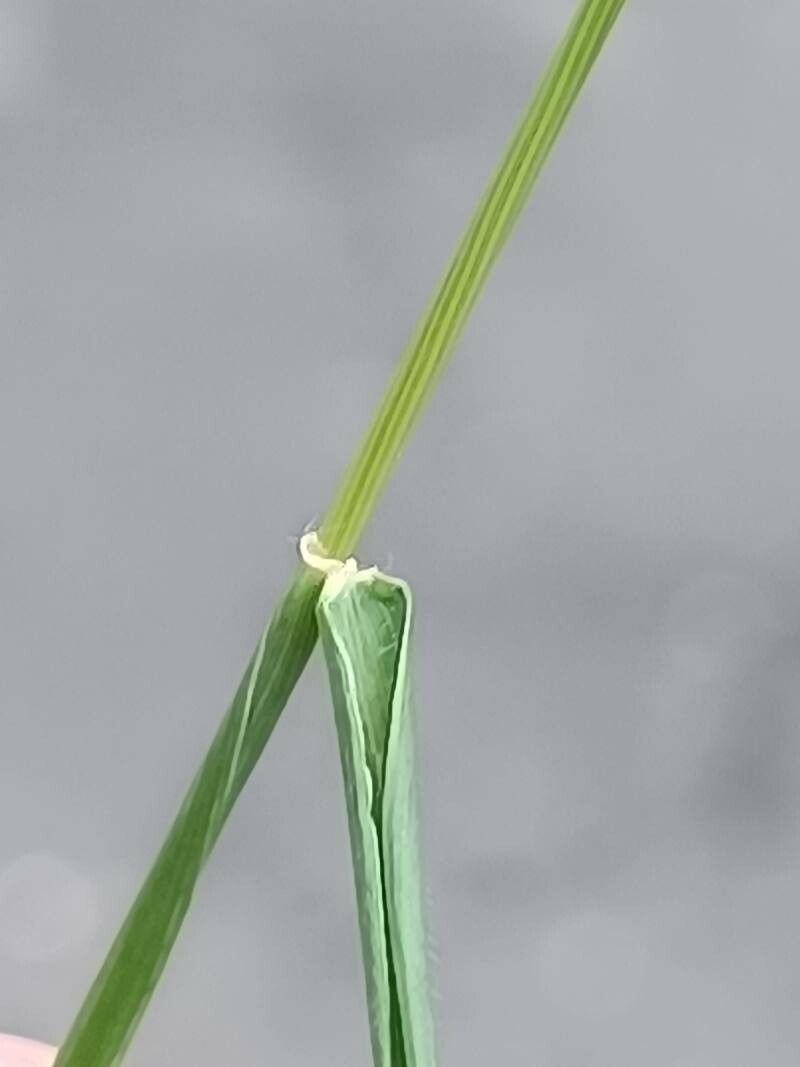
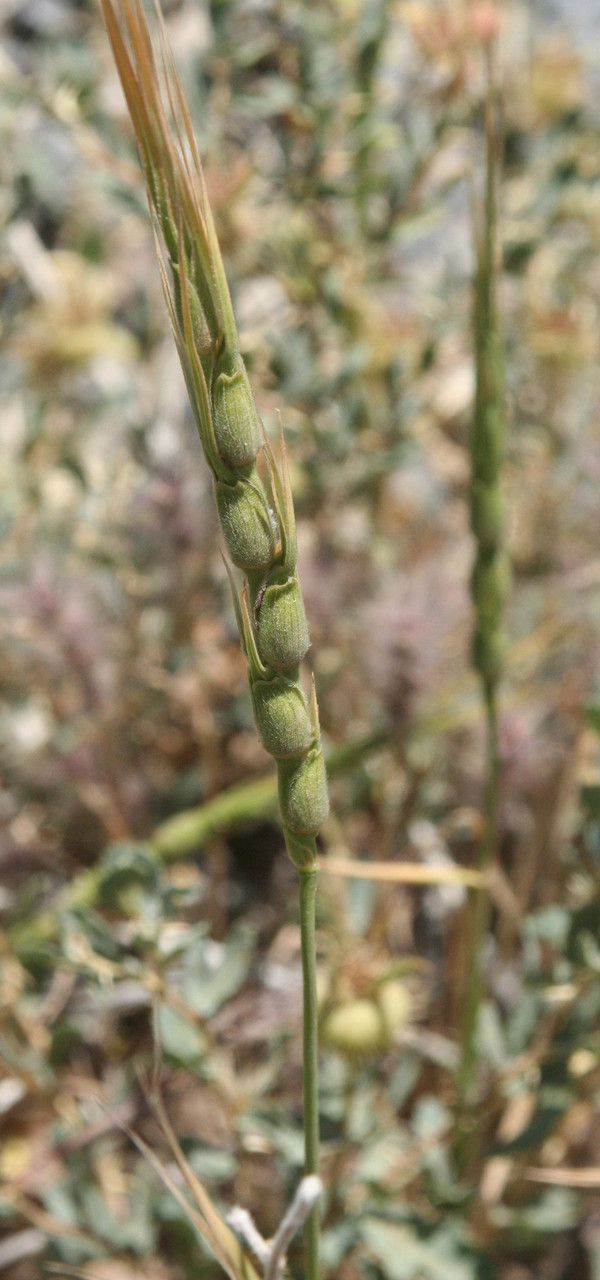
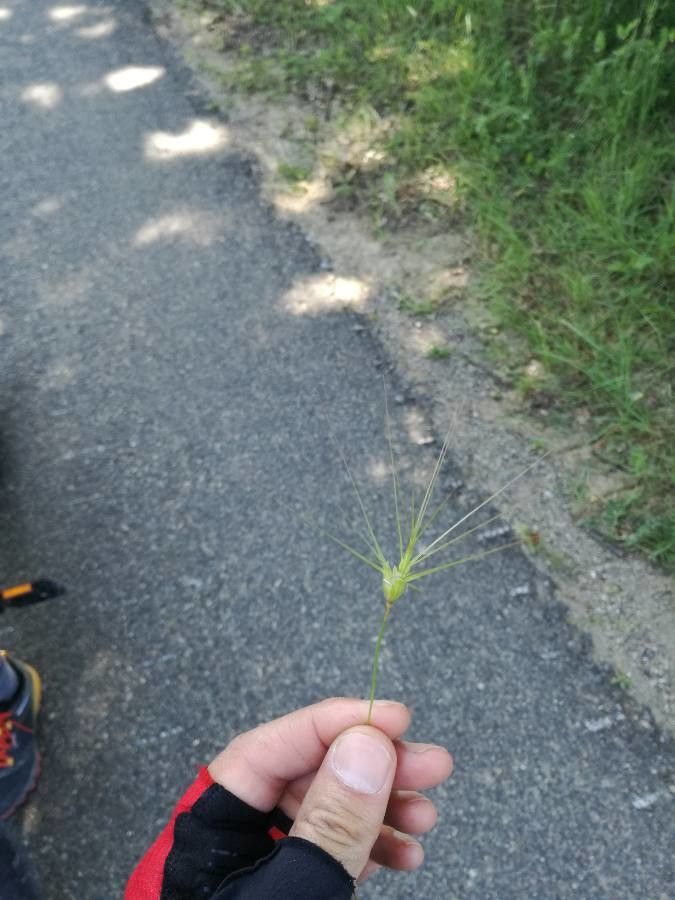
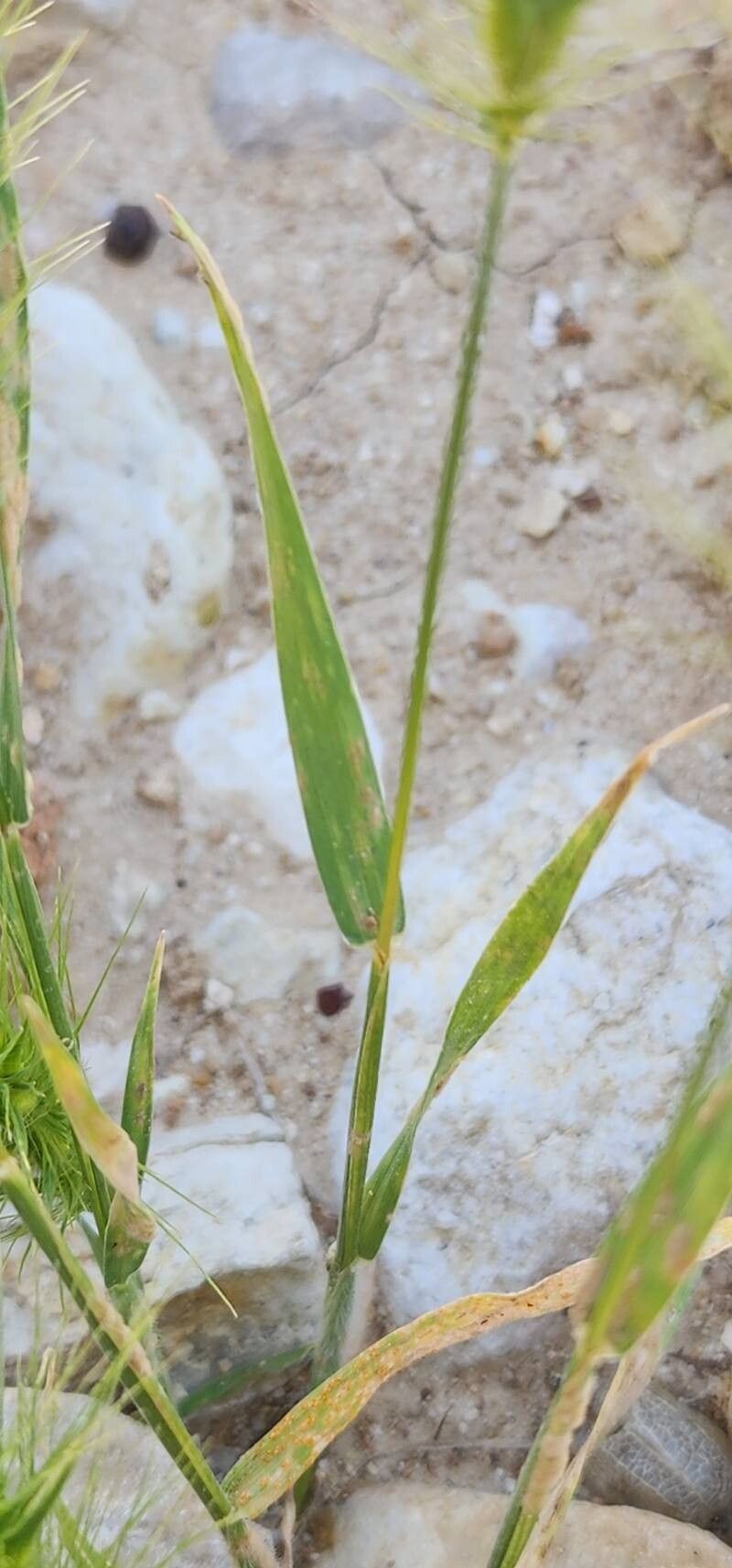
Aegilops cylindrica, also known as jointed goatgrass. is an annual grass seed that is part of the tribe Triticeae, along with wheat and some other cereals. It is not native to North America, however it has become a serious issue as a weed since it was introduced in the late 19th century. Due to its relation to winter wheat, it is very difficult to control. Not only are the joints similar in shape and size to the seeds of winter wheat, making it difficult to remove through grain cleaning methods, the shared genetics mean that no registered herbicides are available to single out jointed goatgrass while leaving winter wheat unharmed. This poses problems for farmers who have to suffer through reduced yields and poorer quality winter wheat.
Jointed goat grass has strong disease resistance and is generally not susceptible to illnesses. In terms of care, this plant is fairly low-maintenance. When grown outdoors it needs little watering, and larger plants usually do not require pruning. Smaller plants, however, should be pruned after they bloom. Jointed goat grass is suitable for anyone with outdoor space—such as a garden or deck—and does not demand much prior gardening experience.
How to keep Aegilops Cylindrica.
Light
Jointed goat grass arises in bright, open habitats where it prospers in full sun. It can tolerate partial sun but favors direct sunlight for optimal growth. This plant, which may be annual or biennial, is noted for its sun-loving nature.
Water
Jointed goat grass is well-suited to arid environments due to its high drought tolerance and ability to limit water loss through its structure. It requires only weekly watering to remain healthy, which helps prevent over-saturation. As a deciduous plant, jointed goat grass goes dormant during dry seasons to conserve water.
Temperature
Native to temperate zones, jointed goat grass performs best at temperatures of 68 to 95 °F (20 to 35 °C). Seasonal changes may require adjustments to maintain these conditions. Excessive heat or cold can stress the plant.
Pruning
Jointed goat grass is a winter annual grass characterized by its distinct jointed seed heads. To maintain its health and control its spread, it's important to prune it from early to late spring. Start by removing any damaged parts, then thin the rest to improve air circulation. Regular pruning helps prevent the grass from becoming invasive and supports its overall health. Be sure to sanitize your tools before use and dispose of any pruned materials properly.
Botanical profile.
- Plant Type
- Grass
- Life Cycle
- Annual
- Genus
- Aegilops
- Family
- Poaceae
- Hardiness Zone
- 5
- Mature Height
- 1.22 m
- Mature Spread
- 20 cm to 40 cm
- Leaf Color
- Green
- Leaf Type
- Semi-evergreen
- Flower Color
- White, Green
- Flower Size
- 0.25 cm
- Bloom Time
- Late spring, Early summer
- Planting Time
- Spring
- Harvest Time
- Mid summer, Late summer
- Native Area
- Tajikistan, Austria, Slovakia, Montenegro, Bulgaria, Pakistan, Armenia, Greece, Slovenia, Croatia, North Macedonia, Ukraine, Lebanon, Uzbekistan, Russia, Serbia, Afghanistan, Iraq, Syria, Hungary, Jordan, Kyrgyzstan, Kazakhstan, Iran, Azerbaijan, Romania, Moldova, Turkmenistan
Other names.
Reader questions.
What should I do if I give my Jointed goat grass too much water or too little water?
Proper watering is essential for this ornamental grass to thrive. When grown in the ground, watering issues can be fixed. However, in a container, too much or too little water can quickly kill Jointed goat grass. When the grass isn't getting the right amount of water, it may stop growing. Overwatering may cause yellow leaves with brown tips, while underwatering can result in drooping leaves, weak seed head production, and browned leaves. If you suspect watering problems, first determine if there is too much or too little water. If there is too much water, stop watering immediately and wait for the soil to dry out. Test the soil for moisture when new growth appears to decide if more water is needed. If there is too little water, simply give the grass a deep drink and observe if it perks up. Remember, watering deeply is better than frequent shallow waterings as it encourages deep root growth, making the grass more resistant to drought and water-related issues.
How many hours of sunlight does Jointed goat grass need each day to grow properly?
In order to thrive, the plants should be exposed to 6 to 8 hours of sunlight each day. They particularly enjoy morning light, especially during the summer. The Jointed goat grass specifically needs full sun and benefits from as much sunlight as possible. The more light these species receive, the better equipped they are to produce food, display lovely blooms, and ultimately survive.
What temperature is best for Jointed goat grass?
Jointed goat grass thrives in cooler weather and has an optimal temperature range for maximum growth. To ensure its health, maintain temperatures between 65~75℉ (18~25℃). While jointed goat grass can tolerate higher and lower temperatures, it is best to keep the growing area within a few degrees of 65~75℉ (18~25℃). Deviating from this range won't halt growth entirely, but jointed goat grass may suffer damage or reduced growth. On the high end, the temperature range is 75~85℉ (25~30℃), while on the low end, jointed goat grass can handle temperatures as low as 5℉ (-15℃). Pay closer attention to higher temperatures as jointed goat grass prefers cooler conditions. Exceeding 85℉ (30℃) may slow growth or even cause the plant to die.
How frequently should I give water to my Jointed goat grass?
The watering needs of Jointed goat grass are influenced by its planting location. In general, watering once a week is recommended. However, in hot climates, watering may need to occur once or twice a week during the summer. In moderate climates, watering every seven days or longer may be sufficient. Grass in containers typically requires more frequent watering compared to grasses in the ground. Additionally, the location of the grass, whether in full sun or part shade, also affects its watering needs. Shaded grasses require less frequent watering than grasses in the ground. It is important to only water Jointed goat grass when the soil is dry. Signs such as pressing a finger into the soil or weighing a potted grass can indicate if water is needed. Despite its drought tolerance, regular and deep waterings can enhance the grass's color. Although Jointed goat grass can withstand harsh and dry conditions, it still benefits from consistent watering. Newly planted grass requires more frequent watering until deep roots are established. Potted grasses, especially those exposed to direct sun, tend to dry out quickly and should be checked for dryness every 3 to 4 days. Jointed goat grass in the ground requires less watering, although this can depend on the soil type. Clay soil may feel dry at the surface but retain moisture below, while sandy soils that drain quickly will need more frequent watering.
What kind of sunlight does Jointed goat grass require?
The Jointed goat grass thrives in full sunlight, so it's important to give them enough space to ensure even sun exposure. Avoid keeping them too close together, as this can prevent the leaves from getting enough sunlight. If you are planting them in pots, place the pots in windows with direct sun and make sure they receive full sunlight all year round. Partial or filtered light is not suitable for strong stems and healthy flowers, so it's best to always expose the Jointed goat grass to the sun.
Does Jointed goat grass need different temperatures for different stages of growth?
To ensure the healthy growth of Jointed goat grass, it is crucial to maintain a growing space temperature between 65~75℉(18~25℃). It is recommended to stay on the colder side of this range, avoiding temperatures below -5℉(-20℃). While extremely cold temperatures can slow down growth at any stage, they are not as damaging as excessively hot temperatures. During the budding stage, it's important to avoid high temperatures to ensure Jointed goat grass can flower successfully.
What do I need to watch out for when watering my Jointed goat grass in different seasons, climates, or stages of growth?
To determine if you are watering enough, observe the rate of growth of your grass. For example, jointed goat grass has been known to double in size during the hottest months of the year. If the weather is hot but the grass isn't growing vigorously, you may need to adjust your watering schedule. In winter, you might be able to water only once a month, but always check the soil to see if it's moist. During the warmest months, the grass will require more water, while in winter and cooler months, the need for water will decrease significantly. Remember, it's crucial to let the soil dry out completely before watering jointed goat grass.
Can the sun harm plants? How can Jointed goat grass be shielded from damage caused by sunlight and heat?
When the temperature goes above 90℉(32℃), it can cause damage to the Jointed goat grass, especially if they are exposed to extended periods of sunlight. It's best to provide some shade in the afternoon during the summer months. It's important to remember that the sunlight is stronger in the summer than in the winter, and the exposure to sunlight is also longer. If the Jointed goat grass is stressed from sunlight, it's recommended to keep them well hydrated. Water them when the top of the soil is about 2 inches dry, and if it's too hot outside, consider moving them indoors if they are planted in containers. It's normal for the plant leaves to wilt during the day, but they should recover at night. However, if the Jointed goat grass continues to droop, it means the plant is losing water quickly and you should water them.
Here are three tips for managing the temperature of Jointed goat grass.
Here are some tips for growing Jointed goat grass indoors: Tip #1: Choose the coldest room: When growing Jointed goat grass indoors, it's important to select the coldest room in your home. This room should be on the side of your house that doesn't get too much direct sunlight during the hottest part of the day. However, make sure the room still receives a reasonable amount of sunlight, as zero sunlight can hinder the growth of Jointed goat grass. Tip #2: Avoid excessive heat: Jointed goat grass may not flower properly if it's exposed to high temperatures. During the growing season (spring and early summer), fluctuations in temperature can cause the flowering buds of Jointed goat grass to transform into non-flowering buds. To ensure optimal flowering, keep the temperature in the range of 65~75℉(18~25℃). Tip #3: Protect from frost: While Jointed goat grass can tolerate lower temperatures as low as -5℉(-20℃), it is sensitive to significant frost. If Jointed goat grass is exposed to frost during the colder months, it will show signs of damage such as wilting and discoloration. It's important to prune any brown or blackened parts of the plant to keep it alive, as they cannot be saved.
Do I need to keep Jointed goat grass away from the sun?
Jointed goat grass thrives in the sun and prefers to be planted in south-facing gardens to get morning to afternoon exposure. However, prolonged sun exposure can cause sunburn, so it's a good idea to provide shade from the afternoon and midday sun using a tree or wall. Growing them in shady areas is not possible as the larger flowers require ample sunlight to grow. Therefore, it is important to ensure they are placed in an area with full sun for optimal results.
Does Jointed goat grass require varying temperatures for each season?
Maintaining a steady temperature for your growing area is vital all year round. If you live in an area with harsh winters or extremely hot summers, it might be better to keep your plants indoors. By doing so, you can create an optimal environment for Jointed goat grass by placing them in a cool room. However, if you decide to leave your plants outside, it is important to monitor the temperature closely. In climates with particularly hot summers, ensure that your plants are not exposed to temperatures above 85℉(30℃). Going beyond this threshold will quickly dehydrate and harm the Jointed goat grass, leading to eventual demise.
What happens if Jointed goat grass doesn't get enough sunlight?
If the Jointed goat grass doesn't receive enough sunlight or is not placed in a sunny location, its photosynthetic process will slow down. This lack of sunlight results in the stems becoming thin and long, as they try to reach for more sunlight. As a result, the plants won't bloom or produce seeds in shaded areas. Additionally, inadequate sunlight can cause older leaves to die, new leaves to be lighter in color than the old ones, and new growth to be smaller. Although the Jointed goat grass thrives in the sun, excessive heat and ultraviolet light during summer can cause them to wilt. To prevent the leaves and flowers from scorching, consider covering them with a net that provides a green shade, especially in summer. Indoors, you can use a fan to help reduce the heat.