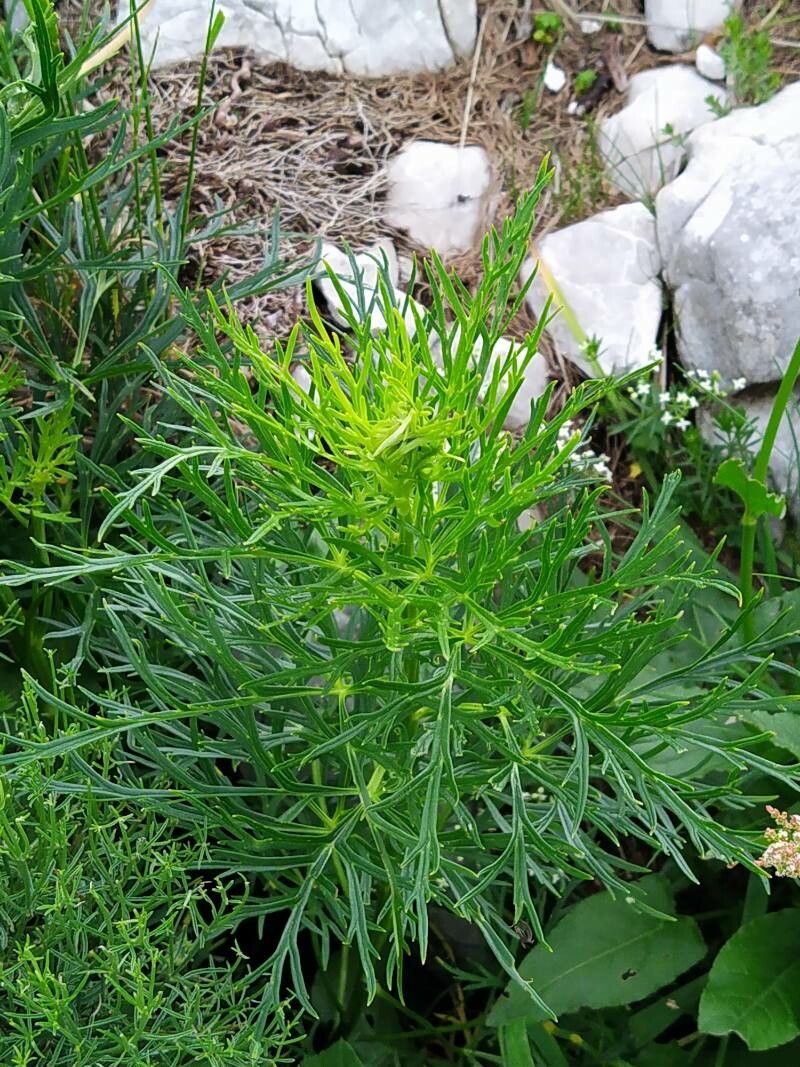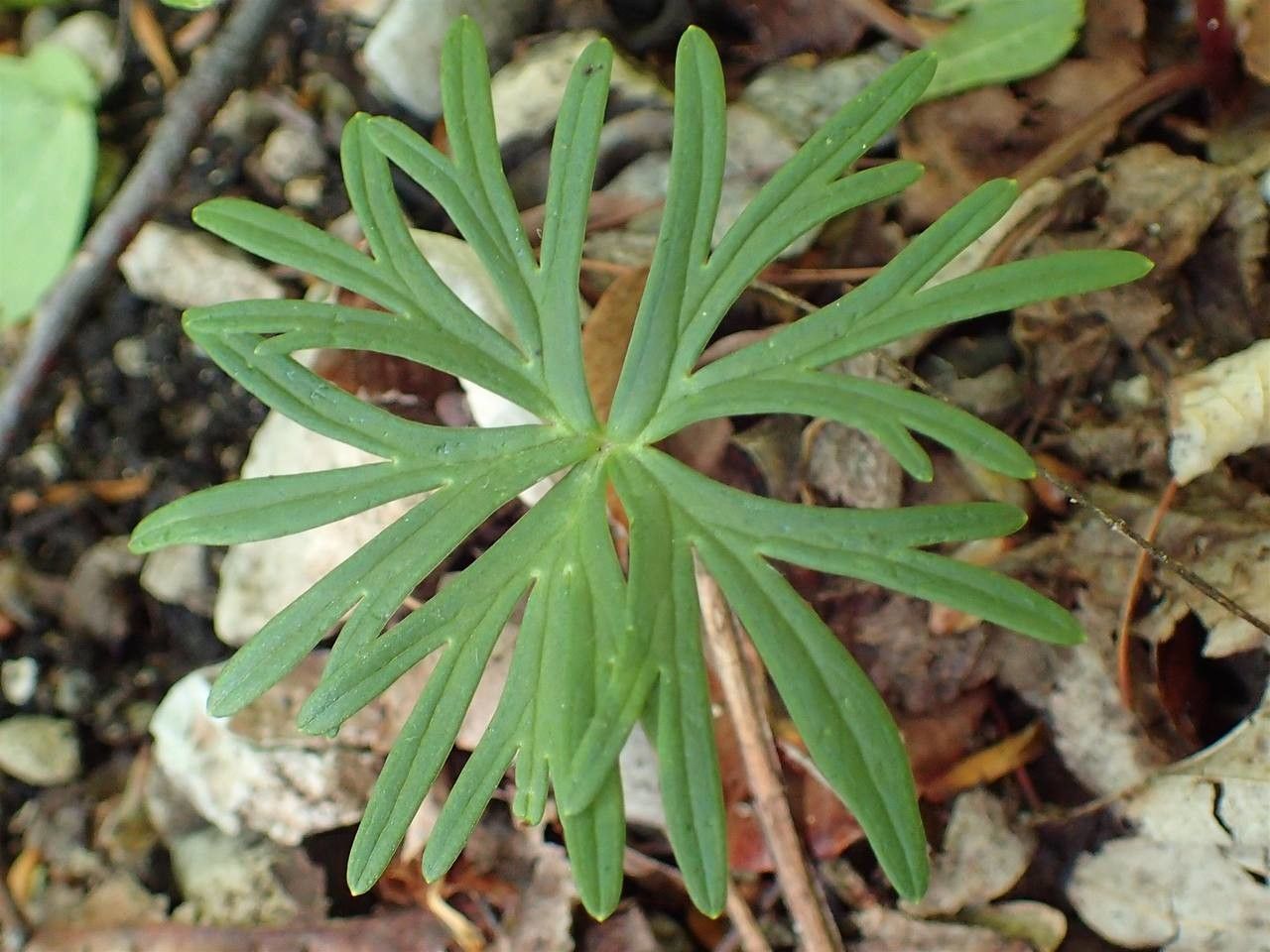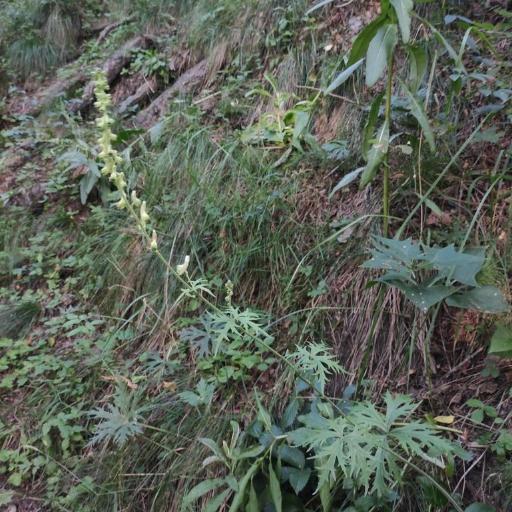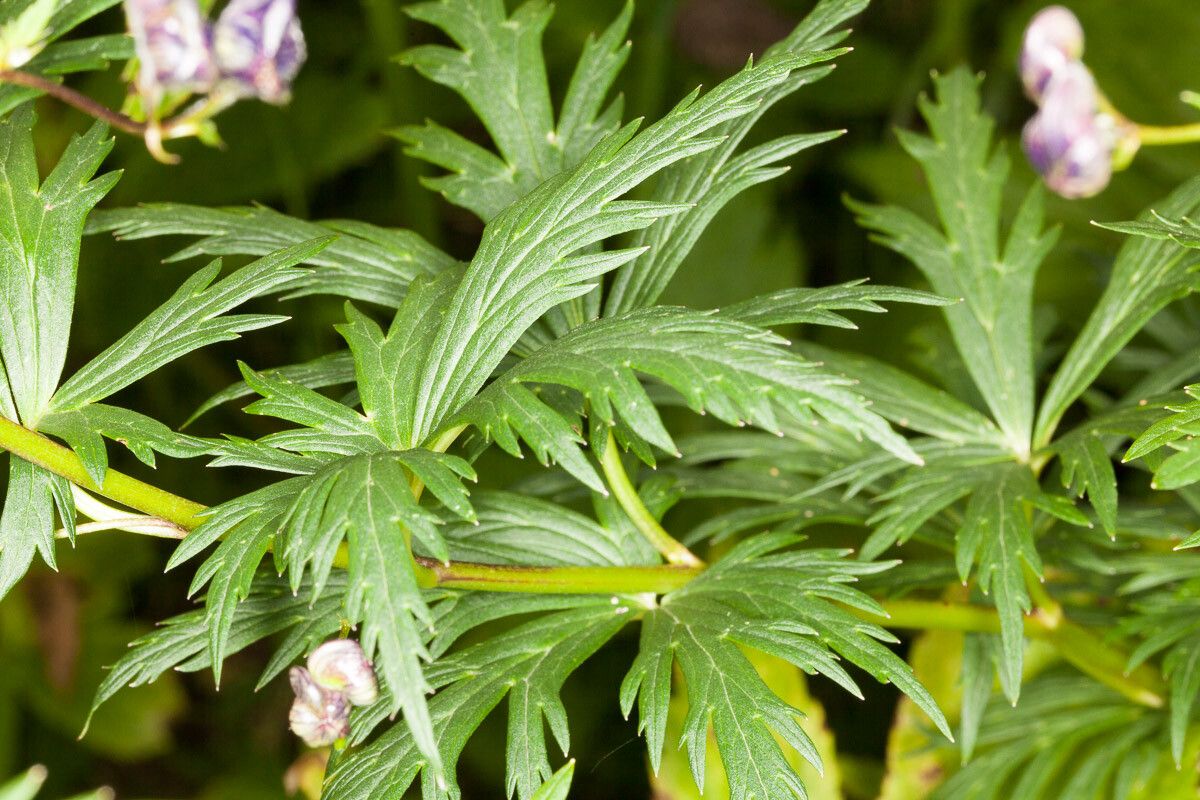
Aconitum napellus, monkshood, aconite, Venus' chariot or wolfsbane, is a species of highly toxic flowering plant in the genus Aconitum of the family Ranunculaceae, native and endemic to western and central Europe. It is an herbaceous perennial plant growing to 1 m (3 ft 3 in) tall, with hairless stems and leaves. The leaves are rounded, 5–10 cm (2.0–3.9 in) diameter, palmately divided into five to seven deeply lobed segments. The flowers are dark purple to bluish-purple, narrow oblong helmet-shaped, 1–2 cm (0.39–0.79 in) tall. Plants native to Asia and North America formerly listed as A. napellus are now regarded as separate species. The plant is extremely poisonous in both ingestion and body contact.
Monk's-hood is fairly resistant to disease and typically does not tend to suffer from illnesses. Nevertheless, it can be vulnerable to pests and diseases present in its environment. Such infections are generally mild. Regarding care, this plant requires moderate maintenance. Regular pruning is necessary to keep it looking tidy and to promote healthy growth. Applying fertilizer can also help encourage flowering. Monk's-hood is suitable for anyone with outdoor space, such as a garden or patio, and does not require extensive care experience. It may need more attention when grown indoors.
How to keep Aconitum Napellus.
Light
Monk's-hood prefers sites offering a balanced combination of sun and shade, though it can tolerate locations that receive sunlight all day. Native to habitats with dappled canopy cover, it does best with filtered light. Excessive light causes stress while insufficient light impedes proper growth.
Water
Originating from the moist mountainous regions of Europe, monk's-hood thrives in soil that remains consistently moist, avoiding both waterlogging and drought. To keep the plant hydrated, it should be watered weekly. Ideally suited for outdoor growth, monk's-hood benefits from mulching, which helps retain moisture and stabilize soil temperature during its active growth period.
Humidity
This plant will thrive in moderate humidity, which is probably the level in your home. However, misting it a few times a week can be very beneficial. Make sure the room has good ventilation.
Temperature
Monk's-hood is native to temperate regions and grows best at temperatures between 68 and 95 °F (20 to 35 ℃). For optimal growth during seasonal shifts, it's advisable to adjust the ambient temperature to match its preference.
Fertilizer
The best time to fertilize Monk's-hood is in early spring, as it breaks dormancy and begins active growth. Fertilizer supplies essential nutrients for healthy development. Although Monk's-hood has relatively modest fertilization requirements, an annual application can improve its survival and produce better, longer-lasting flowers.
Pruning
Monk's-hood is a plant known for its tall spires of blue flowers. To keep it healthy and looking its best, it's essential to prune it from early to late spring. Begin by cutting back the old stems down to the soil level. Additionally, perform regular deadheading to prolong the blooming period. Pruning not only enhances the plant's health and prevents disease but also improves its overall appearance. For the best results, use clean, sharp tools when pruning.
Toxicity
Harmful to people, canines, and felines, the monkshood plant carries a dangerous toxin. It is largely known as the heart poison for its effect on one’s nerves. Rough aconite plants are particularly poisonous.
Further reading →
The toxicity and danger assessments provided are for reference only. We do not assure their accuracy, so it's crucial not to depend on them. Seek professional advice when necessary for accurate guidance.
Botanical profile.
- Plant Type
- Herb
- Life Cycle
- Perennial, Annual
- Genus
- Aconitum
- Family
- Ranunculaceae
- Hardiness Zone
- 2-9
- Mature Height
- 91 cm
- Mature Spread
- 46 cm
- Leaf Color
- Green
- Leaf Type
- Deciduous
- Flower Color
- Purple
- Flower Size
- 2.54 cm to 5.08 cm
- Bloom Time
- Early summer, Mid summer
- Planting Time
- Spring
- Harvest Time
- Mid summer
- Native Area
- Europe, Asia
Other names.
Reader questions.
What's the best way to water my Monk's-hood plant?
To best care for the Monk's-hood plant, it is recommended to use filtered water at room temperature. Tap water may contain harmful particles that can affect the plant's health. It is important to use water that is not too cold, as this plant is accustomed to warmer environments and cold water may be disruptive to its system. In addition, it is advisable to avoid overhead watering to prevent any issues with the foliage. Instead, gently apply the filtered room temperature water directly to the soil until it is fully saturated. This method benefits the plant by moisturizing the roots and facilitating their growth and nutrient absorption.
Why is it necessary to fertilize my Monk's-hood plant?
Fertilization plays an important role in the growth of Monk's-hood and other plants. It provides essential nutrients that support both above-ground growth and root development. While Monk's-hood generally has lower fertilization requirements, annual fertilization can greatly benefit the plant. It not only helps the plant stay healthy but also promotes the production of long-lasting flowers. Therefore, those who want their Monk's-hood to thrive should consider regular fertilization.
What are the sunlight requirements for Monk's-hood?
Monk's-hood (Aconitum napellus) requires a balanced mix of sun and shade for optimal growth, ideally in locations with filtered light mimicking its native environments under dappled canopies. It can adapt to full sun locations but may experience stress when overexposed and hindered development in underexposed conditions. Partial sun is quantified as about 3-6 hours of sunlight, while full sun means receiving over 6 hours of sunlight daily. It's essential to watch the sunlight dynamics in your garden to choose spots that ensure the right balance for your plants.
What temperature conditions are optimal for growing Monk's-hood?
Monk's-hood is native to temperate zones and thrives best in temperatures ranging from 68 to 95 °F (20 to 35 °C). This range of temperature is optimal for its growth in varying seasons. Despite its strong cold resistance, meaning special frost protection measures are not usually necessary, if winter temperatures are expected to drop below -40°C, it's important to protect the plant from cold by covering it with soil or straw, and watering it abundantly before the first freeze in autumn to ensure the soil remains moist.
What should I do if I give my Monk's-hood plant too much water or too little water?
Both overwatering and underwatering can harm the health of your Monk's-hood plant, but overwatering is more common and problematic. When the plant gets too much water, its stems and leaves may wilt and turn yellow. Overwatering for a long time can also cause diseases like root rot, mold, and mildew, which can be fatal for the plant. On the other hand, underwatering is less common as Monk's-hood plants can tolerate drought. However, underwatering can still happen, resulting in brittle and brown leaves. It's important to promptly recognize signs of overwatering when taking care of your Monk's-hood plant. Certain diseases caused by overwatering, like root rot, may be irreversible if not addressed quickly. If you notice early signs of overwatering, reduce your watering schedule immediately. Additionally, check the quality of the soil in which your Monk's-hood plant is growing. If the soil doesn't drain well, replace it with a loose and well-draining potting mix. Conversely, if your Monk's-hood plant shows signs of underwatering, simply water it more regularly until those signs disappear.
When should I fertilize my Monk's-hood plant?
To achieve the best results, it is recommended to fertilize a Monk's-hood in the late winter to early spring when it is transitioning from its dormant phase to active growth. This timing ensures the plant gets a healthy start for the season. Although fertilizing in the fall is allowed, it is generally most beneficial to do so in the early spring. However, it is advised to avoid fertilizing during summer and winter for optimal growth.
How can artificial lighting benefit indoor Monk's-hood plants, and what are the guidelines?
For indoor Monk's-hood plants, adequate lighting is crucial, especially in conditions where natural sunlight is insufficient such as during winter or in less sunny spaces. Artificial lighting, like LED lights, serves as a vital solution by offering customizable wavelengths specific to plant needs, promoting faster and healthier growth. Full sun plants require 30-50W/sq ft, partial sun plants 20-30W/sq ft, and full shade plants 10-20W/sq ft of artificial light. The light source should be placed 12-36 inches above the plant, mimicking the natural sunlight's distance, and turned on for 8-12 hours per day to emulate the length of natural daylight hours appropriate for the plant's species.
How does Monk's-hood react to low temperatures?
Monk's-hood is quite cold-tolerant and performs best when temperatures are maintained above 20°C. During winter, it's essential to keep it above 0°C to prevent damage. However, if temperatures fall below -40°C, the plant may not show noticeable changes in the winter but could experience decreased sprouting or fail to sprout at all come springtime. The solution for any parts that fail to sprout in spring is to remove them to encourage healthy growth.
How often should I water my Monk's-hood plant?
If your Monk's-hood plant is in a pot, you can determine if it needs water by checking the soil. Simply put your finger into the soil and if the first two to three inches are dry, it is time to water it. For outdoor Monk's-hood plants, you can use the same method to test the soil. If the top few inches of soil have dried out, it is time to water. Usually, during spring and early fall, watering once a week is sufficient. However, in extremely hot weather, you may need to water twice or even more per week. It's worth noting that mature and well-established Monk's-hood plants can tolerate drought quite well.
When is the best time to not fertilize my Monk's-hood?
To avoid overfertilization and its complications, it is best to only fertilize your Monk's-hood in late winter and early spring. This plant has low fertilization needs, so one annual feeding is sufficient. If you didn't fertilize in spring, you can feed it in the fall as well. During the growing season, refrain from fertilizing altogether. Additionally, there is no need to fertilize the plant during winter when it is in a dormant growth phase and not putting forth new growth.
What are the significant symptoms of inappropriate light exposure for Monk's-hood?
When Monk's-hood receives insufficient light, it may exhibit symptoms such as smaller new leaves, leggy or sparse growth, faster leaf drop, and either slower or no new growth. Insufficient sunlight can also lead to lighter-colored new leaves, indicating a lack of chlorophyll and essential nutrients. Conversely, excessive sunlight can cause chlorosis (yellowing of leaves), sunscald (damaged leaves or stems), leaf curling, wilting, and leaf scorching, each indicating stress and potential damage to the plant. These symptoms highlight the plant's need for optimal sunlight exposure.
How should Monk's-hood be cared for in high temperatures?
During the summer, it's crucial to keep Monk's-hood below 35°C. Exposure to temperatures above 38°C can lead to the plant's leaves becoming lighter in color, curling, and becoming susceptible to sunburn. In severe cases, the entire plant may wilt and dry up. To prevent this, any sunburned or dried parts should be trimmed away. Moving the plant to a shaded location or using a shade cloth to protect it from the midday and afternoon sun can help, as can watering the plant in the morning and evening to keep the soil moist.