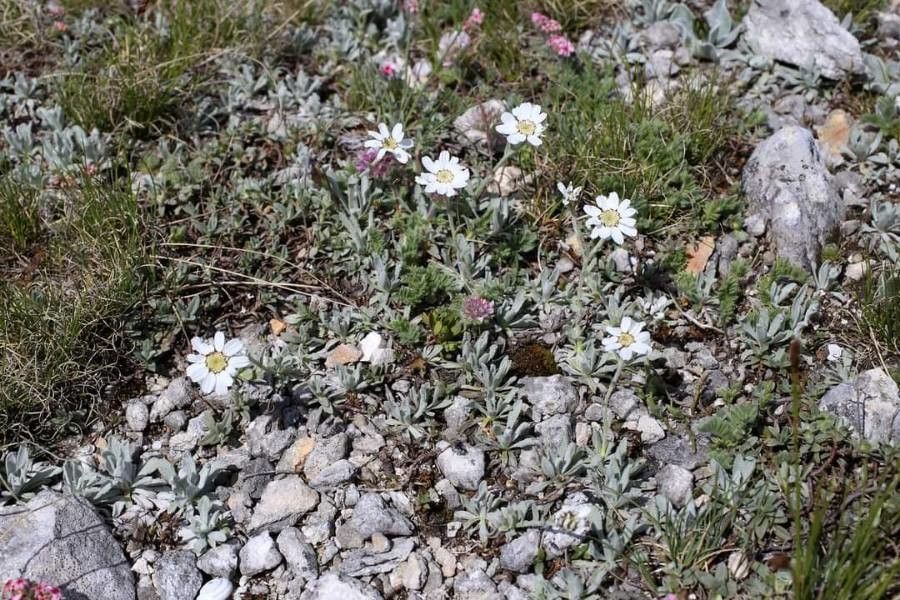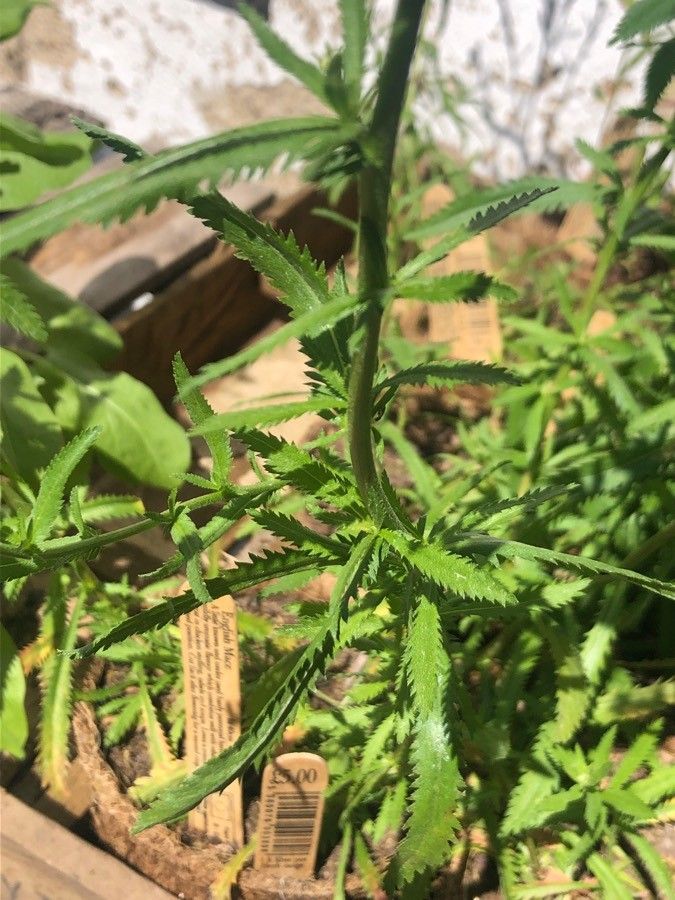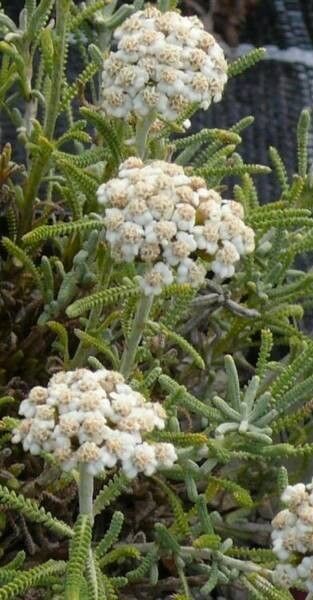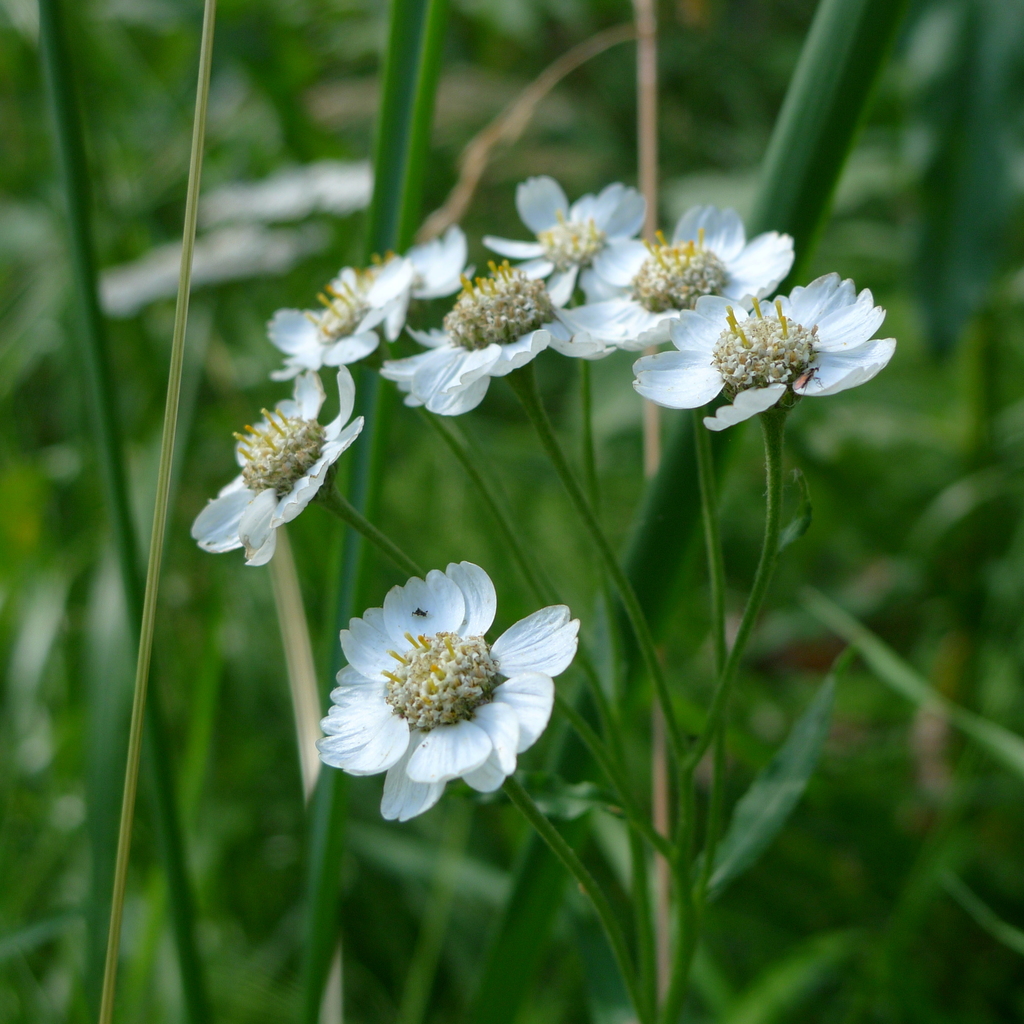
Achillea ptarmica is a European species of herbaceous perennial flowering plant in the genus Achillea of the daisy family Asteraceae. Common names include the sneezewort, sneezeweed, bastard pellitory, European pellitory, fair-maid-of-France, goose tongue, sneezewort yarrow, wild pellitory, and white tansy. It is widespread across most of Europe and naturalized in scattered places in North America. It is native to Europe and western Asia.Achillea ptarmica has loose clusters of showy white composite flower heads that bloom from June to August. Its dark green leaves have finely toothed margins. Like many other plants, the sneezewort's pattern of development displays the Fibonacci sequence.The name ptarmica comes from the Greek word ptairo (=sneeze) and means 'causes sneezing'.
Sneezewort is relatively resistant to disease and generally not prone to illness. Still, it can be vulnerable to pests and diseases present in its surroundings, though these problems are typically mild. As for care, the plant calls for moderate maintenance. It should be pruned regularly to keep a neat appearance and support healthy growth. Fertilizing can also encourage more blooms. Sneezewort is appropriate for anyone with outdoor space such as a garden or patio and does not demand extensive experience in plant care. It may need more attention when grown indoors.
How to keep Achillea Ptarmica.
Light
Sneezewort grows best with abundant sunlight. It can tolerate some shade, though that may affect the plant's overall health and growth. Its native environment has shaped it to withstand a wide range of sunlight exposure, yet both too much and too little light can be harmful.
Water
Sneezewort is native to the moist meadows of Europe and Asia, where it thrives in environments with consistent moisture. It prefers to be watered regularly, about once a week, though it can withstand short periods of dryness. As an outdoor plant, it adapts its growth cycle to the seasonal patterns of rainfall, ensuring optimal health in its natural habitat.
Temperature
Sneezewort naturally occurs in settings with temperatures between 68 and 95 °F (20 to 35 °C). It does well at those temperatures, so changes to its surroundings are seldom needed as the seasons change.
Fertilizer
The best time to fertilize Sneezewort is in early spring, as the plant comes out of dormancy and begins active growth. Fertilization supplies essential nutrients for healthy development. Although Sneezewort has fairly low fertilizer requirements, applying fertilizer annually can improve its survival and encourage better, longer-lasting flowers.
Pruning
Sneezewort is a perennial herb with white flowers and finely divided leaves. To keep the plant healthy and looking its best, prune it from early to late spring. This will encourage growth, remove any damaged stems, and tidy up spent blooms. Regular pruning helps maintain its appearance, prevents the plant from sprawling, and boosts air circulation, which reduces the risk of disease.
Botanical profile.
- Plant Type
- Herb
- Life Cycle
- Perennial, Annual
- Genus
- Achillea
- Family
- Asteraceae
- Hardiness Zone
- 4-9
- Mature Height
- 61 cm
- Mature Spread
- 34 cm
- Leaf Color
- Green
- Leaf Type
- Deciduous
- Flower Color
- White
- Flower Size
- 1.52 cm to 2.03 cm
- Bloom Time
- Early summer, Mid summer
- Planting Time
- Spring, Summer
- Harvest Time
- Mid summer, Late summer
- Native Area
- Europe, including Britain but excluding the Mediterranean, east to Siberia and W. Asia
Other names.
Reader questions.
How should I water my Sneezewort plant?
To properly water the Sneezewort plant, it is recommended to use filtered water at room temperature. Tap water may contain harmful particles for the plant's health. It is important to note that Sneezewort comes from a warm environment, so cold water can be a shock to its system. Additionally, avoid watering the plant from above as it can cause issues with the leaves. Instead, pour the filtered room temperature water directly onto the soil until it is completely soaked. This method of watering is beneficial as it moistens the roots and allows them to spread and gather the necessary nutrients from the soil.
Why do I have to add fertilizer to my Sneezewort plant?
Fertilization is important for the Sneezewort for a few reasons. Firstly, it provides essential nutrients that support the plant's growth above and below the ground. However, Sneezewort doesn't require excessive fertilization. While it can survive without it, annual fertilization can greatly benefit the plant. It not only helps keep the Sneezewort alive but also promotes the production of better, longer-lasting flowers. Therefore, if you want your Sneezewort to thrive and look its best, regular fertilization is recommended.
What are the sunlight requirements for Sneezewort?
Sneezewort requires full sun, which means it thrives best with above 6 hours of sunlight daily. However, it can also tolerate partial sun, or about 3-6 hours of sunlight. It's important to watch how sunlight moves through your garden and select spots that provide a good balance of light and shade to ensure your plants' health.
What temperatures are ideal for Sneezewort?
Sneezewort is best suited to environments offering temperatures ranging from 68 to 95°F (20 to 35°C). It thrives within this temperature range, indicating that modifications to its surrounding conditions are rarely necessary across different seasons. Due to its strong cold resistance, special frost protection measures are usually not essential during winter. However, if winter temperatures are anticipated to drop below -30°C, it is crucial to provide cold protection by covering the plant with soil or straw and watering abundantly before the first freeze in autumn to ensure the soil remains moist and enters a frozen state.
What should I do if I give my Sneezewort plant too much or too little water?
Overwatering can harm your Sneezewort plant by causing wilting, yellowing of leaves, and potential diseases like root rot, mold, and mildew. Underwatering is less common but can make the leaves brittle and brown. It's important to notice signs of overwatering early and reduce watering immediately. If the soil doesn't drain well, replace it with loose, well-draining potting mix. If you notice signs of underwatering, simply water more regularly until the signs lessen.
When should I fertilize my Sneezewort for optimal results?
The best time to fertilize a Sneezewort is in the late winter to early spring. During this time, the Sneezewort is coming out of its dormant phase and starting to grow actively. Fertilizing at this time helps promote healthy growth and gives the plant a good start for the season. While it's generally best to fertilize in the early spring, fall is also an option. However, it's not recommended to fertilize the Sneezewort in the summer or winter.
What are the essentials for growing Sneezewort successfully?
Sneezewort flourishes under abundant sunlight but can also endure some shade, though it might impact its health and growth. Originating from environments with a wide range of sunlight exposure, it's adaptable, but excessive or insufficient sunlight can be detrimental. For indoor plants, adequate lighting is critical for optimal growth, especially in low-light conditions like winter or less sunny areas, where artificial lighting, such as LED lights, becomes vital. Full sun plants require 30-50W/sq ft, partial sun plants 20-30W/sq ft, and full shade plants 10-20W/sq ft of artificial light, placed 12-36 inches above the plant for 8-12 hours per day to mimic natural daylight hours.
How does Sneezewort react to low temperatures?
Sneezewort exhibits strong cold tolerance, thriving best when temperatures are above 20°C and maintaining health above 0°C. Should temperatures fall below -30°C, the plant may not demonstrate immediate changes during winter; however, a decrease in sprouting or a complete absence of sprouting may occur in springtime. To mitigate these effects, any parts of the plant that have failed to sprout in the spring should be removed.
How frequently should I give water to my Sneezewort plant?
If your Sneezewort plant is in a pot, the best way to determine if it needs water is by sticking your finger into the soil. If the top two to three inches of soil feel dry, then it's time to water it. If you have your Sneezewort planted outdoors in the ground, you can use the same method to test the soil. When you find that the top few inches of soil have become dry, it's time to add water. Typically, during spring and early fall, you'll need to water the plant about once a week. However, in very hot weather, you may need to increase watering to twice or more per week. It's important to note that mature, well-established Sneezewort plants can tolerate drought quite well.
When should I not put fertilizer on my Sneezewort plant?
To properly care for your Sneezewort plant, it is best to fertilize only during late winter and early spring. This plant has low fertilization needs and will thrive with just one annual feeding. It's important not to continue fertilizing throughout the spring, summer, and fall as this can lead to overfertilization and complications. However, if you missed fertilizing in the spring, it is acceptable to feed the plant in the fall. During the winter, when the Sneezewort is in a dormant growth phase and not producing new growth, there is no need to fertilize.
What are the symptoms of incorrect lighting for Sneezewort?
Symptoms of inadequate lighting in Sneezewort include smaller new leaves, leggy or sparse growth due to longer spaces between leaves or stems, faster leaf drop, slower or halted new growth, lighter-colored new leaves signaling a lack of chlorophyll, chlorosis (leaves turning yellow), sunscald marked by pale, bleached areas on plant tissue, leaf curling or twisting as a defense mechanism against extreme sunlight, wilting from excessive transpiration, and leaf scorching characterized by brown, crispy leaf edges.
What should be done if Sneezewort is exposed to high temperatures?
In the summer, it is essential to maintain Sneezewort temperatures below 35°C. Exposure to temperatures above 38°C can lead to the leaves becoming lighter in color, prone to curling, susceptible to sunburn, and in severe cases, causing the whole plant to wilt and dry up. To counteract damage from high temperatures, trim away the sunburned and dried-up parts of the plant. Moving the plant to a location that provides shade from the midday and afternoon sun, or utilizing a shade cloth, can be beneficial. Additionally, watering the plant in the morning and evening helps keep the soil moist.