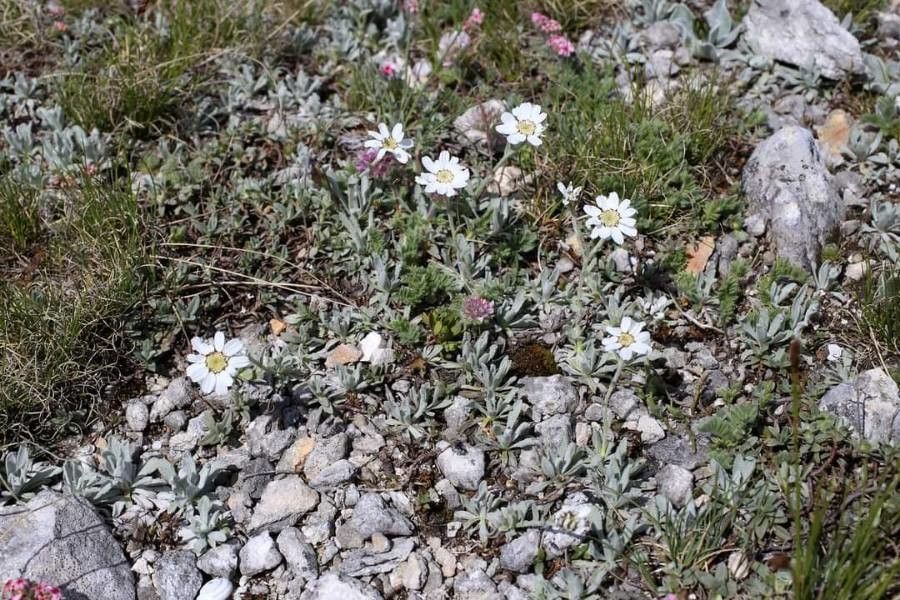
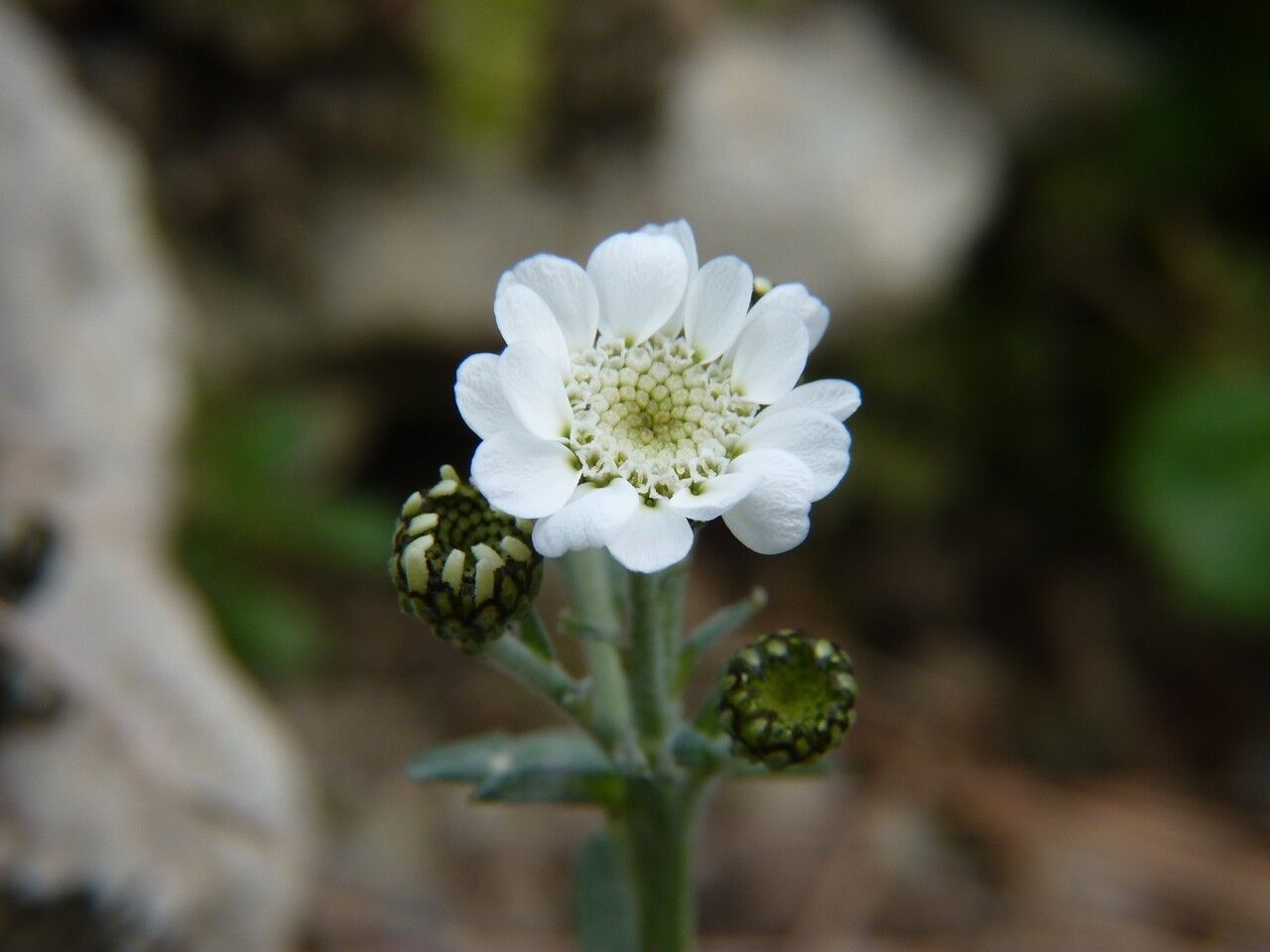
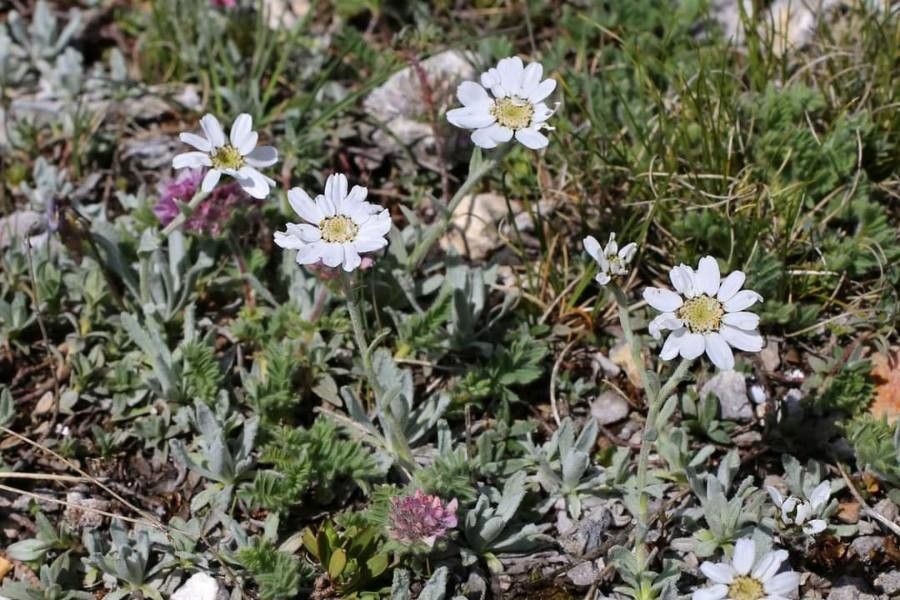
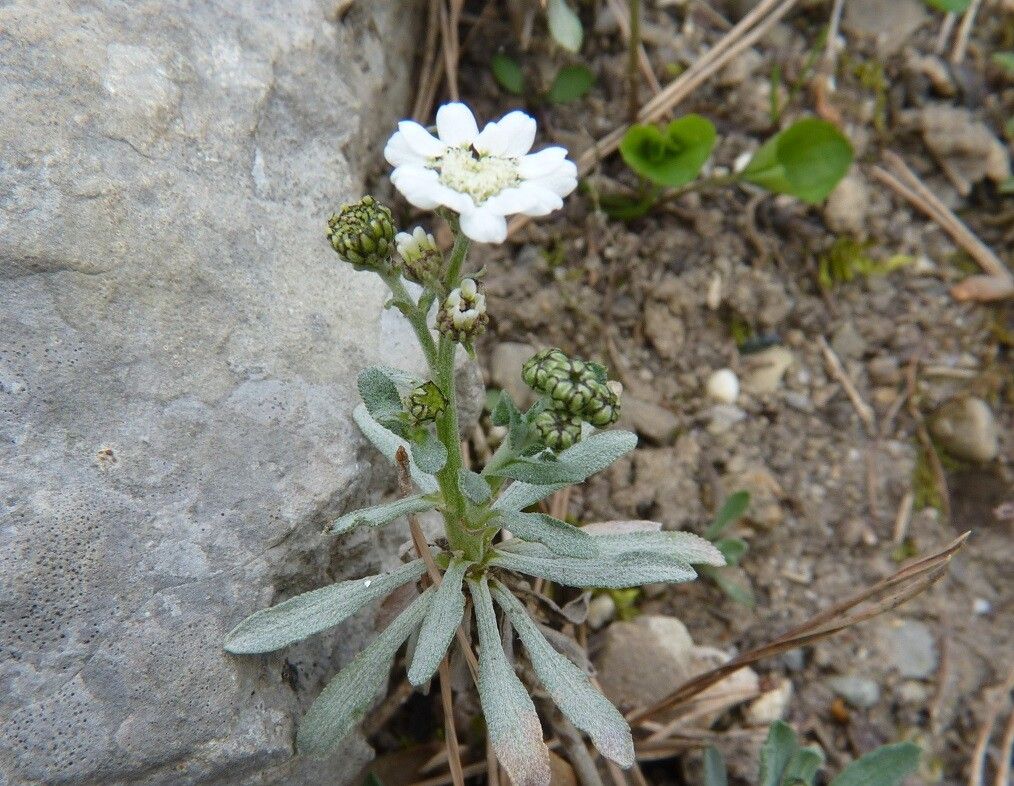
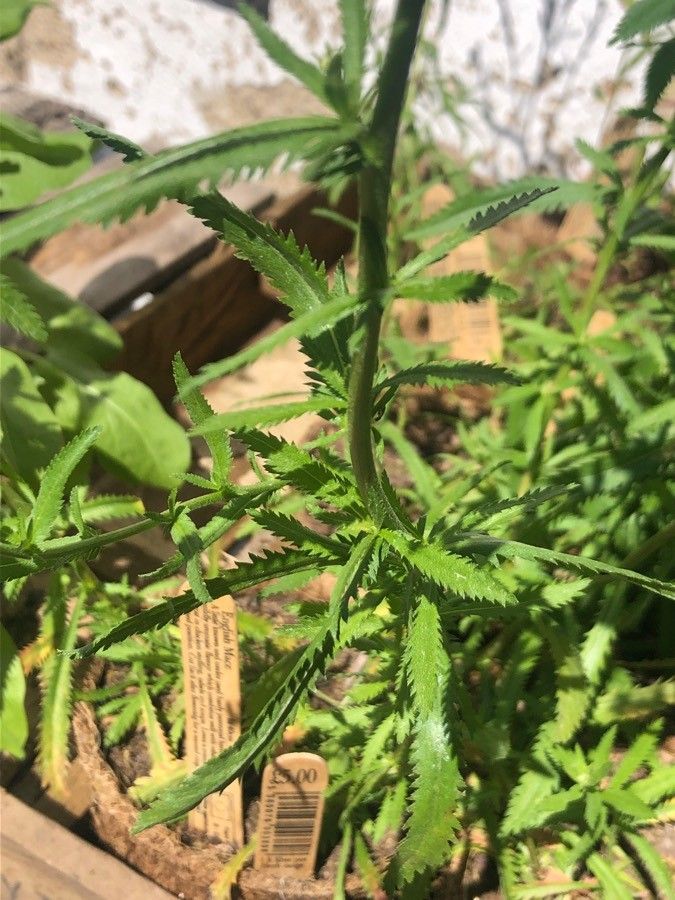
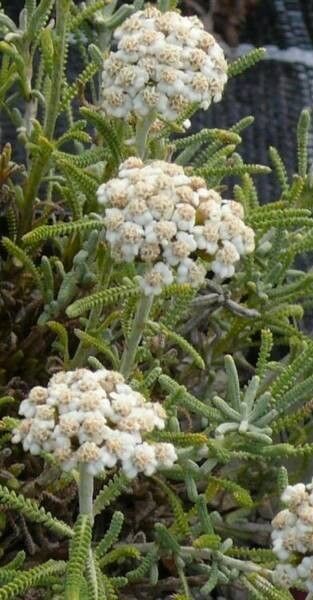
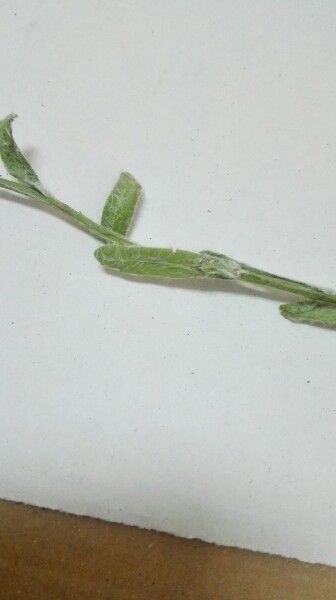
Achillea ageratifolia, the Balkan yarrow or Greek yarrow, is a species of flowering plant in the daisy family Asteraceae, native to Greece and Bulgaria. Growing to 20 cm (7.9 in) tall and broad, it is a compact herbaceous perennial. It is a highly variable species, with three recognized subspecies. They have erect, simple, somewhat woody based stems. The narrow grey-green foliage resembles that of a related genus Ageratum, hence the Latin specific epithet ageratifolia. The solitary, daisy-like composite flower heads are white with yellow centres and about 2–3 cm across. They appear May–July in the northern hemisphere.
Yarrow is fairly resistant to disease and generally not prone to illness. Nevertheless, it can be affected by pests and diseases present in its environment, though such problems are usually mild. Regarding care, this plant needs moderate maintenance. It should be pruned regularly to preserve a neat appearance and support healthy growth. Fertilizing can also encourage flowering. Yarrow is well suited for anyone with outdoor space like a garden or patio and does not require extensive gardening experience. It may need more attention when cultivated indoors.
How to keep Achillea Ageratifolia.
Light
Yarrow is a perennial, herbaceous plant that prefers sunny conditions and originates from open habitats, commonly doing well in meadows and grasslands. It favors full sun but can also tolerate partial sun.
Water
Yarrow thrives in well-drained soil with moderate moisture, showcasing its drought-resistant nature. To stay healthy, it needs to be watered weekly. During its growing season, yarrow efficiently uses water, allowing it to survive droughts. As a herbaceous perennial, it is well-suited for outdoor cultivation.
Fertilizer
The optimal period to fertilize a Yarrow is at the onset of spring when it comes out of dormancy and commences active growth. The application of fertilizers offers essential nutrients for healthy development. Despite the fact that Yarrow requires minimal fertilization, undertaking this practice annually can boost its longevity and encourage superior, more durable flowers.
Pruning
Yarrow is a perennial plant characterized by its fern-like leaves and white flowers. To encourage a well-shaped, fuller growth, prune the plant from early to late spring. Remove spent flowers and trim the foliage in the fall to get it ready for winter. To ensure effective pruning, use clean and sharp tools.
Botanical profile.
- Plant Type
- Herb
- Life Cycle
- Perennial
- Genus
- Achillea
- Family
- Asteraceae
- Hardiness Zone
- 4-9
- Mature Height
- 15 cm to 23 cm
- Mature Spread
- 30 cm
- Leaf Color
- Gray, Silver
- Leaf Type
- Evergreen
- Flower Color
- White
- Flower Size
- 0.51 cm to 1.02 cm
- Bloom Time
- Late spring, Early summer, Mid summer
- Planting Time
- Spring, Summer
- Harvest Time
- Mid summer, Late summer
Reader questions.
What are the sunlight requirements for Yarrow (Achillea ageratifolia)?
Yarrow (Achillea ageratifolia) thrives under various sunlight conditions, needing full sun exposure of above 6 hours of sunlight daily to flourish. It can also adapt to partial sun, requiring about 3-6 hours of sunlight. It's crucial to observe how sunlight moves through your garden to find spots that offer the ideal mix of light and shade, ensuring the best environment for your Yarrow plants to grow healthily.