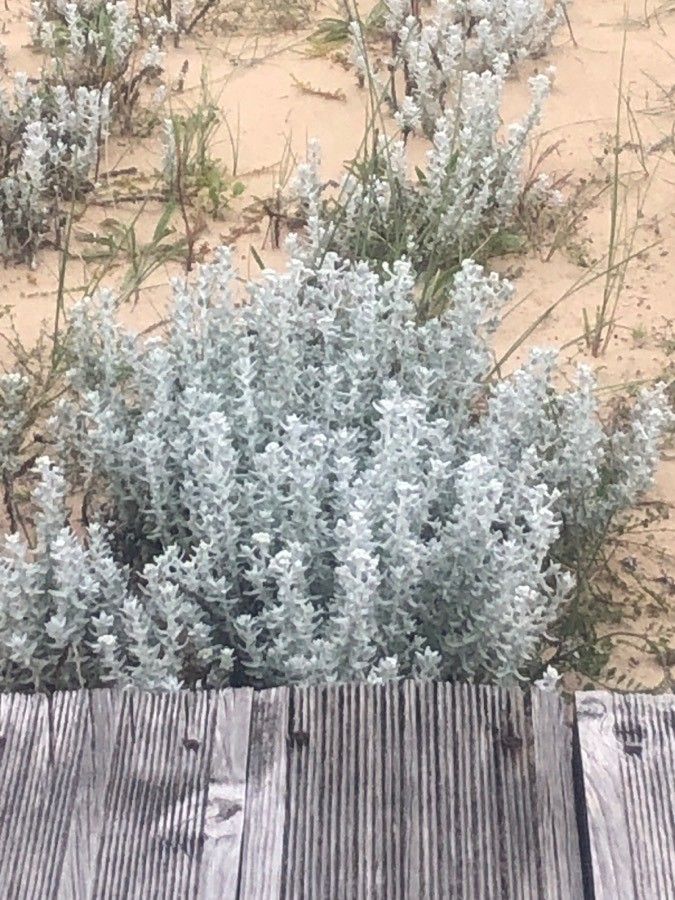
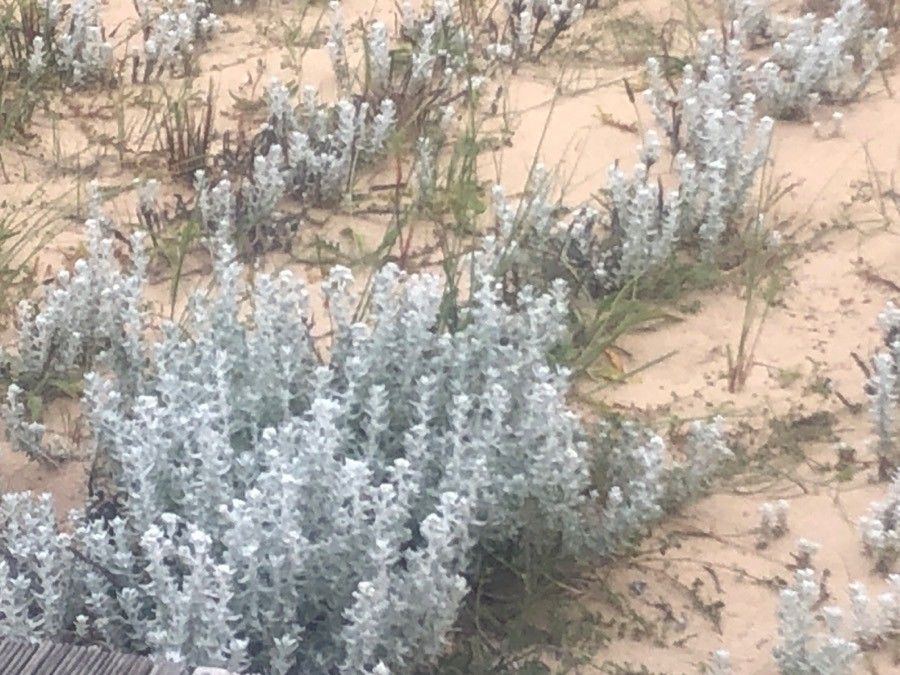
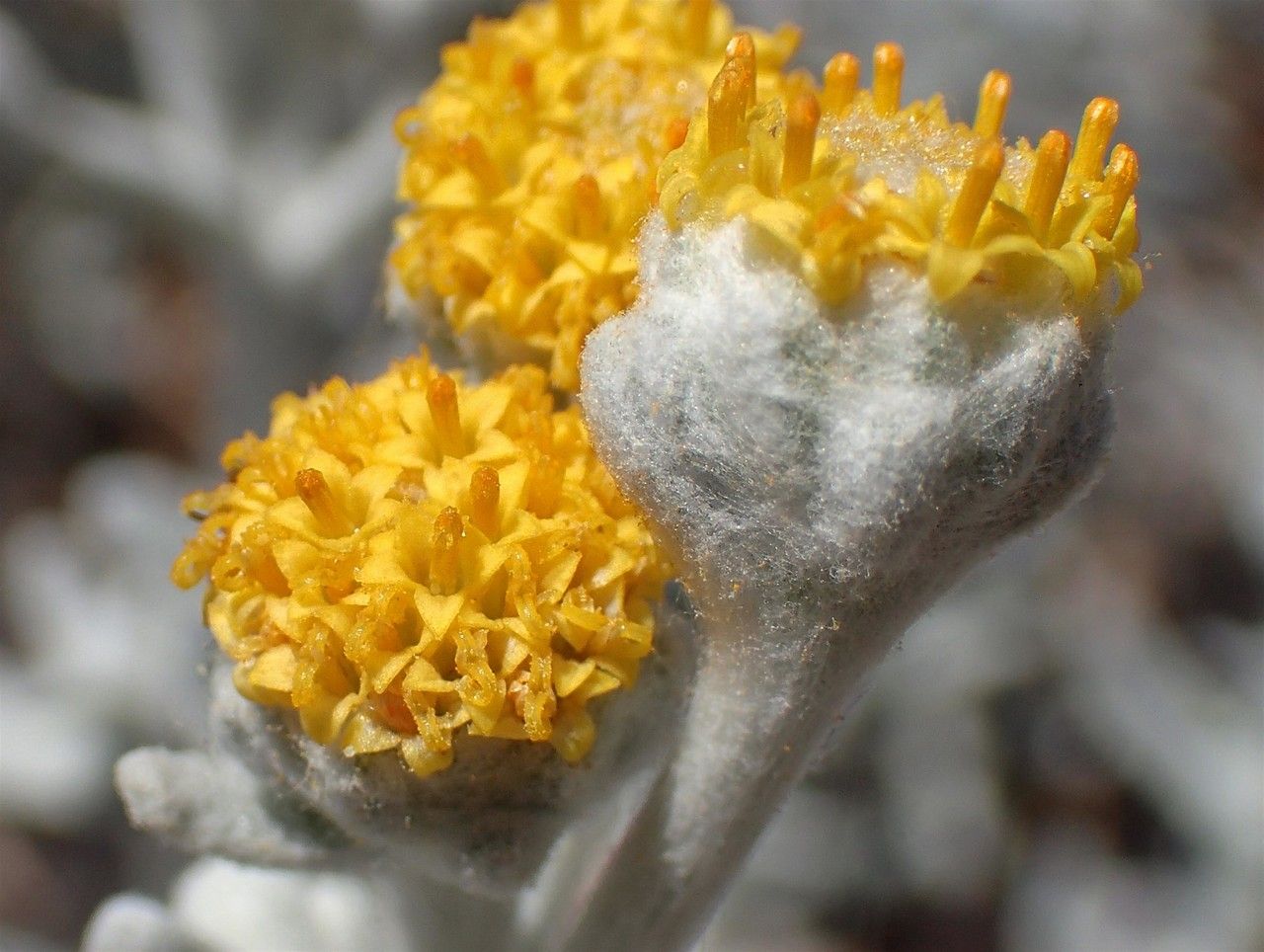
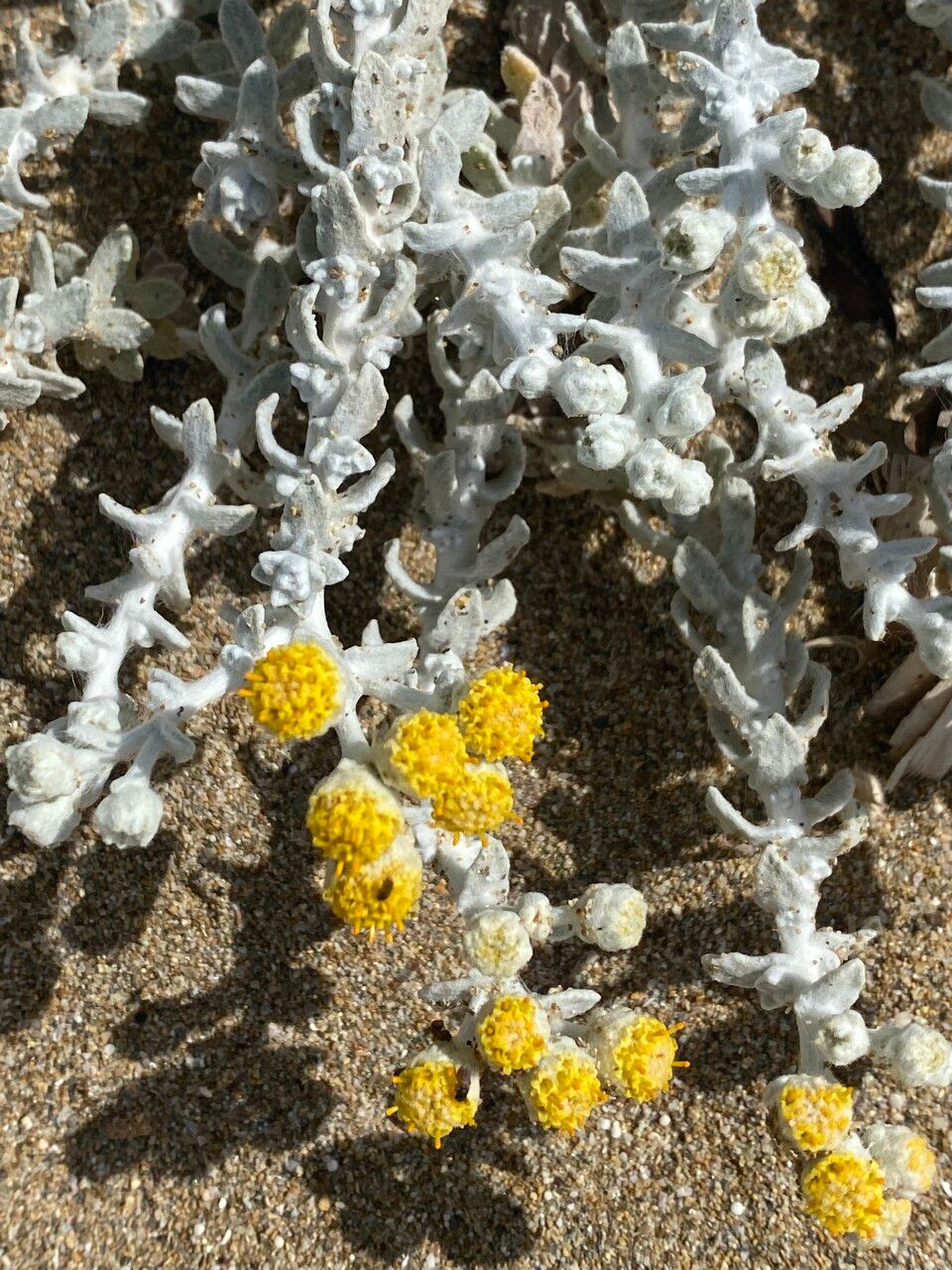
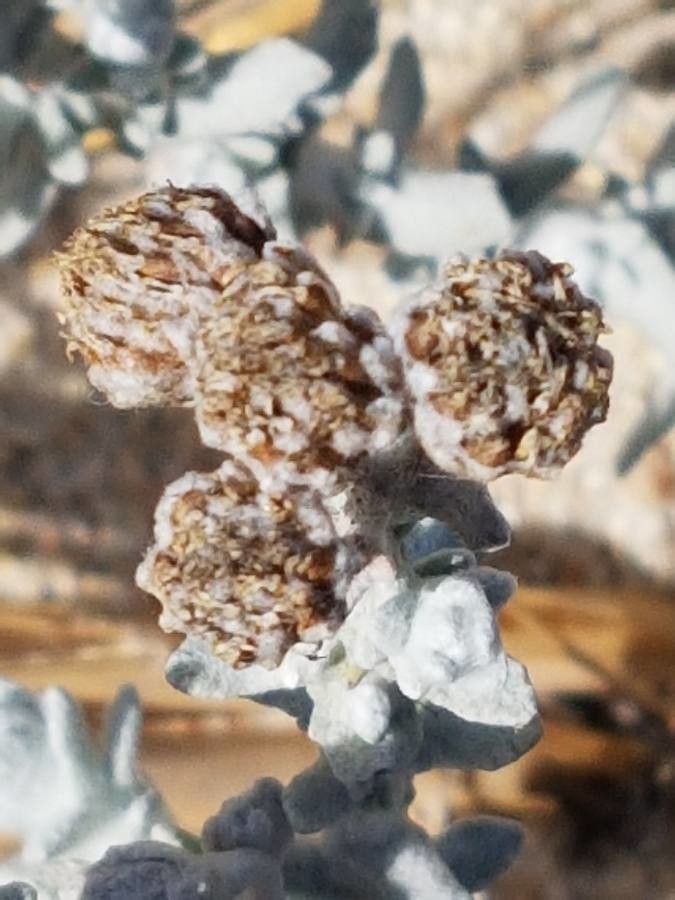
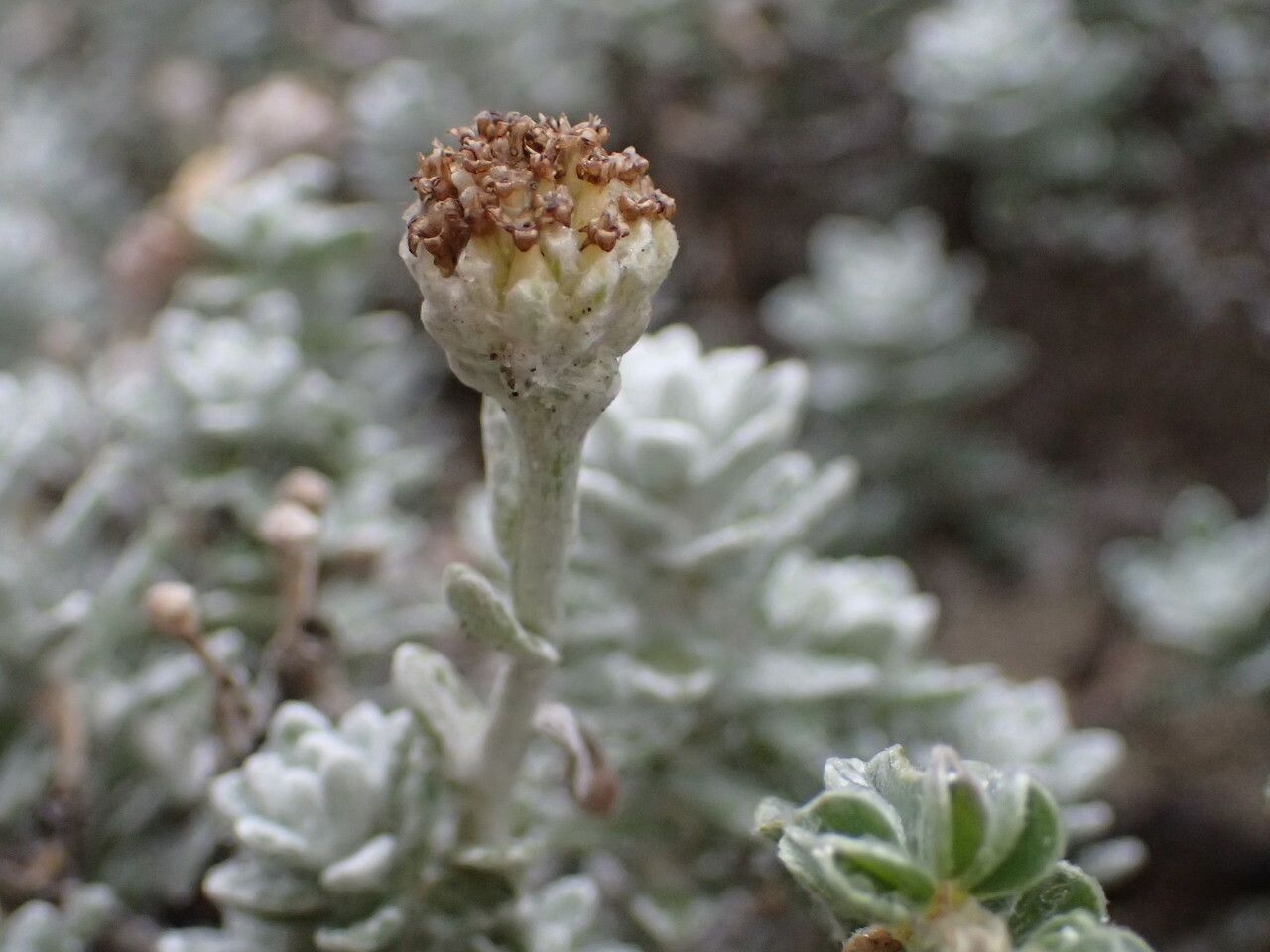
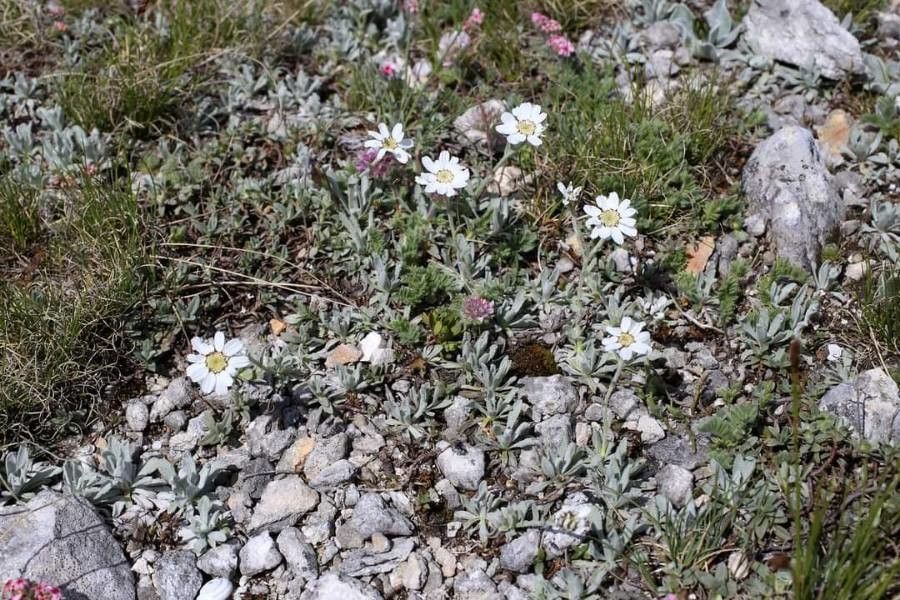
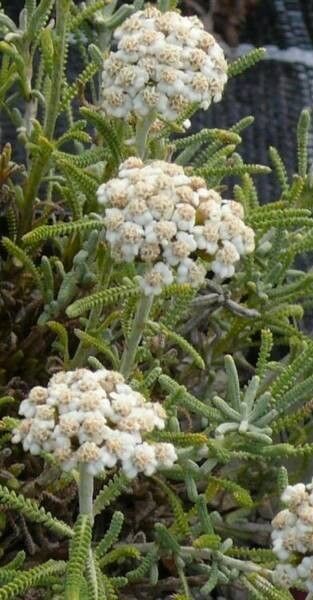
Otanthus is a genus of flowering plants in the chamomile tribe (Anthemideae) within the daisy family (Asteraceae or Compositae). The only known species is the cotton weed plant, Otanthus maritimus. It is a small pioneering perennial that grows in the dune areas throughout the Mediterranean and exerts a stabilizing action on the sandy soils. A thick white down covers both the stems and the small oval, slightly saw-toothed alternate leaves. The globose flower heads, with their short peduncles, are composed of an envelope of white-wooly scales around tubular yellow flowers that are visible from June through to September. The generic name is derived from the Greek words otos (ear) and anthos (flower). This refers to the form of the corolla, which is composed of three membranous bracts that create a profile similar to that of a human ear.
Cottonweed is fairly resistant to disease and generally does not tend to get illnesses easily. However, it can be vulnerable to pests and diseases present in its surroundings. These problems are typically not severe. As for care, this plant needs moderate maintenance. It should be pruned regularly to keep a neat appearance and support healthy growth. Fertilizing can also help encourage flowering. Cottonweed is well suited for anyone with outdoor space, such as a garden or patio, and does not require extensive care experience. It may need more attention when grown indoors.
How to keep Achillea Maritima.
Light
Cottonweed comes from bright, open habitats where it flourishes in full sun. It can tolerate partial sun but prefers direct sunlight for the best growth. This plant, which can be annual or biennial, is noted for its sun-loving nature.
Temperature
Cottonweed can adjust to a broad range of temperatures, though its range may still be restricted by various combinations of moisture and heat. It performs best in warm summer climates with adequate rainfall or watering. Extended spells of cloudy, rainy weather, as well as prolonged high temperatures, can raise the likelihood of Cottonweed dying. In winter, suitable protection from cold can enhance the plant’s survival rate.
Fertilizer
When most of Cottonweed's blooms have opened to full size, resume fertilizing. At the time the flowers are at their peak, apply fertilizer every three to four weeks, weather permitting. Then, once Cottonweed begins producing fewer new blooms, stop fertilizing; there's no need to feed the plant when it can no longer produce additional blooms.
Botanical profile.
- Plant Type
- Herb
- Life Cycle
- Annual
- Genus
- Achillea
- Family
- Asteraceae
- Hardiness Zone
- 8-10
- Mature Height
- 20 cm to 40 cm
- Mature Spread
- 30 cm to 61 cm
- Leaf Color
- Silver, Light Gray
- Leaf Type
- Semi-evergreen
- Flower Size
- 0.51 cm to 0.76 cm
- Bloom Time
- Summer
- Planting Time
- Spring, Autumn
- Harvest Time
- Early fall, Mid fall
Other names.