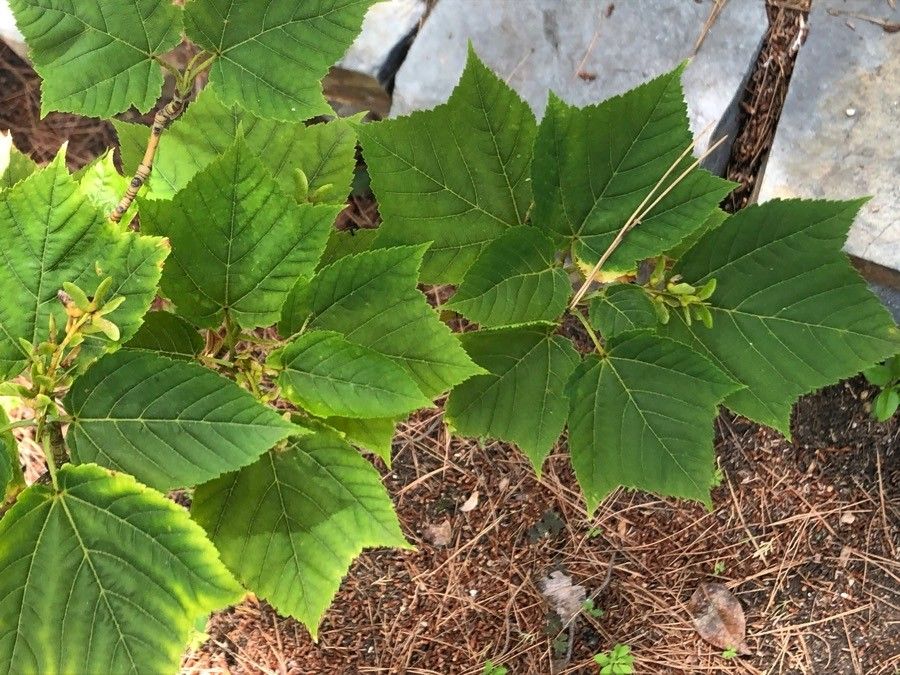
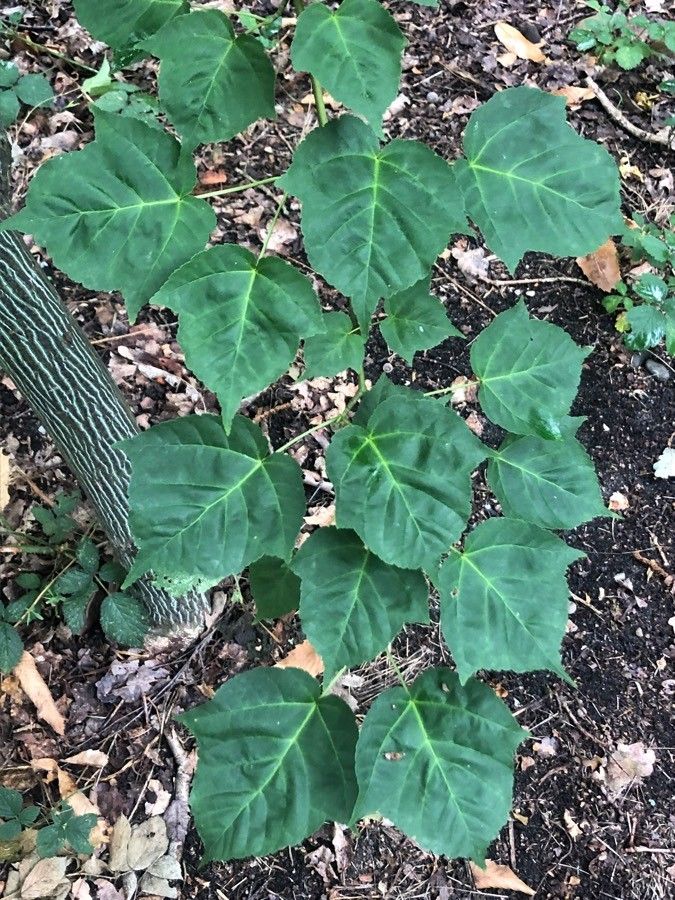
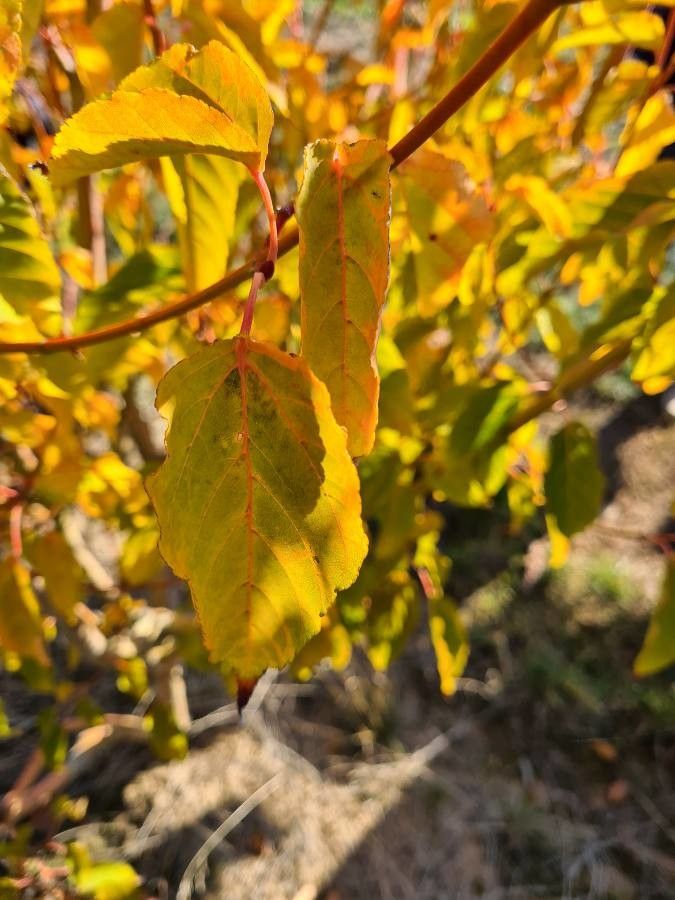
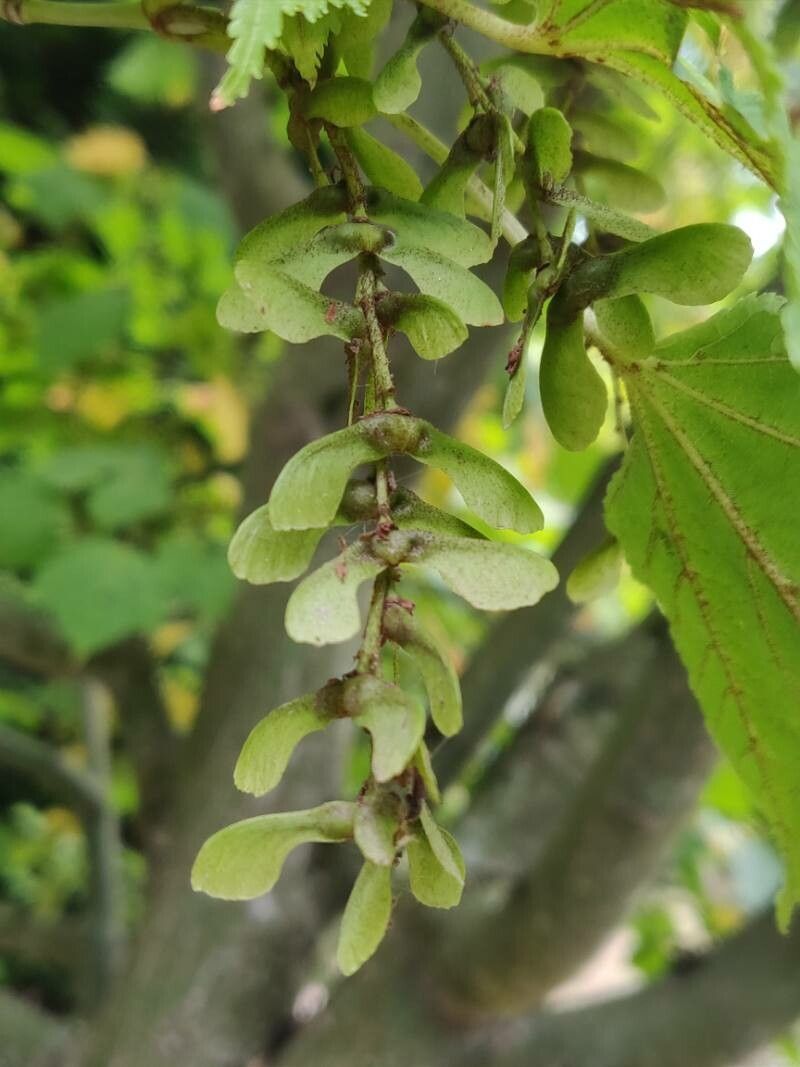
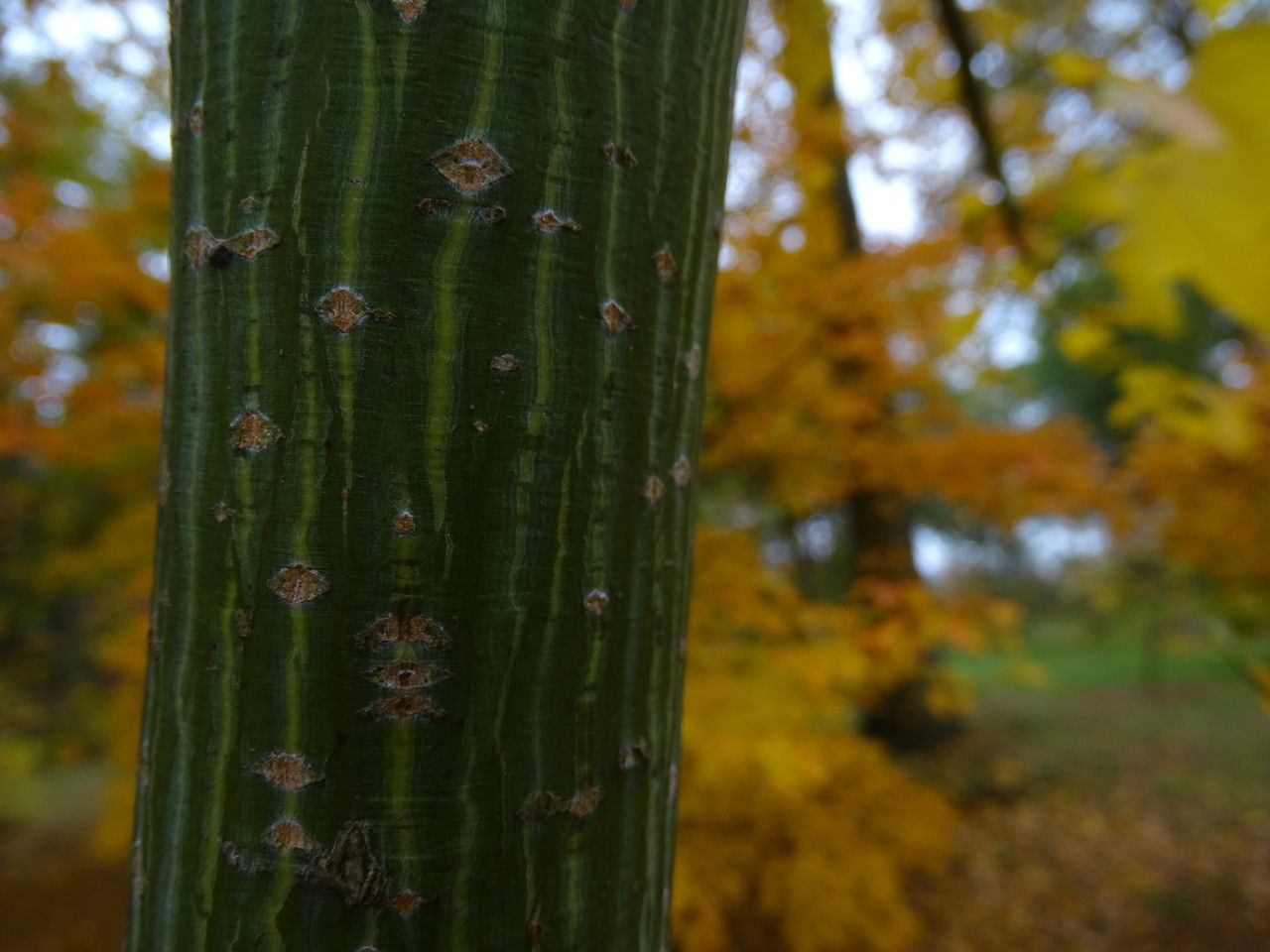
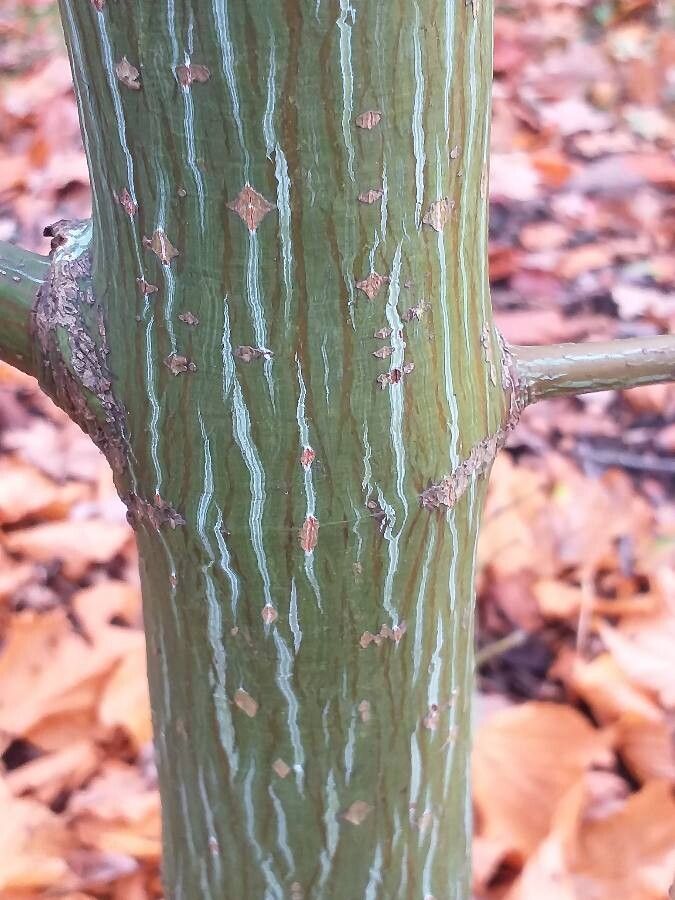
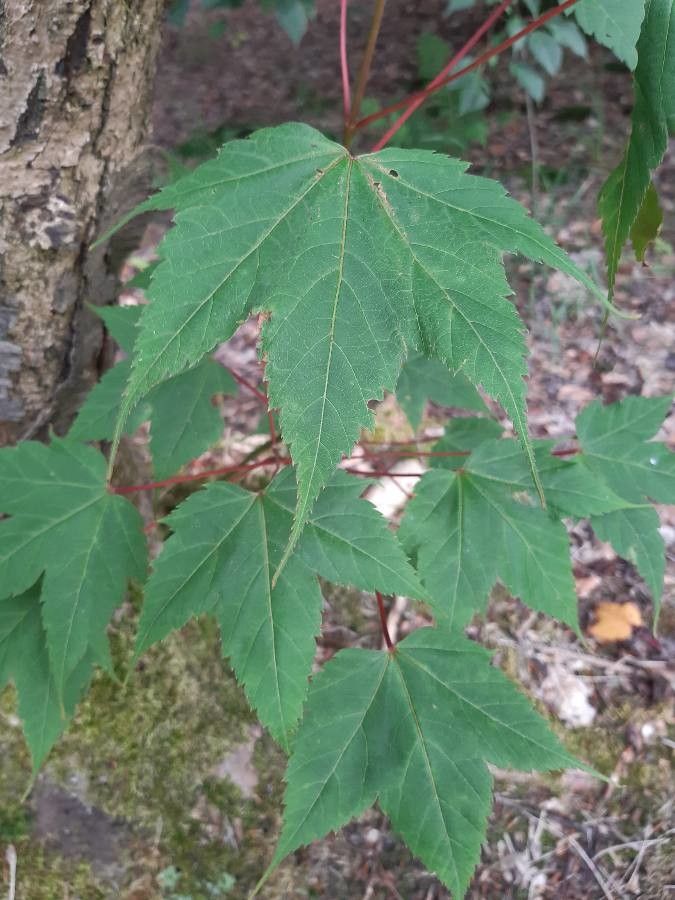
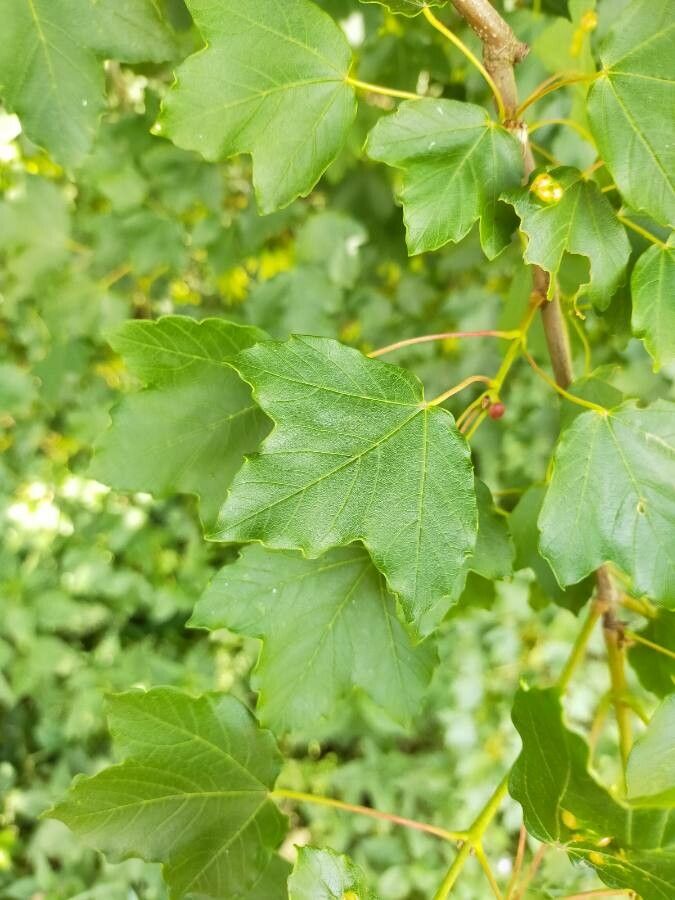
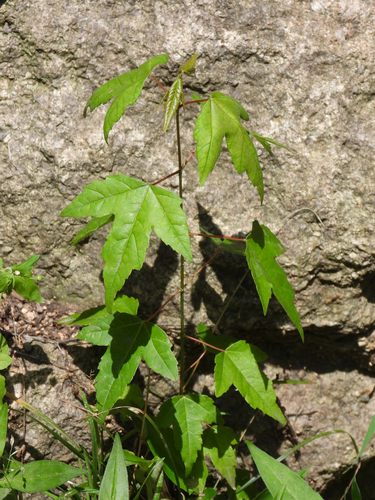
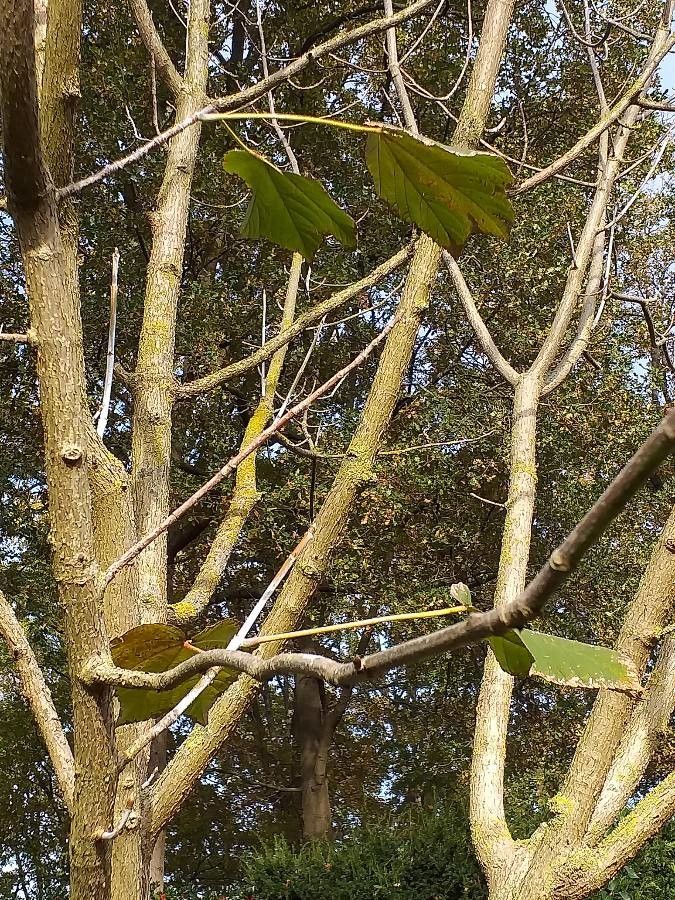
Acer rufinerve, commonly known as the Redvein Maple or Snakebark Maple, is a deciduous tree belonging to the Sapindaceae family. Native to Japan and Korea, it can grow up to 15-20 meters tall. The tree is notable for its distinctive bark, which features greenish-gray stripes interspersed with reddish-brown patches, hence the name "Snakebark Maple." The leaves are green, three-lobed, and have serrated edges. In autumn, they turn a striking yellow or orange-red before falling.
The Redvein Maple produces small yellow-green flowers in the spring, preceding leaf emergence. These flowers are followed by winged fruits called samaras, which ripen in late summer or early autumn.
This tree prefers well-drained soil and partial shade but can tolerate full sun if it receives sufficient moisture. It is commonly used as an ornamental plant in gardens due to its attractive bark pattern and vibrant fall foliage.
In traditional medicine, Acer rufinerve has been used for various purposes, such as treating fever, coughs, and sore throats, due to its anti-inflammatory properties.
Overall, Acer rufinerve is a visually appealing ornamental plant with unique characteristics, making it a popular choice for gardeners seeking something different from other maple trees on the market today.
Grey snake-bark maple has strong resistance to disease and is usually not susceptible to illnesses. Regarding care, this plant is fairly low-maintenance. When planted outdoors it needs minimal watering, and larger specimens typically do not require pruning. Smaller plants, however, should be pruned after they have bloomed. Grey snake-bark maple is suitable for anyone with outdoor space, like a garden or a deck, and does not demand a great deal of care experience.
How to keep Acer Rufinerve.
Light
Grey snake-bark maple occurs naturally in habitats such as forest understories or rocky sites, where it grows in natural shade. It prefers partial sun but can tolerate both full sun and full shade, reflecting its versatile, hardy nature.
Water
The grey snake-bark maple flourishes in a balanced mix of moisture and dryness. It requires watering every 1-2 weeks and prefers well-drained soil. During the colder months, when the tree enters dormancy, its water needs decrease. This is typical of its temperate climate habitat.
Temperature
Grey snake-bark maple is highly adaptable to a wide range of climatic conditions, from searing summers to frigid winters. It nonetheless has an ideal temperature range for healthy growth. If temperatures become too high, the plant is susceptible to heat and humidity stress, which can lead to its death. In areas where temperatures reach the lower edge of its cold tolerance, taking insulation measures to protect the plant is necessary.
Fertilizer
Fertilize your Grey snake-bark maple in early spring to encourage healthy growth. Consistent fertilization boosts the tree’s overall health, producing vigorous growth, increased tolerance to stressful conditions, and enhanced resistance to pests and diseases. Stick to a regular fertilizing schedule for your Grey snake-bark maple to preserve vibrant, deeply colored foliage and a lush appearance.
Pruning
To promote healthy growth and maintain the shape of the grey snake-bark maple, prune it in early spring using thinning cuts. This timing helps prevent sap bleeding and improves air circulation by removing dead branches. Regular pruning not only boosts the plant's aesthetic appeal but also enhances its overall health.
Botanical profile.
- Plant Type
- Tree
- Life Cycle
- Perennial
- Genus
- Acer
- Family
- Sapindaceae
- Hardiness Zone
- 5-8
- Mature Height
- 10.06 m
- Mature Spread
- 10.06 m
- Leaf Color
- White, Yellow, Red, Green, Orange, Variegated
- Leaf Type
- Deciduous
- Flower Color
- Yellow, Green
- Flower Size
- 2.54 cm to 7.62 cm
- Bloom Time
- Early spring, Mid spring
- Planting Time
- Spring, Summer
- Harvest Time
- Late summer, Early fall, Mid fall
- Native Area
- Japan
Other names.
Reader questions.
What are the sunlight requirements for Grey snake-bark maple?
The Grey snake-bark maple, also known by its botanical name Acer rufinerve, thrives under specific sunlight conditions to ensure its health and happiness. It requires 'Full sun' which means it should be placed in a spot that receives above 6 hours of sunlight daily. For those who cannot provide this, 'Partial sun' conditions are also suitable, where the plant should get about 3-6 hours of sunlight daily. It's important to observe how sunlight moves through your garden, selecting locations that offer the right balance of light and shade to meet the needs of your Grey snake-bark maple for optimal growth and development.