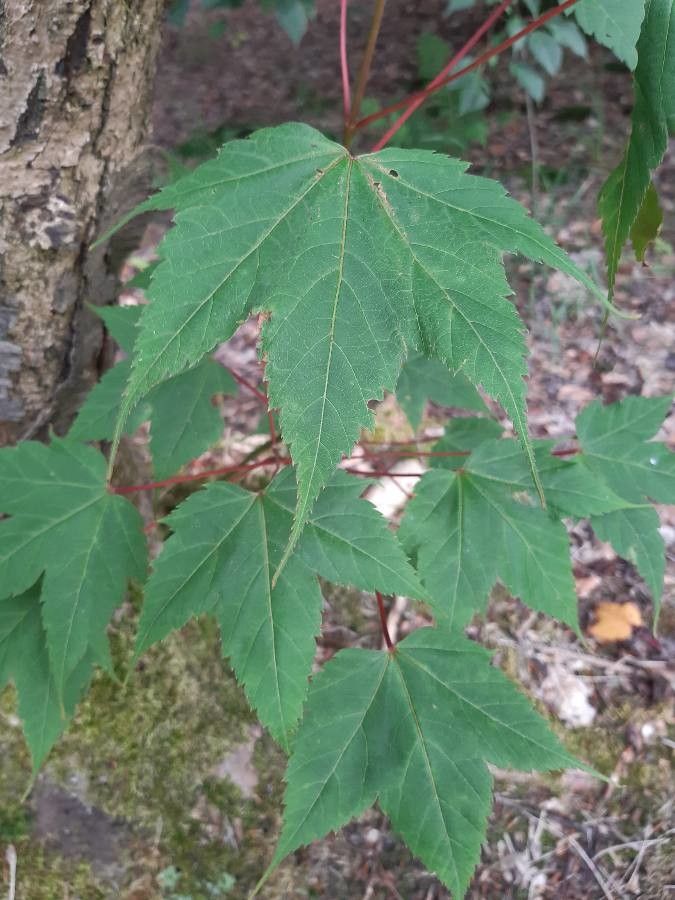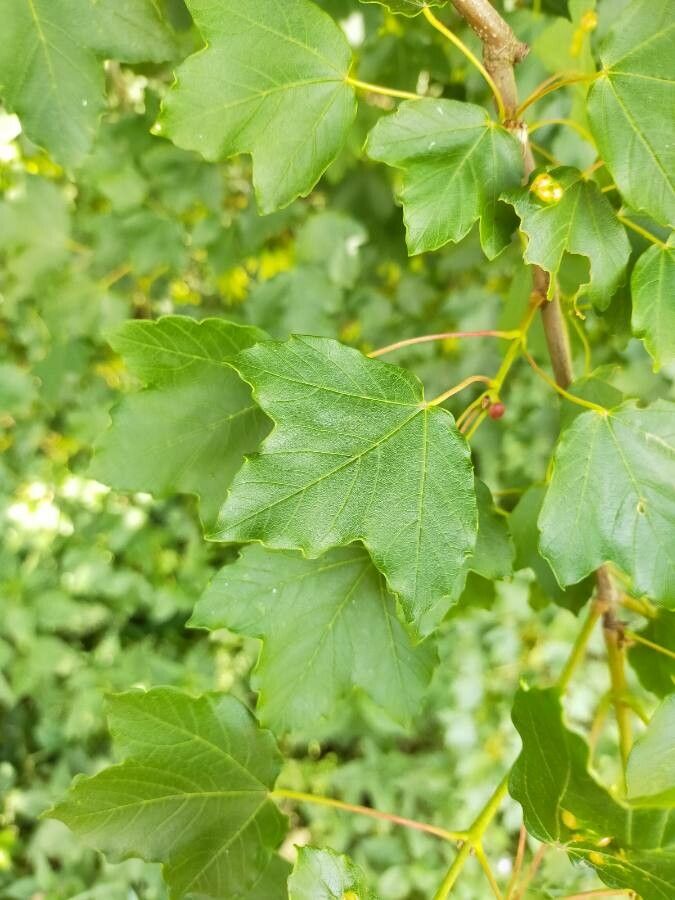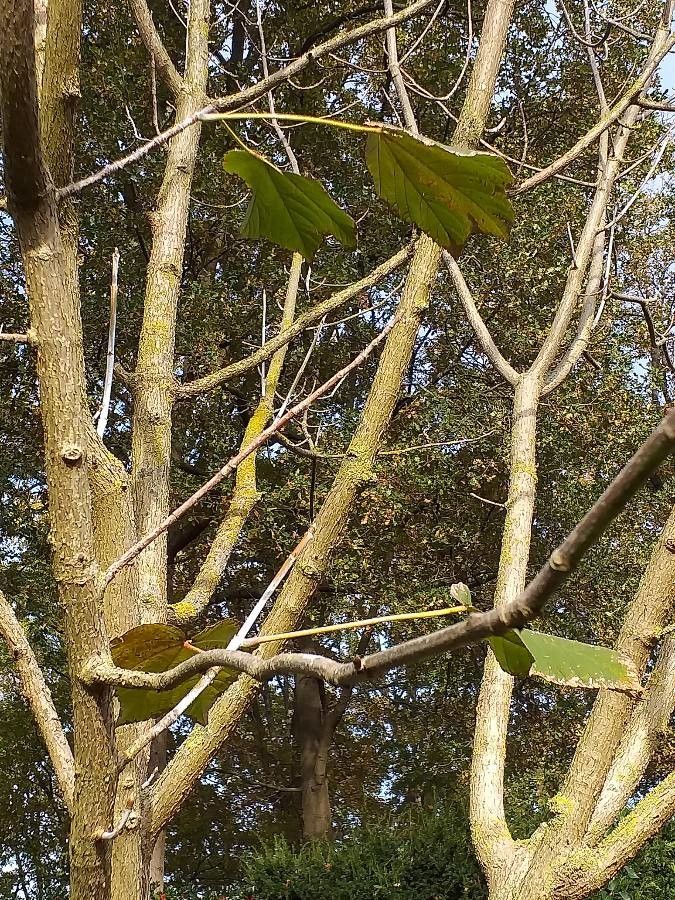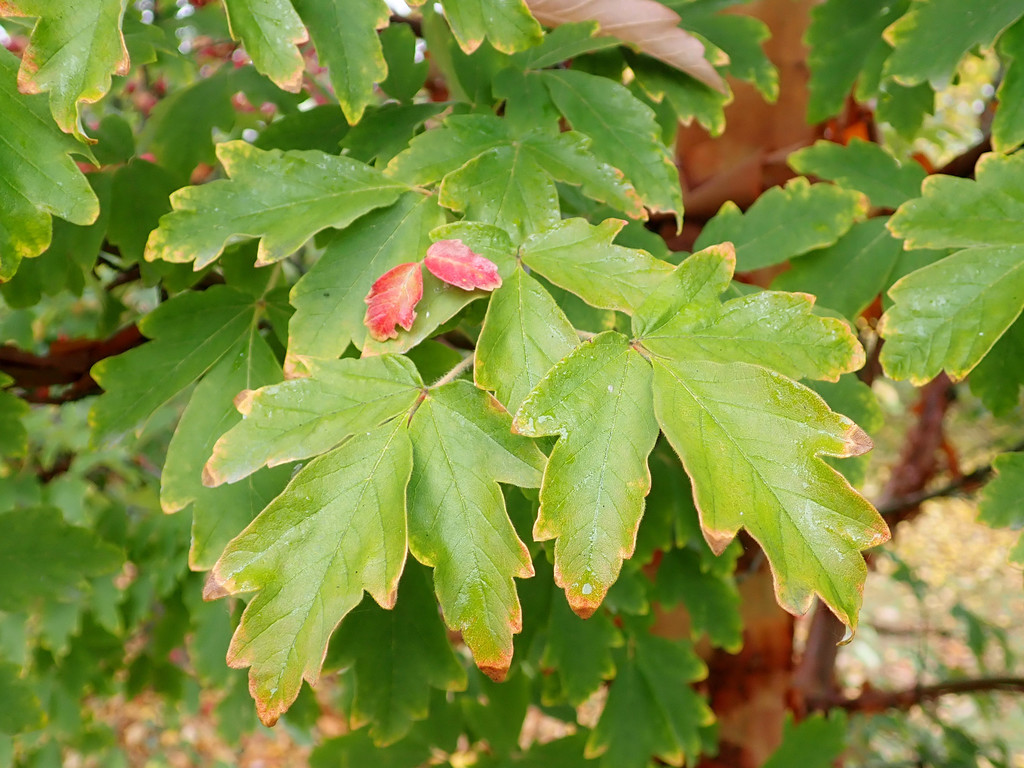
Acer griseum, commonly known as the Paperbark Maple, is a deciduous tree native to central China. It is a slow-growing tree that can reach up to 30 feet in height and 20 feet in width. The most distinctive feature of this plant is its cinnamon-colored bark, which peels away in thin sheets to reveal the smooth and shiny bark underneath.
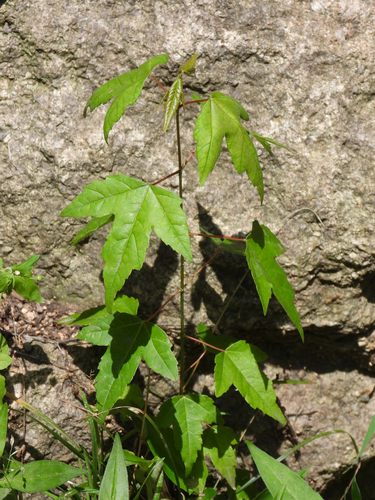
The leaves of Acer griseum are trifoliate and dark green during the summer months. In autumn, they turn shades of orange-red before falling off for winter dormancy. The flowers are small and inconspicuous but are followed by winged samaras, or seeds.
This plant prefers well-drained soil with moderate moisture levels but can tolerate drought conditions once established. It thrives best in full sun to partial shade.
Acer griseum has become popular among gardeners due to its unique bark texture and coloration, as well as its attractive autumn foliage. It also serves as an excellent specimen tree for small gardens or landscapes due to its slow growth rate and manageable size.
Overall, Acer griseum is an excellent choice for those looking for an ornamental tree with year-round interest that requires minimal maintenance once established.
Paperbark maple is fairly disease-resistant and typically does not suffer from diseases. Regarding care, this plant is fairly low-maintenance. When grown outdoors it needs only small amounts of water, and larger plants usually do not require pruning. Smaller plants, however, should be pruned after they finish blooming. Paperbark maplet is a good choice for anyone with an outdoor area, such as a garden or deck, and does not demand much care experience.
How to keep Acer Griseum.
Light
The paperbark maple thrives with plenty of sunlight, though it can tolerate less bright locations. Because it comes from areas with abundant sun, insufficient light can lead to subpar growth. Conversely, subjecting it to excessively intense light—something uncommon in its native range—can be harmful.
Water
The paperbark maple flourishes in soil that maintains balanced moisture levels and can tolerate moderate drought once it is established. It typically needs to be watered every three weeks, with less frequent watering required during its dormant phase in colder months. This characteristic makes it well-suited for outdoor growth in areas where seasonal rainfall can naturally supply the necessary hydration.
Temperature
Paperbark maple is native to temperate regions and grows best in climates where temperatures range from 41 to 89.6 °F (5 to 32 °C). During colder months, preventing the plant from being exposed to prolonged periods of freezing will help it survive.
Fertilizer
The timing of fertilizing a Paperbark maple is important. Apply fertilizer in early spring and continue monthly until early summer. Fertilizer encourages attractive blooms and provides energy during both dormant and active growth periods.
Pruning
The paperbark maple is known for its peeling, cinnamon-colored bark and its trifoliate leaves. To keep the tree healthy, prune it in early spring. During pruning, focus on removing any dead, diseased, or crossing branches. This helps promote the tree's health. Light thinning of the tree's branches can improve air circulation and sunlight exposure. It's important to avoid heavy pruning, as it can stress the tree. Pruning encourages vigorous growth and enhances the tree's ornamental appeal.
Toxicity
Paperbark maple trees are non-toxic trees, safe for planting in gardens with pets. However, it is not intended to be eaten and consuming large quantities of any part of the tree may lead to stomach upset.
Further reading →
The toxicity and danger assessments provided are for reference only. We do not assure their accuracy, so it's crucial not to depend on them. Seek professional advice when necessary for accurate guidance.
Botanical profile.
- Plant Type
- Tree
- Life Cycle
- Perennial
- Genus
- Acer
- Family
- Sapindaceae
- Hardiness Zone
- 4-8
- Mature Height
- 6.1 m to 9.14 m
- Mature Spread
- 4.88 m to 6.1 m
- Leaf Color
- Green, Red, Orange
- Leaf Type
- Deciduous
- Flower Color
- Yellow
- Flower Size
- 2.54 cm
- Bloom Time
- Mid spring, Late spring
- Planting Time
- Autumn
- Harvest Time
- Late summer, Early fall, Mid fall
- Native Area
- China
Other names.
Reader questions.
How should I water my Paperbark maple tree?
To ensure excellent root development, place a garden hose at the base of the plant. Avoid spraying the leaves directly and keep in mind that outdoor plants in direct sunlight may need more water. You can use bubblers or soaker hoses to moisten the roots. When planting or removing plants, use soaker hoses that cover the entire garden or bed to ensure deep root growth. Drain any excess water and allow the soil to dry before watering again. Water at ground level to prevent diseases. On a sunny day, consider spraying the entire bush with water. Whether the Paperbark maple is in a pot or planted in the ground, remember that it prefers deep watering rather than light sprinkling.
Why is it necessary to fertilize my Paperbark maple?
If you own a Paperbark maple, regardless of the type, regular fertilization is important for the plant's overall health. Providing the right nutrients will help the tree grow stronger and better withstand challenging growing conditions. It will also enhance its ability to fight off diseases and pests. One of the most appealing aspects of the Paperbark maple is its foliage, so it's crucial to maintain it. This involves following a specific fertilization schedule for your tree, which will result in vibrant, colorful leaves and an overall lush appearance.
What are the sunlight requirements for Paperbark Maple?
Paperbark Maple requires full sun, which means it should receive above 6 hours of sunlight daily, though it can also thrive in partial sun, receiving about 3-6 hours of sunlight. It's crucial to observe how sunlight moves through your garden to find spots that offer an ideal balance of light and shade, ensuring your plants flourish. While Paperbark Maple originates from environments rich in sunlight, lacking adequate light may dampen its growth. Conversely, too much sun, uncommon in its native habitat, could be harmful.
What are the ideal temperature conditions for the survival and growth of Paperbark Maple?
Paperbark maple is native to temperate regions and thrives best in climates with temperatures ranging from 5 to 32 °C (41 to 89.6 °F). It possesses strong cold resistance, allowing it to withstand winter conditions without special frost protection measures in many cases. However, during colder seasons, it's essential to prevent the plant from being subjected to prolonged freezing to aid its survivability. If winter temperatures are expected to fall below -30°C, providing cold protection by wrapping the trunk and branches with non-woven fabric or cloth is recommended. Additionally, watering the plant abundantly before the first freeze in autumn to keep the soil moist helps prevent drought and water scarcity during winter and early spring.
What should I do if I give the Paperbark maple tree too much or too little water?
If a Paperbark maple is overwatered, its leaves may turn yellow, drop off, and wilt. The plant may also appear dull and unhealthy, with mushy stems. When these signs are evident, it's important to adjust your watering schedule as needed. Wilting can also indicate under watering, in which case the leaves may become crispy and dry. If the soil is dry and just watering is not enough, give the plant a thorough watering. Sufficient water will help the Paperbark maple recover, but the plant may still have dry and yellow leaves due to damage to the root system. Once the plant returns to normal, the yellowing of the leaves will stop. When growing the Paperbark maple indoors, always check the moisture levels in the pot and avoid overwatering. Look out for black spots, and if present, allow the soil to dry by refraining from watering for a few days. Overwatering can lead to root rot, so if you see discolored and slimy roots, consider transferring the plant to a different pot. Prevent root rot by avoiding excessively soggy soil. When planting the Paperbark maple outdoors, dig a little deeper and if the soil feels too dry, it may indicate under watering. Provide adequate watering to aid in the plant's recovery.
When should I fertilize my Paperbark maple tree?
To keep your Paperbark maple healthy and promote growth, it's recommended to fertilize it twice a year. The first time should be in late winter or early spring, which provides the necessary nutrients for healthy growth once the weather warms up. If you live in a warm climate region, it's also beneficial to fertilize in early fall. This will add nutrients to the soil for the following growing season and help the tree withstand the winter cold without damage to its foliage. Fertilizing earlier in the fall will give the new branches enough time to grow and withstand the cold winter.
How can artificial lighting benefit indoor plants, and what are the recommendations?
Indoor plants, including Paperbark Maple, require sufficient lighting for optimal growth, especially when natural sunlight is not adequate, such as in winter or less sunny locations. Artificial lights, like LED lights capable of providing specific light wavelengths, are a crucial alternative, stimulating healthier and faster growth. For full sun plants, 30-50W/sq ft of artificial light is recommended, partial sun plants need 20-30W/sq ft, and full shade plants require 10-20W/sq ft. The light source should be placed 12-36 inches above the plant, mimicking natural sunlight for 8-12 hours per day.
How should I care for my Paperbark Maple during extreme temperatures?
For Paperbark maple, it's crucial to maintain the temperature above 5°C during winter and below 32°C during summer. If temperatures fall below -30°C, the branches may become brittle and dry by spring, with no new shoots emerging, despite the plant's cold-tolerant nature. In such cases, it's advisable to prune away any dead branches that have failed to produce new leaves come spring. During summer, if temperatures exceed 35°C, the plant's leaves may lighten in color, tips may dry and wither, and it becomes more susceptible to sunburn. To mitigate these effects, trim away sunburned and dried-up parts, move the plant to a shaded location, or use a shade cloth to protect it during peak sun hours. Ensuring the soil remains moist by watering in the morning and evening is also vital.
How frequently should I give water to my Paperbark maple tree?
The Paperbark maple prefers deep watering, especially when planted in pots. In pots, the soil dries out faster due to limited water storage. To ensure sufficient water supply, soak the plant in a gallon of water each time. In cold regions, water every 3 to 5 days, preferably in the morning when the soil is dry. Check the soil moisture by examining the top 2-3 inches of soil; if it is dry, it's time to water. During hot days, monitor the soil moisture daily as heat quickly dries out the pot's soil. For garden irrigation in hot climates, water once a week when the top 2-3 inches of soil are too dry. Avoid watering if there is sufficient rainfall to prevent root rot. When the Paperbark maple is outdoors, add mulch 3 to 4 inches deep to retain water. Sandy soil requires more frequent watering due to faster drainage, while clay soil needs less frequent watering. Use a calendar to track watering dates and pay attention to the leaves drooping, as this may indicate a need for watering.
When is the best time to not fertilize my Paperbark maple tree?
To ensure the best care for your Paperbark maple, it is important to know when not to fertilize. First, avoid fertilizing during winter months when the plant is dormant and does not require nourishment. Secondly, refrain from fertilizing during late spring and summer when the weather tends to be hotter and drier. These conditions can have adverse effects on the plant if it is fertilized during this time. To prevent any problems, it is best to follow a fertilization schedule that focuses on feeding the plant only during early spring and early fall.
What are common symptoms of light deficiency in Paperbark Maple?
Paperbark Maple shows several symptoms when light is deficient, including smaller new leaves, leggy or sparse growth, accelerated leaf drop, halted or no new growth, lighter-colored new leaves, chlorosis, sunscald, leaf curling, wilting, and leaf scorching. These symptoms indicate a need for more light or damage from too much direct sunlight, impacting the plant's ability to photosynthesize and maintain health.
How much water does my Paperbark maple tree need?
The Paperbark maple has specific watering needs. For potted plants, water them deeply until water is dripping from the bottom of the pot. Wait for the soil to dry before watering again. Use a water calculator or moisture meter to track water given in a week. During the flowering period, provide plenty of water but let it evaporate to avoid root rot. If the Paperbark maple is planted outdoors with enough rainfall, additional watering may not be necessary. When the tree is young or newly planted, ensure it receives 1-2 inches of rain per week. As it grows, it can rely on rainfall. In hot weather or when there is no rain for 2-3 weeks, water the tree during cooler times to prevent heat damage. Extra watering is needed during prolonged dry spells.