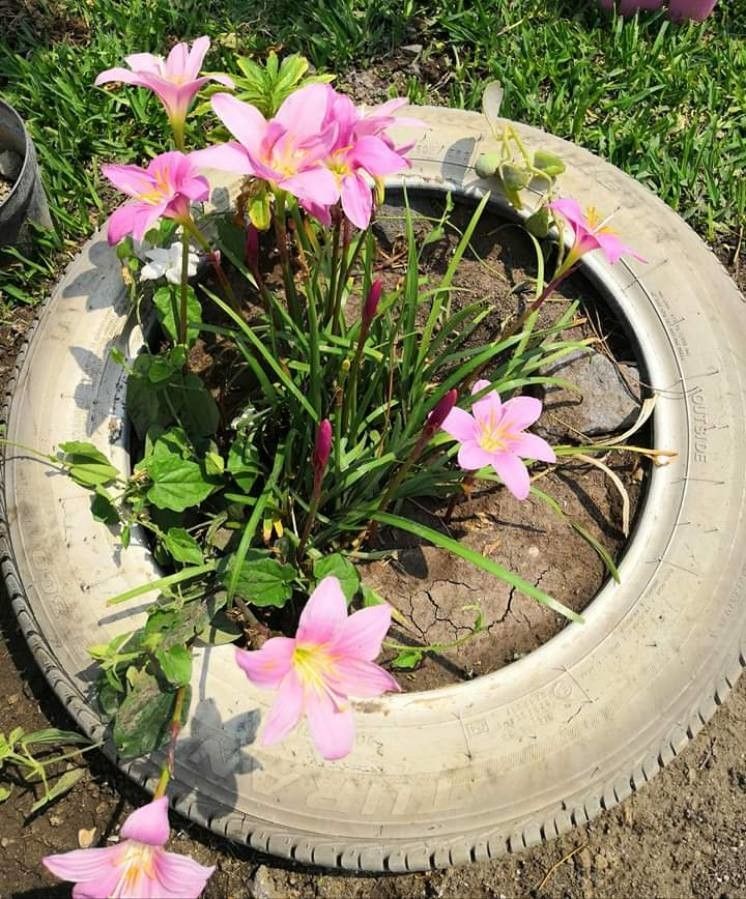
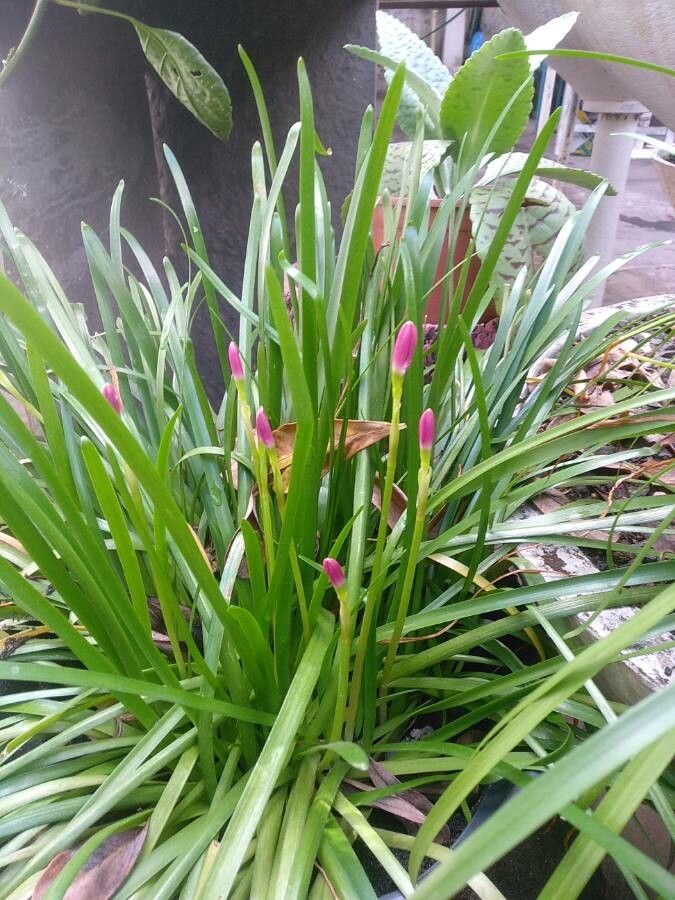
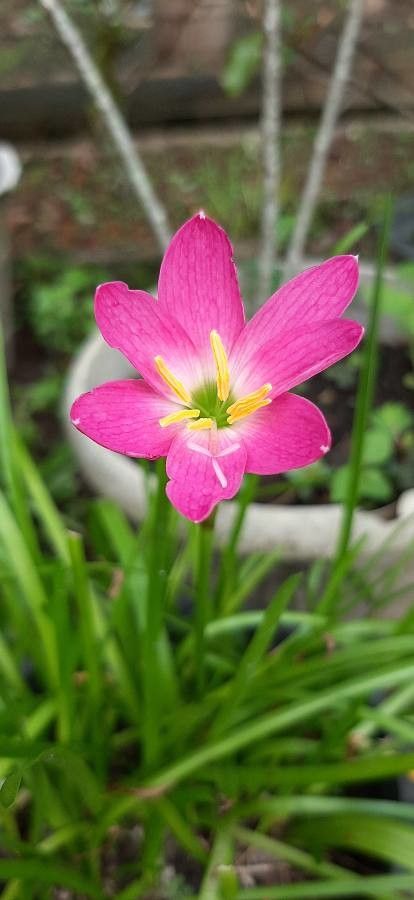
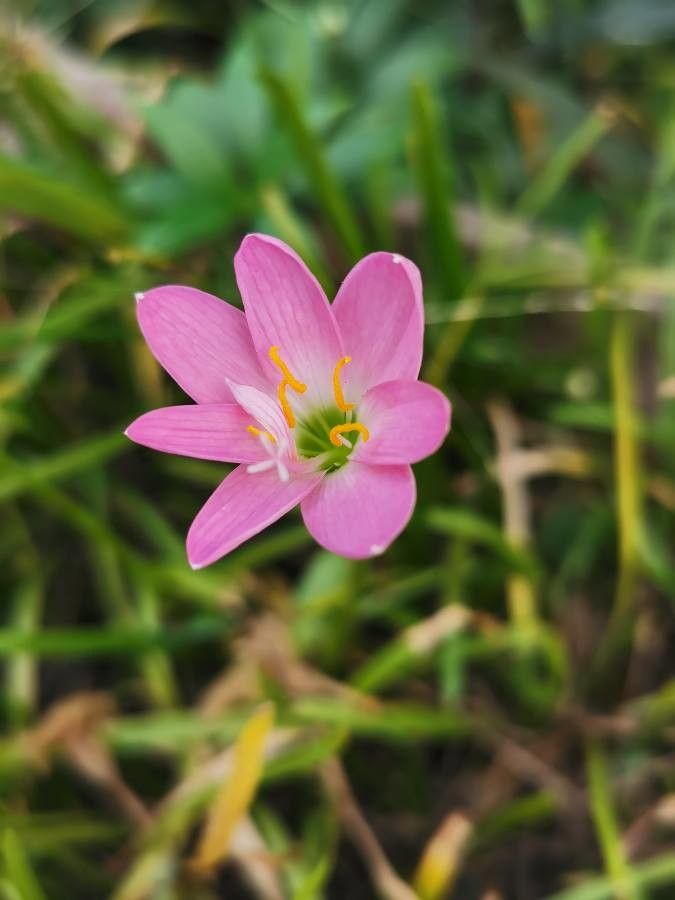
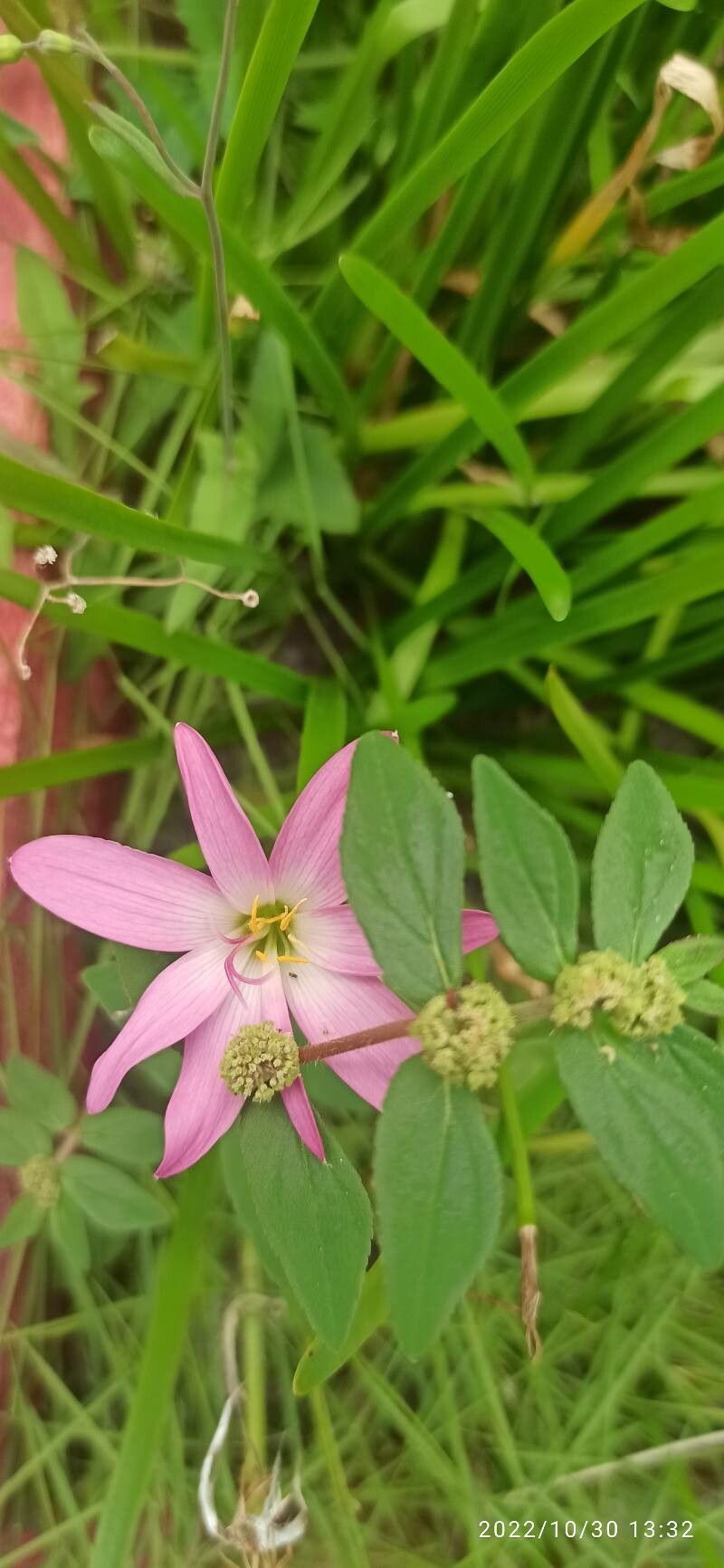
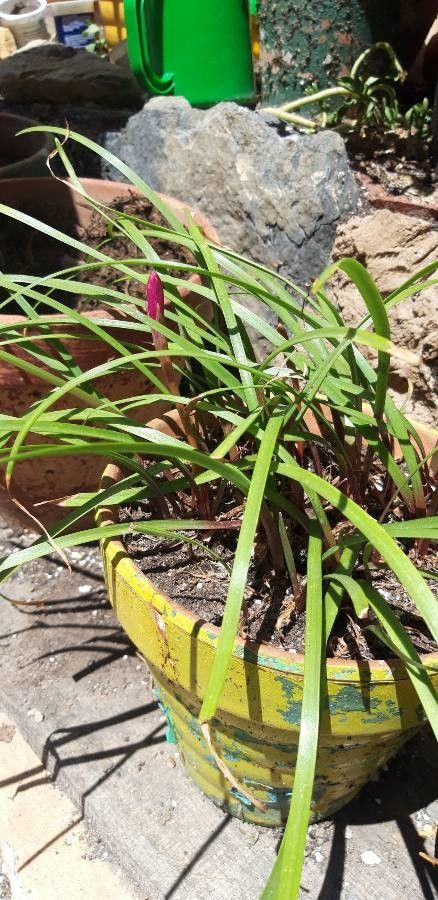
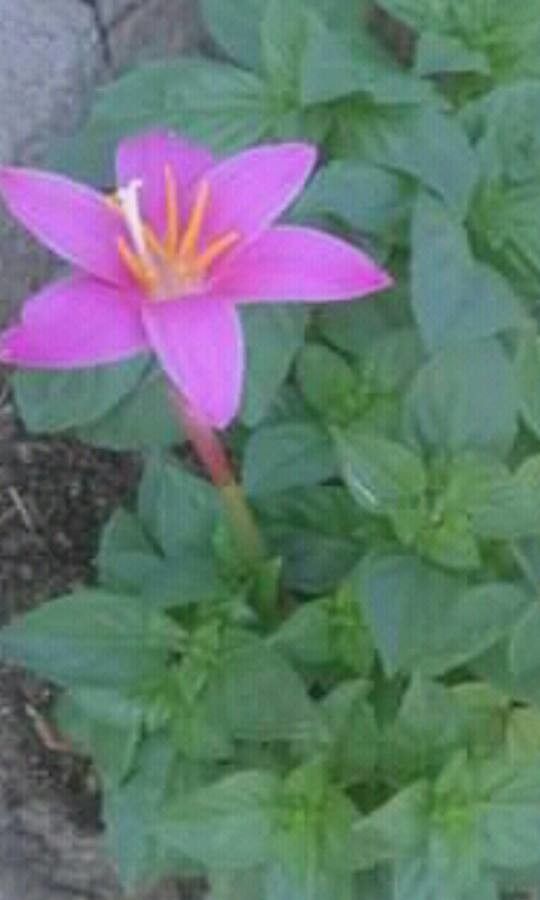
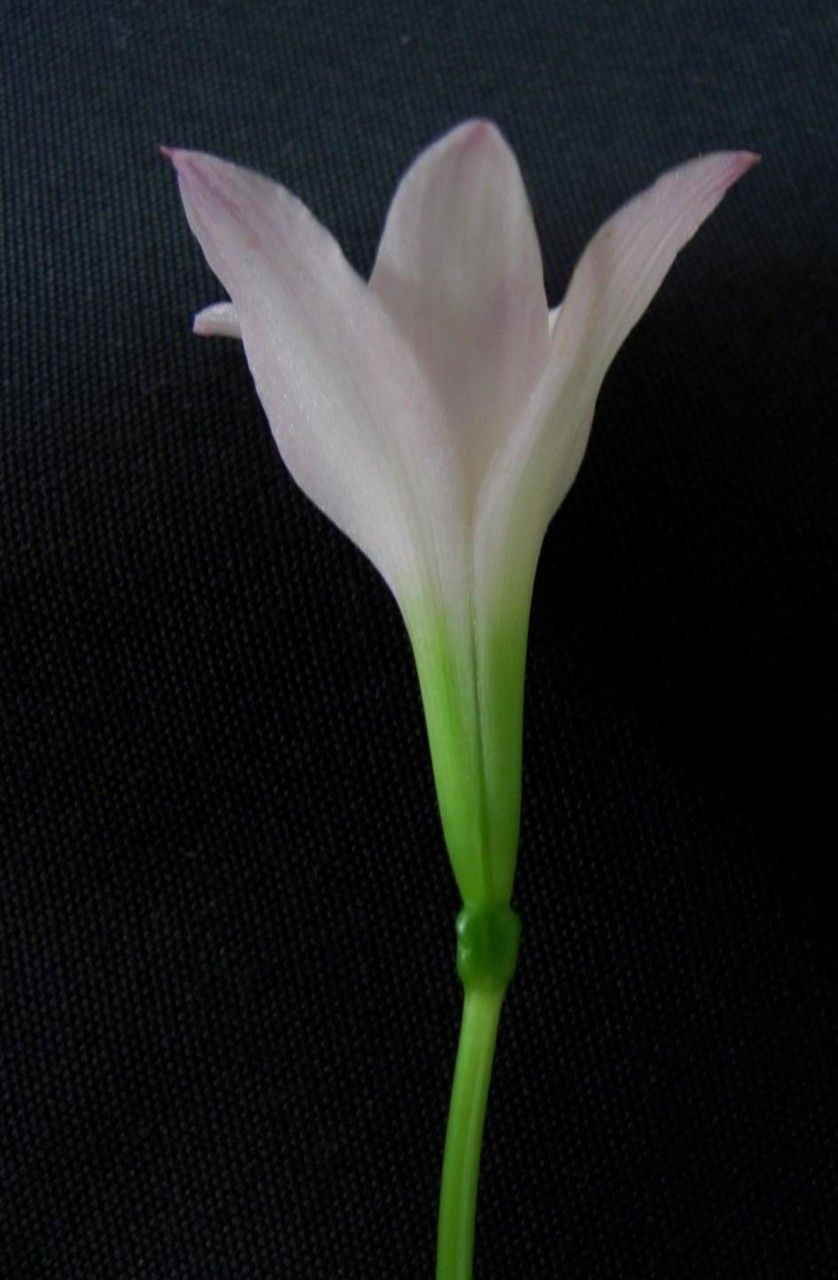
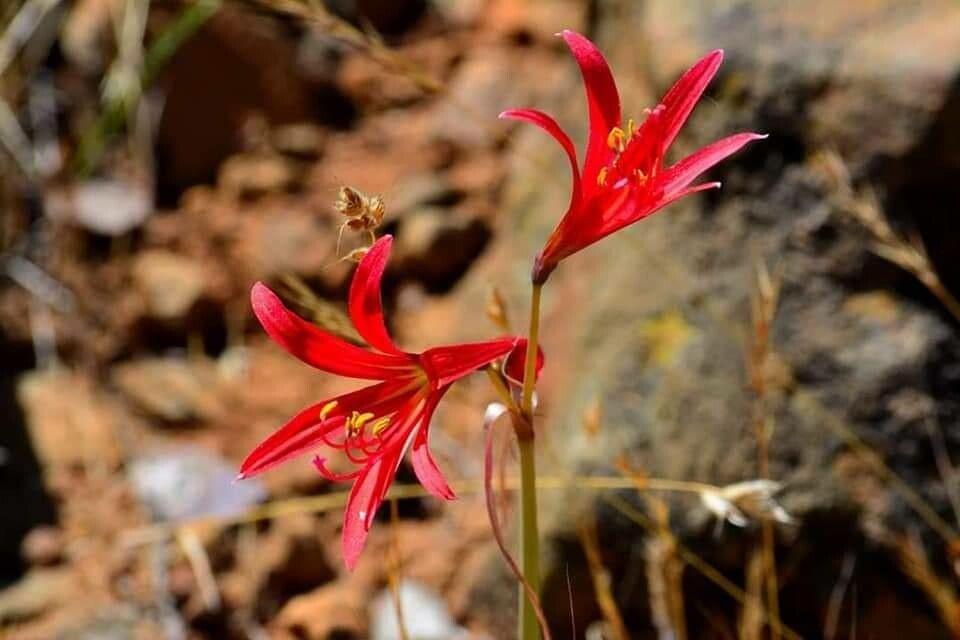
Zephyranthes rosea, commonly known as the pink rain lily, is a perennial bulbous plant in the Amaryllidaceae family. Native to South America, it is found in regions such as Argentina, Brazil, and Uruguay. The plant features narrow green leaves that can reach up to 30 cm in length and 1 cm in width. Its flowers are trumpet-shaped with six petals, usually pink or light purple, blooming in the summer and lasting for several days.
The pink rain lily thrives in well-drained soil with moderate moisture levels and prefers full sun exposure or partial shade. It is a hardy plant capable of tolerating drought conditions but requires regular watering during its growing season for optimal health.
Zephyranthes rosea is also noted for its medicinal properties, including anti-inflammatory effects on skin conditions like eczema, psoriasis, and acne vulgaris. These benefits are attributed to its high flavonoid content, particularly quercetin, which has antioxidant properties.
Overall, Zephyranthes rosea is an attractive ornamental plant suitable for gardens or containers. Its beautiful flowers bloom profusely after rainfall, earning it the name "rain lily."
The pink rain lily is quite disease-resistant and generally does not suffer from many illnesses. However, it can be vulnerable to pests and diseases present in its environment. Such infections are typically mild. In terms of care, this plant needs moderate maintenance. Regular pruning is required to keep a neat appearance and support healthy growth. Fertilizing can also help encourage blooming. Pink rain lily is suitable for anyone with outdoor space, like a garden or patio, and does not demand extensive gardening experience. It may need additional care if grown indoors.
How to keep Zephyranthes Rosea.
Light
The pink rain lily does best in spots where sunlight is unobstructed. It thrives when receiving plenty of sun, encouraging vigorous growth and the formation of its distinctive pink blooms. Excessive shade can result in leggy plants and few flowers, while too much sun can also be harmful, causing scorching.
Water
The pink rain lily, native to tropical rainforests, thrives in humid conditions and needs to be watered weekly for optimal health. Although it can tolerate some drought, it adapts well to different climates, including those with heavy rainfall, which makes it easy to care for in a variety of environments.
Humidity
This plant needs special care because it loves high humidity levels of 60-80% or more. The best way to achieve this is by placing a humidifier near the plant. Daily misting is also essential! Make sure the room has good ventilation.
Temperature
The pink rain lily is native to areas with mild climates and prefers temperatures from 59 to 100.4 °F (15 to 38 ℃). Seasonal adjustments may be necessary to keep temperatures in this range for optimal growth.
Fertilizer
The best time to fertilize a Pink rain lily is in early spring, as it comes out of dormancy and begins active growth. Fertilizing supplies essential nutrients needed for healthy development. Although Pink rain lilies need relatively little fertilizer, giving them an annual feeding can boost their survival and encourage improved, longer-lasting blooms.
Pruning
The pink rain lily is a small perennial known for its lovely pink blooms. To maintain healthy growth, prune the plant from early to late spring by removing spent flowers. Trim only the yellowing foliage and cut back the leaves after they naturally die back. This will promote vigor and improve the plant's overall health for the next blooming season.
Botanical profile.
- Plant Type
- Herb
- Life Cycle
- Perennial
- Genus
- Zephyranthes
- Family
- Amaryllidaceae
- Hardiness Zone
- 8-11
- Mature Height
- 30 cm
- Mature Spread
- 30 cm
- Leaf Color
- Green, Blue
- Leaf Type
- Deciduous
- Flower Color
- Pink
- Flower Size
- 5.08 cm to 6.35 cm
- Bloom Time
- Mid summer, Late summer
- Planting Time
- Winter, Spring
- Harvest Time
- Mid summer, Late summer, Early fall
- Native Area
- Colombia, Bahamas, Cuba, Peru, Costa Rica, Panama
Other names.
Reader questions.
How should I water my Pink rain lily?
To properly water the Pink rain lily, it is recommended to use filtered water at room temperature. Tap water may contain harmful particles, so it is best to avoid using it. The Pink rain lily prefers warm water because it is accustomed to a warm environment, and cold water can be stressful for it. Another important thing to keep in mind is to avoid watering the plant from above, as it can lead to problems with the foliage. Instead, it is advised to water the soil directly until it is completely soaked. This method benefits the plant by keeping the roots moist and allowing them to spread and absorb essential nutrients from the soil.
Why do I have to put fertilizer on my Pink rain lily?
Fertilization is important for the Pink rain lily because it provides necessary nutrients for growth. Although the plant has relatively low fertilization needs and can survive without it, yearly fertilization can greatly benefit the plant's health and promote the growth of beautiful and long-lasting flowers. Therefore, those who want their Pink rain lily to thrive should prioritize annual fertilization.
What are the sun requirements for Pink Rain Lily?
Pink Rain Lily requires full sun, which is above 6 hours of direct sunlight, or partial sun, about 3-6 hours of sunlight. It's crucial to observe how sunlight moves through your garden to find spots with the ideal balance of light and shade, ensuring the plant's well-being.
What is the Pink Rain Lily's native temperature range for optimal growth?
The Pink Rain Lily, also known by its botanical name Zephyranthes rosea, thrives in mild temperature regions. It prefers a temperature range of 59 to 100.4 °F (15 to 38 °C) for optimal growth. Seasonal adjustments may be necessary to maintain this temperature range, ensuring the plant's health and vitality.
What should I do if I give my Pink rain lily too much or too little water?
Both overwatering and underwatering can harm the health of your Pink rain lily, but overwatering is more common. When the plant gets too much water, its stems and leaves may droop and turn yellow. Prolonged overwatering can also cause diseases like root rot, mold, and mildew, which can kill the plant. Underwatering is less likely, as the Pink rain lily is somewhat resistant to drought. However, if it does happen, the leaves will become brittle and brown. It's important to recognize the signs of overwatering early on. Some diseases caused by overwatering, like root rot, may not be fixable if you wait too long. If you see early signs, reduce your watering and check the soil. If it drains poorly, replace it with loose, well-draining soil. If your Pink rain lily shows signs of not getting enough water, simply water more frequently until the signs go away.
When should I fertilize my Pink rain lily?
To ensure optimal growth, it is recommended to fertilize a Pink rain lily in late winter to early spring when it is transitioning from dormancy to active growth. This timing will help the plant thrive and promote healthy growth throughout the season. Although fertilizing in the fall is also acceptable, it is not advisable to feed the Pink rain lily during summer and winter.
What are the essentials for growing Pink Rain Lily?
The Pink Rain Lily thrives in locations with unobstructed sunlight. It requires full sunlight exposure for vigorous growth and the development of its distinct pink blooms. Both excessive shade and sunlight can be harmful, leading to sparse blooms or plant scorching. For indoor plants lacking in natural sunlight, especially during winter, artificial lighting such as LED lights, can be vital. These should provide 30-50W/sq ft for full sun plants, 20-30W/sq ft for partial sun plants, and 10-20W/sq ft for full shade plants, positioned 12-36 inches above the plant for 8-12 hours per day.
Does Pink Rain Lily have any tolerance to cold temperatures?
Pink Rain Lily exhibits a moderate level of cold tolerance. It generally does not require additional cold protection measures when the temperature remains above -5°C. However, if temperatures are expected to drop below -5°C, temporary cold protection measures, such as covering the plant with plastic film, fabric, or other materials, should be implemented. Once the temperature rises again, these protective measures must be promptly removed.
How many times do I need to water my Pink rain lily?
If your Pink rain lily is in a pot, you can easily determine when it needs water by checking the soil. Stick your finger in the soil and if you find that the top two to three inches are dry, then it's time to water it. If your Pink rain lily is planted outdoors, you can use the same method to test the soil. Once the top few inches of soil have dried out, it's time to give it a drink. Typically, you'll need to water this plant about once a week during spring and early fall. However, during very hot weather, you may need to increase watering to twice a week or more. It's worth mentioning that mature, well-established Pink rain lilies have a remarkable ability to endure drought.
When should I not put fertilizer on my Pink rain lily?
To properly fertilize your Pink rain lily, it is best to only do so in late winter and early spring. This plant has very low fertilization needs, so one feeding per year is enough. Avoid fertilizing during spring, summer, and fall to prevent overfertilization and its complications. However, if you missed fertilizing in spring, you can feed the plant in fall. Additionally, there is no need to fertilize during winter when the Pink rain lily is in a dormant phase and not actively growing.
What symptoms indicate inadequate lighting for a Pink Rain Lily?
Symptoms of inadequate lighting in Pink Rain Lily include smaller new leaves, leggy or sparse growth, faster leaf drop, slower or no new growth, lighter-colored new leaves, and symptoms of excessive sunlight exposure like chlorosis, sunscald, leaf curling, wilting, and leaf scorching. These signs indicate that the plant isn't receiving the ideal amount of light it needs for optimal growth.
How should you care for Pink Rain Lily in low temperature conditions?
In low temperature conditions, where the temperature falls below -10°C, Pink Rain Lily exhibits signs of stress with drooping leaves which may recover in mild cases but can wilt and fall off in severe conditions. The recommended care includes trimming off frost-damaged parts of the plant. Before exposure to low temperatures again, protect the plant with non-woven fabric or cloth and construct a wind barrier to shield it from cold winds, ensuring the plant's survival and health.