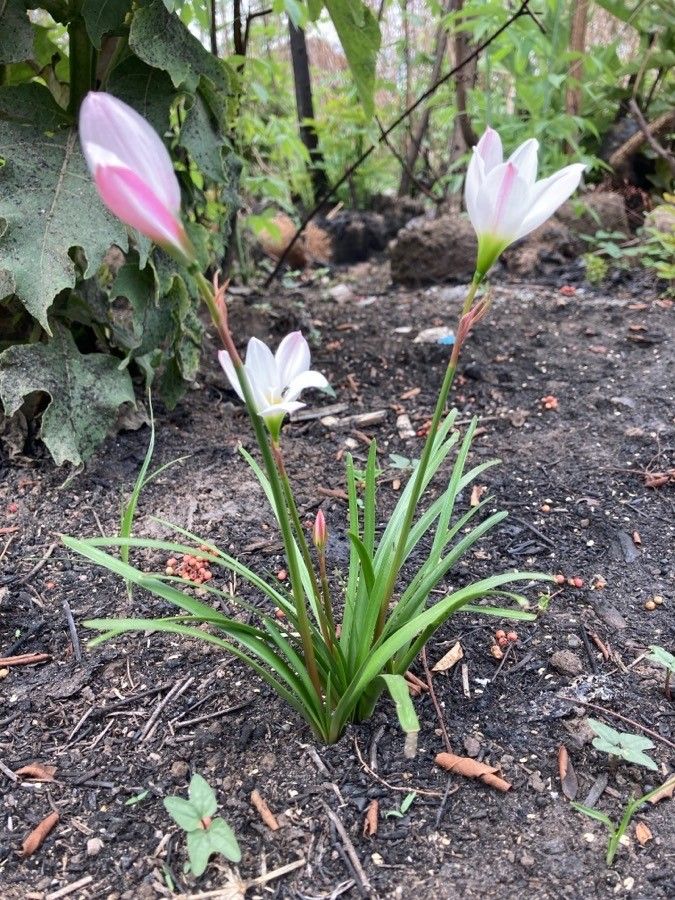
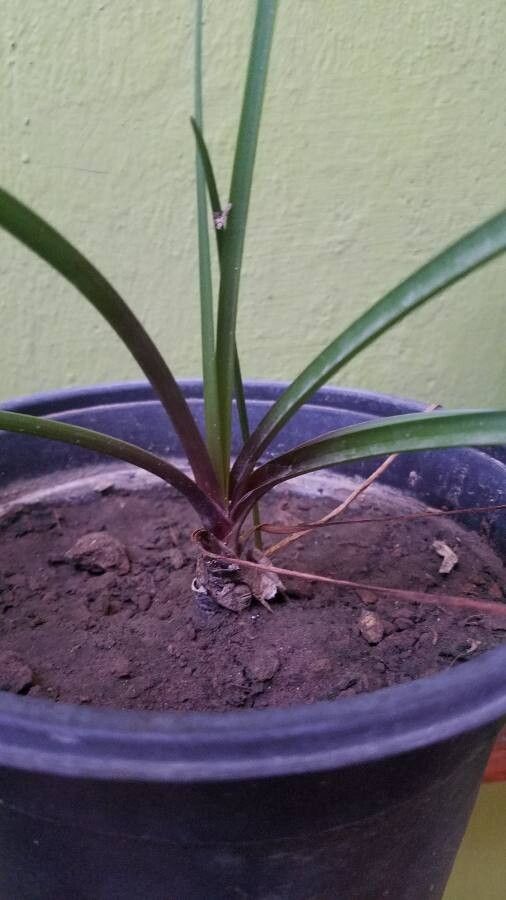
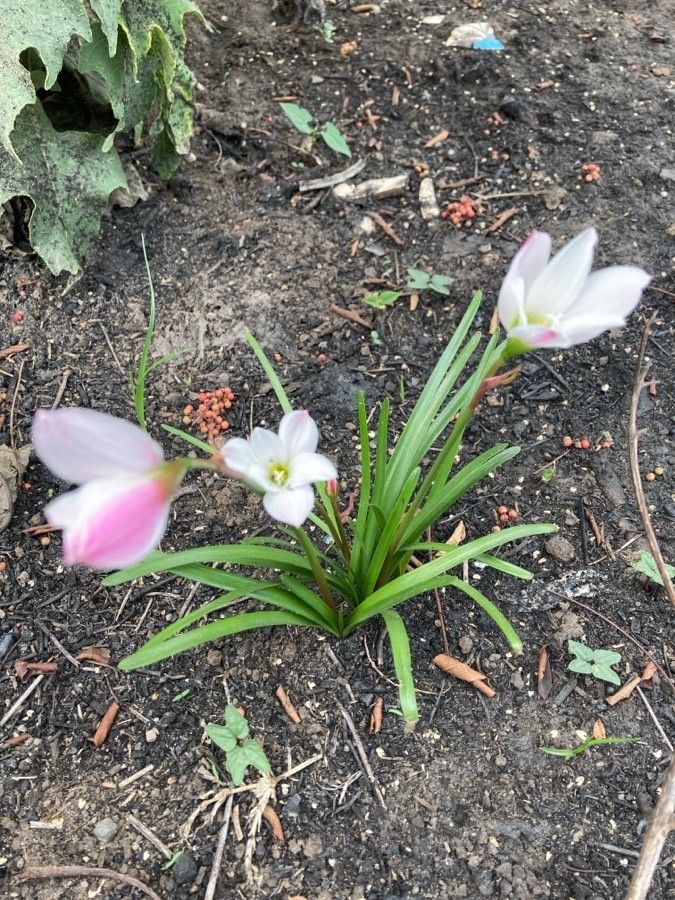
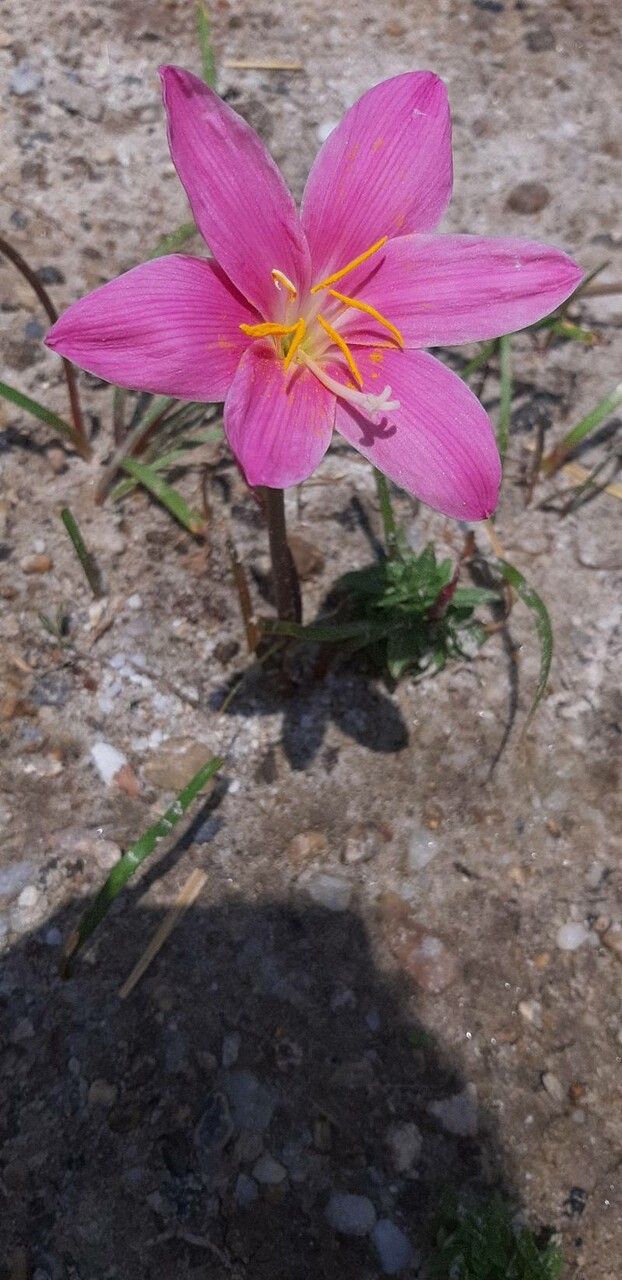
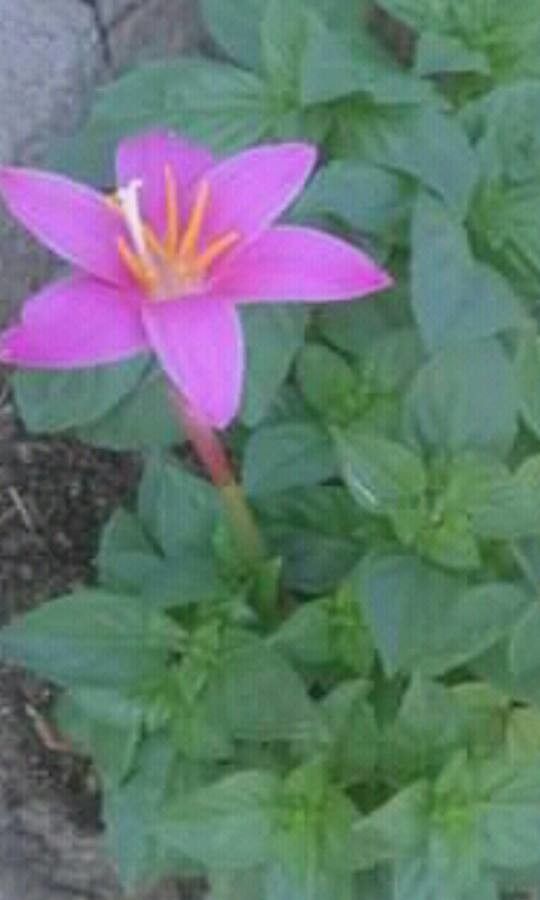
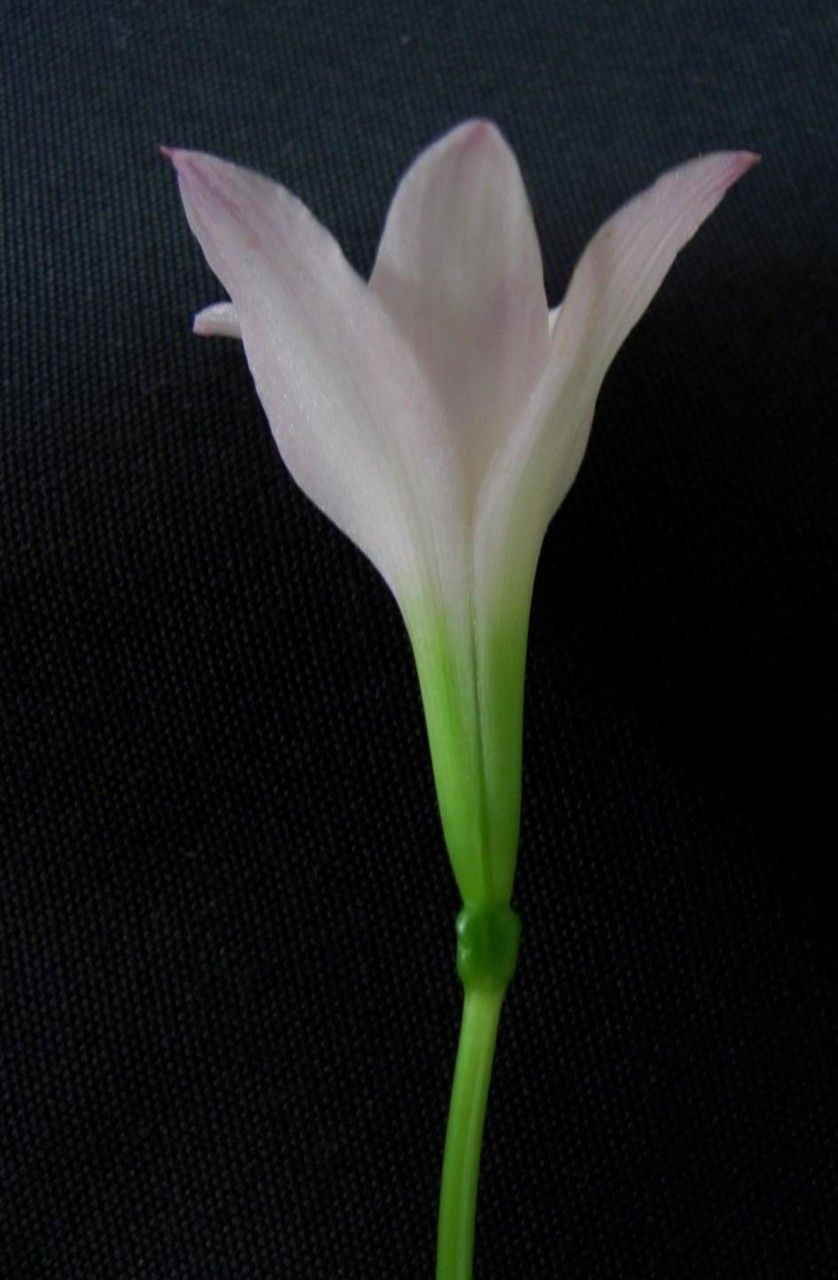
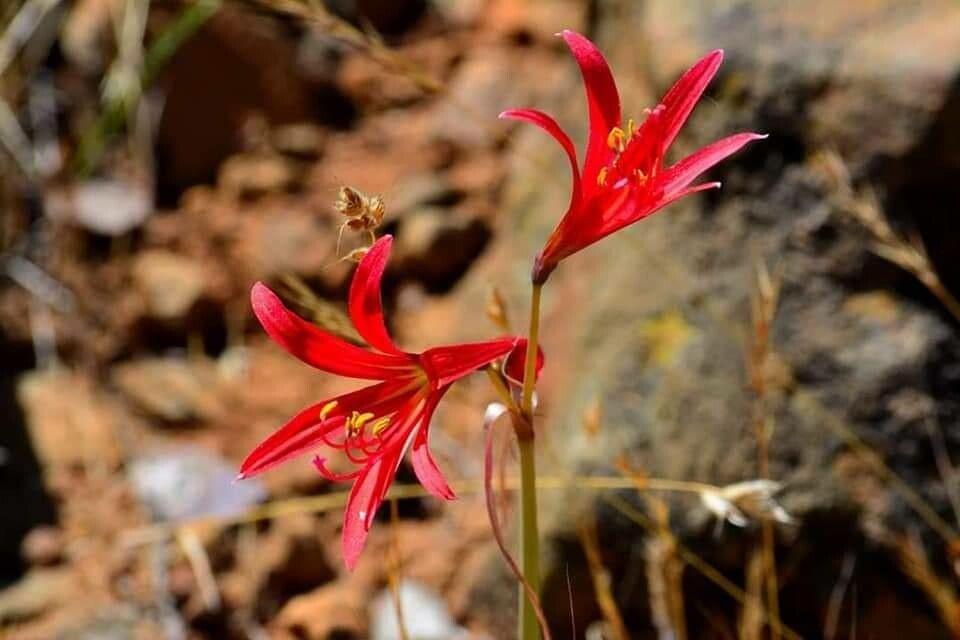
Zephyranthes minuta is a plant species very often referred to as Zephyranthes grandiflora, including in Flora of North America. The latter is, however, an illegitimate name because the original author in coining the name Zephyranthes grandiflora listed the older name Amaryllis minuta as a synonym. This makes "minuta" the acceptable epithet under the ICN. In the UK it is a recipient of the Royal Horticultural Society's Award of Garden Merit.
The rose pink zephyr lily has strong resistance to disease and generally is not susceptible to illnesses. However, it can be affected by pests and diseases present in its surroundings. Such infections are typically mild. Carewise, this plant needs moderate maintenance. It should be pruned regularly to keep a neat appearance and support healthy growth. Applying fertilizer can also encourage flowering. The rose pink zephyr lily is suitable for anyone with outdoor space, like a garden or patio, and does not require extensive experience in plant care. It may need extra attention if cultivated indoors.
How to keep Zephyranthes Minuta.
Light
Rose pink zephyr lily is a sun-loving herbaceous perennial native to open habitats, commonly occurring in meadows and grasslands. It prefers full sun but can also tolerate partial sun.
Water
The rose pink zephyr lily, native to moist environments, thrives with consistent moisture and regular watering, ideally about once a week. Although it has some drought tolerance, steady hydration is beneficial. It's crucial to pay close attention to watering patterns to avoid overwatering or underwatering, particularly during its active growth periods.
Temperature
The rose pink zephyr lily comes from tropical regions, where the climate is generally warm and humid. Therefore, it is adapted to high temperatures and moisture. It is sensitive to sudden temperature shifts and prefers a steady thermal environment, so indoor temperature fluctuations should be avoided. It usually cannot tolerate cold and needs higher temperatures for growth. If the surrounding temperature falls too low, the plant may stop growing or even die.
Fertilizer
Proper fertilization is essential for the health and appearance of the Rose pink zephyr lily. Fertilize the Rose pink zephyr lily during summer, repeating the treatment monthly throughout the season. Nutrients fuel growth and support the plant's parts. Regular fertilization improves the Rose pink zephyr lily's flower display, ensuring the best blooms.
Pruning
The rose pink zephyr lily showcases vibrant pink flowers and thrives when pruned from early to late spring. To promote better growth and more blossoms, remove dead leaves and spent blooms. Be careful not to prune too heavily, as this can cause stress. Routine maintenance not only boosts air circulation but also lowers the risk of disease, leading to increased vigor and longer blooming periods.
Pot & Repot
Repot the rose pink zephyr lily every 2-3 years into a pot that is 1-2 inches larger to support bulb growth. The best time for repotting is in the spring. After repotting, place the plant in a location with bright, indirect light and keep the soil moist. Ensure proper drainage to prevent bulb rot.
Botanical profile.
- Plant Type
- Herb
- Life Cycle
- Perennial
- Genus
- Zephyranthes
- Family
- Amaryllidaceae
- Hardiness Zone
- 8-11
- Mature Height
- 23 cm to 30 cm
- Mature Spread
- 30 cm
- Leaf Color
- Green
- Leaf Type
- Deciduous
- Flower Color
- White
- Flower Size
- 2.03 cm to 3.05 cm
- Bloom Time
- Summer, Early fall
- Planting Time
- Spring, Autumn
- Harvest Time
- Late summer, Fall
- Native Area
- Honduras, Mexico, Guatemala
Other names.