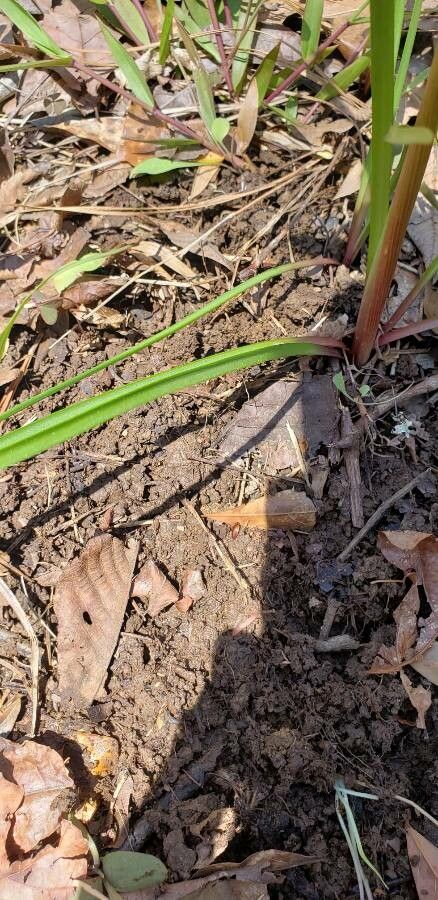
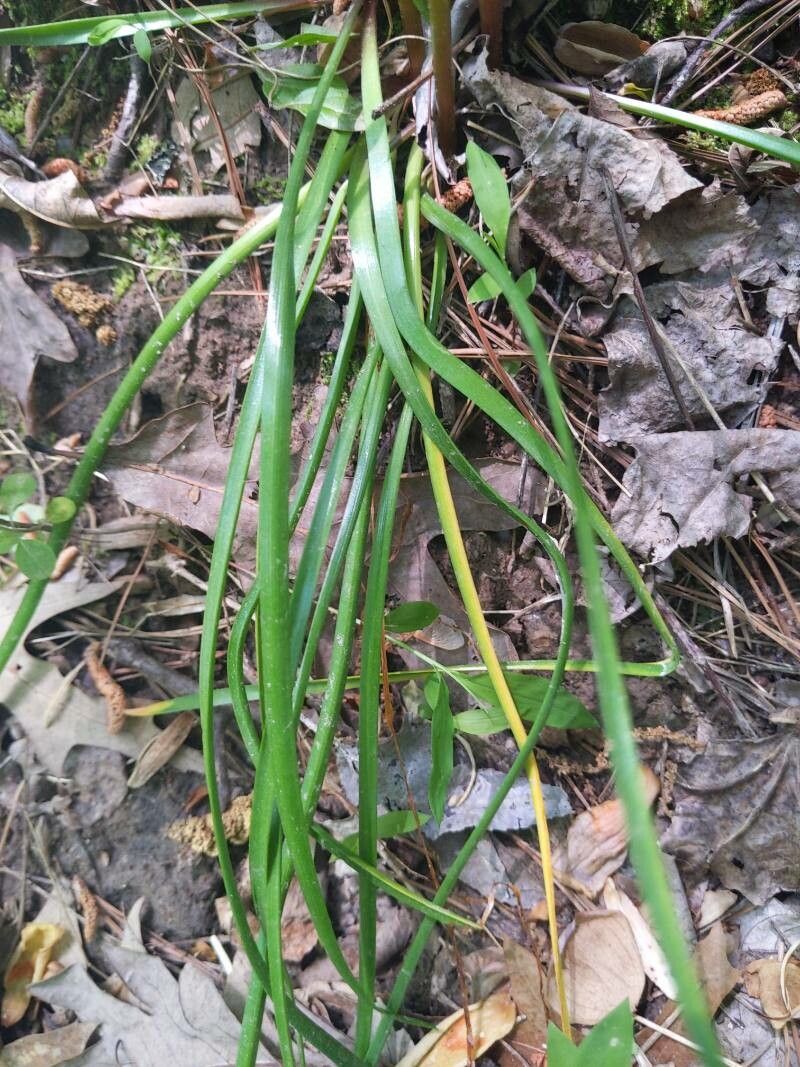
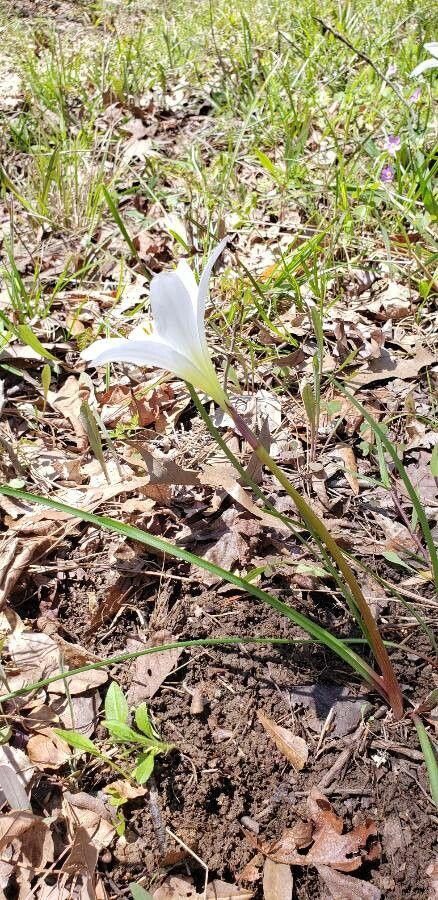
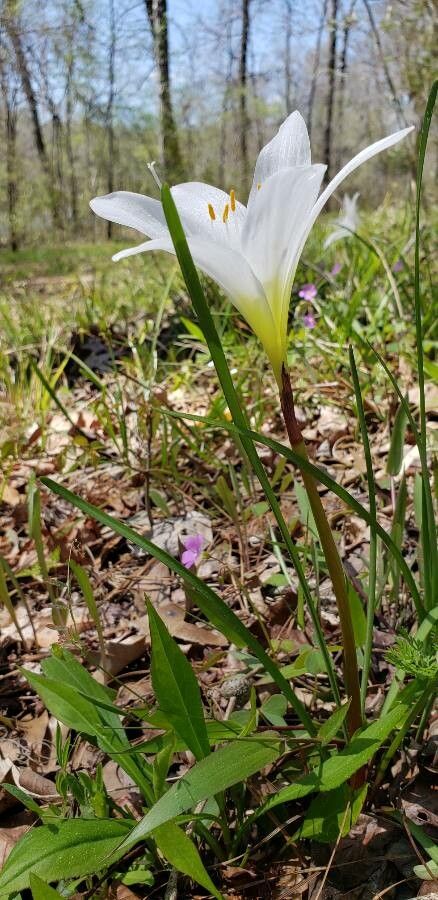
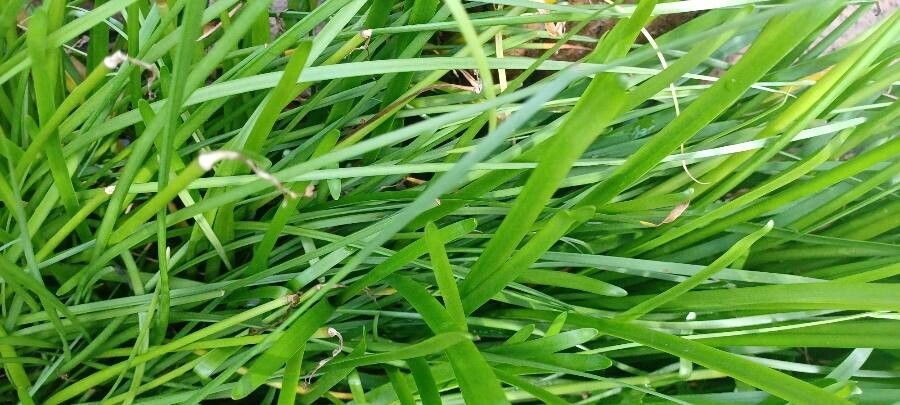
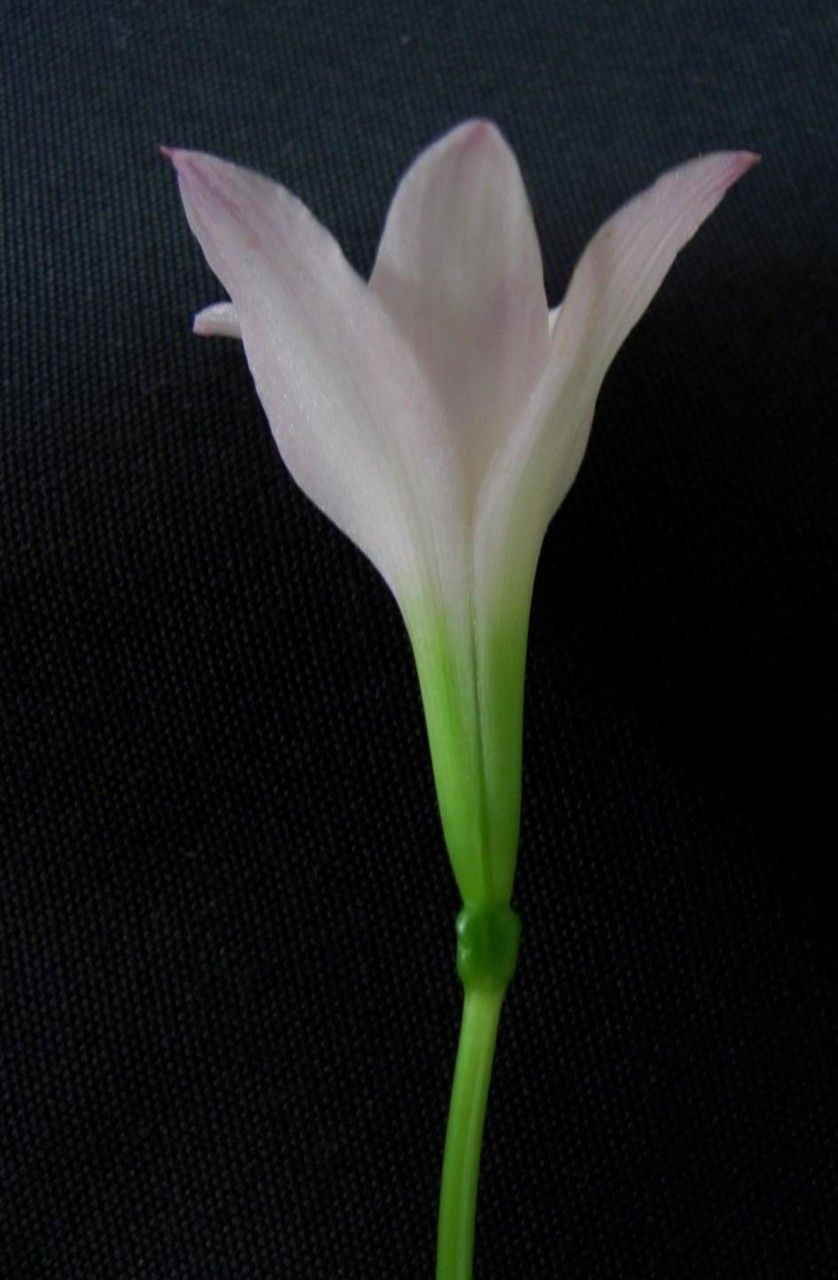
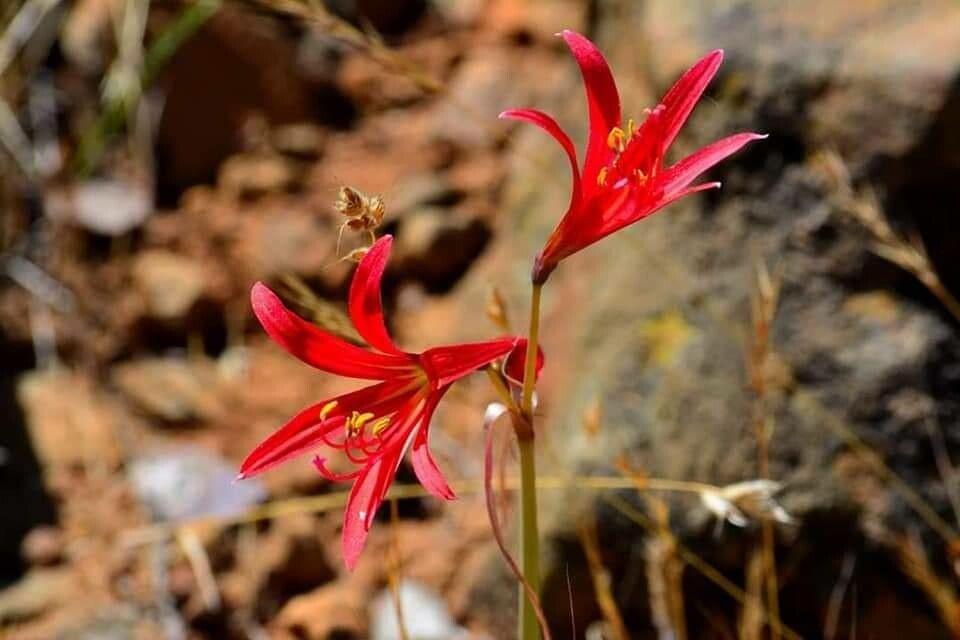
Zephyranthes atamasco, commonly known as the Atamasco Lily, is a perennial plant that belongs to the Amaryllidaceae family. It is native to the southeastern United States and can be found in wetlands, meadows, and along stream banks. The plant features grass-like leaves that are about 12 inches long and 1/4 inch wide. These leaves emerge in early spring and die back by late summer.
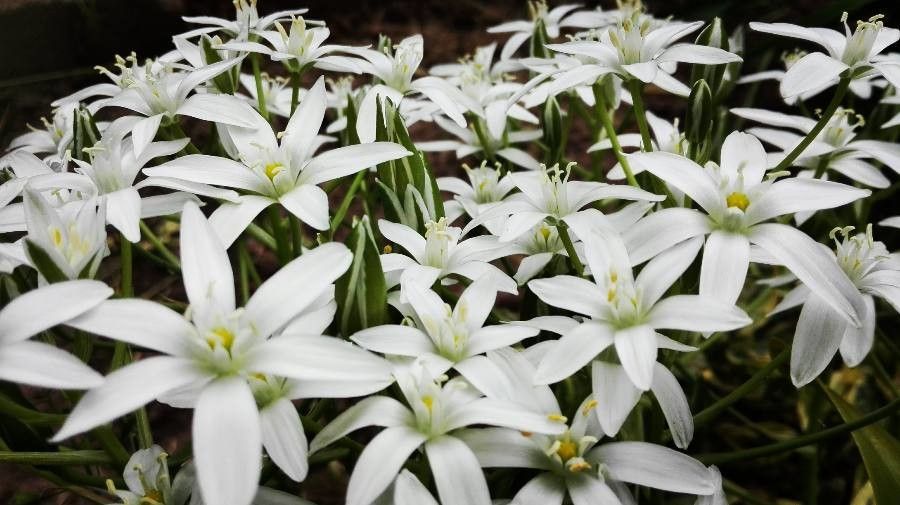
The Atamasco Lily produces striking white flowers that are approximately 2 inches wide, with six petals arranged in a star shape. These flowers bloom from late winter to early spring, before the leaves fully emerge, and emit a sweet fragrance that attracts pollinators such as bees.
This plant prefers moist soil but can tolerate some drought once established. It thrives in full sun or partial shade but can also manage in full shade conditions.
Zephyranthes atamasco is easy to grow and requires minimal maintenance once established. It is an excellent choice for naturalizing areas or adding color to wetland gardens or meadows with its beautiful white blooms during early spring when few other plants are in bloom.
Overall, Zephyranthes atamasco is an attractive perennial plant with lovely white flowers that add beauty to any garden in early spring. Its ease of cultivation makes it an excellent choice for gardeners of all experience levels.
Atamasco-lily has strong resistance to disease and is usually not vulnerable to illnesses. Still, it can be affected by pests and diseases present in its surroundings. Such infections are typically mild. Regarding care, this plant needs medium maintenance. It should be pruned regularly to preserve a neat appearance and encourage healthy growth. Applying fertilizer can also aid in boosting flowering. Atamasco-lily is appropriate for anyone with outdoor space, like a garden or patio, and does not demand extensive care experience. It may need extra attention if cultivated indoors.
How to keep Zephyranthes Atamasco.
Light
Atamasco lily performs best in full, unobstructed sunlight, though it can tolerate locations with some shade. Native to regions with plentiful sunshine, the plant's healthy development is supported by abundant light. Excessive shade can restrict its growth, while too much sun may scorch it.
Water
The Atamasco lily is native to moist meadows and woodlands, where it thrives in consistently hydrated environments. Although it can tolerate moderate drought conditions, the plant benefits from weekly watering to maintain optimal health. When grown outdoors, the Atamasco lily does best in well-draining soil that retains moisture without becoming waterlogged.
Temperature
Atamasco-lily is native to warm regions where temperatures fall between 59 and 95 °F (15 to 35 ℃). It grows best within that range. In cooler seasons, consider relocating the plant to a warmer spot to keep it within these temperatures.
Fertilizer
The best time to fertilize an Atamasco lily is in early spring, when it is coming out of dormancy and starting active growth. Fertilization supplies essential nutrients for healthy development. Although Atamasco lilies have relatively low fertilizer needs, an annual application can improve their survival and encourage better, longer-lasting flowers.
Pruning
The Atamasco-lily is known for its stunning white flowers and requires minimal pruning. The best time to prune is from early to late spring, after the plant has finished flowering. Focus on deadheading spent blooms and removing any diseased leaves to enhance its beauty and improve airflow. Be sure to use clean tools to prevent the spread of disease, promoting healthier growth and more vibrant blooms.
Botanical profile.
- Plant Type
- Herb
- Life Cycle
- Perennial
- Genus
- Zephyranthes
- Family
- Amaryllidaceae
- Hardiness Zone
- 7-10
- Mature Height
- 10 cm to 25 cm
- Mature Spread
- 15 cm to 30 cm
- Leaf Color
- Light Green
- Leaf Type
- Deciduous
- Flower Color
- White
- Flower Size
- 2.54 cm to 7.62 cm
- Bloom Time
- Early spring, Mid spring
- Planting Time
- Spring, Summer, Autumn
- Harvest Time
- Late spring, Early summer
- Native Area
- South America
Other names.
Reader questions.
How should I water my Atamasco-lily plant?
To properly care for the Atamasco-lily, it's important to use filtered water at room temperature. Tap water may have harmful particles that can damage the plant's health. The reason for using room temperature or slightly warmer water is that the Atamasco-lily thrives in warm environments, and cold water can shock its system. In addition, avoid watering the plant from above, as it can cause problems with the leaves. Instead, gently pour the filtered room temperature water onto the soil until it is thoroughly saturated. This helps keep the roots moist and promotes their spread throughout the soil, allowing the plant to gather the necessary nutrients.
Why do I have to put fertilizer on my Atamasco-lily?
Fertilization is important for the Atamasco-lily because it provides essential nutrients for the plant's growth above and below the ground. Although the Atamasco-lily doesn't require a lot of fertilization, annual fertilization can greatly benefit the plant by keeping it alive and enhancing the longevity of its flowers. Those who want their Atamasco-lily to thrive should prioritize annual fertilization.
What are the requirements for sunlight exposure for plants?
Plants require different amounts of sunlight depending on their type. Full sun plants thrive with over 6 hours of sunlight daily, while partial sun plants need about 3-6 hours of sunlight. It's important to observe the movement of sunlight in your garden to identify areas that offer the right balance of light and shade, ensuring the ideal conditions for your plants' growth.
What is the native climate for the Atamasco-lily?
The Atamasco-lily is native to warmer climates where temperatures typically range between 59 to 95°F (15 to 35°C). It thrives best within these temperature ranges, making it essential to consider relocating the plant to warmer spots during cooler seasons to maintain its preferred temperature.
What should I do if I give my Atamasco-lily too much or too little water?
Overwatering is a more common issue and can harm your Atamasco-lily. It causes wilting and yellowing of stems and leaves. Prolonged overwatering can lead to root rot, mold, and mildew, which can be fatal for your plant. Underwatering, on the other hand, is less common as the Atamasco-lily can tolerate drought. However, when it occurs, the leaves become brittle and brown. To care for your Atamasco-lily, it's important to notice the signs of overwatering early. Some diseases caused by overwatering may be irreversible if not addressed promptly. If you notice early signs, reduce watering immediately and check the soil drainage. If the soil is poorly draining, replace it with loose and well-draining potting mix. Conversely, if your Atamasco-lily shows signs of not receiving enough water, simply increase your watering frequency until the signs improve.
When should I fertilize my Atamasco-lily?
The best time to fertilize an Atamasco-lily is in late winter to early spring when it is transitioning from dormant to active growth. Fertilizing during this time promotes healthy growth for the season. It is also okay to fertilize in the fall, but it is not recommended during summer or winter.
What are the essentials for Atamasco-lily's growth?
The Atamasco-lily performs best in environments with unobstructed solar exposure, benefiting from its native preference for sunny habitats. Despite this, it has some tolerance for partial shade. Ample sunlight supports its health and growth, while too much or too little sunlight can be detrimental. In situations where natural light is inadequate, artificial lighting can serve as a necessary alternative, enhancing growth by providing adequate light intensity and duration.
Does the Atamasco-lily require frost protection during winter?
Atamasco-lily has a strong resistance to cold, and special frost protection measures are usually not necessary. However, if winter temperatures are expected to fall below -15°C, it's important to provide cold protection by covering the plant with soil or straw. Additionally, abundant watering before the first freeze in autumn is recommended to keep the soil moist, helping the plant avoid drought and water scarcity during winter and early spring.
How frequently should I water my Atamasco-lily?
If your Atamasco-lily is in a pot, you can determine if it needs water by checking the soil. Simply stick your finger into the soil and if the top two to three inches are dry, it's time to water. For Atamasco-lilies grown outdoors in the ground, follow a similar method. When the first few inches of soil have dried out, it's time to water. Typically, during spring and early fall, you will need to water about once a week. In very hot weather, you may need to increase watering to twice or more per week. However, it's worth noting that mature and established Atamasco-lilies are quite resilient and can survive with less water.
When is the best time to not use fertilizer on my Atamasco-lily?
To properly care for your Atamasco-lily, it is important to remember when and how often to fertilize. Avoid fertilizing this plant during spring, summer, and fall, as excessive fertilization can cause problems. The exception is if you skipped fertilizing in spring, in which case you can fertilize in fall. Additionally, it is unnecessary to fertilize during the winter when the plant is in a dormant phase and not actively growing. By following these guidelines, you can ensure proper fertilization and avoid any complications that may arise from overfertilization.
How does artificial lighting benefit indoor plants?
Artificial lighting is crucial for indoor plants, especially when natural sunlight is limited. It promotes healthier and faster growth by offering a consistent light source. LED lights are recommended due to their efficiency and ability to provide specific light wavelengths needed by plants. The amount of light (measured in watts per square foot), the distance of lights from the plants, and the duration of exposure are important factors to mimic natural sunlight conditions, ensuring optimal growth of full sun, partial sun, and full shade plants.
What are the effects of low temperatures on Atamasco-lily?
Atamasco-lily is cold-tolerant and thrives best with temperatures above 15°C. In winter, temperatures should be kept above -10°C. When temperatures fall below -15°C, the plant may not show immediate changes, but there could be a decrease in sprouting or even no sprouting at all during springtime.