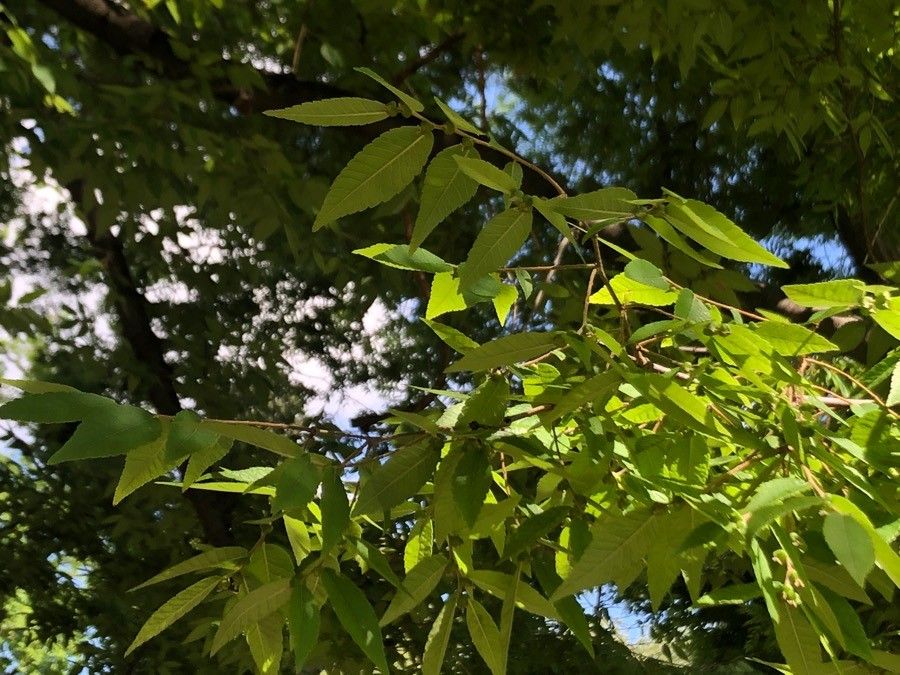
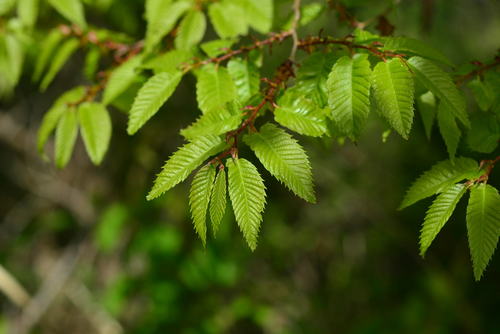
Zelkova carpinifolia, known as Caucasian zelkova, Caucasian elm or just zelkova, is a species of Zelkova, native to the Caucasus, Kaçkar, and Alborz mountains in the extreme southeast of Europe and southwest Asia.
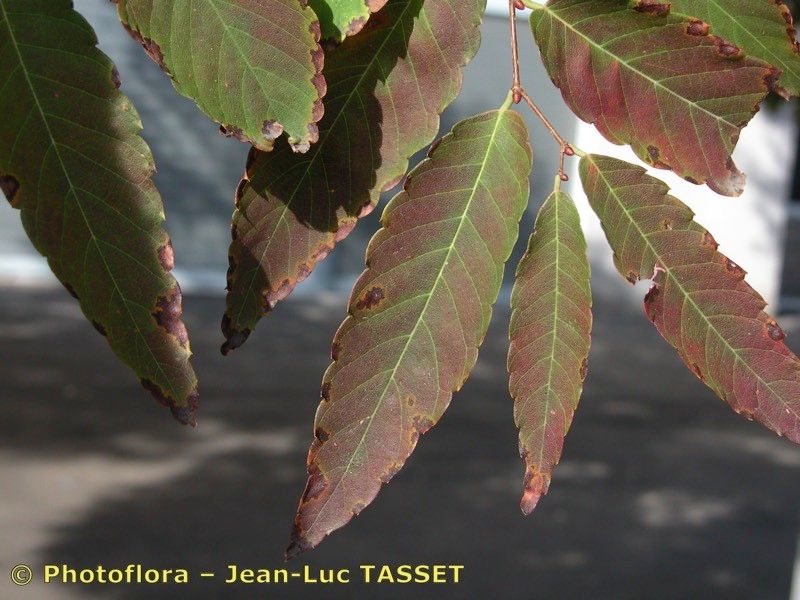
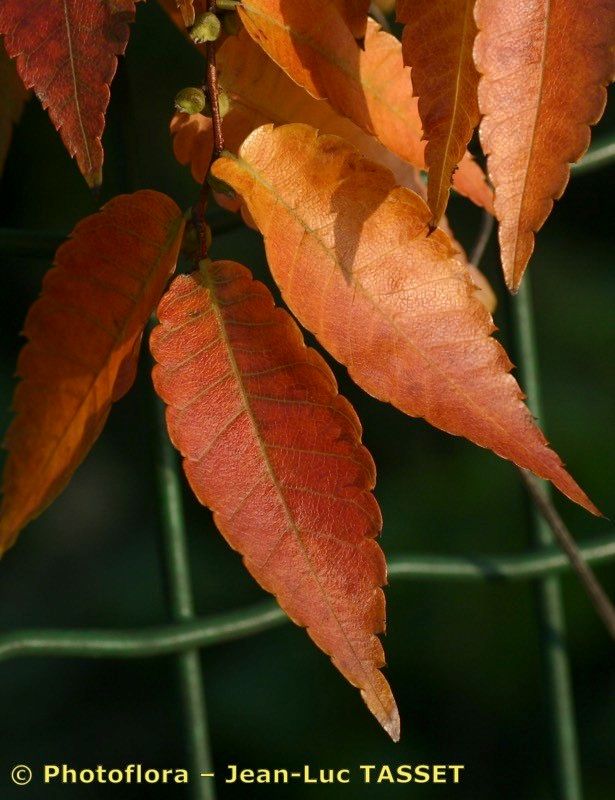
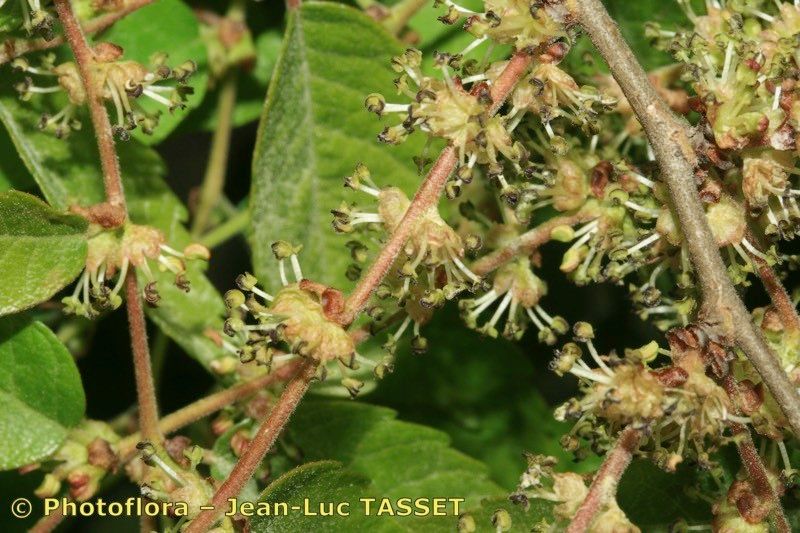
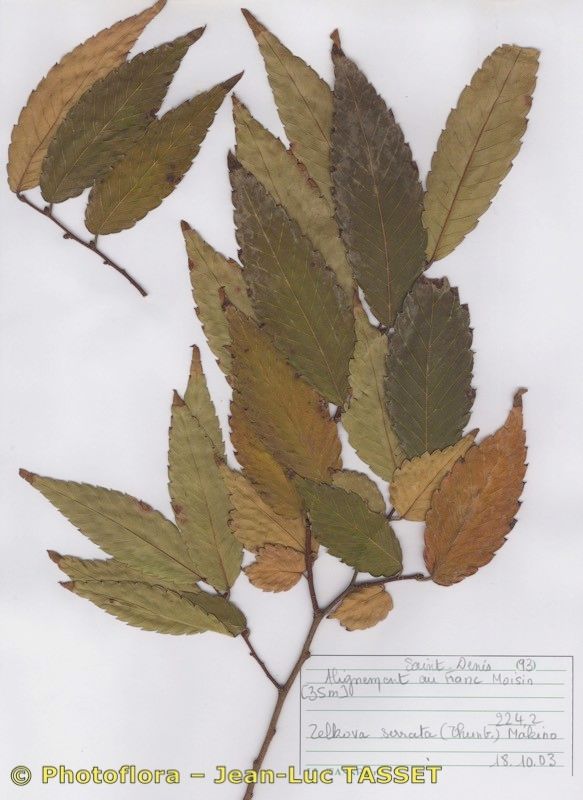
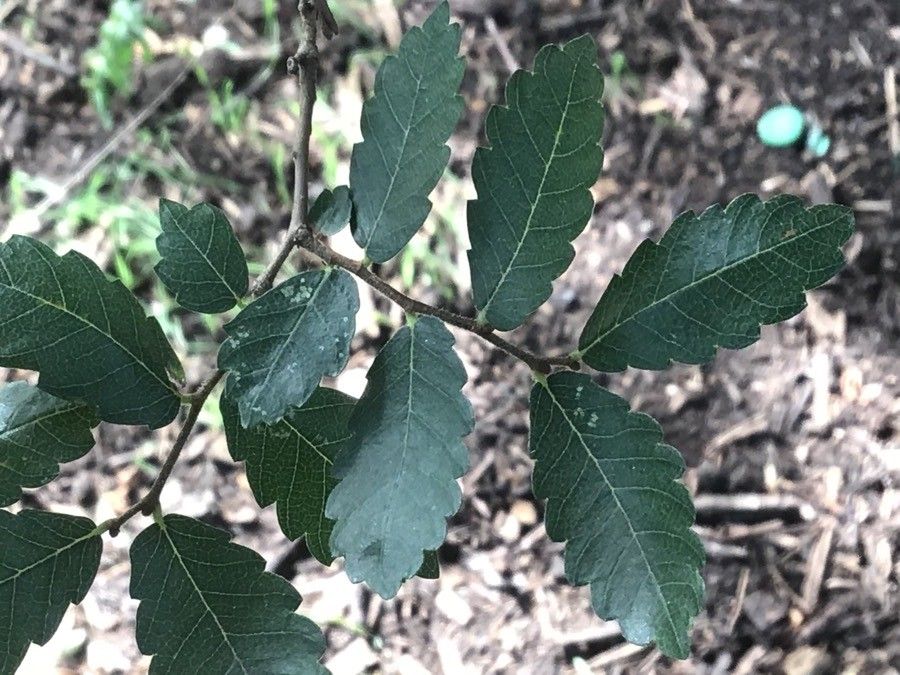
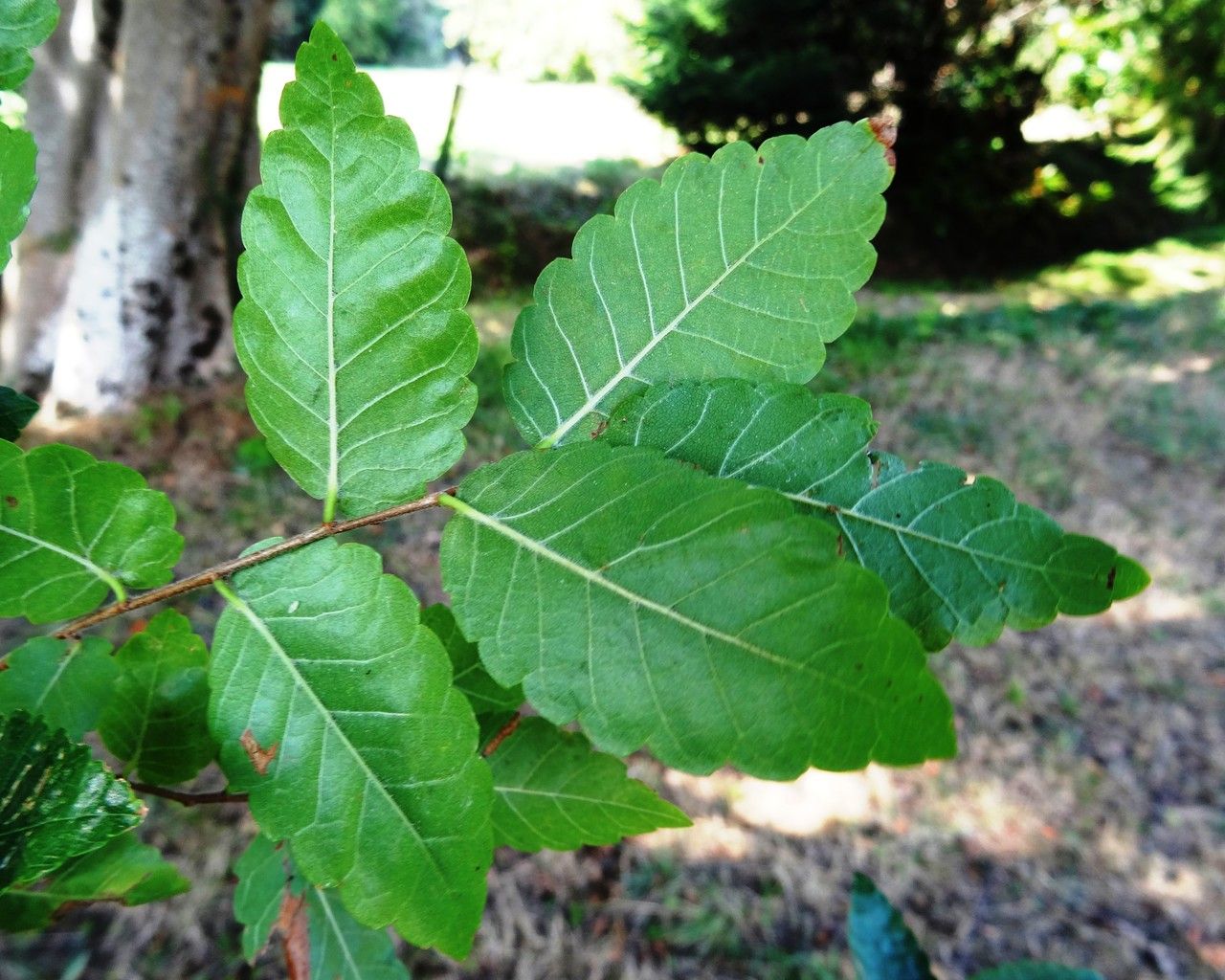
It is a medium-sized to large deciduous tree growing to 20–35 m (66–115 ft) tall, with a trunk of up to 2 m (6 ft 7 in) in diameter. The crown is a highly distinctive vase-shape, with a short broad trunk dividing low down into numerous nearly erect branches. The leaves are alternate, 4–10 cm (1.6–3.9 in) long and 2.5–6 cm (1–2+3⁄8 in) broad, the margin bluntly serrated with 7–12 teeth on each side. The flowers are inconspicuous and greenish, with no petals, and are wind-pollinated. The fruit is a small nutlet 5–6 mm (3⁄16–1⁄4 in) in diameter. It is grown as an ornamental tree in Europe (huge exemplars of it can be found quite often in the western Georgian province of Imereti, used for decorating courtyards in villages and providing pleasant shade) and more rarely in North America (where the related Japanese Z. serrata is more popular).
Hybrid cultivarsZelkova × verschaffeltii
Caucasian elm has good resistance to disease and is generally not susceptible to illnesses. As for care, this plant is fairly low-maintenance. Planted outdoors, it needs only minimal watering, and larger specimens usually do not require pruning. Smaller plants, however, should be pruned after they finish blooming. Caucasian elm is appropriate for anyone with an outdoor area, such as a garden or deck, and does not demand extensive caretaking experience.
How to keep Zelkova Crenata.
Light
The Caucasian elm is native to open habitats, such as sunlit meadows and forest edges, which provide abundant light. It grows best in Full Sun but can also tolerate Partial Sun, adapting well to different sunlight conditions.
Temperature
Caucasian elm shows strong adaptability to a wide range of climatic conditions, from blazing summers to severe winters. Nonetheless, it has a preferred temperature band for growth. When temperatures climb too high, the plant can suffer from heat and humidity stress, which may lead to its death. In areas where temperatures approach the lower edge of its cold tolerance, insulating measures should be taken to protect the plant.
Fertilizer
Apply fertilizer to your Caucasian elm in early spring to encourage healthy growth. Consistent feeding improves overall health, resulting in vigorous growth, greater tolerance of difficult conditions, and increased resistance to pests and diseases. Follow a specific fertilizing schedule for your Caucasian elm to keep the foliage vibrant with deep color and a lush appearance.
Botanical profile.
- Plant Type
- Tree
- Life Cycle
- Perennial
- Genus
- Zelkova
- Family
- Ulmaceae
- Hardiness Zone
- 5-8
- Mature Height
- 29.87 m
- Mature Spread
- 24.99 m
- Leaf Color
- Green, Orange, Brown
- Leaf Type
- Deciduous
- Flower Color
- Green
- Flower Size
- 0.25 cm to 0.51 cm
- Bloom Time
- Mid spring, Late spring
- Planting Time
- Spring, Summer, Autumn
- Harvest Time
- Late summer, Early fall, Mid fall
- Native Area
- Turkey, Iran, Armenia, Azerbaijan