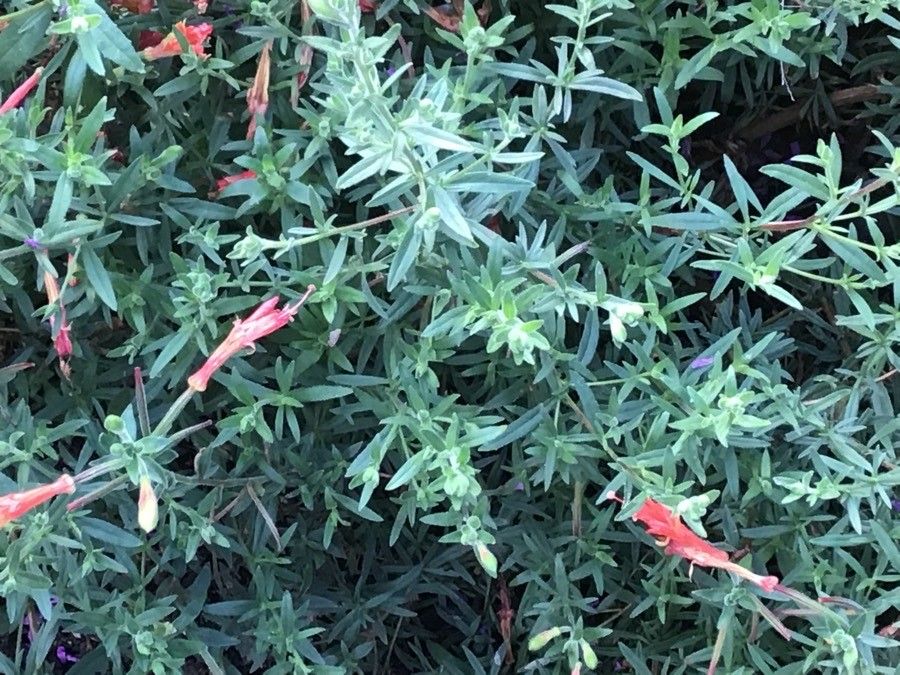
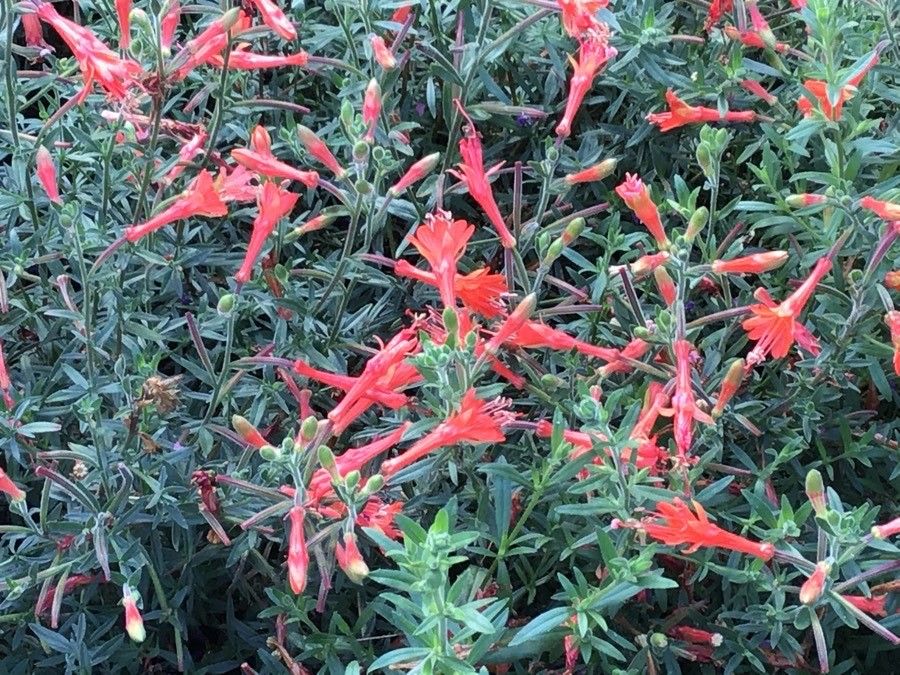
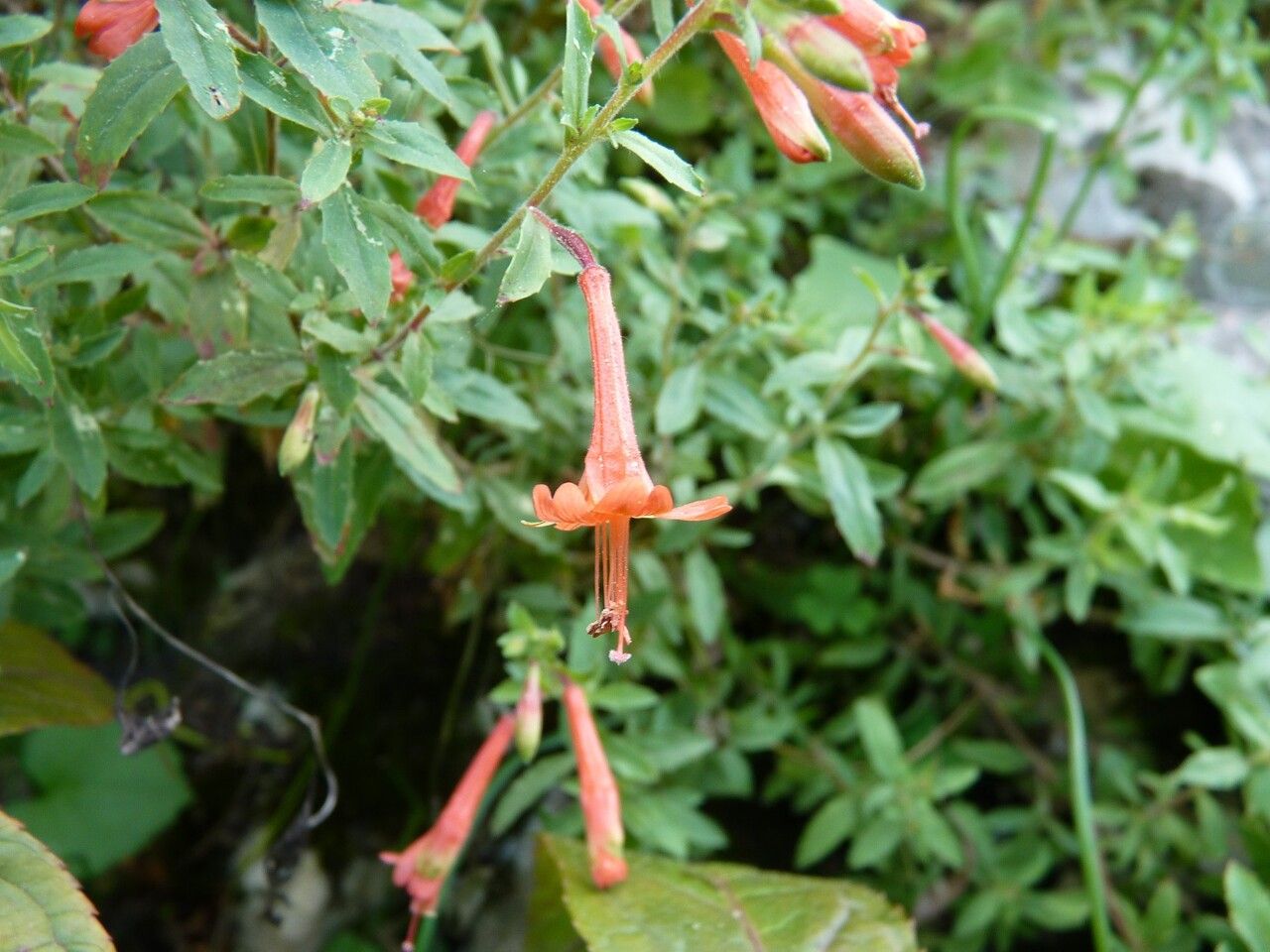
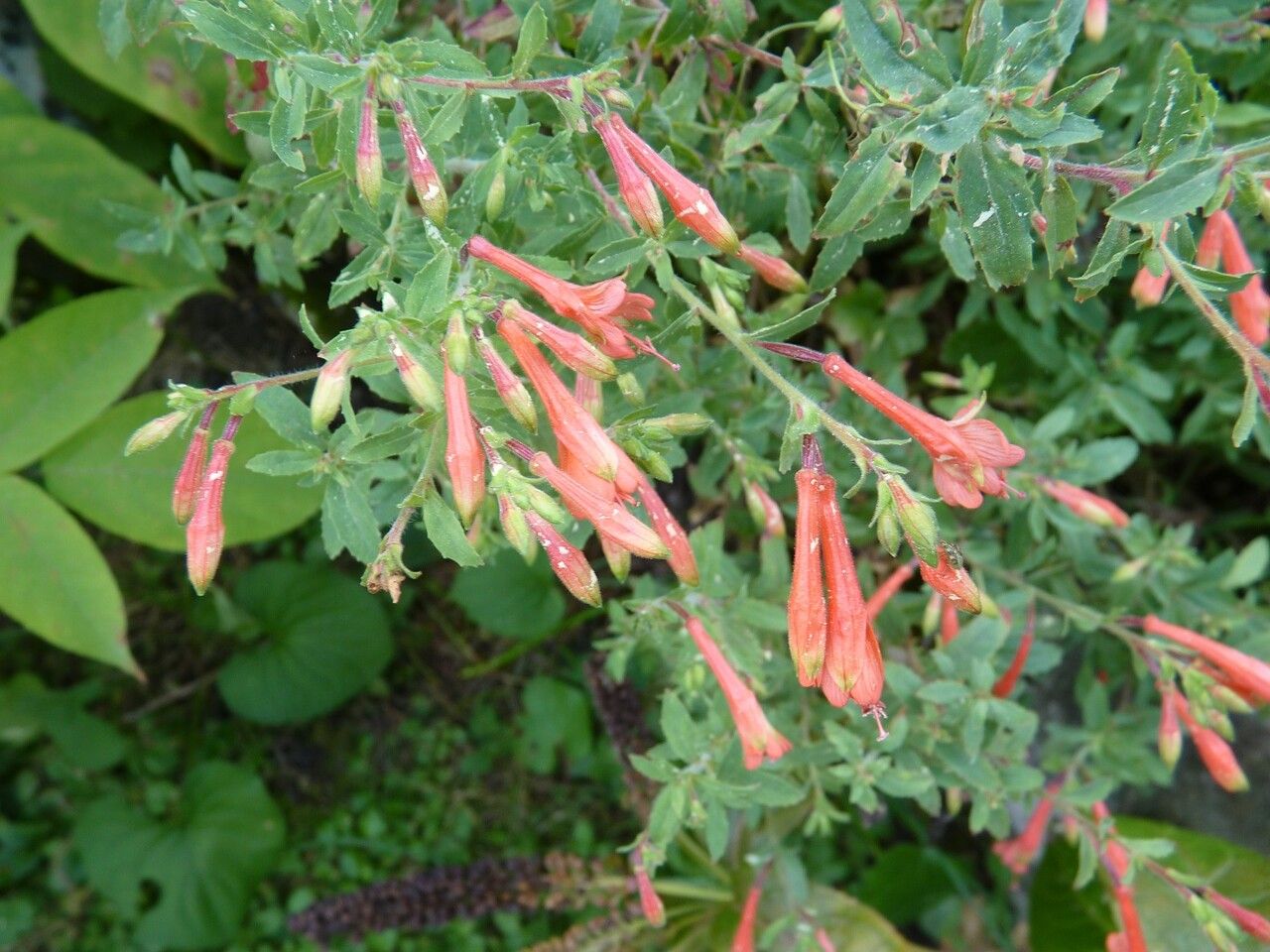
Zauschneria californica, commonly known as California fuchsia, is a perennial plant native to California and parts of Oregon. As a member of the evening primrose family, it produces bright red-orange tubular flowers that bloom from summer through fall. The plant features narrow green leaves covered in fine hairs, giving them a fuzzy appearance.
California fuchsia is drought-tolerant and thrives in well-draining soil with full sun or partial shade. It can grow up to 3 feet tall and wide, making it an excellent option for rock gardens or ground cover. Its vibrant flowers are particularly attractive to hummingbirds.
Beyond its ornamental appeal, California fuchsia has been traditionally used for medicinal purposes by Native Americans to treat various ailments such as sore throats and stomachaches. The leaves were also used as a poultice for treating wounds.
Overall, Zauschneria californica is an attractive perennial that brings vibrant blooms to any garden and provides ecological benefits by attracting pollinators like hummingbirds.
Epilobium canum subsp. angustifolium is fairly resistant to disease and generally not prone to illness. Nonetheless, it can be affected by pests and diseases present in its surroundings. Such infections are typically mild. Regarding care, this plant requires moderate maintenance. Regular pruning is necessary to keep a tidy appearance and support healthy growth. Fertilizing can also aid in encouraging flowering. Epilobium canum subsp. angustifolium is appropriate for anyone with an outdoor area, like a garden or patio, and does not demand extensive gardening experience. It may need more attention if grown indoors.
How to keep Zauschneria Californica.
Light
Epilobium canum subsp. angustifolium is a perennial herbaceous plant that prefers sunny sites and comes from open habitats, commonly growing in meadows and grasslands. It favors full sun but can also tolerate partial sun.
Temperature
Epilobium canum subsp. angustifolium can adapt to a wide range of temperature conditions, though its distribution may still be constrained by different combinations of water and heat. It grows best in warm summer climates with sufficient rainfall or watering. Extended periods of cloudy, rainy weather or prolonged high temperatures can raise the chance of Epilobium canum subsp. angustifolium dying. In winter, protecting the plant from cold can increase its survival rate.
Fertilizer
The best time to fertilize Epilobium canum subsp. angustifolium is in early spring, when it is coming out of dormancy and starting active growth. Fertilization supplies essential nutrients for healthy growth. Although this subspecies has relatively low fertilizer requirements, an annual application can improve its survival and encourage better, longer-lasting flowers.
Botanical profile.
- Plant Type
- Herb
- Life Cycle
- Perennial
- Genus
- Zauschneria
- Family
- Onagraceae
- Hardiness Zone
- 8-11
- Mature Height
- 30 cm to 91 cm
- Mature Spread
- 49 cm
- Leaf Color
- Green, Dark Green
- Leaf Type
- Deciduous
- Flower Color
- Red
- Flower Size
- 2.03 cm to 4.06 cm
- Bloom Time
- Mid summer, Late summer, Fall
- Planting Time
- Spring, Summer, Autumn
- Harvest Time
- Mid fall, Late fall, Early winter, Mid winter
Other names.