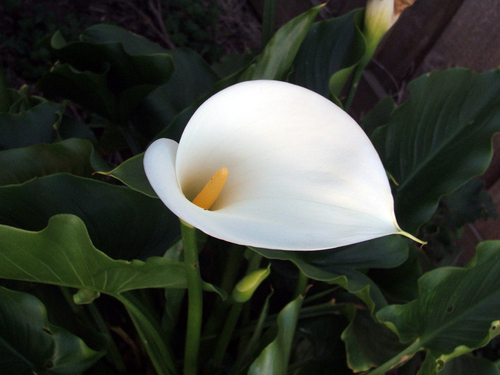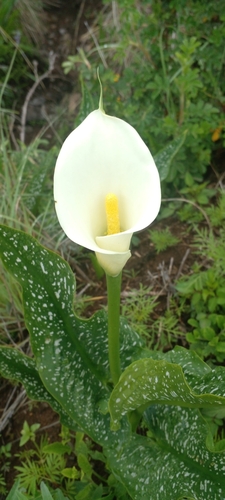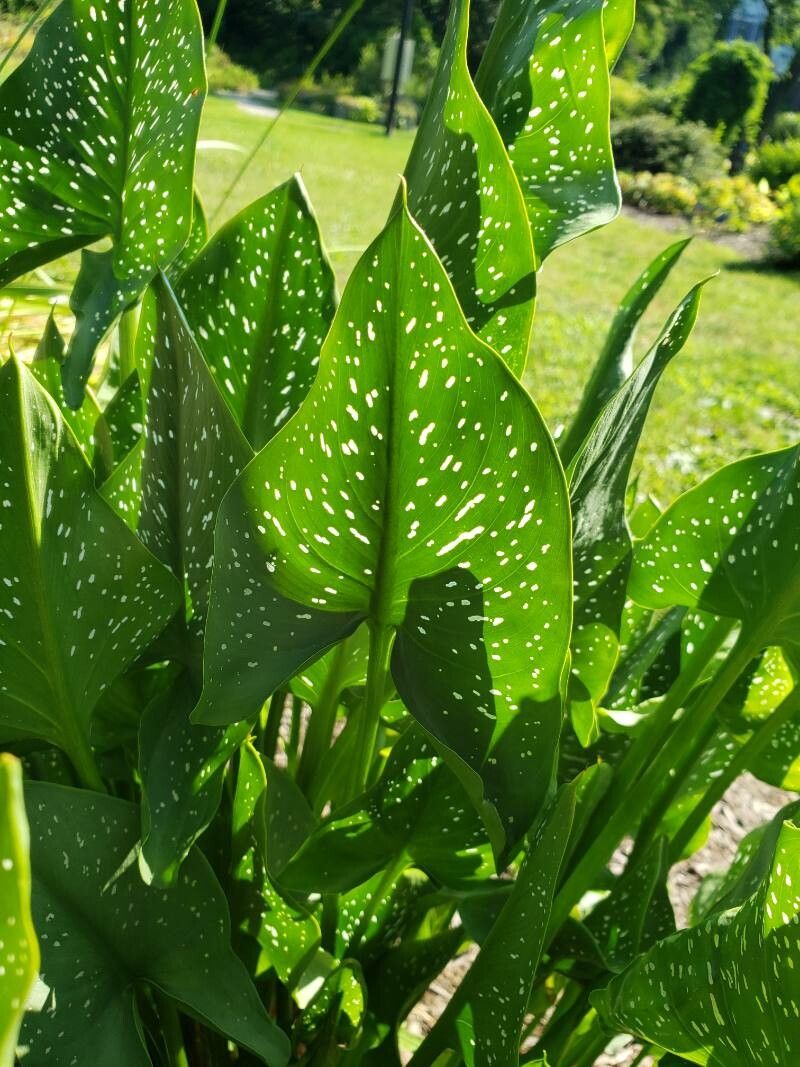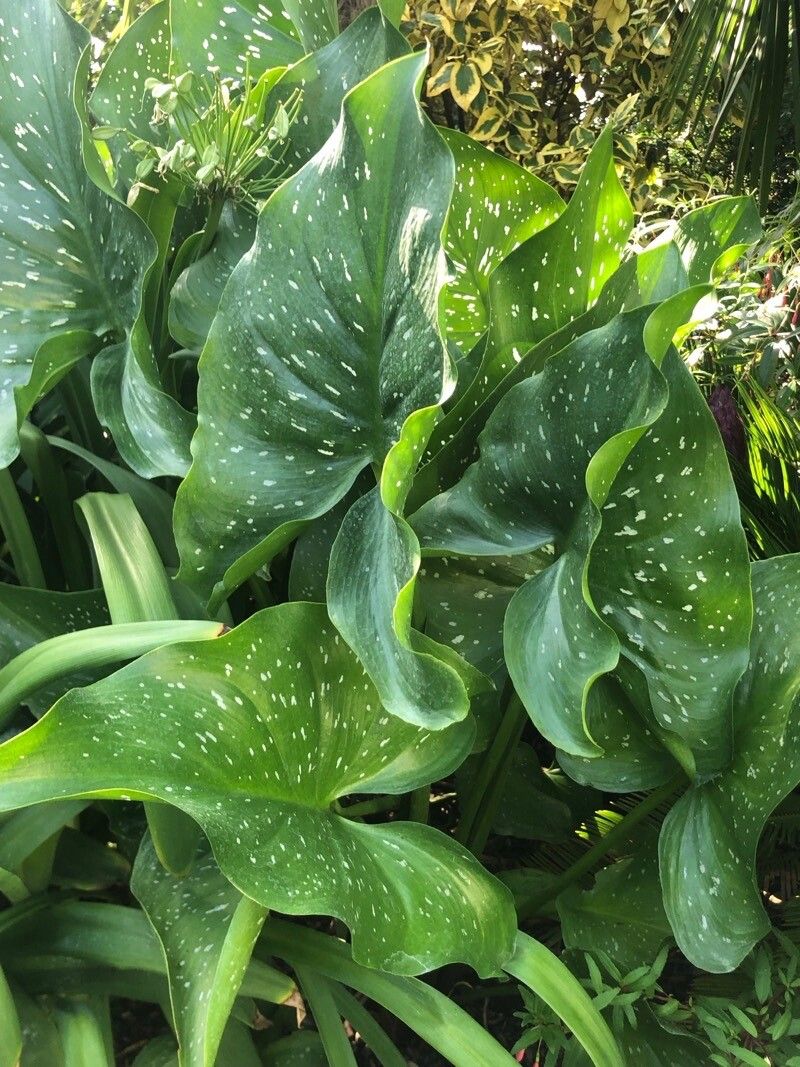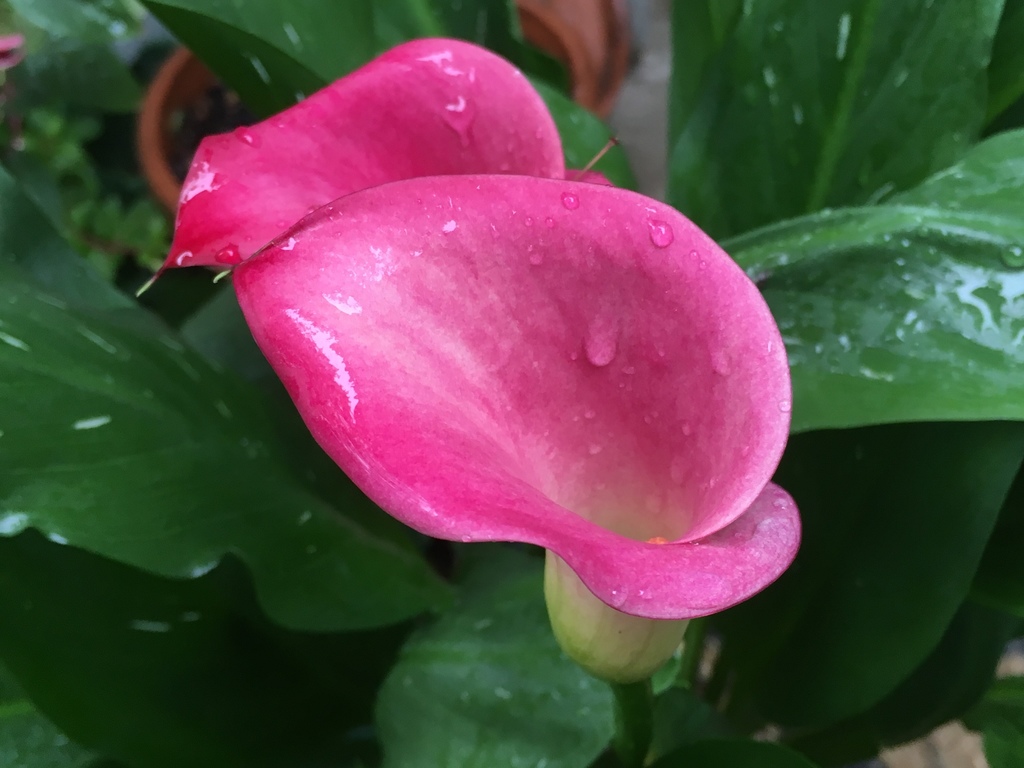
Zantedeschia rehmannii, commonly known as the Pink Calla Lily or Pink Arum Lily, is a perennial herbaceous plant belonging to the Araceae family. Native to South Africa, it thrives in marshy areas and along riverbanks. This plant features a rhizomatous root system and produces long-stemmed leaves with an arrowhead shape, complemented by pink or magenta-colored flowers.
Reaching up to 60 cm in height and spreading up to 30 cm, the Pink Calla Lily's flowers are trumpet-shaped, showcasing a distinctive yellow spadix surrounded by pink or magenta petals. These striking blooms appear from late spring through summer.
Preferring moist soil conditions, the plant can tolerate some drought once established. It requires partial shade to full sun exposure for optimal growth but should be shielded from direct sunlight during the hot summer months.
Calcium oxalate crystals in the plant make it toxic, which can cause vomiting, diarrhea, and a burning sensation in the mouth. It can also irritate the skin. Despite these dangers, it is a stunning addition to any garden and is often used as a cut flower. FUN FACT · FROM THE LIBRARY
Zantedeschia rehmannii is popular among gardeners worldwide for its attractive foliage and showy flowers, making it a favored ornamental plant. Additionally, its roots hold medicinal properties and have been traditionally used by indigenous people to treat various ailments such as headaches, fever, wounds, and respiratory infections.
Overall, Zantedeschia rehmannii is a captivating perennial herbaceous plant that enhances any garden with its vibrant colors and beauty while also offering medicinal benefits when used appropriately.
The Pink Calla Lily, scientifically known as Zantedeschia rehmannii, was named in honor of two notable botanists. The genus name, Zantedeschia, pays tribute to the Italian botanist Giovanni Zantedeschi, who lived from 1773 to 1846. Meanwhile, the species name, rehmannii, honors Anton Rehmann, a Polish botanist and geographer who traveled through South Africa and lived from 1840 to 1917.
Pink calla lily has good resistance to disease and is generally not prone to illness. However, it can be susceptible to leaf spots when light and ventilation are poor and watering is excessive. The plant's care level is considered easy, since it only requires regular watering and not much else. Pink calla lily is suitable for those who don't have some time and energy to devote to regular care.
How to keep Zantedeschia Rehmannii.
Light
Pink calla lily does best with half-day sun to promote healthy growth. In its natural habitat, the plant adjusts to a range of light conditions, from full sun to full shade. Excessive or insufficient light can result in leaf scorch or reduced flowering, respectively. During different growth stages, consistent light exposure is recommended.
Water
The pink calla lily thrives in marshy areas and requires consistent moisture for optimal growth. Once established, it also develops a moderate tolerance to drought. To maintain soil moisture, water it weekly. Although it is often grown indoors, the plant benefits from high humidity, which encourages the growth of its elegant, trumpet-shaped flowers.
Temperature
The pink calla lily does best at temperatures of 68 to 100 ℉ (20 to 38 ℃), similar to the conditions of its native habitat. In colder months, ensure the temperature does not drop below 50 ℉ (10 ℃) to prevent damage to the plant. Conversely, avoid exposing it to direct sunlight during hotter months to prevent sunburn.
Fertilizer
Proper fertilization is essential for the health and appearance of the Pink calla lily. Fertilize the Pink calla lily in summer, applying it once a month throughout the season. Nutrients drive growth and help preserve the plant’s structures. Fertilization improves the Pink calla lily’s floral display, ensuring the best blooms.
Pruning
The pink calla lily, known for its vibrant pink hues and trumpet-shaped flowers, requires pruning from late winter to early spring. To do this, trim away dead leaves and faded flowers at their base using sterilized tools. Proper pruning not only improves the plant's appearance but also encourages blooming. It's important to consider the plant's dormant period when pruning to minimize stress.
Pot & Repot
Repot a Pink calla lily in spring or summer once temperatures are warm enough, choosing a pot that's slightly larger and has good drainage. Water thoroughly after repotting, and place it in a spot with bright, indirect light. Consider adding a moss pole to support the plant as it grows.
Botanical profile.
- Plant Type
- Herb
- Life Cycle
- Perennial, Annual, Biennial
- Genus
- Zantedeschia
- Family
- Araceae
- Hardiness Zone
- 10-11
- Mature Height
- 40 cm
- Mature Spread
- 30 cm
- Leaf Color
- Green, Blue
- Leaf Type
- Evergreen, Semi-evergreen
- Flower Color
- Pink, Purple, Red
- Flower Size
- 6.35 cm
- Bloom Time
- Late spring, Early summer, Mid summer
- Planting Time
- Spring, Summer, Autumn, Winter
- Harvest Time
- Early summer, Mid summer
- Native Area
- South Africa, Eswatini
Other names.
Reader questions.
How should I water my Pink calla lily?
There are several ways to water your Pink calla lily effectively. If your plant is in a small indoor pot, simply take it to the kitchen sink and use the faucet to water the container. Hold the pot and stop watering when the water starts to drain out of the pot's holes. It is important to avoid doing this during winter or in cold climates as the cold temperature can harm the plant's roots. In most cases, using the faucet is sufficient for watering the Pink calla lily. However, if the tap water in your area has a high amount of fluorine, chlorine, or salts, it's better to use rainwater or lake water instead. Additionally, the Pink calla lily responds well to overhead watering and watering directly into the soil, so you can use a watering can, hose, or any other tool of your choice to water it.
Why should I put fertilizer on my Pink calla lily?
Fertilizer and soil nutrients are like fuel for your Pink calla lily. They are essential for maintaining healthy growth. Plants use the nutrients in the soil to develop new plant material and keep their existing components in good condition. For the Pink calla lily specifically, fertilization is necessary to make its flowers look their best. Since the flowers are the main attraction, most gardeners want to ensure they appear in their best form. Fertilization is one of the most effective ways to help your Pink calla lily produce the most beautiful blooms.
What are the sunlight requirements for Pink Calla Lily?
Pink Calla Lily thrives under conditions ranging from partial to full sunlight. It requires about 3-6 hours of sunlight daily for partial sun exposure and more than 6 hours for full sun exposure. However, it is crucial to watch how sunlight moves through your garden to ensure your plants get a balance of light and shade, ensuring their happiness and health.
What are the ideal temperature conditions for pink calla lily?
The pink calla lily thrives in temperatures between 68 to 100°F (20 to 38°C), which mirrors the climate of its native environment. To prevent harm, ensure the temperature does not drop below 50°F (10°C) during colder months. The pink calla lily is very sensitive to cold. In the autumn, it's advisable to bring outdoors-grown pink calla lilies indoors, positioning them near a bright window but away from direct heat sources. Keeping the temperature above the minimum suitable growth temperature during winter supports its growth, whereas temperatures nearing the minimum tolerable growth temperature can be detrimental.
What do I do if I give too much or too little water to my Pink calla lily?
To remedy underwatering, simply give your Pink calla lily a good watering until excess water flows out. For outdoor plants, make sure the soil is entirely moist. If the plant is receiving too much water, decrease the watering schedule. Take a look at the soil and container conditions - if they hinder efficient drainage, your plant will likely be overwatered again. To fix this, use looser soils and/or containers with larger drainage holes or more porous materials. Also, consider the plant's location. If it's in a enclosed space like a corner, move it to a window or near a door for better ventilation. This can help prevent overwatering.
When should I put fertilizer on my Pink calla lily?
The Pink calla lily has two main phases each year. The first phase is the dormant phase, which happens in winter and involves minimal new growth. The second phase is the active growth phase, occurring in spring and fall, when the plant needs the most fertilization. In general, it's best to start fertilizing your Pink calla lily in spring and repeat the feeding once a month until late summer. As fall approaches, you can gradually decrease the rate of fertilization.
How does Pink Calla Lily adapt to different lighting conditions?
In its native habitat, Pink Calla Lily adapts to varied lighting conditions, from continuous sunlight to complete shade. However, overexposure or underexposure can cause issues such as leaf burn or diminished blossoming, respectively. Throughout its growth stages, uniform light exposure is recommended for optimal growth.
How should I care for my pink calla lily during low temperatures?
Pink calla lilies prefer warm conditions and struggle with low temperatures, showing the best growth above their minimum suitable growth temperature. In winter, it is crucial to keep them above their tolerable growing temperature minimum. Exposure to temperatures below their growth limit can cause the leaves to lighten and, following frost damage, turn brown or black with additional signs of wilting and drooping. To protect the plants, remove frost-damaged parts and move them indoors to a warmer spot, ideally near a south-facing window, ensuring they get plenty of sunlight while avoiding placement near heating or cooling vents which could dry out the air around them.
How much should I water my Pink calla lily?
The Pink calla lily doesn't need consistently moist soil. It's better to let the soil dry out between waterings. If you're growing the Pink calla lily in a container, you can tell if it needs water by checking how dry the soil is. For example, if the top half of the soil is dry, it's time to water. You can check by touching the soil with your fingers or using a soil moisture meter. If you're growing the Pink calla lily outdoors, you can water it about once every other week, unless it has rained recently.
When is the best time to not fertilize my Pink calla lily?
If you want to help your Pink calla lily grow, be mindful of avoiding root burn. During the spring and summer when the plant is actively growing, it requires extra nutrients. However, in the fall and winter when the plant goes dormant, you should refrain from fertilizing.
What should be considered when using artificial lighting for Pink Calla Lily?
When natural sunlight is insufficient, artificial lighting can be crucial for Pink Calla Lily's growth, especially during winter or in less sunny spaces. LED lights are recommended as they can be customized to the plant's needs. Full sun plants require 30-50W/sq ft, partial sun plants 20-30W/sq ft, and full shade plants 10-20W/sq ft of artificial light. The light source should be placed 12-36 inches above the plant to mimic natural sunlight, and most plants need 8-12 hours of light per day.
What steps should I take if my pink calla lily is exposed to high temperatures?
During the summer, it's important to ensure that Pink calla lilies are kept below their maximum suitable growth temperature. Exceeding their tolerable high temperature can lead to lighter leaf coloration and increased risk of sunburn. If this occurs, remove the sunburned or dried parts of the plant. Relocating the plant to a shaded area, especially away from the intense midday and afternoon sun, can prevent further damage. To assist with temperature regulation, water the plant during cooler times of the day, like morning and evening, helping to maintain moist soil conditions.