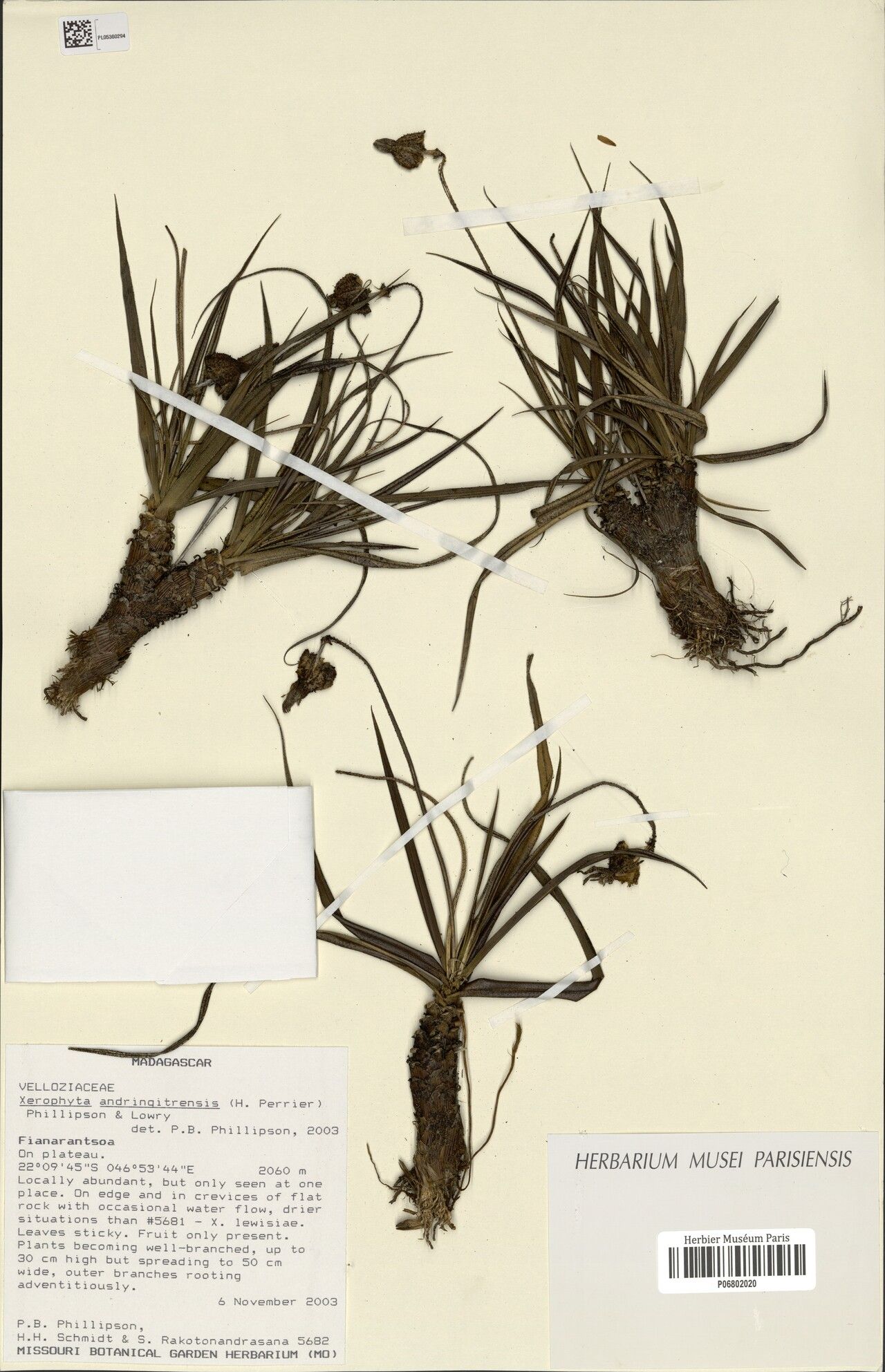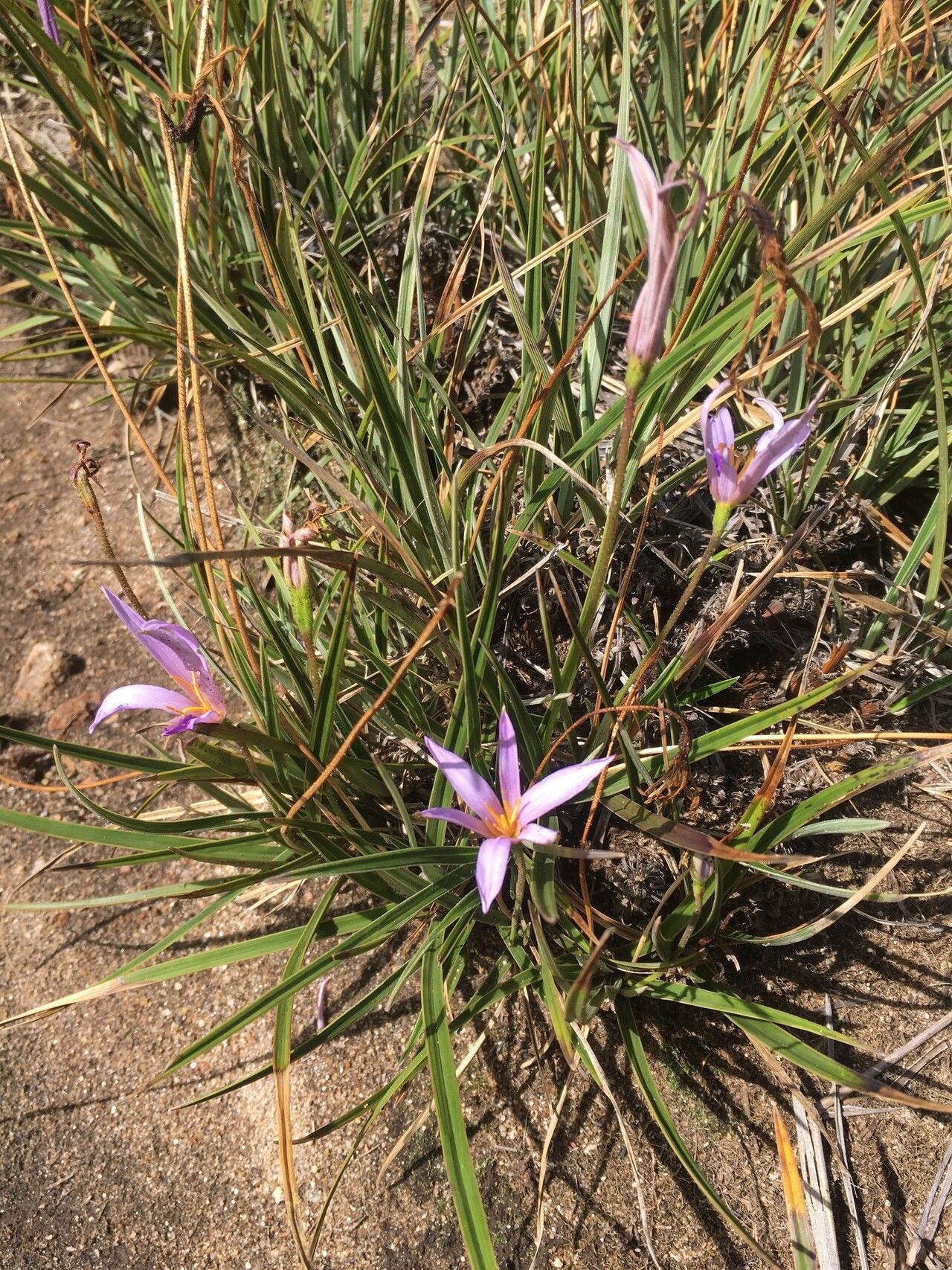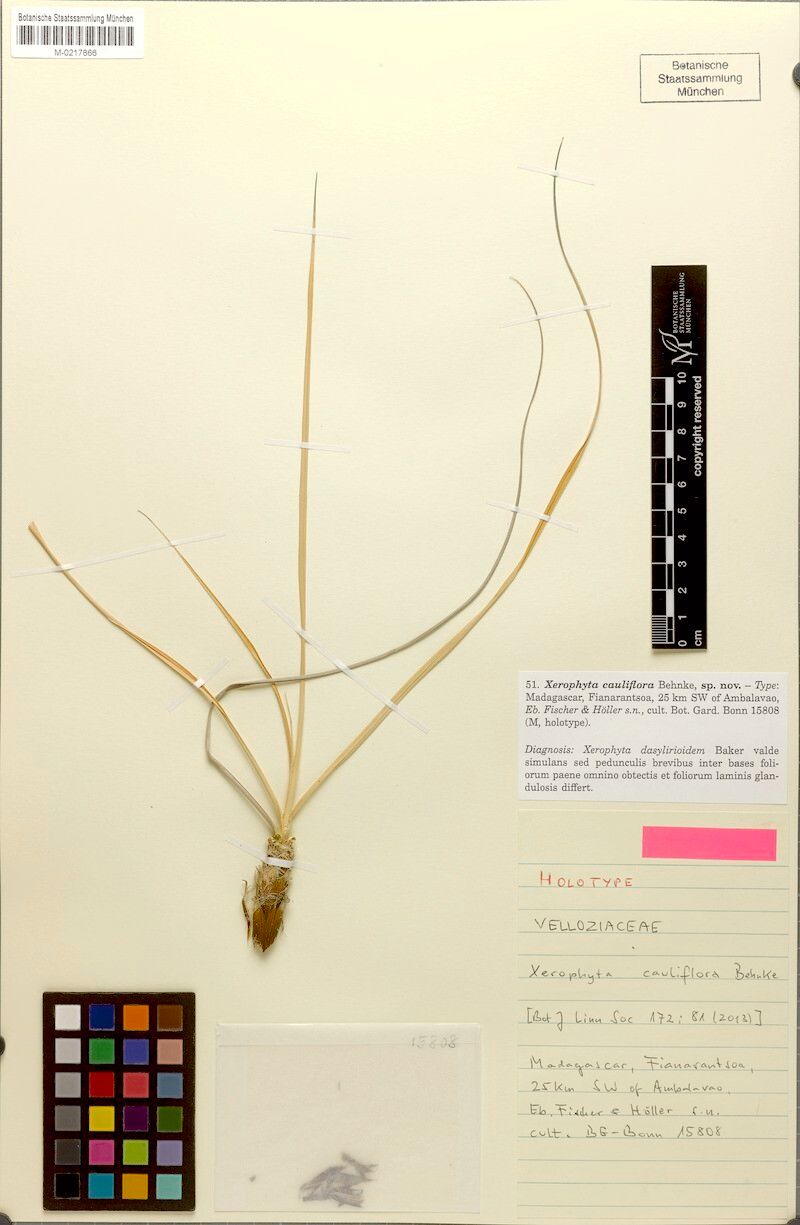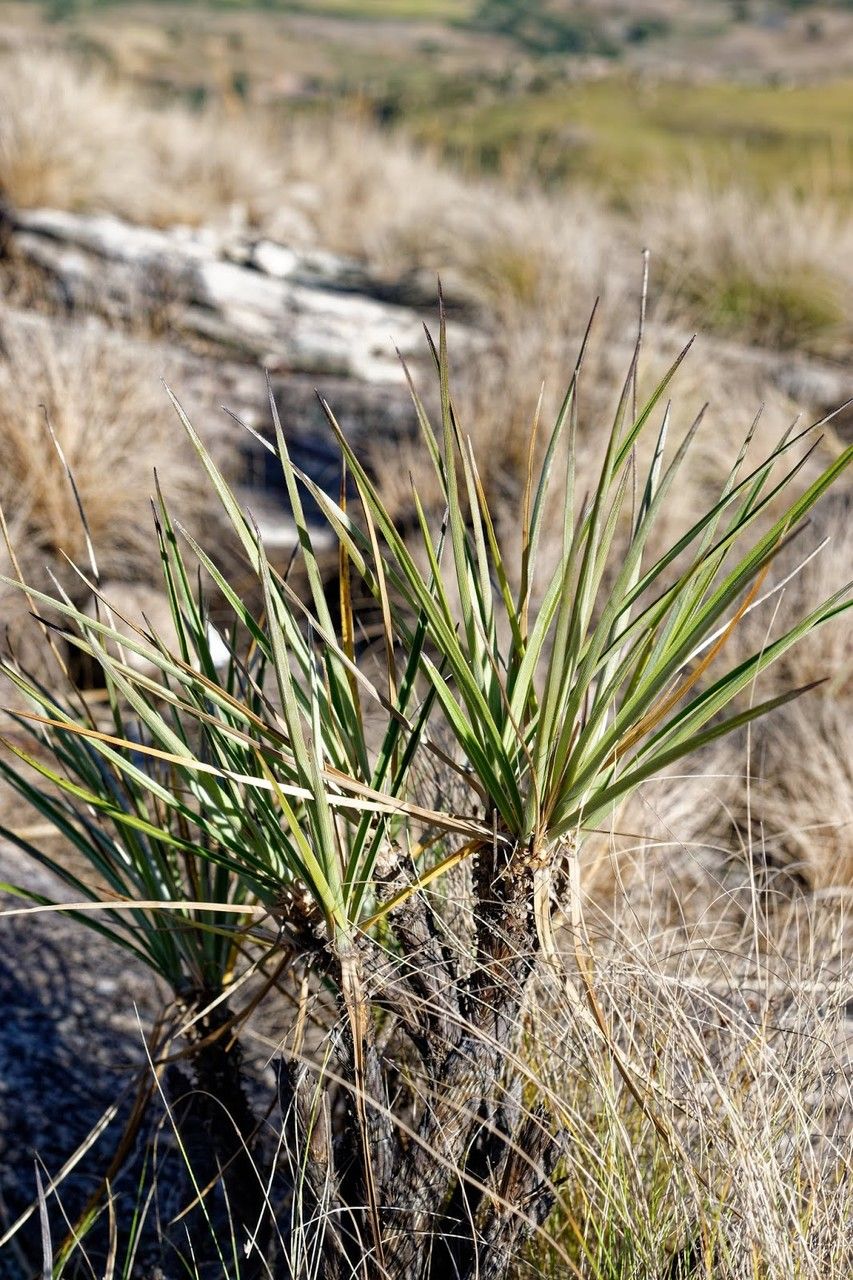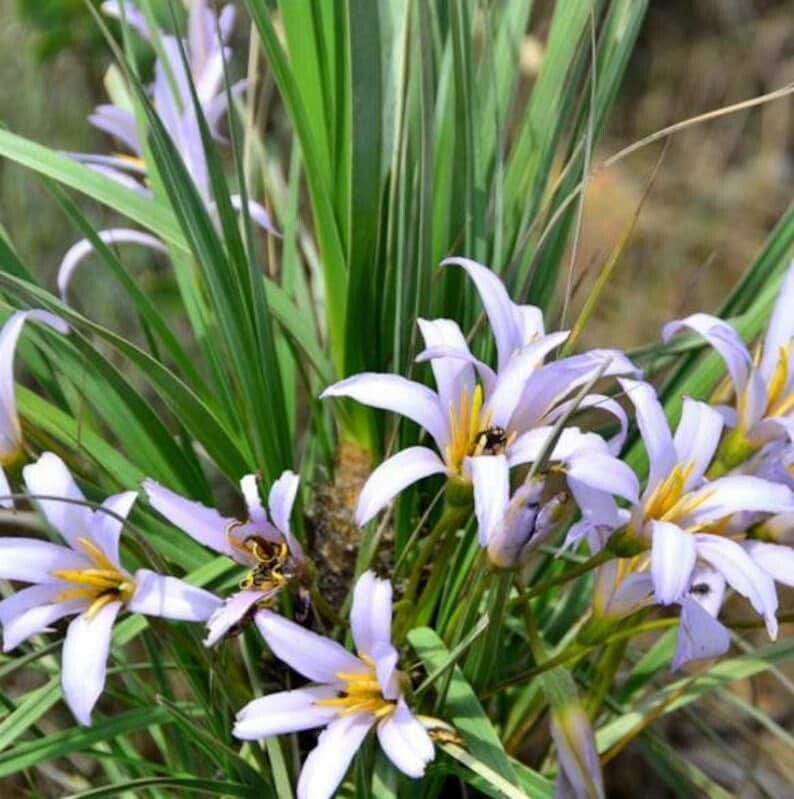
Xerophyta retinervis is a deciduous perennial up to 2 metres tall with stout, erect stems, densely covered in persistent, fibrous leaf bases, often charred and blackened by veldfires. Fragrant flowers appear after fire or rain, and are blue or mauve, or rarely white. The small capsules are covered in rough hairs and are loculicidally dehiscent, releasing numerous small, black angled seeds about 2 mm long. The species is tolerant of extreme conditions such as drought, fire, and low temperatures. The old leaf bases are arranged so that rainwater is funnelled down and to the core, where it is absorbed by densely packed roots that run the entire length of the stem. Strap-shaped leaves occur in tufts along stems.
Black-stick lily has moderate resistance to disease but is more sensitive to moisture. It becomes vulnerable to illnesses when humidity is high and is likely to develop root rot while dormant. Regarding care, Black-stick lily tolerates drought yet requires increased watering during its active growth phase. Watering should be sharply reduced or halted completely during dormancy. Black-stick lily is best for growers with some prior experience, as it can be challenging to maintain, especially during the dormant period. It is particularly well suited to those who can commit time to its care over the winter months.
How to keep Xerophyta Retinervis.
Light
Originating from arid areas, the Black-stick lily does best in full sun, its native habitat marked by intense sunlight and scarce shade. It will also tolerate partial sun, providing some flexibility in its growth.
Temperature
Although the Black-stick lily can tolerate some heat, it mainly flourishes and grows in cooler seasons and goes dormant during the summer. In hot summer temperatures, provide shade to prevent scorching from intense sunlight. Watering should be reduced or stopped during the hottest period to avoid root rot. The plant shows vigorous growth in winter and spring, and will continue to grow steadily as long as temperatures do not fall too low.
Fertilizer
Black-stick lily requires only light fertilizer applications 1-2 times a year during the growing season. Avoid fertilizing in winter and in summer while it is dormant. Use less fertilizer for plants that have been repotted and wait a couple of months after repotting before you fertilize. Fertilizing helps maintain healthy growth and promotes blooms.
Botanical profile.
- Plant Type
- Herb, Succulent
- Life Cycle
- Perennial
- Genus
- Xerophyta
- Family
- Velloziaceae
- Hardiness Zone
- 9-11
- Mature Height
- 30 cm to 61 cm
- Mature Spread
- 30 cm to 49 cm
- Leaf Color
- Gray, Silver
- Leaf Type
- Evergreen
- Flower Size
- 3.05 cm to 5.08 cm
- Bloom Time
- Late spring, Early summer, Mid summer
- Planting Time
- Spring, Summer, Autumn
- Harvest Time
- Mid summer, Late summer, Early fall
- Native Area
- South Africa, Eswatini, Mozambique, Botswana