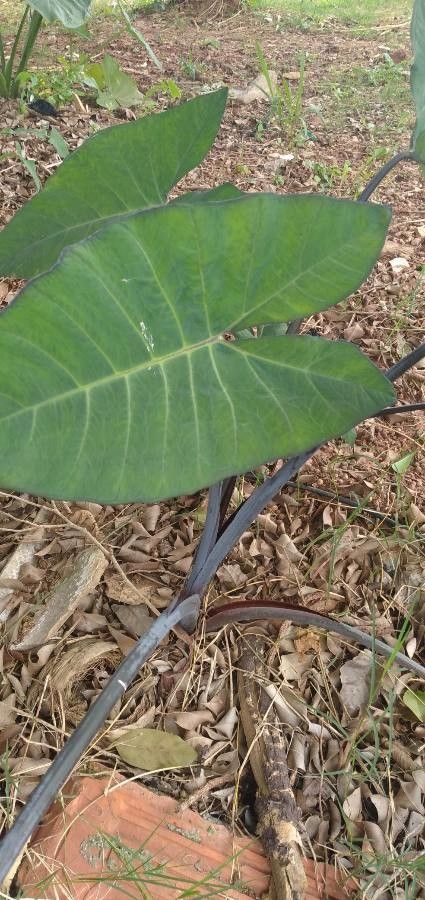
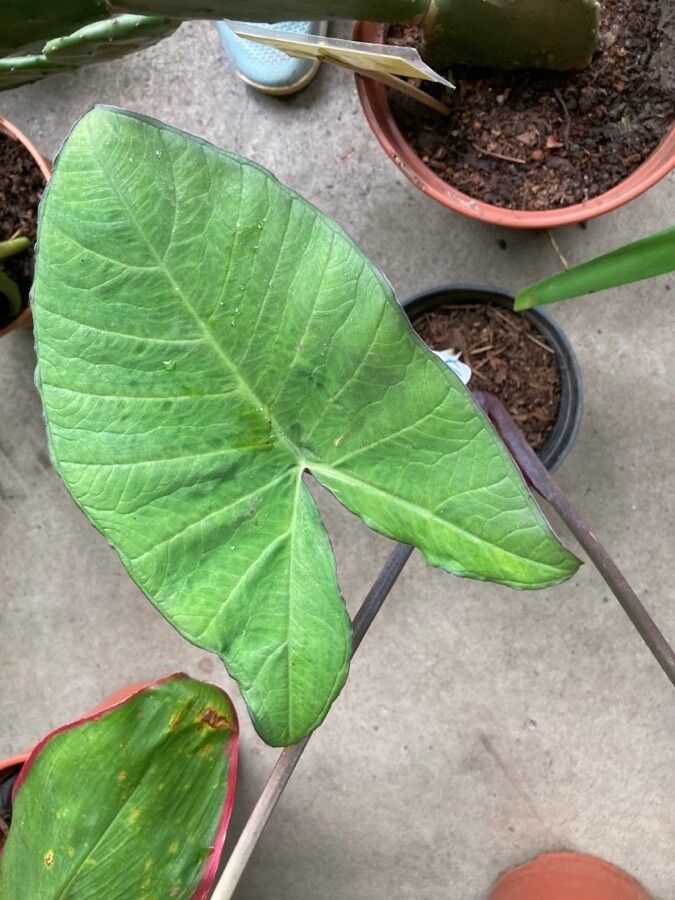
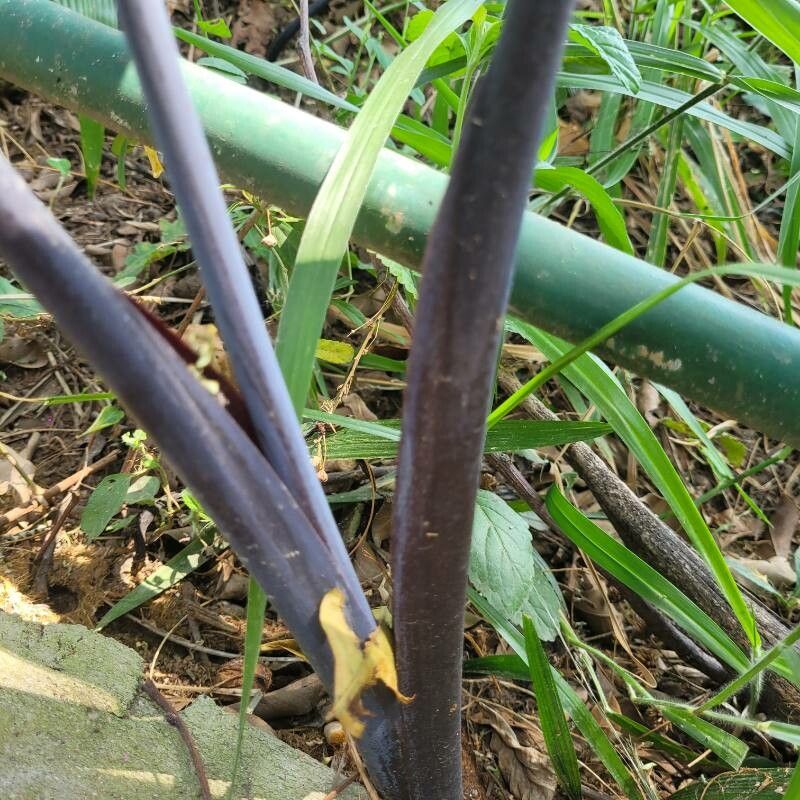
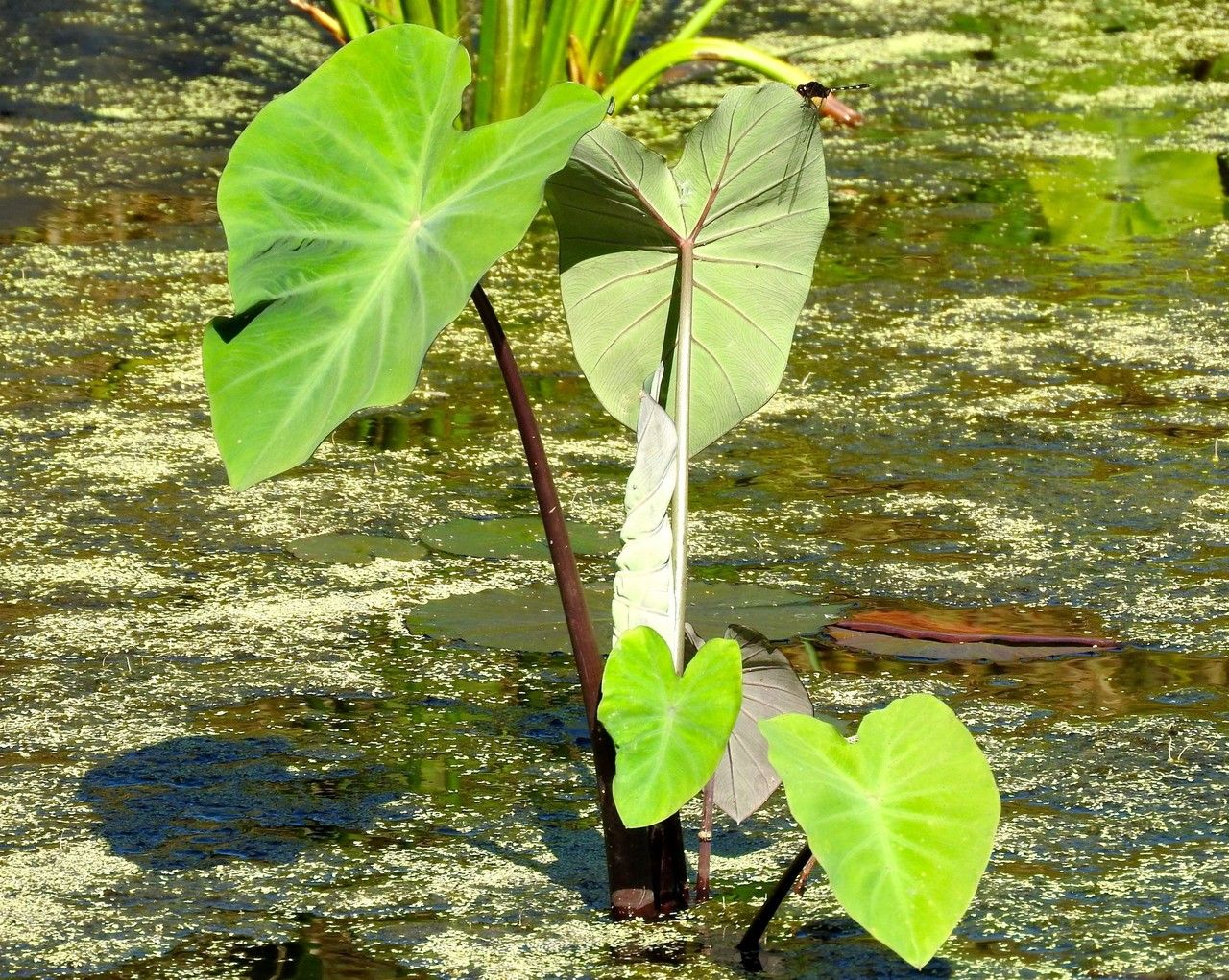
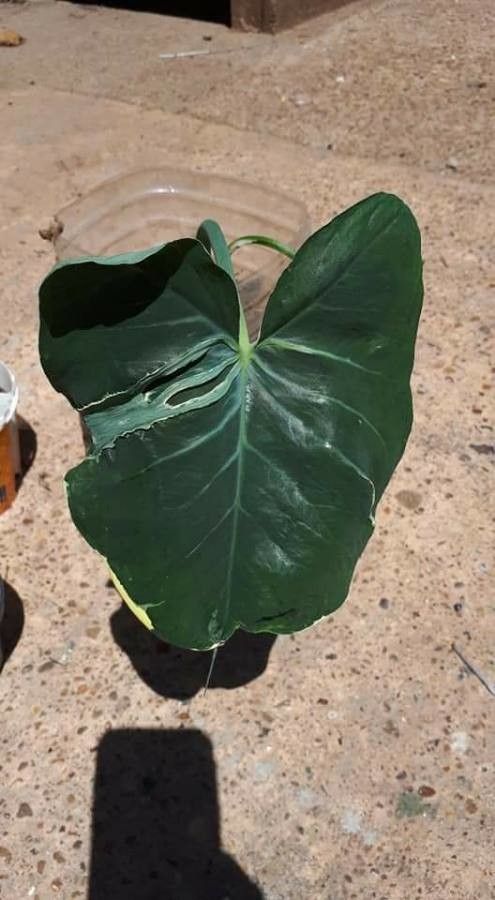
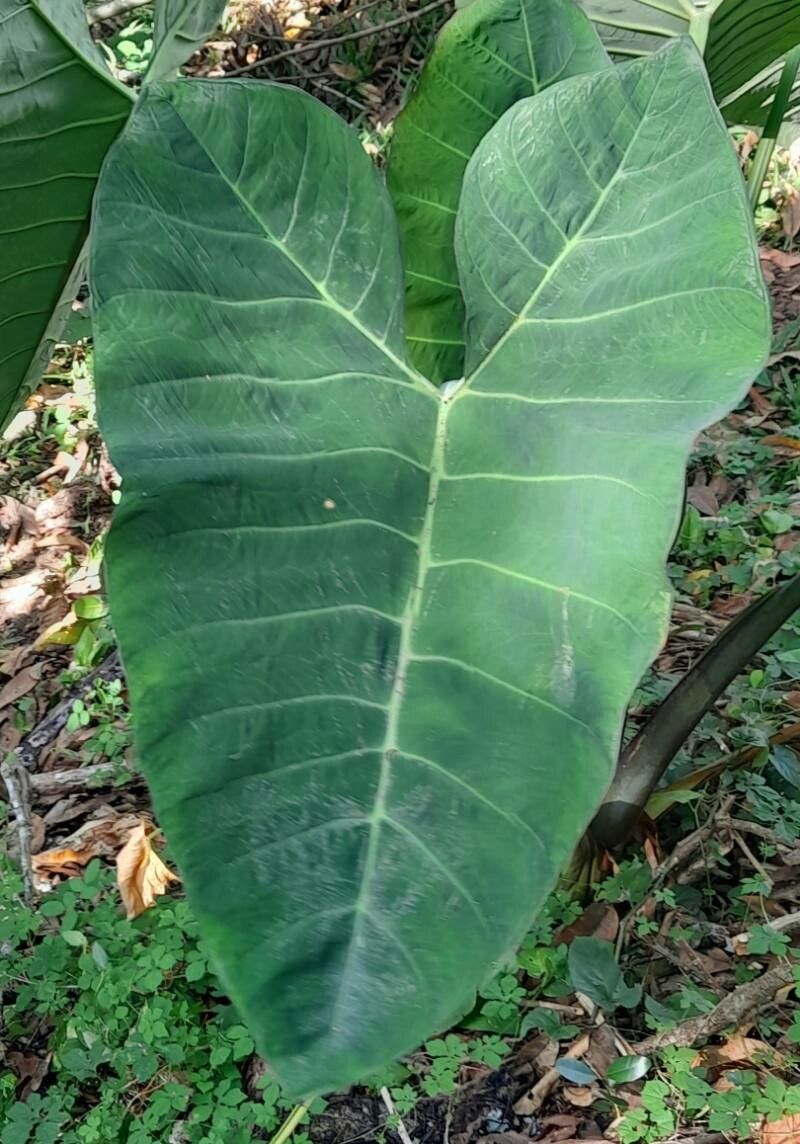
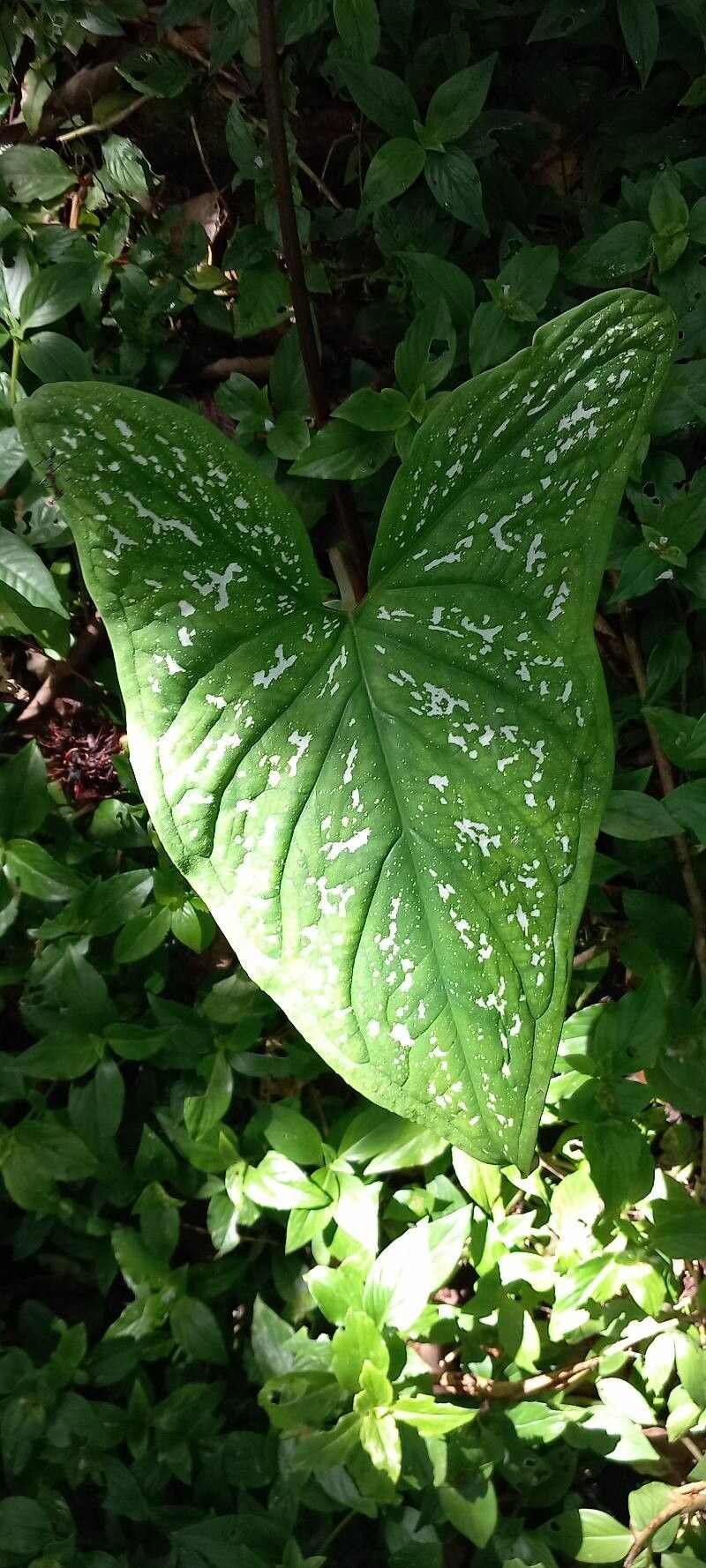
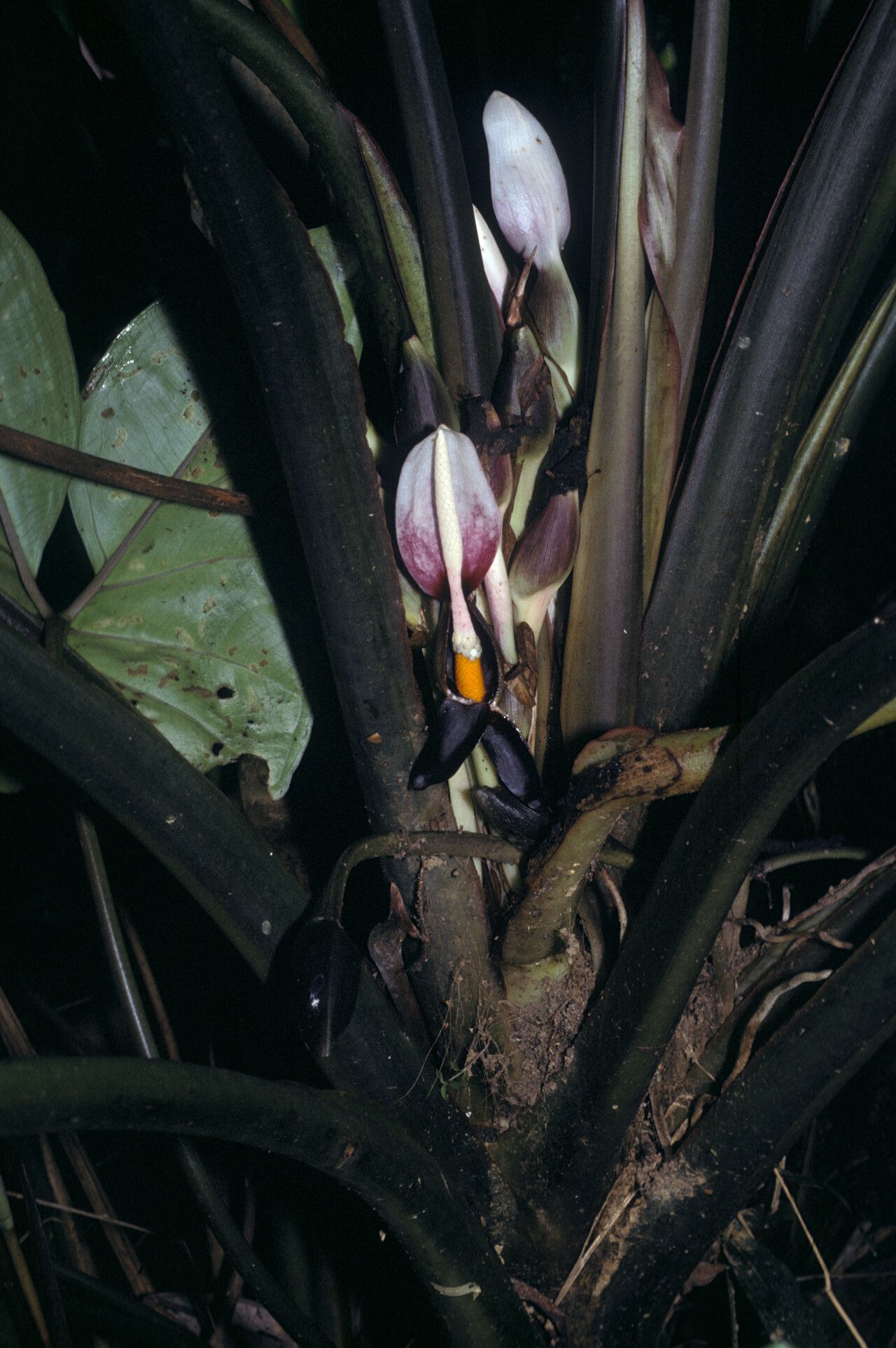
Xanthosoma violaceum, commonly known as the purple elephant ear or violet taro, is a tropical plant species belonging to the Araceae family. Native to Central and South America, it is widely cultivated for its edible tubers. The plant features large, heart-shaped leaves that can grow up to 2 feet long and 1 foot wide. These leaves are a deep green color with purple veins on top and a purplish-red underside.
Xanthosoma violaceum thrives in warm temperatures ranging from 70-85°F (21-29°C) and requires high humidity levels. It grows best in well-draining soil enriched with organic matter and needs regular watering to keep the soil moist but not waterlogged.
The plant produces small flowers on a spadix surrounded by a spathe; however, they are not particularly showy or ornamental. Instead, it is primarily cultivated for its starchy tubers, which can be boiled or roasted like potatoes.
In addition to its culinary uses, Xanthosoma violaceum has medicinal properties. It contains high levels of antioxidants, which help protect against cellular damage caused by free radicals.
Overall, Xanthosoma violaceum is an attractive tropical foliage plant with edible tubers that serve as an alternative source of carbohydrates and offer health benefits when consumed regularly.
Arrowleaf elephant's ear has strong disease resistance and is generally not prone to illness. However, it can develop leaf spots if light and ventilation are inadequate and if it is overwatered. The plant is regarded as easy to care for, requiring only regular watering and little else. It is well suited to people who lack the time and energy to provide frequent care.
How to keep Xanthosoma Violaceum.
Light
Arrowleaf elephant's ear needs filtered sunlight on most days to grow well, although it can tolerate constant shade or occasional full sun. It comes from habitats where the canopy of taller plants provides dappled light. Too little light can limit its growth, while too much exposure can burn the leaves.
Temperature
Arrowleaf elephant's ear favors a warm climate; its native growth range is # to # ℉ (# to # ℃). It grows best at temperatures between 68 to 100 ℉ (20 to 38 ℃). During winter, keep temperatures in the 59 to 65 ℉ (15 to 18 ℃) range for optimal growth.
Fertilizer
Arrowleaf elephant's ear needs the most fertilizer during its active growth phase, which occurs mainly in spring, summer, and early fall. Fertilizing provides essential nutrients the soil may lack, supporting healthy root and stem development as well as the attractive foliage that is a defining characteristic of this plant.
Pot & Repot
Repot Arrowleaf elephant's ear in spring or summer once it's warm enough, choosing a slightly larger pot with good drainage. Water thoroughly after repotting and place the plant in bright, indirect light. Consider installing a moss pole to support it as it grows.
Botanical profile.
- Plant Type
- Herb
- Life Cycle
- Perennial
- Genus
- Xanthosoma
- Family
- Araceae
- Hardiness Zone
- 9-11
- Mature Height
- 2.13 m to 2.44 m
- Mature Spread
- 61 cm to 91 cm
- Leaf Color
- Green, Blue
- Leaf Type
- Evergreen
- Flower Color
- White, Cream
- Flower Size
- 10.16 cm to 15.24 cm
- Bloom Time
- Summer
- Planting Time
- Spring
- Harvest Time
- Late summer, Early fall, Mid fall
- Native Area
- Colombia, Honduras, Mexico, Bolivia, Venezuela, Peru, Brazil, Panama
Other names.