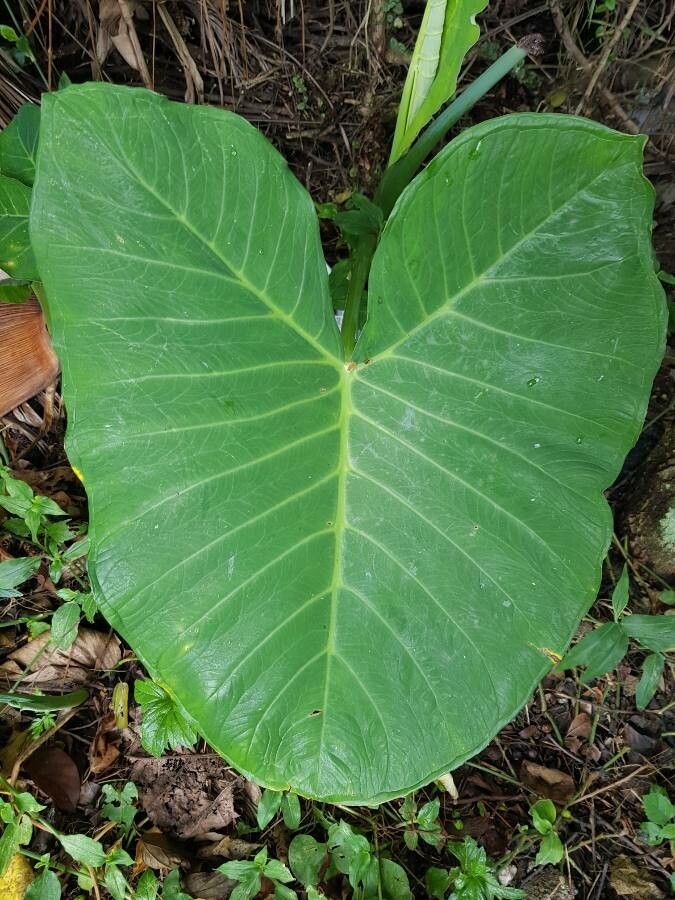
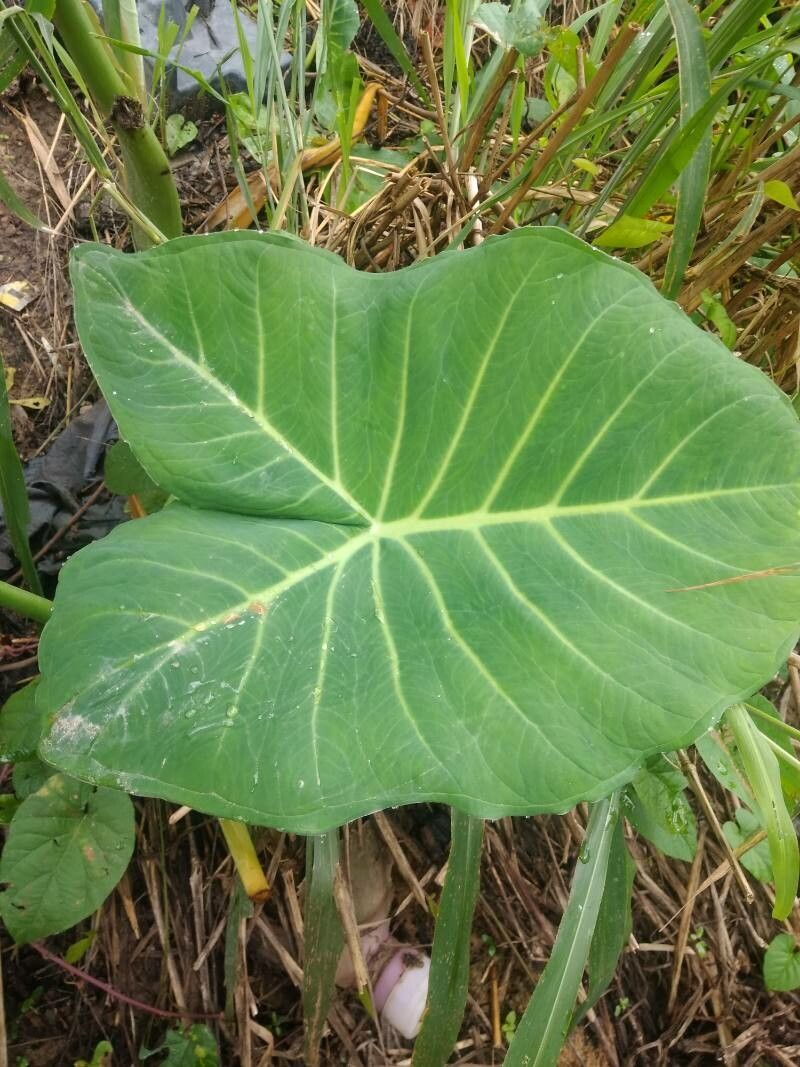
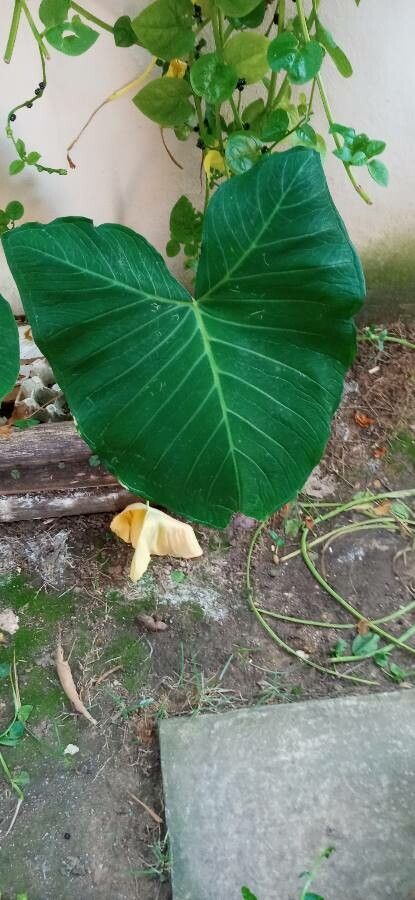
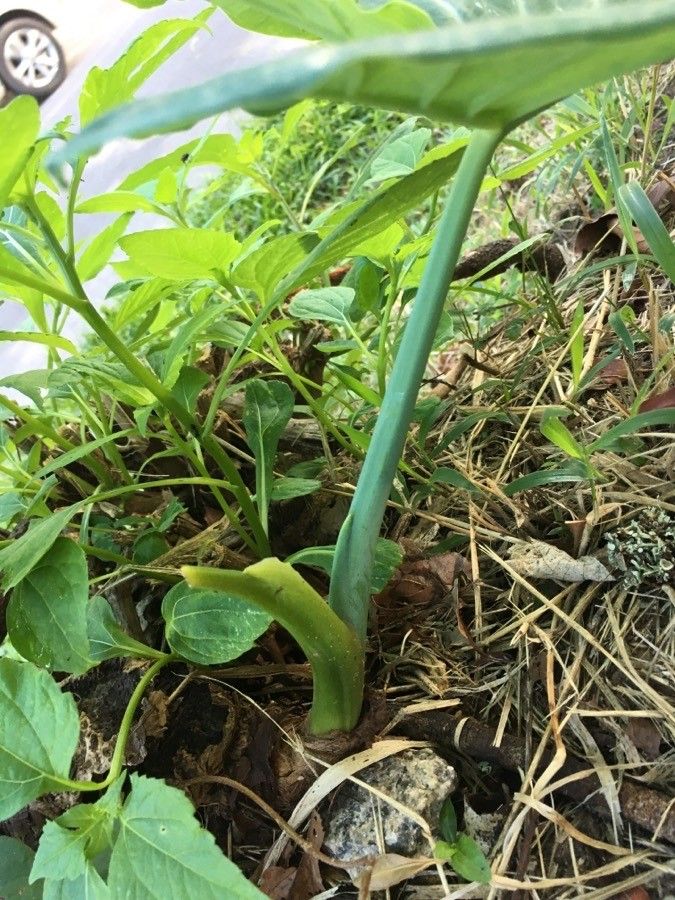
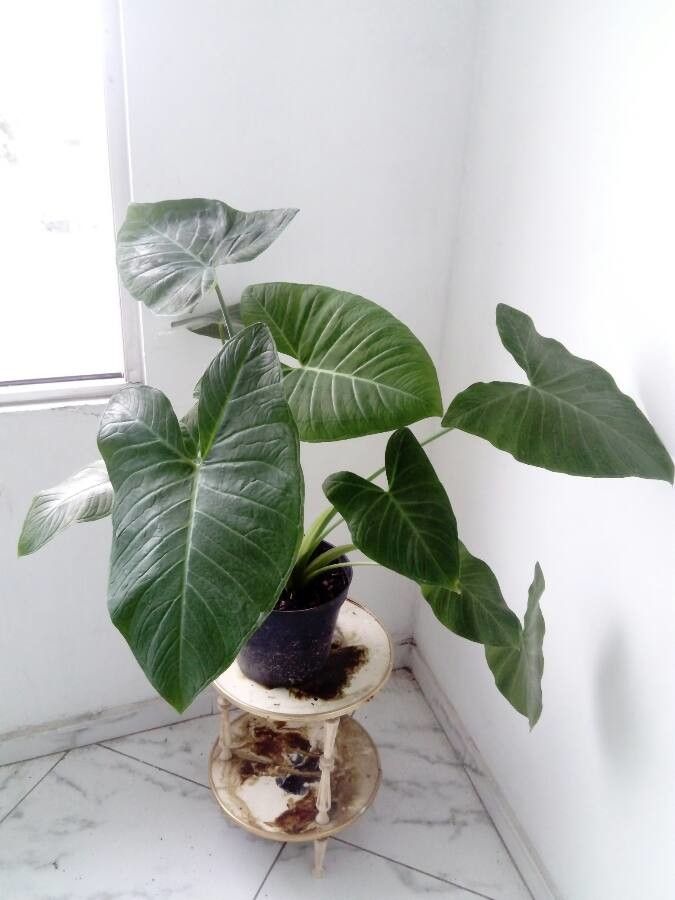
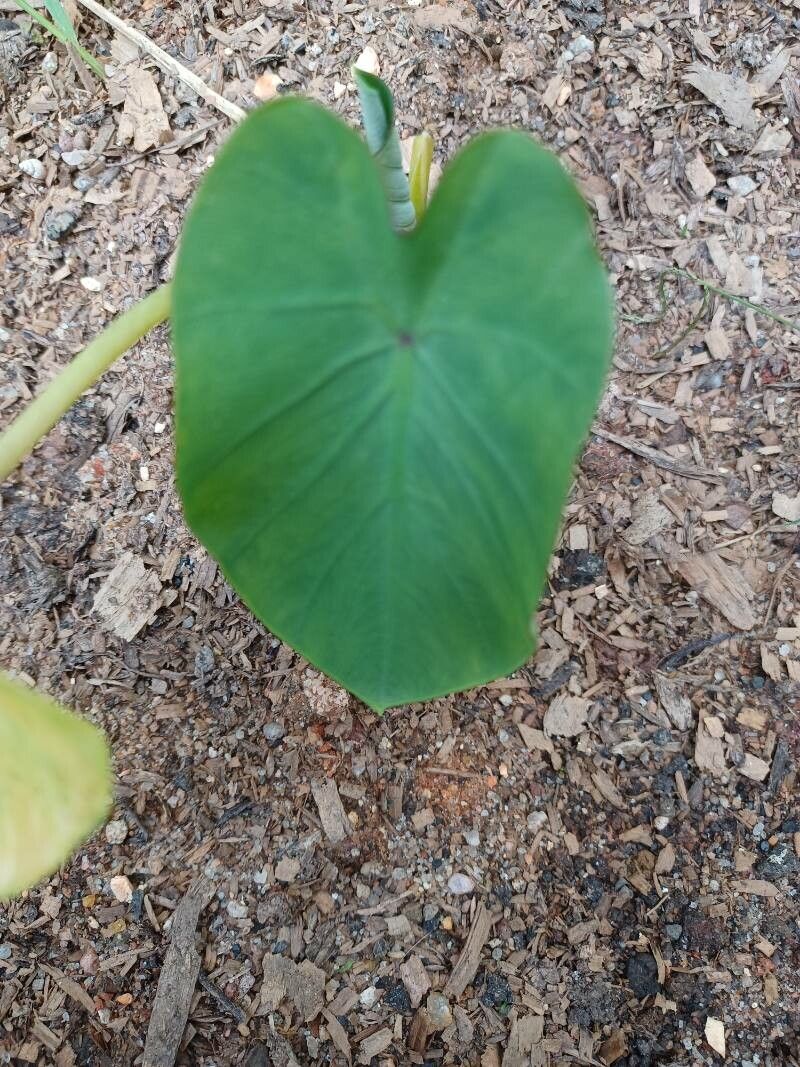
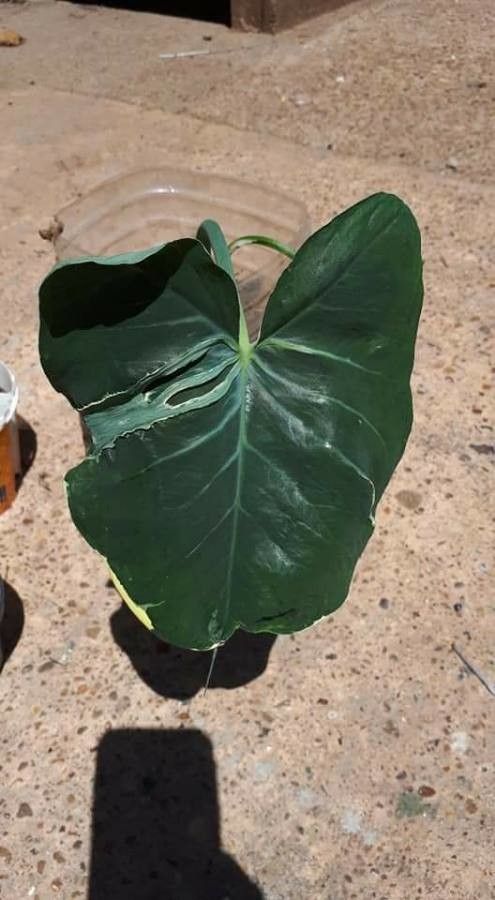
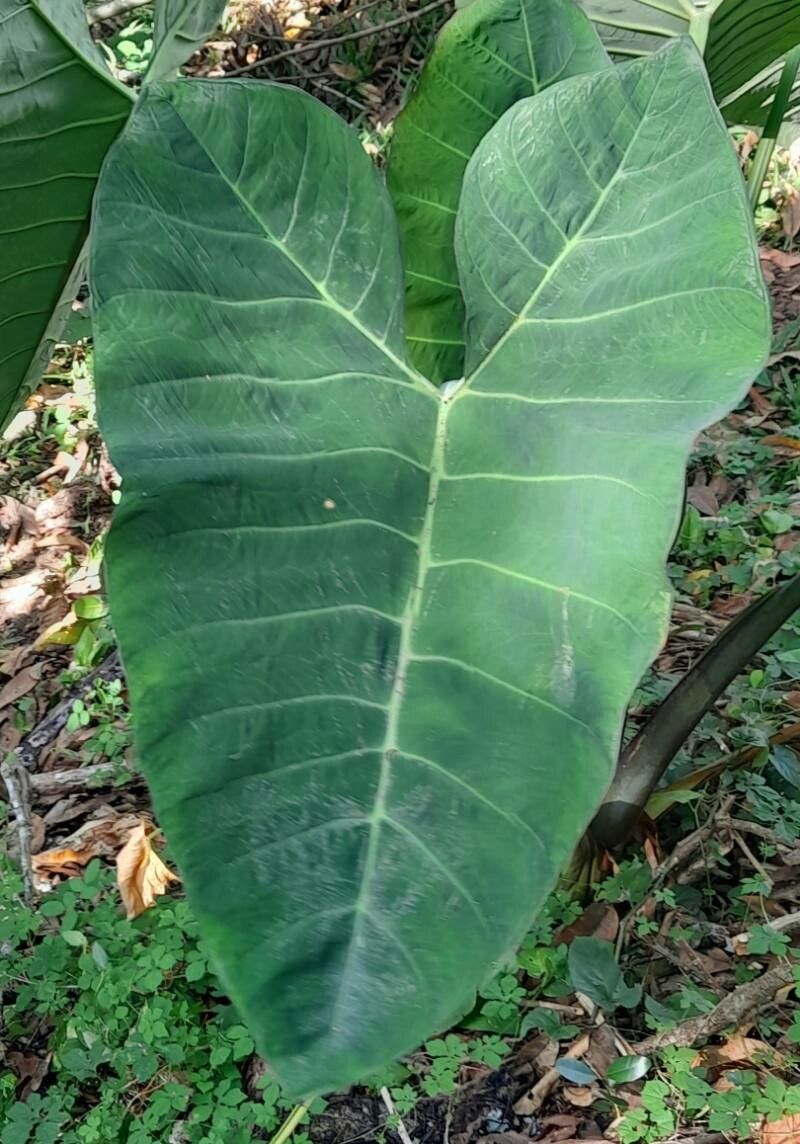
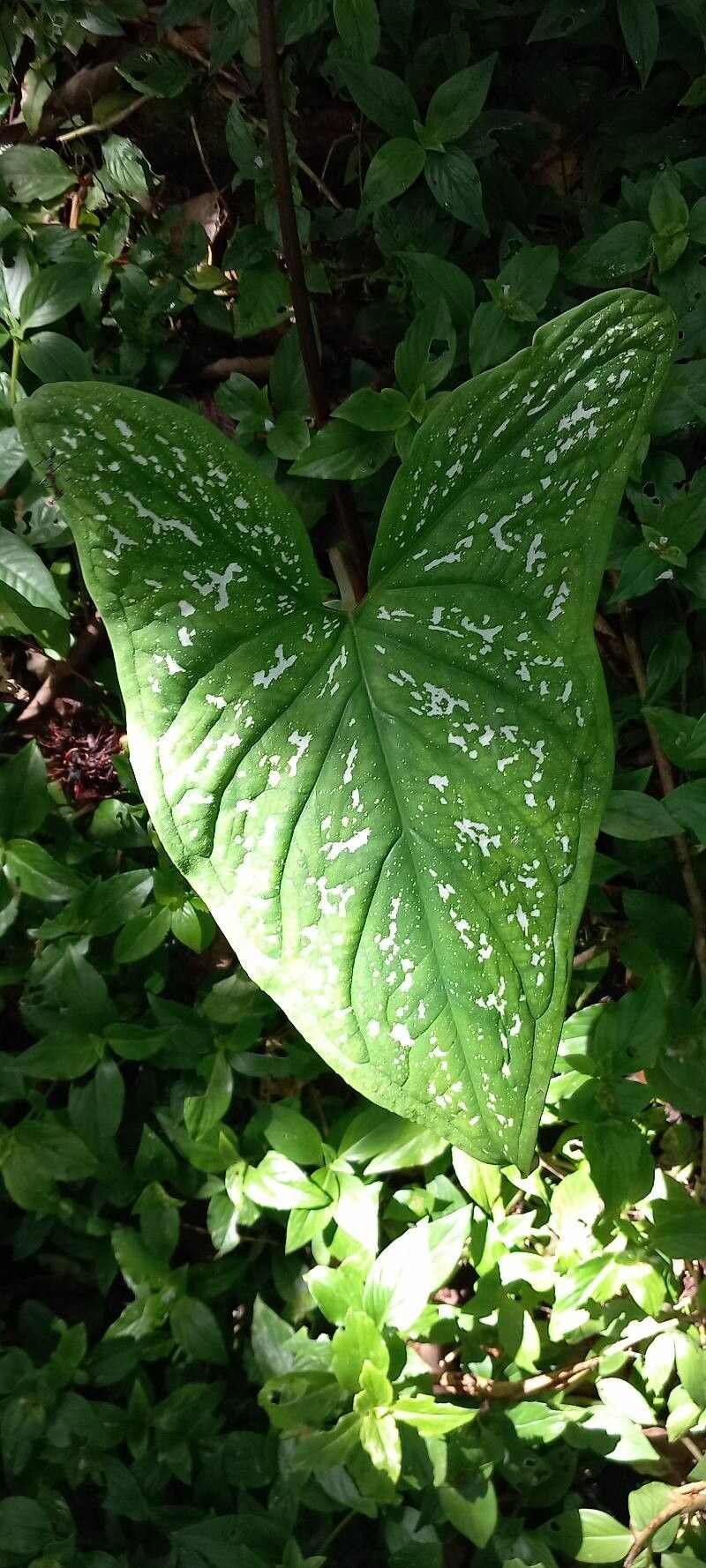
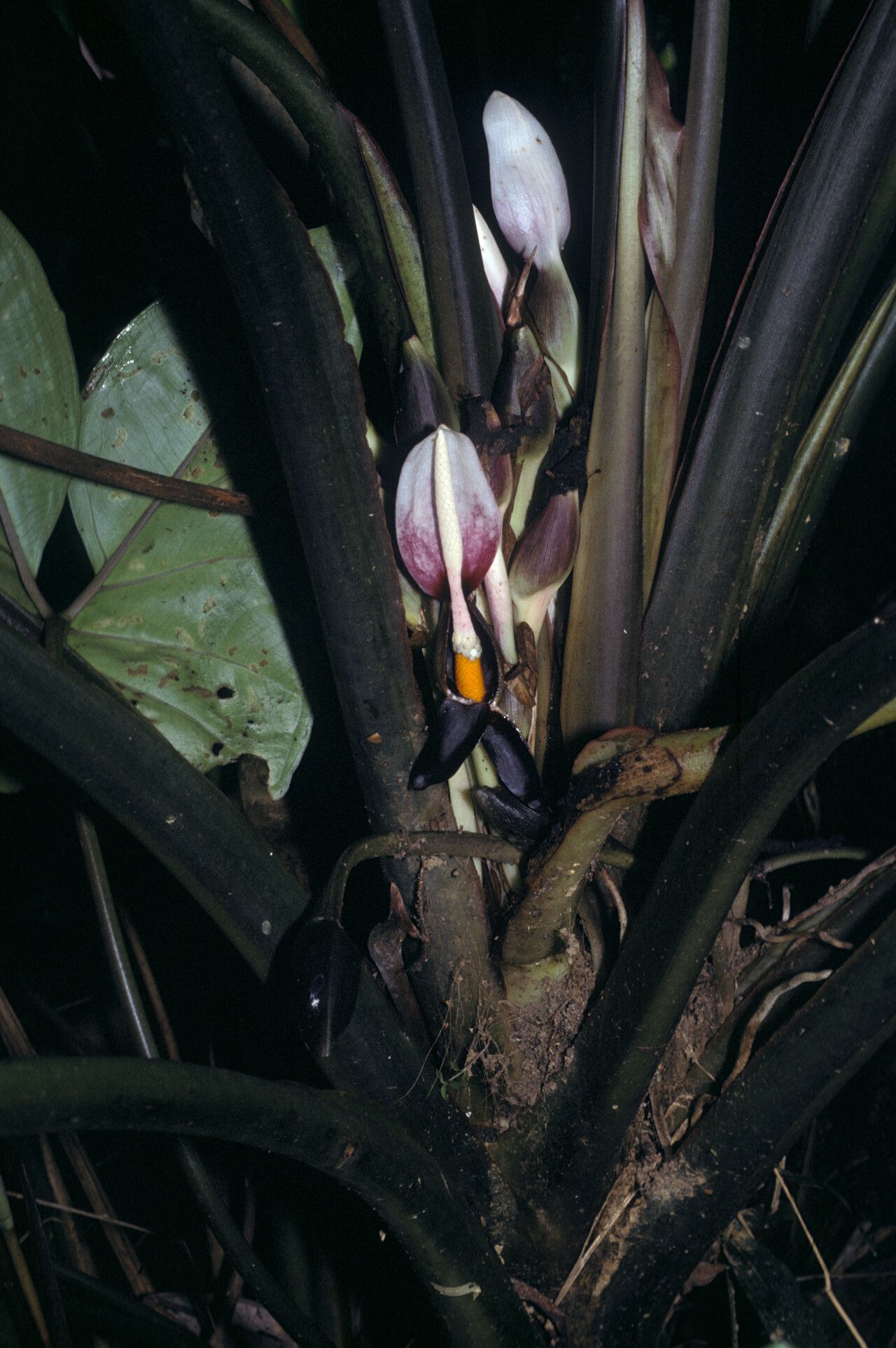
Xanthosoma taioba, commonly known as Taro or Elephant Ear, is a tropical plant in the Araceae family. Native to South America, it is widely cultivated across the globe for its edible corms and leaves. The plant features large, heart-shaped leaves that can reach up to 1 meter in length and 60 cm in width. Its starchy corms serve as a staple food in many cultures worldwide.
This plant thrives in warm temperatures ranging from 20-30°C (68-86°F) and requires high humidity levels for optimal growth. It prefers well-drained soil rich in organic matter and needs regular watering.
Xanthosoma taioba possesses several medicinal properties, including anti-inflammatory, anti-cancerous, and antioxidant benefits. These properties make it useful for treating various ailments, such as providing arthritis pain relief and reducing inflammation caused by allergies.
Beyond its culinary applications, Xanthosoma taioba also holds ornamental value. Its large foliage makes it an attractive addition to gardens and indoor spaces.
In summary, Xanthosoma taioba is an important tropical crop with both culinary and medicinal benefits, making it a valuable asset for farmers and consumers alike.
Xanthosoma taioba has moderate resistance to disease but can be vulnerable to ailments such as leaf spot. Its vulnerability to insect pests depends on the variety, though most varieties are less resistant to pests. Regarding care needs, Xanthosoma taioba requires consistent watering and fertilization, along with regular removal of yellowing leaves. Pests and diseases should be controlled promptly when they appear, and the plant should be harvested in a timely manner. Xanthosoma taioba is appropriate for people who can spend some time and energy on routine care.
How to keep Xanthosoma Taioba.
Light
Xanthosoma taioba comes from habitats such as forest understories or rocky sites with natural shade. It prefers partial sunlight, though it can withstand full sun when required. This flexibility lets it do well across different sunlight conditions.
Temperature
For Xanthosoma taioba, moderate temperatures are preferable, similar to the range most people find comfortable. It does best in conditions that are neither very hot nor very cold. The main concern with high temperatures is the risk of sunburn, so providing some shade in summer is recommended to prevent excessive heat. When temperatures decrease, Xanthosoma taioba goes dormant. If continuous growth is wanted, it is necessary to maintain warmer temperatures during winter. Frost can damage the plant and should be avoided.
Fertilizer
To maximize yield, Xanthosoma taioba responds well to regular applications of a balanced fertilizer, especially one high in nitrogen. Apply fertilizer before planting, at planting, and when seedlings are 2 inches (5.1 cm) tall. Adding compost or manure also delivers a steady source of nutrients. Inadequate soil nutrients cause underdeveloped leaves and stems, inferior flavors, thin stems, and possibly a bitter taste.
Botanical profile.
- Plant Type
- Herb
- Life Cycle
- Perennial
- Genus
- Xanthosoma
- Family
- Araceae
- Hardiness Zone
- 9-11
- Mature Height
- 0.91 m to 2.13 m
- Mature Spread
- 0.91 m to 1.52 m
- Leaf Color
- Dark Green, Forest Green
- Leaf Type
- Deciduous
- Flower Color
- White, Cream
- Flower Size
- 10.16 cm to 15.24 cm
- Bloom Time
- Summer
- Planting Time
- Autumn, Winter
- Harvest Time
- Late summer, Early fall, Mid fall
- Native Area
- Brazil
Other names.