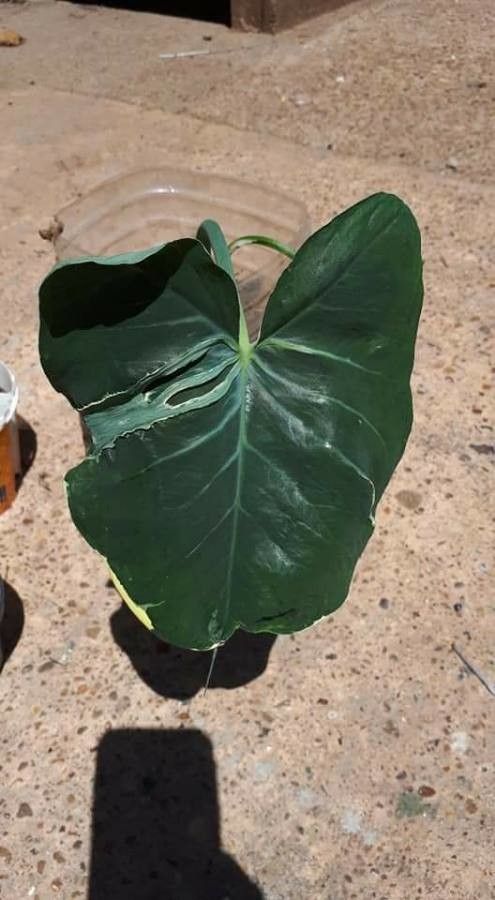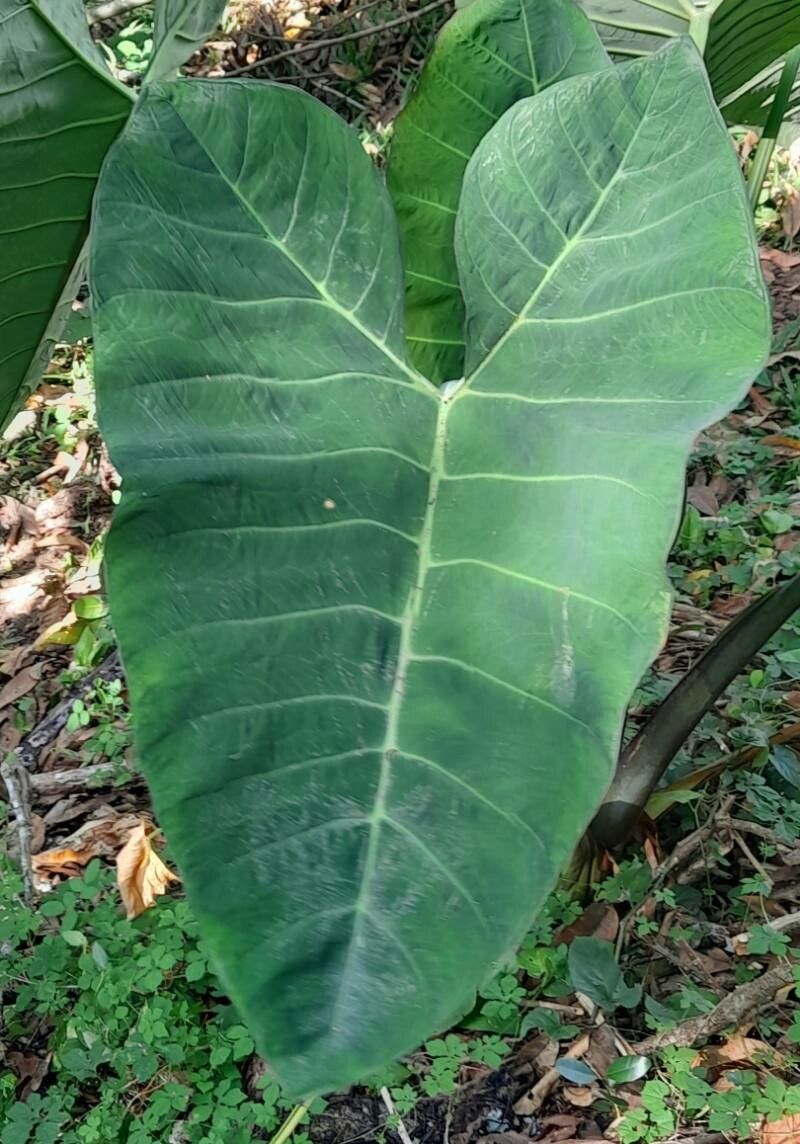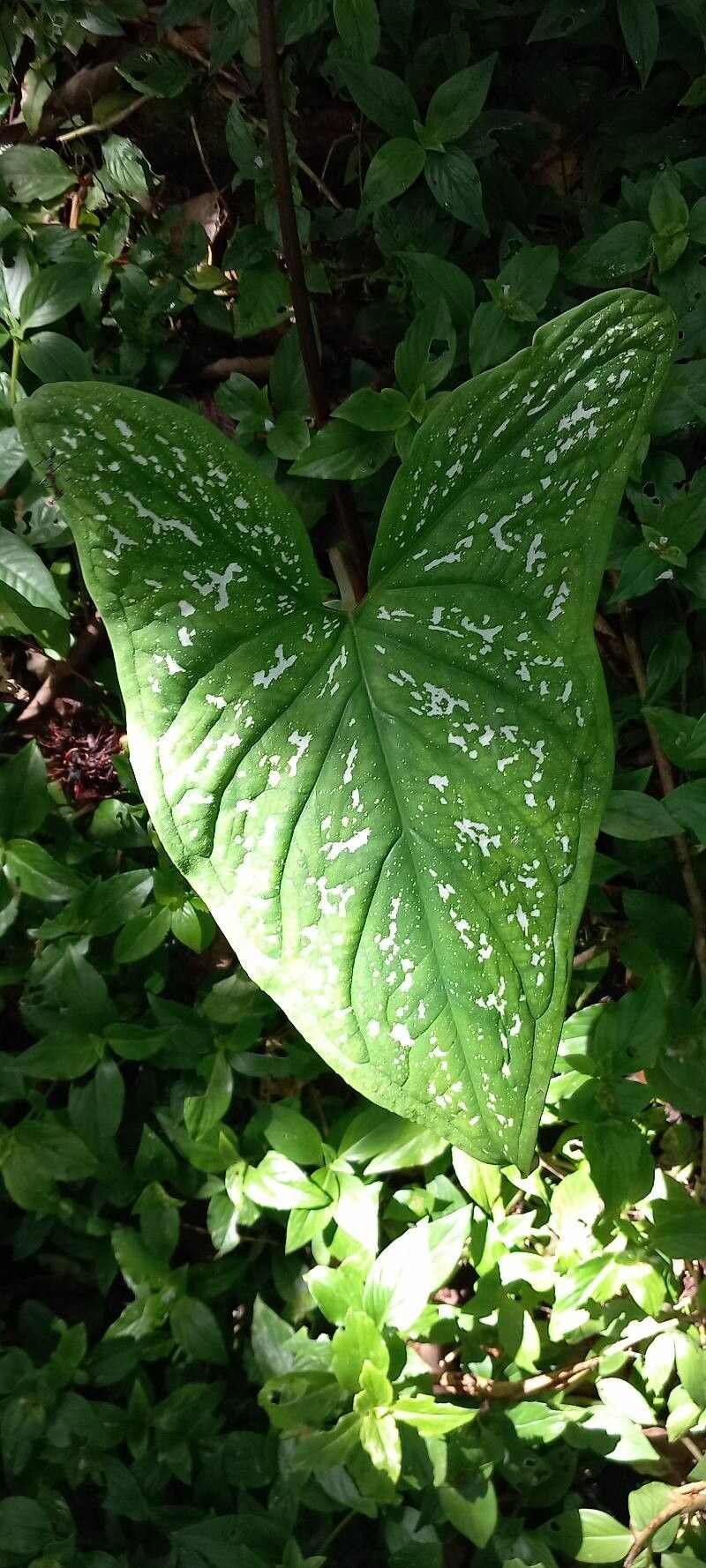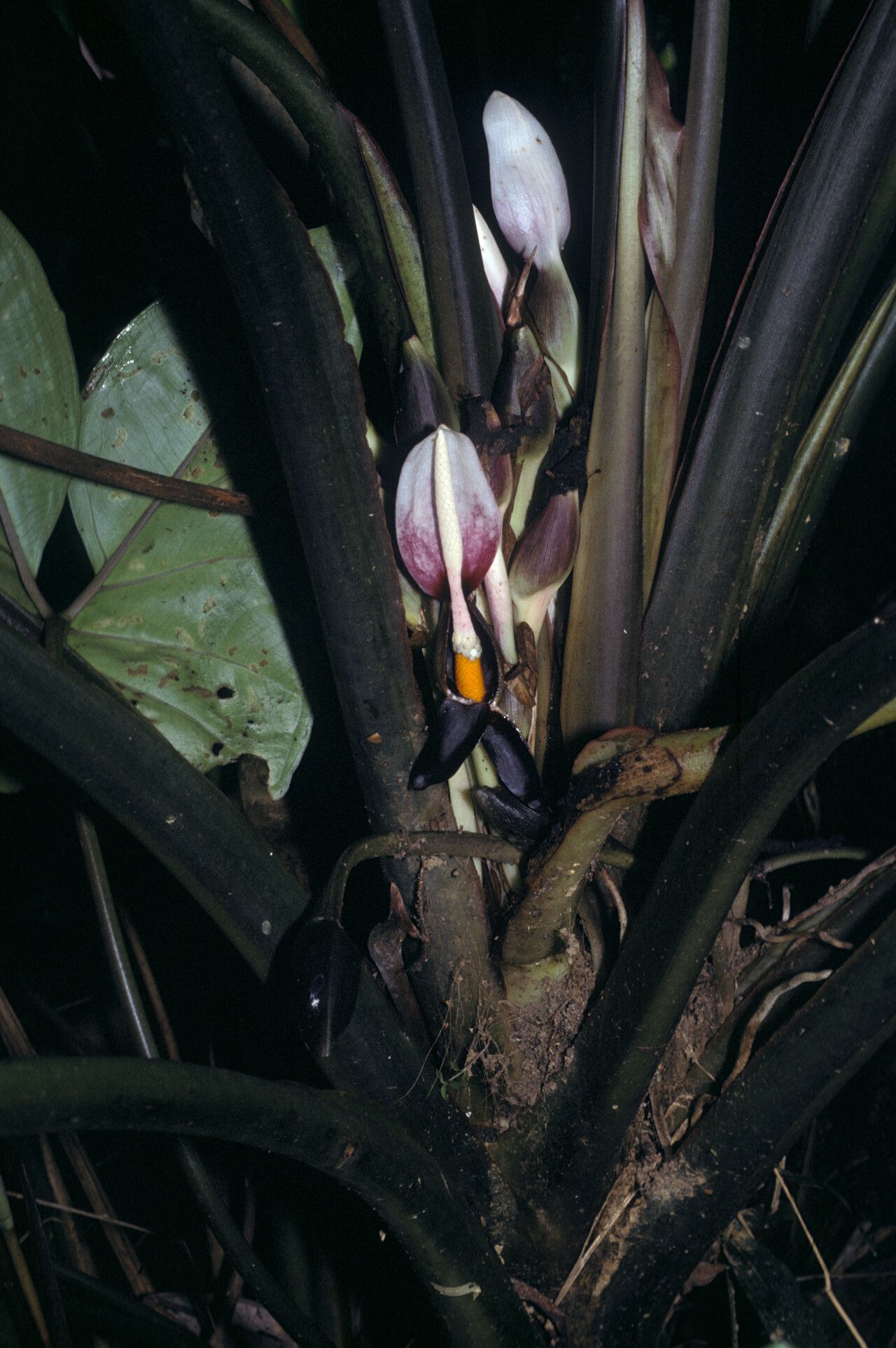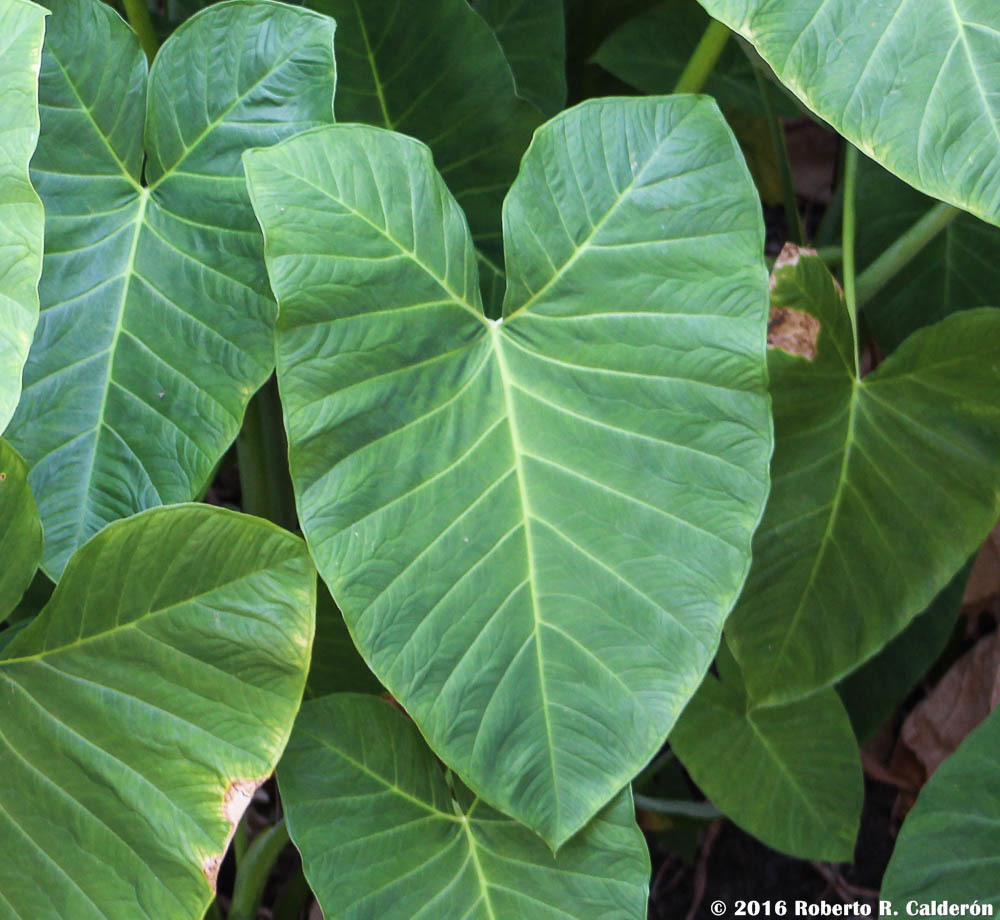
Xanthosoma sagittifolium, the arrowleaf elephant ear, arrowleaf elephant's ear, malanga or American taro, is a species of tropical flowering plant in the genus Xanthosoma, which produces an edible, starchy corm. Cultivars with purple stems or leaves are also variously called blue taro, purple taro, purplestem tannia, and purple elephant's ear among others. Taro is a different species that belongs to the genus Colocasia.
Arrowleaf Elephant's Ear: This plant is aptly named for its large, attractive green leaves that resemble pointed elephant ears. Its specific epithet, "sagittifolium," also means "arrow-shaped."
Arrowleaf elephant's ear has strong disease resistance and is generally not prone to illness. However, it can develop leaf spots if light and ventilation are inadequate and if it is overwatered. The plant is regarded as easy to care for, requiring only regular watering and little else. It is well suited to people who lack the time and energy to provide frequent care.
How to keep Xanthosoma Sagittifolium.
Light
Arrowleaf elephant's ear needs filtered sunlight on most days to grow well, although it can tolerate constant shade or occasional full sun. It comes from habitats where the canopy of taller plants provides dappled light. Too little light can limit its growth, while too much exposure can burn the leaves.
Water
Arrowleaf elephant's ear flourishes in humid, tropical environments. It needs soil that stays evenly moist but is not waterlogged. To keep the plant healthy, water it weekly. As an evergreen plant often grown indoors, it also requires high humidity. You can increase humidity by misting the leaves or placing the pot on a tray filled with pebbles and water.
Temperature
Arrowleaf elephant's ear favors a warm climate; its native growth range is # to # ℉ (# to # ℃). It grows best at temperatures between 68 to 100 ℉ (20 to 38 ℃). During winter, keep temperatures in the 59 to 65 ℉ (15 to 18 ℃) range for optimal growth.
Fertilizer
Arrowleaf elephant's ear needs the most fertilizer during its active growth phase, which occurs mainly in spring, summer, and early fall. Fertilizing provides essential nutrients the soil may lack, supporting healthy root and stem development as well as the attractive foliage that is a defining characteristic of this plant.
Pruning
The Arrowleaf Elephant's Ear is known for its large, arrow-shaped leaves and requires minimal pruning. To keep the plant healthy and looking its best, prune during early to late spring, concentrating on removing dead or damaged leaves. Using clean, sharp tools helps prevent infections and encourages strong growth, resulting in a neat appearance.
Pot & Repot
Repot Arrowleaf elephant's ear in spring or summer once it's warm enough, choosing a slightly larger pot with good drainage. Water thoroughly after repotting and place the plant in bright, indirect light. Consider installing a moss pole to support it as it grows.
Botanical profile.
- Plant Type
- Herb
- Life Cycle
- Perennial
- Genus
- Xanthosoma
- Family
- Araceae
- Hardiness Zone
- 9-11
- Mature Height
- 2.13 m to 2.44 m
- Mature Spread
- 61 cm to 91 cm
- Leaf Color
- Green, Blue
- Leaf Type
- Evergreen
- Flower Color
- White, Cream
- Flower Size
- 10.16 cm to 15.24 cm
- Bloom Time
- Summer
- Planting Time
- Spring
- Harvest Time
- Late summer, Early fall, Mid fall
- Native Area
- Colombia, Honduras, Mexico, Bolivia, Venezuela, Peru, Brazil, Panama
Other names.
Reader questions.
How should I water my Arrowleaf elephant's ear plant?
There are several ways to water your Arrowleaf elephant's ear plant. If you have it in a small indoor pot, you can bring it to the kitchen sink and use the faucet. Hold the pot in your hands and stop watering when the water starts running through the drainage holes. Avoid doing this in cold weather as it can harm the root system. If your tap water has high levels of fluorine, chlorine, or salts, consider using rainwater or lake water instead. Additionally, you can also water the plant overhead or directly into the soil using a watering can, hose, or any other tool you prefer.
Why should I put fertilizer on my Arrowleaf elephant's ear plant?
All plants need soil nutrients to grow, and the Arrowleaf elephant's ear is not an exception. However, there is no guarantee that the soil where your plants grow will have all the necessary nutrients. To ensure that the plants in your garden get the nutrients they need, fertilization and soil amendments are used. For the Arrowleaf elephant's ear, fertilizer is particularly important to support the healthy development of its roots and stems throughout the growing season. Fertilization also contributes to the plant's appealing foliage, which is its main ornamental feature.
What are the sunlight requirements for Arrowleaf elephant's ear?
Arrowleaf elephant's ear requires filtered sunlight on most days to ensure healthy growth. Originating from under the canopies of larger plants, it thrives in dappled sunlight but can also tolerate consistent shade or full sun occasionally. It's important to monitor exposure since insufficient light can hinder growth, and too much sunlight may lead to leaf scorching. Consider adjusting the plant's placement or employing artificial lighting, especially during less sunny seasons or in indoor settings, to provide optimal growth conditions. For indoor plants, using LED lights can mimic natural sunlight, with recommendations varying from 10-50W/sq ft depending on the plant's sunlight needs. Properly managing the distance from the light source and ensuring 8-12 hours of light per day can help maintain its health.
What is the preferred temperature range for Arrowleaf elephant's ear?
Arrowleaf elephant's ear, or Xanthosoma sagittifolium, thrives in a warm environment and has a native growth temperature range from 68 to 100°F (20 to 38°C). During winter, it's important to maintain temperatures between 59 and 65°F (15 to 18°C) for optimal growth. This plant is heat-loving, and exposure to cold temperatures can cause damage. Therefore, in the autumn, it's advisable to move outdoor plants indoors, placing them near a bright window but away from direct heat sources to maintain the required warm conditions.
What should I do if I give my Arrowleaf elephant's ear plant too much water or too little water?
If your Arrowleaf elephant's ear is underwatered, the first step is to give it some water. Make sure to water deeply until excess water runs out of the drainage hole. For outdoor plants, the soil should be completely moist. On the other hand, if your plant is receiving too much water, start by reducing the watering schedule. Also, check the soil and container. If the soil or container does not allow for efficient drainage, it may cause overwatering again. To solve this, transfer the plant to looser soils or a container with larger drainage holes. Consider the location of the plant as well. If it is in a corner, it is recommended to move it to a well-ventilated area, such as near a window or door, to reduce the chance of overwatering.
When should I fertilize my Arrowleaf elephant's ear?
An Arrowleaf elephant's ear plant requires the most fertilizer when it is actively growing, which is usually during spring, summer, and early fall. During this time, it is recommended to feed the plant every two to four weeks. As winter approaches, gradually decrease the amount of fertilizer given until you stop feeding the plant entirely. This is because the plant's growth slows down significantly in winter.
What are the indicators of insufficient or excessive light exposure in Arrowleaf elephant's ear?
When Arrowleaf elephant's ear doesn't receive appropriate light levels, several symptoms can indicate either insufficient or excessive exposure. Insufficient sunlight can lead to lighter-colored new leaves, faster leaf drop, and smaller new leaves, signaling a need for more light. On the other hand, excessive sunlight can cause chlorosis, where leaves turn yellow due to a breakdown of chlorophyll; sunscald, which damages plant tissues; leaf curling, as a mechanism to minimize damage; wilting from rapid water loss; and leaf scorching, identified by brown, dry patches on leaves. These symptoms help in determining whether the plant needs more shelter or exposure to sunlight.
How does low temperature affect Arrowleaf elephant's ear and what are the solutions?
Arrowleaf elephant's ear prefers warm conditions and does not tolerate low temperatures well. It's important to keep the plant above 59°F (15°C) during winter. Exposure to temperatures below this range can lead to symptoms like leaves lightening in color, and after frost damage, leaves may turn brown or black and exhibit wilting or drooping. To address frost damage, trim off the frost-damaged parts and move the plant to a warm indoor environment. Positioning the plant near a south-facing window ensures ample sunlight, but it should be kept away from heaters or air conditioning vents to prevent dry air issues.
How often should I water my Arrowleaf elephant's ear plant?
The Arrowleaf elephant's ear doesn't need consistent soil moisture. It's best to let the soil dry out between waterings. If you grow this plant in a container, you can check if it needs water by feeling the soil's dryness. If the top half of the soil is dry, it's time to water. You can also use your fingers, sticks, or a soil moisture meter to check. If you grow the Arrowleaf elephant's ear outdoors, you can plan to water it about once every other week, unless it has rained recently.
When is it best not to fertilize my Arrowleaf elephant's ear?
During most of the year, including spring, summer, and most of the fall, it is important to regularly feed your Arrowleaf elephant's ear. However, there are two exceptions to this. Firstly, if you notice that your plant has received too much fertilizer or if you have fertilized it incorrectly, you should address these issues before continuing with regular feeding. Secondly, you should refrain from fertilizing your Arrowleaf elephant's ear during the winter. If you are growing the plant indoors in a cold climate, it will go into a dormant phase during winter. Feeding the plant during this phase is not only unnecessary and unhelpful, but it can also lead to fertilizer burn.
How can I address light-related issues with my Arrowleaf elephant's ear?
Addressing light-related issues in Arrowleaf elephant's ear involves adjusting the plant's exposure to sunlight gradually and, if necessary, using artificial lighting. For indoor plants or those that are not easily movable, introducing artificial light sources such as desk lamps or professional grow lights for at least 8 hours a day can supplement natural light. Outdoors, it's crucial to move plants progressively into sunnier spots weekly to prevent shock and sunburn. Additionally, for ground-planted species, reducing obstructions like overhanging branches or relocating the plant during its dormant period to a sunnier spot can significantly improve light access. Remember, while unhealthy parts of the plant might not recover, new growth post adjustment should return to normal health.
What should be done if Arrowleaf elephant's ear is exposed to high temperatures?
During summer, it's crucial to keep Arrowleaf elephant's ear below 100°F (38°C) to prevent heat stress. When temperatures exceed this threshold, the leaves may lighten in color and the plant becomes prone to sunburn. To mitigate this, trim the sunburned and dried areas, move the plant to a shaded location during the midday and afternoon sun, and ensure it is watered in the morning and evening to keep the soil moist. This helps in maintaining the plant's health even in higher temperatures.