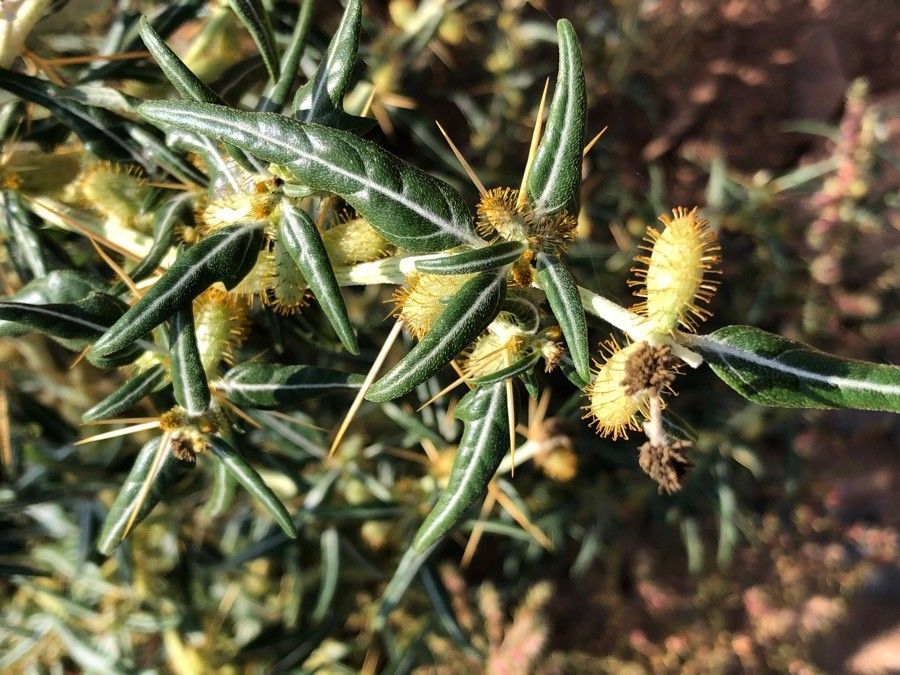
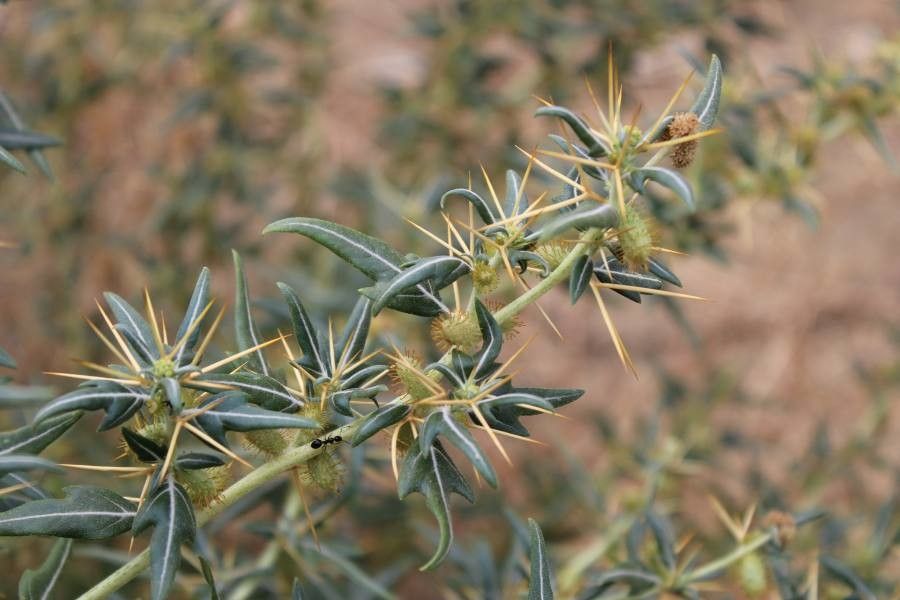
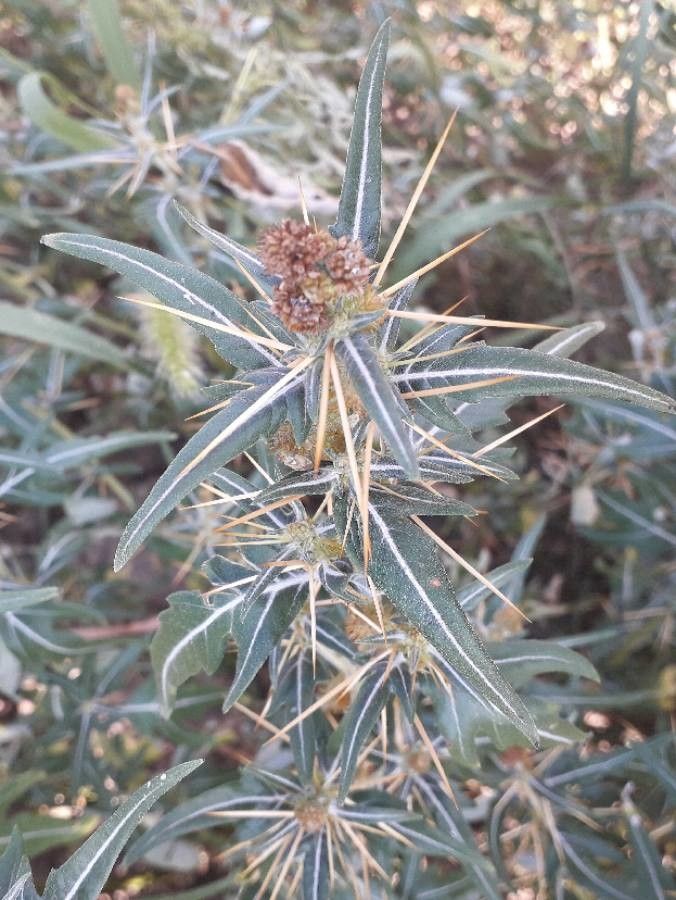
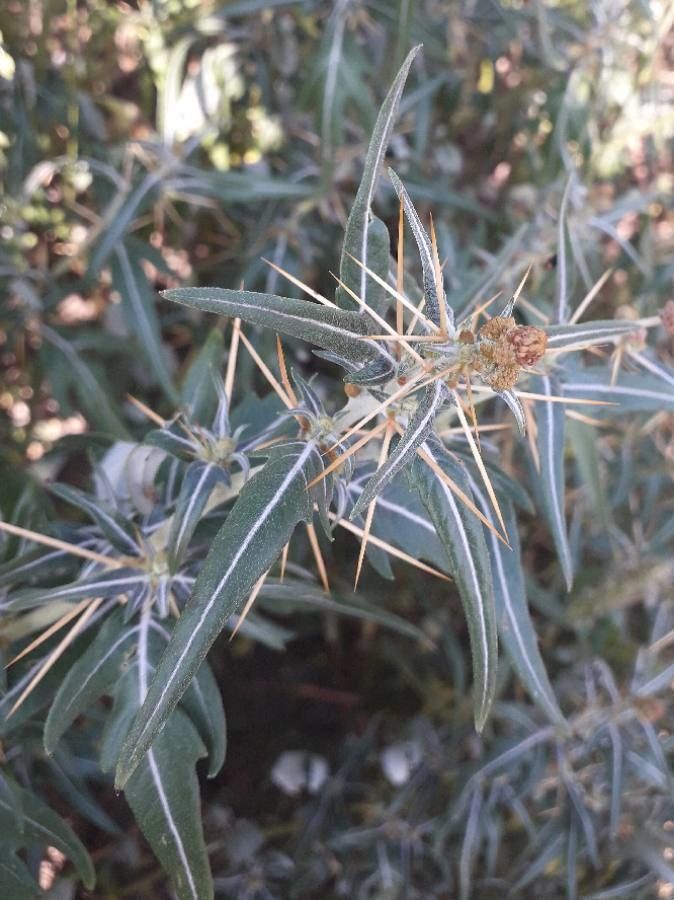
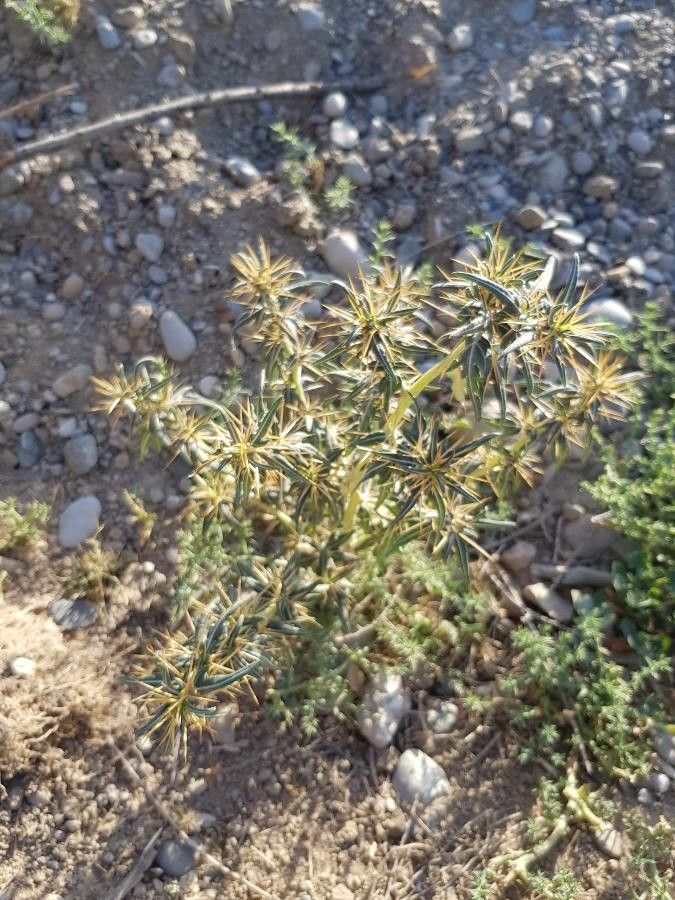
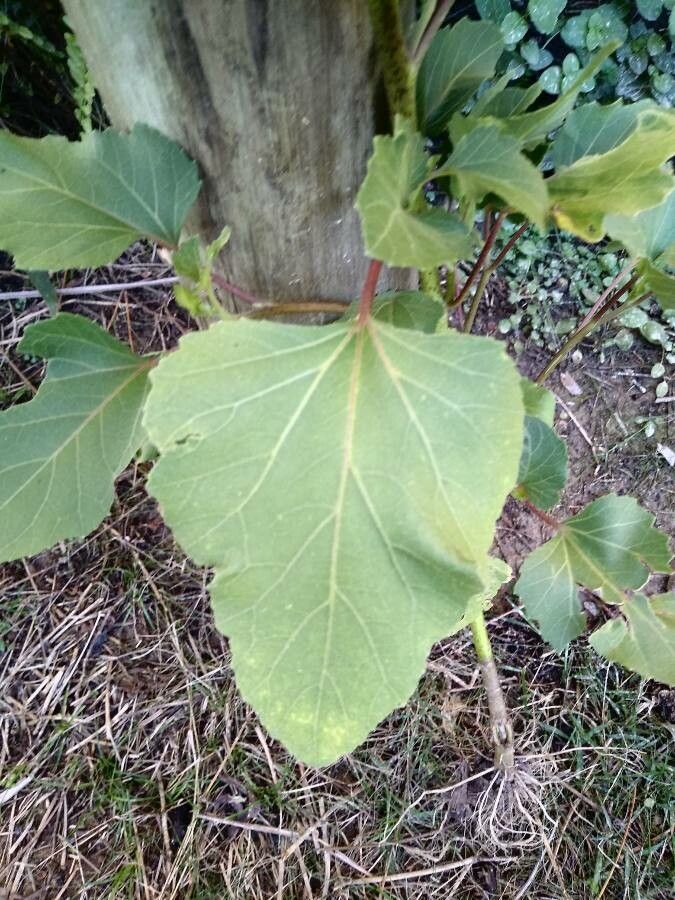
Xanthium spinosum, commonly known as spiny cocklebur or spiny clotbur, is a species of flowering plant in the Asteraceae family. It is native to Europe, Asia, and North Africa but has been introduced to other parts of the world, including North America and Australia.
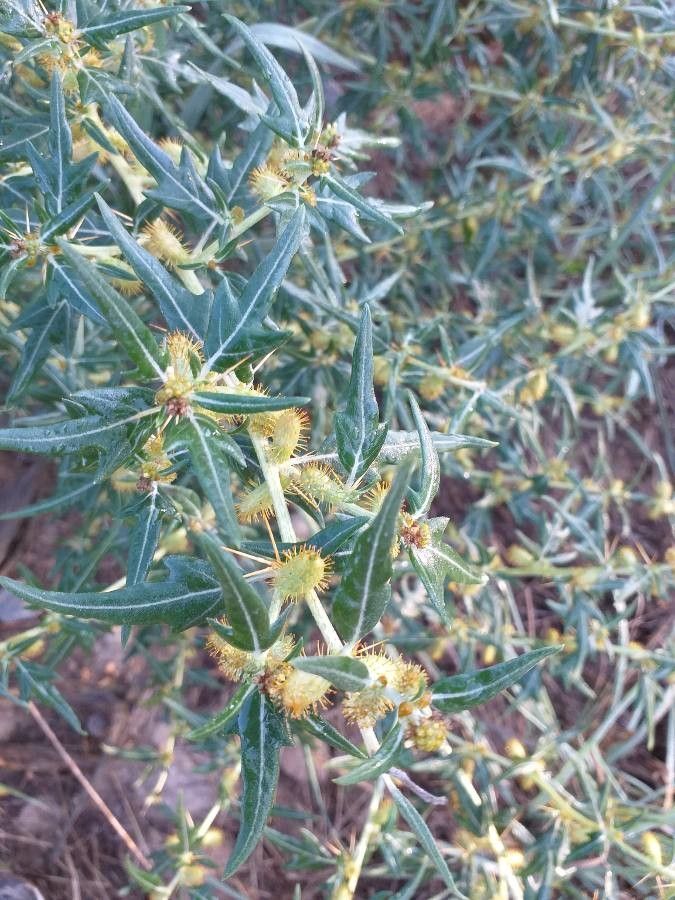
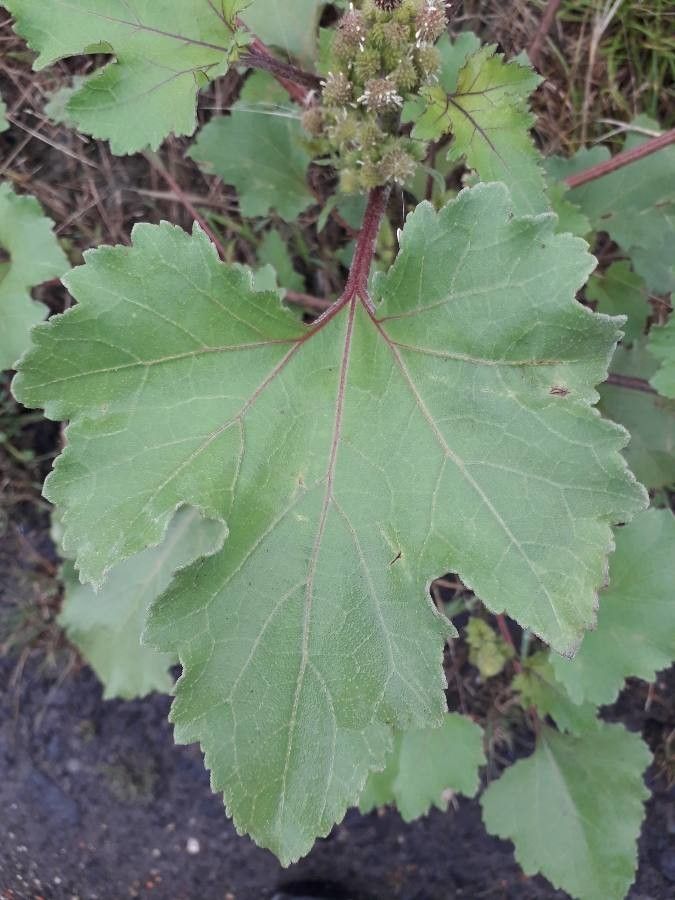
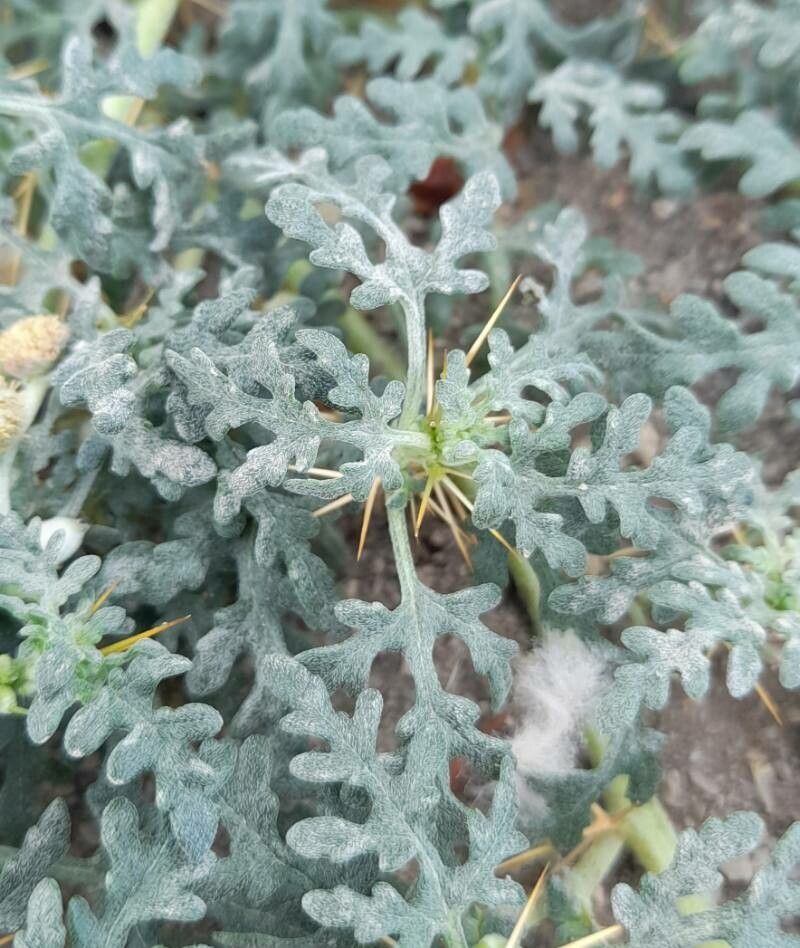
The plant can grow up to 1 meter tall and features a branching stem covered in small spines. Its leaves are alternate, lobed or toothed, and have a rough texture, growing up to 15 cm long. The flowers are small, greenish-yellow heads that bloom from July to September.
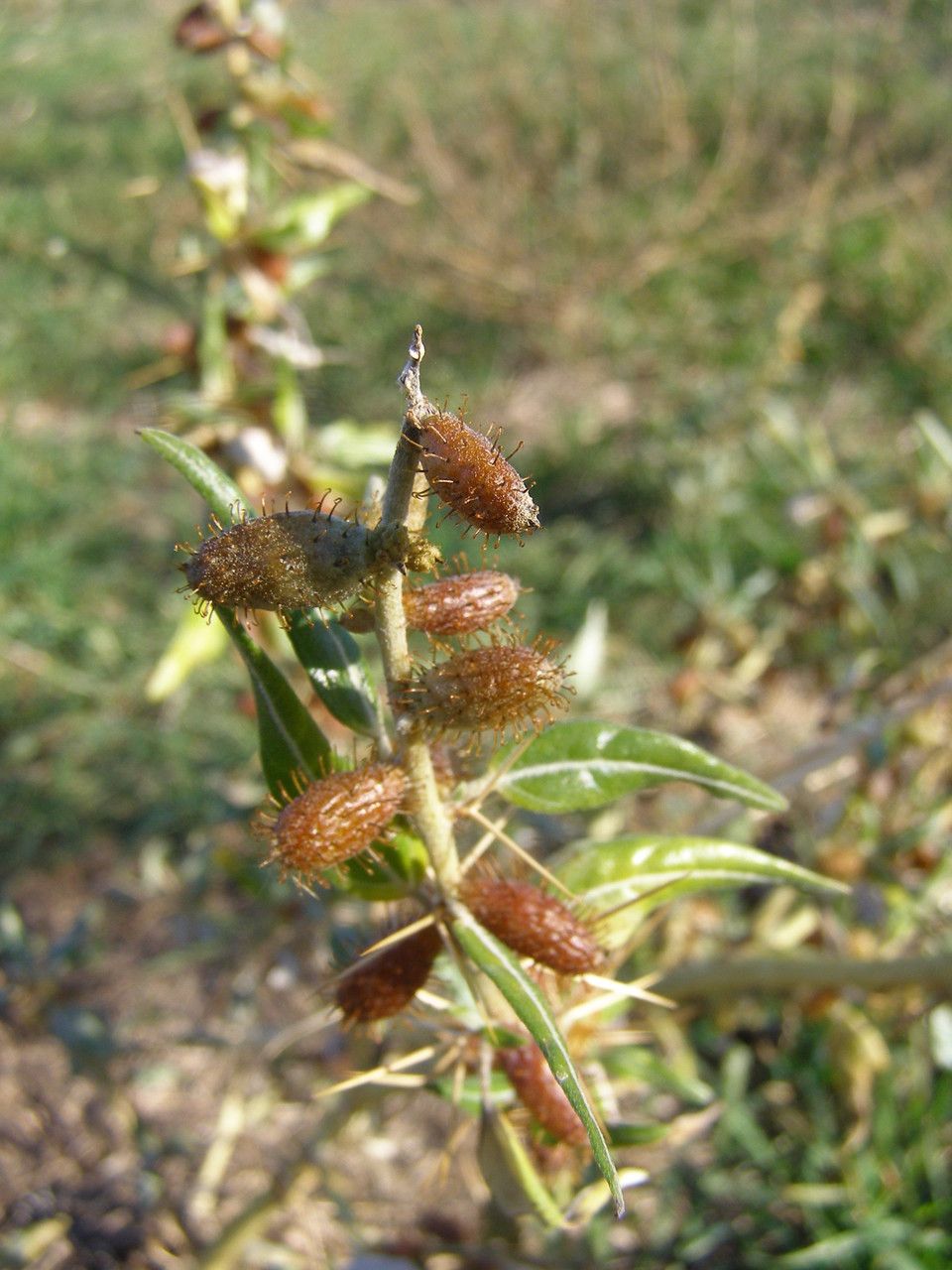
The fruit of Xanthium spinosum is covered in hooked bristles that easily attach to clothing or animal fur, aiding in its dispersal. These burrs can cause skin irritation if they come into contact with human skin.
Xanthium spinosum prefers dry soils such as those found in waste ground, roadsides, and disturbed areas, but it can also grow in damp soils near water sources like riversides.
In traditional medicine practices across Europe, Asia, and Africa, Xanthium spinosum has been used for its anti-inflammatory properties to treat conditions such as rheumatism and arthritis.
Overall, Xanthium spinosum is an interesting plant species with unique physical characteristics. While it has positive medicinal uses, it can also become an invasive weed in some parts of the world due to its ability to disperse easily via its burrs.
Spiny cocklebur shows strong disease resistance and is usually not prone to illnesses. However, it can be affected by pests and diseases present in its environment. These outbreaks are generally mild. For care, this plant needs moderate maintenance. It should be pruned regularly to preserve a neat appearance and support healthy growth. Fertilizing can also encourage flowering. Spiny cocklebur is well suited for anyone with outdoor space, such as a garden or patio, and does not demand extensive gardening experience. It may need more attention when cultivated indoors.
How to keep Xanthium Spinosum.
Light
Spiny cocklebur does best in locations receiving abundant sunlight. Sunlight is essential for strong growth and vigor. Throughout its different growth stages, steady, unobstructed exposure to light is helpful. As a species native to open, unshaded habitats, insufficient sunlight can cause health problems, while an excess of sunlight does not harm it.
Water
The spiny cocklebur, native to regions with varying moisture levels, is a drought-tolerant plant. To mimic its natural environment, it needs weekly watering. This plant thrives outdoors, adapting well to unpredictable rainfall, which makes it ideal for climates that experience irregular weather patterns.
Temperature
Spiny cocklebur is a plant native to environments with average temperatures of 68 to 95 °F (20 to 35 °C). It requires this warm temperature range for optimal growth. Seasonal temperature adjustments should be considered, if necessary, to maintain this range.
Fertilizer
Spiny cocklebur does well with regular, light applications of fertilizer to encourage healthy leaf development. You should apply fertilizer roughly once a month during the summer. Nitrogen is vital for foliage, and adding nitrogen-rich fertilizers helps Spiny cocklebur thrive.
Pruning
The spiny cocklebur has distinctive spines and produces burs. To manage this plant effectively, it's best to prune it before new growth begins in early spring. Use sharp tools to remove dead branches and thin out crowded areas, which will improve air circulation. Regular pruning helps control the plant's invasiveness and promotes healthy growth by encouraging new shoots. Focus on cutting back older stems to achieve the best results.
Botanical profile.
- Plant Type
- Herb
- Life Cycle
- Annual
- Genus
- Xanthium
- Family
- Asteraceae
- Hardiness Zone
- 6-9
- Mature Height
- 3.96 m
- Mature Spread
- 1.22 m to 1.52 m
- Leaf Color
- Green, Dark Green
- Leaf Type
- Evergreen
- Flower Color
- Yellow, Green, White, Cream
- Flower Size
- 2.54 cm
- Bloom Time
- Mid summer, Late summer, Early fall
- Planting Time
- Spring, Summer
- Harvest Time
- Early fall, Mid fall
- Native Area
- Uruguay, Chile, Paraguay, Bolivia, Peru, Brazil, Ecuador, Zimbabwe
Other names.
Reader questions.
How should I water my Spiny cocklebur plant effectively?
To water Spiny cocklebur, you have several options: a garden hose with a spray nozzle, a watering can, or any other common watering tool you have. This plant isn't too particular about the water it receives, so rainwater, tap water, or filtered water will suffice. Avoid watering from above, as it can harm the leaves, flowers, and potentially cause disease. For optimal watering, consider using a drip irrigation system, which provides even and direct water to the soil. If you're watering a Spiny cocklebur in a container, simply swap out the tools and use a cup, watering can, or tap to directly water the soil.
What are the sunlight requirements for Spiny Cocklebur?
Spiny cocklebur requires more than 6 hours of sunlight to thrive, making full sun exposure crucial for its growth and vigor. Observing how sunlight moves through your garden helps in choosing spots that offer a perfect balance of light and shade. As a plant accustomed to open areas, it needs consistent, clear exposure to sunlight throughout its different growth stages. Too little sunlight can lead to health issues, whereas too much sunlight generally doesn't cause harm.
What are the optimal growth temperatures for Spiny cocklebur?
Spiny cocklebur, or Xanthium spinosum, thrives in environments where the average temperature ranges between 68 to 95 °F (20 to 35 °C). To ensure optimal growth, it's important to maintain this warm temperature range, making seasonal adjustments to temperature as necessary.
What should I do if I give my Spiny cocklebur plant too much or too little water?
To avoid underwatering your Spiny cocklebur, it's important to water it regularly when you notice it lacks moisture. Overwatering, on the other hand, can be a more serious problem that may lead to diseases and even death for your plant. To prevent overwatering, choose a suitable location with ample sunlight for soil drying and good drainage to prevent water from pooling. If you have overwatered a potted Spiny cocklebur, it may be necessary to transfer it to a pot with better drainage and looser soil.
How can artificial lighting benefit indoor Spiny Cocklebur plants?
Indoor Spiny cocklebur plants require adequate lighting for optimal growth, especially when natural sunlight is insufficient, such as during winter or in less sunny spaces. Artificial lights, such as LED lights, are beneficial because they provide the essential wavelengths of light needed by the plants. The recommended amount of artificial light varies depending on the plant's needs: 30-50W/sq ft for full sun plants, 20-30W/sq ft for partial sun plants, and 10-20W/sq ft for full shade plants. It's important to place the light source 12-36 inches above the plant and mimic natural daylight hours by keeping the lights on for 8-12 hours per day.
Does Spiny cocklebur need frost protection in winter?
Spiny cocklebur has strong cold resistance and typically does not require special frost protection measures during winter. However, if winter temperatures are expected to drop below -25°C, it is important to provide cold protection. This can be achieved by covering the plant with soil or straw. Additionally, before the first freeze of autumn, watering the plant abundantly to keep the soil moist can help prevent drought and water scarcity during winter and early spring.
How frequently should I water my Spiny cocklebur plant?
Spiny cocklebur requires regular watering throughout the growing season. In spring, water this plant about once per week. As the season progresses and becomes warmer, you may need to increase watering to two to three times per week. However, be careful not to exceed this rate as it could harm the plant. It's important to keep the soil relatively moist but not wet regardless of the watering frequency. When watering a Spiny cocklebur that is in a pot, you should water it more often than an in-ground plant. The soil in pots dries out faster, so plan to water a container-grown Spiny cocklebur a few times per week instead of just once.
What are the common symptoms of inadequate light for Spiny Cocklebur?
When Spiny cocklebur is grown indoors with insufficient light, it may exhibit symptoms such as small leaves, leggy or sparse growth, faster leaf drop, slower or no new growth, lighter-colored new leaves, chlorosis (leaf yellowing), sunscald, leaf curling, wilting, and leaf scorching. These symptoms indicate either a deficiency or, in some cases like chlorosis and sunscald, excessive sunlight exposure, reflecting the plant's struggle to adapt to inadequate light conditions.
How does Spiny cocklebur respond to low temperatures, and what are the solutions?
Though Spiny cocklebur is cold-tolerant and prefers temperatures above 20°C, it should be kept above 0°C during winter. If temperatures fall below -25°C, the plant may show no noticeable changes in winter but could experience a decrease in sprouting or no sprouting in spring. The solution for dealing with non-sprouting parts in spring is to remove them.
How much water does my Spiny cocklebur plant require?
To determine how much water to give your Spiny cocklebur, there are a few approaches you can take. Some gardeners prefer to assess the soil's moisture level by feeling it. If you choose this method, water until you perceive that the top six inches of soil are moist. Alternatively, you can follow a specific measurement guideline. Generally, you should provide around two gallons of water per week, considering factors like temperature and the soil's drying speed. It's important to note that sticking strictly to this guideline may result in overwatering if your plant requires less water for some reason. When growing the Spiny cocklebur in a container, a different approach is needed. In this case, water enough to moisten all dry layers of soil. You can check for moisture by simply inserting your finger into the soil. Another indication is when you notice a slight excess water drainage from the pot's holes.
What solutions are recommended for addressing inadequate sunlight for Spiny Cocklebur?
To combat inadequate sunlight exposure for Spiny cocklebur, gradually increasing sunlight is key. Indoors, move the plant closer to a south-facing window or use artificial light, ensuring at least 6 hours of direct sunlight or equivalent light daily. For outdoor plants, relocate them to sunnier spots gradually to prevent sunburn. Reducing obstructions like overhanging branches can also help. Note that parts of the plant already affected may not recover, but new growth should be healthy once light conditions improve. For smaller plants, consider transplanting to a sunnier location, preferably during their dormant period.
What happens if Spiny cocklebur is exposed to high temperatures, and what should be done?
During summer, it's crucial to keep Spiny cocklebur below 35°C to prevent heat stress. Exposing the plant to temperatures above 38°C can cause the leaves to lighten in color, become prone to curling, susceptible to sunburn, and in severe cases, result in the entire plant wilting and becoming dry. To mitigate damage, trim away sunburned and dried-up parts, move the plant to a shadier location or use a shade cloth to protect it from the midday and afternoon sun. It's also advisable to water the plant in the morning and evening to keep the soil moist.