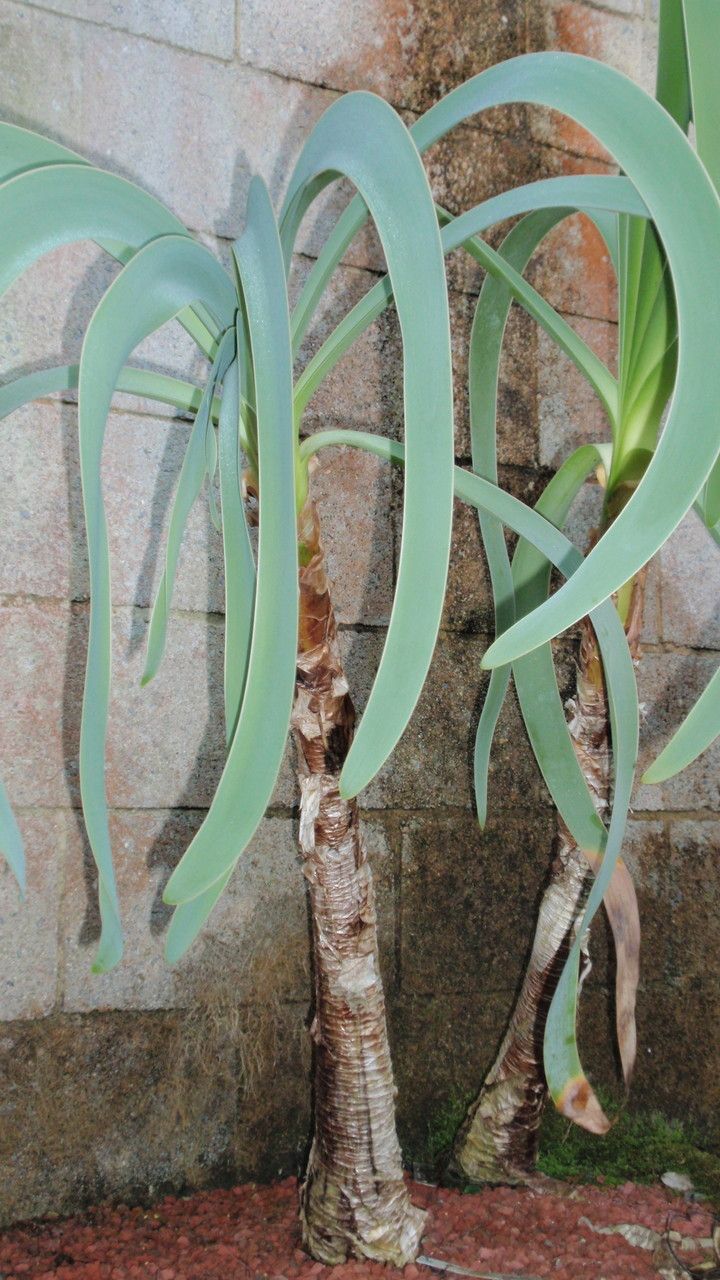
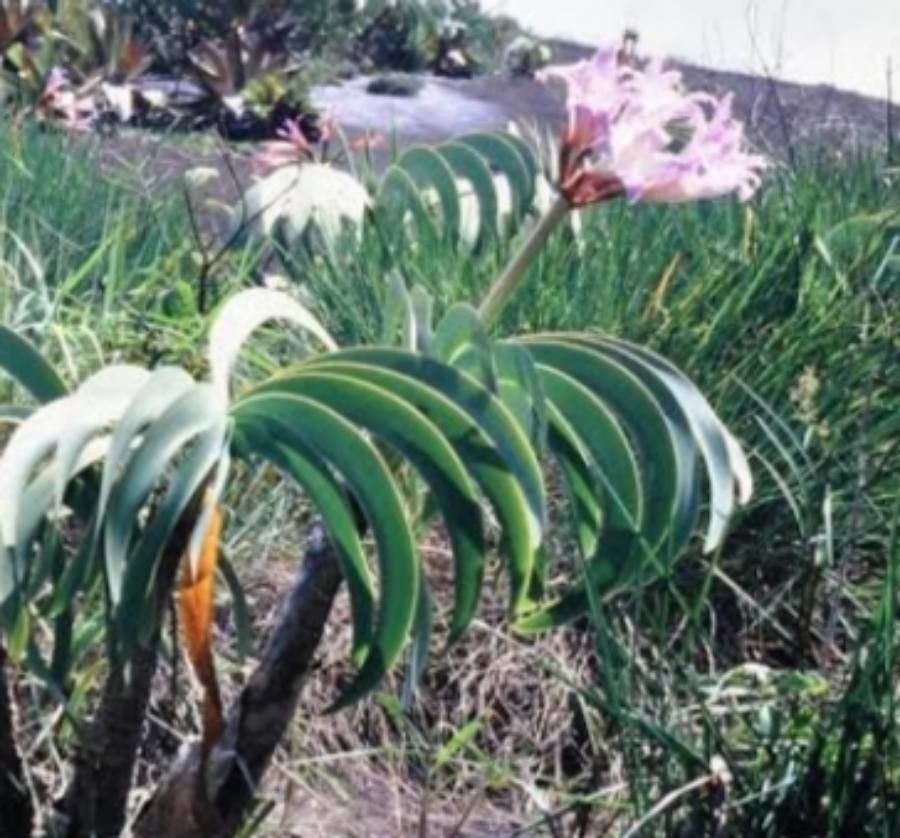
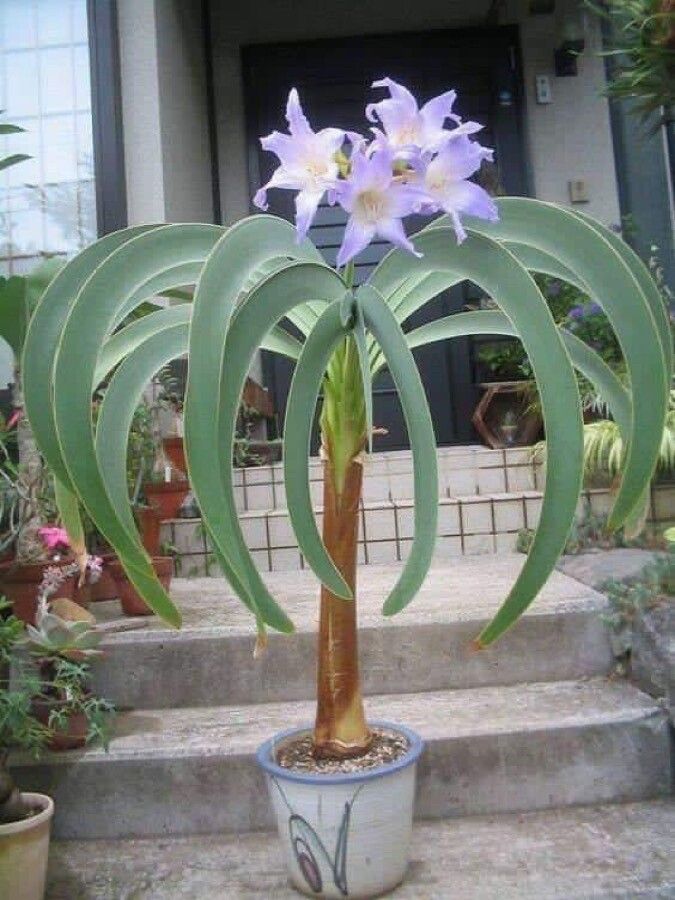
Worsleya is a genus of Brazilian plants in the Amaryllis family, cultivated as an ornamental because of its showy flowers. There is only one known species, Worsleya procera, native to eastern Brazil. It is endemic to a mesa called "Mount Cuca" 30 miles (52 km) north of Rio de Janeiro. Here the sickle-shaped leaves curve northward. When grown in the northern hemisphere, the leaves curve southward. It is one of the largest (around 1.5 meters high) and rarest members of the subfamily Amaryllidoideae (family Amaryllidaceae). This species is also known as the Empress of Brazil because of its origin in South America and in reference to the wife of Emperor Dom Pedro. It grows in very extreme and moist environments, and is commonly found near waterfalls in rich soil situated on granite rocks (which is why it is sometimes considered to be a lithophyte) and sunny places. However, it can be difficult to cultivate. It has plenty of needs, though it can exhibit great hardiness. It also has many ornamental traits. The plant has a large bulb that produces a high stem with green recurved leaves. Worsleya produces spectacular and beautiful blooms. They are large, lilac to blue, with small freckles on them. The seeds are black and semicircular, and (when cultivated) are usually sown in pumice or sometimes Sphagnum, although with Sphagnum the threat of decay is higher.
Empress of Brazil is fairly disease-resistant and generally not prone to illnesses. Still, it can be affected by pests and diseases present in its environment. These problems are typically mild. For care, this plant needs moderate maintenance. It should be pruned regularly to keep a neat appearance and support healthy growth. Fertilizing can also assist in encouraging flowering. Empress of Brazil is well-suited for anyone with an outdoor area, such as a garden or patio, and does not demand extensive care experience. It may need more attention if grown indoors.
How to keep Worsleya Procera.
Light
Empress of Brazil is a sun-loving perennial herbaceous plant native to open habitats, frequently flourishing in meadows and grasslands. It prefers full sun but can also tolerate partial sun.
Temperature
Empress of Brazil comes from tropical areas, where the climate is generally warm and humid. As a result, it is well suited to high temperatures and humidity. It does not tolerate sudden temperature shifts and prefers a consistent thermal environment, so avoiding indoor temperature fluctuations is important. It usually cannot endure cold conditions and needs warmer temperatures to grow. If the surrounding temperature falls too low, the plant may stop growing or even die.
Fertilizer
Proper fertilization is essential for the Empress of Brazil's health and appearance. Fertilize the Empress of Brazil in summer, repeating the application monthly throughout the season. Nutrients fuel growth and sustain the plant's parts. Fertilization improves the Empress of Brazil's flower display, ensuring the best blooms.
Botanical profile.
- Plant Type
- Herb
- Life Cycle
- Perennial
- Genus
- Worsleya
- Family
- Amaryllidaceae
- Hardiness Zone
- 11
- Mature Height
- 0 cm to 18 cm
- Mature Spread
- 0.91 m to 1.52 m
- Leaf Color
- Green, Gray
- Leaf Type
- Evergreen
- Flower Color
- Purple, White
- Flower Size
- 15.24 cm to 20.32 cm
- Bloom Time
- Summer
- Planting Time
- Summer
- Harvest Time
- Late summer, Early fall, Mid fall
- Native Area
- Brazil
Other names.