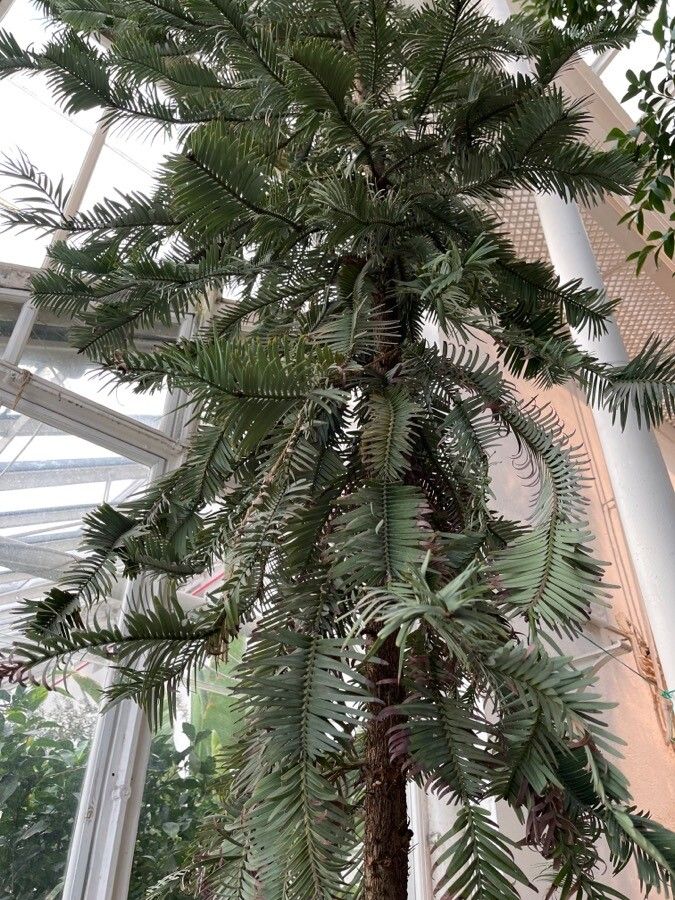
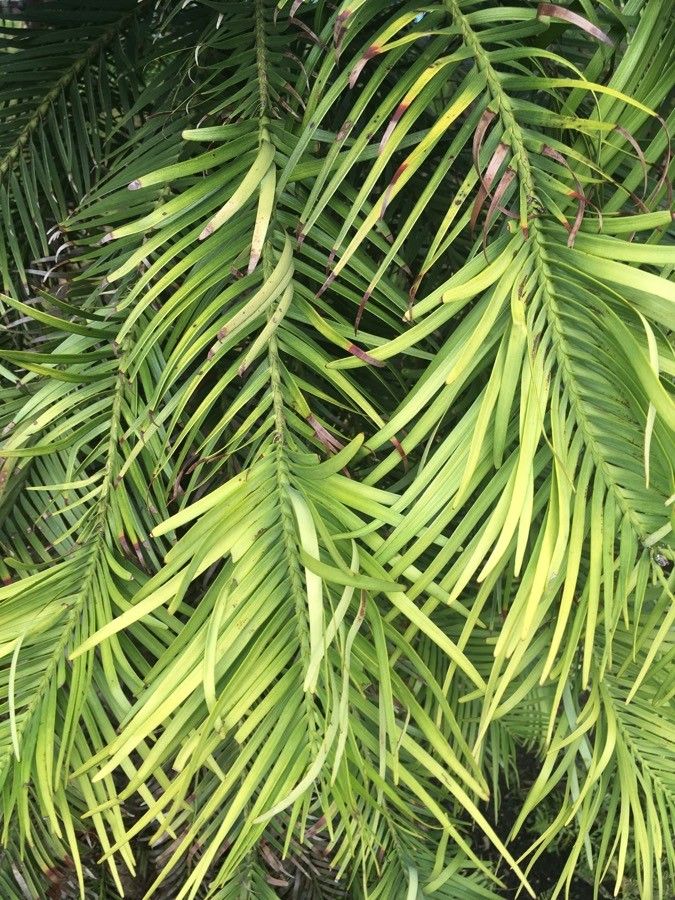
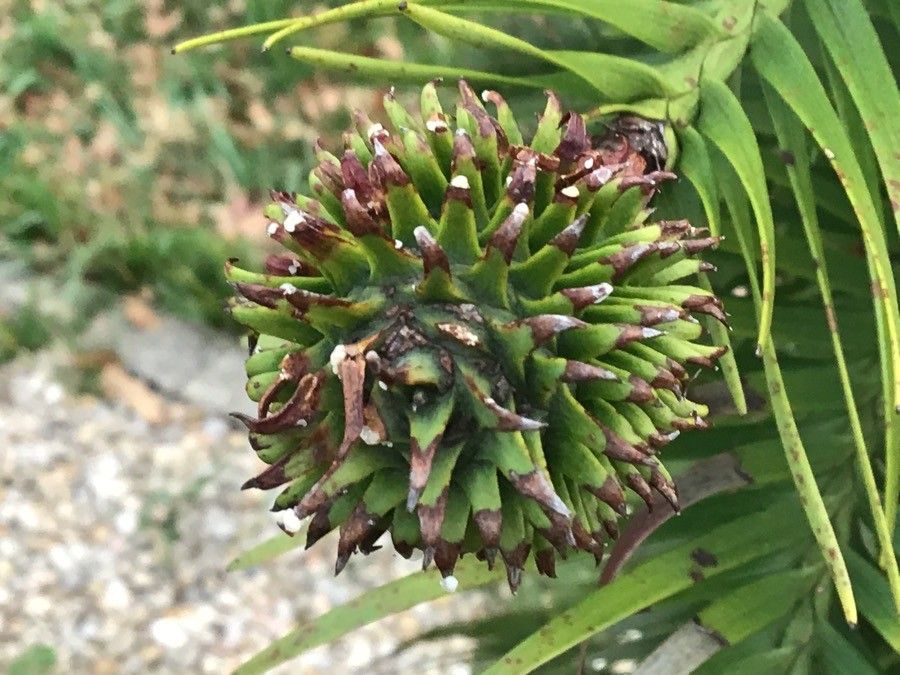
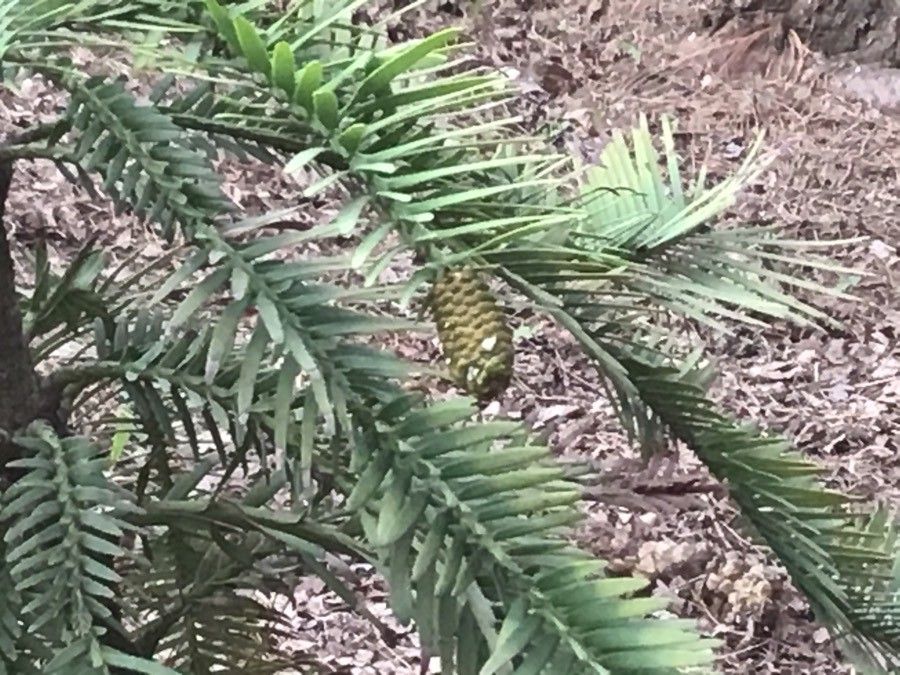
Wollemia nobilis, commonly known as the Wollemi pine, is a rare and ancient coniferous tree species discovered in 1994 in a remote canyon of Wollemi National Park, Australia. Belonging to the family Araucariaceae, this tree stands out with its distinctive characteristics, such as bark that looks like bubbling chocolate and foliage resembling ferns.
Considered a living fossil, Wollemia nobilis has survived for over 200 million years and was only recently discovered by humans. Prior to its discovery, the species was believed to be extinct, with fewer than 100 individuals found in the wild.
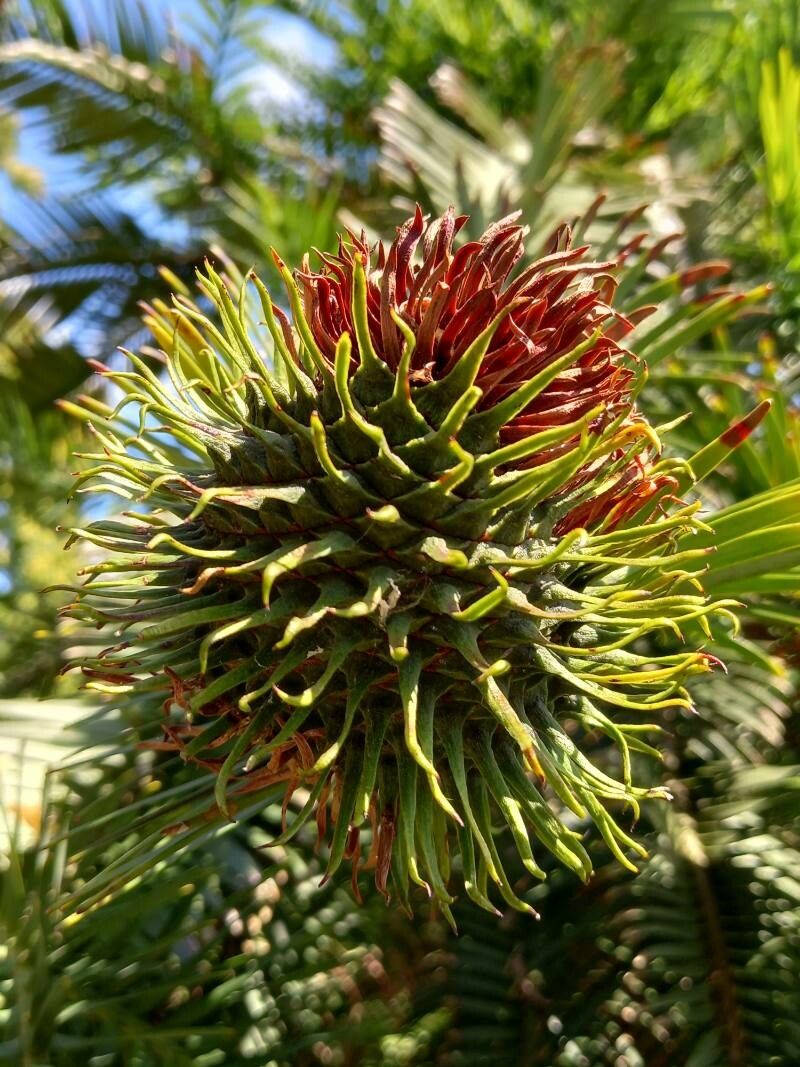
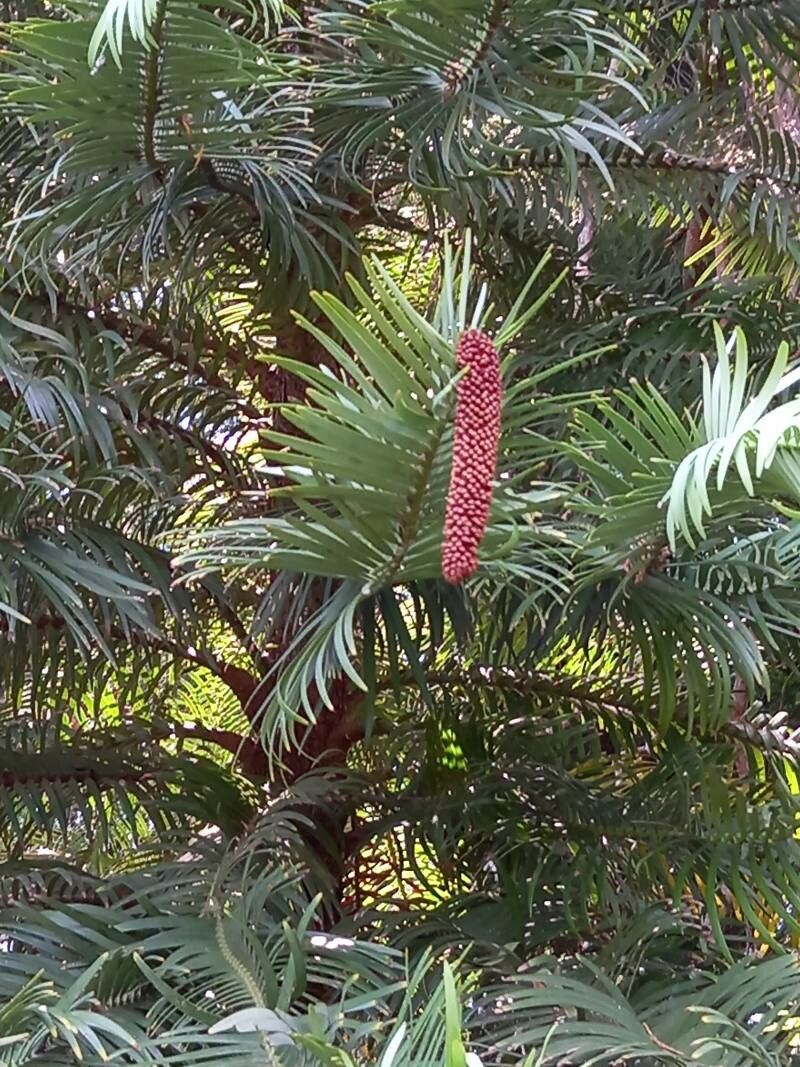
The Wollemi pine can grow up to 40 meters tall with a trunk diameter of up to one meter. It thrives in cool temperatures and can tolerate both full sun and partial shade conditions. The tree produces cones about six centimeters long, each containing around fifty seeds.
Due to its rarity, significant conservation efforts have been initiated by government agencies and private organizations worldwide to protect this unique species from threats such as habitat loss and disease outbreaks.
In conclusion, Wollemia nobilis is an ancient coniferous tree species with unique characteristics found only in the remote canyon areas of Australia. Its rarity underscores the importance of global conservation efforts to prevent its potential extinction due to habitat loss or disease outbreaks.
The Wollemi pine has strong disease resistance and is generally not susceptible to diseases. In terms of care, this species is fairly low-maintenance. When planted outdoors it needs minimal watering, and larger (mature) plants typically do not require pruning. Smaller (younger) plants, however, should be pruned after they have bloomed. The Wollemi pine is suitable for anyone with outdoor space, such as a garden or a deck, and does not demand extensive plant-care experience.
How to keep Wollemia Nobilis.
Light
Wollemi pine does best in spots that receive some sun during the day, although it can tolerate periods of more intense light. Coming from understorey habitats with moderate illumination, the pine may become stressed by constant strong sun exposure, which can cause needle burn.
Water
The Wollemi pine flourishes best in moist soil and should be watered every two weeks for optimal hydration. Although it can tolerate some drought, it thrives with consistent moisture, as long as it is not waterlogged. As an evergreen, it requires careful watering during the growing season to maintain its lush, green needles.
Temperature
The Wollemi pine is native to habitats with temperatures ranging from 68 to 100.4 °F (20 to 38 °C). Its preferred temperatures lie within that range. Seasonal temperature adjustments must align with the environmental requirements.
Fertilizer
The Wollemi pine has specific nutrient needs and does not require heavy fertilization. Spring is the best time to apply fertilizer for optimal growth. Providing nutrients enhances its health, increases its resistance to pests and diseases, and helps maintain its long lifespan.
Pruning
To ensure the Wollemi pine thrives, it's important to carefully prune it from early to late winter, which aligns with its dormant phase. Begin by removing any dead or crossing branches to promote healthier growth and a more attractive shape. Light pruning also helps improve airflow and light penetration, which reduces the risk of disease while maintaining the tree's natural growth habit.
Botanical profile.
- Plant Type
- Tree
- Life Cycle
- Perennial
- Genus
- Wollemia
- Family
- Araucariaceae
- Hardiness Zone
- 9-11
- Mature Height
- 24.38 m to 39.62 m
- Mature Spread
- 4.88 m
- Leaf Color
- Green
- Leaf Type
- Evergreen
- Flower Color
- Green, Brown
- Bloom Time
- Mid spring, Late spring
- Planting Time
- Spring, Summer, Autumn
- Harvest Time
- Late summer, Early fall, Mid fall
Other names.
Reader questions.
How should I water my Wollemi pine?
Your Wollemi pine is easy-going when it comes to watering. You can use any common watering tool, such as watering cans, hoses, or even cups, to water this plant. Just make sure to water the soil directly and evenly, so that all parts of the root system get the water they need. It's a good idea to use filtered water to avoid harmful particles, and water that is at or slightly above room temperature to prevent shocking the plant. However, the Wollemi pine generally responds well to any type of water you give it.
Why should I put fertilizer on my Wollemi pine tree?
To promote healthy growth of the Wollemi pine, it is recommended to fertilize it in the spring. Keep in mind that this plant has a long lifespan and requires adequate support. Adding nutrients to the soil not only enhances the plant's overall health but also helps it resist common pests and diseases. This ensures that its growth is not stunted and its lifespan is not shortened.
What are the sunlight requirements for Wollemi pine?
Wollemi pine thrives in areas where it receives some sun throughout the day. It prefers partial sun, about 3-6 hours of sunlight, but can also handle full sun, which is above 6 hours of sunlight, especially in cooler weather. However, constantly strong sunlight can stress the plant and potentially cause needle burn. It's important to watch how sunlight moves through your garden, selecting spots that offer a balance of light and shade to ensure the plant's happiness.
What is the preferred temperature range for a Wollemi pine?
The Wollemi pine thrives in environments where the temperature ranges from 68 to 100.4 °F (20 to 38 °C). It prefers temperatures within this range for optimal growth. Seasonal temperature adjustments should be made according to the pine's environmental needs. The Wollemi pine loves heat, and exposure to cold temperatures can cause damage. During autumn, it's advisable to bring outdoor-grown Wollemi pines indoors, placing them near a bright window yet at a distance from heaters to avoid harm. Keeping the temperature above 20°C during winter supports the pine's growth, while temperatures approaching 0°C can be detrimental.
What should I do if I give my Wollemi pine too much water or too little water?
When dealing with outdoor plants, especially newly planted ones or seedlings, it's important to be aware of the risk of not watering them enough. Remember to consistently water them for a few months while they're small or just planted. Once the roots have established, these plants, like the Wollemi pine, can generally rely on rainwater. However, if you have the Wollemi pine planted in pots, be cautious of overwatering. If you accidentally overwater the pine, act promptly to fix the situation. Immediately stop watering the plant to minimize the impact of overwatering. Take the pine out of its pot to check its roots. If there is no sign of root rot, you can return the plant to its container. However, if you do find root rot, trim any affected roots and consider applying a fungicide to prevent further damage. Finally, repot the Wollemi pine using well-draining soil. In the case of underwatering, simply water the plant more frequently. Underwatering is generally an easy problem to fix, as the leaves will droop, dry out, and fall off, but they will regain fullness when given sufficient water. Adjust your watering frequency as soon as you notice underwatering.
When should I fertilize my Wollemi pine?
Unlike garden annuals and perennials, Wollemi pine does not need excessive nutrients for its healthy growth. The growing medium may not always provide enough nutrients, but this special pine variety does not require a lot of extras. For optimum fertilization, it is best to do so in the spring, before new growth emerges.
What should you do if natural sunlight is insufficient for indoor Wollemi pine?
If natural sunlight is insufficient for an indoor Wollemi pine, particularly in winter or less sunny spaces, artificial lighting can be a vital solution for optimal growth. LED lights are recommended because they can be customized to provide specific light wavelengths needed by the plant. Full sun plants require 30-50W/sq ft of artificial light, partial sun plants need 20-30W/sq ft, and full shade plants need 10-20W/sq ft. The light source should be placed 12-36 inches above the plant, mimicking natural sunlight, and kept on for 8-12 hours per day.
How does low temperature affect Wollemi pine and what are the solutions?
Wollemi pine is sensitive to low temperatures and thrives best when the temperature remains above 20°C. It should be kept above 0°C during winter to avoid cold damage. Exposure to temperatures below -5°C can cause the leaves to lighten in color, which is an early sign of frost damage. Subsequently, the leaves may turn brown or black, and the pine may experience wilting and drooping. The solution to frost damage includes trimming off the frost-damaged parts and moving the pine indoors to a warm environment for cold protection. It should be placed near a south-facing window to ensure it gets enough sunlight, while avoiding placement near heaters or air conditioning vents to prevent air dryness.
How many times a week should I water my Wollemi pine?
Most plants growing outdoors can rely on rainfall for their water needs. However, if your area doesn't receive enough rain, it's important to water your plants adequately. During the spring and fall, watering every 2 weeks should be sufficient. In the summer, you'll need to water more frequently to keep up with increased water needs. In the winter, when plants grow slower and require less water, you can water less often, and in some cases, not at all. If you have a young or newly planted Wollemi pine, it's recommended to water it more frequently to help it establish and promote its growth. This will help it become more adaptable and drought tolerant over time. For potted plants, there are two main ways to determine the watering frequency for your Wollemi pine. One is to follow a set schedule, such as watering once a week or every other week. However, this approach may not consider the specific conditions of your plant's environment. Another approach is to judge watering frequency based on the moisture of the soil. It's usually best to wait until the top two to four inches of soil in the pots have completely dried out before watering again. This method allows you to adjust watering frequency according to the season, as the plant's water needs are highest in the summer.
When is it not a good idea to fertilize my Wollemi pine?
While some plants benefit from regular fertilization every month or week, this is not the case for the Wollemi pine. It doesn't need a significant amount of additional nutrients, and too much fertilizer can actually harm it by causing it to die back. To avoid this, only apply fertilizer to the Wollemi pine in the spring and refrain from doing so during the summer, fall, and winter. Additionally, it's best to avoid adding any fertilizer or organic matter to the soil during these seasons.
What are the symptoms of insufficient light in Wollemi pine?
Wollemi pine may exhibit several symptoms due to insufficient light, including small leaves, leggy or sparse growth, faster leaf drop, slower or no new growth, and lighter-colored new leaves. These signs indicate the plant is struggling with light deficiency, which can lead to chlorosis (leaves turning yellow), sunscald (damaged leaves due to intense sunlight), leaf curling (a defense mechanism to minimize water loss), wilting, and leaf scorching. These symptoms highlight the importance of providing adequate sunlight or artificial light to maintain the plant's health.
What should be done if a Wollemi pine is exposed to high temperature?
During the summer, it is important to keep the Wollemi pine's temperature below 38°C. Exposure to temperatures above 43°C can cause the leaves to lighten and increase the risk of sunburn. To mitigate the effects of high temperature, sunburned and dried-up parts of the pine should be trimmed away. The plant should be moved to a location that offers shade during the midday and afternoon sun. Additionally, the soil should be kept moist by watering the plant in the morning and evening to help it cope with the heat.