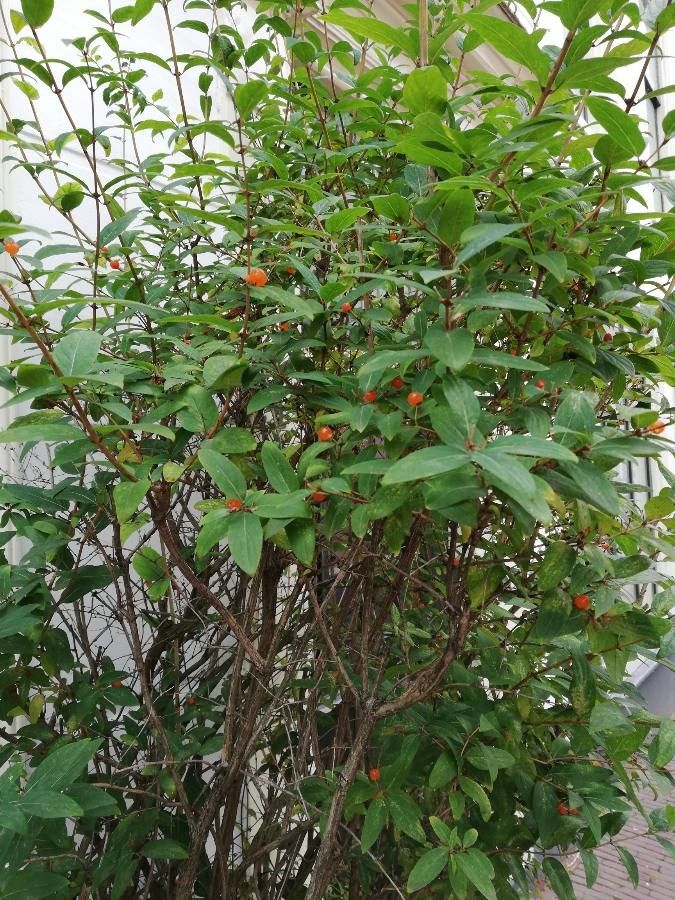
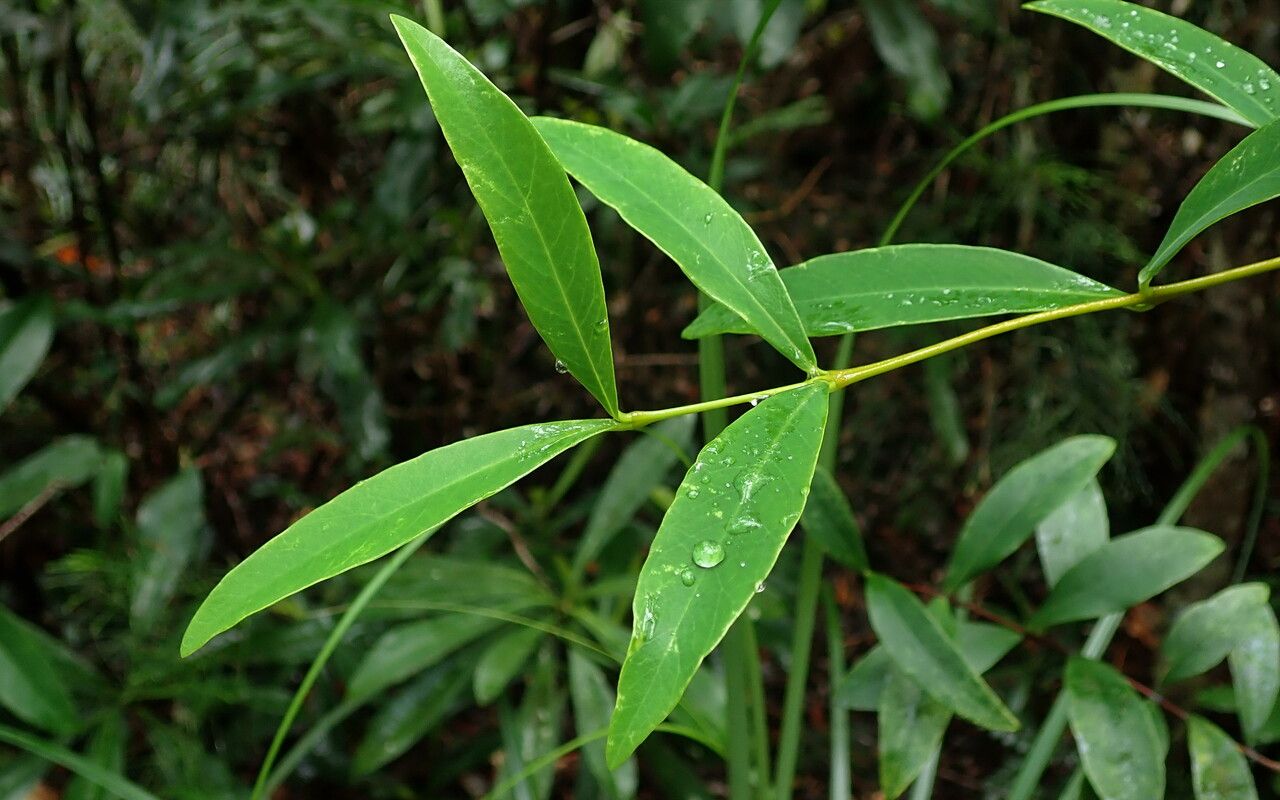
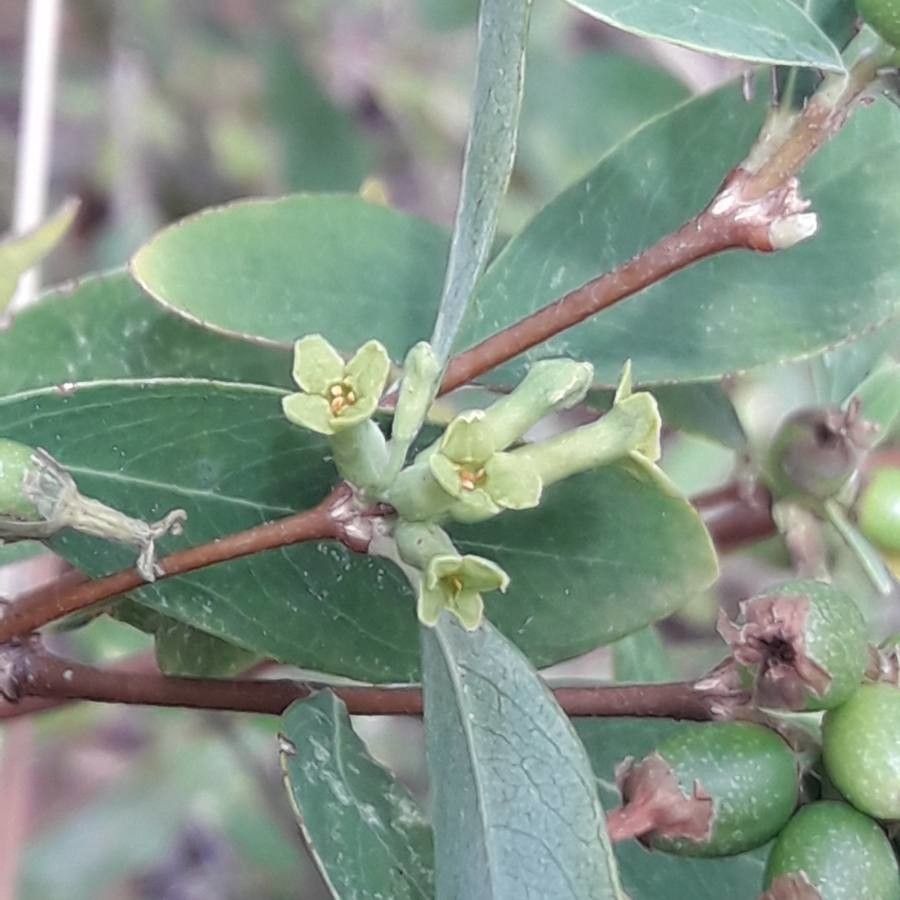
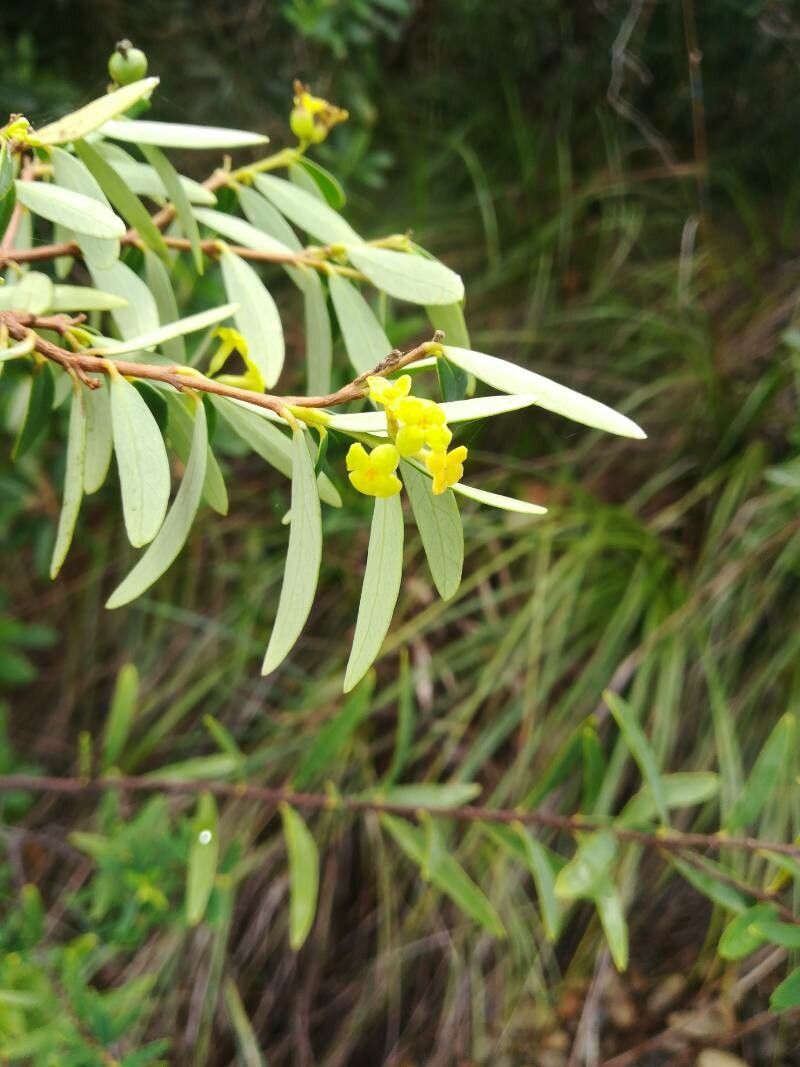
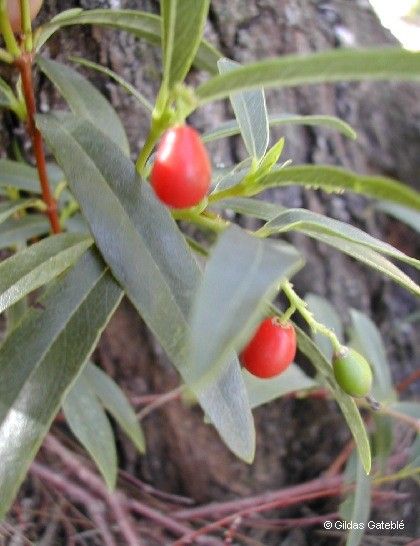
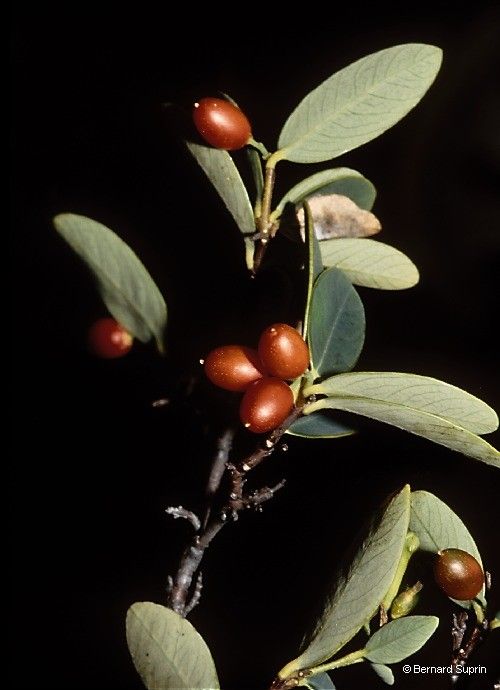
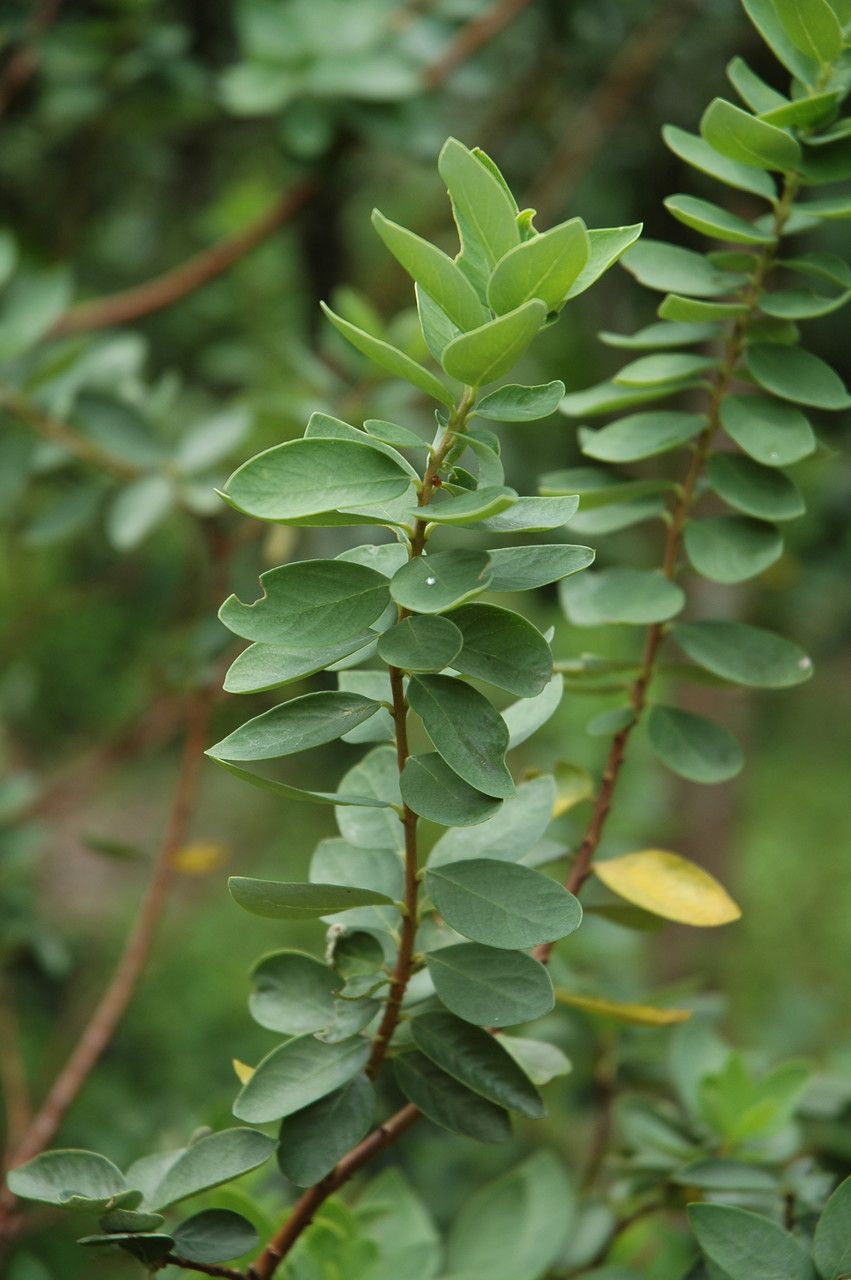
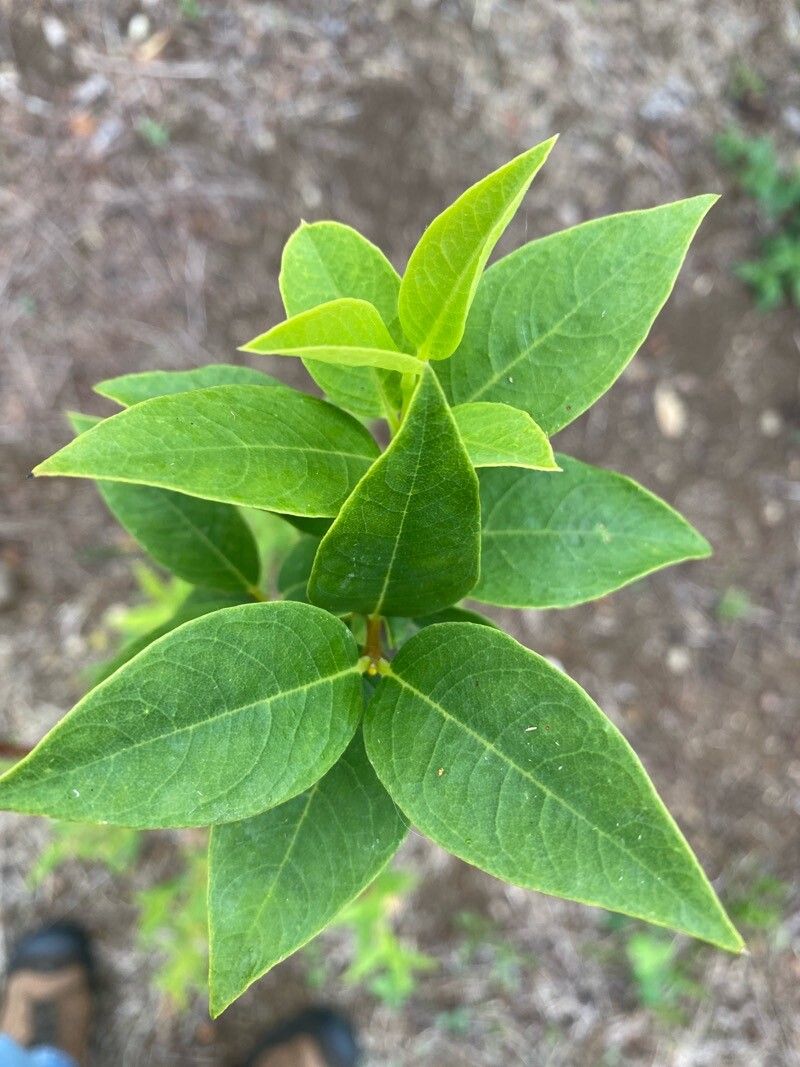
Wikstroemia indica, commonly known as Indian yellow-root or yellow-flowered wikstroemia, is a small shrub belonging to the Thymelaeaceae family. It is native to the Indian subcontinent and Southeast Asia and thrives in diverse habitats, including forests, grasslands, and rocky slopes.
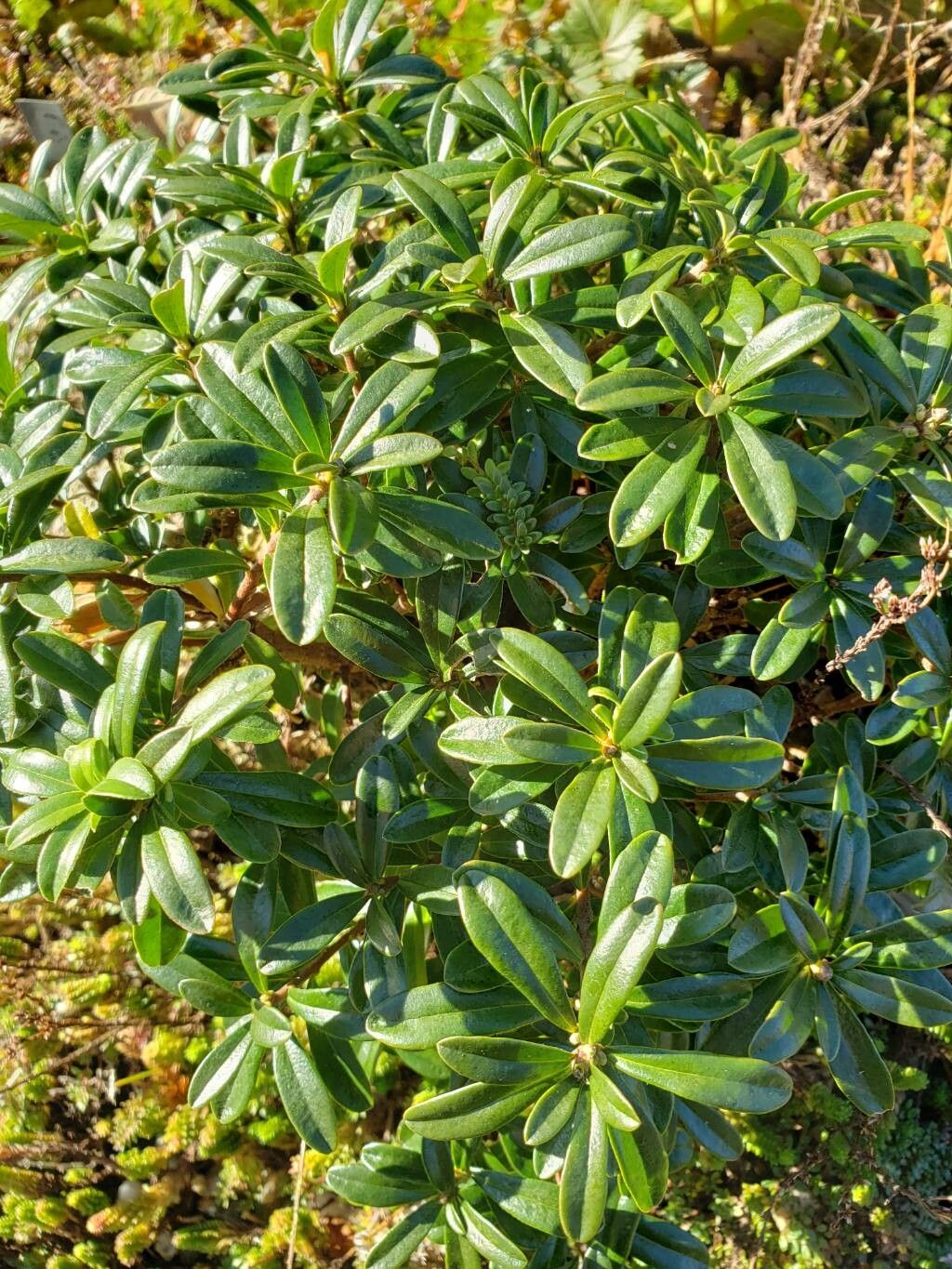
The plant reaches up to 2 meters in height and has a spreading growth habit. It features smooth bark and numerous branches, each bearing alternate leaves that are elliptic or ovate in shape. The leaves are dark green on the upper side and lighter underneath.
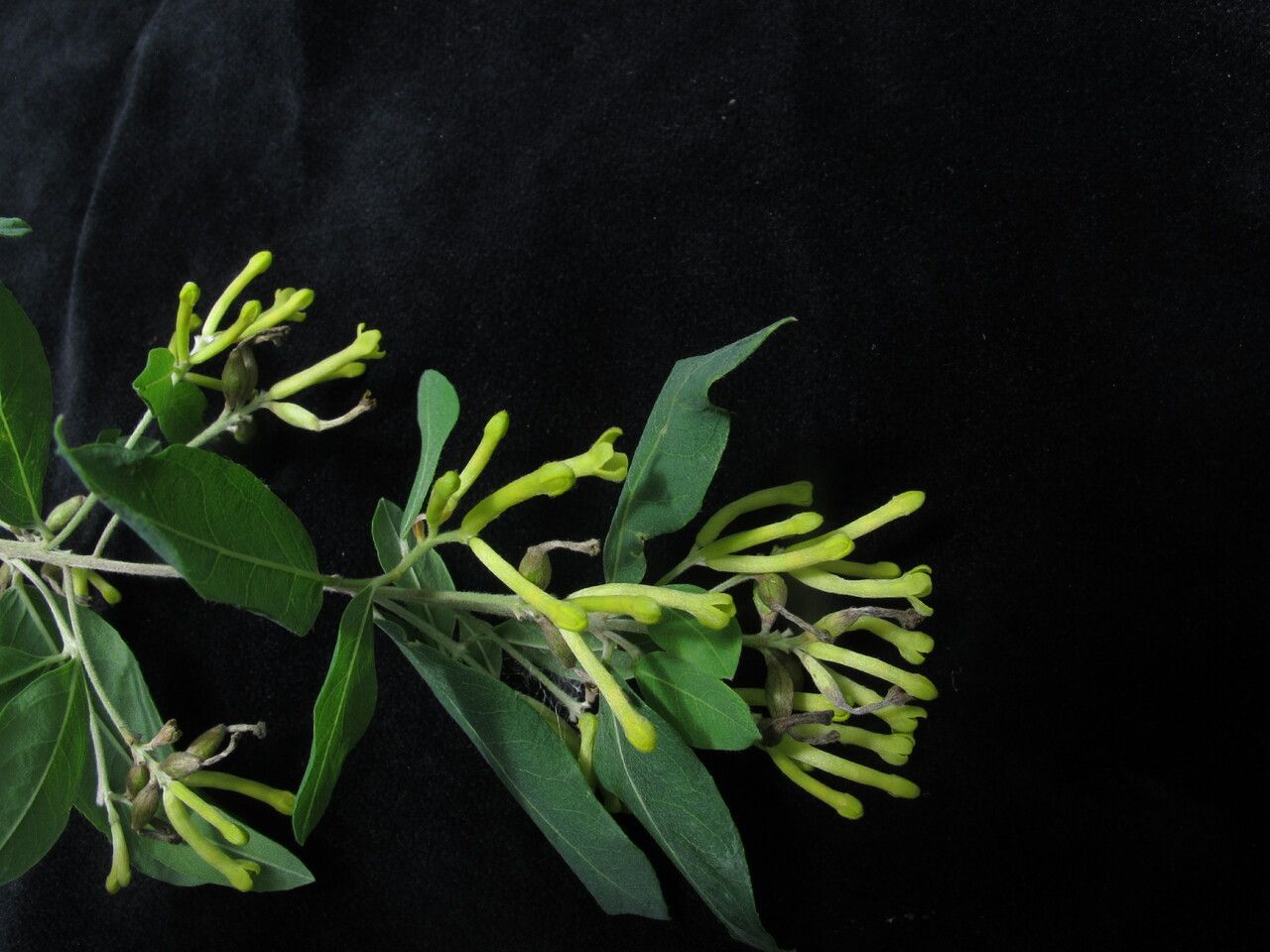
Wikstroemia indica produces small yellow flowers that bloom from late winter through early spring. These fragrant flowers are arranged in clusters at the ends of branches.
For centuries, traditional healers across its native range have used the plant for medicinal purposes. The roots contain several bioactive compounds, such as flavonoids, alkaloids, and terpenoids, which are known to possess anti-inflammatory properties.
Besides its medicinal uses, Wikstroemia indica is also valued for ornamental purposes. Its attractive foliage and bright yellow flowers make it an excellent choice for landscaping in gardens and parks.
Overall, Wikstroemia indica is an important plant species, both ecologically and culturally, across various regions of Asia where it naturally grows.
Tie bush has good resistance to disease and is generally not susceptible to illnesses. Regarding care, this plant is fairly low-maintenance. When grown outdoors it needs little watering, and larger specimens usually do not require pruning. Smaller plants, however, should be pruned after they have finished blooming. Tie busht is suitable for anyone with an outdoor area, such as a garden or deck, and does not demand much care experience.
How to keep Wikstroemia Indica.
Light
The tie bush prefers moderate sunlight rather than full sun. In its native habitat it commonly gets filtered light, which supports healthy growth. Excessive sun can damage the plant, while too little light may impede its development.
Water
The tie bush is well-suited for arid conditions, demonstrating a strong tolerance for drought. It only needs to be watered every 2-3 weeks. This makes tie bush ideal for xeriscaping, as it conserves resources by shedding its leaves during dry periods. Its ability to thrive in water-conserving environments makes it an excellent choice for areas with limited water.
Temperature
Tie bush adapts well to temperature, able to withstand high heat and considerable temperature swings. In hot weather, attention should be paid to watering and suitable shading should be provided to prevent sunburn. Conversely, Tie bush has limited cold tolerance. While it can survive some cold, very low temperatures can cause frost damage.
Fertilizer
Fertilize your Tie bush in early spring to encourage healthy growth. Regular feeding improves overall health, producing vigorous growth, greater resilience to harsh conditions, and enhanced resistance to pests and diseases. Keep a specific fertilization schedule for your Tie bush to ensure foliage that is vibrant, deeply colored, and lush in appearance.
Pruning
The tie bush is a resilient evergreen shrub featuring small yellow flowers and glossy leaves. To maintain its shape and encourage airflow, prune the plant between early and late winter. Begin by using clean tools to remove any dead branches. Proper pruning not only enhances growth and flowering but also ensures the plant remains vigorous and attractive.
Botanical profile.
- Plant Type
- Shrub
- Life Cycle
- Perennial
- Genus
- Wikstroemia
- Family
- Thymelaeaceae
- Hardiness Zone
- 9-11
- Mature Height
- 2.13 m
- Mature Spread
- 0.91 m to 2.13 m
- Leaf Color
- Dark Green
- Leaf Type
- Evergreen
- Flower Color
- Yellow
- Flower Size
- 0.76 cm to 1.02 cm
- Bloom Time
- Late spring, Summer, Early fall
- Planting Time
- Spring, Summer, Autumn
- Harvest Time
- Late summer, Fall
- Native Area
- Sri Lanka, India, Malaysia, Indonesia, Vietnam, Myanmar, Vanuatu, Philippines, Bangladesh, Fiji, Thailand, China
Other names.
Reader questions.
What are the sunlight requirements for a Tie bush?
The Tie bush (Wikstroemia indica) thrives in partial sun, necessitating about 3-6 hours of sunlight daily. It's crucial to observe your garden to identify areas that strike a balance between light and shade, ensuring conditions that foster the plant's happiness. Excessive exposure to sunlight can damage the Tie bush, while insufficient light may impede its growth. Therefore, selecting a location that receives moderate sunlight or utilizing artificial lighting when natural light is inadequate is essential.
How can I use artificial lighting for my Tie bush?
When natural sunlight is insufficient for your Tie bush, especially during winter or in less sunny indoor spaces, artificial lighting becomes a vital solution. LED lights are recommended because they can be tailored to provide specific wavelengths needed by the plant. For full sun plants, 30-50W/sq ft is advised; partial sun plants, such as the Tie bush, require 20-30W/sq ft; and full shade plants need 10-20W/sq ft. The artificial light should be placed 12-36 inches above the plant, mimicking natural sunlight, and it's suggested to keep the lights on for 8-12 hours per day to replicate the natural daylight hours.
What are the signs of insufficient light in Tie bush?
Insufficient light can lead to several noticeable symptoms in Tie bush, including smaller new leaves, leggy or sparse growth, faster leaf drop, slower or no new growth, lighter-colored or irregularly patterned new leaves indicating a lack of chlorophyll, chlorosis, sunscald, leaf curling, wilting, and leaf scorching. These symptoms highlight the plant's struggle to adapt to low light conditions and the ensuing deficiencies in its growth and health.
How should I address problems related to sunlight exposure for my Tie bush?
To address sunlight exposure issues for your Tie bush, start by gradually introducing the plant to more sunlight, aiming for 3-6 hours of direct sunlight daily. If the plant is large or immovable, consider supplementing with artificial light, keeping a desk or ceiling lamp on for at least 8 hours daily, or opting for professional plant grow lights. Outdoors, move your plants progressively to sunnier spots each week to avoid sunburn. Indoors or on the ground, reduce sunlight obstructions by pruning or relocating the plant to sunnier areas with good drainage, especially during the plant's dormant period. While parts of the plant that have suffered might not revive, new growth should emerge healthier with these adjustments.