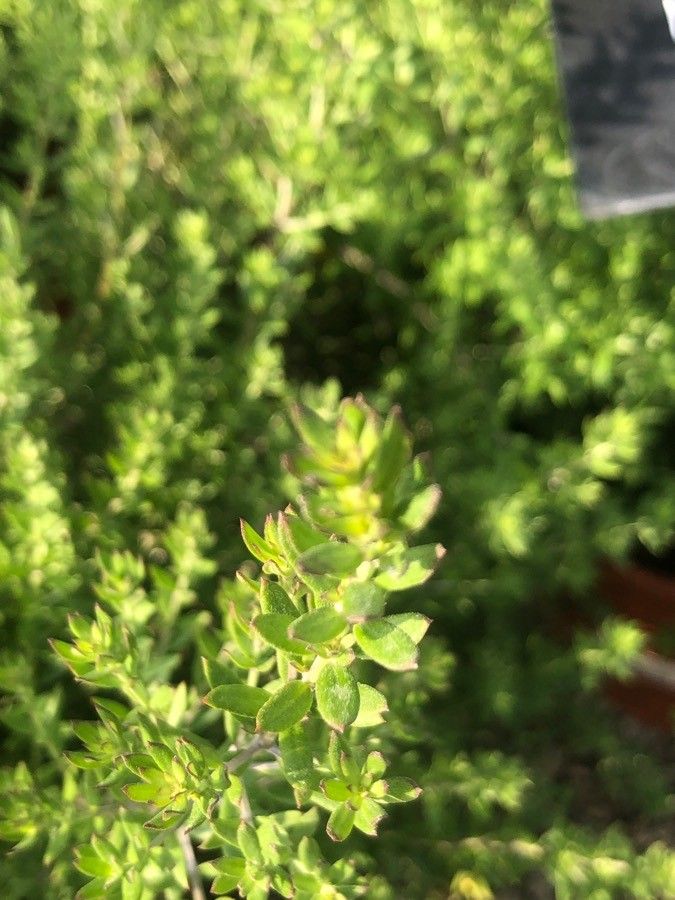
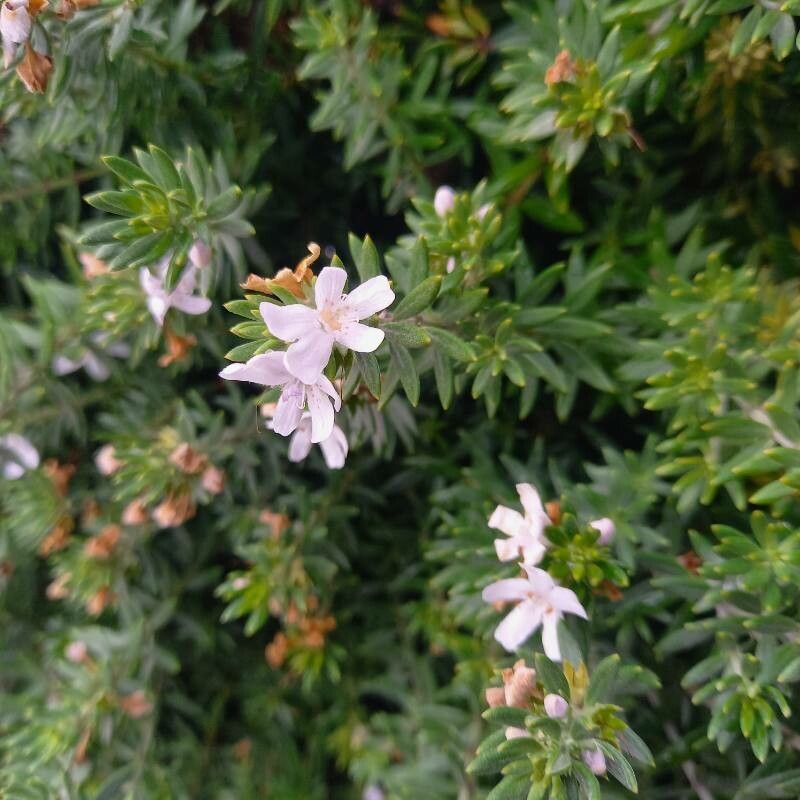
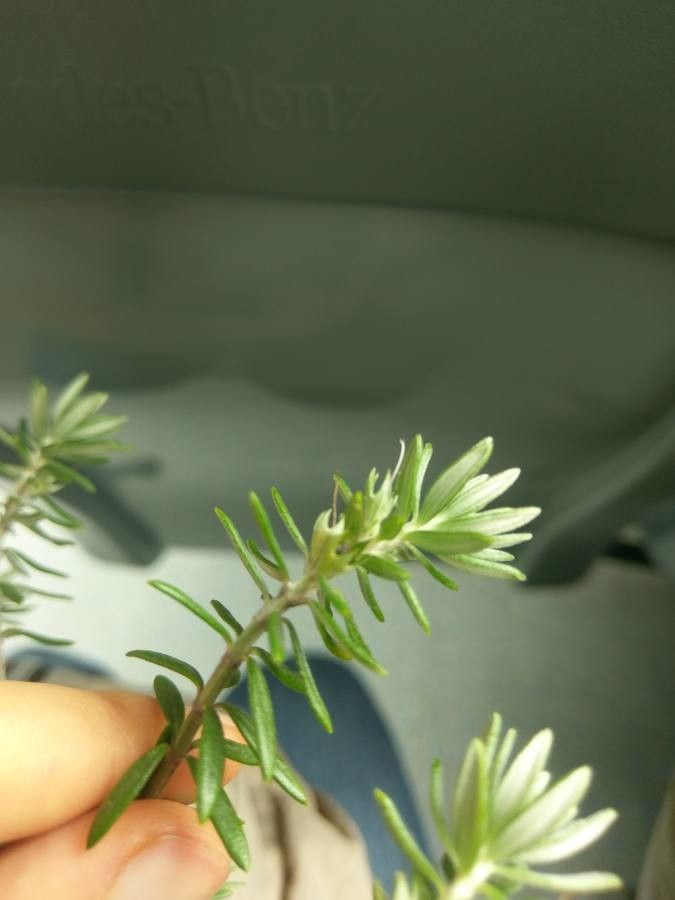
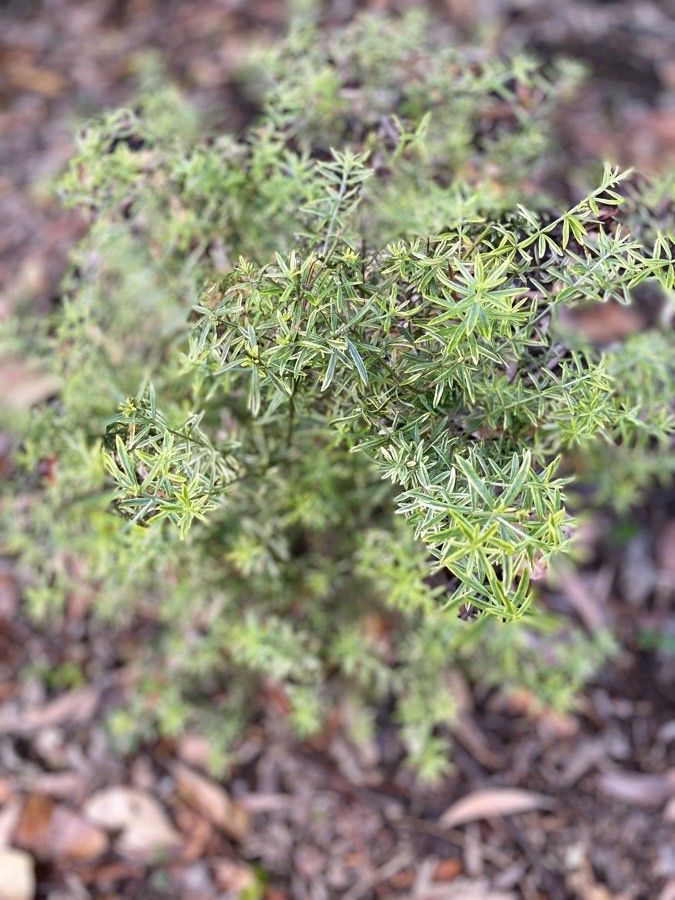
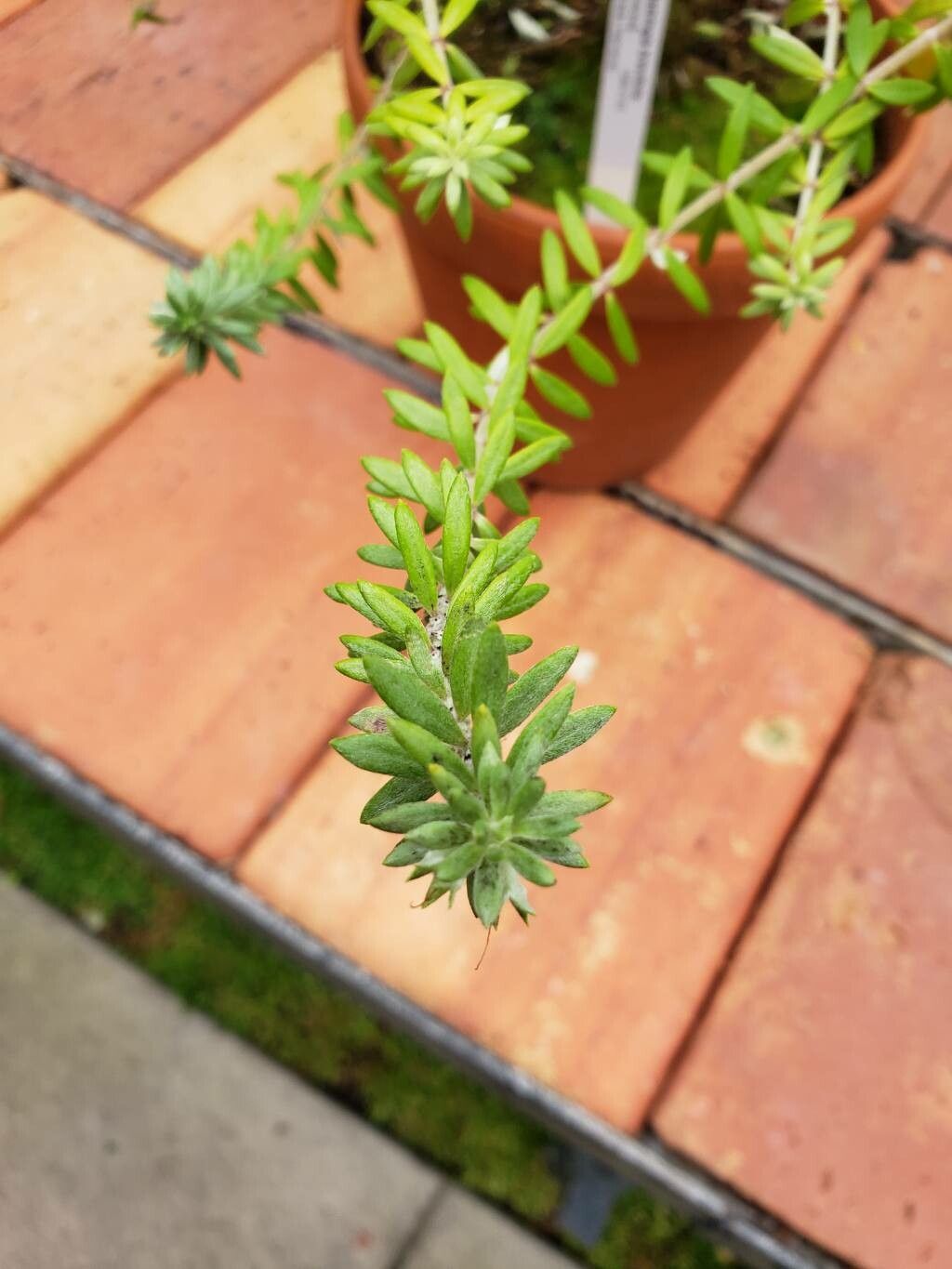
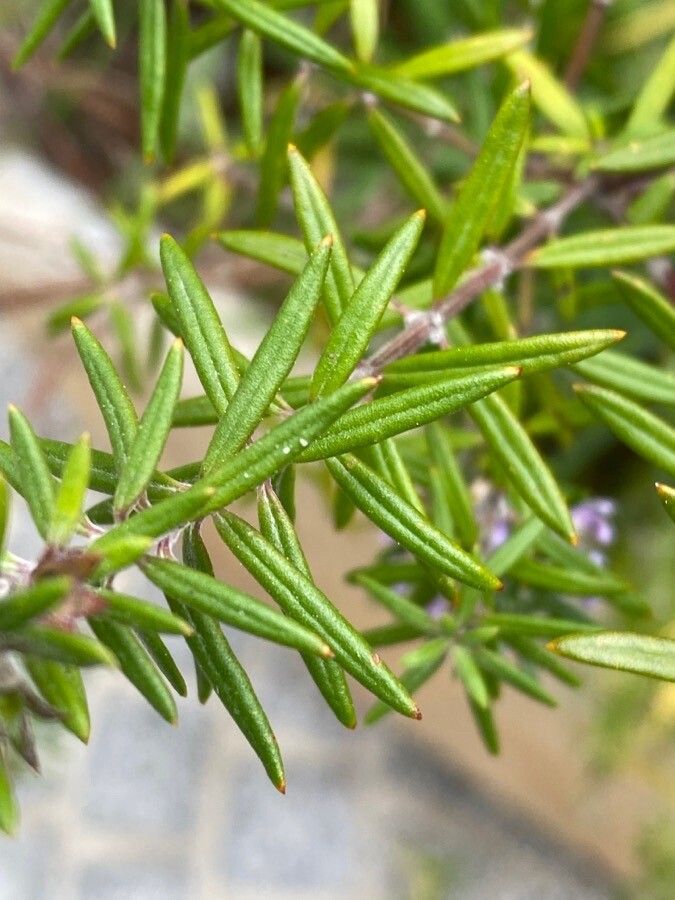
Westringia fruticosa, commonly known as Coastal Rosemary, is a robust evergreen shrub native to Australia. It is highly favored in landscaping due to its attractive foliage and its ability to thrive under various conditions. Typically, the plant reaches heights of up to 2 meters and widths of 1.5 meters. Its small, grey-green leaves release a pleasant aroma when crushed.
From late winter through spring, Coastal Rosemary produces small clusters of white or pale lilac flowers, which can also appear sporadically throughout the year. These flowers attract bees and other pollinators, enhancing garden biodiversity.
Once established, this plant is highly drought-tolerant, making it an excellent choice for coastal gardens or areas with low rainfall. While it prefers well-drained soil and full sun, it can also tolerate partial shade.
Coastal rosemary, much like regular rosemary, thrives in dry conditions, making it a highly valued plant for drought-tolerant gardens. Known scientifically as Westringia fruticosa, it is often chosen for garden hedges or used as a plant in rock gardens, thanks to its many cultivated varieties. FUN FACT · FROM THE LIBRARY
Due to its dense growth habit, Westringia fruticosa works well as a hedge or border plant. It also serves beautifully as an individual accent shrub in gardens or containers.
Overall, Coastal Rosemary is an excellent option for gardeners seeking an easy-to-grow evergreen shrub that offers year-round interest with minimal maintenance.
Coastal rosemary, also known as Australian rosemary or Coastal westringia, gets its common name due to its resemblance to the rosemary plant (Salvia rosmarinus). Westringia fruticosa forms a bush that looks similar to rosemary, complete with thin, long leaves and white flowers that resemble those of the rosemary. However, despite its similar appearance, coastal rosemary lacks the distinctive aroma that characterizes rosemary.
Coastal rosemary has strong resistance to disease and is generally not susceptible to illnesses. In terms of care, this plant is relatively low-maintenance. When grown outdoors, it needs little watering, and larger plants normally do not require pruning. However, smaller plants should be pruned after they have finished blooming. Coastal rosemary is suitable for anyone with an outdoor area, such as a garden or deck, and does not demand much gardening experience.
How to keep Westringia Fruticosa.
Light
Coastal rosemary grows best in places where it gets unbroken sunlight during the day but can also tolerate locations with reduced sun exposure. Sunlight is vital for its growth; both too much and too little can result in poor health. Coming from habitats with abundant sun, coastal rosemary requires similar light conditions throughout its growth stages.
Water
Coastal rosemary, originally from Australia, is well-suited to dry conditions and only needs watering every 1-2 weeks. This evergreen shrub thrives when grown outdoors, as it benefits from natural rainfall and doesn't require high humidity to keep its foliage lush throughout the year.
Temperature
Coastal rosemary originates from coastal areas with temperate climates where temperatures typically fall between 59 and 100 ℉ (15 and 38 ℃); it thrives best at 68 to 100 ℉ (20 to 38 ℃). During colder periods, it may benefit from shelter or being moved indoors to keep temperatures within its preferred range.
Fertilizer
Fertilization is essential to caring for Coastal rosemary. Consistent feeding during the growing season preserves the energy required for its showy foliage and supports overall growth. Ignoring fertilization can lead to unhealthy leaves, reduced ornamental value, and stunted or weak growth that is prone to breaking.
Pruning
Coastal rosemary benefits from regular pruning, which is best done in late spring after it has finished flowering. To enhance the plant's density and remove weak branches, trim back about one-third of the plant. Be sure to make clean cuts to minimize the risk of disease. This practice promotes a healthier, more visually appealing plant, making it an excellent choice for hedges or as standalone features.
Pot & Repot
When repotting Coastal rosemary, select a pot 1–2 inches (2.5–5.1 cm) larger with ample drainage. Use a well-draining potting mix. Repot in spring or fall, ensuring that the root ball is positioned slightly lower than the rim of the flower pot. Water thoroughly after repotting and place in a warm spot with indirect sunlight.
Botanical profile.
- Plant Type
- Shrub
- Life Cycle
- Perennial
- Genus
- Westringia
- Family
- Lamiaceae
- Hardiness Zone
- 9-11
- Mature Height
- 2.13 m
- Mature Spread
- 1.83 m to 3.66 m
- Leaf Color
- Green
- Leaf Type
- Evergreen
- Flower Color
- White, Lavender
- Flower Size
- 2.03 cm
- Bloom Time
- All year round
- Planting Time
- Spring, Autumn
- Harvest Time
- All year round
Other names.
Reader questions.
What is the most effective way to water my Coastal rosemary plant?
Your Coastal rosemary plant is not too demanding when it comes to watering. You can use any common watering tool, such as a watering can, hose, or even cups, to water it. It's important to water the plant by applying the water directly to the soil. Make sure to evenly moisten all areas of the soil to provide water to all parts of the root system. Using filtered water is beneficial, as tap water may contain harmful particles. Additionally, it's helpful to use water that is at or slightly above room temperature, as very cold or hot water can shock the plant. However, the Coastal rosemary generally responds well to any kind of water you give it.
Why is it important to add fertilizer to my Coastal rosemary plant?
Coastal rosemary requires regular fertilization because its showy leaves require a lot of energy for production and maintenance. This poses a challenge as the plant needs to allocate enough energy not only for leaf health, but also for supporting the growth of stems, branches, roots, and other essential structures. If fertilization is neglected, there are two likely outcomes. Firstly, the leaves of the Coastal rosemary will lose their natural color and texture, appearing unhealthy and diminishing its ornamental appeal. Secondly, the overall growth of the plant will slow down or produce weak growth that is susceptible to breakage.
What are the sunlight requirements for coastal rosemary?
Coastal rosemary thrives best in full sun, requiring more than 6 hours of sunlight daily, but it can also grow in partial sun, which is about 3-6 hours of sunlight. This plant originates from an ecosystem abundant in sun exposure, necessitating similar conditions for optimal growth. Whether in its natural habitat or a garden setting, ensuring it receives enough sunlight is crucial, as too much or too little can lead to unhealthy conditions.
What is the native climate of Coastal rosemary?
Coastal rosemary, known botanically as Westringia fruticosa, is native to coastal regions with temperate climates. It thrives in temperatures generally ranging from 59 to 100°F (15 to 38°C), with a preference for temperatures between 68 to 100°F (20 to 38°C). Being extremely heat-loving, Coastal rosemary may require protection or indoor adjustment during colder seasons to maintain temperatures within its preferred range.
What should I do if I give too much or too little water to my Coastal rosemary plant?
Outdoor plants, especially newly planted ones or seedlings, can easily suffer from lack of watering. It is important to water them sufficiently for a few months while they are small or newly planted. Once the roots are established, Coastal rosemary plants can rely on rainfall most of the time. When Coastal rosemary is planted in pots, overwatering is more likely to happen. If you accidentally overwater your Coastal rosemary, you should take immediate action to remedy the situation. First, stop watering the plant right away to minimize the negative effects. Then, remove the Coastal rosemary from its pot to inspect the roots. If there is no sign of root rot, you can return the plant to its container. In case of root rot, trim away the affected roots and consider using a fungicide to prevent further damage. Finally, repot the Coastal rosemary in well-draining soil. On the other hand, underwatering is relatively easy to fix. If you notice the plant's leaves drooping, drying out, and falling off, it means it is not getting enough water. Simply water the plant more frequently, and the leaves will quickly return to their fullness. Make sure to correct your watering frequency as soon as you notice underwatering.
When should I fertilize my Coastal rosemary plant?
Coastal rosemary doesn't require a strict feeding schedule, but occasional feedings will be beneficial. You can easily fertilize by applying the fertilizer when watering the plant. It's important to provide a decent amount of water during the growing season. Feeding the plant every two to three weeks is appropriate, especially while it's producing new growth.
How can artificial lighting be used for coastal rosemary?
For indoor coastal rosemary plants, artificial lighting is essential, especially when natural sunlight is insufficient, such as in winter or less sunny spaces. LED lights are recommended due to their ability to provide specific wavelengths needed for plant growth. Full sun plants need 30-50W per square foot, partial sun plants 20-30W per square foot, and full shade plants 10-20W per square foot. The light source should be placed 12-36 inches above the plant to mimic natural sunlight, ensuring the plant receives 8-12 hours of light per day to promote faster and healthier growth.
How should Coastal rosemary be cared for in winter?
In colder seasons, particularly when temperatures are lower than its preferred range, it's beneficial to bring Coastal rosemary indoors. Placing the plant near a bright window allows it to get enough light, yet it should not be set too close to heaters to avoid harm. Maintaining temperatures above 20°C is crucial for the plant's health during winter. Exposure to temperatures approaching 0°C can significantly damage the plant.
How many times should I water my Coastal rosemary plant?
Here are some tips for watering your plants based on the season and growth conditions: 1. Most outdoor plants can grow naturally with rainfall, but if your area lacks rainfall, consider watering them every 2 weeks during the spring and fall. In the summer, you will need to water them more frequently. During the slower growth period of winter, water sparingly or not at all. 2. If you have young or newly planted Coastal rosemary, they will need more frequent watering to help them establish and grow into adaptable and drought-tolerant plants. 3. For potted plants like Coastal rosemary, there are two main ways to determine watering frequency. One way is to set a predetermined watering schedule, but this may not always work as it doesn't account for the specific conditions of your plant's environment. 4. Another approach is to base your watering frequency on soil moisture. Wait until the top two to four inches of soil (about ⅓ to ½ depth of the pots) have dried out completely before watering again. Remember, the watering needs may vary depending on the season, and during summer, the water needs of your Coastal rosemary will be the highest.
When is the best time to not put fertilizer on my Coastal rosemary?
For most of the year, you can stick to a regular fertilization schedule for your Coastal rosemary. This means fertilizing it during the active growing season, which includes spring, summer, and early fall. However, during winter, the plant should not be given any fertilizer. This is because Coastal rosemary enters a dormant growth phase during that time. In this phase, the plant either doesn't grow at all or grows very little. Since there is less active growth in the winter, the plant uses less energy and doesn't require fertilization.
What are the symptoms of light deficiency in coastal rosemary?
Symptoms of light deficiency in coastal rosemary include lighter-colored new leaves, indicating a lack of chlorophyll and nutrients; leggy or sparse growth, where the plant appears thin and stretched; smaller new leaves compared to older ones; and potential adverse effects on flowering and fruiting. In contrast, excessive sunlight can cause chlorosis (yellowing of leaves), sunscald, leaf curling, wilting, and leaf scorching. Identifying and addressing these symptoms promptly can help maintain the plant's health.
How does low temperature affect Coastal rosemary, and what are the solutions?
Coastal rosemary is not tolerant of low temperatures, and it thrives best when the temperature is above 20°C, requiring protection to keep it above 0°C during winter. Exposure to temperatures below -5°C can cause the leaves to lighten in color, and after frost damage, they may turn brown or black, exhibiting symptoms such as wilting and drooping. The solution involves trimming off frost-damaged parts and immediately moving the plant to a warm environment indoors, preferably near a south-facing window but away from heaters or air conditioning vents to avoid air dryness.