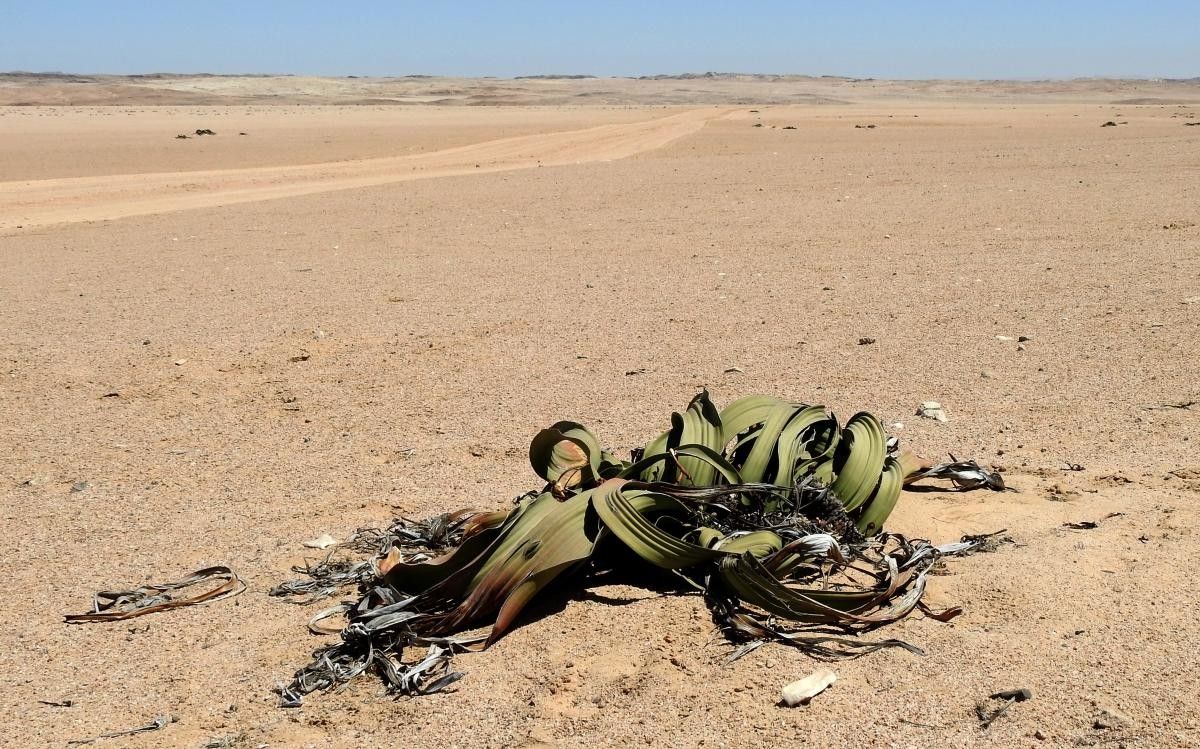
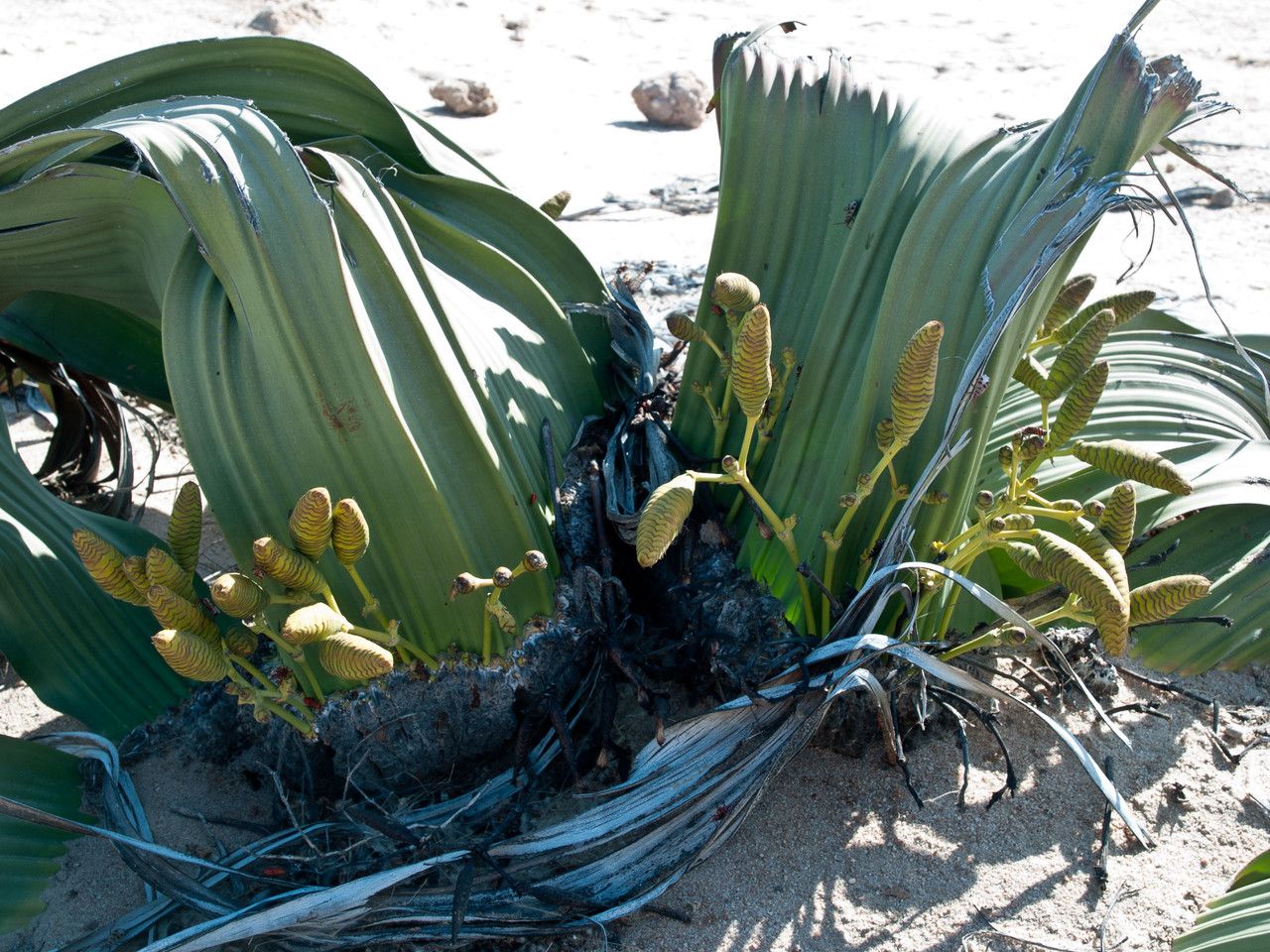
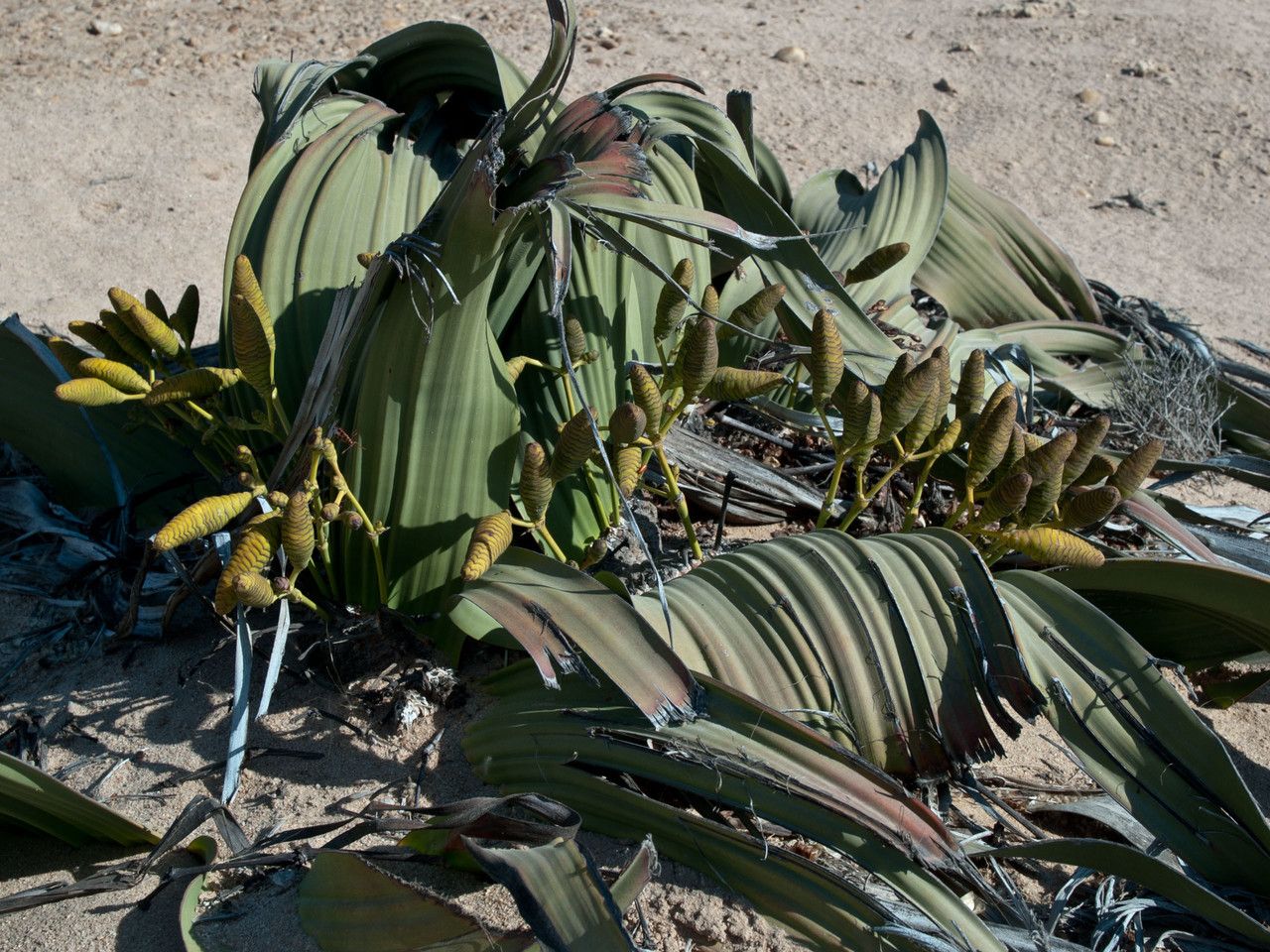
Welwitschia mirabilis is a unique and fascinating plant native to the Namib Desert in southwestern Africa. This slow-growing, long-lived species can survive for up to 2,000 years, adapting to thrive in one of the harshest environments on Earth.
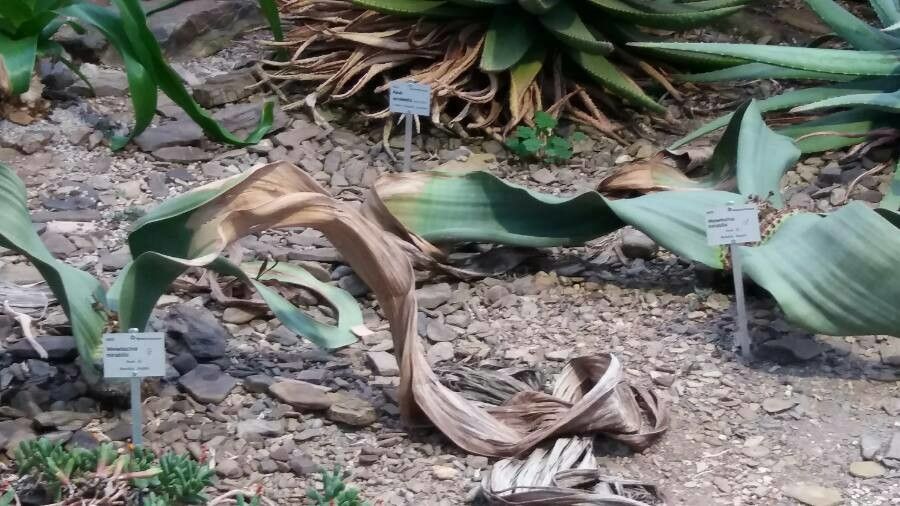
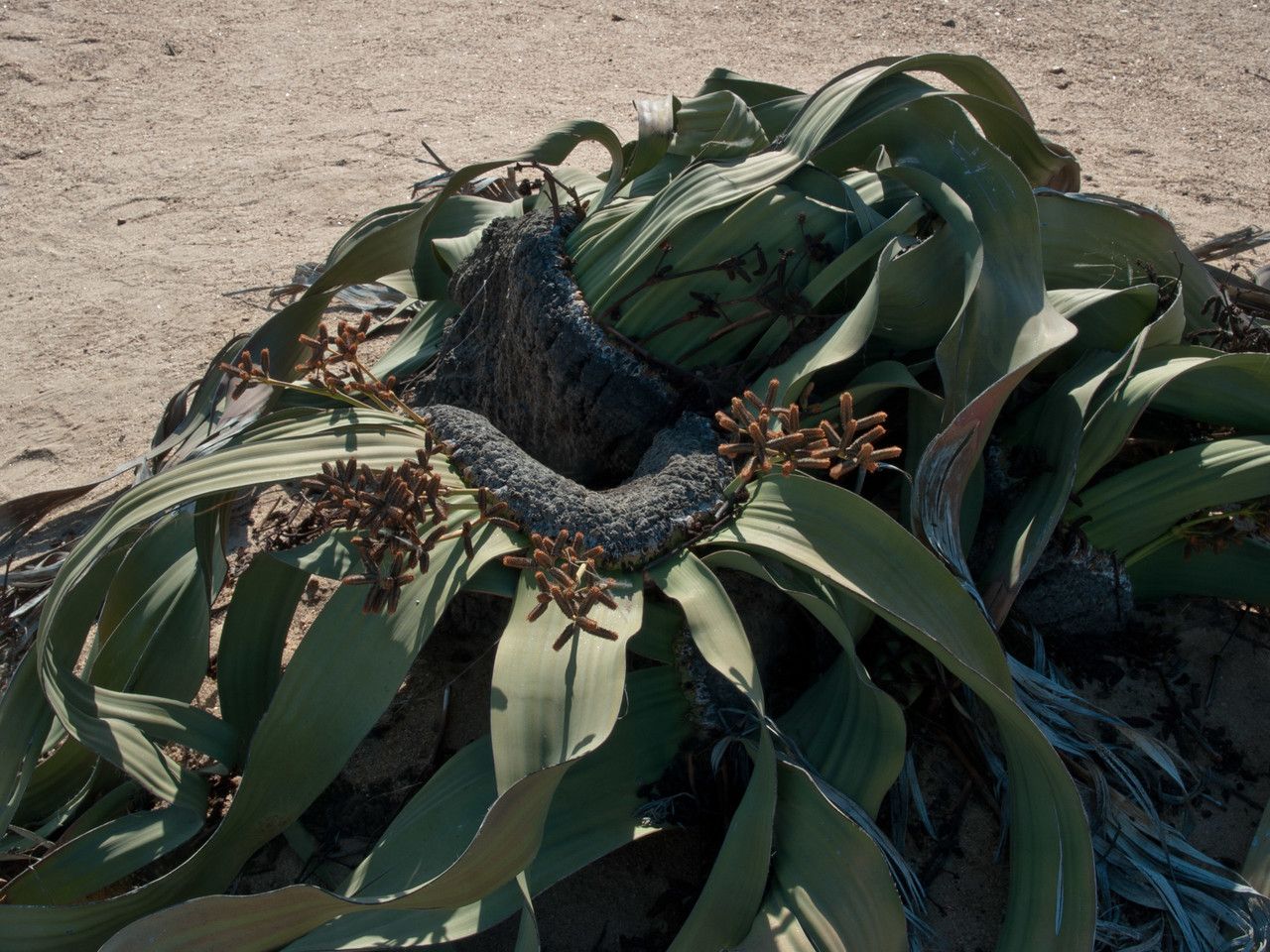
The Welwitschia mirabilis plant features only two leaves that grow continuously throughout its life. These leaves can reach up to 4 meters in length and split into numerous strap-like segments. They are tough, leathery, and covered with a thick layer of wax, which helps retain moisture.
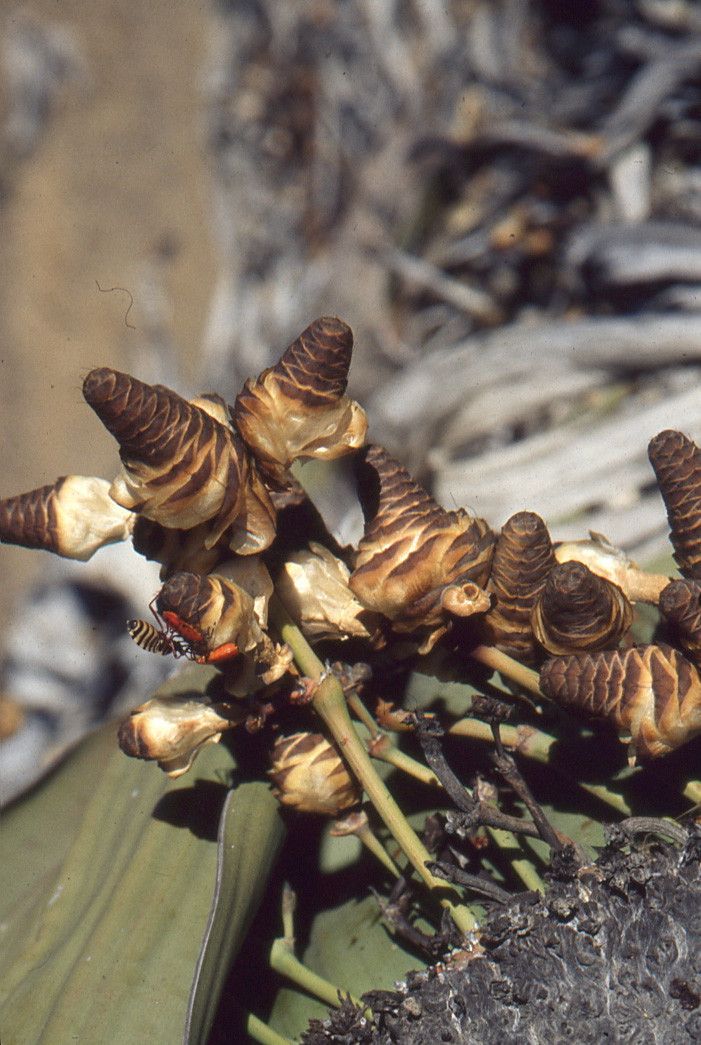
An extensive root system enables the plant to absorb water from deep underground sources. Additionally, it produces small cones that contain male or female reproductive structures.
Austrian botanist Friedrich Welwitsch first discovered this remarkable plant in 1859 during an expedition through Angola. Since then, it has become an iconic symbol of the Namib Desert's extreme environment and resilience.
Despite its robust nature, Welwitschia mirabilis is considered vulnerable due to habitat loss from human activities like mining and agriculture. Conservation efforts are underway to protect this extraordinary species for future generations.
Welwitschia has strong disease resistance and is generally not prone to illnesses. However, it can be vulnerable to pests and diseases present in its environment. Such infections are usually mild. Regarding care, this plant needs moderate maintenance. It should be pruned regularly to preserve a neat appearance and healthy growth. Fertilizing can also help encourage flowering. Welwitschia is appropriate for anyone with outdoor space, such as a garden or patio, and does not demand extensive care experience. It may need more attention when cultivated indoors.
How to keep Welwitschia Mirabilis.
Light
Welwitschia grows best where sunlight is plentiful and unblocked. It does not have particular adaptations for tolerating shade, and its health and development depend greatly on abundant sun exposure. Originating from habitats that are generally open and free of shade, both too much and too little sunlight can disturb its normal growth.
Water
Welwitschia is well-suited for arid environments, only needing water every three weeks. It thrives in sandy, well-drained soils. Native to southwestern Africa, this plant has adapted to survive with very little moisture. It benefits from full sun exposure and makes use of fog and dew for hydration.
Humidity
This plant prefers dry conditions, so don't mist it. However, watering it less often can also thrive in higher humidity.
Temperature
Welwitschia originates from temperate regions where temperatures fall between 68 and 100 °F (20 to 38 ℃). It does well under these conditions, so a similar climate should be maintained to promote optimal growth throughout the seasons.
Fertilizer
Welwitschia needs the most fertilizer during its active growth period, which occurs mainly in spring, summer, and early fall. Fertilizing supplies essential nutrients the soil may lack, encouraging healthy root and stem development and enhancing the attractive foliage that is a key characteristic of this plant.
Pruning
Welwitschia plants are known for their distinctive strap-shaped leaves and can live for centuries. Pruning, ideally done in early spring, is important for removing damaged foliage and promoting healthy growth. To ensure this, use gentle trimming techniques and sterile tools to prevent infections. Regular pruning also improves air circulation and light penetration, which are essential for the plant's optimal health.
Pot & Repot
When repotting Welwitschia, select a pot 1-2 inches (2.5–5.1 cm) larger with ample drainage. Use a well-draining potting mix. Repot in spring or fall, ensuring the root ball is slightly lower than the rim of the flower pot. Water thoroughly after repotting and place it in a warm spot with indirect sunlight.
Botanical profile.
- Plant Type
- Herb
- Life Cycle
- Perennial
- Genus
- Welwitschia
- Family
- Welwitschiaceae
- Hardiness Zone
- 9-11
- Mature Height
- 30 cm to 46 cm
- Mature Spread
- 1.83 m
- Leaf Color
- Green, Blue
- Leaf Type
- Evergreen
- Flower Color
- Purple, Red, Brown, Orange
- Flower Size
- 2.54 cm
- Bloom Time
- Mid summer, Late summer
- Planting Time
- Spring, Autumn
- Harvest Time
- Fall
Other names.
Reader questions.
How should I water my Welwitschia?
When watering the Welwitschia plant, it is best to use filtered water at room temperature. Tap water may contain harmful particles, so filtered water is preferred. The water should be slightly warm or at room temperature because the Welwitschia is accustomed to warm environments and cold water can be damaging. Avoid watering the plant from above as it can cause problems with the leaves. Instead, water the soil directly until it is completely soaked. This helps the roots get the moisture they need and spread through the soil to gather necessary nutrients.
Do I have to put fertilizer on my Welwitschia?
All plants, including the Welwitschia, need soil nutrients to grow. However, it's not always certain that the soil where your plants grow will have all the required nutrients. Fertilizing and amending the soil can help ensure that your garden plants not only have the basic nutrients they need, but also the specific nutrients necessary for their health. For the Welwitschia, fertilizer is essential to support the development of its roots and stems during the growing season. Fertilization will also enhance the appearance of its leaves, which are the main feature that makes this plant visually appealing.
What kind of sunlight requirements does Welwitschia need?
Welwitschia requires full sun, defined as more than 6 hours of sunlight daily, to thrive. It originates from open environments devoid of shade, making it highly reliant on generous and unobstructed sunlight for healthy growth. Notably, the plant lacks specific adaptations to tolerate shaded conditions, and both excessive and insufficient sunlight can hinder its normal growth processes. It's crucial to watch how sunlight moves through your garden, selecting spots that offer an ideal balance of light and shade to ensure the well-being of your plants.
What is the native climate for Welwitschia?
Welwitschia is native to temperate climates, flourishing in temperature ranges from 68 to 100 °F (20 to 38 ℃). This plant is extremely heat-loving and thrives in warm conditions. For optimal growth, replicating this climate range across different seasons is advisable. During colder months, especially in autumn, it's recommended to bring Welwitschia indoors, placing it near a bright window while avoiding proximity to heaters. Ensuring the temperature remains above 20°C during winter will support its growth, as temperatures nearing or dropping to 0°C can severely harm the plant.
What should I do if I give my Welwitschia plant too much water or too little water?
Taking proper care of your Welwitschia is important to maintain its health. Both overwatering and underwatering can harm your plant, but overwatering is a more common problem. When the Welwitschia receives excessive water, its stems and leaves may wilt and turn yellow. In addition, overwatering for an extended period can lead to diseases like root rot, mold, and mildew, which are potentially fatal to your plant. While underwatering is less likely to occur since the Welwitschia is quite tolerant of drought, it is still a possibility. In such cases, the leaves of your Welwitschia may become brittle and brown. It is crucial to identify signs of overwatering early on to prevent irreversible damage. If you notice these signs, reduce your watering schedule immediately and check the quality of the soil. If the soil drains poorly, replace it with a loose, well-draining potting mix. Alternatively, if your Welwitschia shows signs of underwatering, simply increase your watering frequency until the signs subside.
When should I fertilize my Welwitschia plant?
To ensure optimal growth, a Welwitschia should receive the highest amount of fertilizer during its active growing seasons, such as spring, summer, and early fall. During these months, it is recommended to feed your Welwitschia every two to four weeks. As winter approaches and the growing phase ends, you can gradually decrease the fertilization rate. Eventually, in anticipation of the winter season when the Welwitschia will have minimal growth, you should stop feeding it entirely.
How can artificial lighting support Welwitschia's growth?
Indoor plants like Welwitschia require adequate lighting, especially when natural sunlight is insufficient. Artificial lighting becomes essential during winter or in less sunny spaces, promoting faster, healthier growth. To optimize growth, it's recommended to: 1. Choose the right type of artificial light, such as LED lights, which can be customized to provide specific light wavelengths. 2. Determine the appropriate light placement, positioning it 12-36 inches above the plant to mimic natural sunlight. 3. Mimic natural daylight hours, ensuring most plants receive 8-12 hours of light per day. The required artificial light intensity varies: full sun plants need 30-50W/sq ft, partial sun plants 20-30W/sq ft, and full shade plants 10-20W/sq ft.
How does Welwitschia react to low temperatures?
Welwitschia prefers warm climates and doesn't fare well in low temperatures, thriving best when the climate is above 20°C. It's crucial to keep it above 0°C during winter months to avoid damage. Exposure to temperatures below -5°C leads to discoloration of the leaves, initially lightening before turning brown or black. These conditions can also cause the plant to wilt and droop. To mitigate the damage from frost, removing the affected parts and relocating the plant to a warmer indoor setting is necessary. A south-facing window is ideal to ensure the plant gets enough sunlight, and it's important to keep the plant away from heaters or air conditioning vents to prevent air dryness.
How frequently should I give water to my Welwitschia plant?
If your Welwitschia plant is in a pot, the most precise way to determine if it needs water is by checking the soil moisture. Stick your finger into the soil and if the top 2-3 inches are dry, it's time to water it. The same method can be used if you are growing Welwitschia outdoors in the ground. During spring and early fall, watering once a week is usually sufficient, but during extremely hot weather, watering twice or more per week may be necessary. However, mature and well-established Welwitschia plants have an impressive ability to tolerate drought.
When is it best to not put fertilizer on my Welwitschia plant?
Throughout most of the year, including spring, summer, and most of the fall, it's important to regularly feed your Welwitschia. However, there are a few exceptions. If you realize that your Welwitschia has received too much fertilizer or if you have fertilized it incorrectly, causing fertilizer burn or other issues, you should fix these problems before continuing with regular feeding. It's crucial to note that during winter, you should not fertilize a Welwitschia. If you're growing this plant indoors in a cold winter area, it will go into a dormant phase. Feeding the plant during this dormant phase not only serves no purpose and doesn't help with its growth, but it also has a high chance of causing fertilizer burn.
What are the signs of light deficiency in Welwitschia?
When Welwitschia is cultivated indoors, especially during winter, it can show symptoms of light deficiency, such as smaller new leaves, leggy or sparse growth, faster leaf drop, slower or no new growth, lighter-colored new leaves, chlorosis, sunscald, leaf curling, wilting, and leaf scorching. These symptoms highlight the plant's struggle in inadequate lighting conditions and the necessity of providing sufficient sunlight or artificial light to maintain its health.
What should be done if a Welwitschia experiences high temperatures?
During the hot summer months, it's crucial to ensure that Welwitschia remains below 38°C to prevent heat stress. Temperatures exceeding 43°C can cause the leaves to lighten in color and become more vulnerable to sunburn. In such instances, trimming the sunburned and dried portions of the plant can help. Moving Welwitschia to a shadier spot, especially to avoid midday and afternoon sun, is advisable. Keeping the soil moist by watering it in the morning and evening will also help in managing the stress from high temperatures.