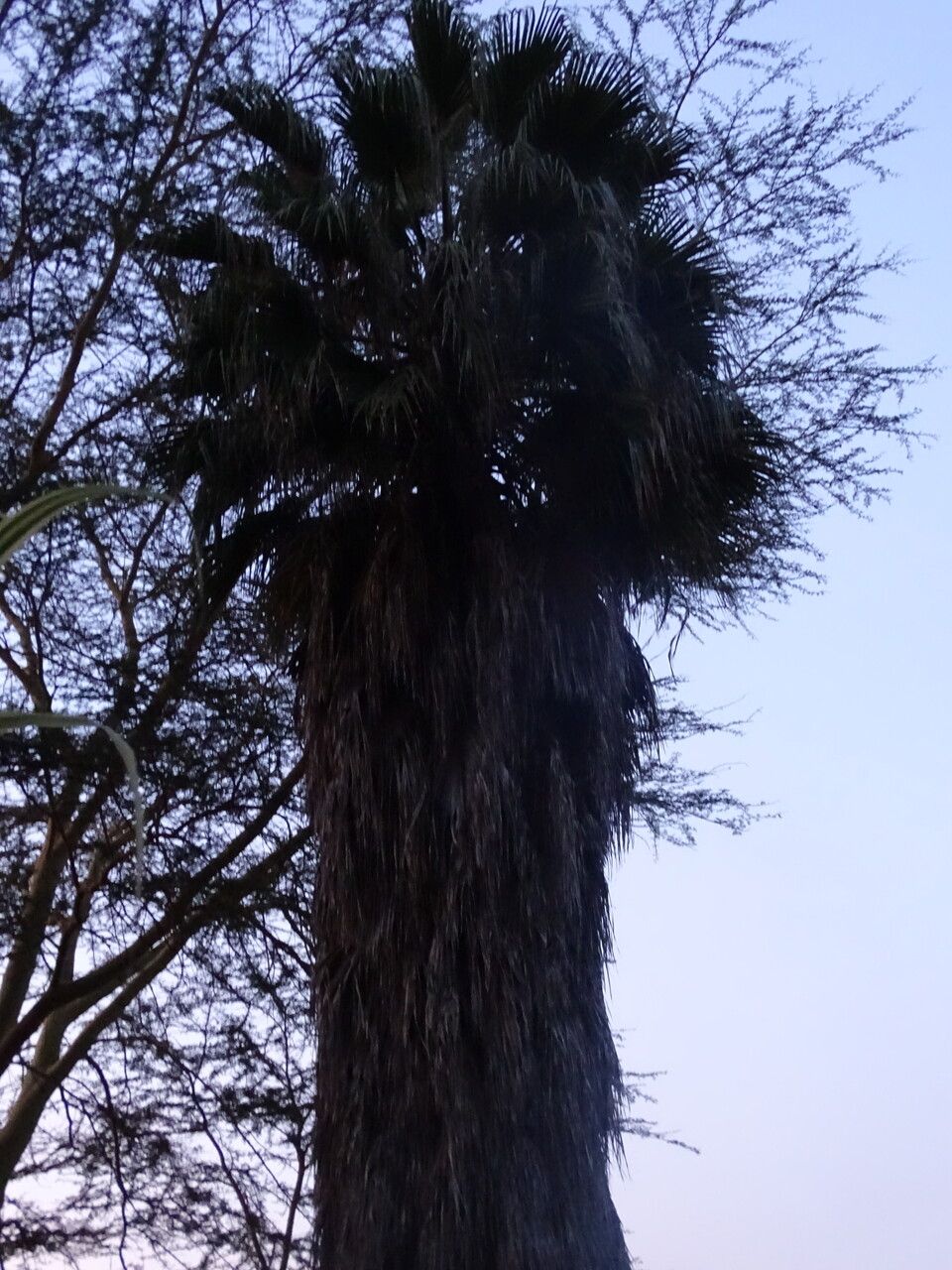
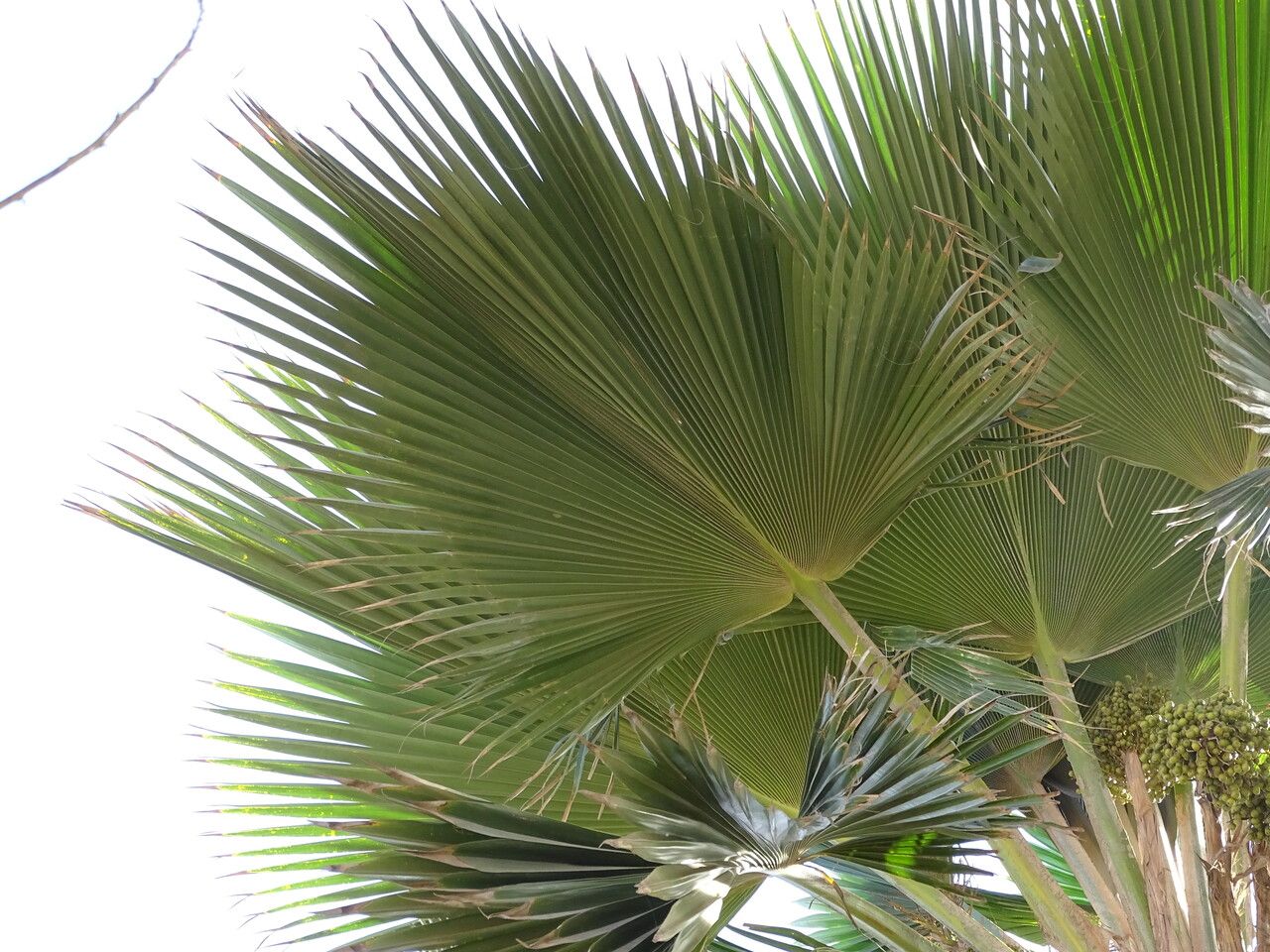
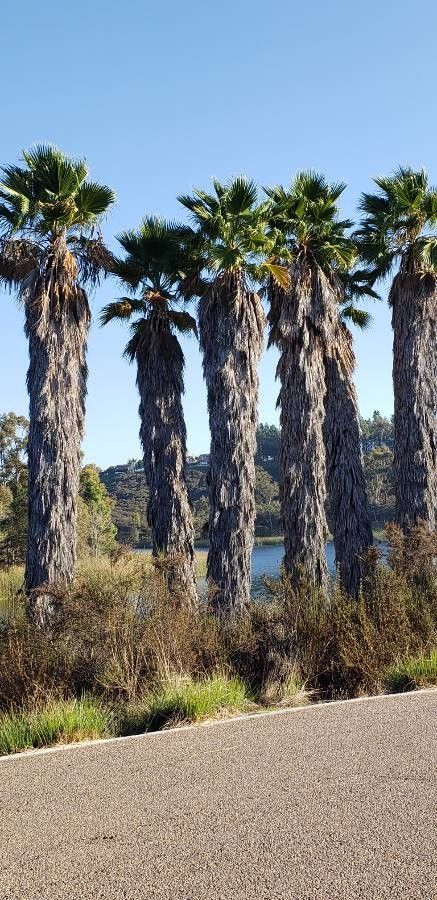
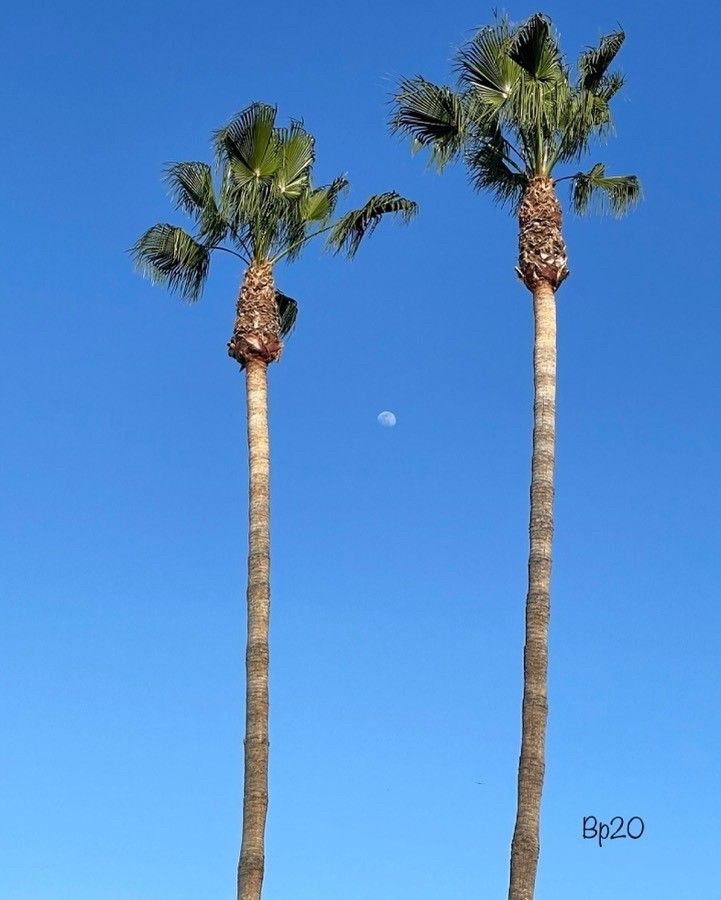
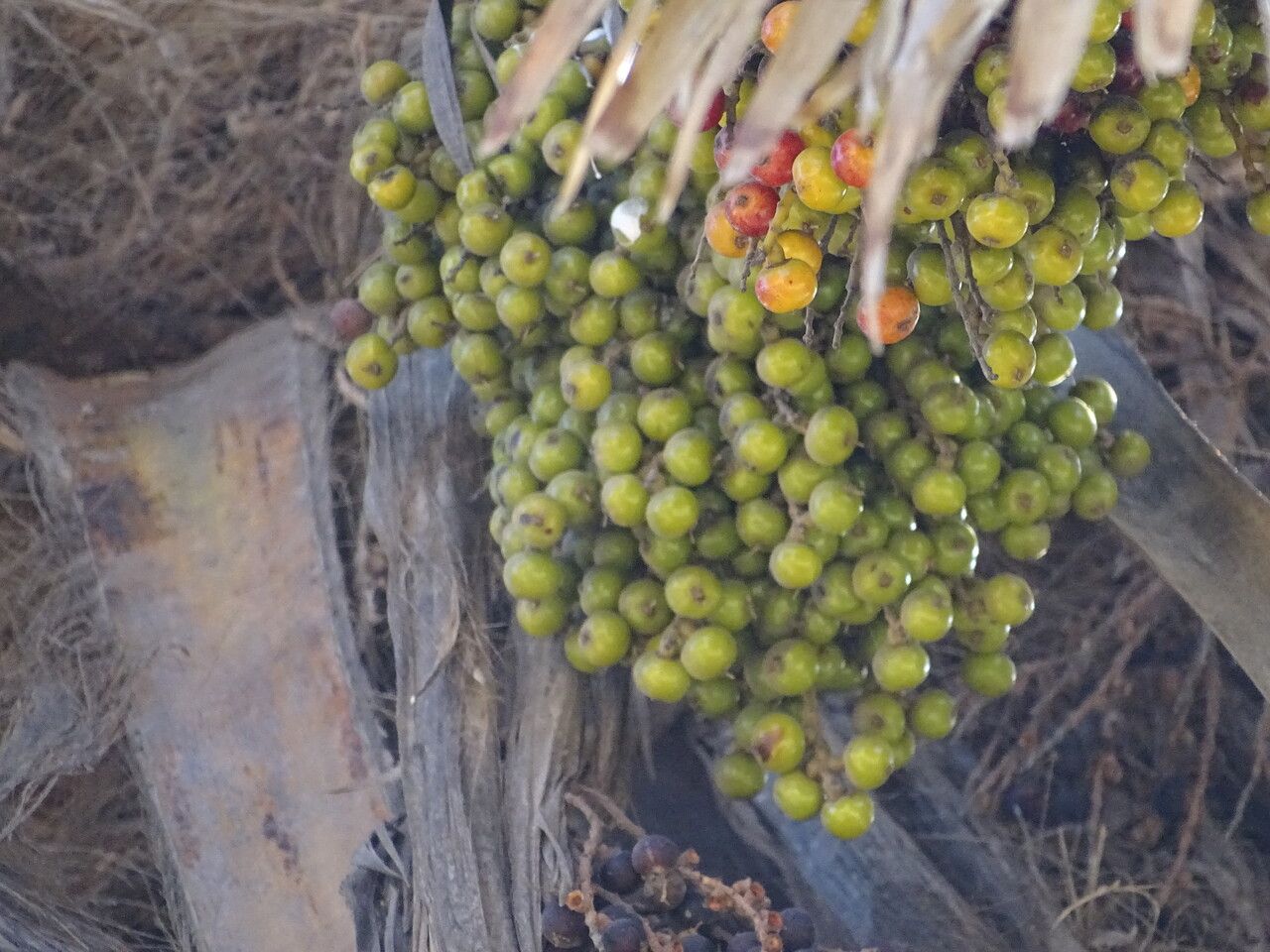
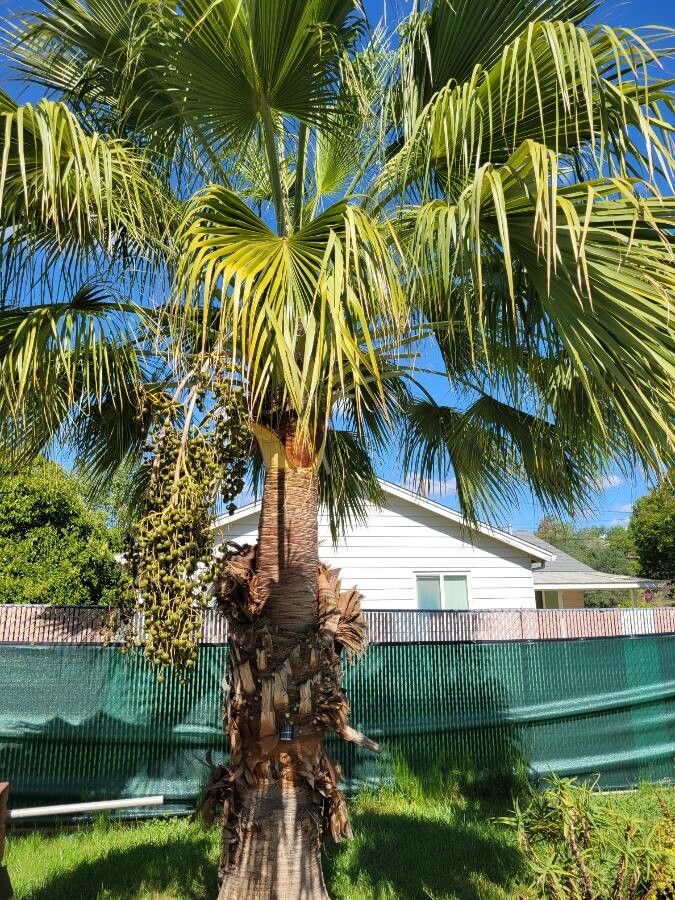
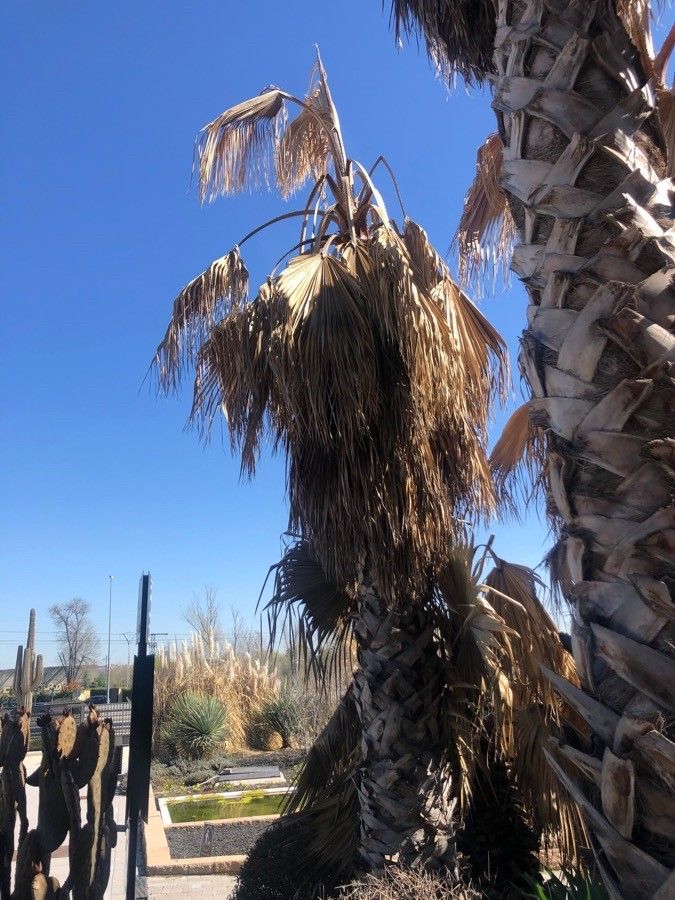
Washingtonia robusta, commonly known as the Mexican fan palm or Washington palm, is a tall and slender tree belonging to the Arecaceae family. Native to northwestern Mexico and southern California, it has been widely cultivated around the world for its ornamental value. The tree can grow up to 30 meters tall and has a trunk diameter of up to 1 meter. Its fan-shaped leaves can reach lengths of up to 2 meters and are equipped with petioles armed with sharp spines. Mexican fan palms prefer full sun exposure and well-drained soil, though they can tolerate some drought conditions once established. They are also resistant to pests and diseases, making them an easy-to-grow option for landscaping. Washingtonia robusta serves various purposes, such as providing shade for outdoor spaces and adding aesthetic value to parks and gardens. It is also used as an ornamental plant in indoor settings such as malls and offices. Moreover, the tree holds cultural significance for Native American tribes, who use its leaves for basket weaving, while its fruit provides food for wildlife, including birds and squirrels. Overall, Washingtonia robusta is an attractive plant that enhances the beauty of any location while offering ecological benefits. These qualities make it a popular choice among gardeners worldwide.
The Mexican fan palm is a plant commonly found along roadsides and beaches in the coastal regions of Mexico. This palm is characterized by its tall and straight trunk, with leaves that only grow at the top. These leaves are distinctive for their hand-held fan shape, which gives the tree a tropical appearance. This unique leaf shape is what gives the Mexican fan palm its name.
The Mexican fan palm is fairly disease-resistant and is generally not prone to infections. Regarding care, this plant is relatively low maintenance. When grown outdoors it needs minimal watering, and larger plants typically do not require pruning. Smaller plants, however, should be pruned after they have bloomed. The Mexican fan palm is suitable for anyone with outdoor space, such as a garden or deck, and does not demand much prior care experience.
How to keep Washingtonia Robusta.
Light
The Mexican fan palm needs plentiful light to thrive, much like in its native habitats where abundant sunlight is typical. It can tolerate moderate shade, but that may compromise the plant’s health and result in reduced vigor. Both too much and too little light can negatively affect the plant’s wellbeing.
Water
The Mexican fan palm is well-suited for arid conditions, as it requires only occasional watering—every one to two weeks—and prefers drier soil to avoid root rot. This palm is a popular choice for landscaping in areas with low rainfall, and once established, it continues to grow, displaying a tall stature and a slender trunk.
Temperature
The Mexican fan palm does best in temperatures of 68 to 100 ℉ (20 to 38 ℃) and comes from areas with warm, dry climates. In summer, adjust the watering schedule to avoid heat stress. In winter, if temperatures fall below 28 ℉ (-2 ℃), it is advisable to cover the plant with a frost cloth to protect it from freezing.
Fertilizer
Fertilize your Mexican fan palm in early spring to encourage healthy growth. Regular feeding improves overall health, producing vigorous growth, increased toughness in challenging conditions, and enhanced resistance to pests and diseases. Follow a consistent fertilization routine for your Mexican fan palm to keep its foliage vibrant with rich color and a lush appearance.
Pruning
The Mexican fan palm is known for its tall, slender trunk and fan-shaped leaves. To maintain the plant's health and vigor, it's important to prune any dead or damaged fronds in early spring. This practice also helps reduce the risks of disease and fire hazards. Always use clean, sharp tools for pruning to prevent infections.
Pot & Repot
When repotting a Mexican fan palm, choose a pot that is slightly larger and provides excellent drainage. Use a well-draining potting mix. Repot in spring, taking care not to damage the roots. Place the palm at the same level it was in the old pot. Water thoroughly after repotting, and keep it in a warm spot with bright, indirect sunlight. Avoid overwatering to prevent root rot.
Botanical profile.
- Plant Type
- Palm
- Life Cycle
- Perennial
- Genus
- Washingtonia
- Family
- Arecaceae
- Hardiness Zone
- 10-12
- Mature Height
- 24.99 m to 29.87 m
- Mature Spread
- 2.13 m to 3.05 m
- Leaf Color
- Green
- Leaf Type
- Evergreen
- Flower Color
- White
- Flower Size
- 1.02 cm
- Bloom Time
- Mid summer
- Planting Time
- Spring, Autumn
- Harvest Time
- Mid summer, Late summer, Early fall
- Native Area
- Mexico
Other names.
Reader questions.
How should I water my Mexican fan palm?
When you have a Mexican fan palm indoors, the best way to water it is by directly applying water to the top layer of soil in the container. Use rainwater or distilled water that is around room temperature. To check if the plant needs water, stick your finger into the soil. If the top few inches of soil are dry, add enough water to moisten it, allowing excess water to drain through the bottom of the container. It is better to underwater the palm to avoid root rot. When growing the Mexican fan palm outdoors, rainfall alone may be sufficient, but if you receive less than weekly rain during the growing season, you may need to supplement the water with rainwater or distilled water.
Why is it necessary to put fertilizer on my Mexican fan palm?
No matter which type of Mexican fan palm you have, regular fertilization can improve its overall health. By providing the right nutrients, you can encourage stronger growth and increase its resistance to difficult growing conditions, as well as protect it from diseases and pests. The foliage is a key feature of the Mexican fan palm, so maintaining it is important. To do this, establish and follow a regular fertilization schedule that is tailored to your specific palm. This will result in leaves that are vibrant in color and give your palm a lush appearance.
What are the sun requirements for Mexican fan palm?
Mexican fan palm thrives in environments that replicate its native conditions, requiring abundant light exposure for optimal growth. Full sun, defined as above 6 hours of sunlight per day, is ideal for these palms, though they can also tolerate partial sun, which is about 3-6 hours of sunlight daily. It's important to monitor the movement of sunlight through your garden to ensure plants receive the perfect balance of light and shade, enhancing their growth and health. However, it's worth noting that both overexposure and underexposure to light can negatively affect the plant's wellbeing.
What are the ideal temperature conditions for a Mexican fan palm?
The Mexican fan palm thrives in temperatures ranging from 68 to 100°F (20 to 38°C), making it well-suited for warm and dry climates. It's extremely heat-loving but sensitive to cold. During summer months, adjusting the watering schedule helps prevent heat stress. In winter, it's crucial to protect the plant from freezing if temperatures drop below 28°F (-2°C) by covering it with a frost cloth. Keeping indoor temperatures above 20°C during winter promotes healthy growth, while temperatures near 5°C can be harmful.
What should I do if I give too much/not enough water to a Mexican fan palm?
Here are some signs that indicate plants are not getting enough water: brown tips on the plant, wilted and drooping leaves that appear lifeless, and the potential for leaves to turn brown, crispy, and dry out severely. If you notice these signs, water the plant as soon as possible. Alternatively, overwatering can lead to root rot. If this occurs, remove any damaged roots from the soil, especially if they are mushy, fragile, and black. It is important to remove a larger part of the root to address the issue. Overwatering can also cause leaves to turn brown and fall off early. To help the plant recover, drain excess water and wait for the soil to dry before watering again. If you notice signs of root rot, discard the soil in the pot. Clean everything thoroughly and place pebbles in the pot to improve drainage. If you observe tan rings or reddish-brown spots on the leaves, discard any excess water at the base of the pot. Additionally, ensure the plant is in a well-ventilated location to promote faster soil drying and prevent future rotting.
When should I fertilize my Mexican fan palm tree?
To ensure healthy growth, it is recommended to fertilize your Mexican fan palm for the first time in late winter or early spring. This allows the palm to receive essential nutrients as the weather warms up. If you live in a warm climate region, it can be beneficial to provide an additional fertilizer feeding in early fall. This not only adds more nutrients to the soil for the following growing season but also helps the palm become hardy and better withstand the cold winter without foliage damage. Fertilizing earlier in the fall ensures that new branches have enough time to grow and withstand the upcoming winter.
How does artificial lighting support Mexican fan palm growth indoors?
Indoor Mexican fan palms can benefit significantly from artificial lighting, especially when natural sunlight is insufficient. This is particularly useful in winter or less sunny spaces, where artificial lights can be a crucial solution for promoting healthier, faster growth. LED lights are a popular choice because they can be tailored to provide specific wavelengths needed by the plant. The general guidance for artificial light intensity is 30-50W/sq ft for full sun plants, 20-30W/sq ft for partial sun plants, and 10-20W/sq ft for full shade plants. Positioning the light source 12-36 inches above the plant and ensuring it receives 8-12 hours of light per day mimics natural sunlight conditions most effectively.
How should I care for my Mexican fan palm during winter?
In winter, it's recommended to cover the Mexican fan palm with a frost cloth if temperatures are expected to drop below 28°F (-2°C) to protect it from freezing. For outdoor-grown Mexican fan palms, bringing them indoors near a bright window while keeping a safe distance from heaters can help them thrive, as maintaining temperatures above 20°C is beneficial. Avoiding cold temperatures, especially those approaching 5°C, is crucial to prevent damage.
What should I do if I give too much or too little water to my Mexican fan palm?
When watering the Mexican fan palm, the main issue to watch out for is overwatering. There are clear signs to indicate if this is a problem. If the palm receives too much water, its leaves will become brown and droopy. The stems may also turn mushy and emit a bad smell. Overwatering can lead to root rot, which can be deadly if not addressed. If you notice overwatering early on, you can solve the problem by reducing the watering rate or adding sand to improve soil drainage. In more severe cases, you may need to replant the palm in a new container after removing any rotten roots. If you grow your Mexican fan palm outdoors and it consistently receives excess water, you should consider moving it to a different location with better soil drainage. On the other hand, if the palm is underwatered, its leaves will droop, but they are more likely to turn yellow than brown. Additionally, an underwatered palm will also experience slower growth. If you notice these signs, you should increase the frequency of watering.
When is the best time to not use fertilizer on my Mexican fan palm?
There are specific times when you should avoid fertilizing your Mexican fan palm. Firstly, during the early and mid-winter months, your palm will be dormant and won't require any feeding. Additionally, it's not recommended to fertilize the plant in late spring and throughout the summer. This period often experiences hotter and drier weather, which can negatively affect the palm's response to fertilization. To avoid any problems, it's best to stick to a fertilizer schedule that only involves feeding in early spring and early fall.
What are the symptoms of light deficiency in Mexican fan palms?
Mexican fan palms may exhibit several symptoms when exposed to insufficient light, especially when kept indoors during winter. These include smaller new leaves compared to mature ones, leggy or sparse growth with increased spacing between leaves or stems, faster leaf drop, slower or halted new growth, and the development of lighter-colored or irregularly patterned new leaves. Additionally, chlorosis (leaf yellowing due to chlorophyll breakdown from excessive sunlight), sunscald, leaf curling, wilting, and leaf scorching can occur when the plant is either under or overexposed to sunlight.
What should I do if my Mexican fan palm experiences low temperatures?
For Mexican fan palms affected by low temperatures, it's important to trim off the frost-damaged parts and immediately move the plant to a warmer environment indoors. Placing the plant near a south-facing window ensures it receives ample sunlight. It's also advisable to keep the plant away from heaters or air conditioning vents to avoid excessive dryness. Ensuring the temperature stays above 20°C, especially during winter, is essential for the plant's health.