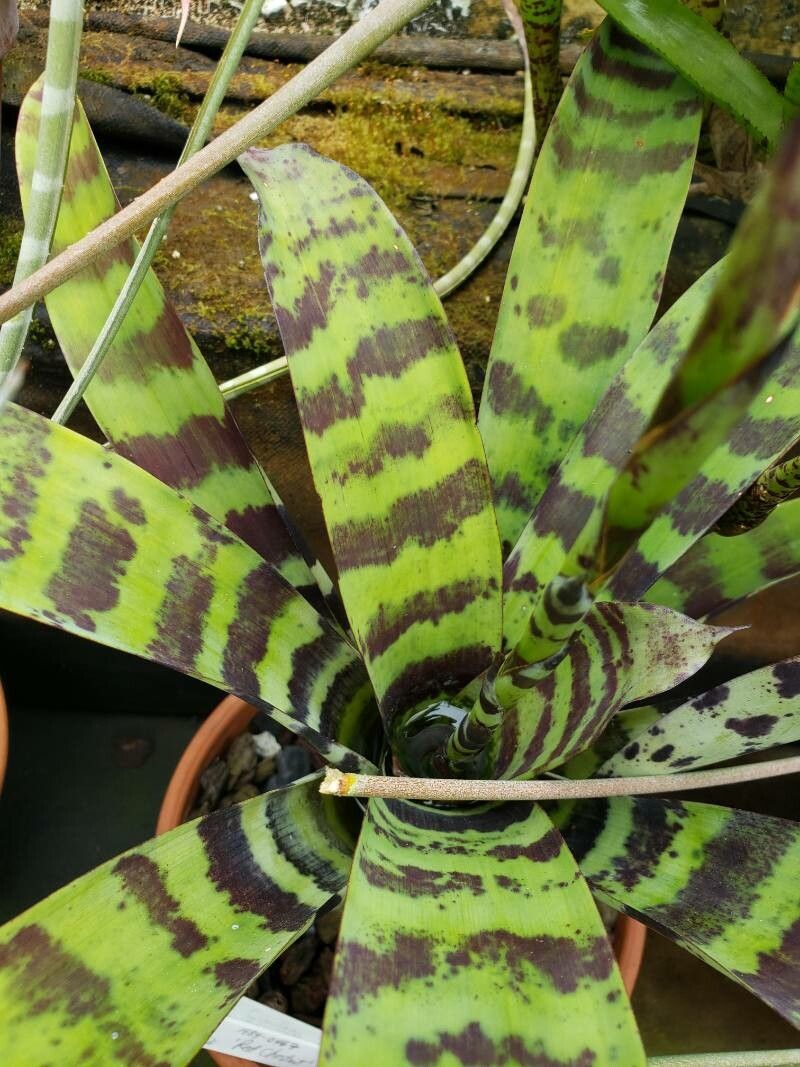
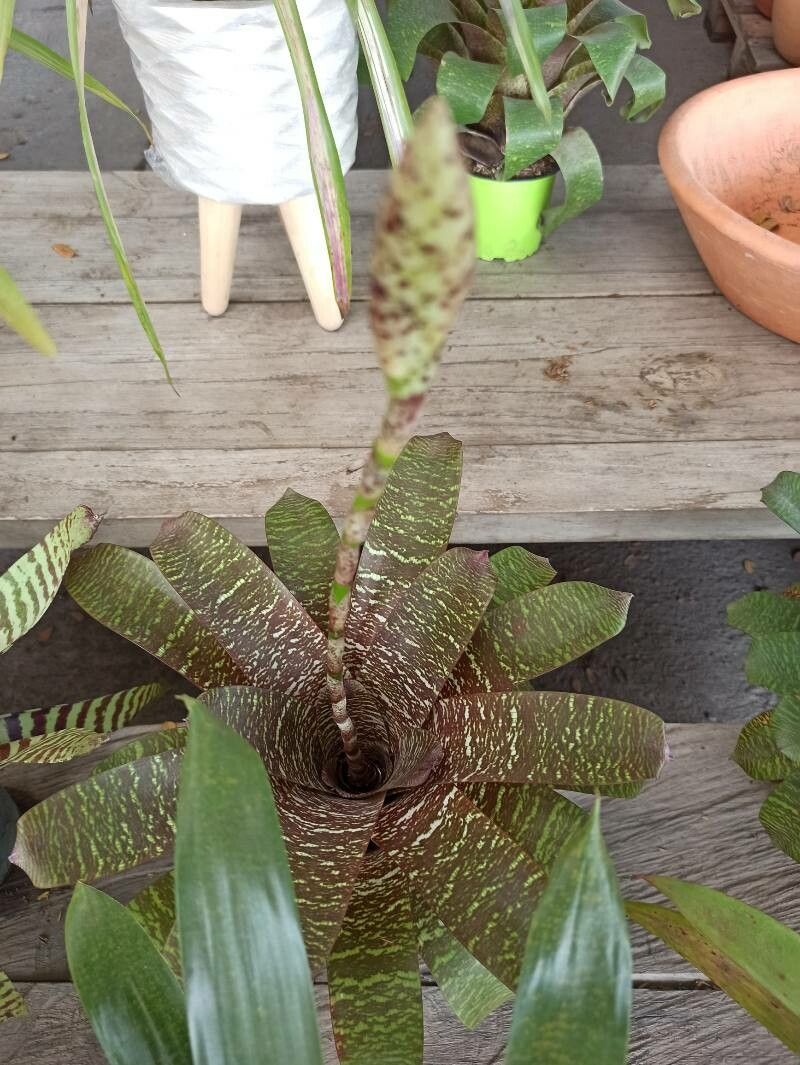
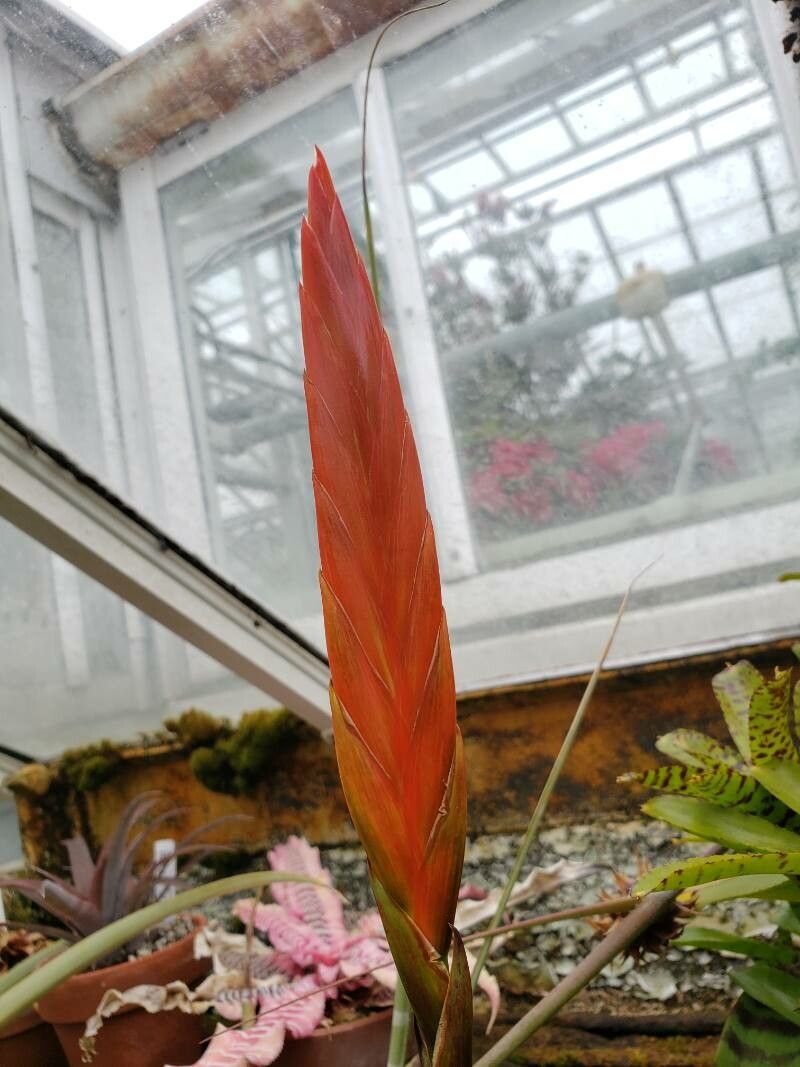
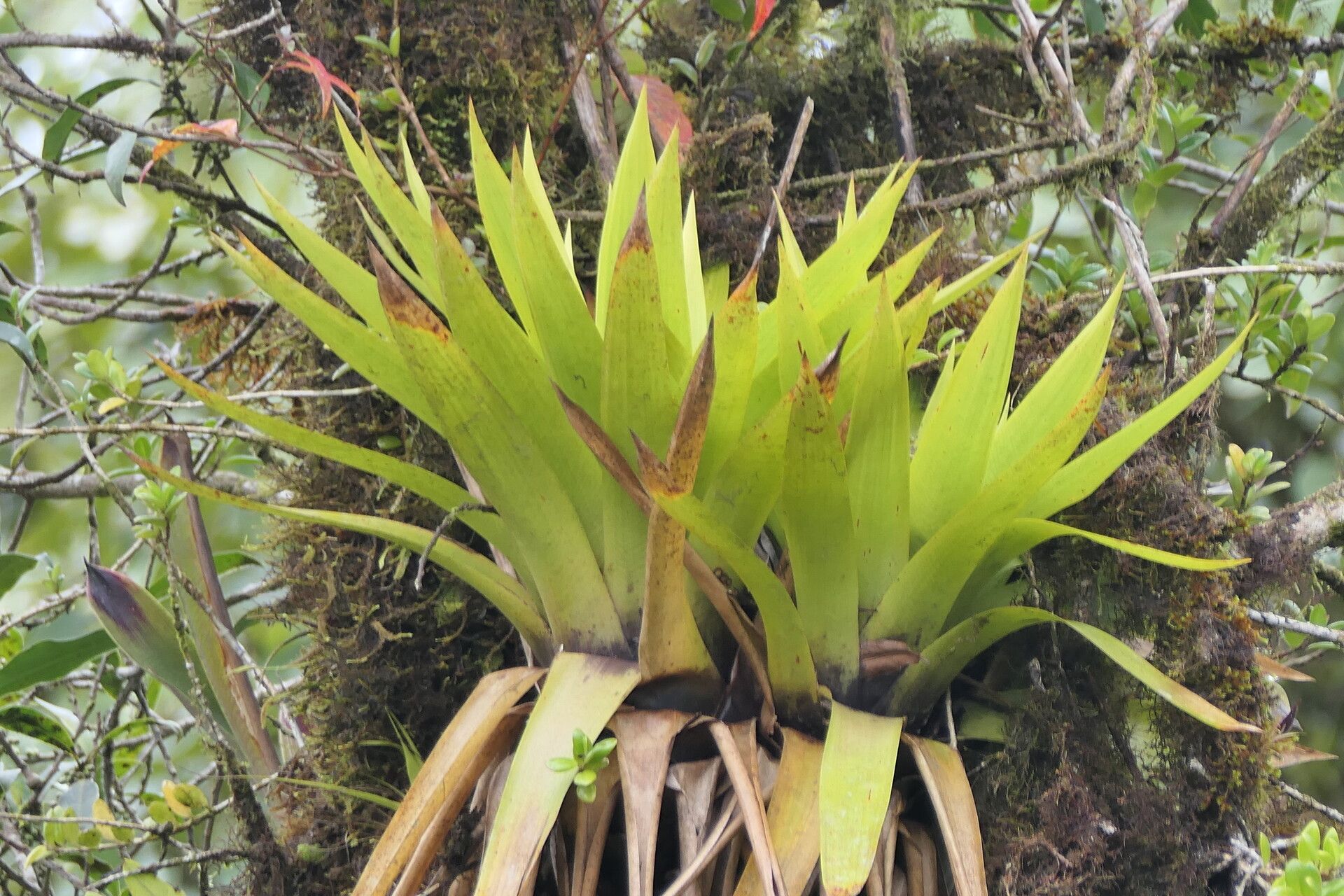
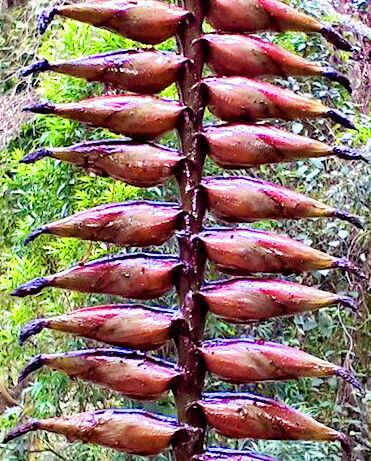
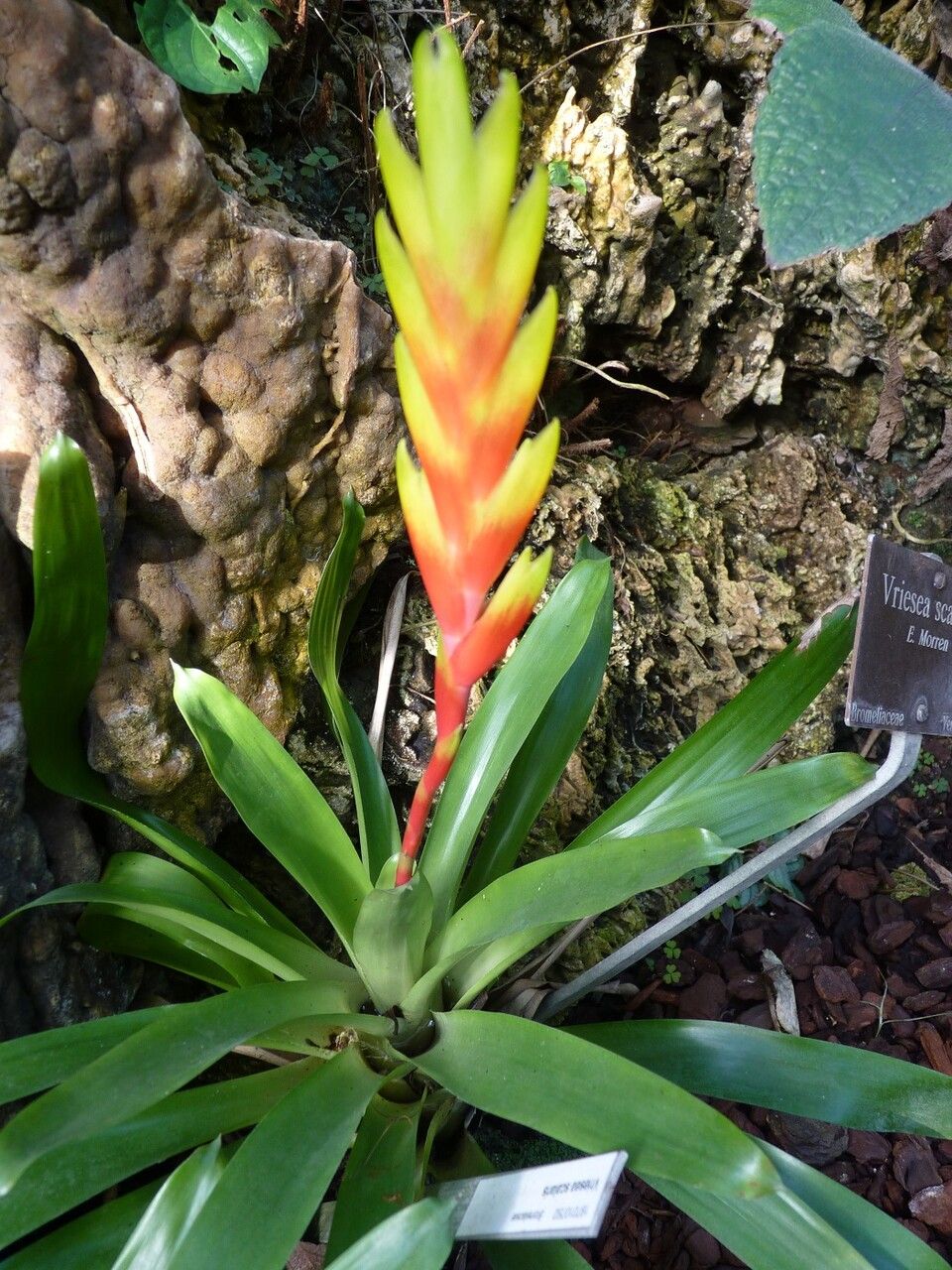
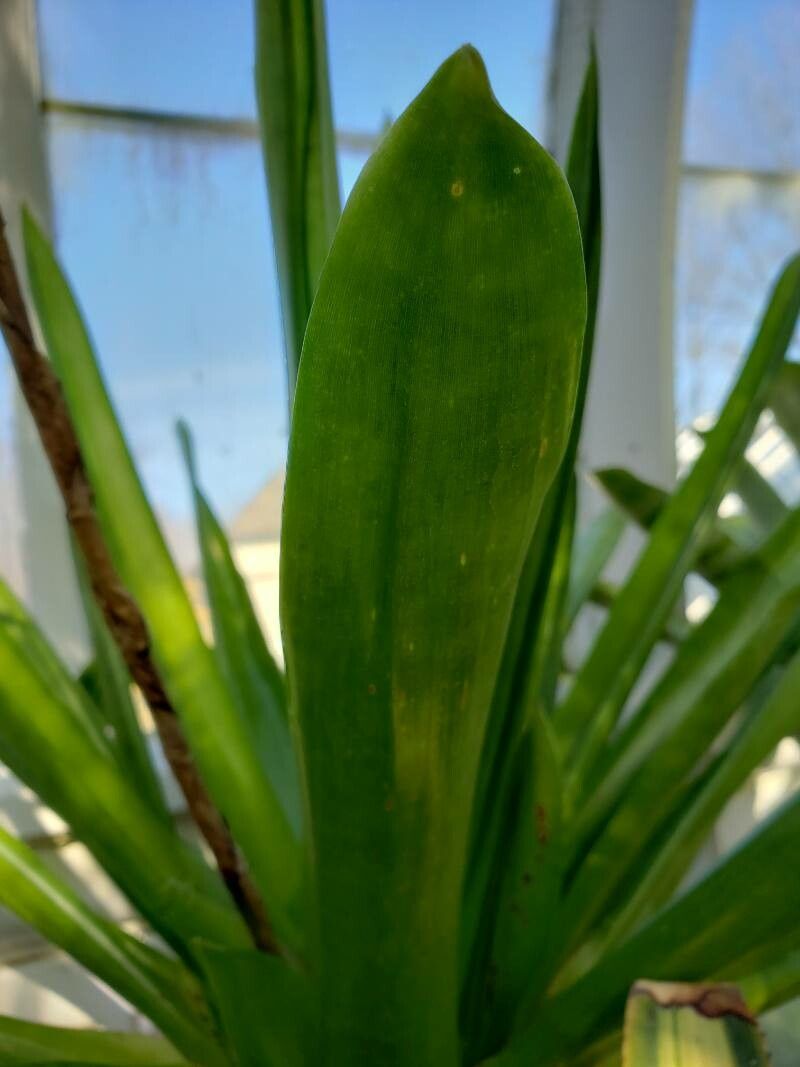
Vriesea fosteriana is a plant species in the genus Vriesea. This species is endemic to Brazil.
Fosteriana has moderate disease resistance but is more sensitive to humidity and overwatering. It is also more prone to illness when it lacks light and is overwatered. Regarding care, Fosteriana is drought-tolerant and can endure long stretches without watering. It needs little fertilizer and only occasional pruning. Because of these characteristics, it is suitable for people of all experience levels, especially those who prefer to spend less time on plant care and who may sometimes be away from home for extended periods. It is a good option for anyone who does not want to devote a lot of time to plant care but still wants an easy-to-maintain plant.
How to keep Vriesea Fosteriana.
Light
Fosteriana is native to places with filtered light, for example the understory of forests or rocky spots that provide natural shade. It favors partial sun but can endure full sun.
Water
Fosteriana, a plant native to the tropical forest underbrush, thrives in consistently moist environments and shows a moderate tolerance for drought. To maintain its health and lush foliage, it should be watered weekly and kept in conditions of high indoor humidity, which mimic its natural habitat.
Temperature
Fosteriana does well in warm conditions. If the temperature drops too low, the plant may stop growing or suffer frost injury. It tolerates high heat and humidity well and needs a steady level of moisture in its surroundings. However, very high temperature and humidity can make it vulnerable to fungal infections. In dry conditions, frequent watering and misting are needed to keep the air sufficiently humid. The plant is sensitive to sudden temperature changes, so maintaining a fairly stable temperature is important.
Fertilizer
For Fosteriana, small amounts of fertilizer applied once or twice a year during the growing season are adequate. Do not fertilize in winter or summer when the plant is dormant. Cut back on fertilizer for plants that have been repotted and wait a couple of months after repotting before you begin fertilizing again. Fertilizing helps maintain healthy growth and promotes flowering.
Pruning
For optimal growth, Fosteriana should be pruned in early spring to remove dead or damaged leaves. This encourages healthy development. Regularly trimming spent flower stalks also boosts its vitality. To maintain the plant's natural structure, light pruning is advisable, as it improves air circulation and reduces the risk of disease. For additional care tips, consider consulting horticultural guides.
Pot & Repot
When repotting Fosteriana, choose a pot slightly larger than the current one that has good drainage. Use a gritty, well-draining succulent or cactus mix. Gently remove the plant from its old pot, brush off excess soil, and set it in at the same depth. Wait a few days before watering so any root damage can heal. Repot in spring or fall and place it in a brightly lit area.
Botanical profile.
- Plant Type
- Herb, Succulent
- Life Cycle
- Perennial
- Genus
- Vriesea
- Family
- Bromeliaceae
- Hardiness Zone
- 10-12
- Mature Height
- 61 cm to 91 cm
- Mature Spread
- 61 cm to 91 cm
- Leaf Color
- Light Green, Yellow
- Leaf Type
- Evergreen
- Flower Size
- 5.08 cm to 6.35 cm
- Bloom Time
- Summer, Early fall
- Planting Time
- Spring, Summer, Autumn
- Harvest Time
- Late summer, Fall
- Native Area
- Brazil
Other names.