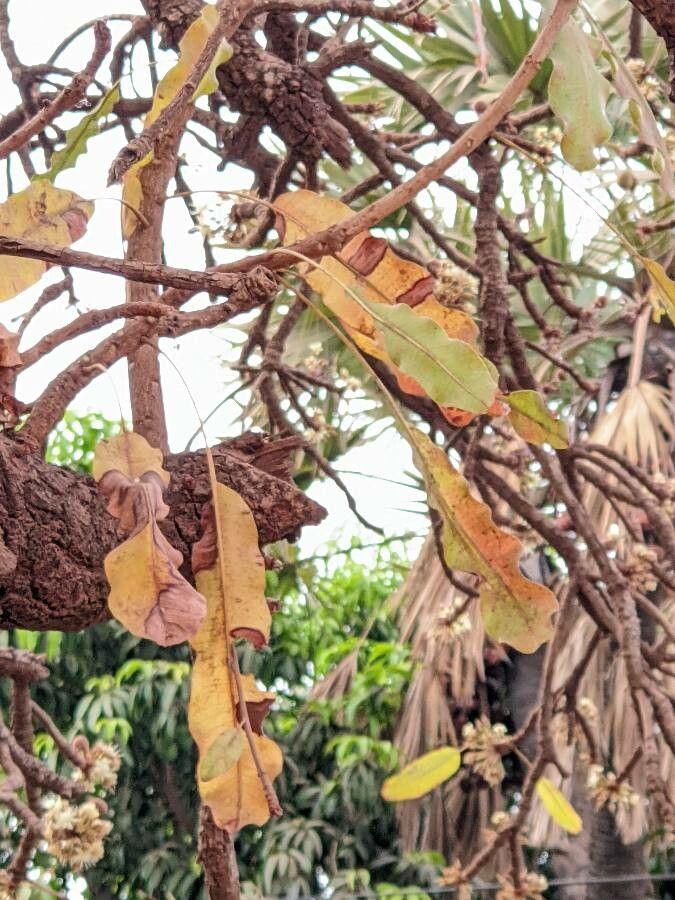
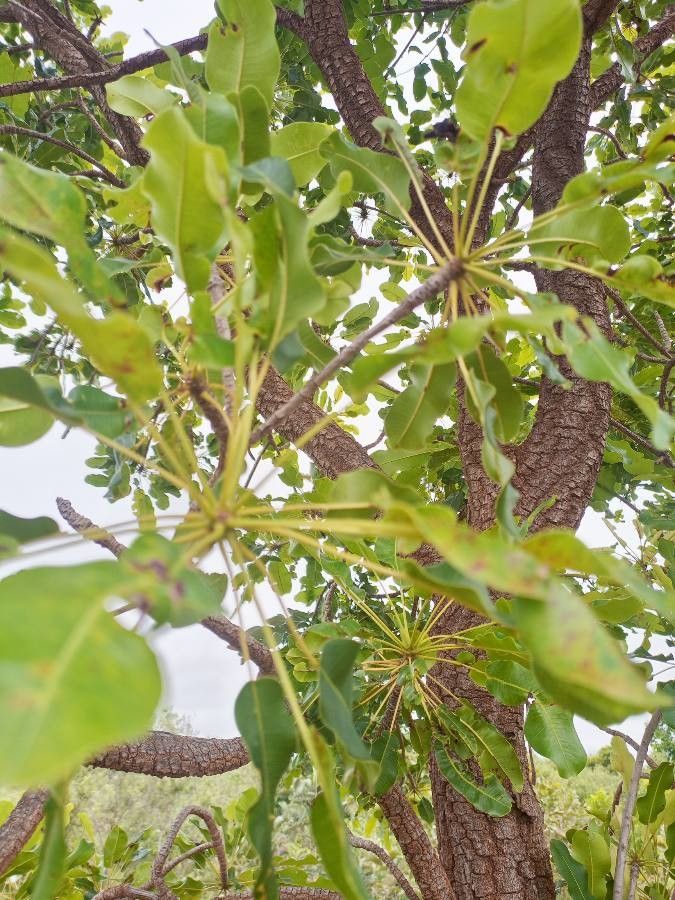
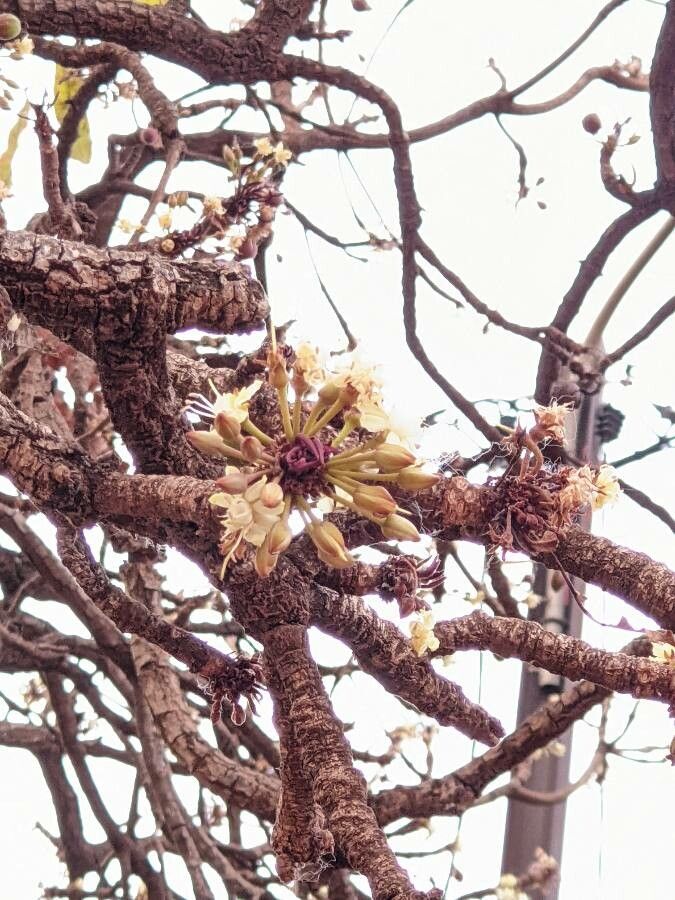
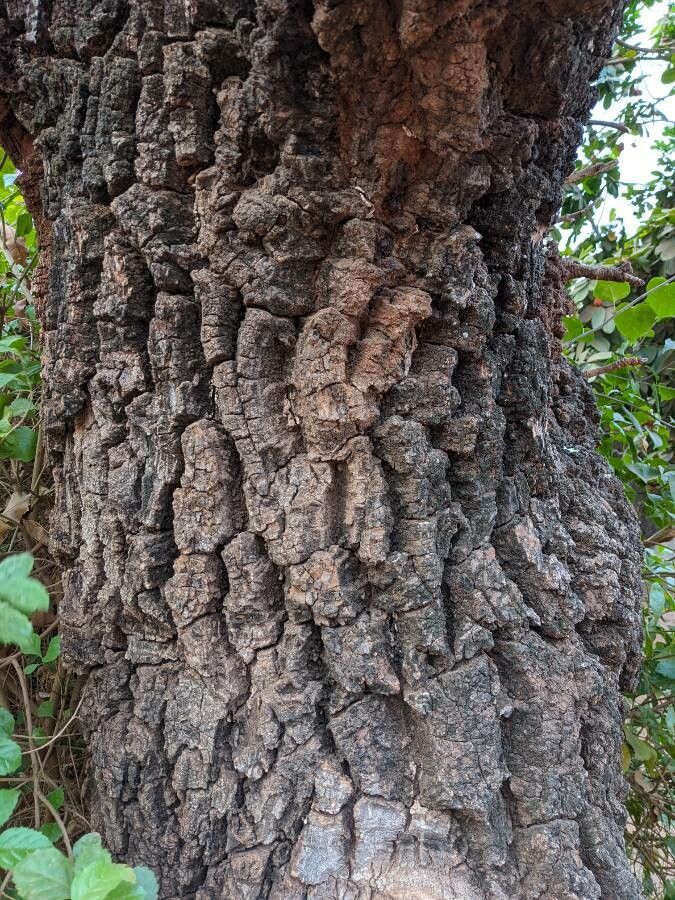
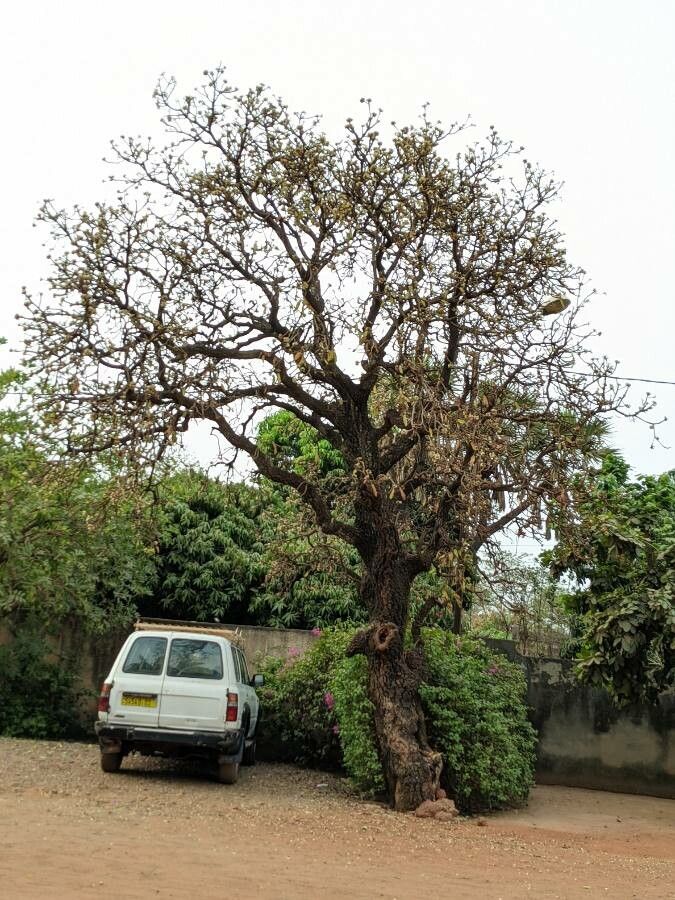
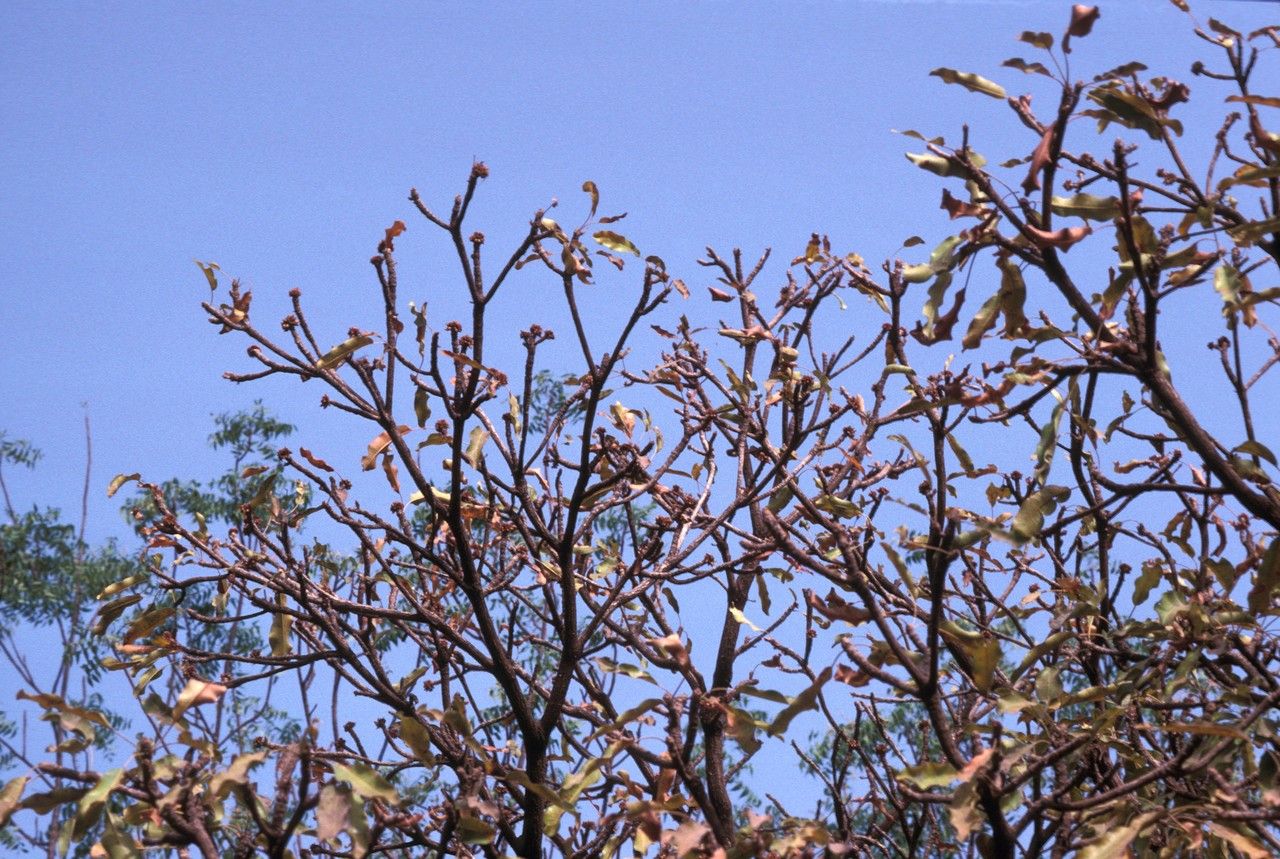
Vitellaria paradoxa, commonly known as the shea tree, is a deciduous species native to Africa. It belongs to the Sapotaceae family and can reach heights of up to 15 meters. The tree features a thick trunk and a wide canopy that provides shade to surrounding vegetation.
The leaves of the shea tree are dark green, glossy, and elliptical in shape. Its small flowers are white or yellowish and have five petals each. These flowers bloom during the dry season, from January to March.
The fruit of Vitellaria paradoxa is an edible nut that contains a rich oil used in cooking and cosmetics. The nut is encased in a hard shell, which must be cracked open to extract the oil-rich kernel inside.
Shea trees are highly valued by local communities not only for their economic importance but also for their cultural significance. They play a vital role in traditional medicine due to their medicinal properties.
Ecologically, Vitellaria paradoxa trees are important as they provide habitat for various wildlife species, including birds, insects, and monkeys, thereby maintaining biodiversity in the ecosystems where they grow.
In conclusion, the Vitellaria paradoxa tree plays significant roles economically, culturally, and ecologically, making it one of Africa's most vital plant species.
Shea butter has strong resistance to disease and is generally not prone to illnesses. Regarding care, this plant is fairly low-maintenance. Planted outdoors it requires only light watering, and larger specimens typically do not need pruning. However, smaller plants should be pruned after they have bloomed. Shea buttert is appropriate for anyone with an outdoor area, such as a garden or deck, and does not require extensive plant-care experience.
How to keep Vitellaria Paradoxa.
Light
Shea butter comes from open environments, such as sunny meadows and forest edges, which offer abundant light. It thrives in Full Sun but can also tolerate Partial Sun, adapting well to various light conditions.
Temperature
Shea butter comes from tropical areas, where the climate is usually warm and humid. For that reason, it is adapted to high heat and moisture. It does not tolerate sudden temperature swings and prefers a consistent temperature, so avoiding indoor temperature fluctuations is important. It generally cannot withstand cold and needs warmer conditions to grow. If the environmental temperature falls too low, the plant may stop growing or even die.
Fertilizer
Fertilizing is essential for the care of Shea butter. Regular feeding during the growing season helps maintain the energy for showy leaves and supports overall growth. Ignoring fertilization can lead to unhealthy leaves, reduced ornamental appeal, and growth that is stunted or weak and prone to breaking.
Pruning
Shea butter trees benefit from annual pruning in early spring. This practice helps maintain a single trunk and remove dead branches, promoting an open canopy for better air circulation and healthier growth. Regular trimming enhances yield, but heavy pruning should be avoided to prevent stressing the plant.
Botanical profile.
- Plant Type
- Tree
- Life Cycle
- Perennial
- Genus
- Vitellaria
- Family
- Sapotaceae
- Hardiness Zone
- 10-12
- Mature Height
- 7.01 m to 24.99 m
- Mature Spread
- 14.94 m
- Leaf Color
- Green
- Leaf Type
- Evergreen
- Flower Color
- White
- Flower Size
- 1.02 cm to 2.03 cm
- Bloom Time
- Mid winter, Late winter, Early spring
- Planting Time
- Spring, Summer, Autumn
- Harvest Time
- Summer, Early fall
Other names.
Reader questions.
What is Shea Butter?
Shea Butter is a natural fat extracted from the nut of the African Shea tree (Vitellaria paradoxa). It is widely used in cosmetics as a moisturizer, salve, or lotion. Shea Butter is renowned for its skin nurturing properties, including moisturizing and soothing abilities.