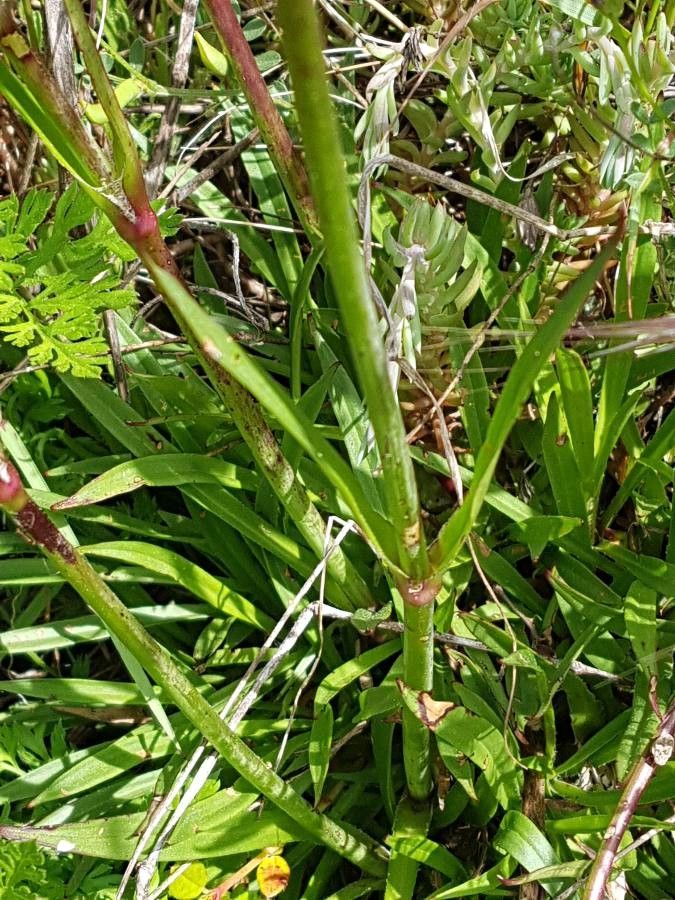
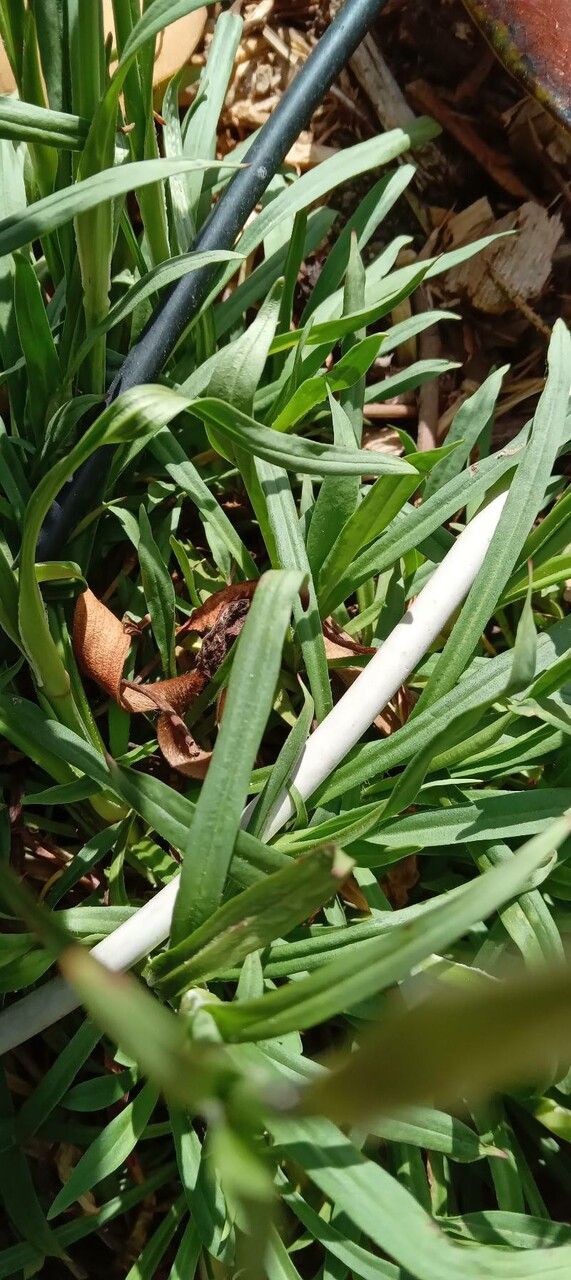
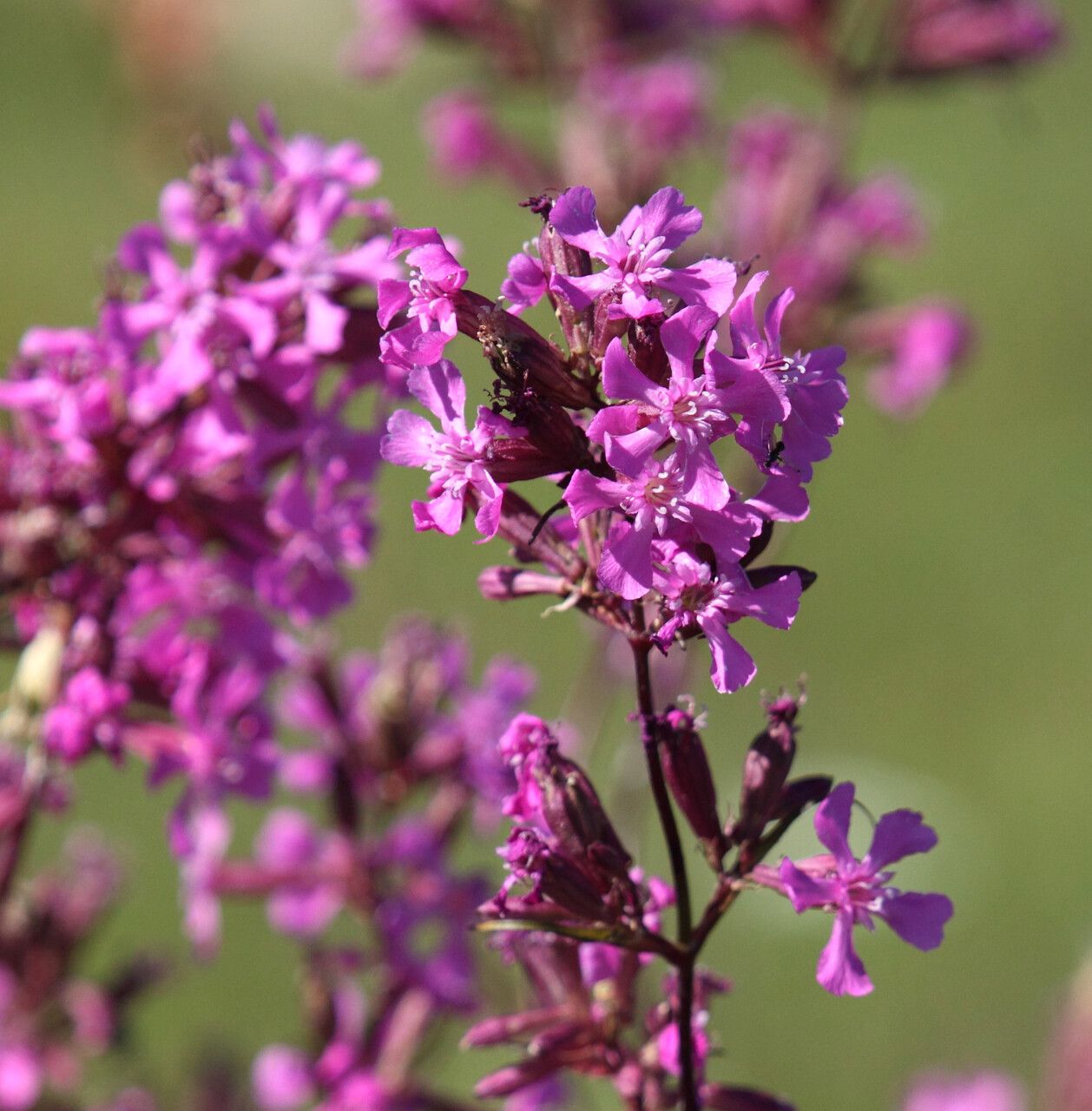
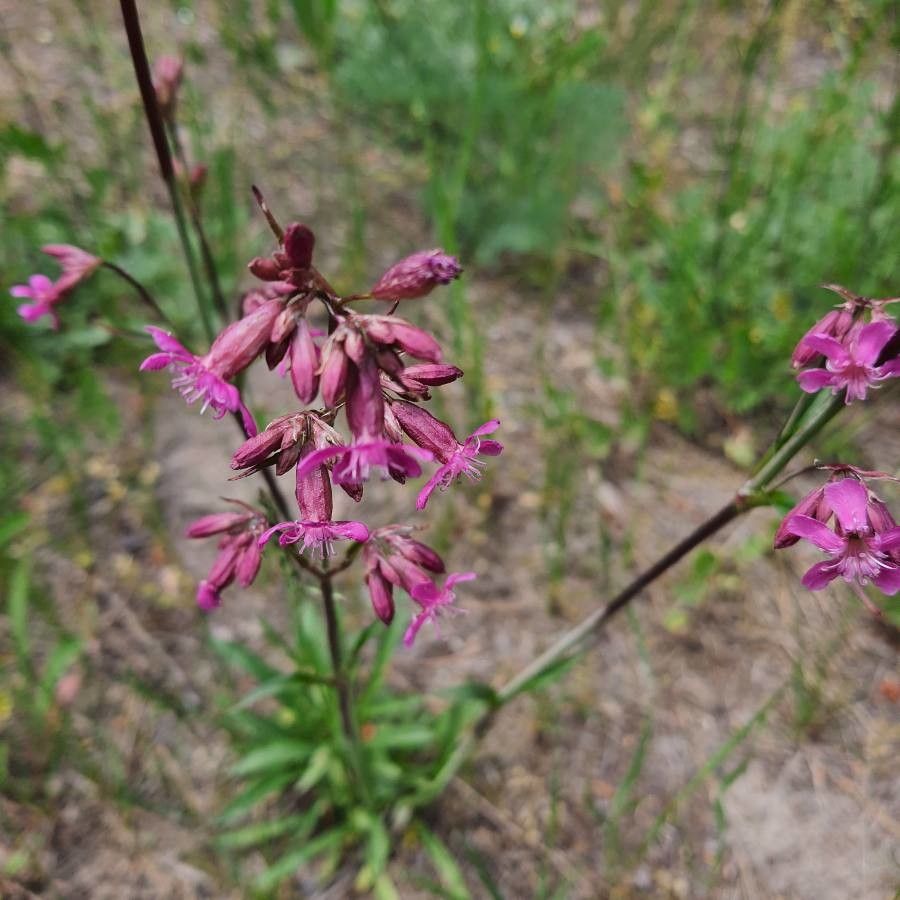
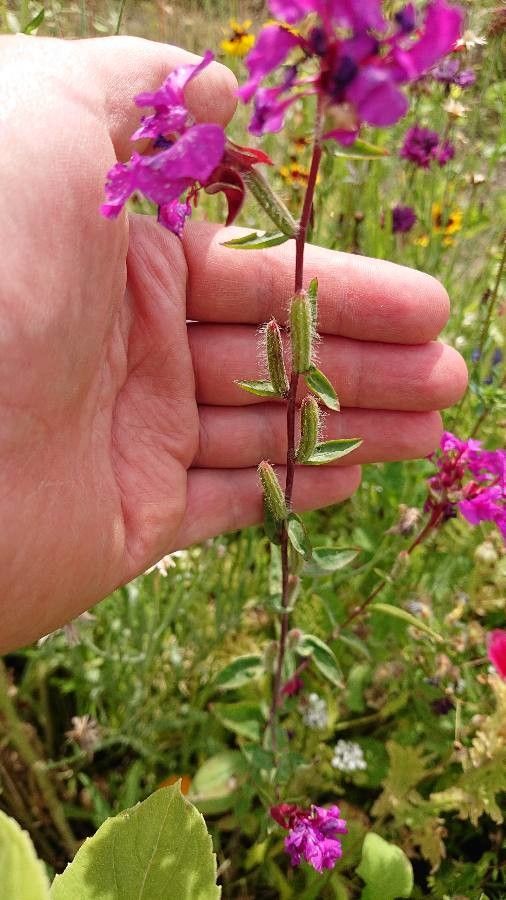
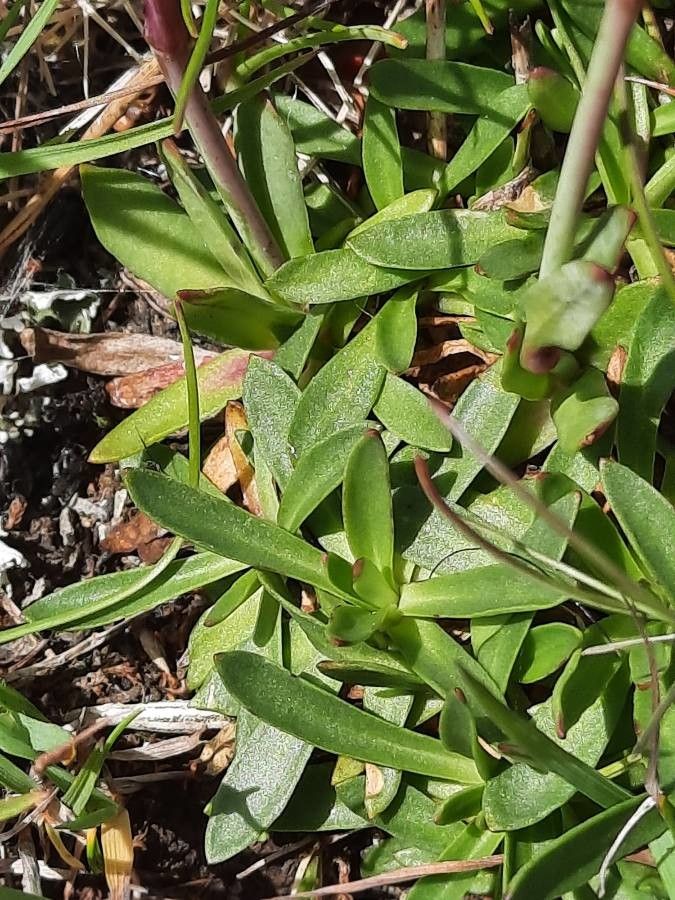
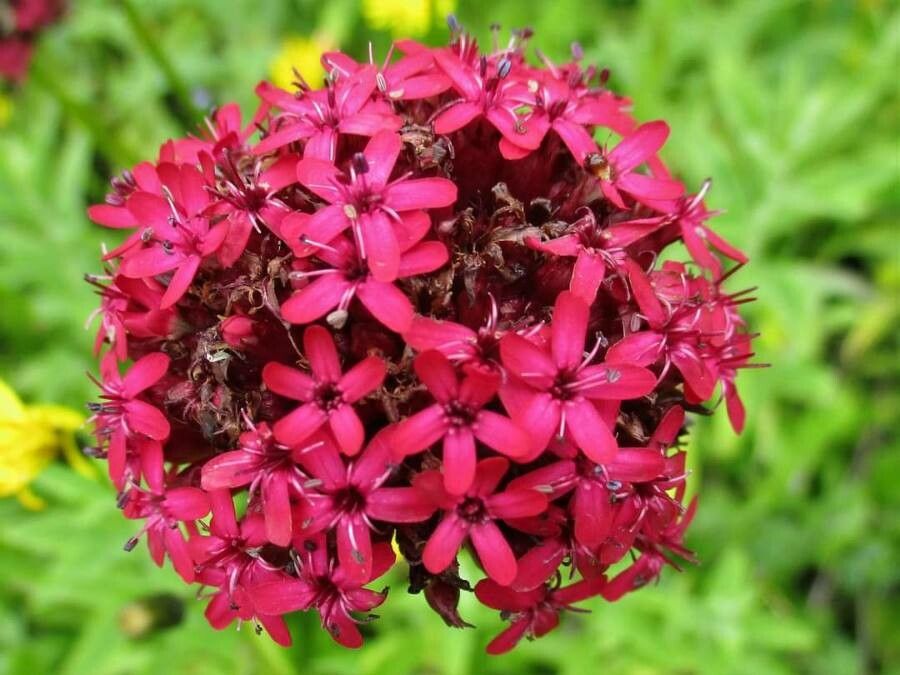
Viscaria vulgaris, commonly known as the German catchfly or pink catchfly, is a herbaceous perennial plant belonging to the Caryophyllaceae family. Native to Europe and Asia, it has also been introduced to North America. The plant grows up to 30 cm in height and features narrow leaves arranged in a basal rosette. Its pink or white flowers, characterized by five deeply notched petals that give a fringed appearance, bloom from May through August. Viscaria vulgaris prefers well-drained soils and thrives in full sun or partial shade. Once established, it can tolerate dry conditions. You will typically find this plant growing on rocky slopes, meadows, grasslands, and disturbed areas such as roadsides. Historically, Viscaria vulgaris has been used for medicinal purposes due to its anti-inflammatory properties. Additionally, its sticky sap functions as an insecticide by trapping insects on its leaves. In garden settings, Viscaria vulgaris is cultivated not only for its attractive flowers, which draw bees and butterflies but also for its suitability as a cut flower due to its long vase life. Overall, Viscaria vulgaris is an appealing perennial that offers medicinal benefits and can be easily grown in gardens or naturalized areas. It provides beauty while attracting important pollinators such as bees and butterflies.
Sticky catchfly is fairly disease-resistant and usually not affected by illnesses. Still, it can be vulnerable to pests and diseases present in its environment. These problems are typically mild. For care, this plant needs moderate maintenance. It should be pruned regularly to keep a neat appearance and support healthy growth. Fertilizing can also help encourage flowering. Sticky catchfly is well suited to anyone with outdoor space, such as a garden or patio, and does not demand much care experience. It may call for more attention when grown indoors.
How to keep Viscaria Vulgaris.
Light
The sticky catchfly receives a large amount of sunlight but also survives in prevailing shadows. It thrives when exposed to plenty of sunlight, yet it can also withstand conditions with less light. Originating from habitats that were mostly sunny, it continues to bloom despite varying light circumstances. Nonetheless, an excess or lack of light can negatively impact its growth.
Water
Sticky catchfly, native to temperate regions, prefers moderate moisture but can tolerate dry conditions better than excessive dampness. For optimal growth, it requires consistent weekly watering. This plant thrives outdoors in various climates and makes efficient use of rainfall during its growing season.
Temperature
The sticky catchfly plant originates from regions where the temperature consistently remains between 32 and 90 °F (0 to 32 ℃). It leans towards preferring cooler weather conditions, thus making it crucial to manage the warmth during blistering seasons.
Fertilizer
The optimal period to apply fertilizer to a Sticky catchfly is in the early spring as it transitions from dormancy to active growth. Fertilizing supplies essential nutrients that promote robust growth. Despite Sticky catchfly's modest fertilization requirements, fertilizing it on a yearly basis can boost its lifespan and encourage improved and longer-lasting blossoms.
Pruning
Sticky catchfly benefits from regular pruning in early to late spring to maintain its shape and promote healthy growth. To encourage branching, remove dead stems and make cuts just above the leaf nodes. Be sure to clean your tools to prevent the spread of disease. Proper pruning not only improves the appearance of the sticky catchfly but also supports its robust development.
Botanical profile.
- Plant Type
- Herb
- Life Cycle
- Perennial
- Genus
- Viscaria
- Family
- Caryophyllaceae
- Hardiness Zone
- 3-8
- Mature Height
- 61 cm
- Mature Spread
- 25 cm to 30 cm
- Leaf Color
- Green
- Leaf Type
- Deciduous
- Flower Color
- Pink
- Flower Size
- 2.03 cm
- Bloom Time
- Late spring, Early summer, Mid summer
- Planting Time
- Spring, Autumn
- Harvest Time
- Mid summer
- Native Area
- Sweden, Austria, Czech Republic, Slovakia, Montenegro, Bulgaria, Poland, Croatia, Slovenia, Belarus, Ukraine, Serbia, Russia, Lithuania, Norway, Hungary, Germany, Italy, Kazakhstan, Switzerland, Denmark, Estonia, Finland, France, Albania, United Kingdom, Romania, Latvia, Belgium, Netherlands
Other names.
Reader questions.
How should I water my Sticky catchfly plant?
To ensure the health of the Sticky catchfly, it is recommended to use filtered water that is at room temperature or slightly warmer. Tap water may contain harmful particles, so it's best to avoid using it. The Sticky catchfly thrives in warm environments, so cold water can be a shock to its system. Additionally, overhead watering should be avoided as it may cause problems with the foliage. Instead, it is suggested to thoroughly soak the soil with filtered room temperature water. This will benefit the plant by moisturizing the roots and allowing them to spread and absorb the necessary nutrients.
Why should I put fertilizer on my Sticky catchfly?
Proper fertilization is crucial for maintaining the health and appearance of the Sticky catchfly plant. The leaves of this plant are an important component of its overall structure, so it is essential to fertilize it correctly. Fertilization ensures that the leaves of the Sticky catchfly are consistent in color and have a healthy texture. Additionally, fertilization promotes root growth and maintenance, both above and below the soil's surface. By fertilizing your plant, you not only keep it healthy in the present but also enhance its ability to absorb nutrients from the soil in the future.
What are the sunlight requirements for Sticky Catchfly?
Sticky Catchfly (Viscaria vulgaris) thrives in environments that provide ample sunlight, ideally flourishing under conditions of full sun, defined as more than 6 hours of sunlight a day. It can also adapt to partial sun, receiving about 3-6 hours of sunlight. However, it's crucial to monitor the movement of sunlight through your garden to find spots that offer the right mix of light and shade, ensuring the plant's health and happiness.
What is the native temperature range for Sticky catchfly?
Sticky catchfly is native to environments where temperatures consistently stay within the 32 to 90°F (0 to 32°C) range. It thrives in cooler climates, making it essential to regulate heat during the hotter seasons. Despite its strong cold resistance, and not generally requiring special frost protection measures in winter, precautions should still be taken if temperatures are expected to drop below -35°C. This includes covering the plant with soil or straw and watering abundantly before the first freeze in autumn to ensure the soil remains moist and enters a frozen state, which helps prevent drought and water scarcity during winter and early spring.
What do I do if I give too much or too little water to my Sticky catchfly plant?
Overwatering is a common issue that can harm your Sticky catchfly. When this happens, the stems and leaves may wilt and turn yellow. It can also lead to diseases like root rot, mold, and mildew, which can kill the plant. Underwatering is less common but can still happen. In this case, the leaves become brittle and brown. It's important to recognize the signs of overwatering early. Some diseases from overwatering, such as root rot, can't be fixed if you wait too long. If you see early signs, reduce watering and check the soil drainage. If it drains poorly, replace it with a well-draining potting mix. If your Sticky catchfly needs more water, simply water it regularly until the signs subside.
When should I fertilize my Sticky catchfly?
If you grow your Sticky catchfly outdoors each year, it will produce new growth in early spring. When the leaves emerge, it's a sign to start fertilizing. Generally, a single application of fertilizer in spring is sufficient for the plant. However, if you want to promote maximum growth, you can fertilize multiple times during the spring and early summer, approximately every month to month and a half.
How does Sticky Catchfly adapt to different lighting conditions?
The Sticky catchfly is a resilient plant that can absorb significant amounts of sunlight while also tolerating shaded conditions. Originating from habitats dominated by sunlight, it grows healthily with plenty of sun exposure but is adaptable to varying light conditions. Despite this adaptability, both too much and too little light can detrimentally affect its growth, highlighting the importance of finding a balance in light exposure for optimal health.
How does Sticky catchfly respond to low temperatures?
Sticky catchfly is remarkably cold-tolerant, thriving best when temperatures are above 0°C. However, during winter, it should be kept above -30°C to avoid adverse effects. When temperatures fall below -35°C, there may not be noticeable changes during the winter, but there could be a reduction in sprouting or even no sprouting at all come springtime. The recommended solution for any non-sprouting parts in spring is simply their removal.
How often should I give water to my Sticky catchfly plant?
To determine if your potted Sticky catchfly needs water, simply insert your finger into the soil about two to three inches deep. If the soil feels dry at that depth, it's time to water. The same method can be used for Sticky catchfly grown in the ground. In spring and early fall, watering once a week is typically sufficient, but during hot weather, you may need to water twice a week or more. However, it's worth noting that mature Sticky catchfly plants are quite resilient and can withstand drought conditions.
When should I not use fertilizer on my Sticky catchfly plant?
During late fall and winter, your Sticky catchfly goes into a dormant phase and stops producing new growth. It is not recommended to fertilize it during this time. In spring and summer, if you choose to fertilize, gradually decrease the frequency as summer approaches because the Sticky catchfly's growth rate slows down. It is always best to avoid fertilizing when the weather is unusually hot or the soil is extremely dry as it can stress and harm the plant.
What options are available for indoor lighting for plants like Sticky Catchfly?
For indoor plants like Sticky Catchfly that may not receive adequate natural sunlight, artificial lighting serves as an excellent solution to encourage growth and health, especially during winter or in less sunny spaces. Options include LED lights, which can be adjusted to provide necessary wavelengths of light. For full sun plants, 30-50W/sq ft of light is recommended, 20-30W/sq ft for partial sun plants, and 10-20W/sq ft for full shade plants. The artificial light source should be placed 12-36 inches above the plant and turned on for 8-12 hours per day to mimic natural daylight as closely as possible.
How does Sticky catchfly respond to high temperatures?
During the summer months, it's essential for the well-being of Sticky catchfly to keep temperatures below 32°C. When temperatures exceed 35°C, the plant's leaves might become lighter in color, curl, become susceptible to sunburn, and, in severe cases, the entire plant may wilt and dry out. Sunburned and dried parts should be trimmed away, and the plant should be moved to a location that provides shade during the midday and afternoon sun or use a shade cloth to create shade. Additionally, watering the plant in the morning and evening will help keep the soil moist and further protect the plant.