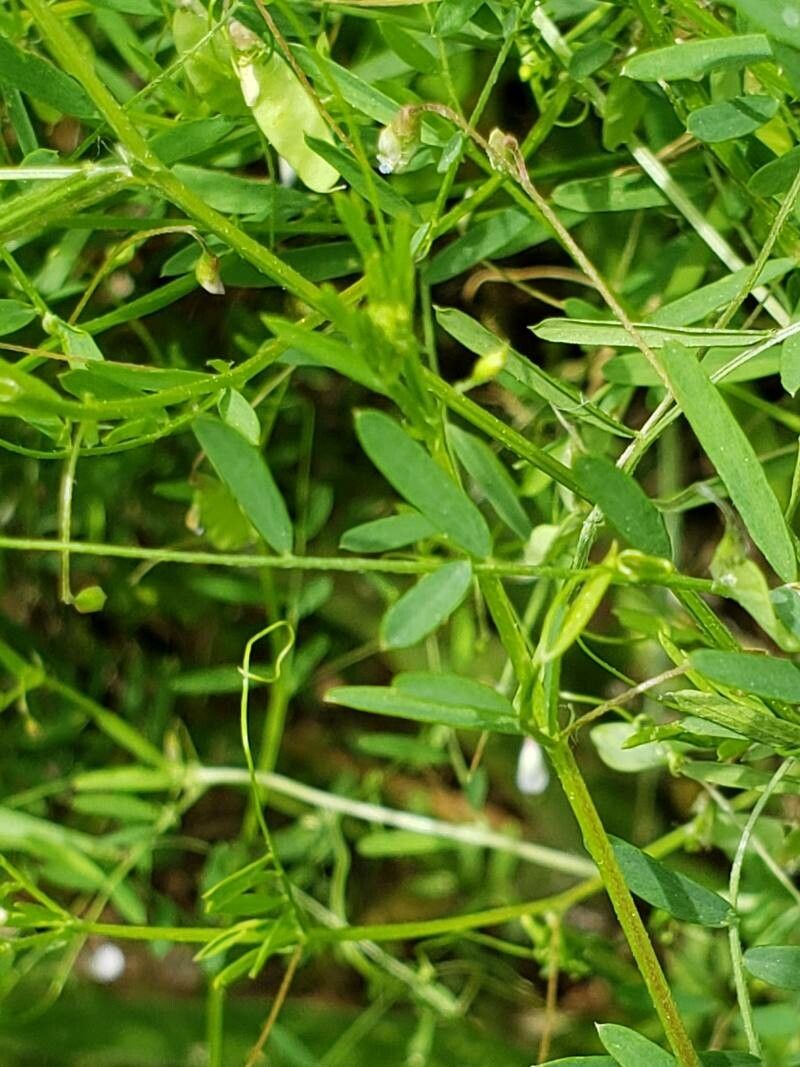
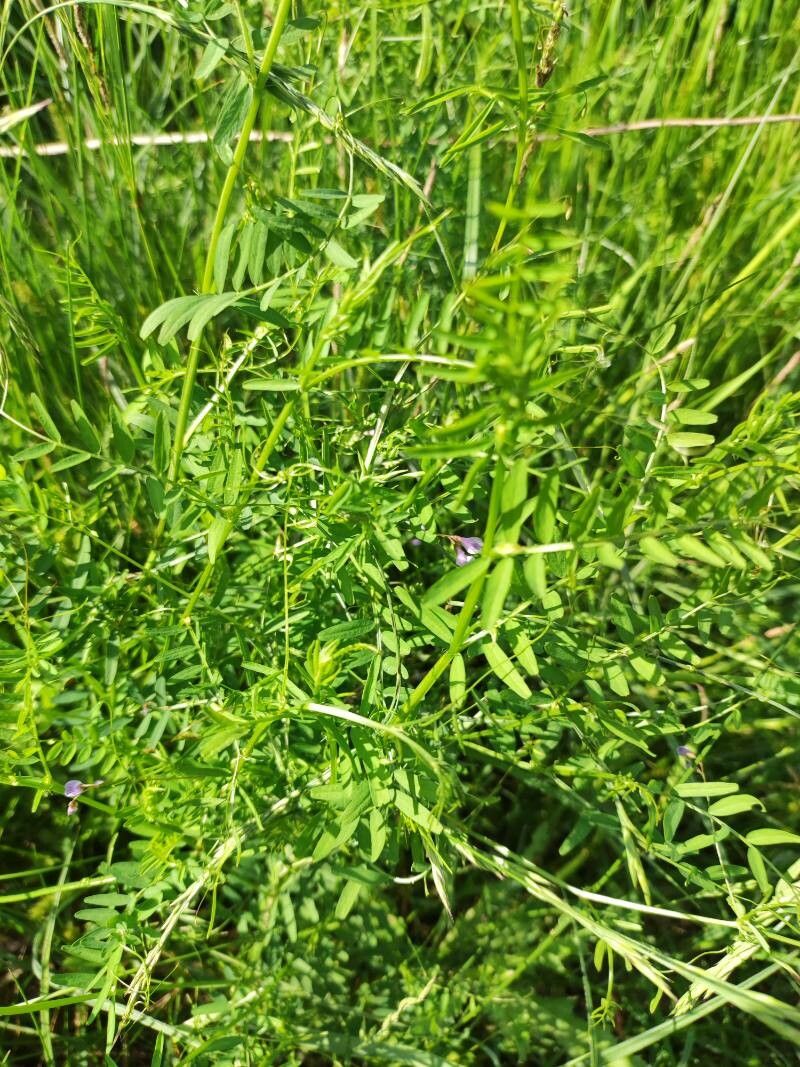
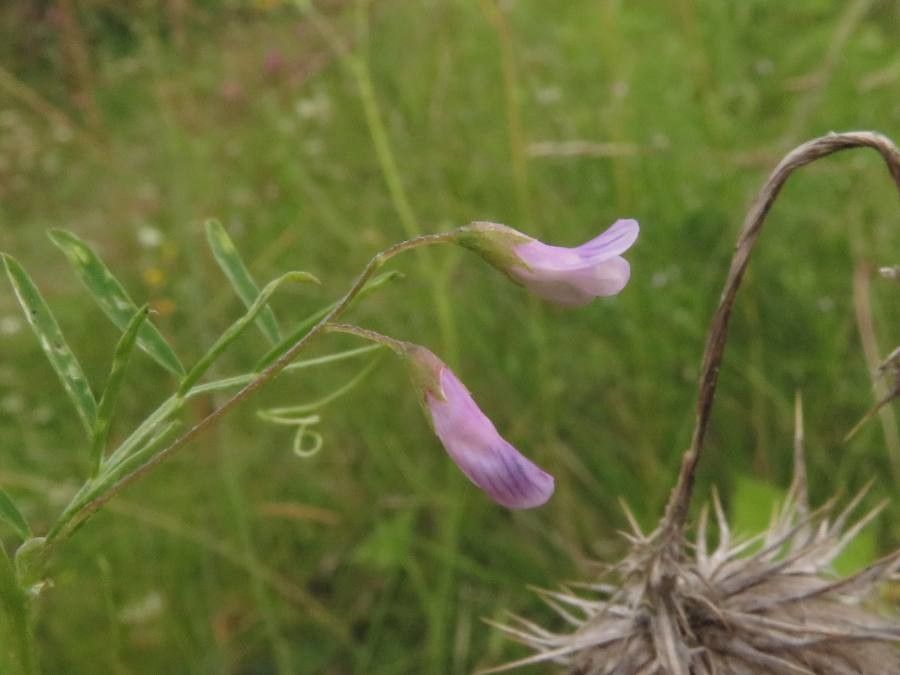
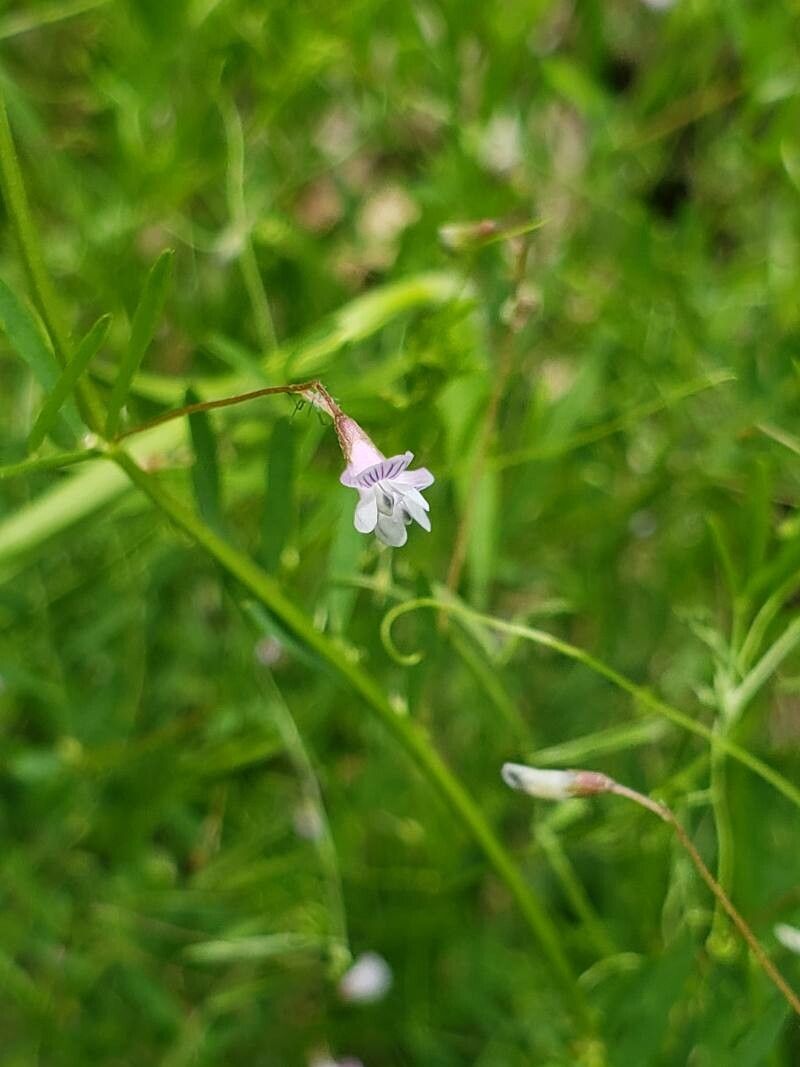
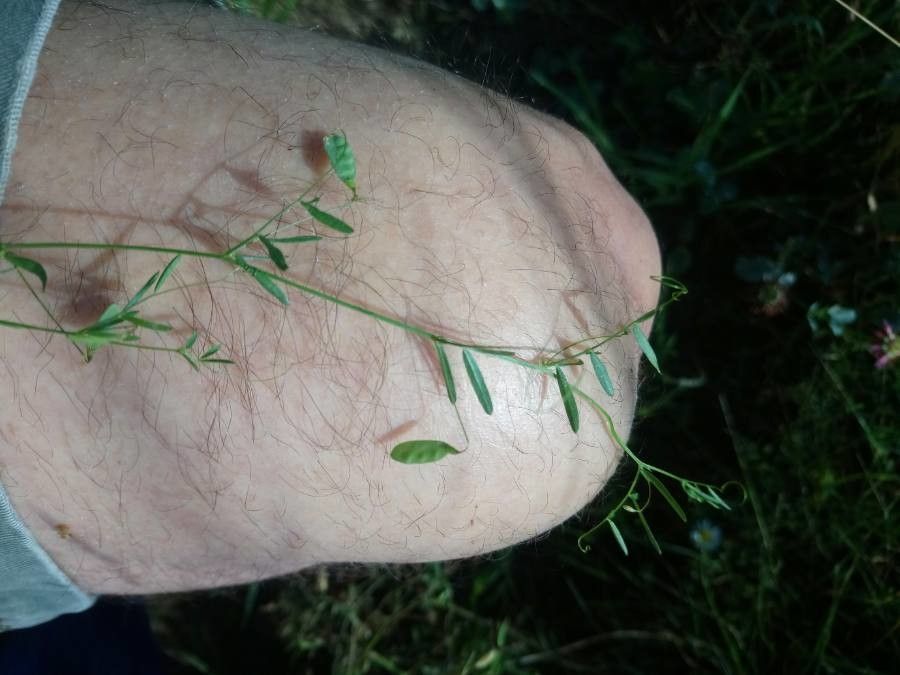
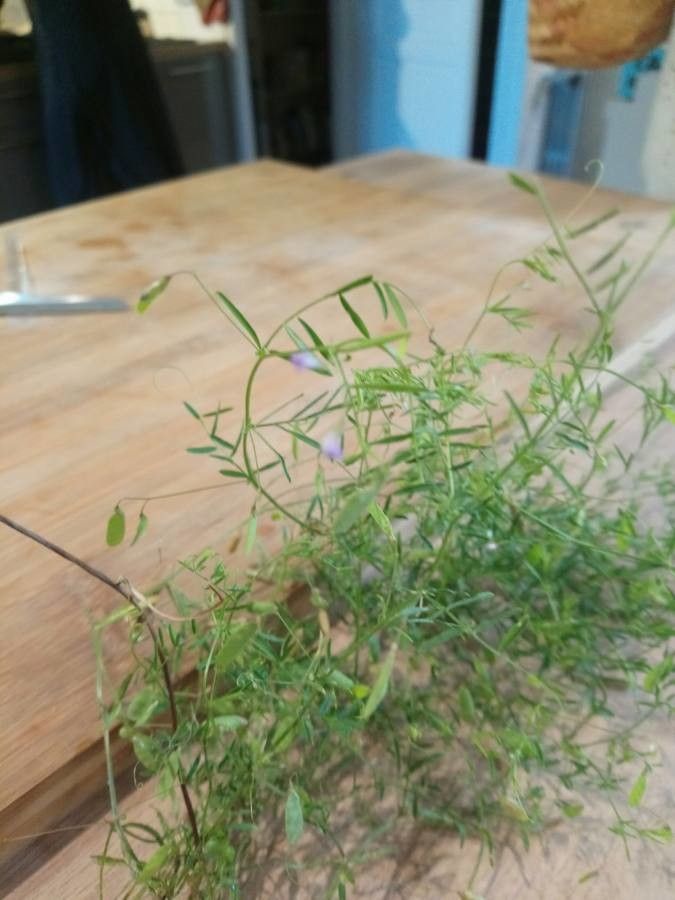
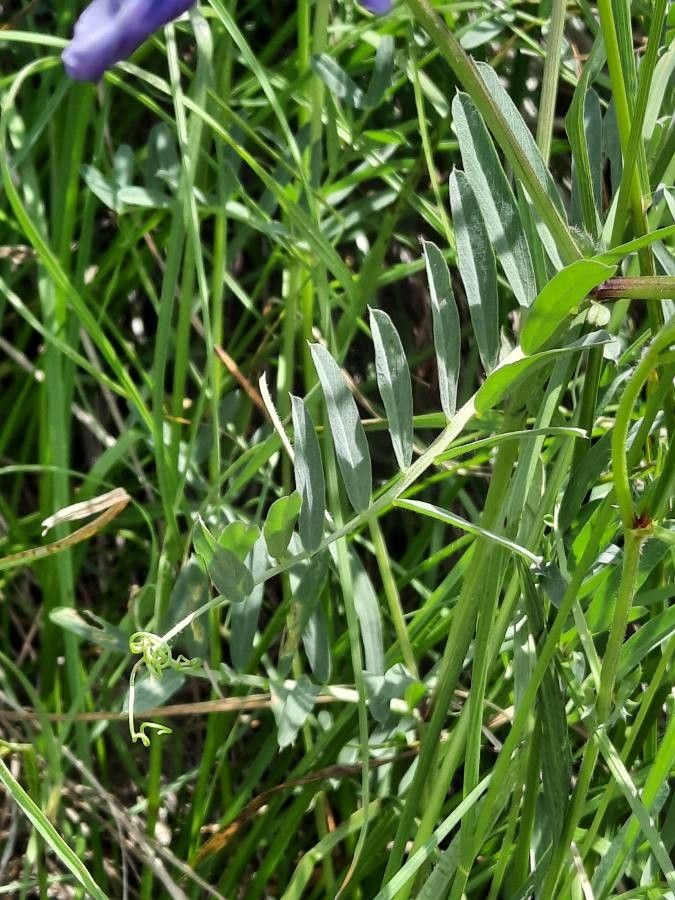
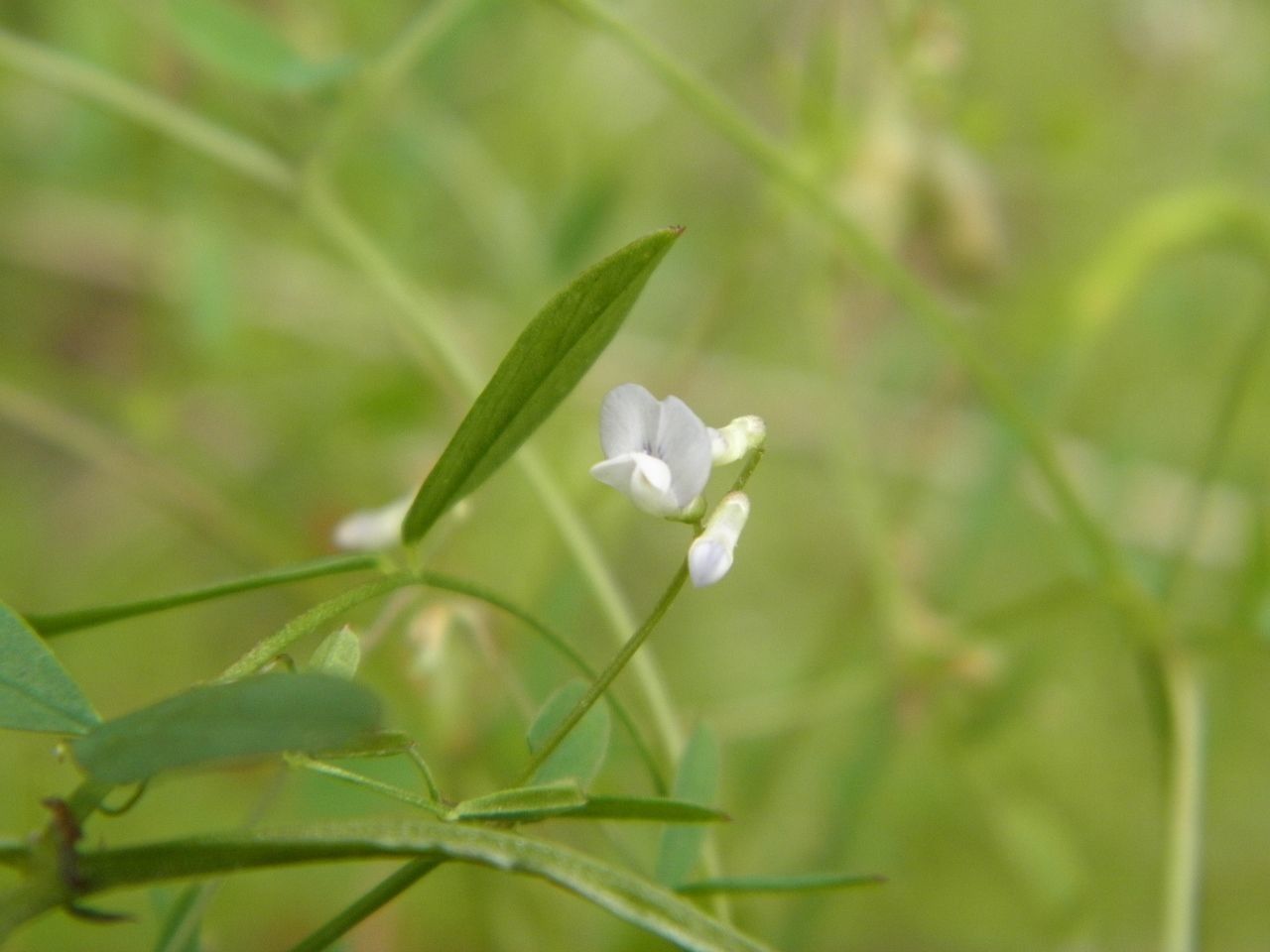
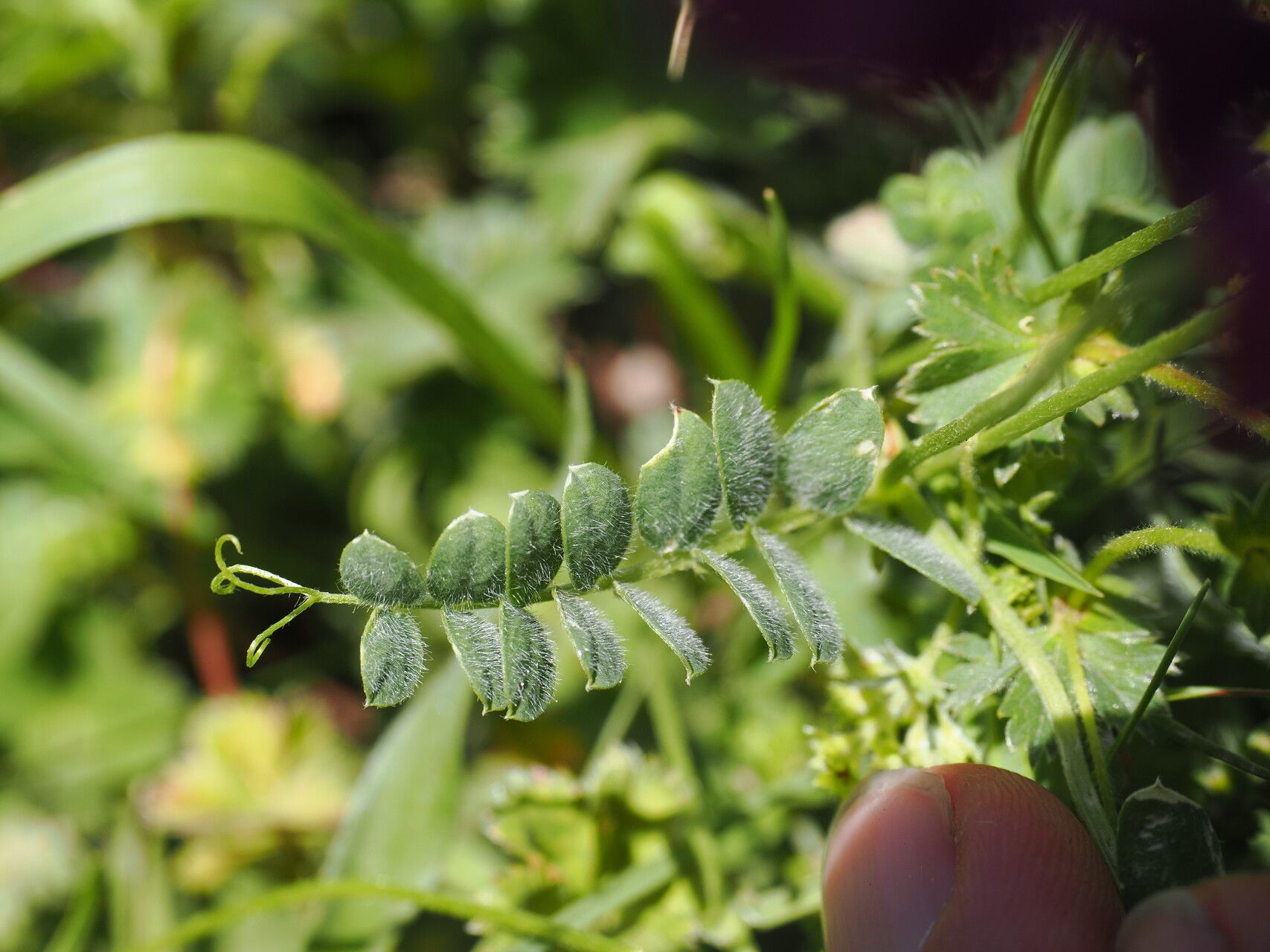
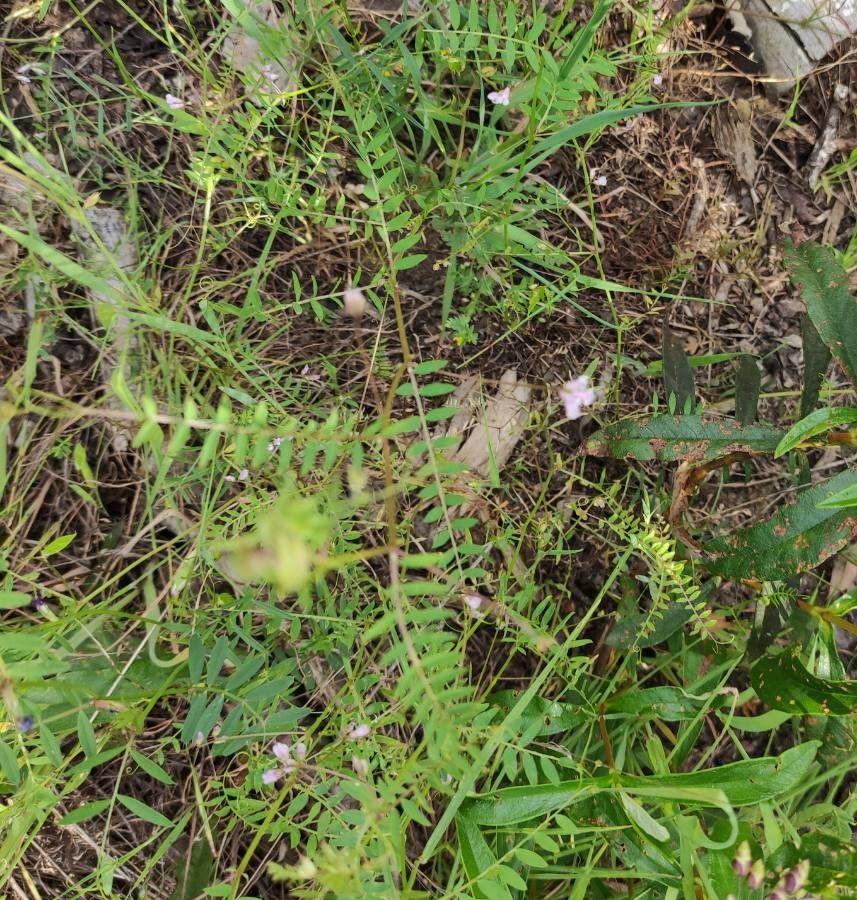
Vicia tetrasperma, commonly known as the four-seeded vetch, is a flowering plant in the Fabaceae family. It is an annual herbaceous plant that can grow up to 60 cm tall, featuring a slender stem with small leaves. Its small, purple flowers are clustered at the ends of long stalks.
Originally native to Europe, the four-seeded vetch has been introduced to, and naturalized in, many parts of North America. It thrives in disturbed areas such as fields, roadsides, and waste places.
This plant plays a crucial role as a cover crop for soil improvement, thanks to its ability to fix atmospheric nitrogen into the soil. Additionally, it serves as a source of food for livestock, including cattle and sheep.
While the seeds of Vicia tetrasperma are edible, they are not commonly consumed by humans because of their bitter taste. However, they have been traditionally used for medicinal purposes, such as treating respiratory ailments.
Overall, Vicia tetrasperma is an ecologically significant plant species. It contributes to soil health improvement and provides food for livestock.
Lentil vetch has good disease resistance and is generally not prone to illnesses. However, it can be vulnerable to pests and diseases present in its surroundings. These infections are typically not severe. In terms of care, this plant needs moderate maintenance. It should be pruned regularly to preserve a good appearance and healthy growth. Fertilizing can also help promote flowering. Lentil vetch is suitable for anyone with an outdoor space, such as a garden or patio, and does not demand extensive care experience. It may need more attention when grown indoors.
How to keep Vicia Tetrasperma.
Light
Lentil vetch does best with plentiful sunlight, although it can tolerate lower light levels. In its native range it is exposed to abundant sun. Excessive sunlight can cause the leaves to scorch, while too little light can impede its vigorous growth.
Water
Lentil vetch, which originates from temperate regions, prefers moderate moisture and consistent soil hydration without becoming waterlogged. To maintain optimal moisture retention and drainage, it is best to water the plant weekly. This species thrives outdoors, and its growth is heavily influenced by water availability, emphasizing the need for effective irrigation practices.
Temperature
Lentil vetch is a plant that grows best in its native environment where temperatures range from 68 to 95 °F (20 to 35 ℃). Seasonal temperature adjustments might be needed to support its growth.
Fertilizer
Lentil vetch benefits from regular, light fertilizer applications to encourage healthy foliage. Fertilize Lentil vetch about once a month during the summer. Nitrogen is vital for leaf development, and supplying nitrogen-rich fertilizer helps Lentil vetch thrive.
Pruning
Lentil vetch is a plant with delicate foliage and small flowers that thrives with strategic pruning from early to late spring. By removing dead branches, you can improve airflow and promote healthy growth. Light pruning also encourages the plant to grow bushier. Regular maintenance helps maintain its vibrant health and enhances flowering, making lentil vetch a standout feature in any garden.
Botanical profile.
- Plant Type
- Herb, Vine
- Life Cycle
- Annual
- Genus
- Vicia
- Family
- Fabaceae
- Hardiness Zone
- 5
- Mature Height
- 61 cm
- Mature Spread
- 20 cm to 40 cm
- Leaf Color
- Green, Blue
- Leaf Type
- Deciduous
- Flower Color
- White, Purple
- Flower Size
- 0.25 cm to 0.51 cm
- Bloom Time
- Late spring, Early summer, Mid summer
- Planting Time
- Spring, Summer, Autumn
- Harvest Time
- Mid summer, Late summer, Early fall
Other names.
Reader questions.
How should I water my Lentil vetch plant?
To water Lentil vetch, you have several options. You can use a garden hose with a spray nozzle, a watering can, or any other common watering tool. Lentil vetch is not too particular about the type of water it receives - rainwater, tap water, or filtered water all work fine. It's generally best to avoid watering this plant from above, as it can harm the leaves, flowers, and potentially cause disease. Instead, a drip irrigation system is often the most effective way to water Lentil vetch. This system evenly applies water directly to the soil. If you have container-grown Lentil vetch, you can use a cup, watering can, or tap to water it by applying the water directly to the soil.
What are the sunlight requirements for Lentil vetch?
Lentil vetch thrives best with generous exposure to sunlight, optimally flourishing under conditions of full sun, defined as over 6 hours of sunlight daily. However, it is capable of enduring partial sun, receiving about 3-6 hours of sunlight. It's crucial to observe how sunlight traverses your garden to pinpoint locations that provide a harmonious mix of light and shade, fostering an ideal environment for your plants. This careful selection ensures their well-being, accommodating their natural affinity for ample solar exposure reminiscent of their native habitats. Despite its resilience, prolonged exposure can lead to leaf scorching, while insufficient sunlight may impede its growth.
What is the ideal temperature range for Lentil vetch?
Lentil vetch thrives in its native growth environment with an ideal temperature range between 68 to 95 °F (20 to 35 °C). To promote its growth, seasonal temperature adjustments may be necessary, ensuring it remains within this optimal range.
What do I do if I give my Lentil vetch too much or too little water?
The solution for when your Lentil vetch plant is not getting enough water is straightforward. If you observe that it lacks moisture, simply increase the frequency of watering. On the other hand, overwatering can be a more severe problem, particularly if you don't address it early. When Lentil vetch is overwatered, it becomes susceptible to diseases that can cause it to decline and eventually die. To prevent this, it's crucial to select an appropriate growing location that receives enough sunlight to dry the soil and has good drainage to avoid waterlogged soil. If you have overwatered Lentil vetch in a pot, you might need to change to a new pot. The old container may have had inadequate drainage or not enough drainage holes. When repotting the overwatered Lentil vetch, make sure to use loose soil and a pot that allows efficient drainage.
What solutions are there for Lentil vetch experiencing light deficiency indoors and outdoors?
For symptoms of light deficiency in Lentil vetch, there are tailored solutions for indoor and outdoor conditions. Indoors, it's advised to gradually expose plants to more sunlight, aiming for at least 6 hours of direct light daily. Utilize south-facing windows and consider artificial lighting, such as keeping a lamp on for at least 8 hours or opting for grow lights to ensure sufficient light exposure. Outdoors, gently transition plants to sunnier spots weekly to prevent shock and sunburn, focusing on gradual adaptation to brighter conditions. Additionally, for ground-level issues, reducing obstructions like pruning nearby trees and considering transplanting to sunnier locations with better light access and drainage can be crucial. It's important to note that while parts of the plant affected by insufficient light might not recover, new growth following increased light exposure should be healthy.
Does Lentil vetch require frost protection in winter?
Lentil vetch is highly cold-tolerant and does not require additional frost protection measures during winter. However, to prepare it for the colder months, it is recommended to water the plant generously before the first freeze in autumn. This ensures the soil remains moist and freezes, helping to prevent drought and water scarcity for the plant during the winter and early spring.
How often do I need to water my Lentil vetch?
To keep your Lentil vetch healthy, water it regularly throughout the growing season. In the spring, water once per week, and as it gets warmer, increase watering to two or three times per week. However, be careful not to overwater, as this can harm the plant. It's important to keep the soil moist but not soggy. If your Lentil vetch is in a pot, you'll need to water it more frequently because potting soil dries out faster than ground soil. In most cases, plan to water a potted Lentil vetch a few times per week, compared to once per week for plants in the ground.
What are the symptoms of light deficiency or overexposure in Lentil vetch?
Lentil vetch can exhibit various symptoms in response to light deficiency or overexposure, guiding caregivers in identifying and rectifying suboptimal growing conditions. Insufficient light can result in small leaves, leggy or sparse growth, quicker leaf drop, halted growth, and lighter-colored leaves, signaling a need for more sunlight. On the flip side, too much light can cause chlorosis, sunscald, leaf curling, wilting, and leaf scorching. These symptoms range from yellowing leaves due to chlorophyll breakdown in cases of chlorosis, to physical damage like necrotic spots with sunscald and curled leaves as a defense mechanism against excessive sunlight. Understanding these signs can help in adjusting light conditions to suit the plant's needs.
What should be done if Lentil vetch experiences temperatures below its cold tolerance?
Lentil vetch is extremely cold-tolerant, capable of withstanding temperatures down to -25°C. If temperatures drop below this threshold, while there may not be noticeable changes during the winter, the plant may experience a decrease in sprouting or might not sprout at all in spring. In such cases, any parts of the plant that have failed to sprout by spring should be removed to encourage new growth.
How much water does my Lentil vetch plant need?
To determine how much water to give your Lentil vetch, there are a few options. Some gardeners prefer to check the moisture of the soil by feeling it. This method suggests watering until the top six inches of soil feel moist. Alternatively, you can use a specific measurement. As a general guideline, about two gallons of water per week should suffice for Lentil vetch, depending on temperature and soil dryness. However, be cautious not to overwater if your plant needs less than two gallons per week. If growing Lentil vetch in a container, a different approach is needed. In this case, provide enough water to moisten all dry soil layers. You can check by inserting your finger into the soil or watering until you see excess water draining from the pot's holes.
How can artificial lighting be used for indoor Lentil vetch plants?
When natural sunlight is scarce, particularly during winter or in naturally dim areas, artificial lighting becomes essential for the growth of indoor Lentil vetch plants. Adequate lighting can be ensured by selecting the appropriate artificial light, such as LED lights, which can be customized to emit specific wavelengths necessary for plant growth. For full sun plants, 30-50 watts per square foot is recommended; partial sun plants require 20-30 watts per square foot; and full shade plants need 10-20 watts per square foot. Positioning the light source 12-36 inches above the plant simulates natural sunlight conditions. To mimic natural daylight hours, most plants will benefit from 8-12 hours of artificial light daily, promoting healthier and faster growth under controlled conditions.
How should Lentil vetch be cared for in high temperatures?
Lentil vetch is not tolerant to high temperatures above 35°C, as its growth will stop, and it becomes susceptible to rot in such conditions. If exposed to excessive heat, trim away sunburned and dried-up parts of the plant. Moreover, relocating the plant to a shaded area during the midday and afternoon sun or using a shade cloth can provide necessary protection. Ensuring the plant is watered in the morning and evening will help keep the soil moist, aiding in the plant's survival during high temperatures.